Skip to Content
  • Bureaux

    Bureaux

    Amérique du Nord et Amérique du Sud
    • Atlanta
    • Austin
    • Bogota
    • Boston
    • Buenos Aires
    • Chicago
    • Dallas
    • Denver
    • Houston
    • Los Angeles
    • Mexico City
    • Minneapolis
    • Monterrey
    • Montreal
    • New York
    • Rio de Janeiro
    • San Francisco
    • Santiago
    • São Paulo
    • Seattle
    • Silicon Valley
    • Toronto
    • Washington, DC
    Europe, Moyen-Orient et Afrique
    • Amsterdam
    • Athens
    • Berlin
    • Brussels
    • Copenhagen
    • Doha
    • Dubai
    • Dusseldorf
    • Frankfurt
    • Helsinki
    • Istanbul
    • Johannesburg
    • Kyiv
    • Lisbon
    • London
    • Madrid
    • Milan
    • Munich
    • Oslo
    • Paris
    • Riyadh
    • Rome
    • Stockholm
    • Vienna
    • Warsaw
    • Zurich
    Asie et Australie
    • Bangkok
    • Beijing
    • Bengaluru
    • Brisbane
    • Ho Chi Minh City
    • Hong Kong
    • Jakarta
    • Kuala Lumpur
    • Manila
    • Melbourne
    • Mumbai
    • New Delhi
    • Perth
    • Seoul
    • Shanghai
    • Singapore
    • Sydney
    • Tokyo
    Voir tous les bureaux
  • Alumni
  • Presse
  • S’abonner
  • Contacter
  • France | Français

    Sélectionnez votre région et votre langue

    Global
    • Global (English)
    Amérique du Nord et Amérique du Sud
    • Brazil (Português)
    • Argentina (Español)
    • Canada (Français)
    • Chile (Español)
    • Colombia (Español)
    Europe, Moyen-Orient et Afrique
    • France (Français)
    • DACH Region (Deutsch)
    • Italy (Italiano)
    • Spain (Español)
    • Greece (Elliniká)
    Asie et Australie
    • China (中文版)
    • Korea (한국어)
    • Japan (日本語)
  • Saved items (0)
    Saved items (0)

    You have no saved items.

    Bookmark content that interests you and it will be saved here for you to read or share later.

    Explore Bain Insights
  • Expertises Sectorielles
    Menu principal

    Expertises Sectorielles

    • Aerospace et Défense
    • Agroalimentaire
    • Chimie
    • Infrastructures, BTP et Matériaux de Construction
    • Grande Consommation
    • Services Financiers
    • Santé
    • Engins & Equipements Industriels
    • Media et Divertissement
    • Metals
    • Mining
    • Pétrole & Gaz
    • Papier et Emballage
    • Private Equity
    • Secteur Public
    • Distribution
    • Technologie
    • Télécommunications
    • Transportation
    • Travel & Leisure
    • Utilities & Energies Renouvelables
  • Expertises Fonctionnelles
    Menu principal

    Expertises Fonctionnelles

    • Expérience Client
    • ESG
    • Innovation
    • Fusions et Acquisitions
    • Opérations
    • People & Organization
    • Private Equity
    • Sales & Marketing
    • Stratégie
    • IA, Perspectives et Solutions
    • Technology
    • Transformation
  • Digital
  • Points de Vue
  • À propos
    Menu principal

    À propos

    • Notre Activité
    • Nos Valeurs
    • Nos Collaborateurs et Notre Équipe Dirigeante
    • Notre Impact
    • Prix & Récompenses
    • Partenariats Internationaux
    • Evénements
    Further: Our global responsibility
    • Diversité et Inclusion
    • Impact Social
    • Sustainability
    • World Economic Forum
    Learn more about Further
  • Carrières
    Menu principal

    Carrières

    • Rejoignez-nous
      Carrières
      Rejoignez-nous
      • Find Your Place
      • Nos domaines d’expertise
      • Equipes multidisciplinaires
      • Étudiants
      • Stages et programmes
      • Événements de recrutement
    • La vie chez Bain
      Carrières
      La vie chez Bain
      • Blog: Inside Bain
      • Récits de carrière
      • Nos collaborateurs
      • Nos bureaux
      • Soutenir votre évolution professionnelle
      • Groupes d’affinités
      • Avantages chez Bain
    • Histoires d’impact
    • Notre processus de recrutement
      Carrières
      Notre processus de recrutement
      • Ce que vous pouvez attendre
      • Entretiens
    Trouver un poste
  • Bureaux
    Menu principal

    Bureaux

    • Amérique du Nord et Amérique du Sud
      Bureaux
      Amérique du Nord et Amérique du Sud
      • Atlanta
      • Austin
      • Bogota
      • Boston
      • Buenos Aires
      • Chicago
      • Dallas
      • Denver
      • Houston
      • Los Angeles
      • Mexico City
      • Minneapolis
      • Monterrey
      • Montreal
      • New York
      • Rio de Janeiro
      • San Francisco
      • Santiago
      • São Paulo
      • Seattle
      • Silicon Valley
      • Toronto
      • Washington, DC
    • Europe, Moyen-Orient et Afrique
      Bureaux
      Europe, Moyen-Orient et Afrique
      • Amsterdam
      • Athens
      • Berlin
      • Brussels
      • Copenhagen
      • Doha
      • Dubai
      • Dusseldorf
      • Frankfurt
      • Helsinki
      • Istanbul
      • Johannesburg
      • Kyiv
      • Lisbon
      • London
      • Madrid
      • Milan
      • Munich
      • Oslo
      • Paris
      • Riyadh
      • Rome
      • Stockholm
      • Vienna
      • Warsaw
      • Zurich
    • Asie et Australie
      Bureaux
      Asie et Australie
      • Bangkok
      • Beijing
      • Bengaluru
      • Brisbane
      • Ho Chi Minh City
      • Hong Kong
      • Jakarta
      • Kuala Lumpur
      • Manila
      • Melbourne
      • Mumbai
      • New Delhi
      • Perth
      • Seoul
      • Shanghai
      • Singapore
      • Sydney
      • Tokyo
    Voir tous les bureaux
  • Alumni
  • Presse
  • S’abonner
  • Contacter
  • France | Français
    Menu principal

    Sélectionnez votre région et votre langue

    • Global
      Sélectionnez votre région et votre langue
      Global
      • Global (English)
    • Amérique du Nord et Amérique du Sud
      Sélectionnez votre région et votre langue
      Amérique du Nord et Amérique du Sud
      • Brazil (Português)
      • Argentina (Español)
      • Canada (Français)
      • Chile (Español)
      • Colombia (Español)
    • Europe, Moyen-Orient et Afrique
      Sélectionnez votre région et votre langue
      Europe, Moyen-Orient et Afrique
      • France (Français)
      • DACH Region (Deutsch)
      • Italy (Italiano)
      • Spain (Español)
      • Greece (Elliniká)
    • Asie et Australie
      Sélectionnez votre région et votre langue
      Asie et Australie
      • China (中文版)
      • Korea (한국어)
      • Japan (日本語)
  • Saved items  (0)
    Menu principal
    Saved items (0)

    You have no saved items.

    Bookmark content that interests you and it will be saved here for you to read or share later.

    Explore Bain Insights
  • Expertises Sectorielles
    • Expertises Sectorielles

      • Aerospace et Défense
      • Agroalimentaire
      • Chimie
      • Infrastructures, BTP et Matériaux de Construction
      • Grande Consommation
      • Services Financiers
      • Santé
      • Engins & Equipements Industriels
      • Media et Divertissement
      • Metals
      • Mining
      • Pétrole & Gaz
      • Papier et Emballage
      • Private Equity
      • Secteur Public
      • Distribution
      • Technologie
      • Télécommunications
      • Transportation
      • Travel & Leisure
      • Utilities & Energies Renouvelables
  • Expertises Fonctionnelles
    • Expertises Fonctionnelles

      • Expérience Client
      • ESG
      • Innovation
      • Fusions et Acquisitions
      • Opérations
      • People & Organization
      • Private Equity
      • Sales & Marketing
      • Stratégie
      • IA, Perspectives et Solutions
      • Technology
      • Transformation
  • Digital
  • Points de Vue
  • À propos
    • À propos

      • Notre Activité
      • Nos Valeurs
      • Nos Collaborateurs et Notre Équipe Dirigeante
      • Notre Impact
      • Prix & Récompenses
      • Partenariats Internationaux
      • Evénements
      Further: Our global responsibility
      • Diversité et Inclusion
      • Impact Social
      • Sustainability
      • World Economic Forum
      Learn more about Further
  • Carrières
    Recherches les plus fréquentes
    • Agile
    • Digital
    • Stratégie
    Vos recherches précédentes
      Pages récemment visitées

      Content added to saved items

      Saved items (0)

      Removed from saved items

      Saved items (0)

      Etude

      Better with Age: The Rising Importance of Older Workers
      en
      En Bref
      • Bain research shows worker motivations evolve with age, with attributes like interesting work and autonomy rising to the top around age 60.
      • Too few firms recognize the changing needs and priorities of older workers or invest in integrating older workers into their talent system.
      • Leading companies focus on recruiting, retaining, reskilling, and respecting the strengths of this group of workers.
      • Creating roles that benefit both older workers and the company is not just the right thing to do, it’s also a business imperative.

      Walking corporate halls for the last two decades you will have become used to the conventional moaning about a shortage of talent, skill gaps, and the weakening loyalties of younger workers to their firms. More recently, you will have begun to hear about aging workforces, perhaps followed by a self-deprecating quip about the indignities of older age.

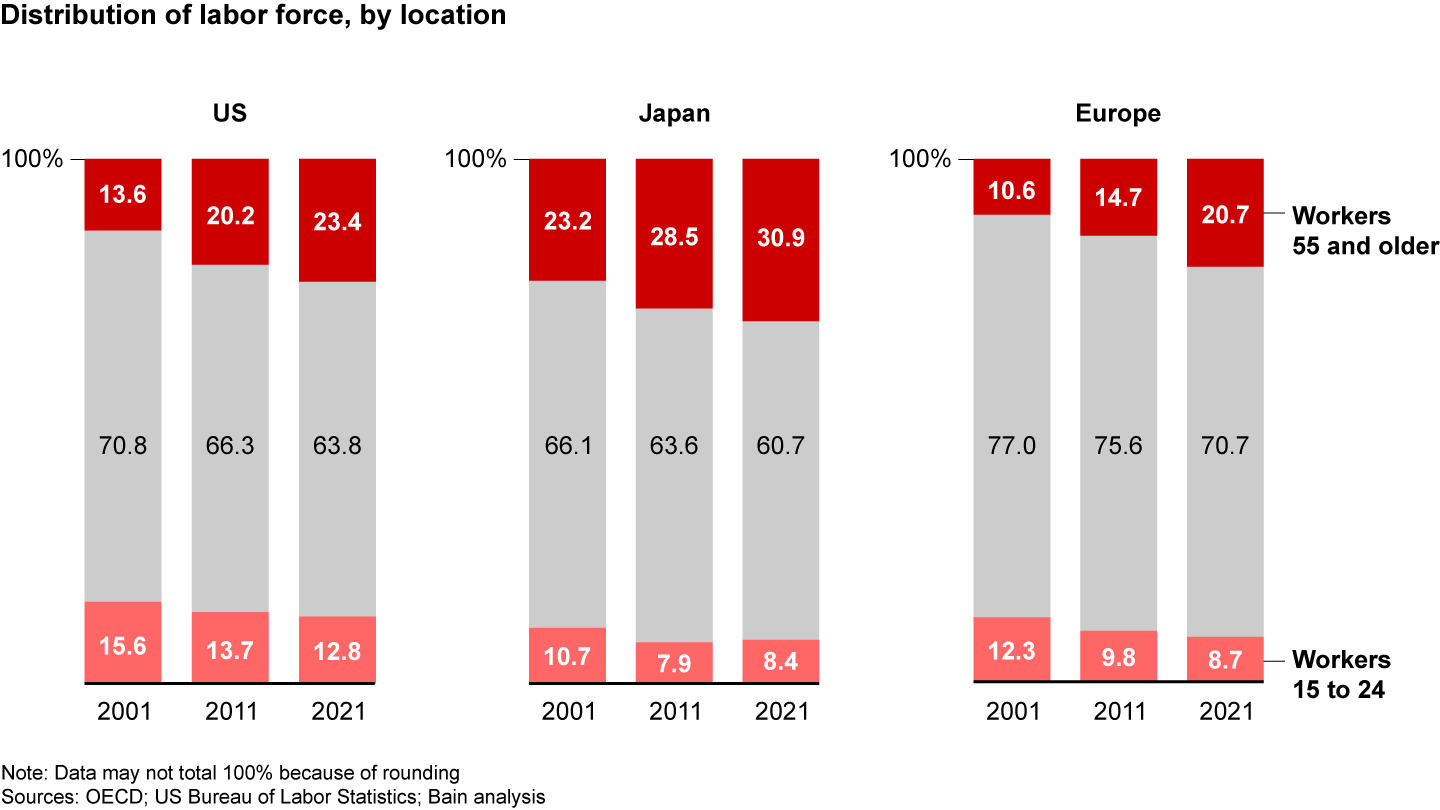
      It’s time to stop the giggles. Populations are aging; work lives are lengthening (see Figure 1). Fewer young people are entering the workforce, due partly to lower fertility rates, partly to longer education (see Figure 2). According to OECD data, a long-term trend toward earlier retirement is slowly going into reverse. The UK increased its retirement age from 60 (for women) and 65 (for men), first by equalizing genders, then pushing both up to 66, and with a plan to move up further over time. Prior to a recent increase in the retirement age from 60 to 61 and higher in future years, the Japanese government struggled to push the official retirement age up, leaving firms to often solve the problem by releasing workers at 60 and rehiring them on new contracts, often at reduced pay rates.
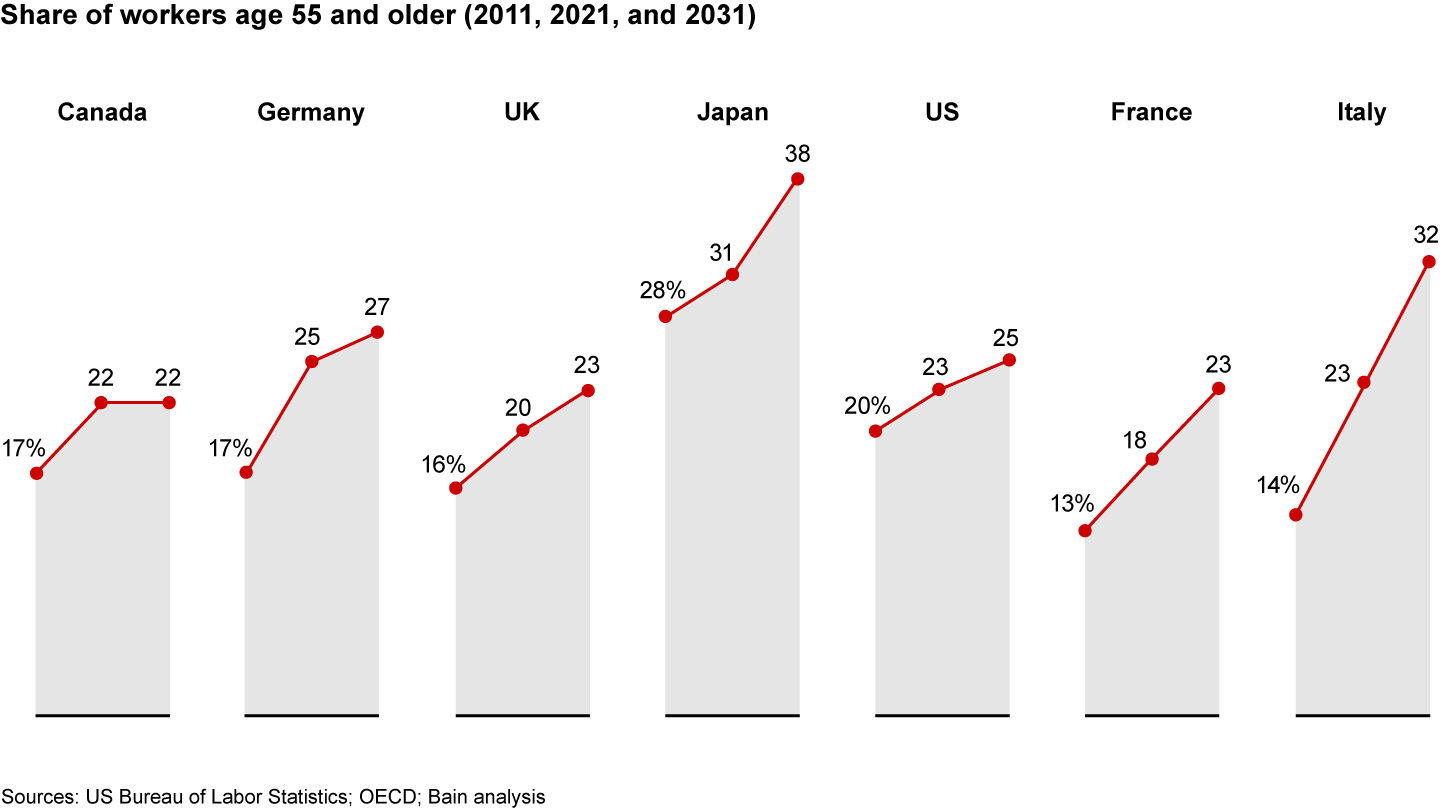
      Figure 1
      In the Group of Seven, older workers will exceed a quarter of the workforce by 2031
      Figure 2
      As older people have worked longer over the past 20 years, the share of young workers has declined quickly

      Some 150 million more older workers by 2030

      In the Group of Seven countries, workers age 55 and older will exceed 25% of the workforce by 2031, nearly 10 percentage points higher than in 2011, according to Bain analysis. Japan is the extreme case. By 2031, Japanese workers 55 and older will approach 40% of the workforce. According to Gallup, 41% of American workers expect to work beyond age 65. Thirty years ago, it was 12%. Even the spike in retirements during the peak-Covid Great Resignation now looks more like a Great Sabbatical, a blip in the long-term trend data, with a higher percentage of retirees reentering the workforce than in February 2019.

      This isn’t an issue exclusively in developed markets. China’s elderly population (65 and older) will double by 2050. Brazil’s proportion of workers over age 55 is creeping up to the midteens. Globally, approximately 150 million jobs will shift to workers 55 and older by the end of the decade, Bain estimates. That’s not far short of the entire working population of the US (see Figure 3).
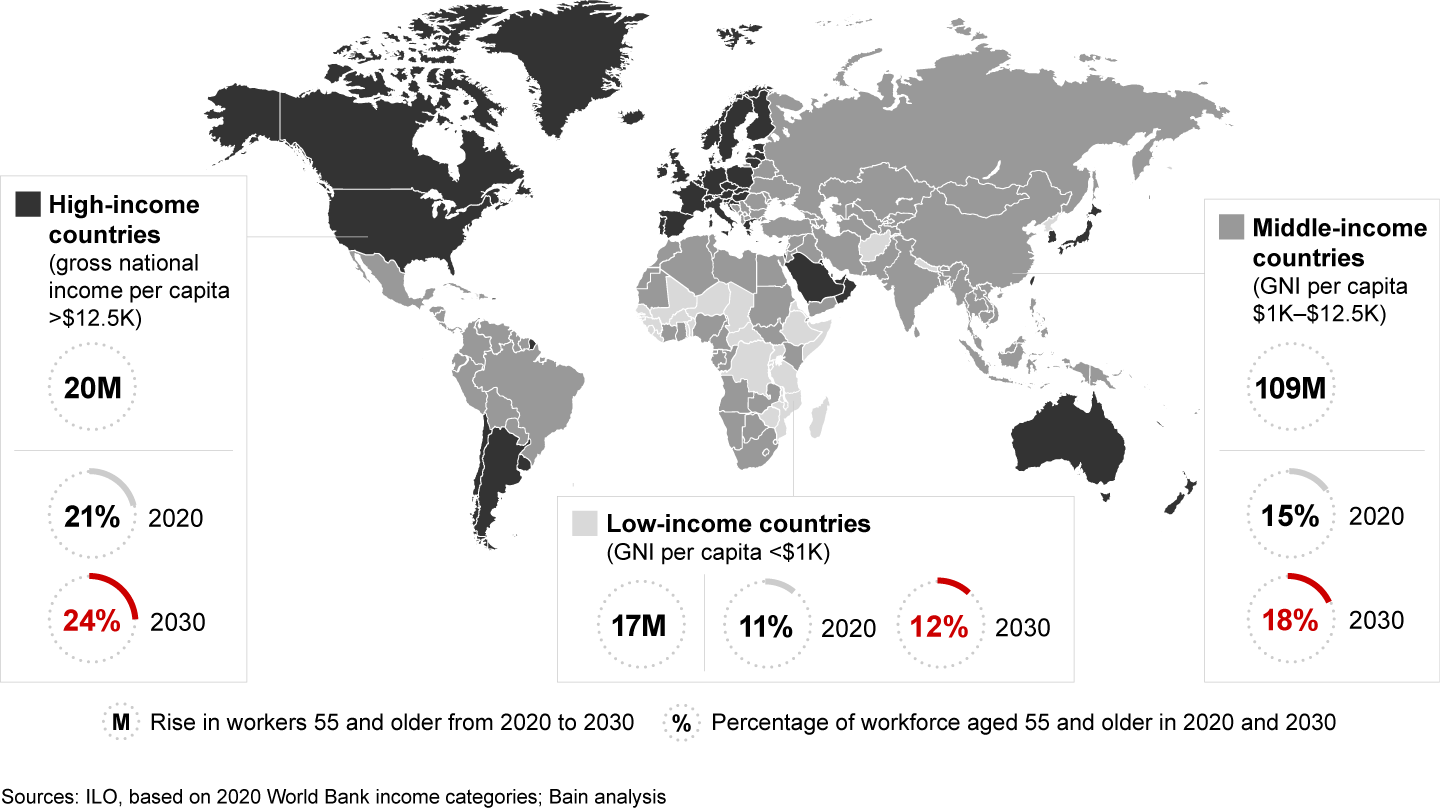
      Figure 3
      By 2030, 150 million jobs will have shifted to older workers globally

      Despite the shift, it’s rare to see organizations put programs in place to integrate older workers into their talent system. In a global employer survey from 2020, AARP found fewer than 4% of firms were already committed to such programs, with only a further 27% saying they were “very likely” to explore this path in the future (see Figure 4).
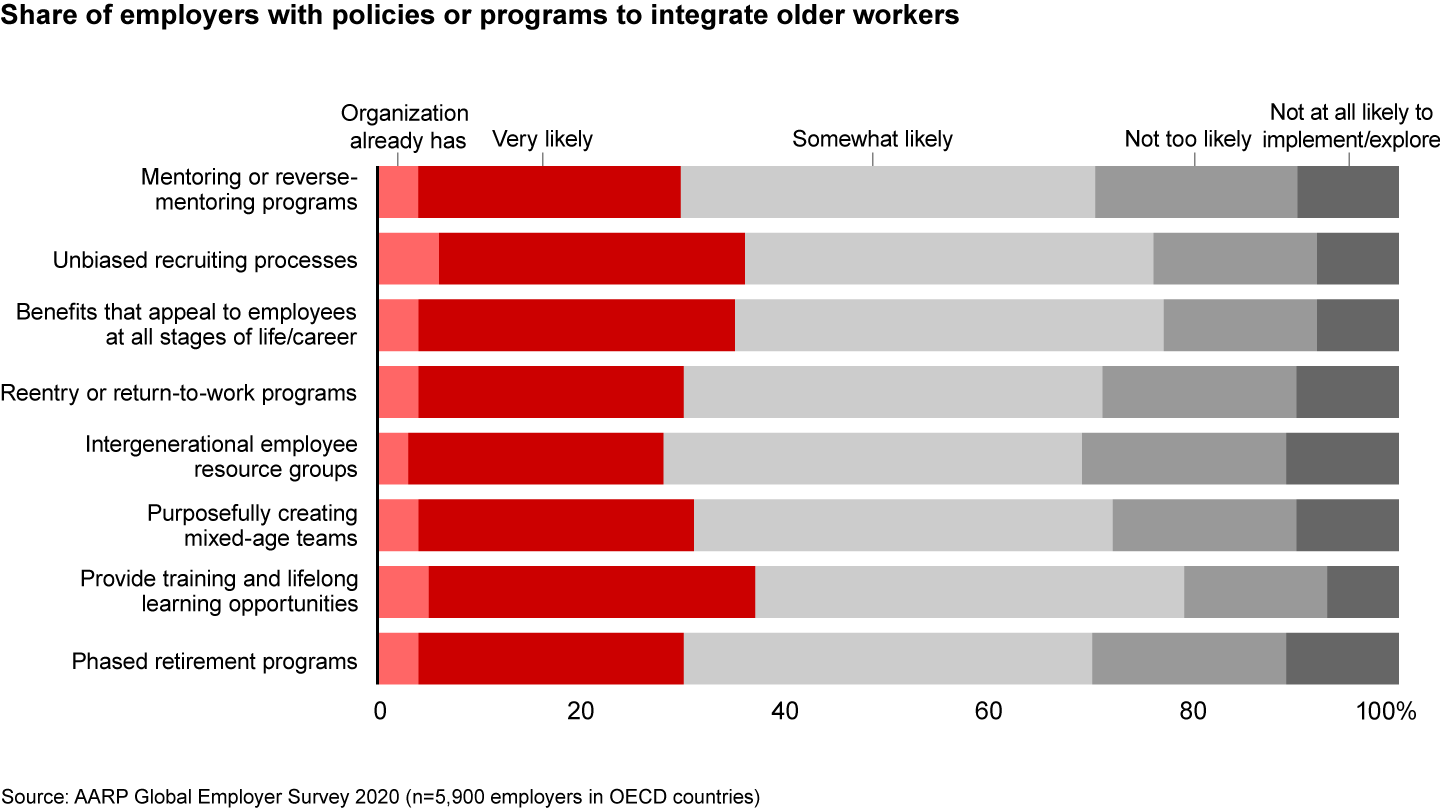
      Figure 4
      Programs to support a multigenerational workforce are rare

      The good news is that, with the right tool kit and mindset, aging workforces can help employers get ahead of their talent gaps and create high-quality jobs that turn older workers’ skills into sources of competitive advantage. There’s persuasive OECD research concluding that age-diverse firms are lower in turnover and higher in productivity than benchmarks. Although this won’t sway everyone, we might add that creating roles for older workers, if your business allows for them, also seems like the right thing to do.

      Let’s acknowledge three challenges before getting to the “how.”

      • Not all jobs are equal when it comes to age diversity. It’s quite easy to picture an academic or a store greeter working deep into their seventies, harder to imagine for a roof repairer or delivery van driver.
      • Not all career changes can be made quickly or easily. After a 30-year career as an accountant, few are going to become research scientists.
      • Not all older workers are the same. Their motivations are their own, so we must not assume older workers fit a single profile.

      Archetypes of older workers

      In our continuing program of research into worker motivations (The Working Future: More Human, Not Less and Working Women and the War for Talent) we’ve heard from over 40,000 workers in 19 countries—across all economic sectors, income groups, educational backgrounds, age cohorts, and job types—about what motivates them to go to work and what helps them thrive when they get there.

      The most striking insight from this research is that practically all of us fall into one of six worker archetypes that reflect our differing motivations at work (see Figure 5, and take our quiz to find which you are).
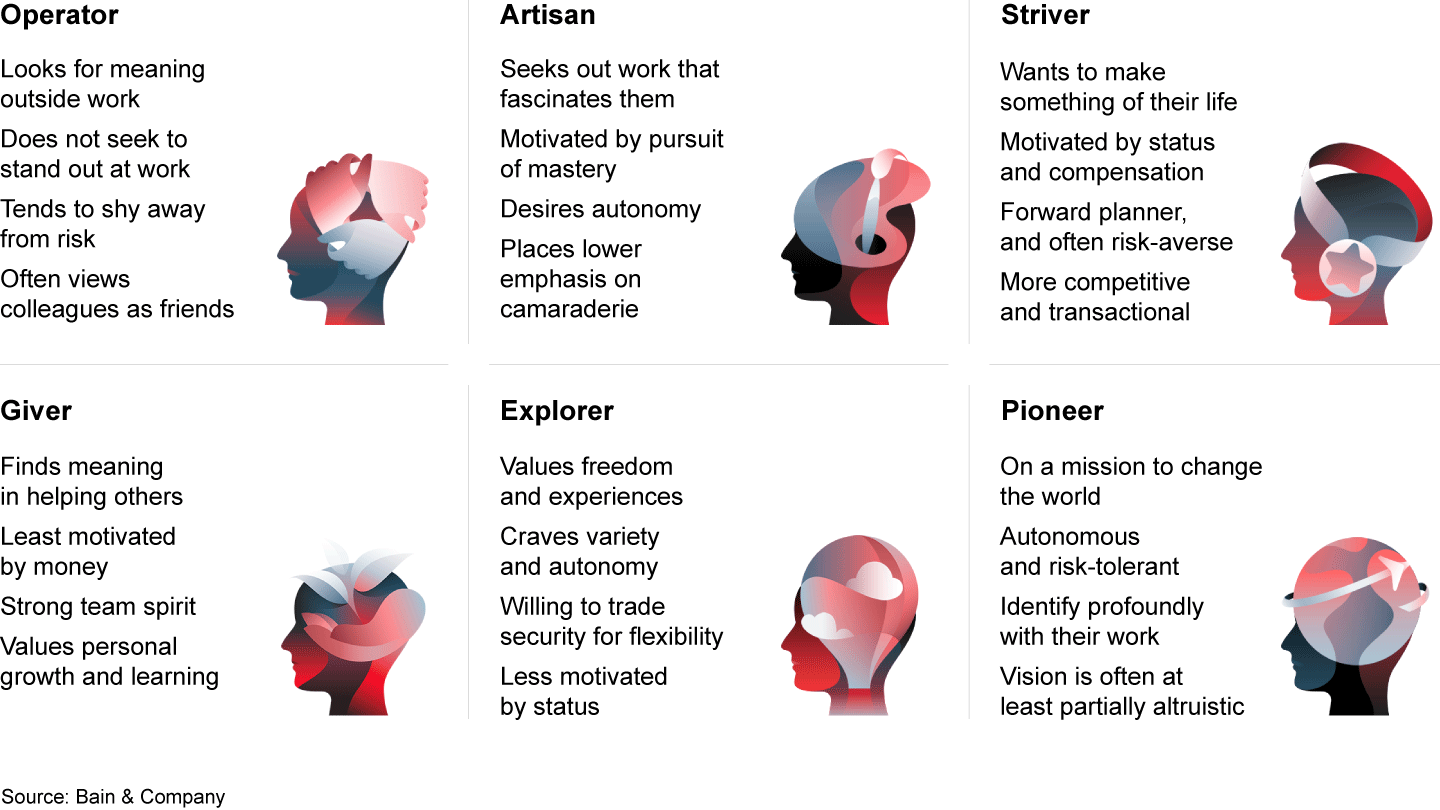
      Figure 5
      There’s no such thing as an average worker, but most fall into one of six archetypes

      In the language of archetypes, there are far more Artisans and Givers in older age groups. Artisans are primarily motivated by mastering their craft. They want to do work that interests them, and they value autonomy. For Givers, work is about service. They feel rewarded by seeing their actions make a positive impact in the lives of others (see Figure 6).
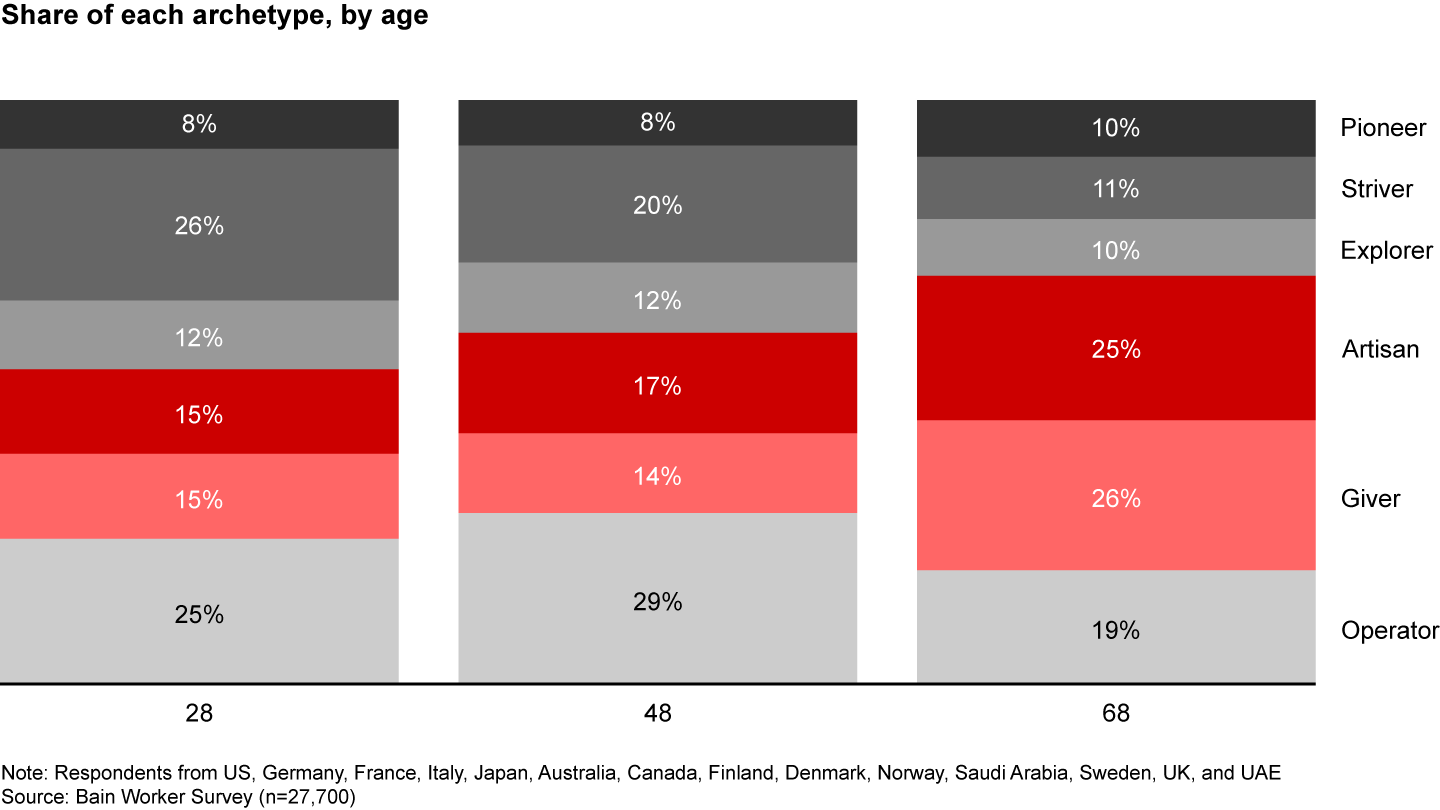
      Figure 6
      As workers age, more of them become Artisans and Givers

      Three steps to empower older workers

      Through understanding the motivations of older workers, both individually and more generally, firms can design their way to success.

      The approach focuses on three clear steps:

      • retain and recruit older workers by understanding what motivates them at work;  
      • reskill them for your next 10 years of capability needs; and
      • respect their strengths and allow them to do what they do best.

      Step 1: Retain and recruit

      Before age 60, the average worker in developed markets is primarily motivated by good compensation. Averages are often misleading, but not in this case. In nearly all developed markets, good compensation is the top priority across archetypes.

      Around 60, there’s a tipping point. Interesting work becomes the No. 1 job attribute, and both autonomy and flexibility significantly increase in importance (see Figure 7).

      Figure 7
      In developed markets, priorities change as workers age; interesting work, flexibility, and autonomy grow in importance

      While good compensation drops in relative importance for the workers over 60, it’s still the second-most-important attribute. A former CHRO at a very large tech firm put it this way, “Older workers and younger workers do want many of the same things, like fair compensation and flexible work arrangements, but [they want them] for different reasons.”

      The increasing desire for autonomy and flexibility at work is often expressed in efforts to control hours. Far more older workers now say they plan to reduce their working hours in preparation for retirement than a generation ago.

      Managing the transition to fewer hours might come through working part-time, self-employment, or doing freelance work. Our research shows a very significant increase in these forms of employment among the 55-and-over age group, compared with those in midcareer (see Figure 8).
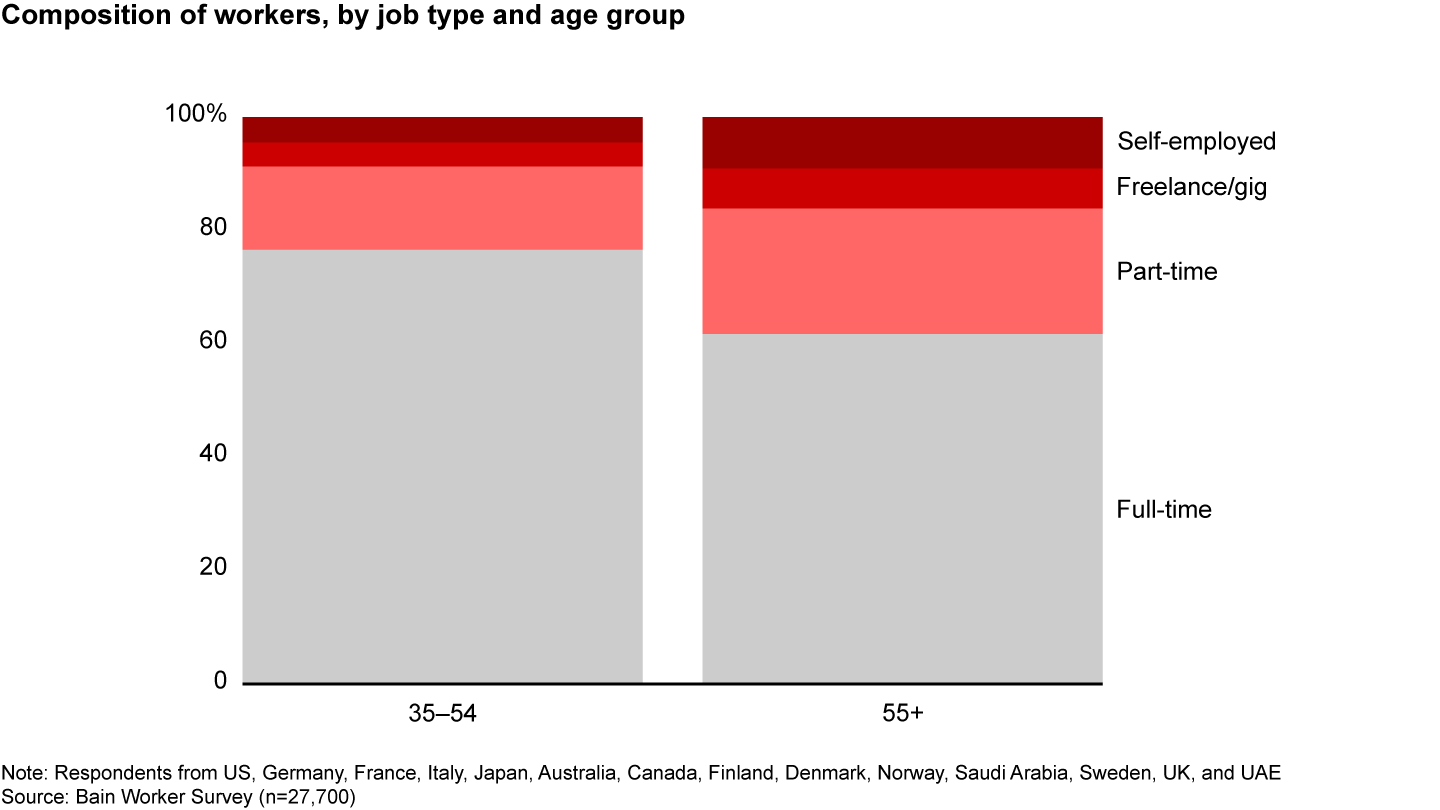
      Figure 8
      The share of part-timers and self-employed workers rises as retirement approaches

      Some companies have adapted their talent programs to meet the different needs of older workers. Home Depot was early to see the opportunity. It partnered with AARP in the United States back in 2004 to recruit and train workers 55 and older. Just a few months after launch, 11,000 older workers had applied, and more than 1,000 positions were filled.

      Mitsubishi Corp. created a Career Design Center exclusively for employees age 60 and older, offering custom training, job matching, and individual consultation services for senior workers. Tokyo Gas has its Grand Career System with similar objectives, for all employees over 50. The program provides career development support, training, and one-on-one mentoring. As a result, more than 90% of Tokyo Gas workers facing mandatory retirement were rehired by the company or its subsidiaries. These two examples are about designing roles suited for an older worker while still recognizing the intrinsic motivations of each individual.

      The National Institutes of Health in the US actively recruits people looking for a second career, often ex-military and ex-academia. As of 2013, nearly half of the NIH workforce was over 50, and older workers there say they feel revered. The NIH has been recognized as one of the best places for older workers for their flexible work policies, opportunities to mentor younger colleagues, and health programs.

      In a 2014 article, The New York Times described CVS Health’s Snowbirds program allowing several hundred pharmacists and others who live in cold climates (mostly the Northeast US) to relocate to warmer states for the winter. It didn’t just retain their older talent; it also matched the demand swing as some customers follow the same temporary migration path.

      Step 2: Reskill

      Older workers attach surprisingly little importance to learning and growth (see Figure 7). Just 3% of those aged 55 and over rate learning as their top motivator, compared with 8% for 18- to 24-year-olds. Some believe they’re already fit for the work, with 29% of the 55-to-64 group saying they don’t need new skills. However, 22% of people in this age group say they do need more tech skills.

      It’s true that older workers don’t get invited to training programs as much as younger colleagues, but in the US at least, more than half are offered training every year (see Figure 9).
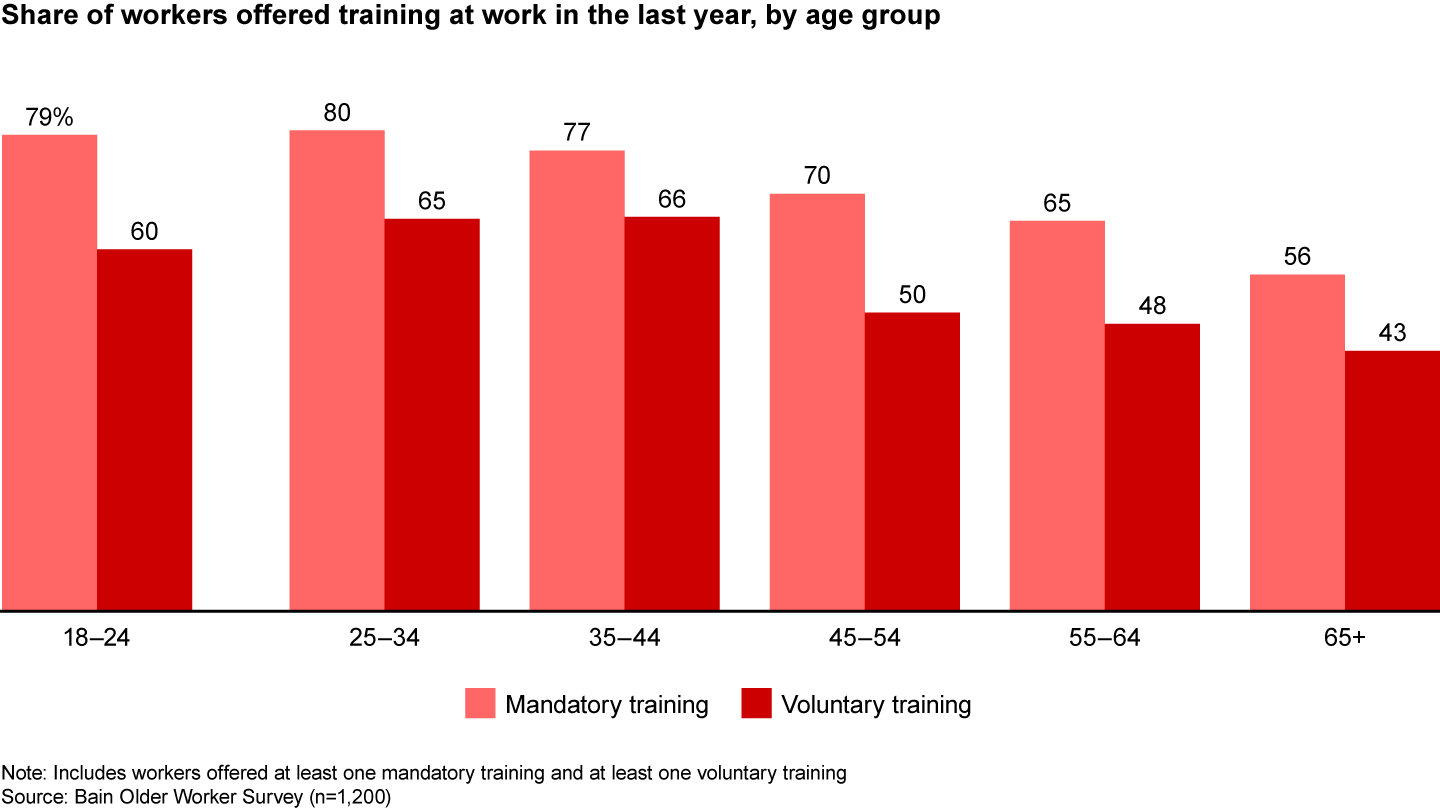
      Figure 9
      In the US, older workers are offered training less often

      Both workers and employers need to shift their thinking on retraining. The absence of a growth mindset in an older worker might make them a weak candidate for employment extension. But companies need to design programs that appeal. Older workers are motivated to participate when training helps to accelerate their pursuit of interesting work. Encouraging supervisors can also be an important motivator of participation of older workers (and workers of all ages).

      There are success stories. Global technology firm Atos launched a program in 2021 to bridge the skill gaps of its 21,000 employees over the age of 50. Employees have to set goals and decide what courses, certifications, and training would benefit them—all provided free. Atos also calls on its “tenured talent” as instructors in the programs.

      The Digital Skills Ready@50+ program developed with support from Google.org (Google’s charitable foundation) and the AARP Foundation is a philanthropic response to one of the most obvious skill gaps. Google’s $10 million grant to AARP for this program, which started last year, will provide training to 25,000 people age 50 and older who are low-income, particularly targeting women and people of color.

      Step 3: Respect their strengths

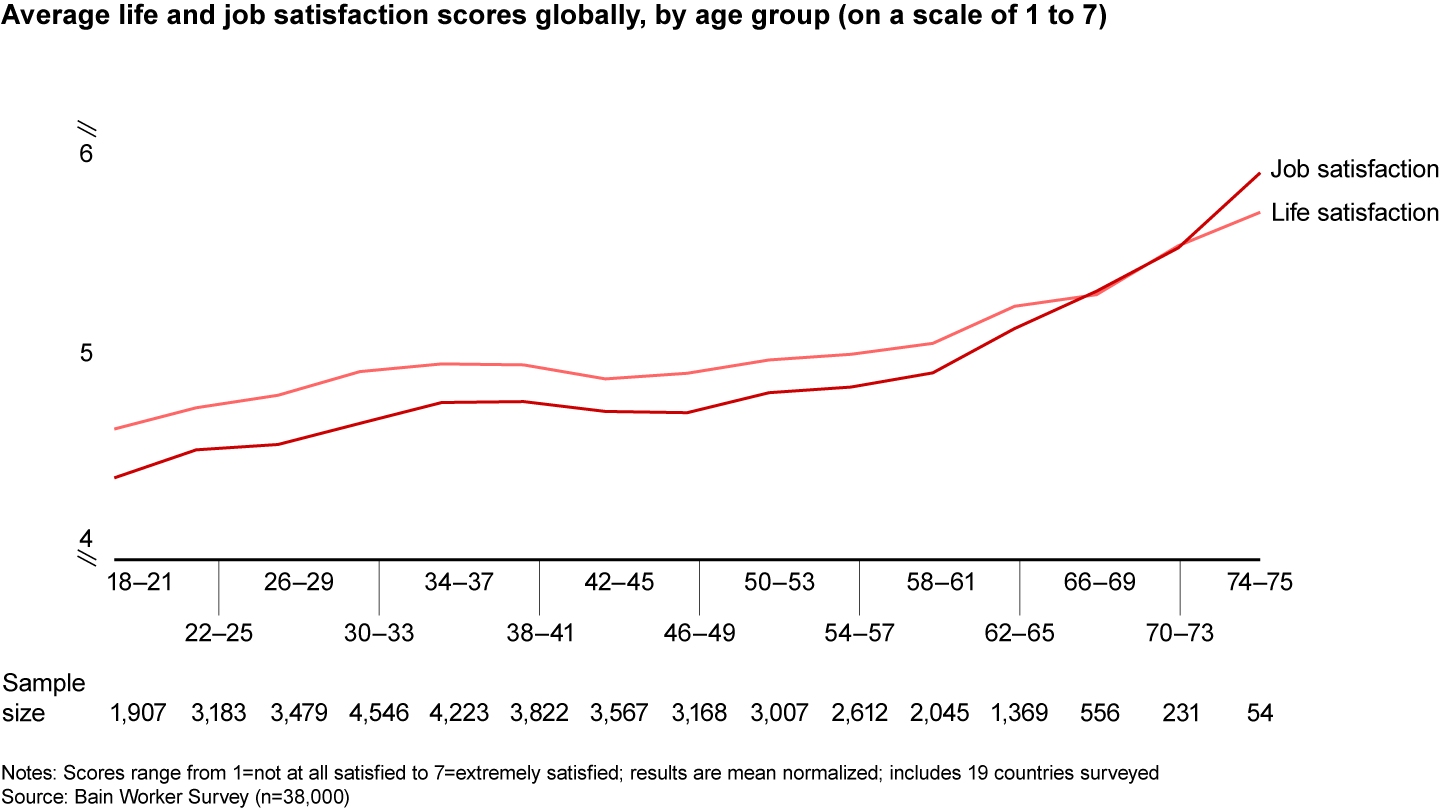
      Older workers tend to be more loyal to their employers (see Figure 10); they also tend to be more satisfied at work, and with life in general (see Figure 11). The Givers like to mentor. The Artisans set high standards of mastery for those around them. Giving space to older workers to bring their unique benefits to the workplace can strengthen your culture for everyone.
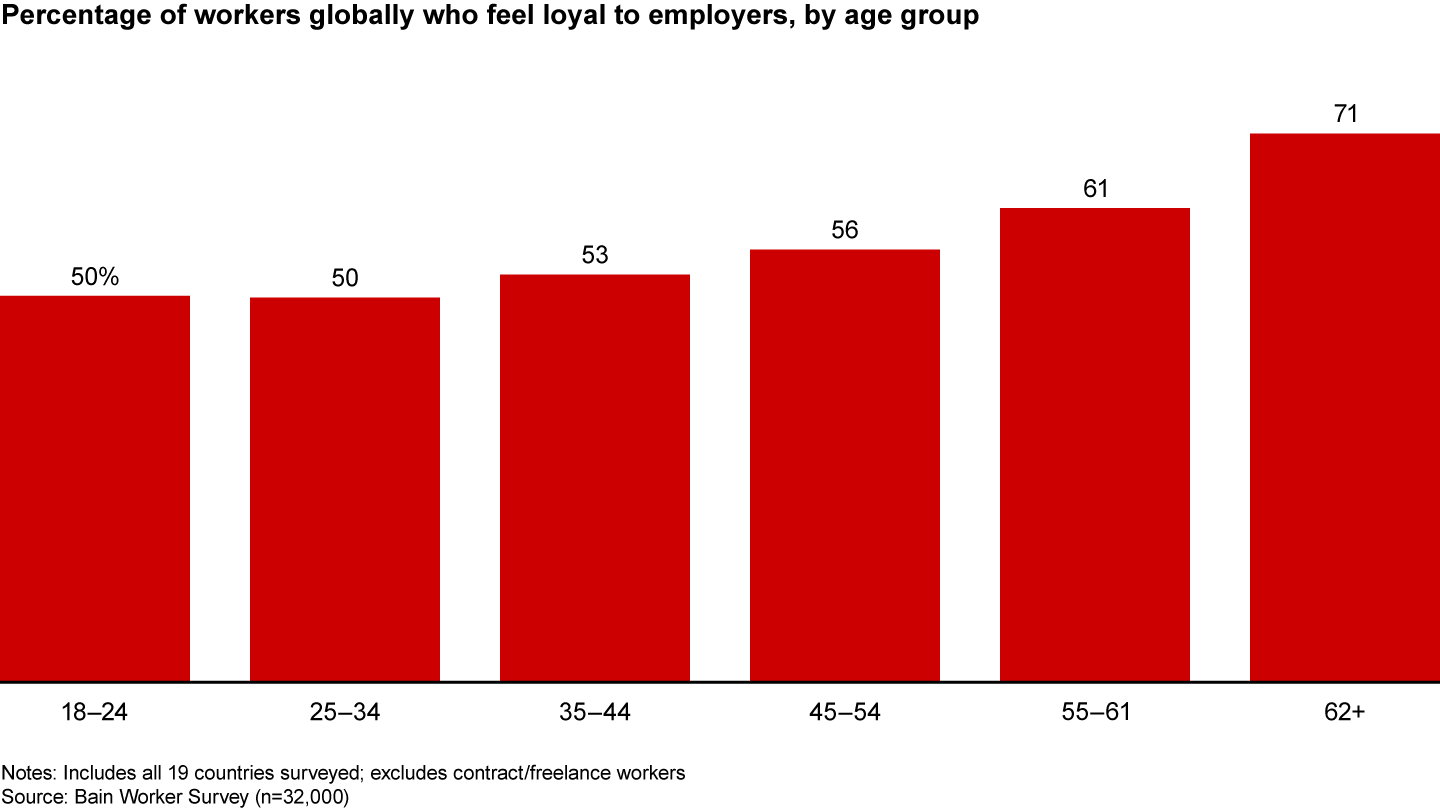
      Figure 10
      Globally, older workers feel more loyal to their employers
      Figure 11
      Around the world, older workers are more satisfied at work and in life

      BMW has considered the physical toll on assembly workers, and in 2007 made ergonomic adjustments that helped older workers and improved overall productivity by 7%. In addition to those improvements, BMW’s Senior Experts program sees retired workers return to the company part-time, to share their expertise with younger colleagues. This checks all the boxes for a certain archetype of older worker: autonomy, flexibility, helping others succeed.

      Marriott designed its Flex Options program offering new roles for 325,000 older associates that are less physically taxing.

      Allianz has gone all in. Starting with the simple facts about their workforce age profile, the financial services company took an inspiring view of age inclusion across the five generations at the firm and built multiple programs, under the Allianz Engage banner, to help each generation thrive on its own terms.

      * * *

      The uncomfortable truth is that age-related work discrimination is widespread. Demographic reality will catch up with that attitude soon enough. And when it does, those firms that invest in recruiting, reskilling, and respecting the strengths of older workers will not just solve a part of their talent gap problem, they’ll create a workforce that’s more productive, more balanced, more diverse, and more loyal than the one they have today.

      • Acknowledgments

        The authors would like to thank the following team members for their contributions: John Hazan, Eric Almquist, Karen Harris, Neelima Jain, Shreyas Raj Krishna, and the Bain Futures team at the Bain Capability Network.

      Auteurs
      • Headshot of James Root
        James Root
        Associé, Hong Kong
      • Headshot of Andrew Schwedel
        Andrew Schwedel
        Associé, New York
      • Mike Haslett
        Alumni, Perth
      • Nicole Bitler
        Alumni, Silicon Valley
      Contactez-nous
      Expertises fonctionnelles transverses
      • Diversity, Equity & Inclusion
      • Leadership & Talent
      • Macro Strategy
      • Organisation
      • Stratégie
      The Working Future: What Type of Worker Are You?

      Six worker archetypes can help business leaders understand the messy world of individual personalities.

      Voir plus
      The Working Future: Six Worker Archetypes for the World Ahead

      There’s no such thing as the “average” worker. Understanding six archetypes can help firms build an effective talent strategy.

      Voir plus
      Stratégie
      More Human, Not Less: Insights On The Future Of Work

      Five identifiable themes are reshaping work today. They point to three steps every executive should take to stay ahead in the war for talent.

      Voir plus
      Macro Tendances
      Tariffs: The Next Chapter

      Companies need to rebuild their strategies for a world in which the free movement of goods, capital, IP, and people cannot be taken for granted.

      Voir plus
      Macro Tendances
      In an Era of Tariffs and Turbulence, Four Moves That Matter

      Understand your exposure. Understand your competitors’ exposure. Adjust your pricing and supply chains accordingly. Repeat as necessary.

      Voir plus
      First published in juillet 2023
      Mots clés
      • Agenda du CEO
      • Diversity, Equity & Inclusion
      • Leadership & Talent
      • Macro Strategy
      • Macro Tendances
      • Organisation
      • Stratégie

      Comment nous avons aidé nos clients

      Stratégie A Bold New Strategy Restores a Bank to a Leadership Position

      Lire l’étude de cas

      Organisation A Video Game Company Levels Up With a New Operating Model

      Lire l’étude de cas

      Organisation A global manufacturer's reorganization restores high profits

      Lire l’étude de cas

      Vous souhaitez continuer cette conversation ?

      Nous aidons des dirigeants du monde entier à matérialiser des impacts et des résultats pérennes et créateurs de valeur dans leurs organisations.

      Les points de vue de Bain : notre perspective sur des problématiques auxquelles sont confrontées les entreprises à travers le monde, envoyés chaque mois dans votre boîte de réception. 

      *J’ai lu la politique de confidentialité et j’accepte les conditions.

      Merci de lire notre politique de confidentialité.
      Bain & Company
      Contactez-nous Sustainability Accessibility Conditions d’utilisation Politique de Confidentialité Cookie Policy Mentions Légales Sitemap Log In

      © 1996-2026 Bain & Company, Inc.

      Contacter Bain

      Comment pouvons-nous vous aider ?

      • Business inquiry
      • Career information
      • Press relations
      • Partnership request
      • Speaker request
      Voir tous les bureaux