

Rapport

En Bref
- A stream of disruptive events is reshaping the business environment through eight major trends, ranging from slower growth of financial capital to more activist governments.
- The effects of these trends will be uneven across markets and industries, raising the value of capabilities around future sensing.
- For most companies, navigating the new landscape will require increased flexibility, along with changes in strategy, financing, and talent.
As disruptions and crises have piled up in recent years, business leaders might be forgiven for wondering, “Are we done yet?” Between Covid-19, inflation, political polarization, the rise of artificial intelligence (AI), wars in Ukraine and the Middle East, and recession fears across many countries, the macro environment is more uncertain than it has been for decades. Worse, traditional economic indicators seem to have lost their predictive power.
Yet it is worth recalling that while previous eras with similar disruptions, such as the 1970s, were unsettling to live through, they ushered in some remarkable business success stories. In the face of even more intense turbulence and uncertainty, a new round of major business gains will hinge on companies understanding how their world is changing and how they must adapt.
Shudders from a confluence of structural changes
Our new world will be shaped by both structural and cyclical changes in the macro environment and in business. The structural forces are well known but underappreciated in the magnitude of their combined effects. Consider changes in technology, which are occurring across a range of areas at an exponential rate. The usage and computational power of generative AI is growing even more rapidly than the capabilities of microprocessors under the longstanding rule of Moore’s Law.
While technology advances, so does the buildup of carbon and climate stress. Fortunately, carbon emissions have plateaued and even started to decline in developed nations. However, the demands of transitioning away from carbon while meeting the world’s growing energy needs will continue to stretch natural resources, resulting in more volatile markets and contributing to domestic and global tensions.
Financial markets, too, face profound change as debt burdens reach levels that historically have proved to be unsustainable. In recent years, low interest rates eased these debt burdens while inflating a broader range of asset bubbles as global financial capital has more than tripled over the past three decades to roughly 10 times global GDP. Now, the current environment, with both higher inflation rates and higher real interest rates that are expected to remain elevated, will likely reverse this dynamic.
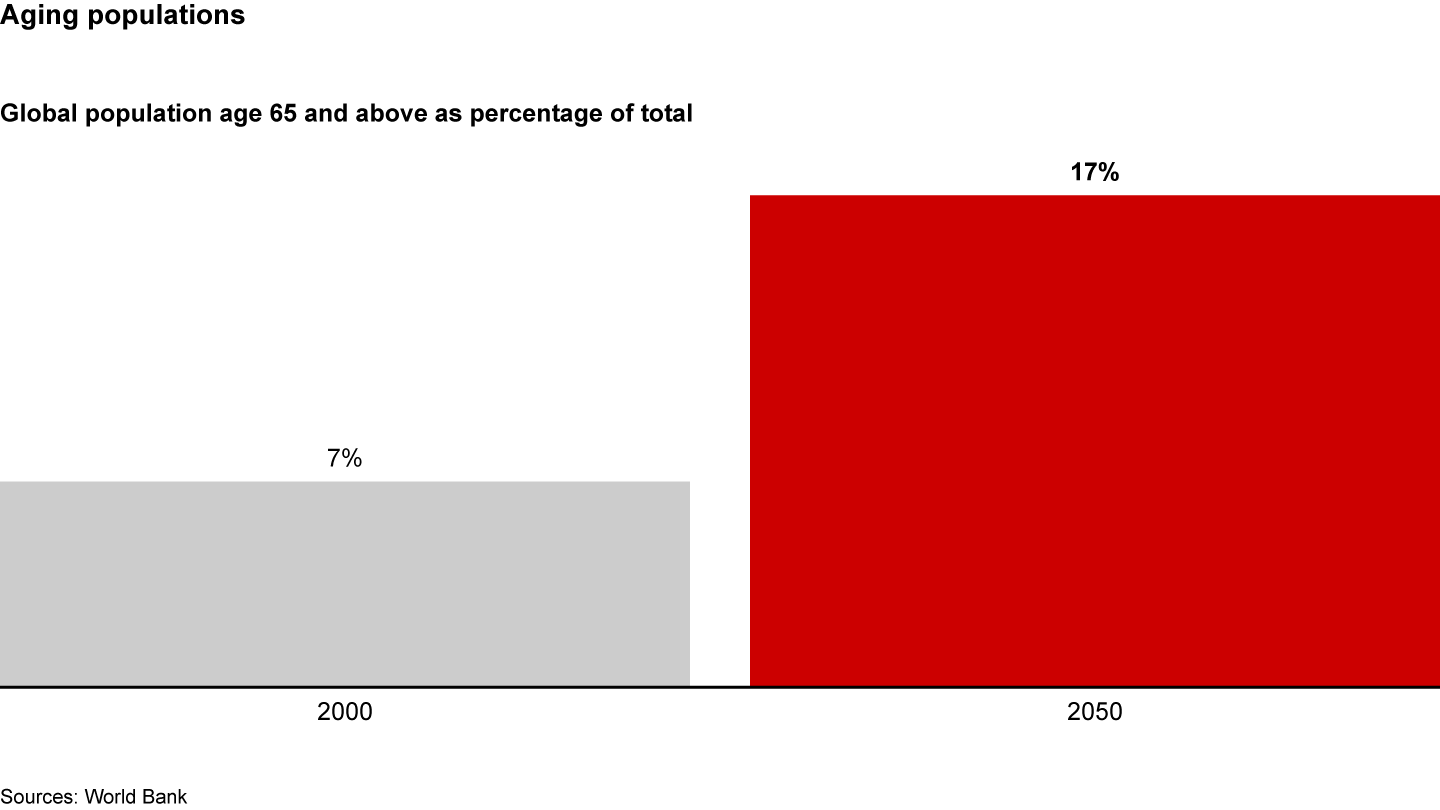
One big driver of the steady rise in public debt, for instance, has been aging populations in many developed and developing countries. As populations age and shift from net savers to net consumers, global capital formation will slow even as demand for investment increases. Older workers’ share of global jobs will increase by 150 million by 2030, as overall workforce growth shrinks and goes negative in many markets (see Figure 1).
Figure 1
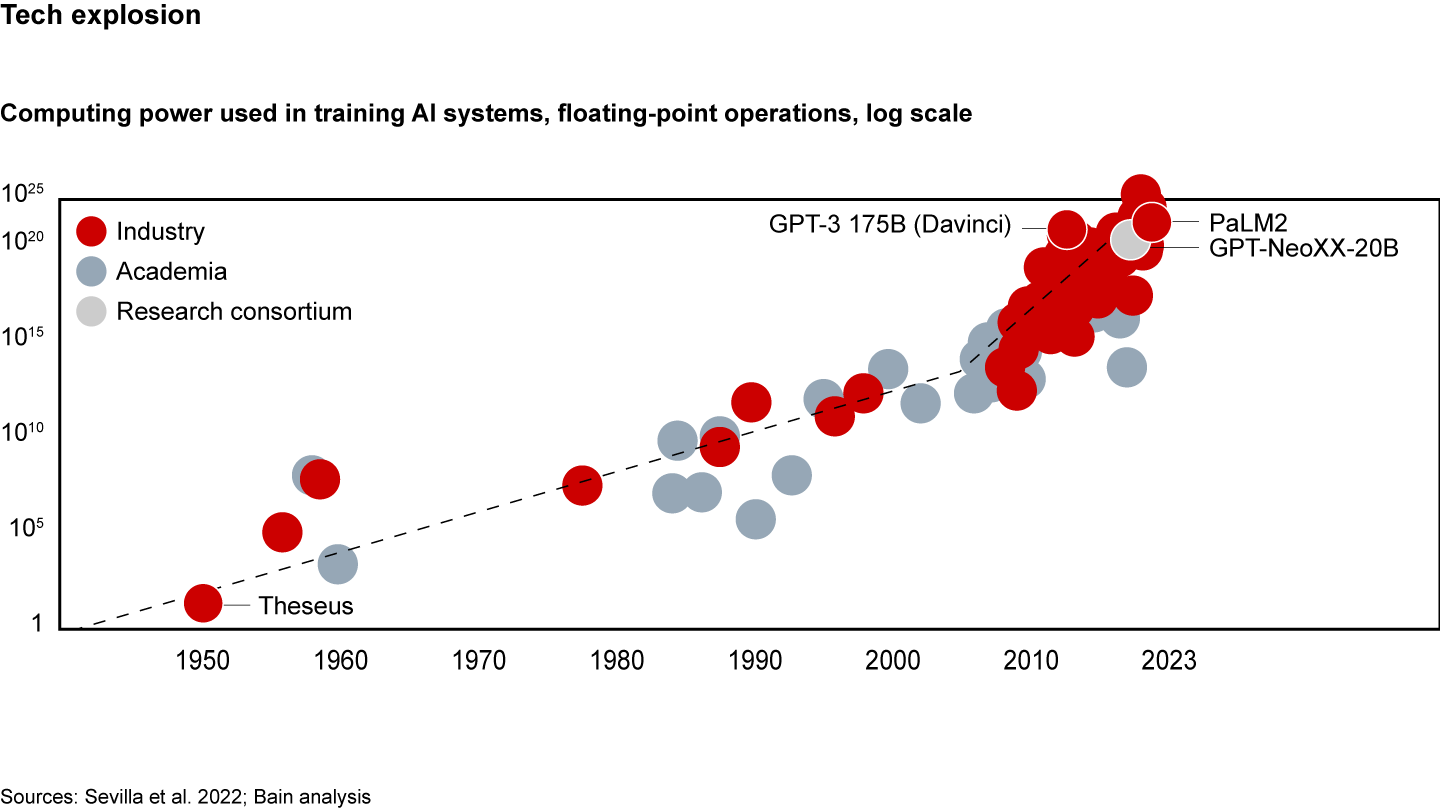

Figure 1
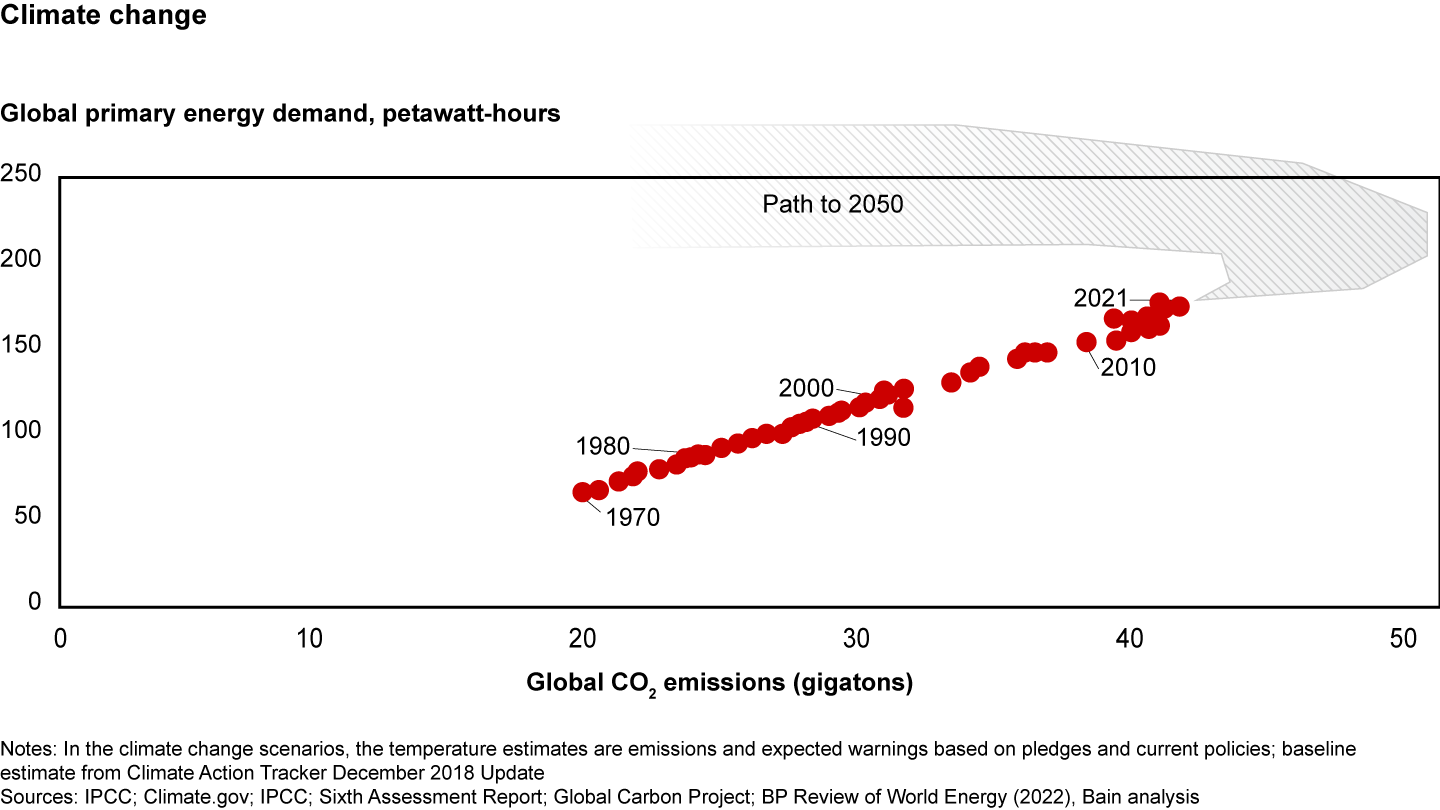

Figure 1
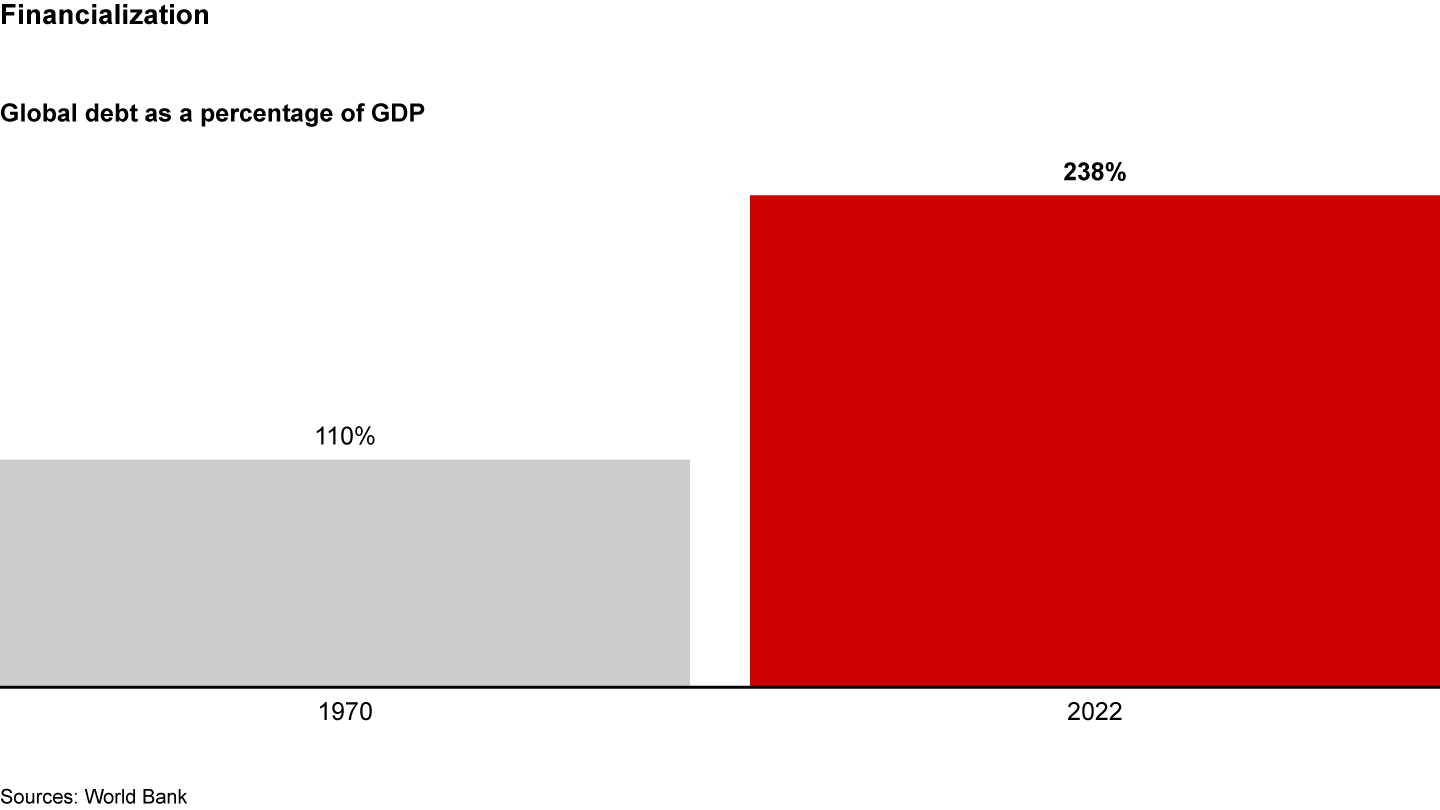

Figure 1

This collision of forces has generated eight major trends that will reshape the business environment over the rest of this decade and beyond (see Figure 2):
- Artificial intelligence: power and peril
- The dual challenge of decarbonization and energy provision
- Post-globalization
- Capital rationalization
- Rehumanizing work
- Waving goodbye to the invisible hand
- Twin focus on bytes and bricks
- Seeking community among fragmented experiences
Figure 2
Many of these themes connect with and reinforce each other. For example, capital rationalization may be more severe in a post-globalized world with more fragmented capital markets. While the themes touch every industry, they show up in different ways across different sectors and markets. On the policy front, AI, energy, and trade regulation vary greatly among countries. On the social and political fronts, fragmented agendas and disconnects between elite and mass public opinion dominate. Consumer segments are increasingly fragmenting and evolving in ways that have little overlap. Higher costs of capital will increase the relative cost of renewables and low carbon energy sources. Taken together, these themes will likely define a multispeed world, with each theme playing out very differently across industries and markets.
What does all this mean for business leaders? We see three imperatives to navigate the coming turbulence.
An earlier, clearer view of the future
First, the combination of greater macroeconomic volatility with shorter and less synchronized business cycles demands an increased emphasis on “future sensing.” This has always been important, but in stable periods, conditions do not change as quickly and planning assumptions may stay relevant for longer. Developing a view of the future is tricky, but companies get an early read on emerging trends by focusing on the right signals to monitor, including patent filings, investment flows, and job creation. Based on a retrospective analysis of more than 200 trends, we see three typical patterns in how they progress: gradually, as with streaming video or telehealth; catalyzed, such as blockchain or remote work; and virally, as with non-fungible tokens or e-scooters) (see Figure 3). The sequence of leading indicators can vary across different trends, so it is important for companies to track a wide range of sources and incorporate diverse perspectives from within and outside the firm.
Figure 3
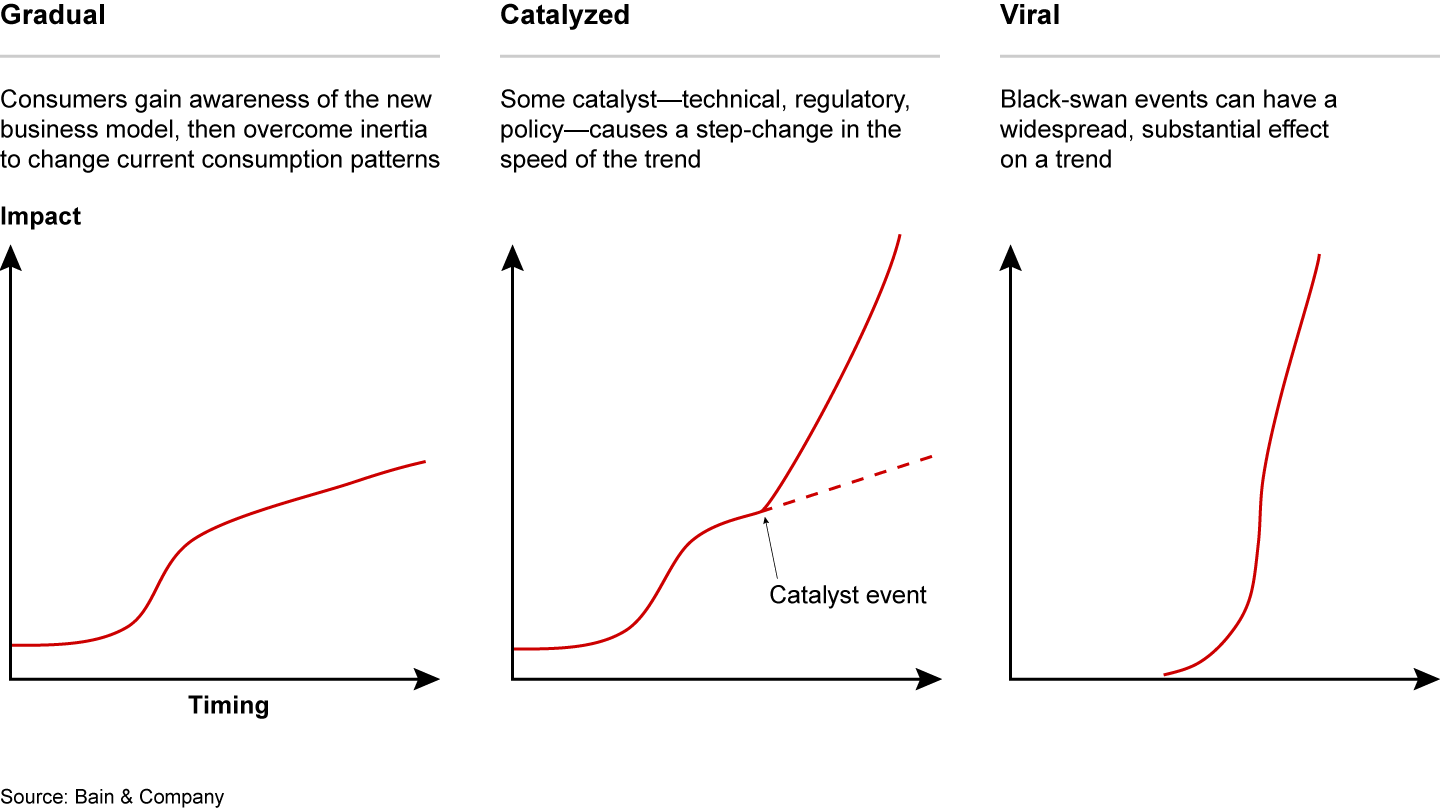

Tracking signals in this way can help firms plan for a range of plausible but extreme scenarios, along with a menu of strategic options—from no-regret moves that would be robust in any scenario, to options and hedges against the different scenarios, to a handful of big bets where management has conviction. This in turn helps address not only the uncertainty of what might happen but also when, allowing firms to start preparing now even for developments that might not play out for several years.
The gold standard for this sort of long-range planning has been practiced by large energy companies, which need to make multibillion-dollar bets that play out over decades. In recent years, we have seen divergent paths taken by European oil and gas giants, which have invested heavily in renewables to speed the energy transition, and their US counterparts, which have taken a more balanced approach. While the US energy companies have fared better from a market perspective so far, both paths may prove viable and appropriate given local market dynamics.
More government intervention, at multiple levels
This raises a second imperative: getting closer to the decisions and thinking of governments and other public sector stakeholders, especially in the home market, as the state gets more involved in market affairs. The goal here involves observing the momentum of greater demands on business from all corners of the political spectrum. While culture war issues have captured the lion’s share of attention to date, emerging battlegrounds will intensify around core economic issues such as labor practices and worker protection, anti-trust, and tax and subsidy policies.
Increasingly, these battles will be fought at the local and multilocal level rather than globally, engaging with a broader range of stakeholders pursuing often divergent agendas. In turn, companies will have to fine-tune their activities to local conditions and the political landscape. Throughout the globalization era, multinational corporations were the apex predators of the business world, building global scale by integrating more and more parts of the enterprise. While global scale and breadth of capabilities will still hold sway in many industries, large parts of a company—from operations to data to talent and even funding—may need to be designed in a modular way to allow for redundancy and separability if required.
Companies such as Uber and Airbnb have embodied the multilocal approach, with tailored leadership and regulatory engagement in different cities and regions. In recent years, they have taken this even further by shifting their business models. In India, for example, potential Uber drivers can lease vehicles from a financial partner, which both expands Uber’s driver base and helps diversify corporate income streams.
Many energy companies are accustomed to local engagement. Duke Energy, a US utility, invested in a multiyear stakeholder process focused on the state of North Carolina’s transition to clean energy. Duke Energy worked with government officials to shape legislation to better serve its clients, helping to pass a bill that enabled utility-owned renewables and creating a pathway for the state to reduce its greenhouse gas emissions 70% by 2030.
Supply-demand mismatches for financial and human capital
A third imperative concerns financial and human capital. As demand for investment surges and global capital formation and mobility slow down, securing the right forms of capital from the right investors at the right cost will become more difficult. The recent rise in interest rates alone has changed the equation on how to balance current profitability and future revenue growth. In a world where the cost of capital was less than 6%, as in much of the past 15 years, future revenue growth was up to three times more valuable than current profits; at 9% cost of capital, the value of profits today will be the same as that of future growth, and at 12% cost of capital, the value of profits today will be five times that of future growth. While the eight trends highlighted above will offer enormous value creation opportunities, investors will have the power to be more discerning about what they fund and more demanding about the rigor of business-building capabilities required.
Sources of funding will probably become more globally dispersed and less geographically mobile, particularly if multipolar economic blocs follow global politics– that is, countries that are political and military allies also start concentrating their economic ties to those allies. These funding sources will also become more diversified by type of institution, as traditional financial intermediaries retrench in the face of increased regulatory requirements (banks now control only about 40% of financial assets held by all financial institutions globally, and only 20% in the US) and private capital providers fill the gap. Flexible capital models such as green bonds, blurring private-public ownership structures, and even vehicles that let investors fund specific projects, such as insurance-linked securities, will likely proliferate.
In this environment, companies will need to devise creative balance sheet options. Leading energy companies, for instance, consider alternatives such as taking a development fee and transferring the asset to another advantaged source of capital, lowering overall project costs. Oil and gas companies could coinvest with infrastructure funds on lower-risk, lower-return projects; with development banks for projects in emerging markets; or with private capital investors willing to take on riskier, longer-term projects.
Along with financial capital, human capital also faces a growing supply-demand mismatch. Even as AI and other technologies raise the prospect of rapid obsolescence for millions of jobs, the war for talent continues, particularly around specific high-growth skills. To meet this demand, firms will have to get much more creative about maximizing the value of their current talent base, moving from talent taker to talent maker. Besides greater investments in reskilling, this shift will also require looking beyond stated credentials on resumes to identify specific skills that might be leveraged in other settings. AI-enabled skills-mining software is a growing market, as demonstrated by start-ups such as eightfold.ai and investments made by established firms including SAP and Workday.
Much remains uncertain about how these trends will evolve, and no doubt there will be further surprises. Nonetheless, much of what will occur can at least be imagined and to some extent planned for with the right approach to future sensing. Those companies that develop the right capabilities now will be better equipped to anticipate and thus deal with the shocks that materialize.
First published in janvier 2024