

Etude

En Bref
- With traditional routes to raising commercial productivity stalled, some leading pharma firms have found an effective alternative: focusing on the doctor’s overall experience.
- Doctors who give high marks for the experience are far more likely to prescribe the company’s products.
- The practical way to improve the experience is to redesign and manage customer “episodes.” An episode consists of all the activities involved when a customer has a task to complete or a need to fulfill.
- Some leading pharma firms select a handful of episodes to tackle first, based on two dimensions: how satisfied doctors are with the episode, and the effect of the episode on the doctor’s propensity to prescribe.
Pharmaceutical companies find it increasingly hard to deliver growth from their in-market portfolio or through product launches. Categories have gotten more crowded, making market share gains harder to eke out. Price increases, the main lever in markets such as the US, are more difficult to impose. Doctors in many developed countries have been moving away from pharma sales representatives as a primary source of learning about medicines; more than half of US doctors, for instance, restrict access for sales reps.
To try to counter these trends, pharma firms have been investing in websites, mobile applications and other channels, yet these have not created much growth. How, then, can pharma firms create the next wave of frontline productivity, becoming more efficient and delivering growth?
Some leading firms have made progress through a customer-centered approach. The goal is to make each interaction with the company relevant, seamless, hassle-free and even delightful, so that customers truly value the reps and channels as helping them make informed treatment decisions. And the key unit of management to make this possible is the customer episode.
Nitin Chaturvedi, a partner with Bain's Healthcare practice, discusses four steps pharma companies can take to successfully manage customer episodes.
What it means to manage through episodes
An episode consists of all the activities involved when a customer has a task to complete or a need to fulfill. It starts when the need is triggered and ends when the customer believes he or she has met that need. Episodes can range from a single interaction or touchpoint (for a cable company, this could be “I want to download a movie”) to an intricate series of touchpoints spanning weeks (“I want to get broadband installed”). Each episode includes the “front-of-the-house” activities that customers and customer-facing employees perform, plus the “backstage” activities that support the episode.
Leading companies in industries such as cable, telecommunications and banking are already adopting episodes as the most effective way to organize the front line in order to improve the overall customer experience, largely because an episode perspective is more holistic than individual touchpoints. Episodes focus the organization on an end-to-end design of a specific customer need, and they align management and the front line around the customer experience. As a result, they can produce significant growth and cost savings because delighted customers buy more, stay longer, refer the company more to colleagues and often cost less to serve.
How episodes matter in pharmaceuticals
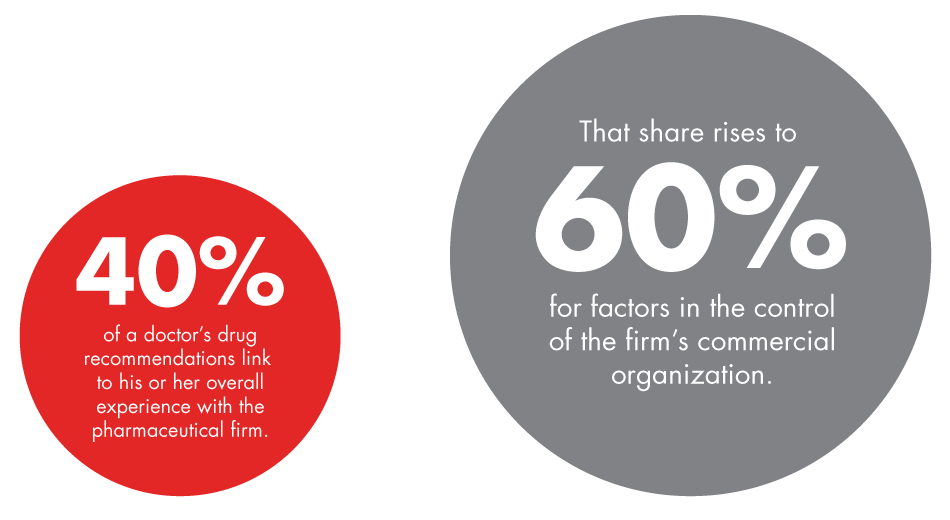
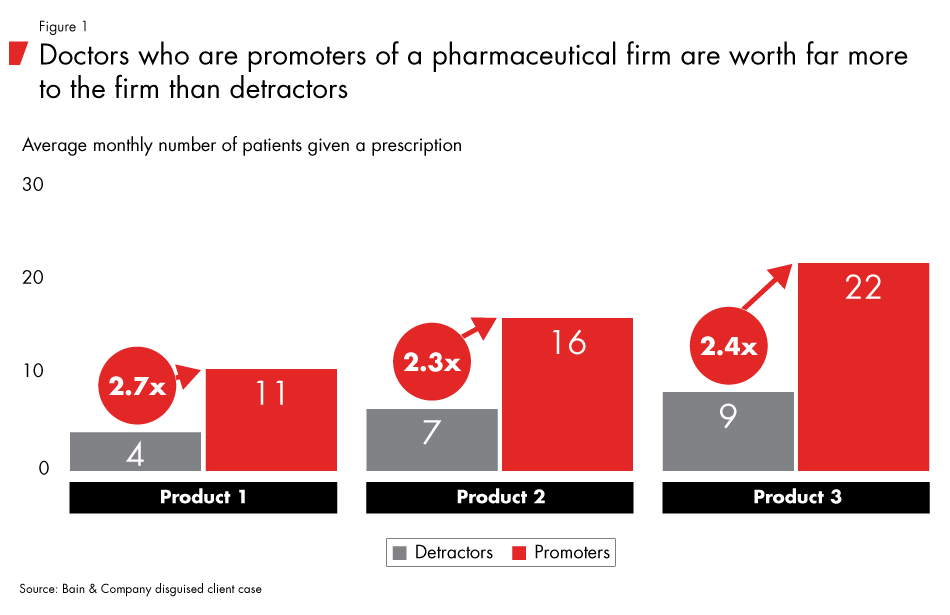
Our work with pharmaceutical firms shows that about 40% of a doctor’s drug recommendations are linked to how effectively a firm delivers an overall experience, as distinct from product-related attributes such as clinical data. That share rises to about 60% for factors within the control of the commercial organization. Doctors who give high marks for their experience with a company (as measured by a Net Promoter Score®, a key metric of loyalty) are between 2.3 and 2.7 times more likely to prescribe the company’s products than those who give low marks (see Figure 1).
Yet for the industry as a whole, Net Promoter Scores run low, around negative 3 for the average pharma firm, and scores also run low for many individual episodes. It’s not surprising that customers typically do not relish their experience with pharma firms, as the firms have focused mostly on pushing out sales and marketing messages through as many channels as possible.
The industry’s mediocre performance does, however, open a major opportunity for companies that embrace customer experience and then find a way to flow the better experience through to financial results. Specifically, successful episode management in the pharma industry works through four principles.
1. Emphasize episodes with the greatest potential to improve both the experience and business results.
We have identified more than two dozen episodes that doctors find relevant for their interactions with a drug company (see Figure 2). These serve as the foundation for any redesign of the front line.
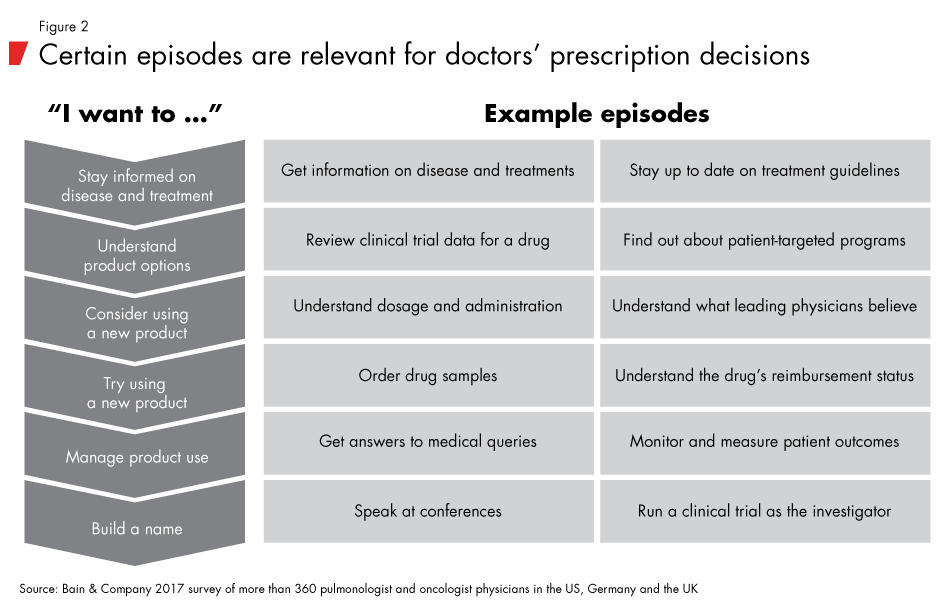
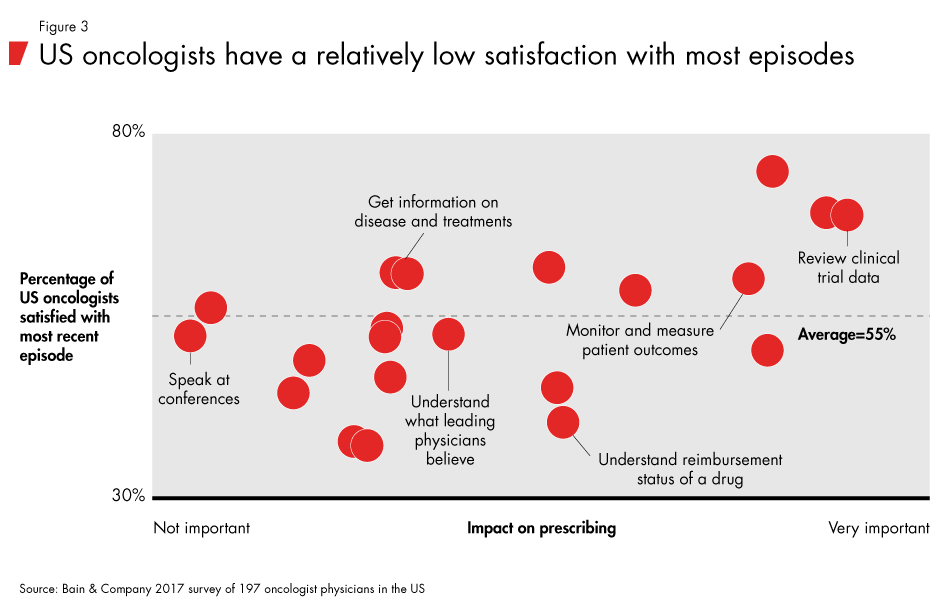
Of course, few companies can optimize two dozen episodes at once, nor should they, given that different episodes figure more prominently for different segments of physicians. Pharmaceutical firms will want to select a handful of episodes to tackle first before moving to the next wave. They should rank episodes along two dimensions: how satisfied doctors are with the episode, and the effect of the episode on the doctor’s propensity to prescribe.
For example, consider how different episodes rate for satisfaction and the impact on prescription decisions among US oncologists (see Figure 3). While “I want to review clinical trial data” is important and delivered fairly well, others lagged. “I want to monitor and measure patient outcomes” and “I want to understand the reimbursement status of a drug,” for example, both have a significant effect on prescribing but get average or poor ratings, respectively. Both are good candidates for redesign.
Some episodes also vary by country and treatment area. For example, “I want to receive samples” matters a lot to German physicians when they are making prescription decisions, while it is irrelevant to their UK counter parts, our survey of pulmonologist physicians finds. Oncologists tend to rank “I need to understand treatment guidelines” much higher than pulmonologists do. Even within oncology, community oncologists give different value rankings than academics, and younger doctors give different rankings than older ones. While some episodes cut across all the groups, the variation on individual episodes offers a route for companies to differentiate themselves. Understanding which episodes to focus on, given a firm’s specific portfolio and geographic footprint, is the start to realizing the full potential of this approach.
2. Design episodes to remove hassles and evoke delight.
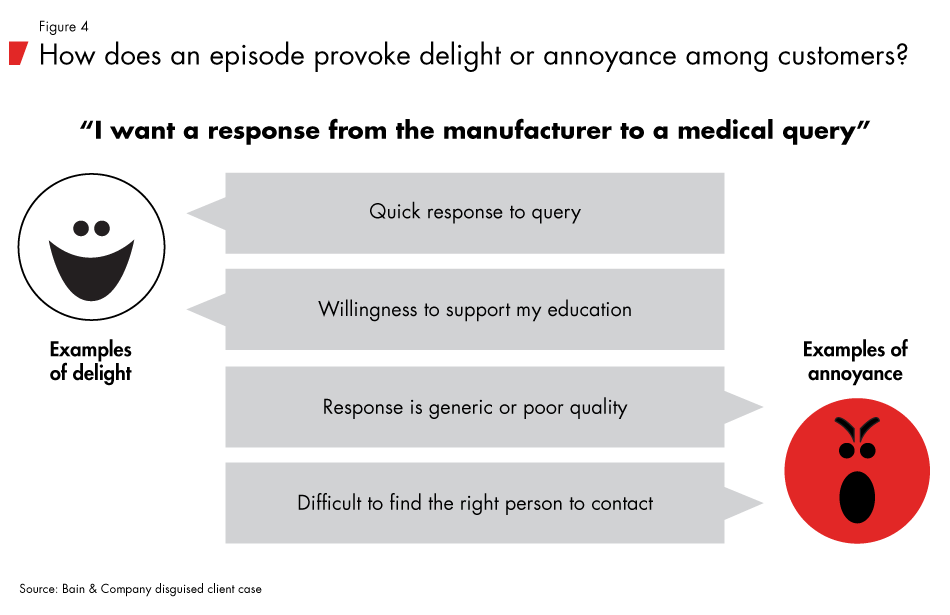
Designing episodes requires a deep understanding of customers’ needs, as well as which aspects of an episode evoke delight and which cause hassles (see Figure 4). Surveys and focus groups provide a surface view, but uncovering deeper insights requires ethnographic methods such as shadowing doctors, asking them to keep diaries and related techniques. The resulting insights allow the team to design an episode that removes hassles as well as introduce moments of delight; the combination of these tactics is what makes for a superior experience.
One global pharmaceuticals firm, for instance, decided to prioritize the “I want to connect with peers to learn about a medicine” episode, after it found that 40% of customers learned about new medicines through their peers. This firm aims to sharply increase the number of peer-to-peer meetings, and identified five areas of hassle and delight in meetings, which when addressed should significantly increase customer attendance, improve the experience and help increase prescription rates.
3. Choose the right channel.
Pharmaceutical firms have expanded their digital channels in recent years to offer a broad array of features. Yet customers have proved to be discriminating in their use of such channels. Our survey shows, for example, that most doctors expect to be able to submit a medical query to a company online, but they prefer to connect with peers in person. And different customer segments often have different channel preferences within the same episode. For example, older oncologists prefer to use online courses more than the youngest ones do, perhaps because the convenience factor of coursework at home matters more to a doctor with children.
These examples highlight the importance of devising a multichannel mix that meshes with customer preferences. One common area of vulnerability is the handoff from one channel to another within an episode—say, a doctor making a request online or through a sales rep to meet with a company’s medical science liaison. If that handoff gets botched or delayed, the entire episode could be tainted. Attention to handovers thus should be a key element of redesigning the episode.
4. Close the loop with customers.
Sales reps and other frontline employees tend to be measured and motivated by product sales, with limited data on how they perform at the episode level, or how to improve delivery of an episode. How do episode teams know whether they’re making progress or moving backward? They can use a Net Promoter Score, which tracks customers’ perception of an episode by asking a couple of questions about the episode and the company, and then obtaining more detailed comments from a smaller sample of customers.
Customer feedback goes to the relevant employees and supervisors, including the episode team, so that they can learn what does and does not work, change behaviors accordingly and follow up with customers. At regular huddles, teams can discuss the feedback, share learnings, escalate issues that cannot be resolved locally and follow up with select customers. The richness of customer feedback, distilled the right way, will also fuel an outer loop of improvement. This outer loop aims to identify major issues and root causes of problems and strengths, which typically involve multiple functions and departments. Management can deploy resources to address these systemic issues and make structural improvements that benefit the overall experience.
Orchestrating the episode approach
Putting the customer experience at the heart of global pharmaceutical operations is not a trivial endeavor. Companies already must manage a complex cube in which multiple functions (IT, medical, sales) are trying to provide cost-efficient and consistent services to support scores of individual country operations delivering multiple products across multiple franchise areas to a broad range of customers (doctors, nurses, practice and formulary managers). Maintaining a focus on customers is tricky enough in the current cube, and shifting to an episode approach adds new challenges.
For one thing, frontline innovation does not work when conceived by the corporate center, but instead flourishes when experimentation happens locally. Yet local experimentation is difficult to support when pharma firms have organized to reap the benefits of globally consistent models. Even if local experimentation could be accommodated by the center, local and global teams are not accustomed to Agile iteration; they’re used to linearity in processes such as clinical trials.
Assuming a company can orchestrate successive waves of local experimentation, it will need to codify and spread the best results in order to harness the benefits of a global model. Without consistency of episode approaches and methods, a firm will experience fragmentation and even anarchy.
Therefore, to reap the benefits of global scale and consistency across all markets, as well as local experimentation, pharma firms will need to develop new capabilities, new ways of working and a dual-track model. Executives should keep several points in mind as they pursue or consider an episode approach:
- Empower episode teams to cut through the cube and standard long compliance and IT approval processes, and to continually test and learn.
- Ensure that senior and country leaders make episode work a high priority, and step in to break functional barriers.
- Focus the program on the few episodes that matter, and roll them out in waves. This is far more practical than changing an entire operating model at one time.
- Mobilize small, cross-functional teams based in the countries, which can innovate using Agile methods. Design minimal viable solutions that can be launched in three to four months.
- Streamline the process of sharing best practices across the organization, and provide central support as required.
- Realize that creating a great customer experience entails a multiyear, iterative journey, rather than a series of brief pilot programs.
Episode design and management has proved successful with forward-looking firms in several industries that are focused on creating an exceptional experience for customers. Pharma firms can learn from those experiences and make their own strides in delighting customers and thereby improve loyalty and advocacy. Further, the episode approach opens up an avenue for productive growth, which has proved so elusive in recent years.
Rafael Natanek, Jason Evers, George Eliades and Gilbert Grima are partners with Bain & Company’s Healthcare practice. Sumit Sahni is a partner with Bain’s Digital practice. The authors are based, respectively, in London, Chicago, San Francisco, Zurich and London.
Net Promoter®, Net Promoter System®, Net Promoter Score® and NPS® are registered trademarks of Bain & Company, Inc., Fred Reichheld and Satmetrix Systems, Inc.
First published in mai 2018