

Etude

En Bref
- While companies race to adapt their strategies to deal with persisting inflation, they will also need to revise their playbooks for the anticipated recession, considering a host of complexities that will make this recession different.
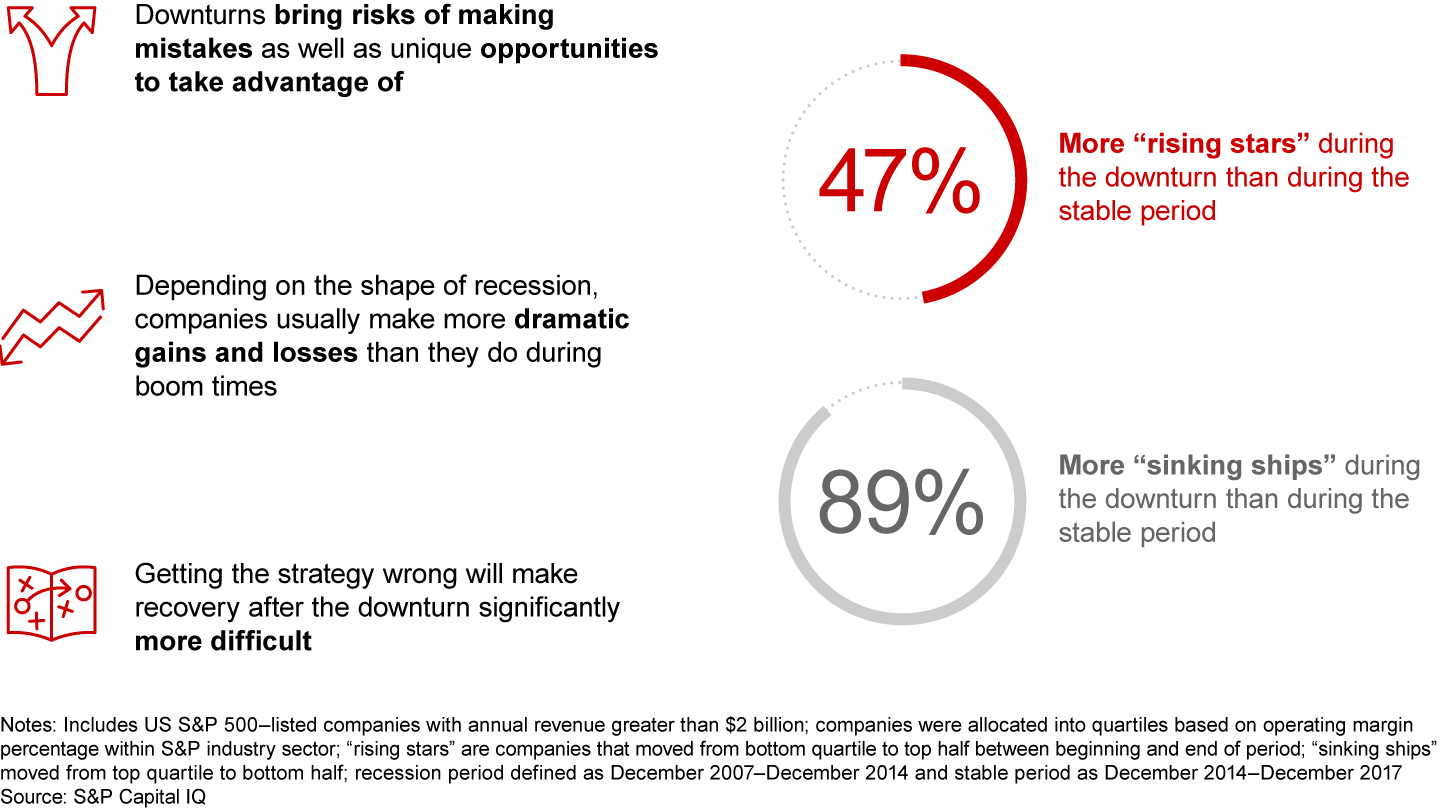
- Our research has found that companies make more dramatic gains or losses during downturns than during stable periods.
- Among the moves that will help companies emerge stronger: surgically restructuring costs before the downturn, diligently managing liquidity and the balance sheet, staying focused on customers, and aggressively pursuing M&A opportunities.
This recession will be different.
It will arrive at a time when decision makers will still be struggling to manage through the onslaught of major disruptions that didn’t all exist simultaneously during previous recessionary periods: supply chain constraints, geopolitical tensions in key markets, a historic labor shortage, the uncertain path of a global pandemic, and the looming possibility that inflation will persist even amid recession, resulting in the first stagflation environment since the 1970s.
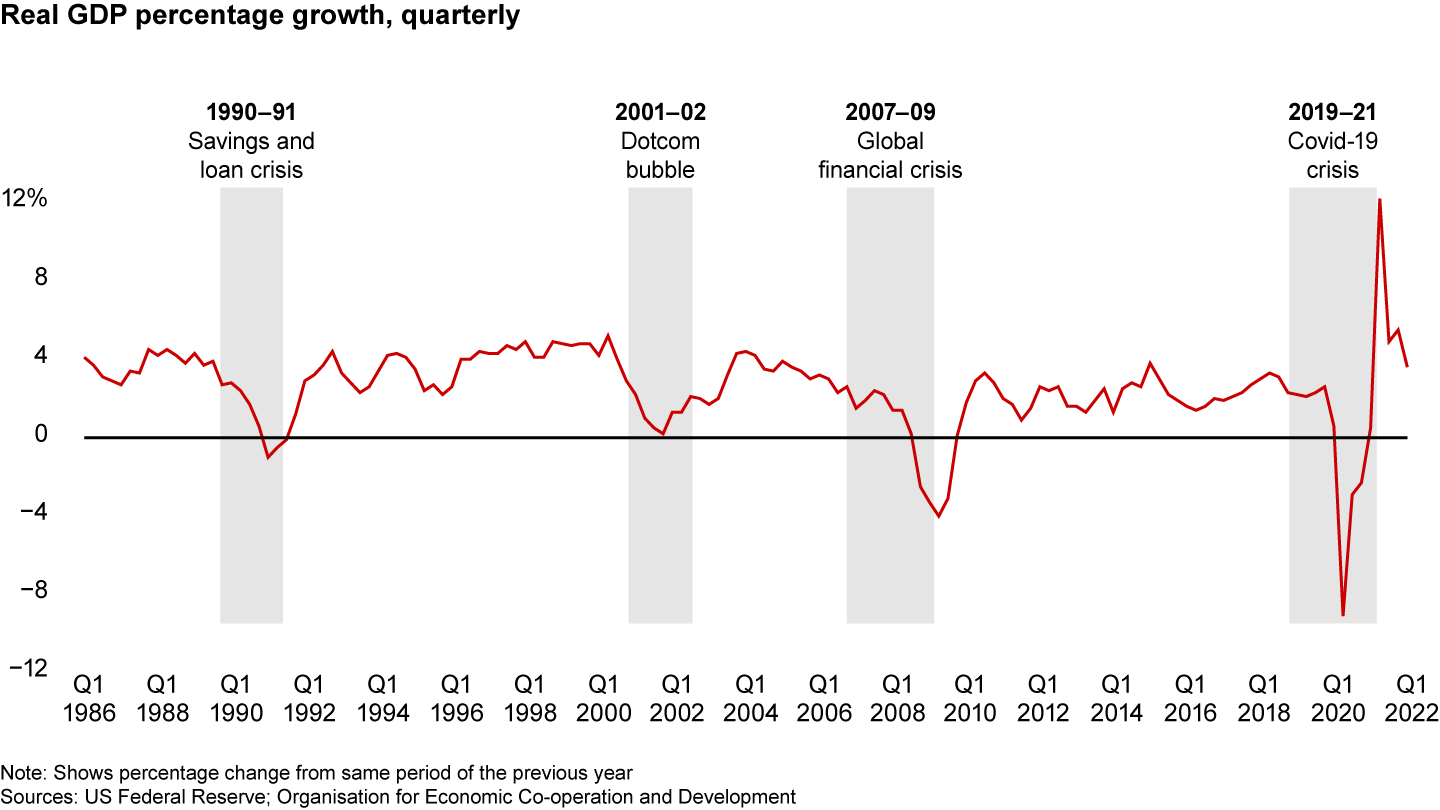
We examined how successful companies are adapting their playbooks for inflation in our recent brief titled “Accelerating Performance Despite Inflation.” Now, companies need to transition that approach to prepare for a downturn—and in a way that reflects what’s different about this pre-recessionary period. Many of the recession plays will be the same moves that are now helping proactive companies get out ahead of inflation. But there are critical nuances and a few important additional plays that will determine whether companies can ride out the recession and emerge from it more successful than when they began. While recessions are inevitable, what’s hard to predict is the timing and depth of a downturn (see Figure 1).
Figure 1

One need only look to past recessions to see what doesn’t work. Companies typically got caught in three traps. Some took a burn-the-furniture approach: Assuming that aggressive, across-the-board cost cutting would get them through the downturn, they slashed R&D budgets, for example, or they cut spending on sales and marketing activities that were key to growth, or they let go of valuable talent and ruled out acquisitions. Other companies made a misguided 'try everything' move, straying from the company’s core by betting on everything in a desperate bid for growth. And some companies simply waited too long before acting, so they were late to the party. The reality is that such a reactive approach is the wrong answer. Our research has found that companies usually make more dramatic and sustainable gains and losses during a downturn than during stable periods (see Figure 2).
Figure 2

What do winning companies do to prepare for recessions? Again, we look at what has worked in the past. They surgically restructure costs before the downturn, trimming the fat and preserving the muscle. They put their financial house in order, diligently managing liquidity and the balance sheet. They play offense by selectively reinvesting for competitive outperformance. And in a key move that enables them to emerge stronger than competitors, they aggressively pursue M&A opportunities.
Companies transitioning from an inflation playbook to a recession playbook must make these moves in a way that also considers the host of complexities that will make this recession different—including the rising cost of capital; the ambitious environmental, social, and corporate governance (ESG) commitments that are now becoming standard practice; and the material shortages that have increased lead times to 70% longer than pre-pandemic lead times.
Here’s what should change and what won’t in the new recession playbook.
Inflation levers to also adapt for recession
Practice pre-recession scenario planning. Scenario planning is as critical to pre-recession planning as it is to inflation preparation. It’s about envisioning different futures and clearly articulating the decisions you would need to make should each occur.
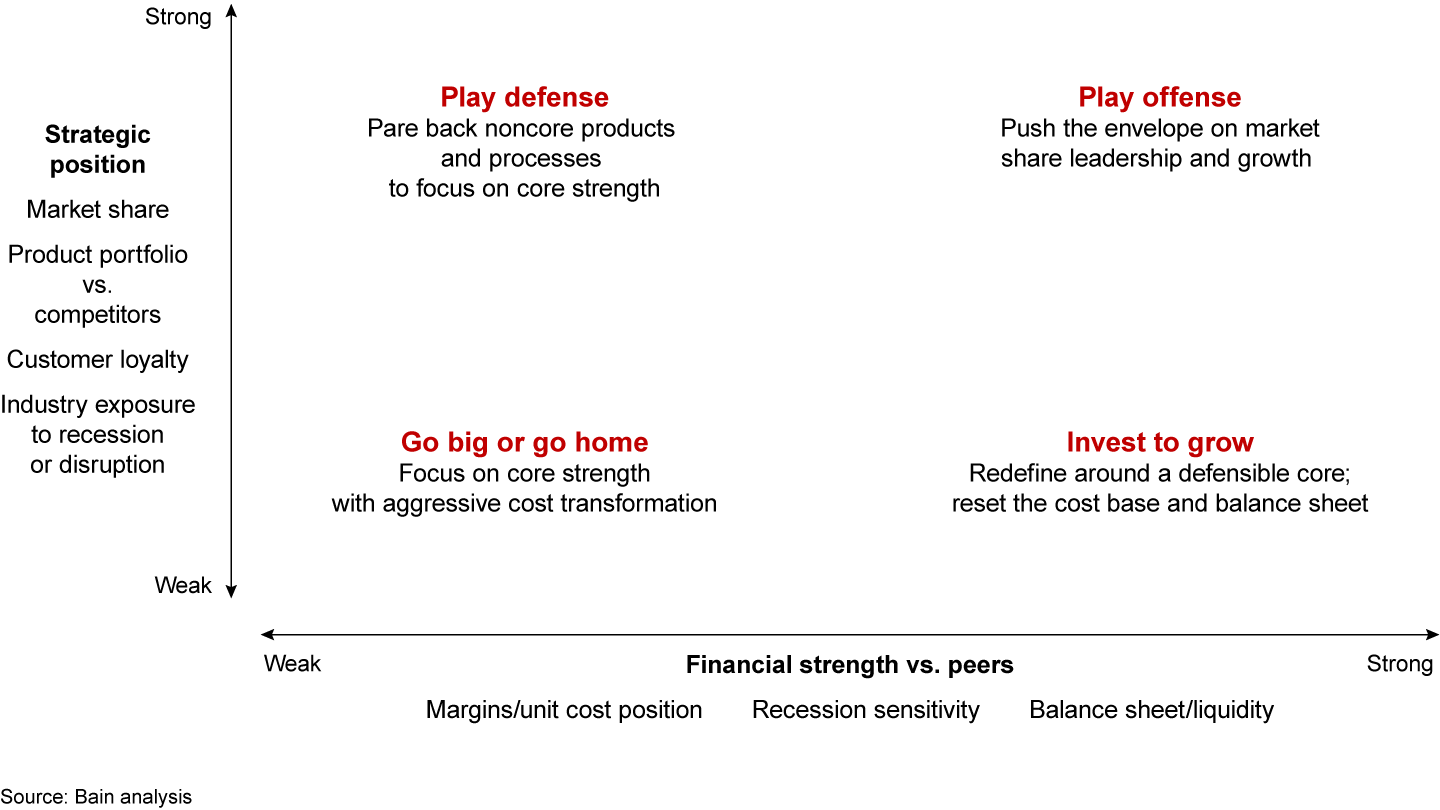
The best companies begin with a realistic assessment of the company’s starting position—namely, how it compares with its competitors in strategic position and financial strength (see Figure 3). That guides the sequencing and emphasis of recessionary levers. It helps dictate whether the company is better suited to play defense by paring back noncore products and focusing on core strengths, for example, or to play offense by pushing the envelope on market share leadership and growth. In the pre-recession context, companies should develop recession signposts and triggers to monitor emerging scenarios, drawing up ready-to-follow steps when those triggers occur.
Figure 3

To support better decision making, a key part of scenario planning involves creating high-resolution visibility on spending and the other key recession response areas. To position for liquidity and potential M&A investments, for example, companies need to strengthen balance sheet management ahead of the downturn. Working capital requirements have increased for many companies because of ongoing supply chain disruptions and rising costs. With the increasing cost of capital, decision makers also are under significant pressure to manage competing capital needs, such as investments to build operational resiliency and continued funding toward committed ESG goals.
Given all of this, it is critical for companies to establish cash management best practices in advance of the downturn. The ability to track the implications of commercial, procurement, and supply chain decisions on working capital and free cash flow gives companies the upper hand in cash management. Companies are beginning to integrate cash flow forecasting into their profit and loss outlooks and scenario modeling, with the best incorporating artificial intelligence and machine learning to build a more robust predictive capability in today’s volatile environment.
Solidify new pricing and portfolio management capabilities. When inflation hit, most companies correctly increased prices to address rising supply costs. By now, many find they have reached their limit on price increases. Should a stagflation scenario occur, in which inflation persists well into the recession, companies would need to get a lot more sophisticated regarding how they approach pricing.
That means replacing broad-based price increases with strategic increases to protect margins that are informed by cost to serve and within the bounds of customer perception. There are a host of potential moves: Exchange price for value, offering other benefits such as volume guarantees, bundled products, or adjusted service levels, for example, or pass on surcharges for customer behavior that causes profits to leak away.
Companies set the stage for more sophisticated pricing when they enhance their pricing capabilities by establishing a centralized pricing center of excellence and by using dynamic price adjustment tools, for example. They also focus on optimizing structural pricing levers, closing the capability gap in other key pricing levers beyond near-term pricing actions.
In the current environment, the best companies will streamline the product offering and optimize mix to mitigate supply shocks and drive growth. These companies eliminate product families and stock-keeping units (SKUs) based on complexity analytics, migrating customers to a more profitable portfolio. They reprice high-complexity SKUs for which customers are willing to pay more, transform the cost structure of low-margin products, and exit product categories that aren’t strategic fits. When done right, these moves can deliver streamlined operations and lower costs as well as increase customer loyalty and growth.
Double down on operational resiliency and traceability. Procurement and supply chain teams will continue to face mounting challenges as inflation leads to a downturn. With a recession in the headlights, a major challenge now is to proactively balance investments in supply chain resilience in a low-growth/high-cost environment, developing mitigation strategies that simultaneously address today’s needs while building flexibility and agility for the future.
That could involve pressure testing input price increases for market alignment and selectively absorbing some cost inflation to bolster demand with loyal, price-sensitive customers, for example. Other moves include recalibrating product specifications to allow for input substitution and creating end-to-end value chain traceability to more accurately forecast input price changes and mitigate supply availability issues. Companies can build more segmented supply chains based on changes in the customer value proposition, too.
Consider the approach taken by Caterpillar when ongoing supply constraints in semiconductors and other components increased the backlog, making it difficult to meet strong demand. The equipment manufacturer executed engineering redesigns that provided customers with alternative options. It also increased dual sourcing of electronic components and deployed specialized resources at suppliers to help ease constraints.
Levers that are essential for the upcoming recession
Reset the cost base, prioritizing automation. It’s time to lean in on costs. While the steps we’ve laid out so far are relevant in preparing for inflationary periods as well as downturns, the big imperative to reset costs is one that is particularly critical for pre-recession planning. Over the past two years, this wasn’t high on the corporate agenda. Now, it needs to be.
Zero-basing work and scaling automation reduces costs, improves resiliency, and frees up scarce human resources. It also creates fuel to invest in key priorities during the downturn. Companies that emerge healthier from the recession will reduce what activities are performed by eliminating unnecessary or nice-to-have services/activities, optimizing service levels, and lowering the frequency/number of deliverables.
A big part of their success will come from scaling automation. Artificial intelligence and machine learning saved UPS 10 million gallons of gas, reducing carbon emissions by 100,000 tons and saving $300 million to $400 million. Fincantieri developed a robotics solution for production that could deliver more than €15 million in annual net savings.
We’ve identified the key elements to a successful, scalable automation program: strong sponsorship and ambitious automation goals, a clear pipeline of opportunities, a well-defined change management plan, a solid governance structure, effective delivery capacity, a plan to redesign work to realize value from the automation, and a system for tracking benefits.
Win on purpose through sustained customer relationship building. A downturn is when customer loyalty is either earned or lost. It’s a moment of increased churn, with customers more aggressively scrutinizing spending and looking for the best value alternatives. That’s why winning companies will invest in superior customer engagement to help them maintain existing customers and earn new ones, building growth and market share.
Savings generated from streamlining and automating work can be invested in building business intelligence to target customer segments based on recessionary impact and competitive vulnerability, for example. Companies can run highly targeted sales plays for customers with the highest risk of churn while also developing compelling new offers that will help them acquire customers likely to churn from their competitors. Companies can run cross-sell/upsell plays to expand the share of wallet from lower-risk customers. Another important approach is to invest in digital capabilities to engage customers at the right place, right time, and on their terms.
Proactively pursue M&A. Despite the tumultuous economic and political environment, 2022 may end up being a banner year for M&A. Based on the first five months’ performance, 2022 could reach $4.7 trillion in deal value by year-end, which would make it the second-best year on record. As we explain in our Global M&A Report Midyear 2022, turbulent times create opportunities for companies to add new capabilities or build scale to gain market share. Forward-looking companies are getting the message that M&A is a critical lever in the pre-recession strategy planning that will enable them to emerge from the downturn in a stronger position. Consider the many companies that turned to dealmaking during the 2008–2009 recession. For example, it was during that downturn when Roche made its aggressive move to acquire full ownership of Genentech for $46.8 billion in a consolidation play. And that merger came together as two other drug giants were launching takeover bids of their own: Pfizer bought Wyeth for $68 billion while Merck paid $41 billion to acquire Schering-Plough.
Despite uncertainties in everything from deal valuations and credit markets to the shape, magnitude, and timing of a recovery, we see solid possibilities for companies willing to act. The fundamentals for M&A still exist. We still live in a world where capital is generally available for deals. Many businesses still have strong cash flows and balance sheets; they just need to continue to manage them well.
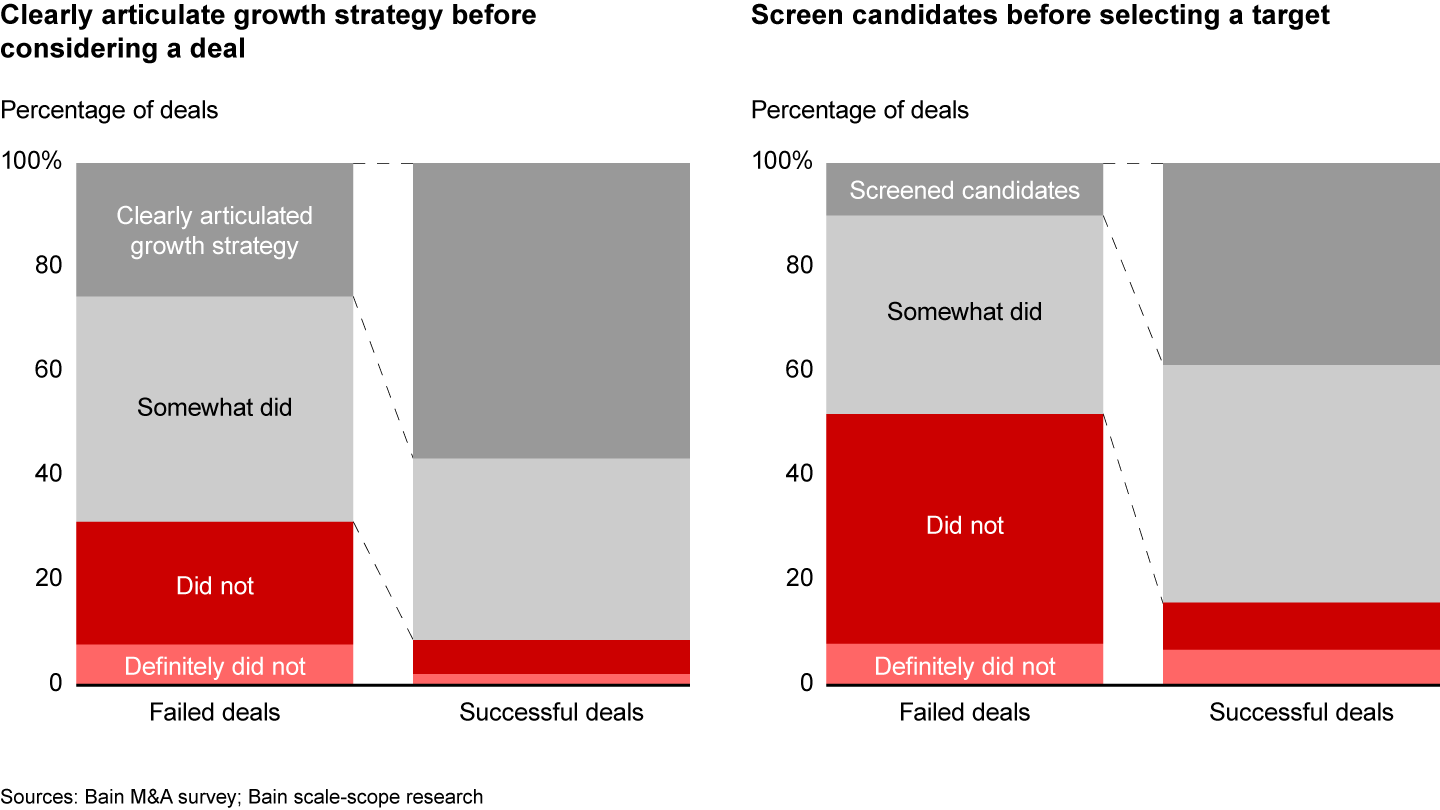
Companies need to start pursuing opportunities by getting a clear view on the full range of potential outcomes in five key areas of uncertainty in M&A: cost of capital, availability of capital, the impact of inflation on margins, scope vs. scale deals, and regulations/spheres of influence. Also, it’s critical to establish a strategic rationale and develop a pipeline of potential deals. Our research has found that clearly articulating a growth strategy before considering a deal and screening several candidates before selecting a target increase the odds of deal success (see Figure 4).
Figure 4

Owens Corning’s purchase of WearDeck in June was a strategic move to expand its composites business into higher-value, more capital-efficient products. Likewise, Quanta Services’ purchase of Blattner Energy last October was a strategic move to position the company as a solutions leader in the transition to renewable energy—the purchase enables Quanta to collaborate early with its customers on their energy transition strategy.
Some companies are opting to segment their business units to mitigate risks and improve operating and capital allocation efficiency. General Electric recently split into independent companies, creating separate aviation, healthcare, and energy public companies to give it greater focus, tailored capital allocation, and strategic flexibility for long-term growth.
If the past is any indication, recessions inevitably follow inflationary periods. While it’s hard to predict an anticipated downturn’s timing and depth, what can be predicted is that companies that seize the moment and take the appropriate actions will come out on top. But it will require a playbook that’s carefully updated for these tumultuous times.

Unlock Performance Under Any Conditions
Our curated selection of insights explores the moves organizations can make now to prepare for a downturn and even thrive when it arrives.
First published in juillet 2022