
Skip to Content
  • Bureaux

    Bureaux

    Amérique du Nord et Amérique du Sud
    • Atlanta
    • Austin
    • Bogota
    • Boston
    • Buenos Aires
    • Chicago
    • Dallas
    • Denver
    • Houston
    • Los Angeles
    • Mexico City
    • Minneapolis
    • Monterrey
    • Montreal
    • New York
    • Rio de Janeiro
    • San Francisco
    • Santiago
    • São Paulo
    • Seattle
    • Silicon Valley
    • Toronto
    • Washington, DC
    Europe, Moyen-Orient et Afrique
    • Amsterdam
    • Athens
    • Berlin
    • Brussels
    • Copenhagen
    • Doha
    • Dubai
    • Dusseldorf
    • Frankfurt
    • Helsinki
    • Istanbul
    • Johannesburg
    • Kyiv
    • Lisbon
    • London
    • Madrid
    • Milan
    • Munich
    • Oslo
    • Paris
    • Riyadh
    • Rome
    • Stockholm
    • Vienna
    • Warsaw
    • Zurich
    Asie et Australie
    • Bangkok
    • Beijing
    • Bengaluru
    • Brisbane
    • Ho Chi Minh City
    • Hong Kong
    • Jakarta
    • Kuala Lumpur
    • Manila
    • Melbourne
    • Mumbai
    • New Delhi
    • Perth
    • Seoul
    • Shanghai
    • Singapore
    • Sydney
    • Tokyo
    Voir tous les bureaux
  • Alumni
  • Presse
  • S’abonner
  • Contacter
  • France | Français

    Sélectionnez votre région et votre langue

    Global
    • Global (English)
    Amérique du Nord et Amérique du Sud
    • Brazil (Português)
    • Argentina (Español)
    • Canada (Français)
    • Chile (Español)
    • Colombia (Español)
    Europe, Moyen-Orient et Afrique
    • France (Français)
    • DACH Region (Deutsch)
    • Italy (Italiano)
    • Spain (Español)
    • Greece (Elliniká)
    Asie et Australie
    • China (中文版)
    • Korea (한국어)
    • Japan (日本語)
  • Saved items (0)
    Saved items (0)

    You have no saved items.

    Bookmark content that interests you and it will be saved here for you to read or share later.

    Explore Bain Insights
  • Expertises Sectorielles
    Menu principal

    Expertises Sectorielles

    • Aerospace et Défense
    • Agroalimentaire
    • Chimie
    • Infrastructures, BTP et Matériaux de Construction
    • Grande Consommation
    • Services Financiers
    • Santé
    • Engins & Equipements Industriels
    • Media et Divertissement
    • Metals
    • Mining
    • Pétrole & Gaz
    • Papier et Emballage
    • Private Equity
    • Secteur Public
    • Distribution
    • Technologie
    • Télécommunications
    • Transportation
    • Travel & Leisure
    • Utilities & Energies Renouvelables
  • Expertises Fonctionnelles
    Menu principal

    Expertises Fonctionnelles

    • Expérience Client
    • ESG
    • Innovation
    • Fusions et Acquisitions
    • Opérations
    • People & Organization
    • Private Equity
    • Sales & Marketing
    • Stratégie
    • IA, Perspectives et Solutions
    • Technology
    • Transformation
  • Digital
  • Points de Vue
  • À propos
    Menu principal

    À propos

    • Notre Activité
    • Nos Valeurs
    • Nos Collaborateurs et Notre Équipe Dirigeante
    • Notre Impact
    • Prix & Récompenses
    • Partenariats Internationaux
    • Evénements
    Further: Our global responsibility
    • Diversité et Inclusion
    • Impact Social
    • Sustainability
    • World Economic Forum
    Learn more about Further
  • Carrières
    Menu principal

    Carrières

    • Rejoignez-nous
      Carrières
      Rejoignez-nous
      • Find Your Place
      • Nos domaines d’expertise
      • Equipes multidisciplinaires
      • Étudiants
      • Stages et programmes
      • Événements de recrutement
    • La vie chez Bain
      Carrières
      La vie chez Bain
      • Blog: Inside Bain
      • Récits de carrière
      • Nos collaborateurs
      • Nos bureaux
      • Soutenir votre évolution professionnelle
      • Groupes d’affinités
      • Avantages chez Bain
    • Histoires d’impact
    • Notre processus de recrutement
      Carrières
      Notre processus de recrutement
      • Ce que vous pouvez attendre
      • Entretiens
    Trouver un poste
  • Bureaux
    Menu principal

    Bureaux

    • Amérique du Nord et Amérique du Sud
      Bureaux
      Amérique du Nord et Amérique du Sud
      • Atlanta
      • Austin
      • Bogota
      • Boston
      • Buenos Aires
      • Chicago
      • Dallas
      • Denver
      • Houston
      • Los Angeles
      • Mexico City
      • Minneapolis
      • Monterrey
      • Montreal
      • New York
      • Rio de Janeiro
      • San Francisco
      • Santiago
      • São Paulo
      • Seattle
      • Silicon Valley
      • Toronto
      • Washington, DC
    • Europe, Moyen-Orient et Afrique
      Bureaux
      Europe, Moyen-Orient et Afrique
      • Amsterdam
      • Athens
      • Berlin
      • Brussels
      • Copenhagen
      • Doha
      • Dubai
      • Dusseldorf
      • Frankfurt
      • Helsinki
      • Istanbul
      • Johannesburg
      • Kyiv
      • Lisbon
      • London
      • Madrid
      • Milan
      • Munich
      • Oslo
      • Paris
      • Riyadh
      • Rome
      • Stockholm
      • Vienna
      • Warsaw
      • Zurich
    • Asie et Australie
      Bureaux
      Asie et Australie
      • Bangkok
      • Beijing
      • Bengaluru
      • Brisbane
      • Ho Chi Minh City
      • Hong Kong
      • Jakarta
      • Kuala Lumpur
      • Manila
      • Melbourne
      • Mumbai
      • New Delhi
      • Perth
      • Seoul
      • Shanghai
      • Singapore
      • Sydney
      • Tokyo
    Voir tous les bureaux
  • Alumni
  • Presse
  • S’abonner
  • Contacter
  • France | Français
    Menu principal

    Sélectionnez votre région et votre langue

    • Global
      Sélectionnez votre région et votre langue
      Global
      • Global (English)
    • Amérique du Nord et Amérique du Sud
      Sélectionnez votre région et votre langue
      Amérique du Nord et Amérique du Sud
      • Brazil (Português)
      • Argentina (Español)
      • Canada (Français)
      • Chile (Español)
      • Colombia (Español)
    • Europe, Moyen-Orient et Afrique
      Sélectionnez votre région et votre langue
      Europe, Moyen-Orient et Afrique
      • France (Français)
      • DACH Region (Deutsch)
      • Italy (Italiano)
      • Spain (Español)
      • Greece (Elliniká)
    • Asie et Australie
      Sélectionnez votre région et votre langue
      Asie et Australie
      • China (中文版)
      • Korea (한국어)
      • Japan (日本語)
  • Saved items  (0)
    Menu principal
    Saved items (0)

    You have no saved items.

    Bookmark content that interests you and it will be saved here for you to read or share later.

    Explore Bain Insights
  • Expertises Sectorielles
    • Expertises Sectorielles

      • Aerospace et Défense
      • Agroalimentaire
      • Chimie
      • Infrastructures, BTP et Matériaux de Construction
      • Grande Consommation
      • Services Financiers
      • Santé
      • Engins & Equipements Industriels
      • Media et Divertissement
      • Metals
      • Mining
      • Pétrole & Gaz
      • Papier et Emballage
      • Private Equity
      • Secteur Public
      • Distribution
      • Technologie
      • Télécommunications
      • Transportation
      • Travel & Leisure
      • Utilities & Energies Renouvelables
  • Expertises Fonctionnelles
    • Expertises Fonctionnelles

      • Expérience Client
      • ESG
      • Innovation
      • Fusions et Acquisitions
      • Opérations
      • People & Organization
      • Private Equity
      • Sales & Marketing
      • Stratégie
      • IA, Perspectives et Solutions
      • Technology
      • Transformation
  • Digital
  • Points de Vue
  • À propos
    • À propos

      • Notre Activité
      • Nos Valeurs
      • Nos Collaborateurs et Notre Équipe Dirigeante
      • Notre Impact
      • Prix & Récompenses
      • Partenariats Internationaux
      • Evénements
      Further: Our global responsibility
      • Diversité et Inclusion
      • Impact Social
      • Sustainability
      • World Economic Forum
      Learn more about Further
  • Carrières
    Recherches les plus fréquentes
    • Agile
    • Digital
    • Stratégie
    Vos recherches précédentes
      Pages récemment visitées

      Content added to saved items

      Saved items (0)

      Removed from saved items

      Saved items (0)

      Etude

      Underserved: Selling to Small Businesses Is a Huge Untapped Market

      Underserved: Selling to Small Businesses Is a Huge Untapped Market

      To sell successfully to this enormous market, develop a strategy that spans service, segmentation and scale.

      Par Mikaela Boyd et Jessica Schreiber Solera

      • min
      }

      Etude

      Underserved: Selling to Small Businesses Is a Huge Untapped Market
      en
      En Bref
      • Many companies struggle to sell to and serve small businesses on a consistently profitable basis because of incomplete data and the very diverse customer base.
      • Suppliers that succeed in this market do a few things differently, such as treating small business as its own category that is served by a dedicated unit.
      • They go beyond industry groupings to segment small businesses based on the customers’ underlying needs.
      • These leaders also develop an organization and a digital platform that are both affordable and easily scalable.

      Selling to small businesses is a tall order, but it’s well worth the effort. Small businesses comprise a huge collective market for a broad swath of providers, ranging from computer hardware and software companies to financial services firms and purveyors of industrial supplies. In the US, for instance, the 30 million businesses with fewer than 500 employees account for 48% of national employment, according to the US Small Business Administration. And in most of the 35 countries analyzed by the Organisation for Economic Co-operation and Development, the number of new firms created continues to recover and, in many cases, is at the highest level since the financial crisis. Moreover, small businesses can be fiercely loyal to providers that offer solutions that address their needs.

      The challenge is how to sell to and serve small firms on a consistently profitable basis.

      As a diverse and fragmented customer base, small businesses can be hard to find and track when they grow and evolve. Targeting gets tricky because of high rates of formation and termination, the growing number of home offices, and incomplete coverage in financial and corporate databases. Small firms often want advice and guidance from a supplier, but they’re not large enough to warrant an account manager in person or even on the phone. They have lean staffs, with owners and teams wearing many hats as opposed to the functional expertise in larger companies.

      These factors add up to a situation in which traditional incumbent providers often ignore or underinvest in small business customers.

      Yet a number of insurgent companies, such as HubSpot, Shopify, Square and Kabbage, have figured out how to serve the small business market effectively. It’s no coincidence that these insurgents are native digital companies, as social media marketing, content marketing and viral marketing all figure heavily in small business markets, and are keys to unlocking lower-cost business models. A survey by Salesforce found that 82% of business buyers want the same experience as when they buy for themselves.

      Some incumbent business-to-business (B2B) providers have adapted their operations to serve this market successfully. Here’s what other companies can learn from the leaders.

      Small businesses, even micro businesses, require their own category

      At many banks, despite the lip service paid to support for entrepreneurs and local businesses, small and micro businesses get lost between the consumer and commercial units. For instance, they tend to be the last group to get a product refresh. In computer hardware and software markets, many suppliers rely heavily on resellers and distributors to reach small businesses. Customers might get what they need, but through an indirect route that does little to earn loyalty for the provider itself.

      Micro businesses behave like consumers in some ways (transactional purchasing, enjoyment of personal rewards and benefits) but like commercial enterprises in other respects (demand for commercial-grade products and services). Providers that have a defined unit selling to and serving small businesses as a distinct category can muster the resources required to succeed.

      American Express has long had a dedicated small business unit, attending to their needs separately from large enterprises and advocating on their behalf. To help small companies mired in the recession, American Express launched a nationwide Small Business Saturday campaign in 2010 by offering cardholders a $25 statement credit for shopping at small stores. The campaign proved quite successful, with an estimated $103 billion in spending since it began, such that American Express no longer has to offer a financial incentive.

      Likewise, Dell has a dedicated small business team across marketing, merchandising and sales that includes expert advisers who provide free technology advice to all small business customers. In addition, Dell relaunched and later expanded a computing line, Vostro, with features and pricing tailored to small business customers’ priorities. With this dedicated support structure, Dell has grown small business sales faster than the market in each of the past six years, according to tallies by IDC.

      Segmentation based on underlying needs proves more useful than industry groupings

      Vertical industry segments have their limits. In medicine, a plastic surgery practice will have different needs than a behavioral health clinic. The level of buyer sophistication will also vary among, say, the restaurants in a city. Within the same industry, a fast-growing business will have different needs than a stable business, needs for which a provider company could offer a critical solution or merely ordinary support. Providers must identify the current and future needs of their customers and then define the value proposition based on those needs (see Figure 1).

      Figure 1
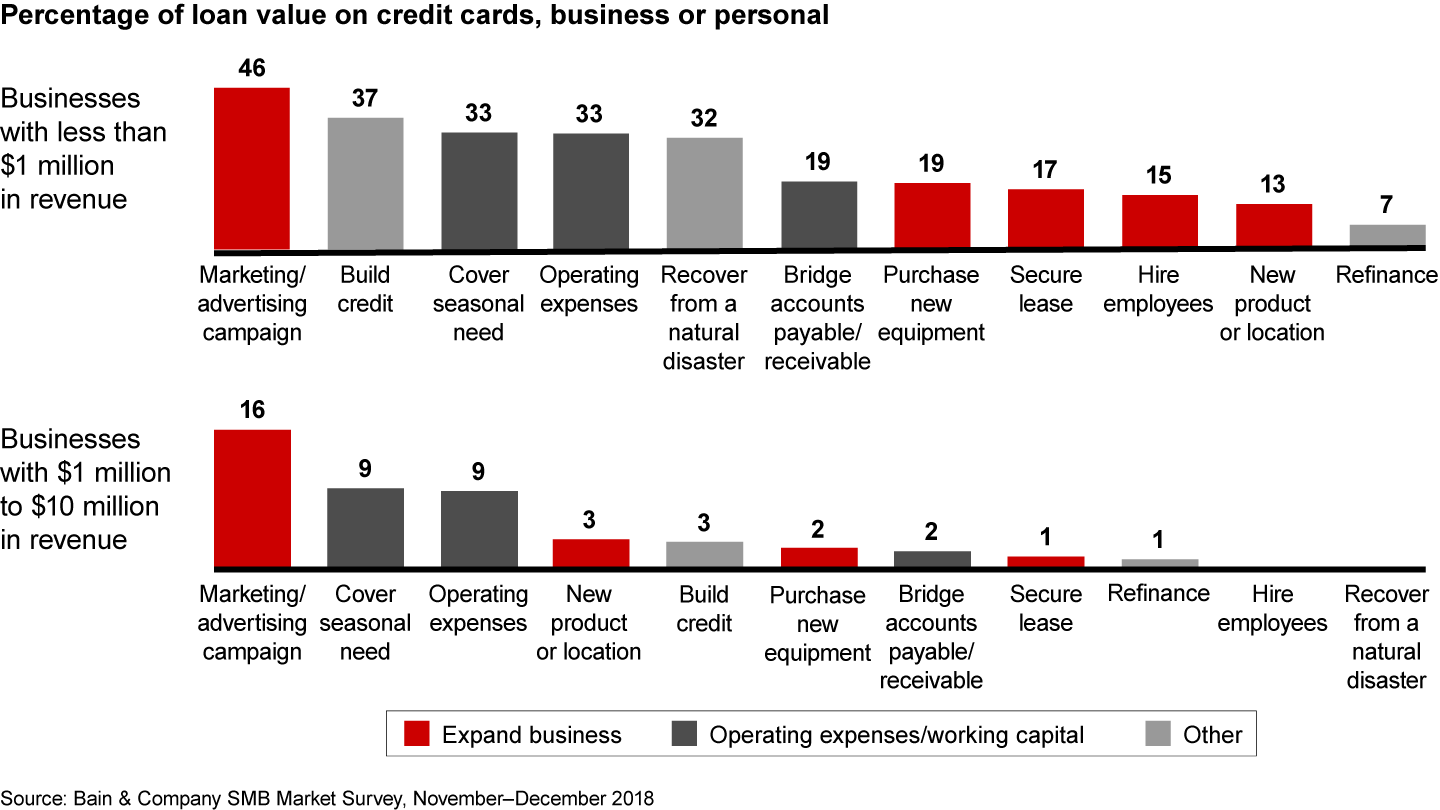
      In small business lending, product usage varies substantially by business size and financial needs
      In small business lending, product usage varies substantially by business size and financial needs
      In small business lending, product usage varies substantially by business size and financial needs

      A technology company, for instance, could sort small businesses along criteria that the customers consider important, such as reliability, ease of use, cloud integration, customization, price and so on. That would yield different segments, such as those seeking premium performance or familiar brands or low-budget offerings (see Figure 2). Then the provider could begin its program with one clearly defined subsegment to determine what works, what does not and impart those lessons to other subsegments. Amazon Business started with office supplies, a subscale business for Amazon, but the resulting customer acquisition and data allowed the company entry into other B2B product categories.

      Figure 2
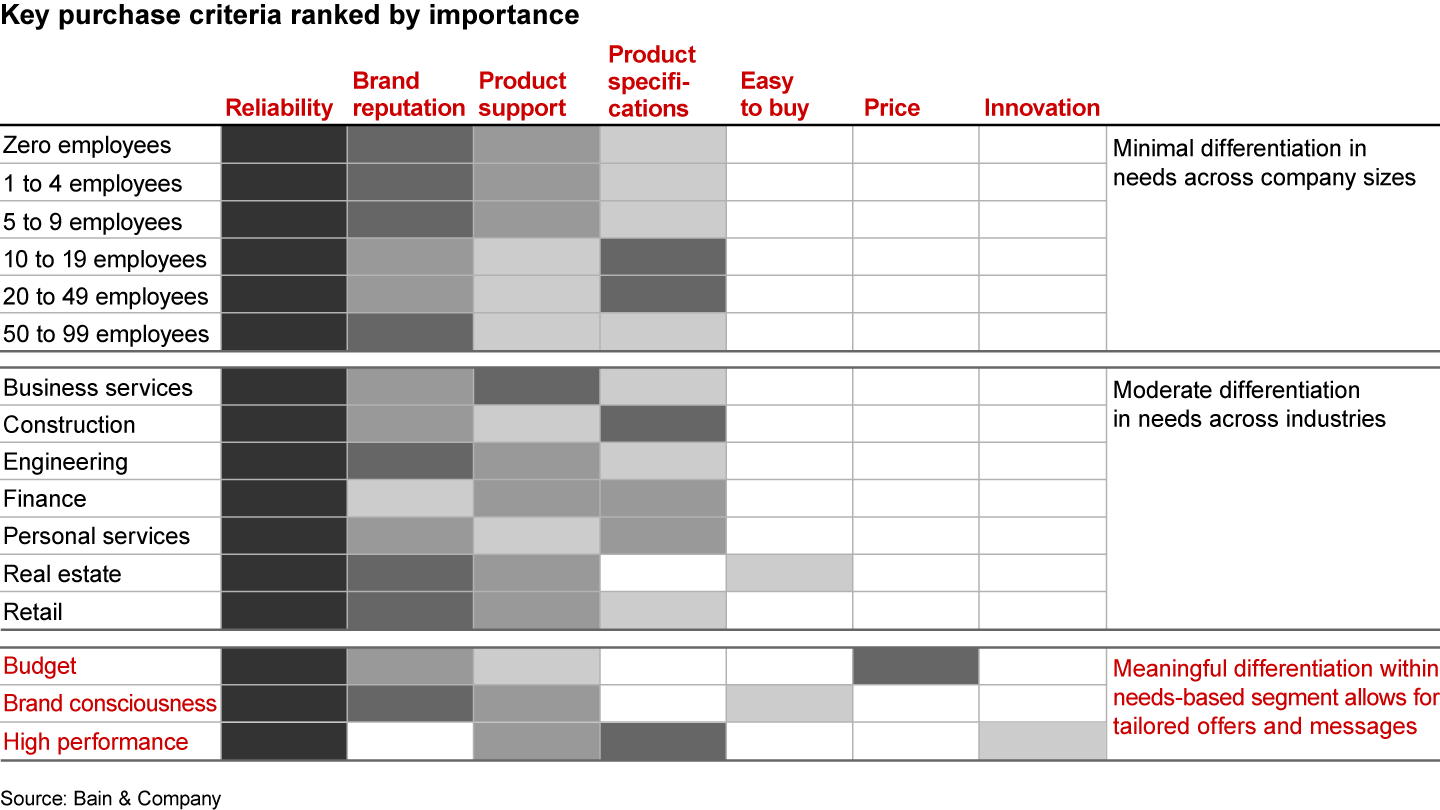
      Segmenting small business customers by their needs offers a more differentiated view than by size or industry
      Segmenting small business customers by their needs offers a more differentiated view than by size or industry
      Segmenting small business customers by their needs offers a more differentiated view than by size or industry

      Going to market must be both affordable and scalable

      Evaluate the economics to serve each segment—namely, what gross margins these customers will generate and how much operating expense you can afford to serve them. Within this expense envelope, identify possible ways to go to market, which could include digital engagement, inside vs. outside coverage, partnerships for referrals, and ongoing sales and support.

      Some companies leverage proprietary data from one product line to break into another product line. Intuit, for example, has used data from its QuickBooks accounting platform to inform the launch of its lending business to small companies. Intuit evaluates the financial health of each customer based on the financial information provided in QuickBooks as well as personal and business credit reports. Intuit makes the loans directly but also enables other financing partners, such as OnDeck and Funding Circle, to lend through its platform. Intuit also has launched online matchmaking to connect small businesses with accountants. This ecosystem delivers extra value for accountant customers, small business customers and Intuit itself (see Figure 3).

      Figure 3
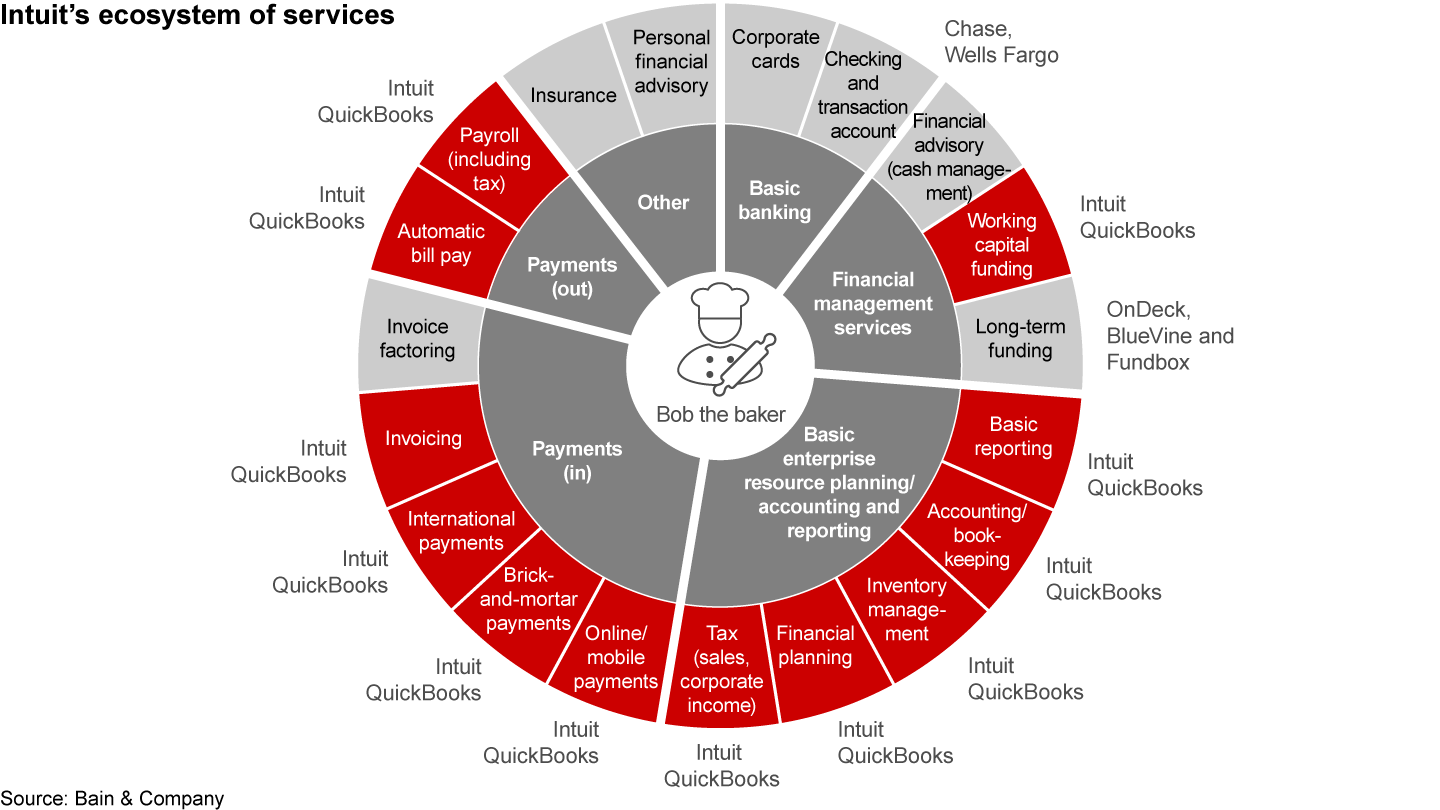
      Technology firms such as Intuit, with its QuickBooks accounting software, use an ecosystem of services to break into traditional small business banking areas
      Technology firms such as Intuit, with its QuickBooks accounting software, use an ecosystem of services to break into traditional small business banking areas
      Technology firms such as Intuit, with its QuickBooks accounting software, use an ecosystem of services to break into traditional small business banking areas

      An e-commerce website obviously can serve small customers efficiently, but to be truly effective, it must have the flexibility to tailor marketing messages and product offerings to different target segments in real time. Many traditional incumbents lack the capabilities necessary for a strong digital user interface, so successful companies often work with partners experienced in building e-commerce systems.

      One agricultural supplier struggled to serve the long tail of smaller customers through its direct salesforce. It designed a functional front end of an e-commerce app for soft launch, while it also digitized the transaction of 1,200 farmers. This supplier estimates a potential profit upside of $50 million for 2020, along with an improved customer experience.

      The choice of internal organization could make or break the economics

      The way that some large incumbents are organized can make it uneconomical to serve small businesses. Take a traditional bank making loans. A $70,000 loan could yield $5,000 in profit for the bank, but a $5,500 loan would yield a $6,000 loss—mainly because of fixed administrative costs.

      Most successful providers organize a separate unit with a dedicated focus on small businesses. The organizational structure should be determined by what customers buy, how they buy it, how new customers are acquired and how their relationships are best managed. A company might steer micro businesses to a website, with online chat offered to answer questions, whereas midsize businesses could merit a sales rep who calls periodically. In that case, it’s critical to get the handoffs right and to have a process for moving accounts up to the right level of support as they grow.

      Unless incumbent providers raise their game in serving small businesses, they will cede this growing market to a new generation of mostly digital native insurgents. For those providers that can address small company needs profitably, they stand to earn the loyalty of a customer set that includes high-growth winners in the years ahead.

      Mikaela Boyd and Jessica Schreiber Solera are partners with Bain & Company’s Customer Strategy & Marketing practice. They are based, respectively, in New York and Houston.

      Auteurs
      • Headshot of Mikaela Boyd
        Mikaela Boyd
        Associé, New York
      • Headshot of Jessica Schreiber Solera
        Jessica Schreiber Solera
        Associé, Houston
      Contactez-nous
      Expertises fonctionnelles transverses
      • Digital
      • Go-to-Market Strategy
      • Stratégie Client et Marketing
      Comment pouvons-nous vous aider ?
      • B2B Product & Portfolio Management
      • Market Opportunity Definition
      Stratégie Client et Marketing
      Preparing Sales for the Coming Storm

      Companies that plan ahead and tap digital tools can not only survive a downturn but thrive.

      Voir plus
      Stratégie Client et Marketing
      An X-ray for Your Sales Ailments

      How sales leaders can diagnose and mend the gaps in their go-to-market models.

      Voir plus
      Stratégie Client et Marketing
      AI Is Transforming Productivity, but Sales Remains a New Frontier

      Potential applications of generative and agentic AI could free up more selling time and boost conversion rates.

      Voir plus
      Market Opportunity Definition
      How to Grab Tech Buyers at “Hello” and Never Say “Goodbye”

      Business-to-business technology vendors are transforming their go-to-market model, teams, and technology to support today’s more digital customer journey.

      Voir plus
      Stratégie Client et Marketing
      Why Generative AI Exceeds Expectations in Marketing

      Generative AI accelerates content creation, personalization, and testing—empowering marketers to deliver better outcomes at lower cost.

      Voir plus
      First published in janvier 2020
      Mots clés
      • B2B Product & Portfolio Management
      • Digital
      • Go-to-Market Strategy
      • Market Opportunity Definition
      • Stratégie Client et Marketing

      Comment nous avons aidé nos clients

      Amélioration de la Performance Aggressively growing an IT service provider with a high-performance culture

      Lire l’étude de cas

      Stratégie Client et Marketing Revenue Hunt Delivers for Air Freight Company

      Lire l’étude de cas

      Organisation Building a winning media salesforce

      Lire l’étude de cas

      Vous souhaitez continuer cette conversation ?

      Nous aidons des dirigeants du monde entier à matérialiser des impacts et des résultats pérennes et créateurs de valeur dans leurs organisations.

      Les points de vue de Bain : notre perspective sur des problématiques auxquelles sont confrontées les entreprises à travers le monde, envoyés chaque mois dans votre boîte de réception. 

      *J’ai lu la politique de confidentialité et j’accepte les conditions.

      Merci de lire notre politique de confidentialité.
      Bain & Company
      Contactez-nous Sustainability Accessibility Conditions d’utilisation Politique de Confidentialité Cookie Policy Mentions Légales Sitemap Log In

      © 1996-2026 Bain & Company, Inc.

      Contacter Bain

      Comment pouvons-nous vous aider ?

      • Business inquiry
      • Career information
      • Press relations
      • Partnership request
      • Speaker request
      Voir tous les bureaux