
Skip to Content
  • Bureaux

    Bureaux

    Amérique du Nord et Amérique du Sud
    • Atlanta
    • Austin
    • Bogota
    • Boston
    • Buenos Aires
    • Chicago
    • Dallas
    • Denver
    • Houston
    • Los Angeles
    • Mexico City
    • Minneapolis
    • Monterrey
    • Montreal
    • New York
    • Rio de Janeiro
    • San Francisco
    • Santiago
    • São Paulo
    • Seattle
    • Silicon Valley
    • Toronto
    • Washington, DC
    Europe, Moyen-Orient et Afrique
    • Amsterdam
    • Athens
    • Berlin
    • Brussels
    • Copenhagen
    • Doha
    • Dubai
    • Dusseldorf
    • Frankfurt
    • Helsinki
    • Istanbul
    • Johannesburg
    • Kyiv
    • Lisbon
    • London
    • Madrid
    • Milan
    • Munich
    • Oslo
    • Paris
    • Riyadh
    • Rome
    • Stockholm
    • Vienna
    • Warsaw
    • Zurich
    Asie et Australie
    • Bangkok
    • Beijing
    • Bengaluru
    • Brisbane
    • Ho Chi Minh City
    • Hong Kong
    • Jakarta
    • Kuala Lumpur
    • Manila
    • Melbourne
    • Mumbai
    • New Delhi
    • Perth
    • Seoul
    • Shanghai
    • Singapore
    • Sydney
    • Tokyo
    Voir tous les bureaux
  • Alumni
  • Presse
  • S’abonner
  • Contacter
  • France | Français

    Sélectionnez votre région et votre langue

    Global
    • Global (English)
    Amérique du Nord et Amérique du Sud
    • Brazil (Português)
    • Argentina (Español)
    • Canada (Français)
    • Chile (Español)
    • Colombia (Español)
    Europe, Moyen-Orient et Afrique
    • France (Français)
    • DACH Region (Deutsch)
    • Italy (Italiano)
    • Spain (Español)
    • Greece (Elliniká)
    Asie et Australie
    • China (中文版)
    • Korea (한국어)
    • Japan (日本語)
  • Saved items (0)
    Saved items (0)

    You have no saved items.

    Bookmark content that interests you and it will be saved here for you to read or share later.

    Explore Bain Insights
  • Expertises Sectorielles
    Menu principal

    Expertises Sectorielles

    • Aerospace et Défense
    • Agroalimentaire
    • Chimie
    • Infrastructures, BTP et Matériaux de Construction
    • Grande Consommation
    • Services Financiers
    • Santé
    • Engins & Equipements Industriels
    • Media et Divertissement
    • Metals
    • Mining
    • Pétrole & Gaz
    • Papier et Emballage
    • Private Equity
    • Secteur Public
    • Distribution
    • Technologie
    • Télécommunications
    • Transportation
    • Travel & Leisure
    • Utilities & Energies Renouvelables
  • Expertises Fonctionnelles
    Menu principal

    Expertises Fonctionnelles

    • Expérience Client
    • ESG
    • Innovation
    • Fusions et Acquisitions
    • Opérations
    • People & Organization
    • Private Equity
    • Sales & Marketing
    • Stratégie
    • IA, Perspectives et Solutions
    • Technology
    • Transformation
  • Digital
  • Points de Vue
  • À propos
    Menu principal

    À propos

    • Notre Activité
    • Nos Valeurs
    • Nos Collaborateurs et Notre Équipe Dirigeante
    • Notre Impact
    • Prix & Récompenses
    • Partenariats Internationaux
    • Evénements
    Further: Our global responsibility
    • Diversité et Inclusion
    • Impact Social
    • Sustainability
    • World Economic Forum
    Learn more about Further
  • Carrières
    Menu principal

    Carrières

    • Rejoignez-nous
      Carrières
      Rejoignez-nous
      • Find Your Place
      • Nos domaines d’expertise
      • Equipes multidisciplinaires
      • Étudiants
      • Stages et programmes
      • Événements de recrutement
    • La vie chez Bain
      Carrières
      La vie chez Bain
      • Blog: Inside Bain
      • Récits de carrière
      • Nos collaborateurs
      • Nos bureaux
      • Soutenir votre évolution professionnelle
      • Groupes d’affinités
      • Avantages chez Bain
    • Histoires d’impact
    • Notre processus de recrutement
      Carrières
      Notre processus de recrutement
      • Ce que vous pouvez attendre
      • Entretiens
    Trouver un poste
  • Bureaux
    Menu principal

    Bureaux

    • Amérique du Nord et Amérique du Sud
      Bureaux
      Amérique du Nord et Amérique du Sud
      • Atlanta
      • Austin
      • Bogota
      • Boston
      • Buenos Aires
      • Chicago
      • Dallas
      • Denver
      • Houston
      • Los Angeles
      • Mexico City
      • Minneapolis
      • Monterrey
      • Montreal
      • New York
      • Rio de Janeiro
      • San Francisco
      • Santiago
      • São Paulo
      • Seattle
      • Silicon Valley
      • Toronto
      • Washington, DC
    • Europe, Moyen-Orient et Afrique
      Bureaux
      Europe, Moyen-Orient et Afrique
      • Amsterdam
      • Athens
      • Berlin
      • Brussels
      • Copenhagen
      • Doha
      • Dubai
      • Dusseldorf
      • Frankfurt
      • Helsinki
      • Istanbul
      • Johannesburg
      • Kyiv
      • Lisbon
      • London
      • Madrid
      • Milan
      • Munich
      • Oslo
      • Paris
      • Riyadh
      • Rome
      • Stockholm
      • Vienna
      • Warsaw
      • Zurich
    • Asie et Australie
      Bureaux
      Asie et Australie
      • Bangkok
      • Beijing
      • Bengaluru
      • Brisbane
      • Ho Chi Minh City
      • Hong Kong
      • Jakarta
      • Kuala Lumpur
      • Manila
      • Melbourne
      • Mumbai
      • New Delhi
      • Perth
      • Seoul
      • Shanghai
      • Singapore
      • Sydney
      • Tokyo
    Voir tous les bureaux
  • Alumni
  • Presse
  • S’abonner
  • Contacter
  • France | Français
    Menu principal

    Sélectionnez votre région et votre langue

    • Global
      Sélectionnez votre région et votre langue
      Global
      • Global (English)
    • Amérique du Nord et Amérique du Sud
      Sélectionnez votre région et votre langue
      Amérique du Nord et Amérique du Sud
      • Brazil (Português)
      • Argentina (Español)
      • Canada (Français)
      • Chile (Español)
      • Colombia (Español)
    • Europe, Moyen-Orient et Afrique
      Sélectionnez votre région et votre langue
      Europe, Moyen-Orient et Afrique
      • France (Français)
      • DACH Region (Deutsch)
      • Italy (Italiano)
      • Spain (Español)
      • Greece (Elliniká)
    • Asie et Australie
      Sélectionnez votre région et votre langue
      Asie et Australie
      • China (中文版)
      • Korea (한국어)
      • Japan (日本語)
  • Saved items  (0)
    Menu principal
    Saved items (0)

    You have no saved items.

    Bookmark content that interests you and it will be saved here for you to read or share later.

    Explore Bain Insights
  • Expertises Sectorielles
    • Expertises Sectorielles

      • Aerospace et Défense
      • Agroalimentaire
      • Chimie
      • Infrastructures, BTP et Matériaux de Construction
      • Grande Consommation
      • Services Financiers
      • Santé
      • Engins & Equipements Industriels
      • Media et Divertissement
      • Metals
      • Mining
      • Pétrole & Gaz
      • Papier et Emballage
      • Private Equity
      • Secteur Public
      • Distribution
      • Technologie
      • Télécommunications
      • Transportation
      • Travel & Leisure
      • Utilities & Energies Renouvelables
  • Expertises Fonctionnelles
    • Expertises Fonctionnelles

      • Expérience Client
      • ESG
      • Innovation
      • Fusions et Acquisitions
      • Opérations
      • People & Organization
      • Private Equity
      • Sales & Marketing
      • Stratégie
      • IA, Perspectives et Solutions
      • Technology
      • Transformation
  • Digital
  • Points de Vue
  • À propos
    • À propos

      • Notre Activité
      • Nos Valeurs
      • Nos Collaborateurs et Notre Équipe Dirigeante
      • Notre Impact
      • Prix & Récompenses
      • Partenariats Internationaux
      • Evénements
      Further: Our global responsibility
      • Diversité et Inclusion
      • Impact Social
      • Sustainability
      • World Economic Forum
      Learn more about Further
  • Carrières
    Recherches les plus fréquentes
    • Agile
    • Digital
    • Stratégie
    Vos recherches précédentes
      Pages récemment visitées

      Content added to saved items

      Saved items (0)

      Removed from saved items

      Saved items (0)

      Etude

      Why Leading Medtech Companies Are Putting Customers Ahead of Products

      Why Leading Medtech Companies Are Putting Customers Ahead of Products

      Integrated delivery networks want partners, not vendors.

      Par Casey Carey, David Burns and Julie Coffman

      • min
      }

      Etude

      Why Leading Medtech Companies Are Putting Customers Ahead of Products
      en

      The leadership team at a global technology company had to move fast. Its products were losing market share as customers switched to integrated solutions. Worse, clients cited the company’s lack of responsiveness as a main reason for switching.

      The leadership team rapidly overhauled its sales organization, putting a strong focus on the customer. It set up internal account managers, deployed predictive analytics and made sure the sales team left no account unattended. By creating a sales organization highly attuned to the customer, the leadership team turned around the company’s sales trajectory within a year and jolted growth. Salesforce productivity grew by an annual average of 11% from 2009 to 2014, while revenue grew an average of 10% through 2015.

      Infographic

      In Medtech, Put Customers Before Products

      As purchasing becomes more centralized, leading medtech companies are focusing on key account management.

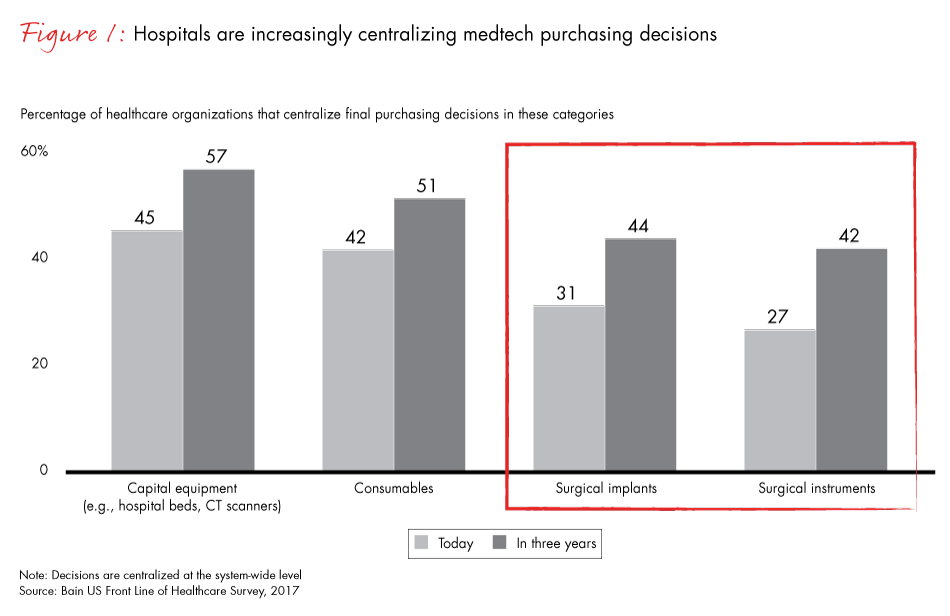
      Over the past decade, many industries have developed a more successful approach to sales by putting customers first. But the medtech industry has been slow to follow suit and reap the same benefits. Medtech leadership teams faced with slowing organic growth are wondering how they can get the most out of their portfolio while adapting to a rapidly consolidating customer landscape. The number of hospitals that make purchasing decisions locally is dwindling (see Figure 1). Medtech companies now sell mainly to large, integrated delivery networks (IDNs) that centralize purchasing decisions.

      In response, successful medtech companies are changing their go-to-market approach. After relying for decades on a product-centric, territory-driven salesforce, they are adopting key account management and putting the customer first. It’s not a simple shift. An overly complex sales and administrative model risks collapsing under its own weight. Bundling higher-value and lower-value products risks eroding margins. And implementing a key account management model requires sustained leadership focus and change management. But leaders who invest in achieving an effective key account management model are more closely connected to the needs of their customers, and that delivers big benefits, including above-average market growth.

      why-leading-medtech-companies-fig01_embed

      Build partnerships


      As IDNs consolidate and grapple with uncertain reimbursement prospects, they are transforming their own operations and demanding more from their suppliers to manage costs. Bain’s 2017 US Front Line of Healthcare Report shows three important shifts in how IDNs are making purchasing decisions:

      More purchasing centralization. Forty-five percent of IDNs make centralized purchasing decisions for capital equipment and consumables for the entire network, and physicians and procurement officers expect that figure to continue rising over the next three years. Notably, procurement officers and physicians increasingly share decision making, assessing clinical and financial benefits together. As a result, medical equipment purchases that physicians previously controlled also are increasingly centralized. While about 30% of healthcare systems centralize decisions on surgical implants and instruments today, that figure is expected to rise to more than 40% in the next three years.

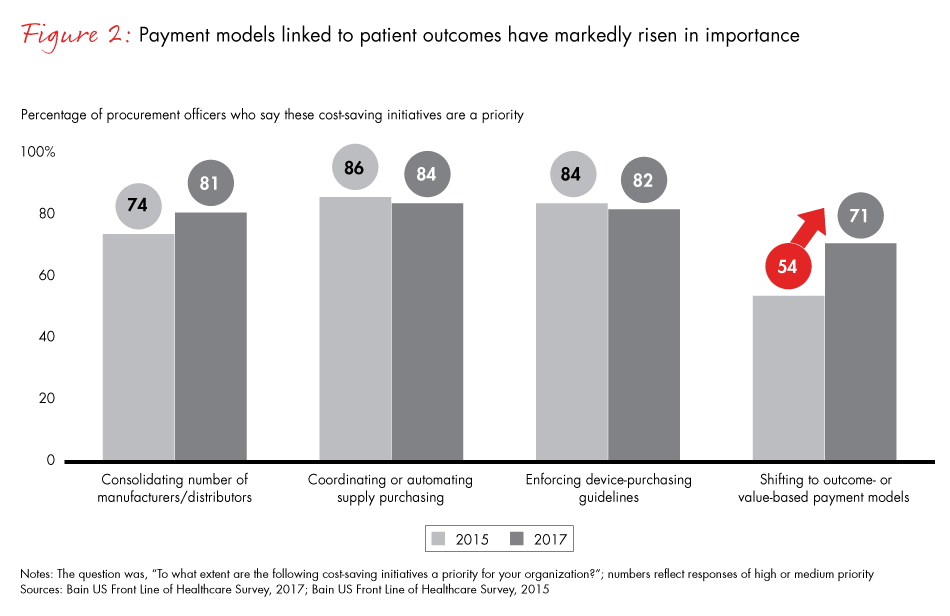
      Joint commitment to patient outcomes. Product quality and patient outcomes remain the most important purchasing criteria for surgeons. However, proof of the patient outcomes matters: 71% of procurement officers place a priority on shifting to outcome-based payment models in which manufacturer payment is linked to specific outcomes, up from 54% in 2015. Health systems are looking for suppliers that deliver value (see Figure 2).

      why-leading-medtech-companies-fig02_embed

      Partners, not vendors. The quality of the supplier partnership has become increasingly important: 62% of surgeons consider the “strongest existing relationship” with a medtech company as one of the top purchasing criteria, compared with 46% in 2015. What makes for a strong relationship? Health systems are looking for partners who will provide value-added services after the product delivery. Seventy percent of surgeons rate “best value for price paid inclusive of wrap-around services and training” as a top purchasing criterion, up from 53% in 2015. And 54% percent of surgeons rank ongoing training support the most important value-added service that suppliers provide.

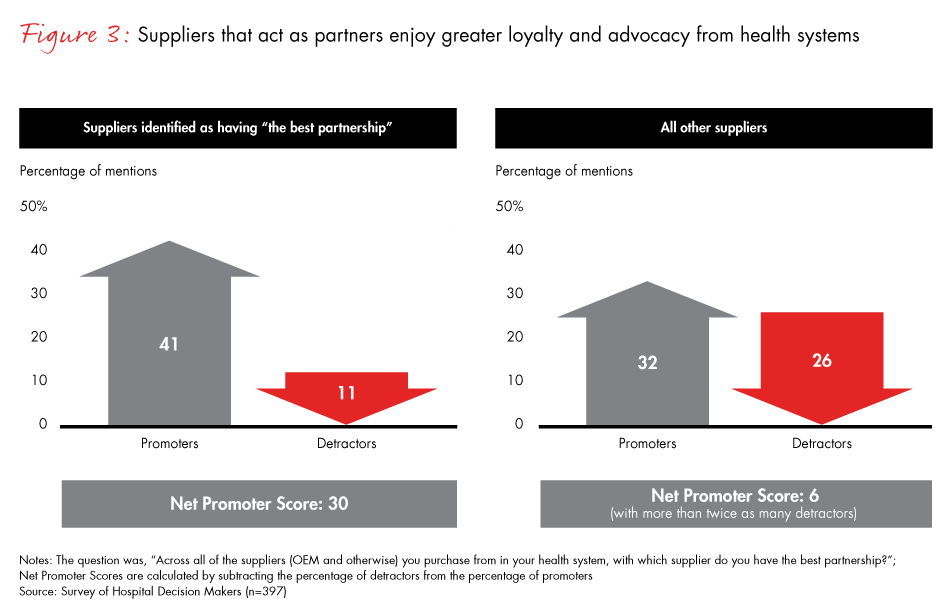
      These findings point to an important market shift. What surgeons most value from medtech sales reps differs from their traditional job description. Surgeons say the two most valuable roles for sales reps are providing technical support in the operating room and on-call support. By contrast, they rank the traditional role of communicating medical device benefits fifth in importance. Medtech companies that act as partners benefit from greater customer loyalty and advocacy. In a separate Bain study, the medtech suppliers identified as having the best partnership received a Net Promoter Score® of 30, compared with a score of 6 for all others (see Figure 3).

      why-leading-medtech-companies-fig03_embed

      Key account management: Focus on the customer


      Leading medtech suppliers are adapting to this new landscape by changing their go-to-market model along two dimensions. They are shifting to a key account management model instead of deploying product-oriented sales teams with multiple contact points across the health system. And, the sales pitch is all about outcomes and solutions, rather than product features and benefits.

      Managing this transition requires both structural and cultural changes. Most medtech companies structure their business around product areas, and sales teams have been trained and given incentives to sell specific product categories. Putting in place a key account management team, even for select customers, is challenging. Successful companies take a step-by-step approach, creating key account management teams for their most important customers first and focusing on change in five areas:

      Structure and roles. Enable the key account manager to act as a team leader coordinating across business units and the entire sales organization. Key account managers do not replace product specialists. IDNs want a central point of contact and a partner who is a strategic problem solver, but they also expect product expertise when deciding what to buy. Key account managers who fail to coordinate with other sales personnel are less effective. As with any team sport, each person on the team needs to know his or her role—where to pick up the ball, when to pass it and how to best communicate.

      People. Choose a skilled team leader as key account manager. Companies often move their best salespeople into this role, but that isn’t always the ideal fit. Key account managers lead a team, solve customer problems and help advance the client’s strategy over several years. The skills and temperament required for team leader may not play to the strengths of a top sales rep who thrives on chasing the next deal.

      Performance and incentives. Focus incentives on the right behaviors: teamwork and long-term gains. If companies encourage teamwork but fail to align incentives and performance metrics across the entire salesforce, sales reps will continue to put their own interests first. At best, they will team up informally and help cross-sell in response to a customer request. At worst, they may perceive cross-selling a colleague’s products as a threat to their own sales or margins. For key account managers, balance short-term execution with incentives that show progress on advancing the entire portfolio of products over a multiyear horizon.

      Processes and information. Develop a transparent sales performance pipeline and review the data with the leadership team regularly. Product-centric organizations with regional sales teams tend to focus on data by territory or product instead of a comprehensive overview by customer. For these companies, producing a holistic view of customer performance can be a near-Herculean feat, requiring manually pulling information from different systems. It’s not necessary to create perfect data or systems overnight. Leaders begin with makeshift systems that provide a holistic view of customer performance, and they make it accessible to all business units to bolster accountability.

      Leadership and culture. Articulate the case for key account management and link expected financial results with behavioral and organizational changes. Leadership teams play a critical role in setting expectations and reinforcing behavior change. Companies that miss this step will have a hard time getting buy-in from the salesforce. Business unit leaders must also support and reinforce the culture change every day. There will be moments of truth when a sales rep either demonstrates the new behavior or not—for example, contributing to weekly IDN team calls. The business unit leaders’ response to that moment of truth is a powerful signal of the importance of key account management in the organization.

      Casey Carey, a partner in Bain's Healthcare practice, shares how key account management and solutions-based selling can help companies generate customer loyalty and above-average market growth.

      Medtech companies face ongoing change as providers continue to consolidate and IDNs evolve. Those that embrace a more customer-centric approach to the market will have a valuable compass to navigate the path ahead—and a strong edge in generating above-average market growth. What starts with a few key accounts today may transform the entire commercial organization in five years.

      Casey Carey is a principal in Bain & Company’s Healthcare practice. David Burns is a partner in Bain’s Customer Strategy & Marketing practice. Julie Coffman is a partner in Bain’s Healthcare practice and leads Bain’s Organization practice in the Americas. They are all located in the firm’s Chicago office.

      Net Promoter Score®, Net Promoter System®, Net Promoter® and NPS® are registered trademarks of Bain & Company, Inc., Fred Reichheld and Satmetrix Systems, Inc.


      why-leading-medtech-companies-fig01_full

      why-leading-medtech-companies-fig02_full

      why-leading-medtech-companies-fig03_full
      Auteurs
      • Headshot of Casey Carey
        Casey Carey
        Associé, Chicago
      • Headshot of David Burns
        David Burns
        Associé, Chicago
      • Headshot of Julie Coffman
        Julie Coffman
        Associé, Chicago
      Contactez-nous
      Synergies sectorielles
      • Santé
      Expertises fonctionnelles transverses
      • Go-to-Market Strategy
      • Organisation
      • Stratégie Client et Marketing
      Comment pouvons-nous vous aider ?
      • Go-to-Market Mobilizer
      Santé
      Reinventing the Role of Medical Affairs

      A strategic overhaul of medical affairs can help pharma companies win in an era of Big Data medicine.

      Voir plus
      Private Equity
      Rapport annuel sur le private equity et les fusions-acquisitions dans la santé 2017

      Le sixième rapport annuel de Bain & Company sur le private equity et les fusions-acquisitions dans le secteur de la santé révèle que les acteurs européens se tournent vers les Etats-Unis pour des deals plus attractifs.

      Voir plus
      Santé
      Front Line of Healthcare Report 2017: Why involving doctors can help improve US healthcare

      Bringing physicians back into the decision-making process will help create greater momentum for change.

      Voir plus
      Santé
      Winning with a Customer Focus in Medtech

      In response to tougher market conditions, successful medtech companies are changing their go-to-market approach by embracing key account management.

      Voir plus
      Santé
      Life Sciences’ AI Momentum Requires a Workforce Redesign

      AI scalers aren't waiting for new talent—they're building it.

      Voir plus
      First published in septembre 2017
      Mots clés
      • Go-to-Market Mobilizer
      • Go-to-Market Strategy
      • Organisation
      • Santé
      • Stratégie Client et Marketing

      Comment nous avons aidé nos clients

      Stratégie Speed at Scale: The Thermo Fisher story

      Lire l’étude de cas

      Taking Shared Services to a New Level at a Healthcare Company

      Lire l’étude de cas

      Stratégie Client et Marketing A new commercial strategy for a dental implant provider

      Lire l’étude de cas

      Vous souhaitez continuer cette conversation ?

      Nous aidons des dirigeants du monde entier à matérialiser des impacts et des résultats pérennes et créateurs de valeur dans leurs organisations.

      Les points de vue de Bain : notre perspective sur des problématiques auxquelles sont confrontées les entreprises à travers le monde, envoyés chaque mois dans votre boîte de réception. 

      *J’ai lu la politique de confidentialité et j’accepte les conditions.

      Merci de lire notre politique de confidentialité.
      Bain & Company
      Contactez-nous Sustainability Accessibility Conditions d’utilisation Politique de Confidentialité Cookie Policy Mentions Légales Sitemap Log In

      © 1996-2026 Bain & Company, Inc.

      Contacter Bain

      Comment pouvons-nous vous aider ?

      • Business inquiry
      • Career information
      • Press relations
      • Partnership request
      • Speaker request
      Voir tous les bureaux