
Skip to Content
  • Offices

    Offices

    North & Latin America
    • Atlanta
    • Austin
    • Bogota
    • Boston
    • Buenos Aires
    • Chicago
    • Dallas
    • Denver
    • Houston
    • Los Angeles
    • Mexico City
    • Minneapolis
    • Monterrey
    • Montreal
    • New York
    • Rio de Janeiro
    • San Francisco
    • Santiago
    • São Paulo
    • Seattle
    • Silicon Valley
    • Toronto
    • Washington, DC
    Europe & Africa
    • Amsterdam
    • Athens
    • Berlin
    • Brussels
    • Copenhagen
    • Dusseldorf
    • Frankfurt
    • Helsinki
    • Istanbul
    • Johannesburg
    • Kyiv
    • Lisbon
    • London
    • Madrid
    • Milan
    • Munich
    • Oslo
    • Paris
    • Rome
    • Stockholm
    • Vienna
    • Warsaw
    • Zurich
    Middle East
    • Doha
    • Dubai
    • Riyadh
    Asia & Australia
    • Bangkok
    • Beijing
    • Bengaluru
    • Brisbane
    • Ho Chi Minh City
    • Hong Kong
    • Jakarta
    • Kuala Lumpur
    • Manila
    • Melbourne
    • Mumbai
    • New Delhi
    • Perth
    • Seoul
    • Shanghai
    • Singapore
    • Sydney
    • Tokyo
    See all offices
  • Alumni
  • Media Center
  • Subscribe
  • Contact
  • Global | English

    Select your region and language

    Global
    • Global (English)
    North & Latin America
    • Brazil (Português)
    • Argentina (Español)
    • Canada (Français)
    • Chile (Español)
    • Colombia (Español)
    Europe, Middle East, & Africa
    • France (Français)
    • DACH Region (Deutsch)
    • Italy (Italiano)
    • Spain (Español)
    • Greece (Elliniká)
    Asia & Australia
    • China (中文版)
    • Korea (한국어)
    • Japan (日本語)
  • Saved items (0)
    Saved items (0)

    You have no saved items.

    Bookmark content that interests you and it will be saved here for you to read or share later.

    Explore Bain Insights
  • Industries
    Main menu

    Industries

    • Aerospace & Defense
    • Agribusiness
    • Chemicals
    • Construction & Infrastructure
    • Consumer Products
    • Financial Services
    • Healthcare & Life Sciences
    • Industrial Machinery & Equipment
    • Media & Entertainment
      Industries
      Media & Entertainment
      • Media Lab
    • Metals
    • Mining
    • Oil & Gas
    • Paper & Packaging
    • Private Equity
      Industries
      Private Equity
      • Due Diligence
      • Exit Planning
      • Firm Strategy & Operations
      • Portfolio Value Creation
    • Social Impact
    • Retail
    • Technology
    • Telecommunications
      Industries
      Telecommunications
      • Capital Expenditure
      • Telco Digital Transformation
    • Transportation
    • Travel & Leisure
    • Utilities & Renewables
  • Consulting Services
    Main menu

    Consulting Services

    • Customer Experience
    • Sustainability
    • Innovation
    • M&A
    • Operations
    • People & Organization
    • Private Equity
    • Sales & Marketing
    • Strategy
    • AI, Insights, and Solutions
    • Technology
    • Transformation
  • Digital
  • Insights
    Main menu

    Insights

    • Industry Insights
    • Services Insights
    • Bain Books
    • Webinars
    • Bain Futures
    View all Insights
    Featured topics
    • Tariff Response
    • Artificial Intelligence
    • Thriving in Uncertainty
    • Executive Conversations
    • Macro Trends
    • M&A Report
    • Healthcare Private Equity Report
    • Paper & Packaging Report
    • Technology Report
    • CEO's Guide to Sustainability
    • CEO Insights
    • CFO Insights
    • COO Insights
    • CIO Insights
    • CMO Insights
    View all featured topics
  • About
    Main menu

    About

    • What We Do
    • What We Believe
    • Our People & Leadership
    • Client Results
    • Awards & Recognition
    • Global Affiliations
    Further: Our global responsibility
    • Sustainability
    • Social Impact
    • World Economic Forum
    Learn more about Further
  • Careers
    Main menu

    Careers

    • Work with Us
      Careers
      Work with Us
      • Find Your Place
      • Our Work Areas
      • Integrated Teams
      • Students
      • Internships & Programs
      • Recruiting Events
    • Life at Bain
      Careers
      Life at Bain
      • Blog: Inside Bain
      • Career Stories
      • Our People
      • Where We Work
      • Supporting Your Growth
      • Affinity Groups
      • Benefits
    • Impact Stories
    • Hiring Process
      Careers
      Hiring Process
      • What to Expect
      • Interviewing
    FIND JOBS
  • Offices
    Main menu

    Offices

    • North & Latin America
      Offices
      North & Latin America
      • Atlanta
      • Austin
      • Bogota
      • Boston
      • Buenos Aires
      • Chicago
      • Dallas
      • Denver
      • Houston
      • Los Angeles
      • Mexico City
      • Minneapolis
      • Monterrey
      • Montreal
      • New York
      • Rio de Janeiro
      • San Francisco
      • Santiago
      • São Paulo
      • Seattle
      • Silicon Valley
      • Toronto
      • Washington, DC
    • Europe & Africa
      Offices
      Europe & Africa
      • Amsterdam
      • Athens
      • Berlin
      • Brussels
      • Copenhagen
      • Dusseldorf
      • Frankfurt
      • Helsinki
      • Istanbul
      • Johannesburg
      • Kyiv
      • Lisbon
      • London
      • Madrid
      • Milan
      • Munich
      • Oslo
      • Paris
      • Rome
      • Stockholm
      • Vienna
      • Warsaw
      • Zurich
    • Middle East
      Offices
      Middle East
      • Doha
      • Dubai
      • Riyadh
    • Asia & Australia
      Offices
      Asia & Australia
      • Bangkok
      • Beijing
      • Bengaluru
      • Brisbane
      • Ho Chi Minh City
      • Hong Kong
      • Jakarta
      • Kuala Lumpur
      • Manila
      • Melbourne
      • Mumbai
      • New Delhi
      • Perth
      • Seoul
      • Shanghai
      • Singapore
      • Sydney
      • Tokyo
    See all offices
  • Alumni
  • Media Center
  • Subscribe
  • Contact
  • Global | English
    Main menu

    Select your region and language

    • Global
      Select your region and language
      Global
      • Global (English)
    • North & Latin America
      Select your region and language
      North & Latin America
      • Brazil (Português)
      • Argentina (Español)
      • Canada (Français)
      • Chile (Español)
      • Colombia (Español)
    • Europe, Middle East, & Africa
      Select your region and language
      Europe, Middle East, & Africa
      • France (Français)
      • DACH Region (Deutsch)
      • Italy (Italiano)
      • Spain (Español)
      • Greece (Elliniká)
    • Asia & Australia
      Select your region and language
      Asia & Australia
      • China (中文版)
      • Korea (한국어)
      • Japan (日本語)
  • Saved items  (0)
    Main menu
    Saved items (0)

    You have no saved items.

    Bookmark content that interests you and it will be saved here for you to read or share later.

    Explore Bain Insights
  • Industries
    • Industries

      • Aerospace & Defense
      • Agribusiness
      • Chemicals
      • Construction & Infrastructure
      • Consumer Products
      • Financial Services
      • Healthcare & Life Sciences
      • Industrial Machinery & Equipment
      • Media & Entertainment
      • Metals
      • Mining
      • Oil & Gas
      • Paper & Packaging
      • Private Equity
      • Social Impact
      • Retail
      • Technology
      • Telecommunications
      • Transportation
      • Travel & Leisure
      • Utilities & Renewables
  • Consulting Services
    • Consulting Services

      • Customer Experience
      • Sustainability
      • Innovation
      • M&A
      • Operations
      • People & Organization
      • Private Equity
      • Sales & Marketing
      • Strategy
      • AI, Insights, and Solutions
      • Technology
      • Transformation
  • Digital
  • Insights
    • Insights

      • Industry Insights
      • Services Insights
      • Bain Books
      • Webinars
      • Bain Futures
      View all Insights
      Featured topics
      • Tariff Response
      • Artificial Intelligence
      • Thriving in Uncertainty
      • Executive Conversations
      • Macro Trends
      • M&A Report
      • Healthcare Private Equity Report
      • Paper & Packaging Report
      • Technology Report
      • CEO's Guide to Sustainability
      • CEO Insights
      • CFO Insights
      • COO Insights
      • CIO Insights
      • CMO Insights
      View all featured topics
  • About
    • About

      • What We Do
      • What We Believe
      • Our People & Leadership
      • Client Results
      • Awards & Recognition
      • Global Affiliations
      Further: Our global responsibility
      • Sustainability
      • Social Impact
      • World Economic Forum
      Learn more about Further
  • Careers
    Popular Searches
    • Agile
    • Digital
    • Strategy
    Your Previous Searches
      Recently Visited Pages

      Content added to saved items

      Saved items (0)

      Removed from saved items

      Saved items (0)

      Brief

      China’s Singles Day 2023: Win the Head and the Heart with Value and Entertainment

      China’s Singles Day 2023: Win the Head and the Heart with Value and Entertainment

      Economic headwinds and livestreamed e-commerce are raising the bar for this year’s festival—and beyond.

      By James Yang, Melanie Sanders, and Kyle Tang

      • min read
      }

      Brief

      China’s Singles Day 2023: Win the Head and the Heart with Value and Entertainment
      en
      At a Glance
      • In Bain’s third Retail Holiday Newsletter of 2023, we preview the latest installment of the world’s biggest shopping event: China’s Singles Day.
      • Amid an economic slowdown, more than three-quarters of surveyed Singles Day shoppers plan to spend less or maintain spending at 2022 levels.
      • Yet retailers can still win by adapting to the flight to value and combining shopping and entertainment through livestreaming and other innovations.

      This year’s installment of the world’s biggest shopping festival—the Singles Day extravaganza that begins in late October and peaks on November 11—presents a new challenge for Chinese retailers that goes beyond the more structural growth constraints they faced during 2022’s event. In 2023, their task is to adjust to a more value-conscious mood while doing an even better job of entertaining and delighting shoppers.

      That’s no easy feat. For one thing, it doesn’t mean just serving up more of the discounts that have long been a hallmark of Singles Day. Successful playbooks are likely to rely on a broader range of tactics that deliver better everyday value to shoppers. At the same time, leading Chinese retailers are also gearing up to fully exploit content-led retail innovations such as livestreamed e-commerce—a China-led trend that retailers globally are closely watching.

      The Chinese macroeconomic headwinds that are making consumers more value-conscious have been well publicized, including a slowdown in the country’s previously strong GDP growth, relative weakness in consumer confidence, and concerns over the property market. Those macro pressures, which prevail despite China’s full reopening from Covid restrictions earlier this year, are reflected in the findings of our annual pre-Singles Day survey of 3,000 Chinese shoppers.

      Once more, there’s an imbalance in spending intentions, with 77% of respondents planning to spend less or maintain spending on the event this year, vs. only 23% gearing up to spend more (see Figure 1). That level of caution is in line with the muted outlook we saw ahead of last year’s Singles Day, largely linked to the sheer size and gradual maturing of the festival, launched in 2009 and progressively emulated by rival events in an ever-more-crowded retail calendar.

      Figure 1
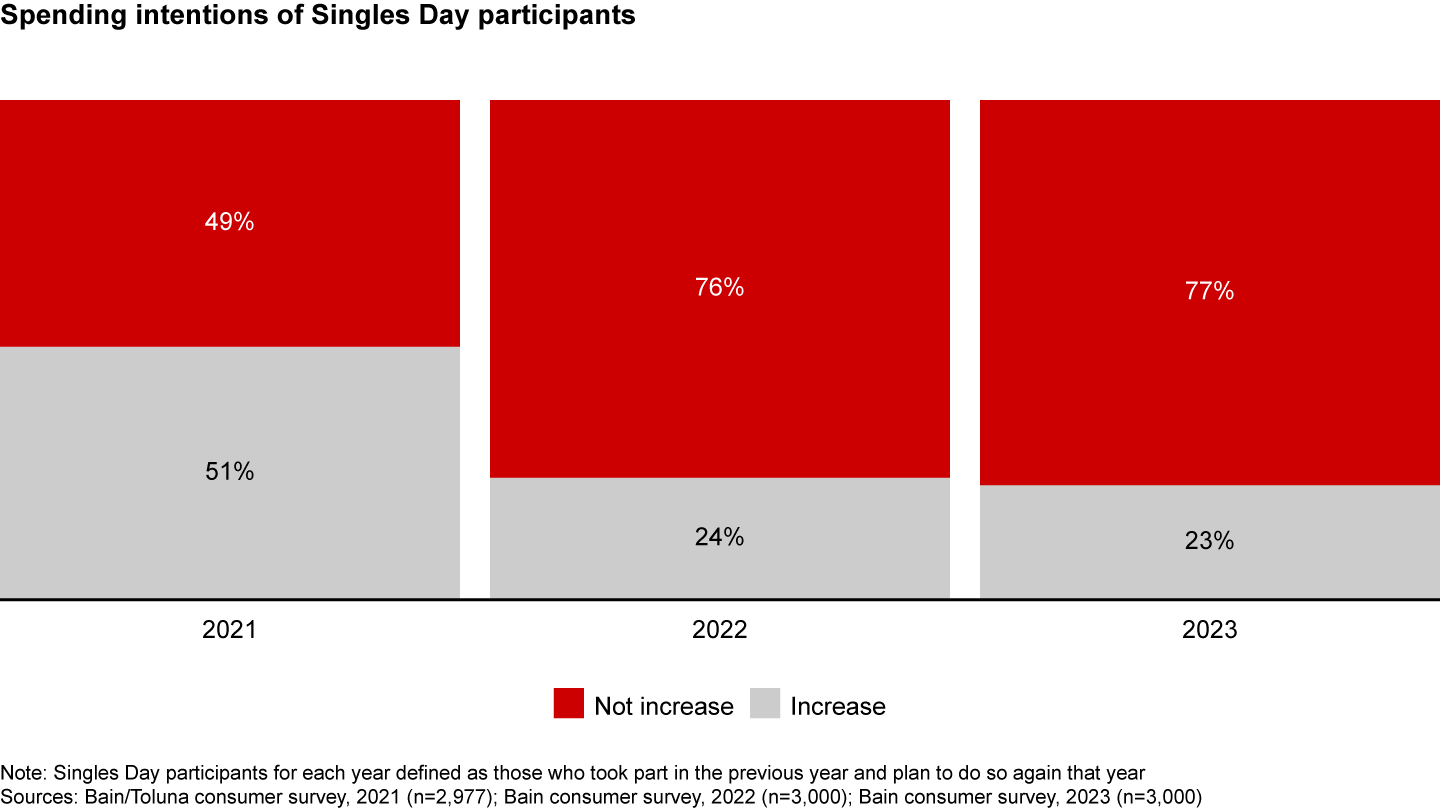
      Amid macroeconomic headwinds, only one in four shoppers is planning to increase their festival spending this year

      In 2023, there still seems to be an element of structural slowdown about the event linked to its longevity and scale. Only 53% of shoppers told us that they were excited by Singles Day, compared with 76% back in 2021. But this year’s survey also dug deeper into general spending intentions beyond Singles Day. That showed the spending caution related to the festival matches a more general mood of restraint: 71% of respondents told us they’d cut or maintain retail spending through 2023. Retailers are facing more than just discount fatigue.

      The flight to value

      The underlying trend is a flight to value. Our survey highlights which Chinese shoppers are likely to be more value conscious. Unsurprisingly, lower-income consumers—who represent about 60% of the Chinese population—were the most value-conscious (see Figure 2). There are geographic and demographic dynamics too. Those in Tier 3, 4, and 5 cities (which are smaller and not as rich as the Tier 1 and 2 conurbations) are most prone to feeling the squeeze, particularly if they are also in the boomer age cohort, Generation Z, or Generation X. That value-conscious mentality was also a feature for Gen Z shoppers in the bigger cities and higher income brackets, who haven’t yet built up the spending power of their older peers.

      Figure 2
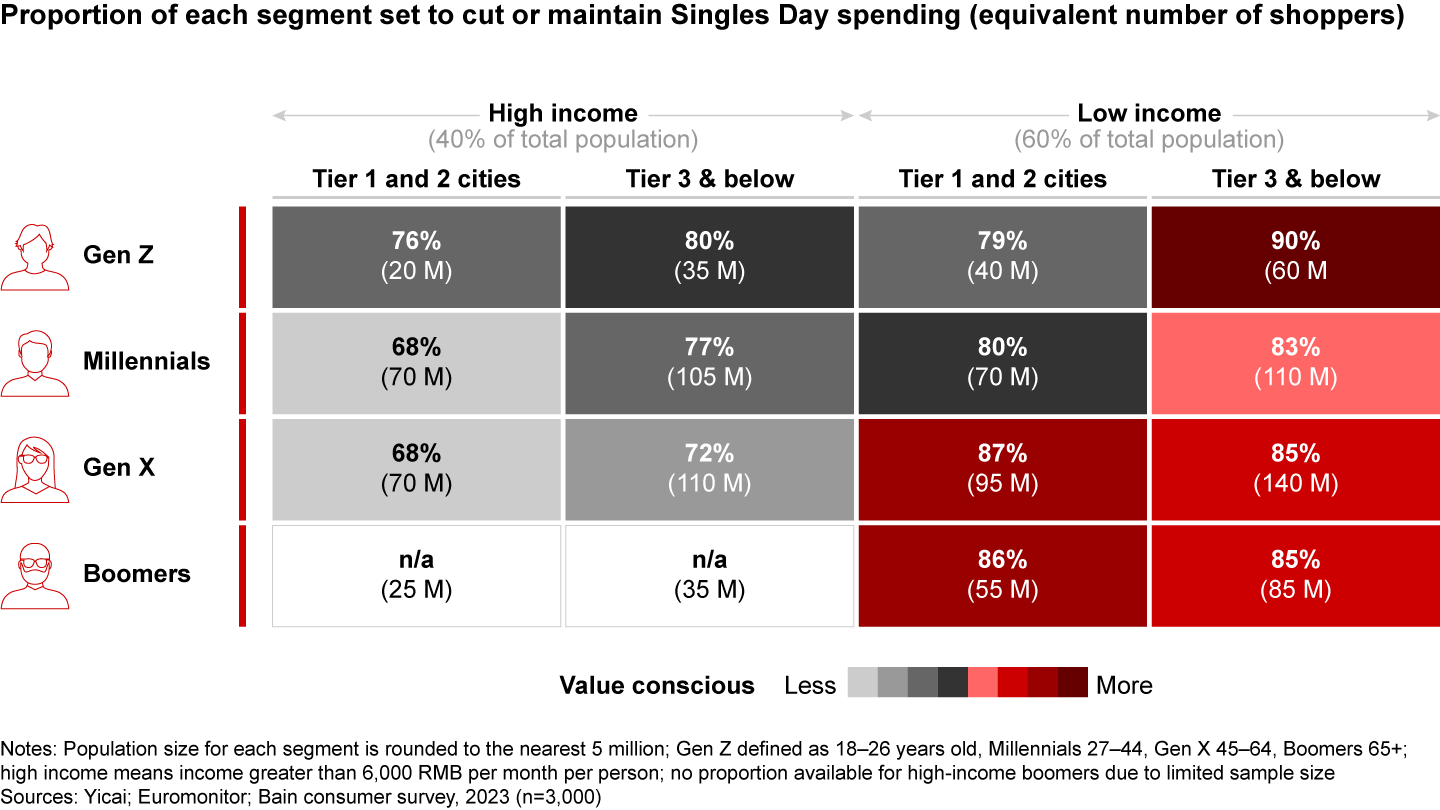
      Singles Day spending caution is more pronounced among lower-income consumers—especially those of Gen Z—in smaller and less wealthy cities

      In terms of the products that shoppers are buying, the flight to value is having a polarized effect across categories. At one level, shoppers are concentrating spending on necessities such as tissues, handwash, instant noodles, and pet food, while also trading down and buying less in discretionary or big-ticket categories such as home appliances and furniture. Yet at the same time, they are also still seeking small indulgences in areas such as dining out and travel.

      Similarly, when we asked Singles Day shoppers to state their top reason to spend during the festival, 45% were mainly seeking value. We looked closer at what this subset of value-seekers wanted. A significant proportion of them (35%) said that they were waiting for better promotions to make their money go further, while 18% were eyeing bulk deals. However, an even bigger proportion (48%) said they were opting for cheaper brands or switching to private label products.

      Against this belt-tightening backdrop, it’s no coincidence that Pinduoduo, the e-commerce platform known for its low prices, has been adding sales this year. Its parent, PDD Holdings, posted first-half revenue that was 63% higher than the same period in 2022 —far stronger than the average 2% gain posted by rival companies based on traditional e-commerce platforms. Pinduoduo’s success reflects a strategy of directing its promotional firepower to simple and continuous low prices (through its “10 billion yuan subsidy” initiative offering discounts on branded products, for instance), rather than complex, one-off discounts.  It has also pushed for an improvement in product quality on its platform, among other customer-friendly moves.

      Livestreaming redefines how to sell

      At the same time as hunting for the best deals on familiar channels, Chinese shoppers are also willing to devote their attention to more novel platforms that blur the boundaries between entertainment and retail, particularly the livestreaming e-commerce provided by the likes of Douyin, the TikTok sister app, and fellow short video/livestreaming platform Kuaishou.

      The rise of livestreaming—which typically consists of an influencer promoting one or more products in an entertaining broadcast that also facilitates purchases by viewers—was already visible on Singles Day last year. In the report we published before the 2022 festival, we questioned whether the gross merchandise value (GMV) of products flowing through traditional e-commerce platforms on Singles Day and the preceding promotional period would necessarily hit RMB 1 trillion, even though this sales milestone was almost reached in 2021.

      In the end, the GMV for these established players rose just 3% to RMB 934 billion (a meager gain by historic Singles Day standards), up from a restated RMB 908 billion in 2021. However, the Singles Day revenues flowing through livestreaming platforms in 2022 grew to a size where they demanded inclusion as an additional, distinct category within our overall GMV calculation. When factoring in these livestreaming revenues, Singles Day GMV rose to RMB 1.115 trillion (see Figure 3).

      Figure 3
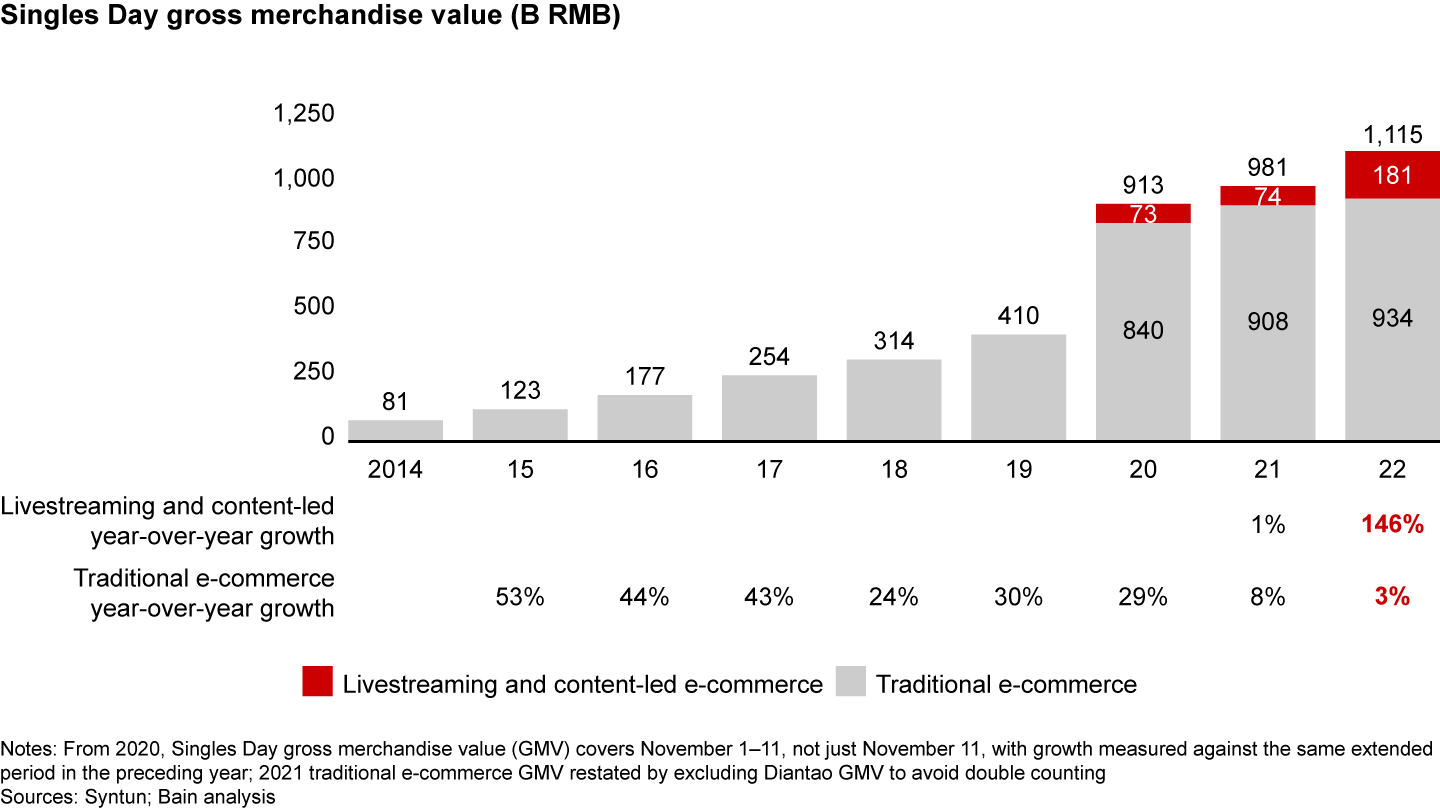
      Livestreaming platforms and other content-led retailers surged on Singles Day last year while sales growth eased further at traditional e-commerce players

      Singles Day livestreaming GMV more than doubled in 2022 from the 2021 installment, and retailers are poised to offer more ways to access the interactive shopping technology this time around. Shoppers are also telling us that they are keen on it, while another 46% were mainly seeking delight (through browsing interesting content or playing fun games, for instance).

      However, rapid growth in livestreaming penetration is not yet matched by average spending per short video/livestreaming customer, which significantly lags traditional e-commerce platforms. That shortfall tallies with concern about customer service. For instance, the minority of shoppers who signaled that they would cut spending on key livestreaming platforms during this year’s Singles Day event cited slow delivery, poor app design, and unsatisfying return policies.

      Value or entertainment? Maybe both, but at least one

      The head and the heart—Chinese consumers want to satisfy both right now. At the same time as demanding value, they want to be entertained or inspired. Some retailers in China are already finding ways to reconcile these potentially clashing needs, one rational, the other emotional.

      Take Decathlon, a retailer that is providing value and entertainment in a physical store context. It offers private label sportswear and equipment with a value proposition that stands out. That differentiation comes from constantly optimizing value-for-money in comparison to bigger name brands, rapidly launching new products to meet evolving customer demand, and exhaustive category coverage. At the same time, it delights customers through an amusement-park-like experience in its physical stores, which set aside large amounts of space for trying out equipment.

      A winning formula in China will combine everyday value with inspiration, amusement, or diversion. Of course, many will be at different stages of each journey. It’s important to bear in mind that there are multiple routes to these twin destinations. For instance, standing out for value-conscious shoppers might involve expanding a private label offering or offering unbeatable value.

      When it comes to entertaining customers, interactive, content-led online retailing models such as livestreaming are just one way to gain an edge. In-store “treasure hunt” experiences offer another path. For instance, the Sam’s Club warehouse chain lures its Chinese members back time and time again through frequent launches of new private-label products and interactive in-store displays that tie in with the seasons (e.g., camping goods in summer).

      There’s little doubt that the bar has been raised for both value- and content-led retailing in China, and it’s imperative that retailers respond rapidly. In the short term, executive teams can focus on the following actions. In all four areas, impeccable customer service will also be crucial to success.

      Private label: Focus on the most productive SKUs to offer low or entry-level price points to shoppers through value-engineered products, lower-cost sourcing, and simplified operations. Prioritize necessities with fragmented market share, high margins, supply chain advantages, and year-round relevance. Approach branding and design like a fast-moving consumer goods group: tiered, simple, memorable.

      Unbeatable value: Focus any high-low pricing on impulse or promotion-sensitive categories. Everyday low pricing is better targeted at frequent, planned purchases. Improve value perception through focusing on the most popular key value items, backed by in-store and online messaging. Use big data to personalize pricing and promotions online and customize by store cluster offline.

      Livestreaming/content:

      • Traditional platforms: Keep moving from a transaction-led to a content-led approach on apps, building a dedicated content team with cross-functional support—while using existing advantages (product assortment, supply chain, customer service) to attract and empower livestreaming hosts.
      • Omnichannel retailers: Create a closed loop between online and offline channels, exploiting livestreaming/content for branding and new product launches, as well as generating traffic to physical stores. Third-party creators can offer a quick entry to newcomers.
      • Livestreaming natives: Sharpen core retailing skills, emulating the strengths of incumbents. Tighten control of product quality and marketing claims. Accelerate customer service responses. Improve tracked fast delivery and make the returns and refund process more user-friendly.

      Treasure hunt experiences: Dig deep into customer behavior to predict which categories and products will light up the eyes of target shoppers. Tight rotation, time-limited offers, and clever store layout and displays can maintain the allure.

      Prompt action in the areas outlined above can help to supply a competitive edge. At the very least, China’s retailers will need to meet the demand for value or entertainment. But, even in today’s more challenging circumstances, it is possible for them to excel at both.

      Authors
      • Headshot of James Yang
        James Yang
        Alumni, Hong Kong
      • Headshot of Melanie Sanders
        Melanie Sanders
        Partner, Melbourne
      • Headshot of Kyle Tang
        Kyle Tang
        Associate Partner, Shanghai
      Contact us
      Related Industries
      • Retail
      Retail Holiday Newsletter
      The 2026 Retail Executive Agenda

      Here are letters to the C-suite to help strengthen strategy, catalyze collaboration, and expand value creation in the AI age.

      Read More
      Retail
      The 2025 Chinese Personal Luxury Goods Market

      Recalibration, resurgence, and more selective consumers are edging China’s personal luxury market toward recovery.

      Read More
      Retail Holiday Newsletter
      2030 Forecast: How Agentic AI Will Reshape US Retail

      Bain estimates that AI agents could be responsible for 15% to 25% of US e-commerce sales.

      Read More
      Retail
      2026 Global Retail Sales Outlook

      What can retailers in the US, UK, France, and Germany anticipate from shoppers this year?

      Read More
      Retail Holiday Newsletter
      Agentic AI in Retail: How Autonomous Shopping Is Redefining the Customer Journey

      As agentic AI transforms retail economics, industry leaders will compete for shoppers and agents alike.

      Read More
      Published in November 2023
      Tags
      • Retail
      • Retail Holiday Newsletter

      How We've Helped Clients

      Sales and Marketing Inspiring retail employees to think and act like owners

      Read case study

      Performance Improvement Retailer's performance improvement boosts shareholder value

      Read case study

      Digital Omnichannel strategy boosts fashion company

      Read case study

      Ready to talk?

      We work with ambitious leaders who want to define the future, not hide from it. Together, we achieve extraordinary outcomes.

      Stay ahead in a rapidly changing world. Subscribe to Bain Insights, our monthly look at the critical issues facing global businesses.

      *I have read and understand Bain’s Privacy Notice.

      Please read and agree to the Privacy Policy.
      Bain & Company
      Contact us Sustainability Accessibility Terms of use Privacy Modern Slavery Act Statement Cookie Policy Sitemap Log In

      © 1996-2026 Bain & Company, Inc.

      Contact Bain

      How can we help you?

      • Business inquiry
      • Career information
      • Press relations
      • Partnership request
      • Speaker request
      See all offices