Skip to Content
  • Offices

    Offices

    North & Latin America
    • Atlanta
    • Austin
    • Bogota
    • Boston
    • Buenos Aires
    • Chicago
    • Dallas
    • Denver
    • Houston
    • Los Angeles
    • Mexico City
    • Minneapolis
    • Monterrey
    • Montreal
    • New York
    • Rio de Janeiro
    • San Francisco
    • Santiago
    • São Paulo
    • Seattle
    • Silicon Valley
    • Toronto
    • Washington, DC
    Europe & Africa
    • Amsterdam
    • Athens
    • Berlin
    • Brussels
    • Copenhagen
    • Dusseldorf
    • Frankfurt
    • Helsinki
    • Istanbul
    • Johannesburg
    • Kyiv
    • Lisbon
    • London
    • Madrid
    • Milan
    • Munich
    • Oslo
    • Paris
    • Rome
    • Stockholm
    • Vienna
    • Warsaw
    • Zurich
    Middle East
    • Doha
    • Dubai
    • Riyadh
    Asia & Australia
    • Bangkok
    • Beijing
    • Bengaluru
    • Brisbane
    • Ho Chi Minh City
    • Hong Kong
    • Jakarta
    • Kuala Lumpur
    • Manila
    • Melbourne
    • Mumbai
    • New Delhi
    • Perth
    • Seoul
    • Shanghai
    • Singapore
    • Sydney
    • Tokyo
    See all offices
  • Alumni
  • Media Center
  • Subscribe
  • Contact
  • Global | English

    Select your region and language

    Global
    • Global (English)
    North & Latin America
    • Brazil (Português)
    • Argentina (Español)
    • Canada (Français)
    • Chile (Español)
    • Colombia (Español)
    Europe, Middle East, & Africa
    • France (Français)
    • DACH Region (Deutsch)
    • Italy (Italiano)
    • Spain (Español)
    • Greece (Elliniká)
    Asia & Australia
    • China (中文版)
    • Korea (한국어)
    • Japan (日本語)
  • Saved items (0)
    Saved items (0)

    You have no saved items.

    Bookmark content that interests you and it will be saved here for you to read or share later.

    Explore Bain Insights
  • Industries
    Main menu

    Industries

    • Aerospace & Defense
    • Agribusiness
    • Chemicals
    • Construction & Infrastructure
    • Consumer Products
    • Financial Services
    • Healthcare & Life Sciences
    • Industrial Machinery & Equipment
    • Media & Entertainment
      Industries
      Media & Entertainment
      • Media Lab
    • Metals
    • Mining
    • Oil & Gas
    • Paper & Packaging
    • Private Equity
      Industries
      Private Equity
      • Due Diligence
      • Exit Planning
      • Firm Strategy & Operations
      • Portfolio Value Creation
    • Social Impact
    • Retail
    • Technology
    • Telecommunications
      Industries
      Telecommunications
      • Capital Expenditure
      • Telco Digital Transformation
    • Transportation
    • Travel & Leisure
    • Utilities & Renewables
  • Consulting Services
    Main menu

    Consulting Services

    • Customer Experience
    • Sustainability
    • Innovation
    • M&A
    • Operations
    • People & Organization
    • Private Equity
    • Sales & Marketing
    • Strategy
    • AI, Insights, and Solutions
    • Technology
    • Transformation
  • Digital
  • Insights
    Main menu

    Insights

    • Industry Insights
    • Services Insights
    • Bain Books
    • Webinars
    • Bain Futures
    View all Insights
    Featured topics
    • Tariff Response
    • Artificial Intelligence
    • Thriving in Uncertainty
    • Executive Conversations
    • Macro Trends
    • M&A Report
    • Healthcare Private Equity Report
    • Paper & Packaging Report
    • Technology Report
    • CEO's Guide to Sustainability
    • CEO Insights
    • CFO Insights
    • COO Insights
    • CIO Insights
    • CMO Insights
    View all featured topics
  • About
    Main menu

    About

    • What We Do
    • What We Believe
    • Our People & Leadership
    • Client Results
    • Awards & Recognition
    • Global Affiliations
    Further: Our global responsibility
    • Sustainability
    • Social Impact
    • World Economic Forum
    Learn more about Further
  • Careers
    Main menu

    Careers

    • Work with Us
      Careers
      Work with Us
      • Find Your Place
      • Our Work Areas
      • Integrated Teams
      • Students
      • Internships & Programs
      • Recruiting Events
    • Life at Bain
      Careers
      Life at Bain
      • Blog: Inside Bain
      • Career Stories
      • Our People
      • Where We Work
      • Supporting Your Growth
      • Affinity Groups
      • Benefits
    • Impact Stories
    • Hiring Process
      Careers
      Hiring Process
      • What to Expect
      • Interviewing
    FIND JOBS
  • Offices
    Main menu

    Offices

    • North & Latin America
      Offices
      North & Latin America
      • Atlanta
      • Austin
      • Bogota
      • Boston
      • Buenos Aires
      • Chicago
      • Dallas
      • Denver
      • Houston
      • Los Angeles
      • Mexico City
      • Minneapolis
      • Monterrey
      • Montreal
      • New York
      • Rio de Janeiro
      • San Francisco
      • Santiago
      • São Paulo
      • Seattle
      • Silicon Valley
      • Toronto
      • Washington, DC
    • Europe & Africa
      Offices
      Europe & Africa
      • Amsterdam
      • Athens
      • Berlin
      • Brussels
      • Copenhagen
      • Dusseldorf
      • Frankfurt
      • Helsinki
      • Istanbul
      • Johannesburg
      • Kyiv
      • Lisbon
      • London
      • Madrid
      • Milan
      • Munich
      • Oslo
      • Paris
      • Rome
      • Stockholm
      • Vienna
      • Warsaw
      • Zurich
    • Middle East
      Offices
      Middle East
      • Doha
      • Dubai
      • Riyadh
    • Asia & Australia
      Offices
      Asia & Australia
      • Bangkok
      • Beijing
      • Bengaluru
      • Brisbane
      • Ho Chi Minh City
      • Hong Kong
      • Jakarta
      • Kuala Lumpur
      • Manila
      • Melbourne
      • Mumbai
      • New Delhi
      • Perth
      • Seoul
      • Shanghai
      • Singapore
      • Sydney
      • Tokyo
    See all offices
  • Alumni
  • Media Center
  • Subscribe
  • Contact
  • Global | English
    Main menu

    Select your region and language

    • Global
      Select your region and language
      Global
      • Global (English)
    • North & Latin America
      Select your region and language
      North & Latin America
      • Brazil (Português)
      • Argentina (Español)
      • Canada (Français)
      • Chile (Español)
      • Colombia (Español)
    • Europe, Middle East, & Africa
      Select your region and language
      Europe, Middle East, & Africa
      • France (Français)
      • DACH Region (Deutsch)
      • Italy (Italiano)
      • Spain (Español)
      • Greece (Elliniká)
    • Asia & Australia
      Select your region and language
      Asia & Australia
      • China (中文版)
      • Korea (한국어)
      • Japan (日本語)
  • Saved items  (0)
    Main menu
    Saved items (0)

    You have no saved items.

    Bookmark content that interests you and it will be saved here for you to read or share later.

    Explore Bain Insights
  • Industries
    • Industries

      • Aerospace & Defense
      • Agribusiness
      • Chemicals
      • Construction & Infrastructure
      • Consumer Products
      • Financial Services
      • Healthcare & Life Sciences
      • Industrial Machinery & Equipment
      • Media & Entertainment
      • Metals
      • Mining
      • Oil & Gas
      • Paper & Packaging
      • Private Equity
      • Social Impact
      • Retail
      • Technology
      • Telecommunications
      • Transportation
      • Travel & Leisure
      • Utilities & Renewables
  • Consulting Services
    • Consulting Services

      • Customer Experience
      • Sustainability
      • Innovation
      • M&A
      • Operations
      • People & Organization
      • Private Equity
      • Sales & Marketing
      • Strategy
      • AI, Insights, and Solutions
      • Technology
      • Transformation
  • Digital
  • Insights
    • Insights

      • Industry Insights
      • Services Insights
      • Bain Books
      • Webinars
      • Bain Futures
      View all Insights
      Featured topics
      • Tariff Response
      • Artificial Intelligence
      • Thriving in Uncertainty
      • Executive Conversations
      • Macro Trends
      • M&A Report
      • Healthcare Private Equity Report
      • Paper & Packaging Report
      • Technology Report
      • CEO's Guide to Sustainability
      • CEO Insights
      • CFO Insights
      • COO Insights
      • CIO Insights
      • CMO Insights
      View all featured topics
  • About
    • About

      • What We Do
      • What We Believe
      • Our People & Leadership
      • Client Results
      • Awards & Recognition
      • Global Affiliations
      Further: Our global responsibility
      • Sustainability
      • Social Impact
      • World Economic Forum
      Learn more about Further
  • Careers
    Popular Searches
    • Agile
    • Digital
    • Strategy
    Your Previous Searches
      Recently Visited Pages

      Content added to saved items

      Saved items (0)

      Removed from saved items

      Saved items (0)

      Brief

      HR’s New Digital Mandate

      HR’s New Digital Mandate

      Digital technologies have become essential for HR to engage top talent and add value to the business.

      By Michael Heric

      • min read
      }

      Brief

      HR’s New Digital Mandate
      en
      At a Glance
      • No facet of HR remains untouched by digital technologies, and the potential is just emerging. Applications range from machine learning predicting who will resign to chatbots handling out-sick notices.
      • Yet the digital transformation has not been easy. In Bain’s new survey, three-quarters of HR executives and managers say their current technologies have not yet achieved optimal performance.
      • Beyond the substantial cost savings digital can yield, respondents cite business outcomes such as speed, quality and accuracy as the primary reasons to invest.
      • While adopting new technologies, companies should still focus on simplifying and standardizing processes, data and systems.

      In the ongoing battle for top talent, digital technologies play an increasingly prominent role. Seismic changes in the workforce and workplace, driven by demographics, alternative work arrangements and various distance-busting technologies, are rewriting the rules of engagement. While digital tools accelerate that shift, they also offer new ways for human resources teams to attract great talent, then motivate and equip them.

      Employment practices are evolving every which way: from compensation and benefits to total rewards, from managing the employee population to managing a workforce ecosystem, from lifelong jobs to a career based on continuous learning, from annual performance reviews to continuous feedback, from individual achievement to team collaboration, and from personnel administration to workforce engagement.

      Bain Partner Sabine Atieh explains how HR leaders can streamline the transition to a more digital workplace.

      Digital technologies form the engine of this transformation. Those HR departments that master the deployment of technology will create a distinct and lasting competitive advantage in the hunt for talent in their industries. Bain & Company’s new survey of 500 HR executives and managers in the US, UK and Germany illuminates how to take advantage of digital’s potential and where the pitfalls lie.

      HR departments that find themselves falling behind can take solace in the fact that the digital transformation is still in early stages, so they can still catch up. Some 87% of respondents believe that digital will fundamentally change HR, but 75% acknowledge that their IT systems and technology have not yet achieved optimal performance or the business outcomes they desire. The window of time may be closing, however, as 57% of respondents plan to increase their IT budgets by 1% to 10% over the next two years, and 25% plan to increase budgets by more than 10% (see Figure 1).

      Figure 1
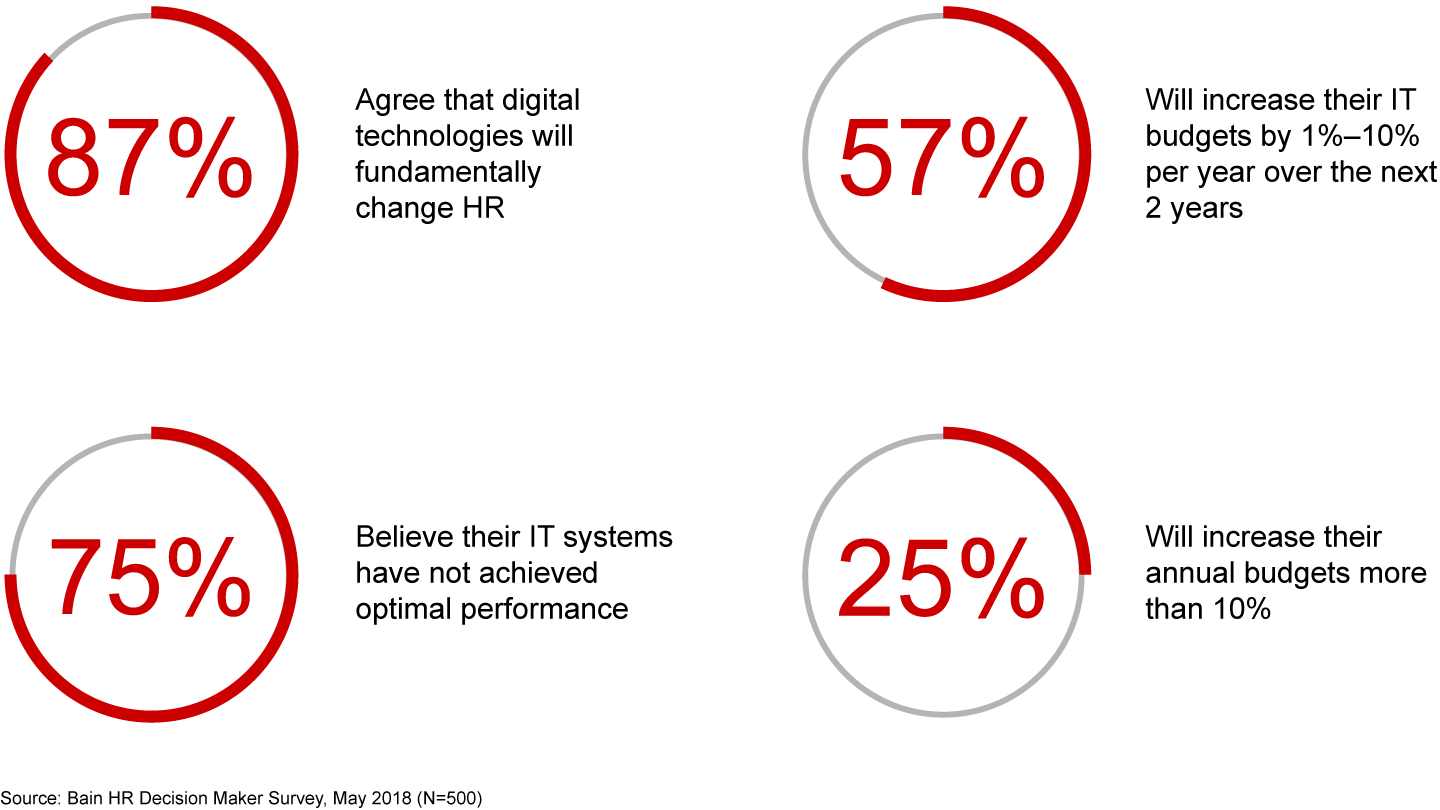
      HR leaders are investing to close the gaps in their digital systems
      HR leaders are investing to close the gaps in their digital systems
      HR leaders are investing to close the gaps in their digital systems

      Practical applications abound

      Many new technologies appear to have reached an inflection point for broad adoption over the next two years. HR departments are rapidly adopting new technologies such as recruiting management platforms, workforce analytics and micro-learning platforms. Cloud computing has gone mainstream, as 84% of large companies are already using at least one software-as-a-service (SaaS) application in at least one HR process. And blockchain pilots are underway in short-term recruiting, employment screening, payroll and other areas.

      Artificial intelligence (AI), in all its forms from robotic process automation (RPA) to machine learning to natural language processing (NLP), has already demonstrated promising results. For example, machine learning can be up to 17 times more accurate than other methods at predicting who will resign. AI-based candidate screening in talent acquisition can improve hiring accuracy and, at Unilever, cut the time to hire by 75%. Recruiters at Johnson & Johnson, Atlassian, Twitter and other companies are using NLP to improve the quality of their job listings to devise a more inclusive workplace. And the Bain survey finds that roughly half of companies are now using or piloting RPA in at least one HR process, with adoption expected to reach 74% within two years.

      These AI applications just scratch the surface of digital’s potential (see Figure 2). In talent acquisition, digital technology can personalize the experience of recruiters and candidates while expanding the talent pool, filtering for candidates with the right skills more efficiently and effectively and helping identify future talent needs earlier. In workforce planning, technology identifies ideal team compositions and enhances collaboration among team members. In performance management, technology helps identify the metrics that truly matter for performance, and supports continuous feedback among employees, their peers and supervisors. In the realm of learning, technology pinpoints training needs earlier, and improves reach, engagement and information retention through hands-on, accessible methods.

      Figure 2
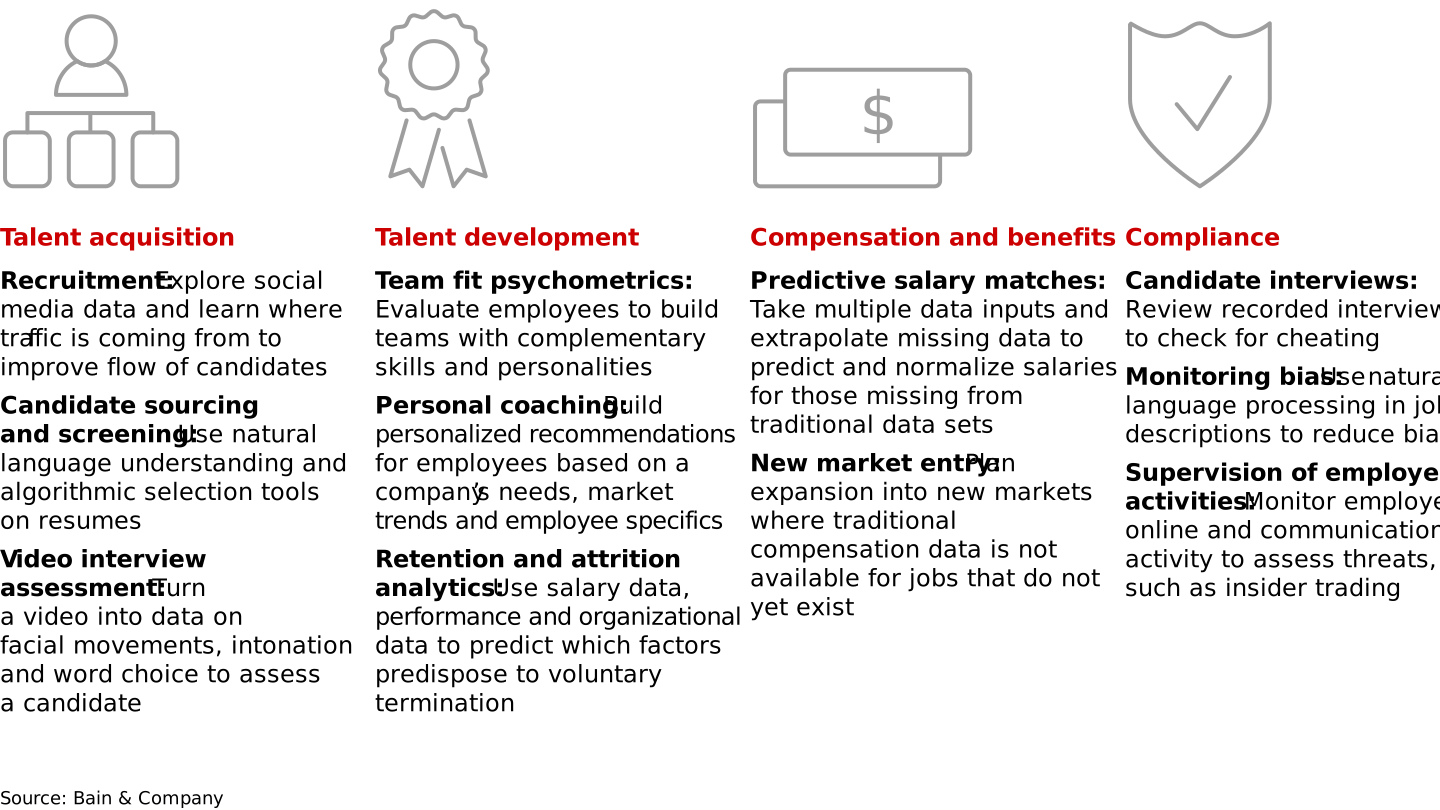
      Artificial intelligence applications such as these are proliferating in HR
      Figure 2: Artificial intelligence applications such as these are proliferating in HR
      Figure 2: Artificial intelligence applications such as these are proliferating in HR

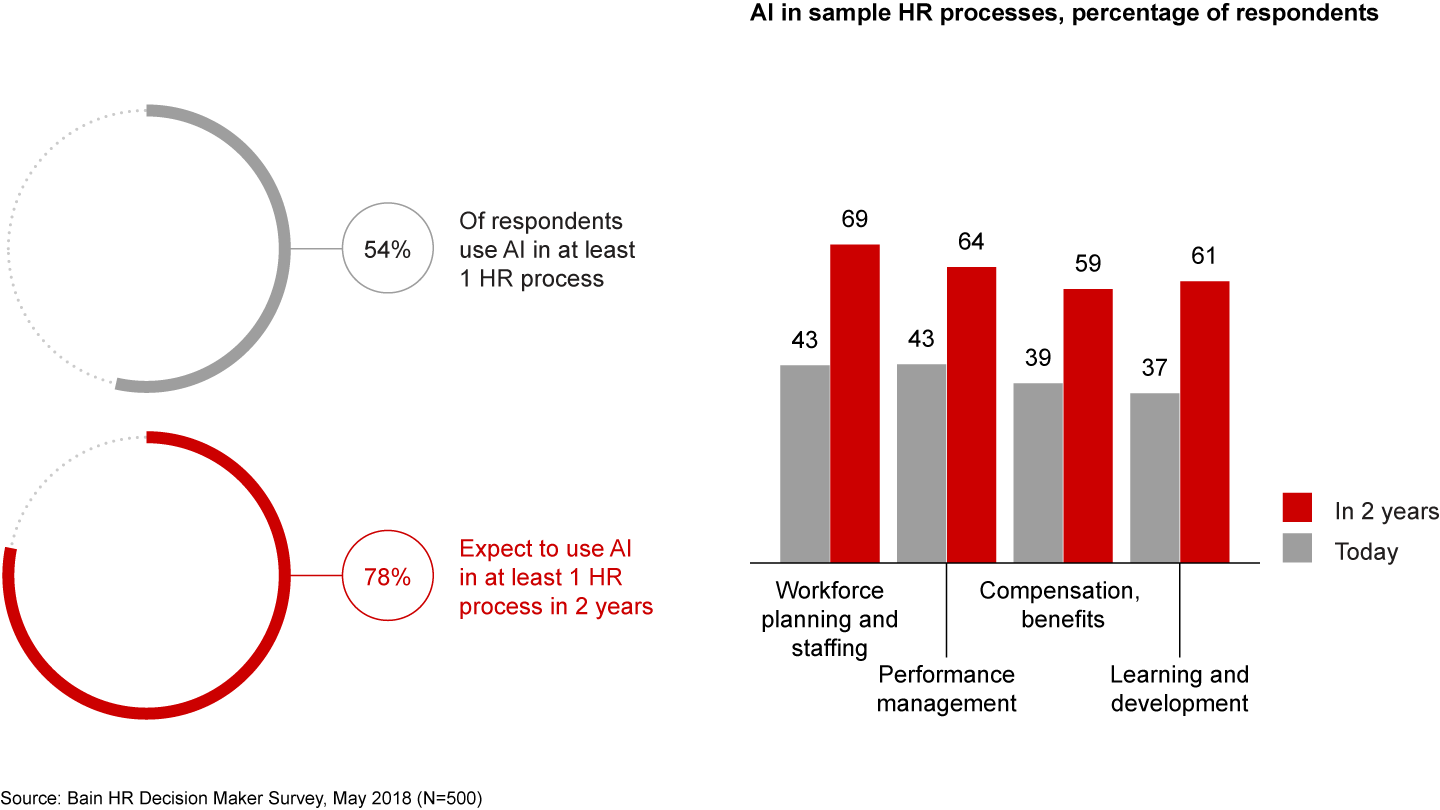
      Indeed, the appetite of HR leaders for more digital tools may outpace their ability to absorb the tools. Depending on the HR process in question, 23% to 31% of HR departments still use manual, Excel-based or paper-based processes as their primary method for delivering different HR services. These HR departments, however, are quickly moving off the sidelines. Our survey anticipates a sharp shift from manual to digital processes over the next two years: for instance, from 23% of HR departments primarily using manual processes in recruiting to 4%, and from 31% to 7% in career management (see Figure 3). Some 78% of HR departments expect to use machine learning in at least one HR process within two years (see Figure 4).

      Figure 3
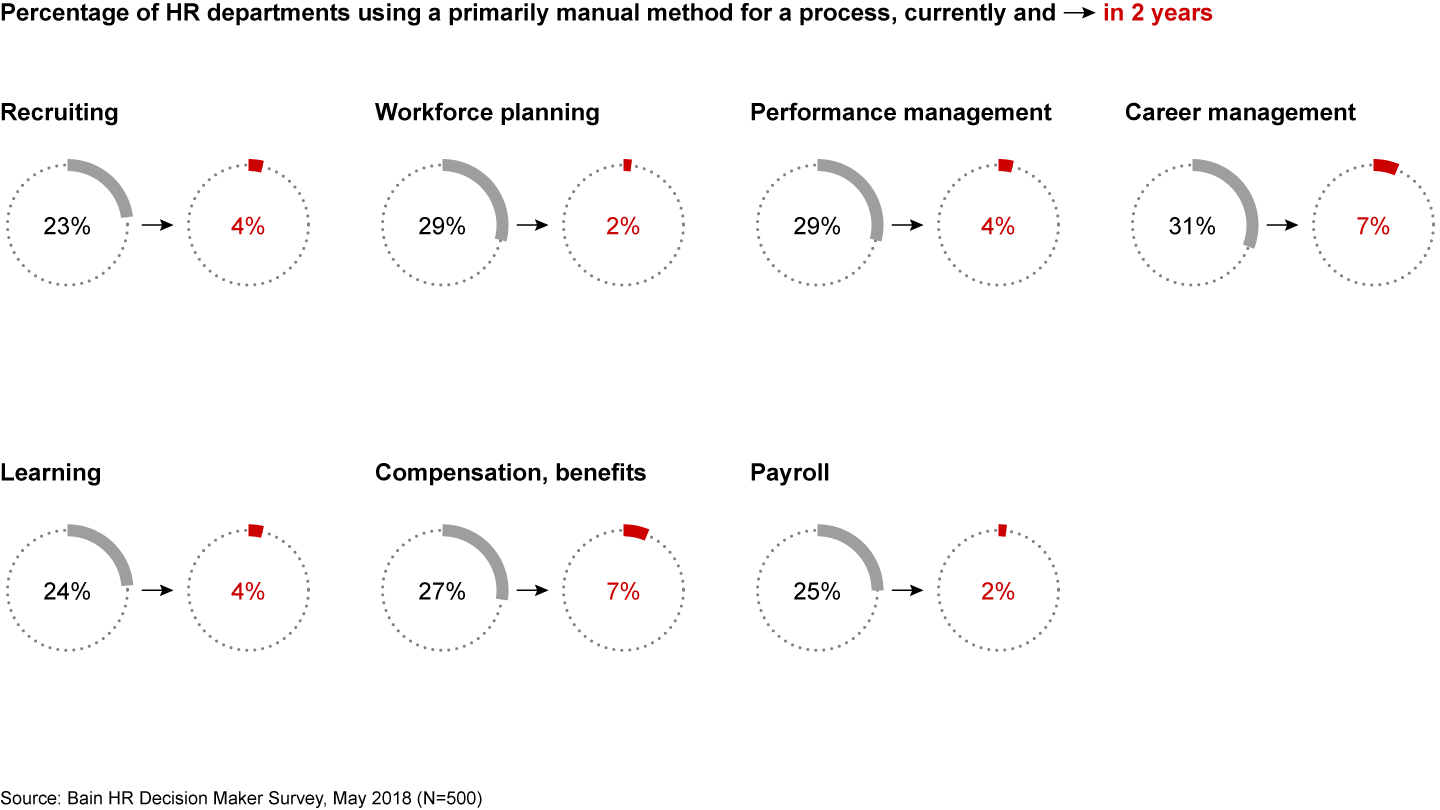
      HR departments plan a major shift from manual to digital processes
      HR departments plan a major shift from manual to digital processes
      HR departments plan a major shift from manual to digital processes
      Figure 4
      Most HR departments plan to adopt AI by 2020
      Figure 4: Most HR departments plan to adopt AI by 2020
      Figure 4: Most HR departments plan to adopt AI by 2020

      Points of aggravation

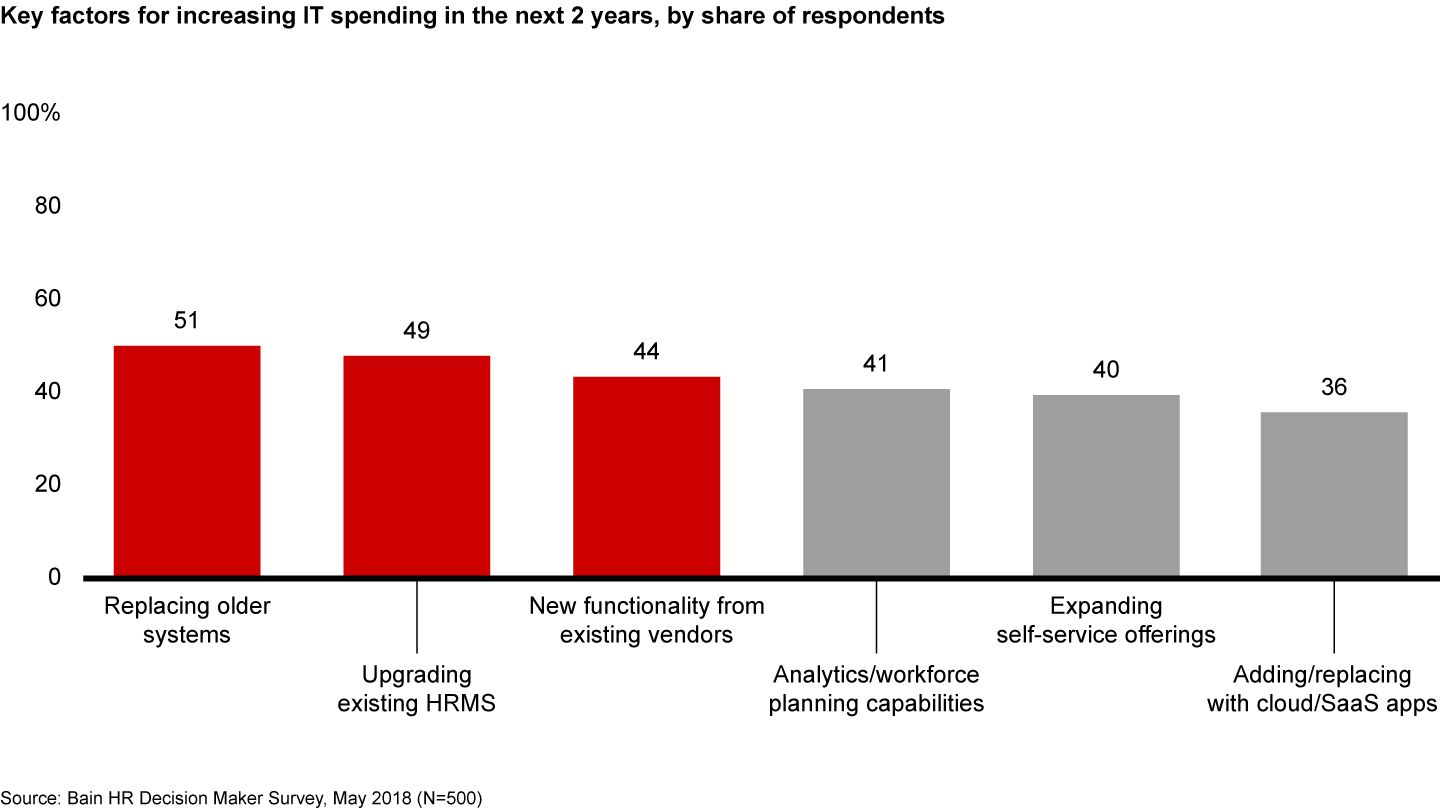
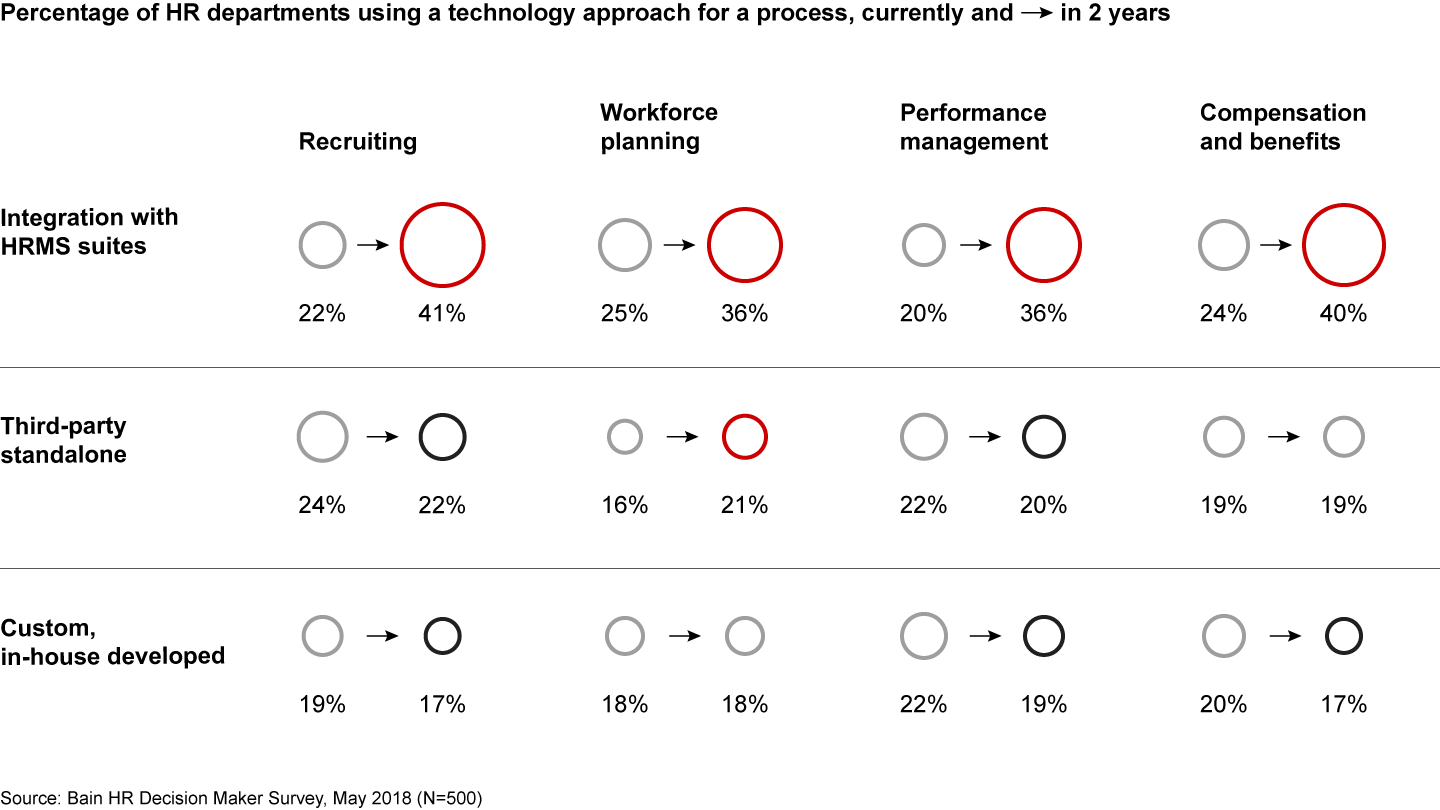
      That’s a hugely ambitious program. HR executives may be overconfident in how quickly they can make the shift, given how rocky the road has been so far in most HR departments. Which issues have caused the most aggravation? Respondents cite too many digital tools, especially unintegrated tools; interfaces that users find difficult to understand; and tools that are missing critical functions (see Figure 5) . Now, combine those problems with the most commonly cited reasons for increasing IT spending: replacing older systems, upgrading existing HR management systems (HRMS) and adding new functionality from current vendors (see Figure 6). In fact, a significant share of HR leaders are planning to buy more technology through HRMS suites rather than through third-party standalone tools or custom, in-house tools (see Figure 7). Not only do these responses signal big expectations of HRMS vendors, they suggest that HR departments could face even more complexity as they adopt new applications, unless they make a concerted effort to integrate functionality into their existing HRMS. The challenge will be to integrate all of the new technology on top of already disparate tools.

      Figure 5
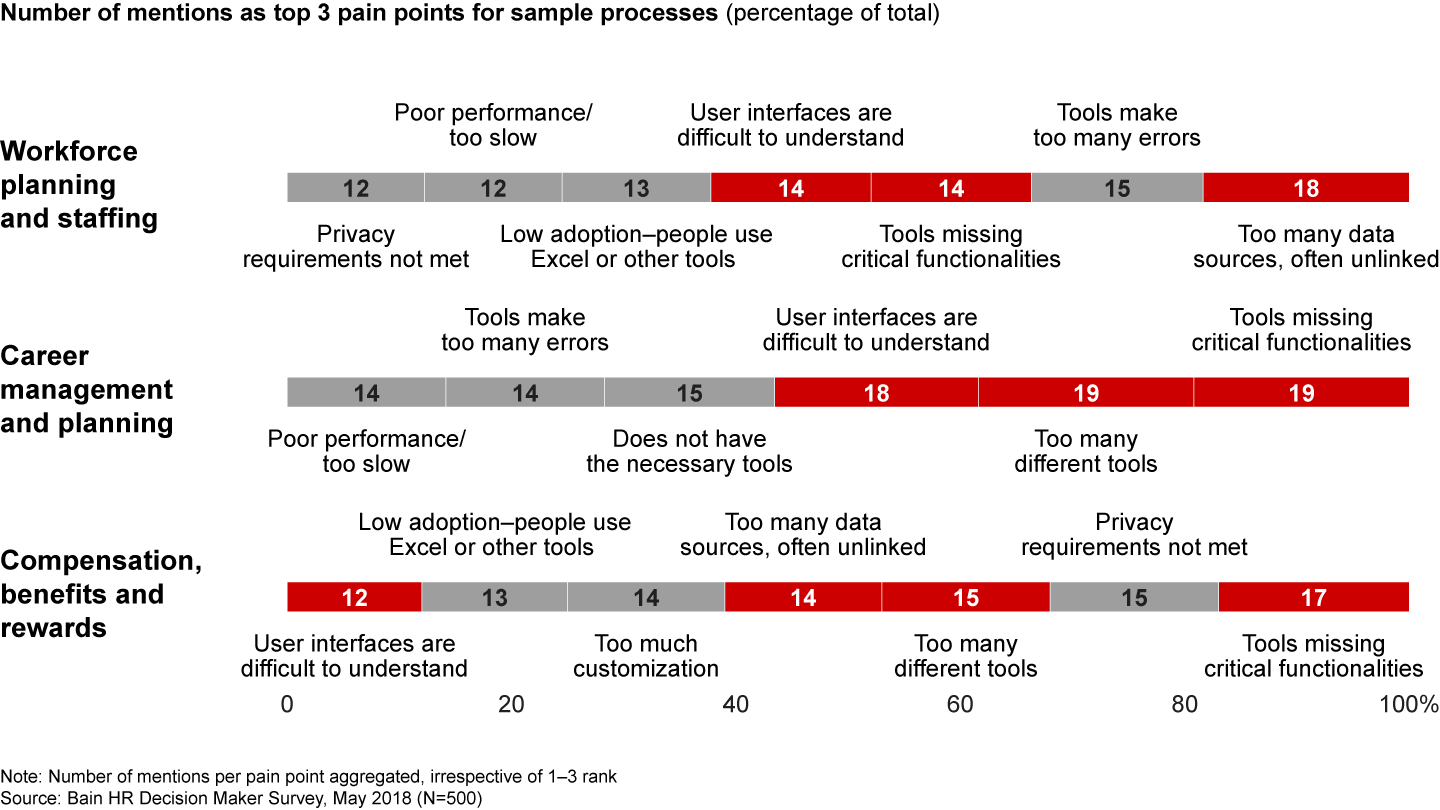
      HR departments most often struggle with unintegrated tools and data sources, lack of functionality and a poor user experience
      Figure 5: HR departments most often struggle with unintegrated tools and data sources, lack of functionality and a poor user experience
      Figure 5: HR departments most often struggle with unintegrated tools and data sources, lack of functionality and a poor user experience
      Figure 6
      Most companies plan to invest primarily in replacing older systems and upgrading their HR management systems
      Figure 6: Most companies plan to invest primarily in replacing older systems and upgrading their HR management systems
      Figure 6: Most companies plan to invest primarily in replacing older systems and upgrading their HR management systems
      Figure 7
      HR departments plan to buy more technology through HRMS suites and move away from custom, in-house tools
      Figure 7: HR departments plan to buy more technology through HRMS suites and move away from custom, in-house tools
      Figure 7: HR departments plan to buy more technology through HRMS suites and move away from custom, in-house tools

      Leading HR teams have found ways to navigate these challenges. Their experiences, combined with insights gleaned from our survey, suggest how companies can take the reins of their digital transformation, rather than be overwhelmed by it.

      Measure success based on business outcomes. Historically, HR used its technology to improve the productivity of HR processes. Today, the role of technology in HR has become more prominent. Companies turn to technology for reasons far beyond cost savings. In fact, for areas other than payroll and recruiting, reducing process-level costs is a much lower priority than broader business outcomes such as speed, accuracy and quality (see Figure 8).

      Figure 8
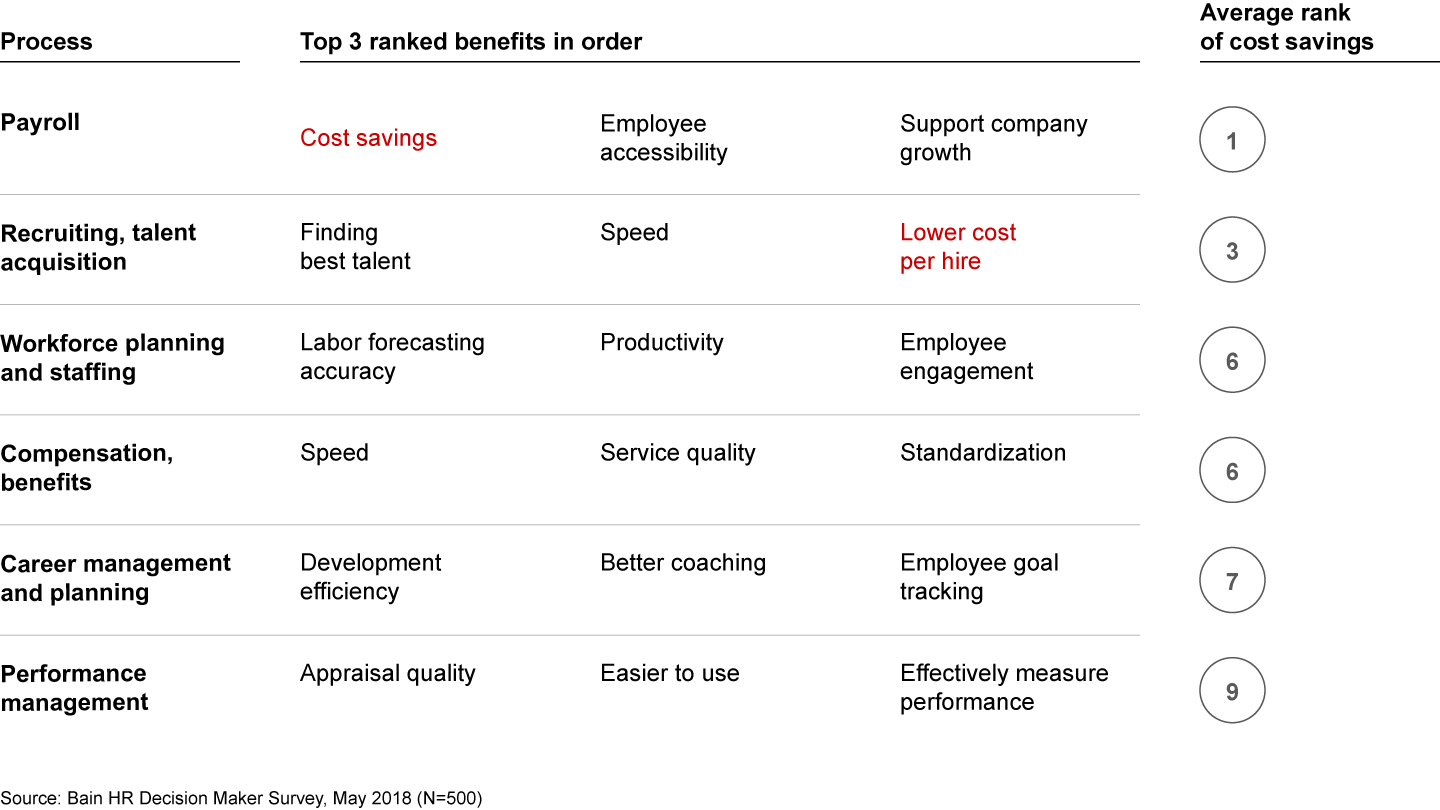
      HR is turning to digital for reasons beyond cost savings
      Figure 8: HR is turning to digital for reasons beyond cost savings
      Figure 8: HR is turning to digital for reasons beyond cost savings

      Bring rich, consumer-grade experiences to the workplace. HR’s customers across the lifecycle—including candidate, new joiner, retiring employee, manager and contractor—increasingly expect an experience as easy, convenient and personalized as they encounter with the best retailers or service providers. Leading companies are using digital technologies to meet these expectations. In 2016, Ford launched the HRRev program to streamline its people processes with technology. A seven-person People Lab gathered input from employees and devised experiments to improve processes. Multiple digital initiatives flowed from the experiments, including development of user-friendly HR tools, multichannel interaction models with HR, and real-time feedback tools.

      Raise the game on analytics. Analytics is proving to be a critical means of informing HR decisions. Google fields a dedicated People Analytics team to improve decision making in HR. People Analytics has helped Google on numerous HR issues, such as how to contain the number of required candidate interviews; what the best size and shape of a given department should be; how to reduce defections after maternity leave; and how to spot hidden gold in the millions of engineer candidate applications.

      Test and learn. Companies can get a lot of mileage out of technologies even at the experimental stage. Take chatbots, for instance. Online retailer Overstock relies on a bot named Mila to field notifications from call-center employees who are too sick to come to work. Mila passes on the information to managers and adjusts schedules automatically. This system replaced an outdated call-in hotline, saving Overstock time and money on lengthy phone conversations. The Marriott hotel chain deploys MC, a chatbot for initial interactions with job candidates over Facebook Messenger. MC responds to typical questions, matches candidates’ interests with open positions and educates on company’s culture and values. Marriott reported that more than 60% of candidates who interact with MC return later to initiate new conversations. While limited in functionality today, chatbots could become a viable way to communicate in many situations.

      Build ecosystems, not islands. As employees increasingly expect access to best-of-breed content, services and networks, HR departments no longer can staff all activities themselves. Instead, they are turning to partners outside the organization. Mastercard partnered with Degreed to create a learning platform for employees to discover, curate, share and track internal and external resources on thousands of topics in a variety of formats.

      Fix and simplify processes, data and systems. RPA and machine learning have a broad range of valuable applications. Often, though, it would be better if companies could simplify and standardize underlying business processes, data and systems. Take offer letter administration. RPA can conveniently draft offer letters for new employees that are tailored, accurate and compliant, by automating manual checking of data across diverse databases and regulations. However, some companies write offer letters in such a way as to create more questions than they answer, and there may be too many versions of the letter. Redesigning the offer letter template and moving to fewer versions, or to a single one, would reduce the manual work in need of automation through RPA in the first place.

      Similarly, machine learning can screen resumes from a large applicant pool in less time and with more accuracy than manual resume screening by human recruiters. However, a machine-learning algorithm works only as well as the quality of the data. First, machine learning needs a large volume of data to learn how to screen resumes as accurately as a human recruiter. Second, since machine learning finds patterns in past behavior, any human bias in the current recruiting process will need to be uncovered and removed when constructing an algorithm. Without addressing data governance and quality, algorithms have limited value.

      While artificial intelligence can provide new capabilities that traditional technologies cannot, these new technologies do not eliminate the need to address the root causes of inefficiencies. In some cases, such as with machine learning, the technology might not even function unless these root causes are addressed.

      For HR leaders committed to getting more selective in their digital investments, and doubling down on those that hold the greatest potential, it’s useful to answer several key questions.

      Do we understand exactly where our digital strengths and gaps lie? Based on that understanding, do we have a clear and compelling digital blueprint, supported by competitive investment levels?

      • How will we ensure that digital initiatives create a better experience? For example, in onboarding, how can technology improve the experience of new joiners and hiring managers?
      • How will we deliver broader business value, such as reducing time to acquire talent, in order to avoid disappointment?
      • Should we consider adopting a cloud-first policy across HR technologies?
      • How will we contain the sprawl of applications that could result from trying all the new tools available?
      • Which organizational capabilities do we need to shore up to achieve our digital goals?

      To be sure, a chatbot or algorithm cannot address all HR issues. Human judgment remains valuable for assessing and motivating people. But the range of applications for digital continues to grow, and the mandate for HR executives is clear: They have an opportunity to create a portfolio of digital bets that will transform the workforce experience, make better talent decisions through analytics, automate processes, free up time for higher value activities, reduce costs and, most important, improve business outcomes.

      Michael Heric is a partner with Bain & Company’s Performance Improvement practice, and leads the firm’s support functions capabilities globally. He is based in New York.

      Authors
      • Headshot of Michael Heric
        Michael Heric
        Partner, New York
      Contact us
      Related Consulting Services
      • Automation
      • Support Functions
      How We Can Help
      • Business Process Redesign
      • HR Function Advantage
      HR Function Advantage
      HR’s New Digital Mandate

      There is still time for human resources leaders to make their digital transformations.

      Read More
      HR Function Advantage
      How Shared Services Organizations Can Scale Up by Earning Internal Customers’ Love

      How are we doing? When shared services organizations ask that question of their internal customers and act on the feedback, great business outcomes can happen.

      Read More
      Support Functions
      Gen AI in Finance Isn’t Failing—It’s Working Where It’s Built In

      The fastest payback comes from automating workflows, not piloting experiments.

      Read More
      Support Functions
      Breaking the G&A Cost Cycle

      How leading companies are unlocking sustainable efficiency.

      Read More
      HR Function Advantage
      The Great Talent Recalibration: How Macroeconomic Shifts Are Reshaping the CHRO Agenda

      Insights from Bain’s Chief People Officer Forum with economist Karen Harris, covering geopolitics, automation, demographic decline, and the future of global talent.

      Read More
      Published in October 2018
      Tags
      • Automation
      • Business Process Redesign
      • HR Function Advantage
      • Support Functions

      How We've Helped Clients

      Full Potential Transformation An Airline’s Journey from Insolvency to Profitability

      Read case study

      Performance Improvement Lean Six Sigma solves a commercial bank's growth problem

      Read case study

      Performance Improvement Streamlining engine assembly boosts output

      Read case study

      Ready to talk?

      We work with ambitious leaders who want to define the future, not hide from it. Together, we achieve extraordinary outcomes.

      Stay ahead in a rapidly changing world. Subscribe to Bain Insights, our monthly look at the critical issues facing global businesses.

      *I have read and understand Bain’s Privacy Notice.

      Please read and agree to the Privacy Policy.
      Bain & Company
      Contact us Sustainability Accessibility Terms of use Privacy Modern Slavery Act Statement Cookie Policy Sitemap Log In

      © 1996-2026 Bain & Company, Inc.

      Contact Bain

      How can we help you?

      • Business inquiry
      • Career information
      • Press relations
      • Partnership request
      • Speaker request
      See all offices