
Skip to Content
  • Offices

    Offices

    North & Latin America
    • Atlanta
    • Austin
    • Bogota
    • Boston
    • Buenos Aires
    • Chicago
    • Dallas
    • Denver
    • Houston
    • Los Angeles
    • Mexico City
    • Minneapolis
    • Monterrey
    • Montreal
    • New York
    • Rio de Janeiro
    • San Francisco
    • Santiago
    • São Paulo
    • Seattle
    • Silicon Valley
    • Toronto
    • Washington, DC
    Europe & Africa
    • Amsterdam
    • Athens
    • Berlin
    • Brussels
    • Copenhagen
    • Dusseldorf
    • Frankfurt
    • Helsinki
    • Istanbul
    • Johannesburg
    • Kyiv
    • Lisbon
    • London
    • Madrid
    • Milan
    • Munich
    • Oslo
    • Paris
    • Rome
    • Stockholm
    • Vienna
    • Warsaw
    • Zurich
    Middle East
    • Doha
    • Dubai
    • Riyadh
    Asia & Australia
    • Bangkok
    • Beijing
    • Bengaluru
    • Brisbane
    • Ho Chi Minh City
    • Hong Kong
    • Jakarta
    • Kuala Lumpur
    • Manila
    • Melbourne
    • Mumbai
    • New Delhi
    • Perth
    • Seoul
    • Shanghai
    • Singapore
    • Sydney
    • Tokyo
    See all offices
  • Alumni
  • Media Center
  • Subscribe
  • Contact
  • Global | English

    Select your region and language

    Global
    • Global (English)
    North & Latin America
    • Brazil (Português)
    • Argentina (Español)
    • Canada (Français)
    • Chile (Español)
    • Colombia (Español)
    Europe, Middle East, & Africa
    • France (Français)
    • DACH Region (Deutsch)
    • Italy (Italiano)
    • Spain (Español)
    • Greece (Elliniká)
    Asia & Australia
    • China (中文版)
    • Korea (한국어)
    • Japan (日本語)
  • Saved items (0)
    Saved items (0)

    You have no saved items.

    Bookmark content that interests you and it will be saved here for you to read or share later.

    Explore Bain Insights
  • Industries
    Main menu

    Industries

    • Aerospace & Defense
    • Agribusiness
    • Chemicals
    • Construction & Infrastructure
    • Consumer Products
    • Financial Services
    • Healthcare & Life Sciences
    • Industrial Machinery & Equipment
    • Media & Entertainment
      Industries
      Media & Entertainment
      • Media Lab
    • Metals
    • Mining
    • Oil & Gas
    • Paper & Packaging
    • Private Equity
      Industries
      Private Equity
      • Due Diligence
      • Exit Planning
      • Firm Strategy & Operations
      • Portfolio Value Creation
    • Social Impact
    • Retail
    • Technology
    • Telecommunications
      Industries
      Telecommunications
      • Capital Expenditure
      • Telco Digital Transformation
    • Transportation
    • Travel & Leisure
    • Utilities & Renewables
  • Consulting Services
    Main menu

    Consulting Services

    • Customer Experience
    • Sustainability
    • Innovation
    • M&A
    • Operations
    • People & Organization
    • Private Equity
    • Sales & Marketing
    • Strategy
    • AI, Insights, and Solutions
    • Technology
    • Transformation
  • Digital
  • Insights
    Main menu

    Insights

    • Industry Insights
    • Services Insights
    • Bain Books
    • Webinars
    • Bain Futures
    View all Insights
    Featured topics
    • Tariff Response
    • Artificial Intelligence
    • Thriving in Uncertainty
    • Executive Conversations
    • Macro Trends
    • M&A Report
    • Healthcare Private Equity Report
    • Paper & Packaging Report
    • Technology Report
    • CEO's Guide to Sustainability
    • CEO Insights
    • CFO Insights
    • COO Insights
    • CIO Insights
    • CMO Insights
    View all featured topics
  • About
    Main menu

    About

    • What We Do
    • What We Believe
    • Our People & Leadership
    • Client Results
    • Awards & Recognition
    • Global Affiliations
    Further: Our global responsibility
    • Sustainability
    • Social Impact
    • World Economic Forum
    Learn more about Further
  • Careers
    Main menu

    Careers

    • Work with Us
      Careers
      Work with Us
      • Find Your Place
      • Our Work Areas
      • Integrated Teams
      • Students
      • Internships & Programs
      • Recruiting Events
    • Life at Bain
      Careers
      Life at Bain
      • Blog: Inside Bain
      • Career Stories
      • Our People
      • Where We Work
      • Supporting Your Growth
      • Affinity Groups
      • Benefits
    • Impact Stories
    • Hiring Process
      Careers
      Hiring Process
      • What to Expect
      • Interviewing
    FIND JOBS
  • Offices
    Main menu

    Offices

    • North & Latin America
      Offices
      North & Latin America
      • Atlanta
      • Austin
      • Bogota
      • Boston
      • Buenos Aires
      • Chicago
      • Dallas
      • Denver
      • Houston
      • Los Angeles
      • Mexico City
      • Minneapolis
      • Monterrey
      • Montreal
      • New York
      • Rio de Janeiro
      • San Francisco
      • Santiago
      • São Paulo
      • Seattle
      • Silicon Valley
      • Toronto
      • Washington, DC
    • Europe & Africa
      Offices
      Europe & Africa
      • Amsterdam
      • Athens
      • Berlin
      • Brussels
      • Copenhagen
      • Dusseldorf
      • Frankfurt
      • Helsinki
      • Istanbul
      • Johannesburg
      • Kyiv
      • Lisbon
      • London
      • Madrid
      • Milan
      • Munich
      • Oslo
      • Paris
      • Rome
      • Stockholm
      • Vienna
      • Warsaw
      • Zurich
    • Middle East
      Offices
      Middle East
      • Doha
      • Dubai
      • Riyadh
    • Asia & Australia
      Offices
      Asia & Australia
      • Bangkok
      • Beijing
      • Bengaluru
      • Brisbane
      • Ho Chi Minh City
      • Hong Kong
      • Jakarta
      • Kuala Lumpur
      • Manila
      • Melbourne
      • Mumbai
      • New Delhi
      • Perth
      • Seoul
      • Shanghai
      • Singapore
      • Sydney
      • Tokyo
    See all offices
  • Alumni
  • Media Center
  • Subscribe
  • Contact
  • Global | English
    Main menu

    Select your region and language

    • Global
      Select your region and language
      Global
      • Global (English)
    • North & Latin America
      Select your region and language
      North & Latin America
      • Brazil (Português)
      • Argentina (Español)
      • Canada (Français)
      • Chile (Español)
      • Colombia (Español)
    • Europe, Middle East, & Africa
      Select your region and language
      Europe, Middle East, & Africa
      • France (Français)
      • DACH Region (Deutsch)
      • Italy (Italiano)
      • Spain (Español)
      • Greece (Elliniká)
    • Asia & Australia
      Select your region and language
      Asia & Australia
      • China (中文版)
      • Korea (한국어)
      • Japan (日本語)
  • Saved items  (0)
    Main menu
    Saved items (0)

    You have no saved items.

    Bookmark content that interests you and it will be saved here for you to read or share later.

    Explore Bain Insights
  • Industries
    • Industries

      • Aerospace & Defense
      • Agribusiness
      • Chemicals
      • Construction & Infrastructure
      • Consumer Products
      • Financial Services
      • Healthcare & Life Sciences
      • Industrial Machinery & Equipment
      • Media & Entertainment
      • Metals
      • Mining
      • Oil & Gas
      • Paper & Packaging
      • Private Equity
      • Social Impact
      • Retail
      • Technology
      • Telecommunications
      • Transportation
      • Travel & Leisure
      • Utilities & Renewables
  • Consulting Services
    • Consulting Services

      • Customer Experience
      • Sustainability
      • Innovation
      • M&A
      • Operations
      • People & Organization
      • Private Equity
      • Sales & Marketing
      • Strategy
      • AI, Insights, and Solutions
      • Technology
      • Transformation
  • Digital
  • Insights
    • Insights

      • Industry Insights
      • Services Insights
      • Bain Books
      • Webinars
      • Bain Futures
      View all Insights
      Featured topics
      • Tariff Response
      • Artificial Intelligence
      • Thriving in Uncertainty
      • Executive Conversations
      • Macro Trends
      • M&A Report
      • Healthcare Private Equity Report
      • Paper & Packaging Report
      • Technology Report
      • CEO's Guide to Sustainability
      • CEO Insights
      • CFO Insights
      • COO Insights
      • CIO Insights
      • CMO Insights
      View all featured topics
  • About
    • About

      • What We Do
      • What We Believe
      • Our People & Leadership
      • Client Results
      • Awards & Recognition
      • Global Affiliations
      Further: Our global responsibility
      • Sustainability
      • Social Impact
      • World Economic Forum
      Learn more about Further
  • Careers
    Popular Searches
    • Agile
    • Digital
    • Strategy
    Your Previous Searches
      Recently Visited Pages

      Content added to saved items

      Saved items (0)

      Removed from saved items

      Saved items (0)

      Report

      Motivations for Work Are Changing
      en

      It’s perhaps unsurprising that Nikola Tesla and John Maynard Keynes foresaw a gradual disappearance of work when one considers what happened in the decades prior to their predictions. Between 1870 and 1930, the average weekly hours of a nonagricultural worker in the US fell by a quarter, from 59.5 to 44.5 (see Figure 1.1).

      At the onset of the Industrial Revolution, the working week was as long as physically bearable. Survival was the primary motive for work for all but a fortunate few. That all began to change as industrialization brought immense advances in living standards. By the early 20th century, working hours were falling, allowing more workers to spend their time as they chose.

      DOWNLOAD THE FULL REPORT (PDF)

      As growth decelerated in the West in the latter part of the last century, this trend began to taper, although it persists today. For instance, one study of time use in the UK found that average weekly leisure time increased by seven hours for men and five hours for women from 1961 to 2000. The average time spent caring for children also increased, by four hours a week for both men and women.
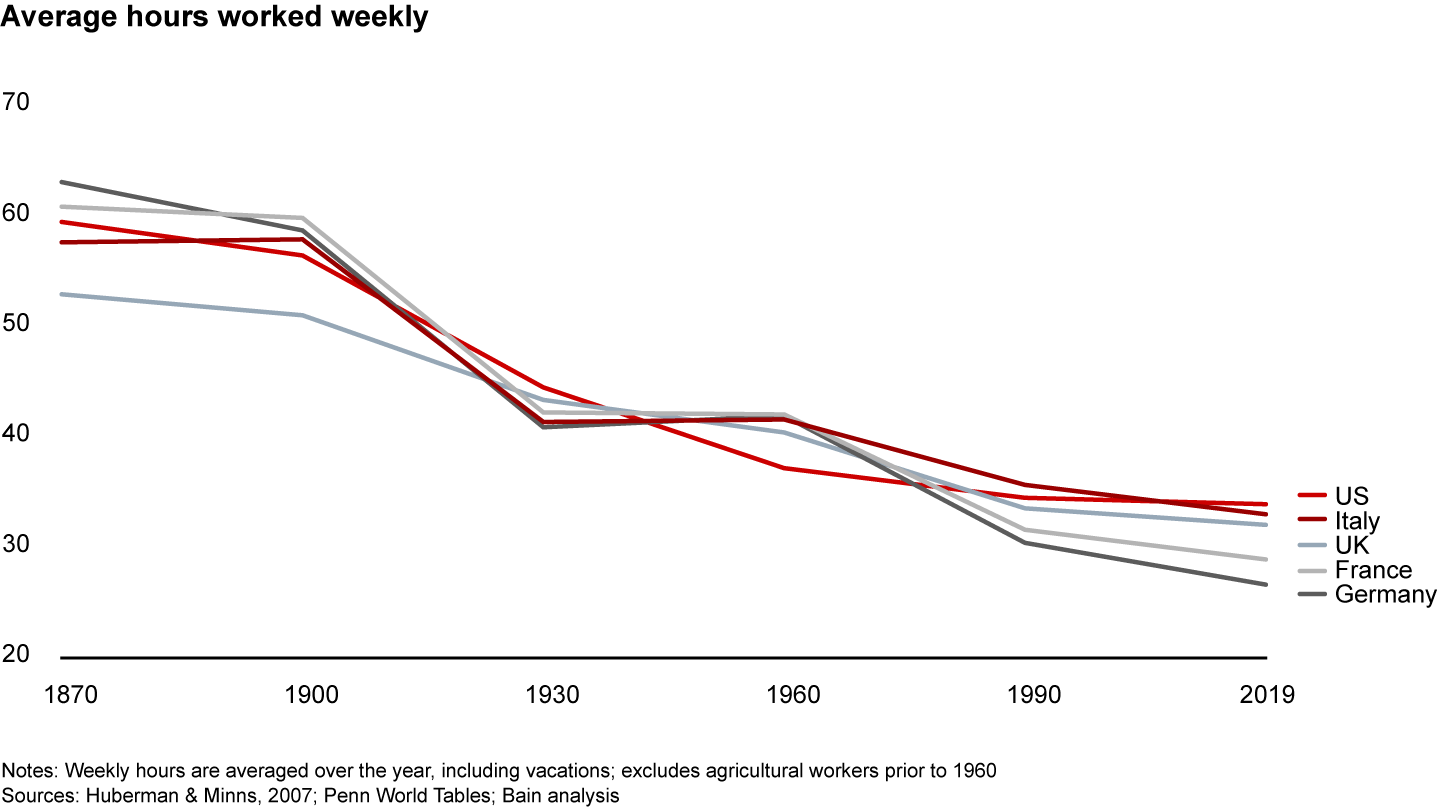
      Figure 1.1
      Rising prosperity has reduced the time that people need to spend working

      In addition, the subjective importance that we place on our jobs compared with other life factors has declined across successive generations. According to the World Values Survey, younger generations place a lower importance on work relative to leisure time compared with respondents in older generations who completed the survey at the same age (see Figure 1.2). The only outlier is Generation X—who were hit particularly hard by the 2007–09 financial crisis in terms of wealth and career prospects. We found a similar pattern in the importance of work compared with family.
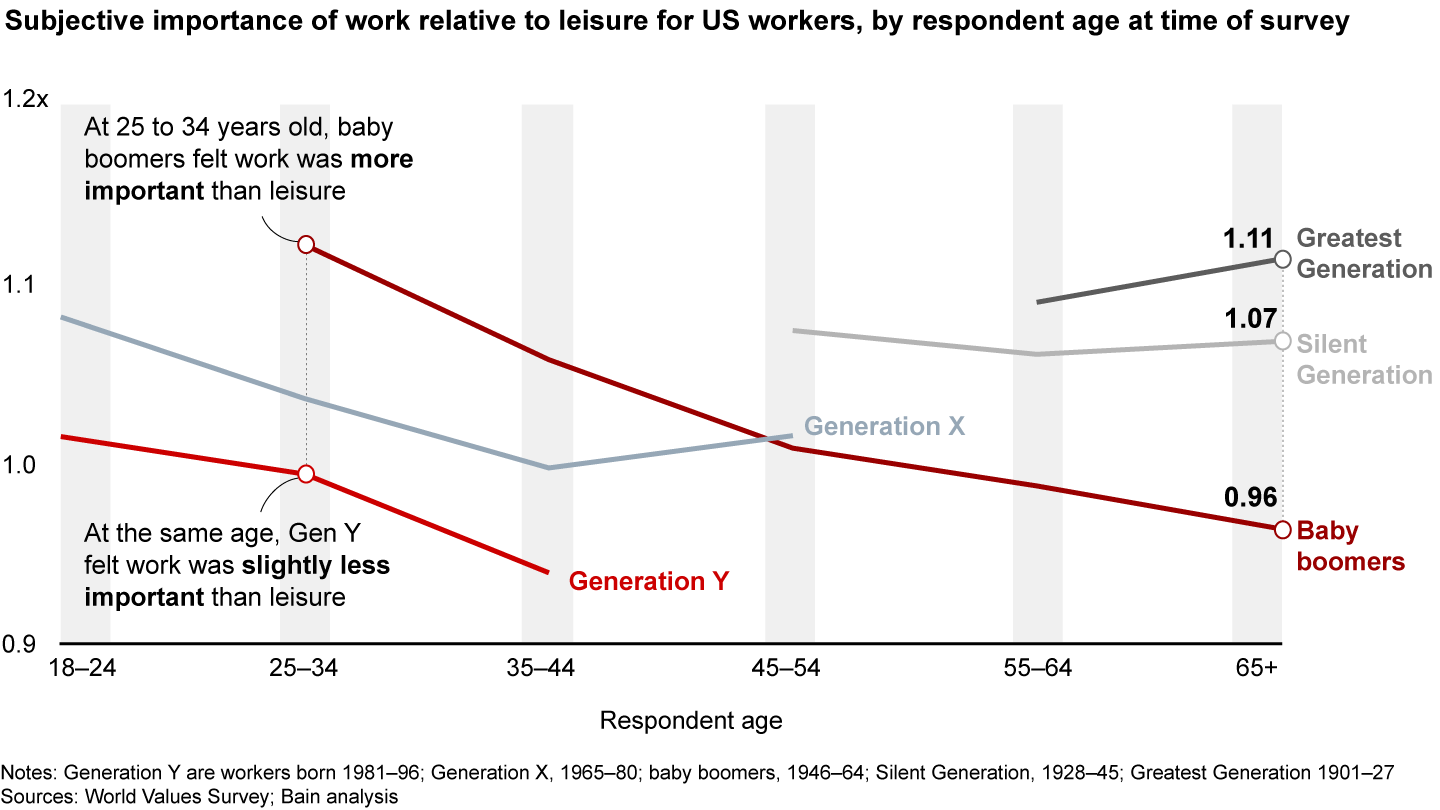
      Figure 1.2
      The importance placed on work relative to leisure has declined across generations

      This trend is not confined to the West. In general, as countries grow their GDP, workers gain greater economic freedom to spend time on other pursuits (see Figure 1.3). For instance, workers in China and India are also starting to place less importance on work relative to leisure.
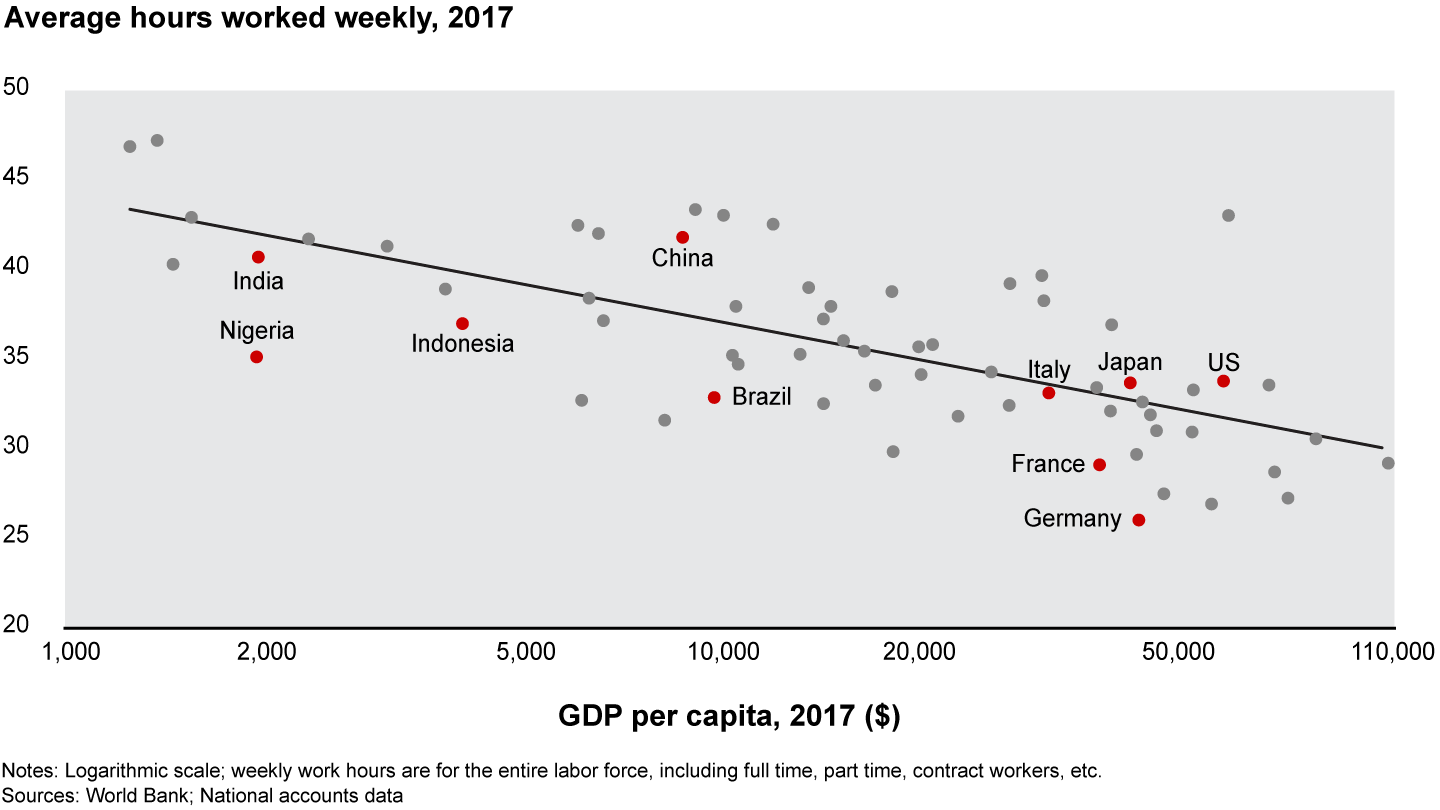
      Figure 1.3
      Hours of work tend to decline as countries become richer

      Does this mean that Tesla and Keynes were simply too early in their predictions of the demise of work? We expect not. As of 2017, only 28% of Americans said they would stop working altogether if they had enough money for the rest of their lives—down from 34% in 1995. As workers have become richer, they’ve recognized that a job can serve more than their basic economic needs. Globally, the richer a country, the lower the share of the population that believe a job is “just a way of earning money” (see Figure 1.4).
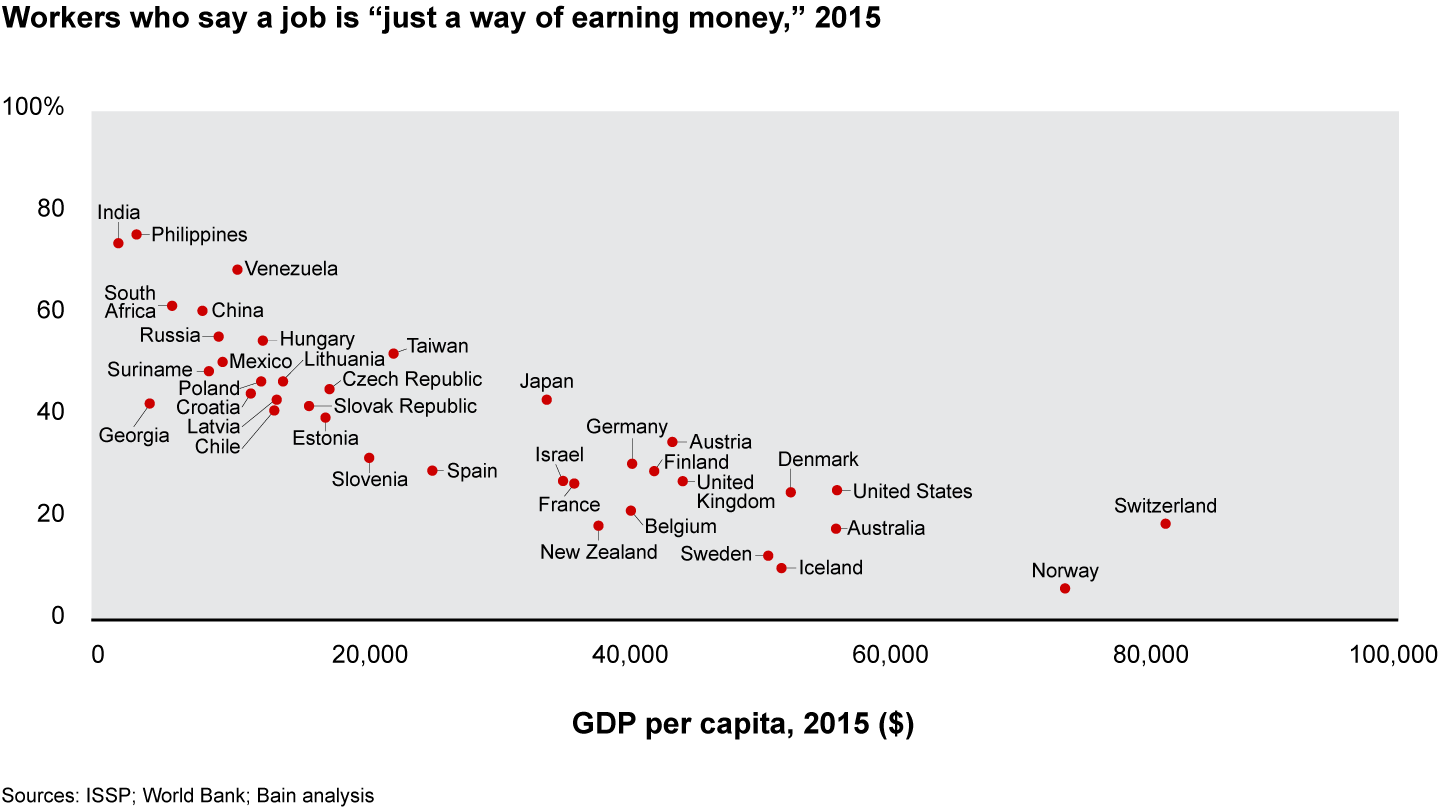
      Figure 1.4
      As incomes rise, our reasons for working extend beyond money

      According to our survey, only 22% of workers globally rank compensation as the thing that matters most to them in a job (see Figure 1.5). This isn’t to say that people will accept a job without fair pay: Compensation still ranks higher than all other job attributes, including interesting work at 15% and an inspiring company at 5%. It also ranks in the top three factors for 56% of respondents. But it’s evident that a coin-operated view of workers, where firm leaders see employment as a purely financial transaction, underestimates the deeper human motivations for work. And dissatisfied workers rank compensation higher than satisfied workers, suggesting that money is more often a source of demotivation for workers who feel underpaid than it is a source of inspiration for others.
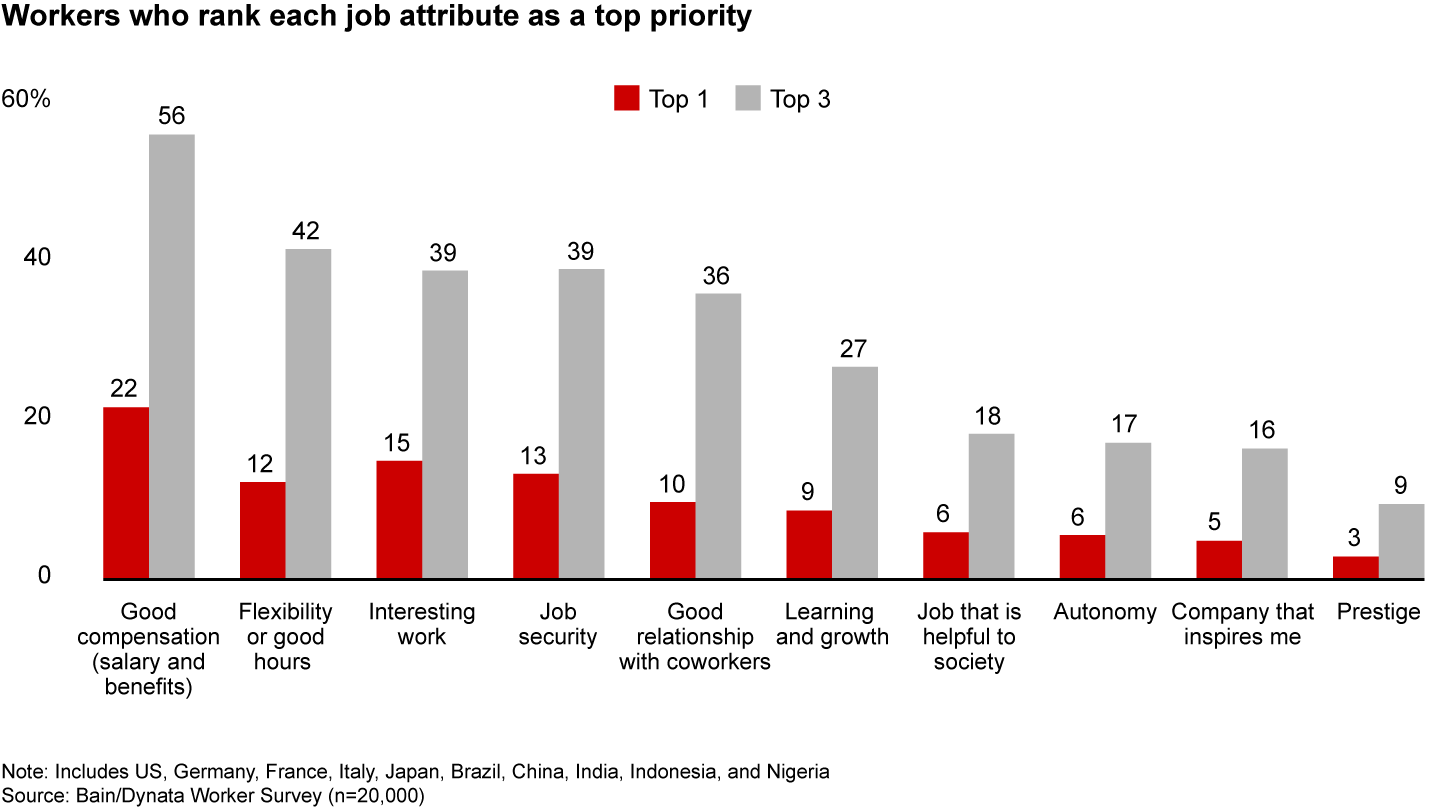
      Figure 1.5
      While workers rank compensation first over any other job attribute, it’s the top priority for one in five workers

      In rich countries, several social changes have likely broadened workers’ expectations around the needs a job should fulfill. As community institutions, such as sports clubs and volunteer associations, have declined in prominence, work has become a more important source of social connection. Similarly, as religious observance has fallen in the US and Europe, new generations of workers may have turned to their careers to provide a sense of higher purpose.

      “In general, as countries grow their GDP, workers gain greater economic freedom to spend time on other pursuits.”

      A shift in the nature of social class, which is now primarily reflected in one’s occupation, has also likely played a role in this change. Looking at the US, there’s been an inversion of the relationship between income and hours worked over the past century (see Figure 1.6). Far from the idle leisure class of bygone eras, the upper echelons of today’s society work the longest hours of all. Busyness is now a sign of status and importance. Those at the bottom of the income hierarchy work the least hours, as they are often unable to secure the stable full-time employment they desire (for more on this, see “Technological Change Is Blurring the Boundaries of the Firm”).
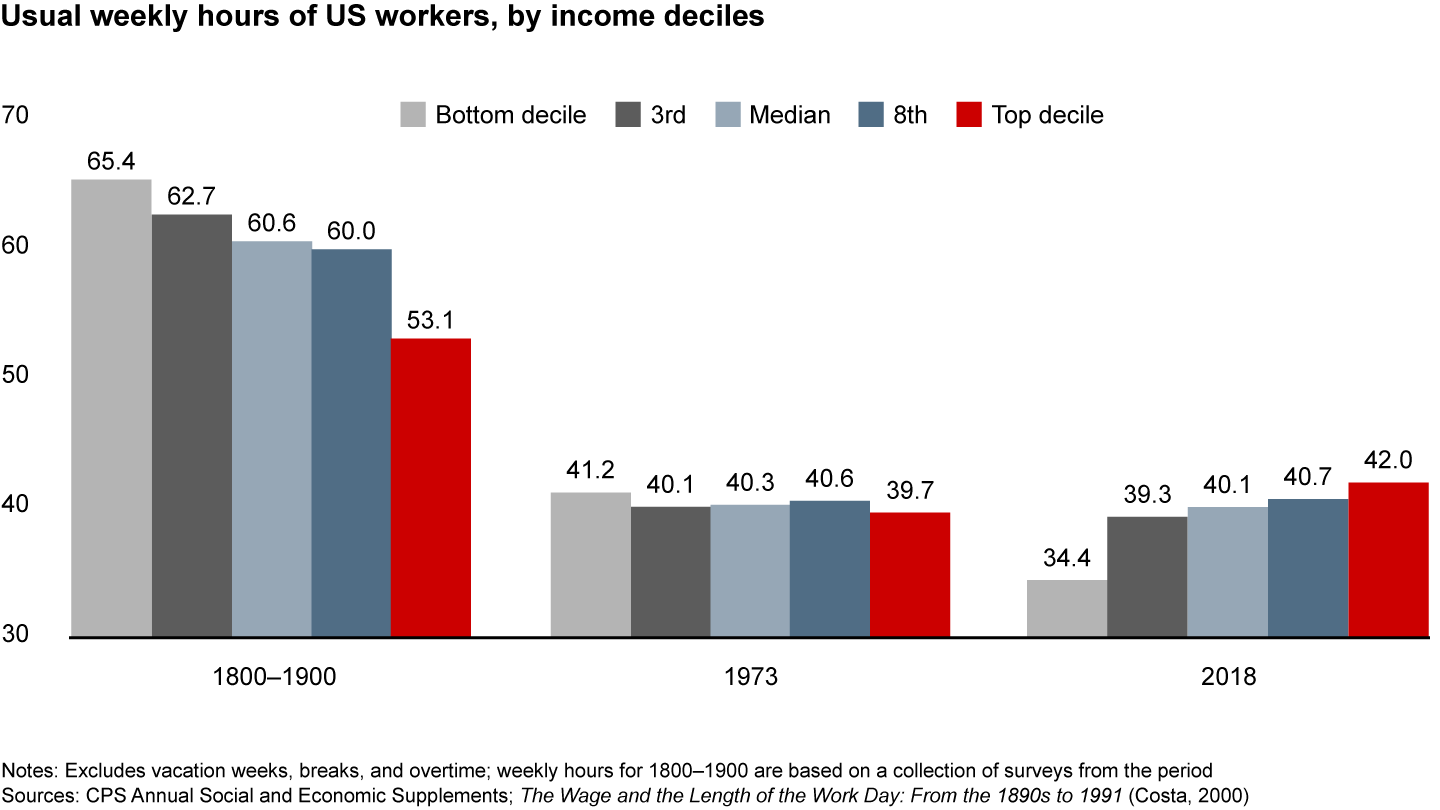
      Figure 1.6
      The relationship between income and number of working hours has flipped over the past century

      As the world has become richer, workers have increasingly shifted their focus from survival to meaning, with profound implications for how we think about work. Importantly, individuals can find a sense of purpose in many places, whether in a sense of achievement and upward mobility, mastery of a skill set, directly helping others, or simply being fully present in family life (for more, see the next chapter, "Beliefs about What Makes a 'Good Job' Are Diverging").

      Quiz

      What Type of Worker Are You?

      Six worker archetypes can help business leaders understand the messy world of individual personalities.

      Continue Reading

      Beliefs about What Makes a “Good Job” Are Diverging

      About the Research

      Data powered by Dynata, a leading global first-party data and insights platform.

      Authors
      • Headshot of Andrew Schwedel
        Andrew Schwedel
        Partner, New York
      • Headshot of James Root
        James Root
        Partner, Hong Kong
      • Headshot of James Allen
        James Allen
        Advisory Partner, London
      • Headshot of John Hazan
        John Hazan
        Partner, Paris
      • Eric Almquist
        Former Advisory Partner, Boston
      • Thomas Devlin
        Former Director, Bain Futures, London
      • Headshot of Karen Harris
        Karen Harris
        Managing Director, Macro Trends Group, New York
      Contact us
      Firm of the Future
      AI and Power: A Marriage of Necessity

      Tech and utilities are an unlikely pair, but how well they balance data center electricity demand and finite energy resources will have huge implications.

      Read More
      Firm of the Future
      How to Feed AI’s Hunger for Power

      The explosive growth of artificial intelligence will need a lot of electricity from a utility industry that hasn’t seen demand grow for 20 years.

      Read More
      Firm of the Future
      The Working Future In Gulf Cooperation Council Countries

      It's time to humanize how we think about work to appeal to today's talent.

      Read More
      Firm of the Future
      Automation May Not Come for Everyone's Job After All

      Uniquely human skills are becoming more important as the composition of the workforce shifts.

      Read More
      Firm of the Future
      Working Women and the War for Talent

      By addressing deeply rooted gender imbalances, firms can overcome the labor shortage.

      Read More
      Published in January 2022
      Tags
      • Firm of the Future
      • Leadership & Talent
      • People and Organization
      • Strategy

      How We've Helped Clients

      Strategy A Bold New Strategy Restores a Bank to a Leadership Position

      Read case study

      People and Organization A Video Game Company Levels Up With a New Operating Model

      Read case study

      People and Organization A global manufacturer's reorganization restores high profits

      Read case study

      Ready to talk?

      We work with ambitious leaders who want to define the future, not hide from it. Together, we achieve extraordinary outcomes.

      Stay ahead in a rapidly changing world. Subscribe to Bain Insights, our monthly look at the critical issues facing global businesses.

      *I have read and understand Bain’s Privacy Notice.

      Please read and agree to the Privacy Policy.
      Bain & Company
      Contact us Sustainability Accessibility Terms of use Privacy Modern Slavery Act Statement Cookie Policy Sitemap Log In

      © 1996-2026 Bain & Company, Inc.

      Contact Bain

      How can we help you?

      • Business inquiry
      • Career information
      • Press relations
      • Partnership request
      • Speaker request
      See all offices