
Skip to Content
  • 오피스

    오피스

    미주
    • Atlanta
    • Austin
    • Bogota
    • Boston
    • Buenos Aires
    • Chicago
    • Dallas
    • Denver
    • Houston
    • Los Angeles
    • Mexico City
    • Minneapolis
    • Monterrey
    • Montreal
    • New York
    • Rio de Janeiro
    • San Francisco
    • Santiago
    • São Paulo
    • Seattle
    • Silicon Valley
    • Toronto
    • Washington, DC
    유럽, 중동, 아프리카
    • Amsterdam
    • Athens
    • Berlin
    • Brussels
    • Copenhagen
    • Doha
    • Dubai
    • Dusseldorf
    • Frankfurt
    • Helsinki
    • Istanbul
    • Johannesburg
    • Kyiv
    • Lisbon
    • London
    • Madrid
    • Milan
    • Munich
    • Oslo
    • Paris
    • Riyadh
    • Rome
    • Stockholm
    • Vienna
    • Warsaw
    • Zurich
    아시아, 호주
    • Bangkok
    • Beijing
    • Bengaluru
    • Brisbane
    • Ho Chi Minh City
    • Hong Kong
    • Jakarta
    • Kuala Lumpur
    • Manila
    • Melbourne
    • Mumbai
    • New Delhi
    • Perth
    • Seoul
    • Shanghai
    • Singapore
    • Sydney
    • Tokyo
    오피스 전체보기
  • 얼럼나이
  • 미디어 센터
  • 구독
  • 연락처
  • Korea | 한국어

    지역 및 언어 선택

    글로벌
    • Global (English)
    미주
    • Brazil (Português)
    • Argentina (Español)
    • Canada (Français)
    • Chile (Español)
    • Colombia (Español)
    유럽, 중동, 아프리카
    • France (Français)
    • DACH Region (Deutsch)
    • Italy (Italiano)
    • Spain (Español)
    • Greece (Elliniká)
    아시아, 호주
    • China (中文版)
    • Korea (한국어)
    • Japan (日本語)
  • Saved items (0)
    Saved items (0)

    You have no saved items.

    관심 있는 내용을 북마크하여 Red 폴더에 저장할 수 있습니다. Red 폴더 에서 저장된 내용을 읽거나 공유해보세요.

    Explore Bain Insights
  • 산업
    메인 메뉴

    산업

    • 우주항공, 방산 및 정부 서비스
    • 농업 관련 산업
    • 화학
    • 인프라, 건설 및 건축 자재
    • 소비재
    • 금융 서비스
    • 헬스케어
    • 산업용 기계 및 장비
    • 미디어 및 엔터테인먼트
    • 금속
    • 광업
    • 석유 및 가스
    • 제지 및 패키징 산업
    • 사모펀드
    • 사회 및 공공 부문
    • 유통
    • 기술
    • 텔레콤
    • 운송
    • 여행·여가
    • 유틸리티 및 재생가능 에너지
  • 컨설팅 서비스
    메인 메뉴

    컨설팅 서비스

    • Customer Experience
    • ESG
    • Innovation
    • M&A
    • 운영
    • 조직
    • 사모펀드
    • 고객 전략 및 마케팅
    • 전략
    • AI, 인사이트 및 솔루션
    • Technology
    • 변화 혁신
  • Digital
  • 인사이트
  • 베인 소개
    메인 메뉴

    베인 소개

    • 업무 소개
    • 베인의 신념
    • 구성원 및 리더십 소개
    • 고객 성과
    • 주요 수상 경력
    • 글로벌 파트너사
    Further: Our global responsibility
    • 다양성과 포용
    • 사회 공헌 활동
    • Sustainability
    • World Economic Forum
    Learn more about Further
  • Careers
    메인 메뉴

    Careers

    • Work with Us
      Careers
      Work with Us
      • Find Your Place
      • Our Work Areas
      • Integrated Teams
      • Students
      • Internships & Programs
      • Recruiting Events
    • Life at Bain
      Careers
      Life at Bain
      • Blog: Inside Bain
      • Career Stories
      • Our People
      • Where We Work
      • Supporting Your Growth
      • Affinity Groups
      • Benefits
    • Impact Stories
    • Hiring Process
      Careers
      Hiring Process
      • What to Expect
      • Interviewing
    FIND JOBS
  • 오피스
    메인 메뉴

    오피스

    • 미주
      오피스
      미주
      • Atlanta
      • Austin
      • Bogota
      • Boston
      • Buenos Aires
      • Chicago
      • Dallas
      • Denver
      • Houston
      • Los Angeles
      • Mexico City
      • Minneapolis
      • Monterrey
      • Montreal
      • New York
      • Rio de Janeiro
      • San Francisco
      • Santiago
      • São Paulo
      • Seattle
      • Silicon Valley
      • Toronto
      • Washington, DC
    • 유럽, 중동, 아프리카
      오피스
      유럽, 중동, 아프리카
      • Amsterdam
      • Athens
      • Berlin
      • Brussels
      • Copenhagen
      • Doha
      • Dubai
      • Dusseldorf
      • Frankfurt
      • Helsinki
      • Istanbul
      • Johannesburg
      • Kyiv
      • Lisbon
      • London
      • Madrid
      • Milan
      • Munich
      • Oslo
      • Paris
      • Riyadh
      • Rome
      • Stockholm
      • Vienna
      • Warsaw
      • Zurich
    • 아시아, 호주
      오피스
      아시아, 호주
      • Bangkok
      • Beijing
      • Bengaluru
      • Brisbane
      • Ho Chi Minh City
      • Hong Kong
      • Jakarta
      • Kuala Lumpur
      • Manila
      • Melbourne
      • Mumbai
      • New Delhi
      • Perth
      • Seoul
      • Shanghai
      • Singapore
      • Sydney
      • Tokyo
    오피스 전체보기
  • 얼럼나이
  • 미디어 센터
  • 구독
  • 연락처
  • Korea | 한국어
    메인 메뉴

    지역 및 언어 선택

    • 글로벌
      지역 및 언어 선택
      글로벌
      • Global (English)
    • 미주
      지역 및 언어 선택
      미주
      • Brazil (Português)
      • Argentina (Español)
      • Canada (Français)
      • Chile (Español)
      • Colombia (Español)
    • 유럽, 중동, 아프리카
      지역 및 언어 선택
      유럽, 중동, 아프리카
      • France (Français)
      • DACH Region (Deutsch)
      • Italy (Italiano)
      • Spain (Español)
      • Greece (Elliniká)
    • 아시아, 호주
      지역 및 언어 선택
      아시아, 호주
      • China (中文版)
      • Korea (한국어)
      • Japan (日本語)
  • Saved items  (0)
    메인 메뉴
    Saved items (0)

    You have no saved items.

    관심 있는 내용을 북마크하여 Red 폴더에 저장할 수 있습니다. Red 폴더 에서 저장된 내용을 읽거나 공유해보세요.

    Explore Bain Insights
  • 산업
    • 산업

      • 우주항공, 방산 및 정부 서비스
      • 농업 관련 산업
      • 화학
      • 인프라, 건설 및 건축 자재
      • 소비재
      • 금융 서비스
      • 헬스케어
      • 산업용 기계 및 장비
      • 미디어 및 엔터테인먼트
      • 금속
      • 광업
      • 석유 및 가스
      • 제지 및 패키징 산업
      • 사모펀드
      • 사회 및 공공 부문
      • 유통
      • 기술
      • 텔레콤
      • 운송
      • 여행·여가
      • 유틸리티 및 재생가능 에너지
  • 컨설팅 서비스
    • 컨설팅 서비스

      • Customer Experience
      • ESG
      • Innovation
      • M&A
      • 운영
      • 조직
      • 사모펀드
      • 고객 전략 및 마케팅
      • 전략
      • AI, 인사이트 및 솔루션
      • Technology
      • 변화 혁신
  • Digital
  • 인사이트
  • 베인 소개
    • 베인 소개

      • 업무 소개
      • 베인의 신념
      • 구성원 및 리더십 소개
      • 고객 성과
      • 주요 수상 경력
      • 글로벌 파트너사
      Further: Our global responsibility
      • 다양성과 포용
      • 사회 공헌 활동
      • Sustainability
      • World Economic Forum
      Learn more about Further
  • Careers
    최근 검색어
      최근 방문 페이지

      Content added to saved items

      Saved items (0)

      Removed from saved items

      Saved items (0)

      Brief

      Tariffs: The Costs of Inaction

      Tariffs: The Costs of Inaction

      Trade levies are more than a headline. As tariffs tighten their grip on global commerce, companies must act decisively to mitigate risks and seize opportunities.

      글 Karen Harris, François Faelli, Hugo Parkinson, and Dunigan O'Keeffe

      • 읽기 소요시간
      }

      Brief

      Tariffs: The Costs of Inaction
      en

      Tariffs are no longer a distant policy issue; they are an immediate and complex challenge affecting most businesses. Leadership teams need to act decisively to navigate this disruptive landscape and plan for the broader implications in a fragmented global economy. Both short-term decisions and long-term strategies are essential to mitigate risks and capitalize on shifting opportunities.

      It helps to put tariffs in context, as symptoms of a larger geopolitical trend: the move from a globalized world to a post-global one. After decades of integrating markets, electorates are pushing back against policies of economic integration, with many nations implementing or considering more protectionist policies, to the detriment of nations that rely on exports. Fragmented markets are more costly for businesses and punish mistakes of prediction or forecasting more severely.

      Beware the lure of simplistic answers

      Predicting the precise impact of tariffs is a fraught exercise. Currency adjustments, retaliatory tariffs, and shifting trade flows create ripple effects that defy linear calculation. Efforts to quantify these impacts can sometimes yield false precision, leaving businesses ill prepared for the complexities ahead. Strategic responses require a balanced grasp of uncertainty, not blind reliance on models or assumptions.

      In general, a tariff is just a specific instance of a government tax that raises government savings (government revenue minus government spending), at the expense of different sectors of the economy: Households may incur higher prices, businesses may generate lower profits, and foreign trading partners may take a hit to their balance of trade. Which sectors ultimately bear the cost of a government’s change in policy is determined by a complex mix of supply and demand balances that vary across products and within those products’ value chains. 

      In the event of a broad increase in tariffs, it is virtually impossible to fully anticipate the net effect of the policy. We can, however, say it’s unlikely that the cost of the tariffs will be fully borne by either consumers or foreign entities. While the global economy is in a very different place than it was in 2017, back then tariffs had a negligible impact on US consumer price inflation; at the product level, though, the impact was varied, and it changed over time as well. 

      Beyond that, any changes in US tariff policy will produce many effects and countereffects, both within the US economy (e.g., the creation of domestic substitutes) and outside the US economy (e.g., the diversion of trade flows from tariffed to non-tariffed countries). While these effects would undoubtedly disrupt business plans and operations, they will also tend to mitigate the macroeconomic effects.

      More broadly, inflationary pressures from tariffs may be lower than many leadership teams assume (see Figure 1). To use an example of a highly disruptive scenario—the immediate imposition of 100% import tariffs on China—the net inflationary shock is likely to be substantially less acute than the post-pandemic inflationary shock when supply was globally constrained while demand was stimulated.

      Figure 1
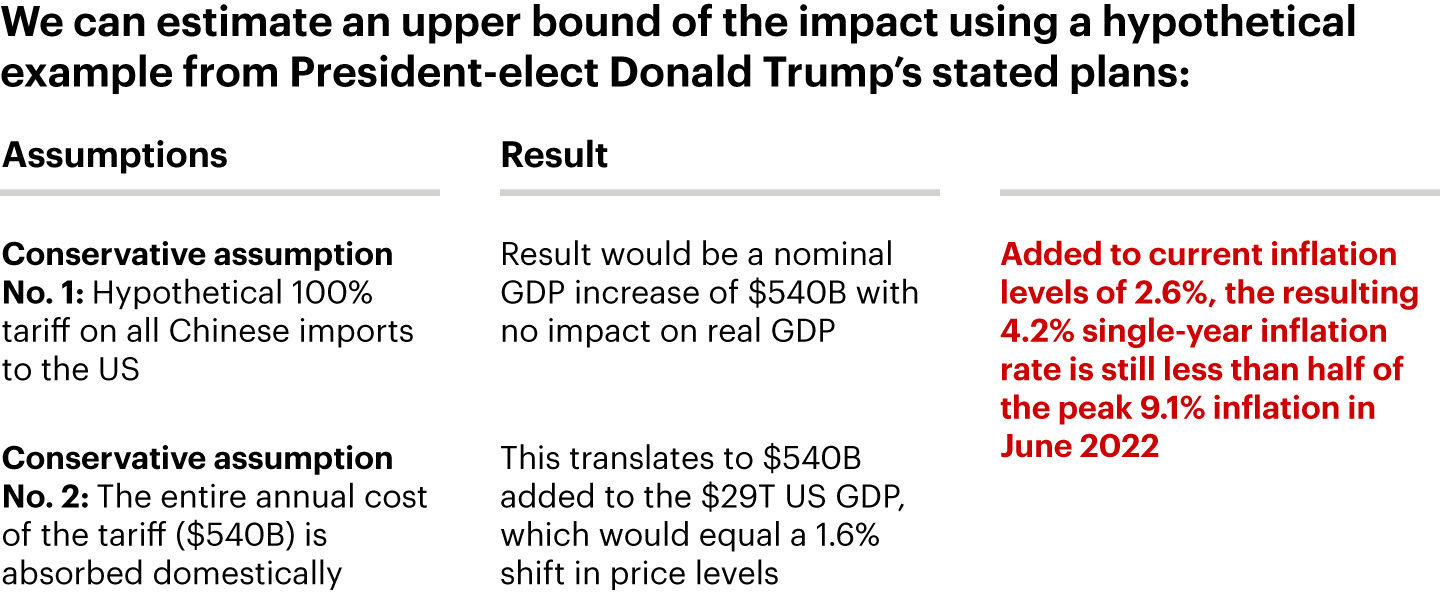
      The overall price impact could be more muted than post-pandemic inflation
      출처: Bain & Company

      Act now, plan now: A double-edged imperative

      Winning in this new world order requires action on two fronts: the immediate and the long-term.

      Act now

      Businesses can mobilize around three key imperatives:

      • Understand your value chain—upstream and downstream—and where it crosses borders. Develop a view of your competitors' exposures and where you are more or less exposed.
      • Determine the breakpoints that will force a business shift—what tariff levels, for what duration, would change decisions?
      • Identify where you have negotiating and pricing leverage and where you need to develop it.

      It’s vital to assess tariff exposure at a company level, as the implications will vary significantly between companies even within one industry. Automakers, for example, have divergent pathways depending on the setup of their supply chains. They can act to optimize their existing footprint, by reshuffling volumes to make US production for the local market and assemble to their maximum capacity at US sites. They can also invest in increasing the flexibility of their existing manufacturing footprint, to ramp volumes up and down as conditions require. And they can reevaluate future large-scale investments in their existing footprint.

      Plan now

      In a world of fractured trade, long-term success hinges on strategies that emphasize prediction, adaptability, and resilience. A key element involves developing hedges and optionality to buy yourself room to maneuver.

      Having mapped their value chains as part of “Act now,” companies can take a more disciplined approach to understanding their exposures more broadly. The process of understanding supply chain exposures, for example, may reveal challenges of monitoring and analyzing potential disruptions and the need to build that capability quickly to deal with volatility.

      The first step is to align around your company’s worldview. Given the global realignment, analyze your company the way an activist investor would. What is the two-page deal thesis that describes what drives the value for this market? What critical markets, products, and suppliers are required and fundamental to the valuation of the company? Scanning that deal thesis, what are your company’s critical exposures?

      Prediction. This capability involves generating beliefs about the future of your industry with enough conviction to trigger actions that can create competitive advantage. Realistically, precision will remain elusive amid the countervailing forces unleashed by tariffs, and the greater risk is overconfidence. Instead, focus on which impact matters to your business. How large is the potential impact to your revenue and margins in an extreme but plausible outcome?

      • Will we face a new tariff/cost barrier, and if so, what is the magnitude and how long will this last?

      Adaptability. Being adaptable means changing the business faster than competitors are changing. The most successful companies will also match their adaptation to the rate of change of the policy environment, which is evolving fast in this case.

      • Will our overseas competitors react by lowering price and outhustling us in our current markets? If so, can we find other markets? Will those be sufficient?

      Resilience. Companies with superior resilience survive shocks better than their competitors do. If companies can’t adapt quickly enough, their ability to build resilience becomes paramount. The extent of pain they can endure—and their strategies to mitigate it—needs to shape the response. This will depend on time horizon as well: The capacity to absorb pain does eventually time out.

      • Do we buy a business whose main source of value is “if things go wrong”?

      Navigating complexity, securing opportunity

      Tariffs are manifestations of a broader economic realignment, one that will reshape how businesses operate. Companies that respond with urgency and sophistication will not only weather the disruption but position themselves as leaders in a post-global era. For those that hesitate, the costs could be steep—and irreversible.

      저자
      • Headshot of Karen Harris
        Karen Harris
        Managing Director, Macro Trends Group, New York
      • Headshot of François Faelli
        François Faelli
        파트너, Brussels
      • Headshot of Hugo Parkinson
        Hugo Parkinson
        파트너, London
      • Headshot of Dunigan O'Keeffe
        Dunigan O'Keeffe
        파트너, San Francisco
      문의하기
      관련 컨설팅 서비스
      • 운영
      • Macro Strategy
      • Procurement
      • Supply Chain
      매크로 트렌드
      Tariff Response: What You Need to Know

      Bain's Karen Harris and Hernan Saenz discuss the lasting impact of tariffs, what leading companies are doing to adapt, and the strategic moves to make for success.

      자세히 보기
      매크로 트렌드
      Tariffs: The Next Chapter

      Companies need to rebuild their strategies for a world in which the free movement of goods, capital, IP, and people cannot be taken for granted.

      자세히 보기
      매크로 트렌드
      The New Case for Zero-Based Cost Management

      A clean-sheet approach helps leaders produce savings that stick—even in turbulent times.

      자세히 보기
      매크로 트렌드
      Beyond Tariffs: The Supply Chain Reinvention Imperative

      Tariffs are accelerating businesses’ operations overhaul. Winning in today’s disrupted world demands bold trade-offs and strategic transformation.

      자세히 보기
      매크로 트렌드
      In an Era of Tariffs and Turbulence, Four Moves That Matter

      Understand your exposure. Understand your competitors’ exposure. Adjust your pricing and supply chains accordingly. Repeat as necessary.

      자세히 보기
      First published in 12월 2024
      태그
      • 매크로 트렌드
      • 운영
      • Macro Strategy
      • Procurement
      • Supply Chain
      • Tariff Response

      프로젝트 사례

      운영 New sourcing plan lowers costs

      See more related case studies

      성과 개선 Turning bottlenecks into growth opportunities

      See more related case studies

      성과 개선 Carmaker shifts its production model

      See more related case studies

      베인에 궁금하신 점이 있으신가요?

      베인은 주저 없이 변화를 마주할 줄 아는 용감한 리더들과 함께합니다. 그리고, 이들의 담대한 용기는 고객사의 성공으로 이어집니다.

      급변하는 비즈니스 환경에서 살아남기 위한 선도자의 시각. 월간 Bain Insights에서 글로벌 비즈니스의 핵심 이슈를 확인하십시오.

      *개인정보 정책을 읽었으며 그 내용에 동의합니다.

      Privacy Policy를 읽고 동의해주십시오.
      Bain & Company
      문의하기 환경정책 Accessibility 이용약관 개인정보 보호 쿠키 사용 정책 Sitemap Log In

      © 1996-2026 Bain & Company, Inc.

      문의하기

      무엇을 도와드릴까요?

      • 프로젝트 문의
      • 채용 정보
      • 언론
      • 제휴 문의
      • 연사 초청
      오피스 전체보기