
Skip to Content
  • Bureaux

    Bureaux

    Amérique du Nord et Amérique du Sud
    • Atlanta
    • Austin
    • Bogota
    • Boston
    • Buenos Aires
    • Chicago
    • Dallas
    • Denver
    • Houston
    • Los Angeles
    • Mexico City
    • Minneapolis
    • Monterrey
    • Montreal
    • New York
    • Rio de Janeiro
    • San Francisco
    • Santiago
    • São Paulo
    • Seattle
    • Silicon Valley
    • Toronto
    • Washington, DC
    Europe, Moyen-Orient et Afrique
    • Amsterdam
    • Athens
    • Berlin
    • Brussels
    • Copenhagen
    • Doha
    • Dubai
    • Dusseldorf
    • Frankfurt
    • Helsinki
    • Istanbul
    • Johannesburg
    • Kyiv
    • Lisbon
    • London
    • Madrid
    • Milan
    • Munich
    • Oslo
    • Paris
    • Riyadh
    • Rome
    • Stockholm
    • Vienna
    • Warsaw
    • Zurich
    Asie et Australie
    • Bangkok
    • Beijing
    • Bengaluru
    • Brisbane
    • Ho Chi Minh City
    • Hong Kong
    • Jakarta
    • Kuala Lumpur
    • Manila
    • Melbourne
    • Mumbai
    • New Delhi
    • Perth
    • Seoul
    • Shanghai
    • Singapore
    • Sydney
    • Tokyo
    Voir tous les bureaux
  • Alumni
  • Presse
  • S’abonner
  • Contacter
  • France | Français

    Sélectionnez votre région et votre langue

    Global
    • Global (English)
    Amérique du Nord et Amérique du Sud
    • Brazil (Português)
    • Argentina (Español)
    • Canada (Français)
    • Chile (Español)
    • Colombia (Español)
    Europe, Moyen-Orient et Afrique
    • France (Français)
    • DACH Region (Deutsch)
    • Italy (Italiano)
    • Spain (Español)
    • Greece (Elliniká)
    Asie et Australie
    • China (中文版)
    • Korea (한국어)
    • Japan (日本語)
  • Saved items (0)
    Saved items (0)

    You have no saved items.

    Bookmark content that interests you and it will be saved here for you to read or share later.

    Explore Bain Insights
  • Expertises Sectorielles
    Menu principal

    Expertises Sectorielles

    • Aerospace et Défense
    • Agroalimentaire
    • Chimie
    • Infrastructures, BTP et Matériaux de Construction
    • Grande Consommation
    • Services Financiers
    • Santé
    • Engins & Equipements Industriels
    • Media et Divertissement
    • Metals
    • Mining
    • Pétrole & Gaz
    • Papier et Emballage
    • Private Equity
    • Secteur Public
    • Distribution
    • Technologie
    • Télécommunications
    • Transportation
    • Travel & Leisure
    • Utilities & Energies Renouvelables
  • Expertises Fonctionnelles
    Menu principal

    Expertises Fonctionnelles

    • Expérience Client
    • ESG
    • Innovation
    • Fusions et Acquisitions
    • Opérations
    • People & Organization
    • Private Equity
    • Sales & Marketing
    • Stratégie
    • IA, Perspectives et Solutions
    • Technology
    • Transformation
  • Digital
  • Points de Vue
  • À propos
    Menu principal

    À propos

    • Notre Activité
    • Nos Valeurs
    • Nos Collaborateurs et Notre Équipe Dirigeante
    • Notre Impact
    • Prix & Récompenses
    • Partenariats Internationaux
    • Evénements
    Further: Our global responsibility
    • Diversité et Inclusion
    • Impact Social
    • Sustainability
    • World Economic Forum
    Learn more about Further
  • Carrières
    Menu principal

    Carrières

    • Rejoignez-nous
      Carrières
      Rejoignez-nous
      • Find Your Place
      • Nos domaines d’expertise
      • Equipes multidisciplinaires
      • Étudiants
      • Stages et programmes
      • Événements de recrutement
    • La vie chez Bain
      Carrières
      La vie chez Bain
      • Blog: Inside Bain
      • Récits de carrière
      • Nos collaborateurs
      • Nos bureaux
      • Soutenir votre évolution professionnelle
      • Groupes d’affinités
      • Avantages chez Bain
    • Histoires d’impact
    • Notre processus de recrutement
      Carrières
      Notre processus de recrutement
      • Ce que vous pouvez attendre
      • Entretiens
    Trouver un poste
  • Bureaux
    Menu principal

    Bureaux

    • Amérique du Nord et Amérique du Sud
      Bureaux
      Amérique du Nord et Amérique du Sud
      • Atlanta
      • Austin
      • Bogota
      • Boston
      • Buenos Aires
      • Chicago
      • Dallas
      • Denver
      • Houston
      • Los Angeles
      • Mexico City
      • Minneapolis
      • Monterrey
      • Montreal
      • New York
      • Rio de Janeiro
      • San Francisco
      • Santiago
      • São Paulo
      • Seattle
      • Silicon Valley
      • Toronto
      • Washington, DC
    • Europe, Moyen-Orient et Afrique
      Bureaux
      Europe, Moyen-Orient et Afrique
      • Amsterdam
      • Athens
      • Berlin
      • Brussels
      • Copenhagen
      • Doha
      • Dubai
      • Dusseldorf
      • Frankfurt
      • Helsinki
      • Istanbul
      • Johannesburg
      • Kyiv
      • Lisbon
      • London
      • Madrid
      • Milan
      • Munich
      • Oslo
      • Paris
      • Riyadh
      • Rome
      • Stockholm
      • Vienna
      • Warsaw
      • Zurich
    • Asie et Australie
      Bureaux
      Asie et Australie
      • Bangkok
      • Beijing
      • Bengaluru
      • Brisbane
      • Ho Chi Minh City
      • Hong Kong
      • Jakarta
      • Kuala Lumpur
      • Manila
      • Melbourne
      • Mumbai
      • New Delhi
      • Perth
      • Seoul
      • Shanghai
      • Singapore
      • Sydney
      • Tokyo
    Voir tous les bureaux
  • Alumni
  • Presse
  • S’abonner
  • Contacter
  • France | Français
    Menu principal

    Sélectionnez votre région et votre langue

    • Global
      Sélectionnez votre région et votre langue
      Global
      • Global (English)
    • Amérique du Nord et Amérique du Sud
      Sélectionnez votre région et votre langue
      Amérique du Nord et Amérique du Sud
      • Brazil (Português)
      • Argentina (Español)
      • Canada (Français)
      • Chile (Español)
      • Colombia (Español)
    • Europe, Moyen-Orient et Afrique
      Sélectionnez votre région et votre langue
      Europe, Moyen-Orient et Afrique
      • France (Français)
      • DACH Region (Deutsch)
      • Italy (Italiano)
      • Spain (Español)
      • Greece (Elliniká)
    • Asie et Australie
      Sélectionnez votre région et votre langue
      Asie et Australie
      • China (中文版)
      • Korea (한국어)
      • Japan (日本語)
  • Saved items  (0)
    Menu principal
    Saved items (0)

    You have no saved items.

    Bookmark content that interests you and it will be saved here for you to read or share later.

    Explore Bain Insights
  • Expertises Sectorielles
    • Expertises Sectorielles

      • Aerospace et Défense
      • Agroalimentaire
      • Chimie
      • Infrastructures, BTP et Matériaux de Construction
      • Grande Consommation
      • Services Financiers
      • Santé
      • Engins & Equipements Industriels
      • Media et Divertissement
      • Metals
      • Mining
      • Pétrole & Gaz
      • Papier et Emballage
      • Private Equity
      • Secteur Public
      • Distribution
      • Technologie
      • Télécommunications
      • Transportation
      • Travel & Leisure
      • Utilities & Energies Renouvelables
  • Expertises Fonctionnelles
    • Expertises Fonctionnelles

      • Expérience Client
      • ESG
      • Innovation
      • Fusions et Acquisitions
      • Opérations
      • People & Organization
      • Private Equity
      • Sales & Marketing
      • Stratégie
      • IA, Perspectives et Solutions
      • Technology
      • Transformation
  • Digital
  • Points de Vue
  • À propos
    • À propos

      • Notre Activité
      • Nos Valeurs
      • Nos Collaborateurs et Notre Équipe Dirigeante
      • Notre Impact
      • Prix & Récompenses
      • Partenariats Internationaux
      • Evénements
      Further: Our global responsibility
      • Diversité et Inclusion
      • Impact Social
      • Sustainability
      • World Economic Forum
      Learn more about Further
  • Carrières
    Recherches les plus fréquentes
    • Agile
    • Digital
    • Stratégie
    Vos recherches précédentes
      Pages récemment visitées

      Content added to saved items

      Saved items (0)

      Removed from saved items

      Saved items (0)

      Technology Report

      How Companies Can Build a Supply Chain for the Circular Economy

      How Companies Can Build a Supply Chain for the Circular Economy

      Reselling and recycling products can offer tech hardware providers a competitive advantage.

      Par Tessa Bysong, Jeff Fortner, Peter Hanbury, et Joshua Hinkel

      • min
      }

      Rapport

      How Companies Can Build a Supply Chain for the Circular Economy
      en
      En Bref
      • Technology hardware providers see new opportunities in circularity: the reuse, remanufacturing, and recycling of products and their components.
      • Some companies are developing new revenue streams from selling second- and third-life products, which have been reclaimed from first-use customers and restored for resale.
      • Circular supply chains have benefits, such as maintaining reliable supplies when inflation hits commodity markets, helping companies reduce waste and emissions, and staving off new competitors.
      • Successful circularity efforts identify new ways to create value, anticipate disruption to profit pools, and plan for scale.

      This article is part of Bain's 2022 Technology Report.

      Explore the report

      Technology companies are under pressure from investors, customers, and regulators to reduce their carbon footprint and become more sustainable. For some tech hardware companies, improving the circularity of their products—repairing, reusing, and recycling products and their materials—creates new value and supports their plans to become more sustainable, though most plans lack specific goals (see Figure 1).

      Figure 1
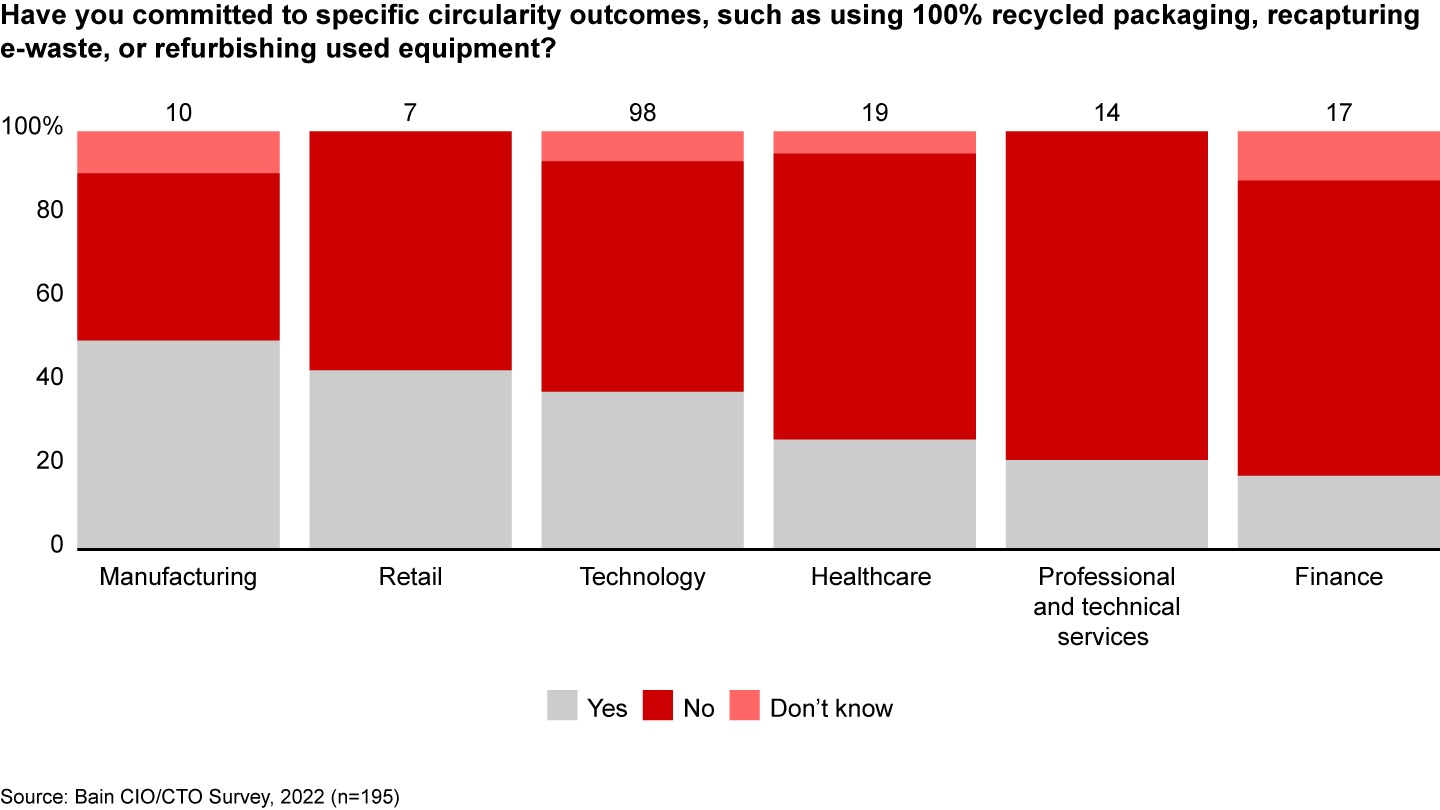
      Nearly two-thirds of technology companies don’t have specific circularity goals

      Circularity can be particularly challenging in tech, where supply chains span continents, carbon footprints are large, and products are complex with short lives. The raw inputs for advanced technology products derive from a wide variety of sources, and improving circularity requires a deep understanding of the flow of materials before, during, and after the product’s useful life (see Figure 2).

      Figure 2
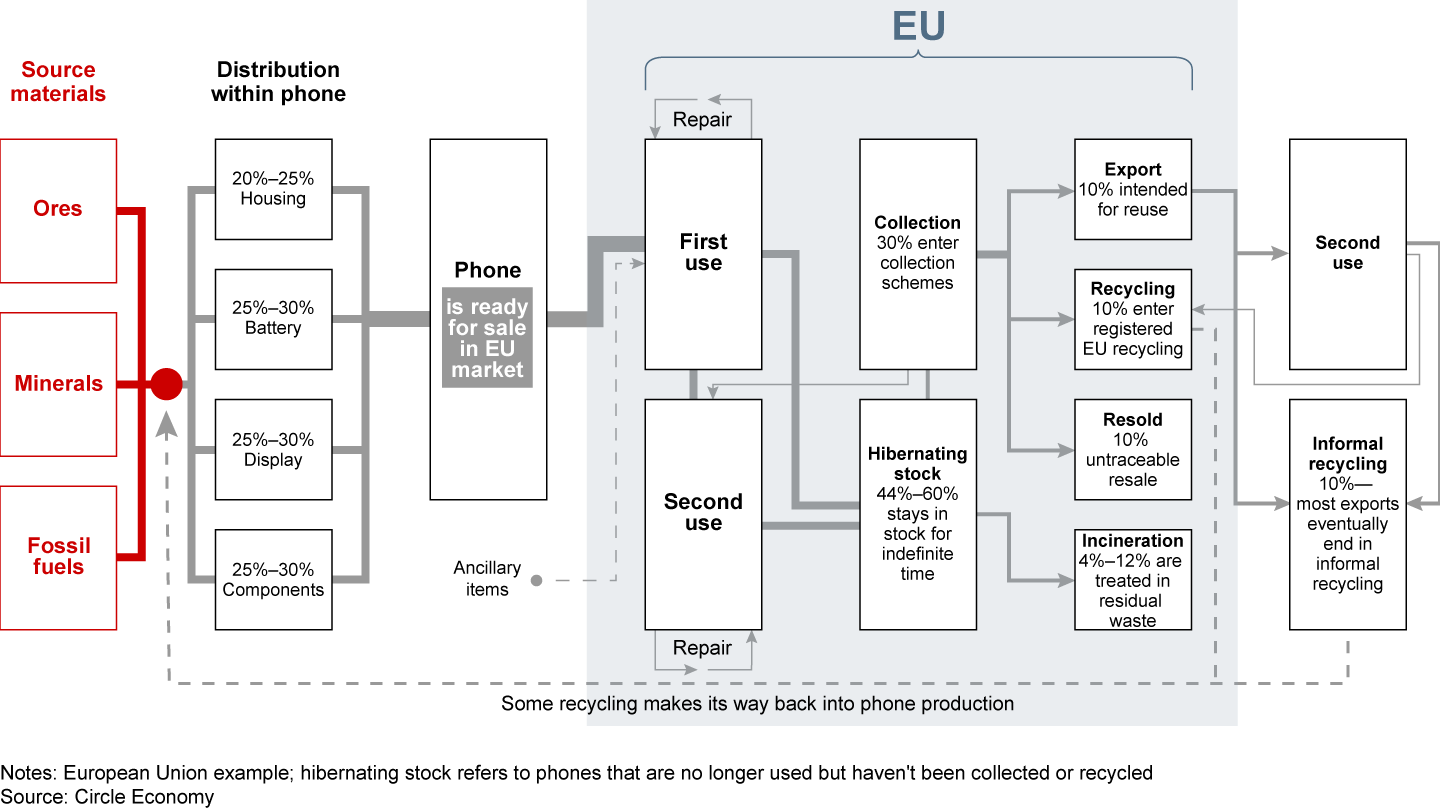
      A material flow chart for a mobile phone shows where a manufacturer is already pursuing circularity

      But even with these challenges, the advantages and opportunities are hard to ignore. As inflationary pressures hit commodity markets and supply chain bottlenecks threaten to limit access to raw materials, executives are looking for new and innovative ways to ensure access to alternative sources of supply. Circularity also helps manage competition from other sectors for strategic materials, for example, battery materials such as lithium for electric vehicles. More circular and repurposed products could also earn a green premium from concerned customers.

      If those are the carrots, there are also sticks. Regulations governing emissions and electronic waste are only going to increase, and more circular models will be essential to hitting those goals. Also, as more tech hardware moves to as-a-service models, providers will increasingly maintain ownership of the physical products, and circular models will help maximize reusability—and therefore, margins. Finally, private equity investors are wading in; if tech hardware providers don’t extend into second- and third-use revenue streams, others will take those profits for themselves.

      Seeing these opportunities, some tech hardware leaders have set ambitious circularity targets. For example, HP has said that it’s designing products for long lives and to make it easier to recapture materials from products at the end of their useful lives. Dell has set a goal of sourcing all of its packaging materials and more than half of its product materials from recycled or renewable materials by 2030, and Apple has said that by 2030 every product it sells will have a net-zero carbon impact.

      To meet such goals, companies are redesigning their products to make them easier to repair and more recyclable and are making plans to salvage and reuse valuable materials when products reach the end of their useful lives. This will require a coordinated internal strategy across product design, sales and marketing, and supply chain teams. And although most tech companies still don’t have specific circularity plans in place, our research finds that tech companies have more detailed sustainability targets than companies in other industries do (see Figure 3).

      Figure 3
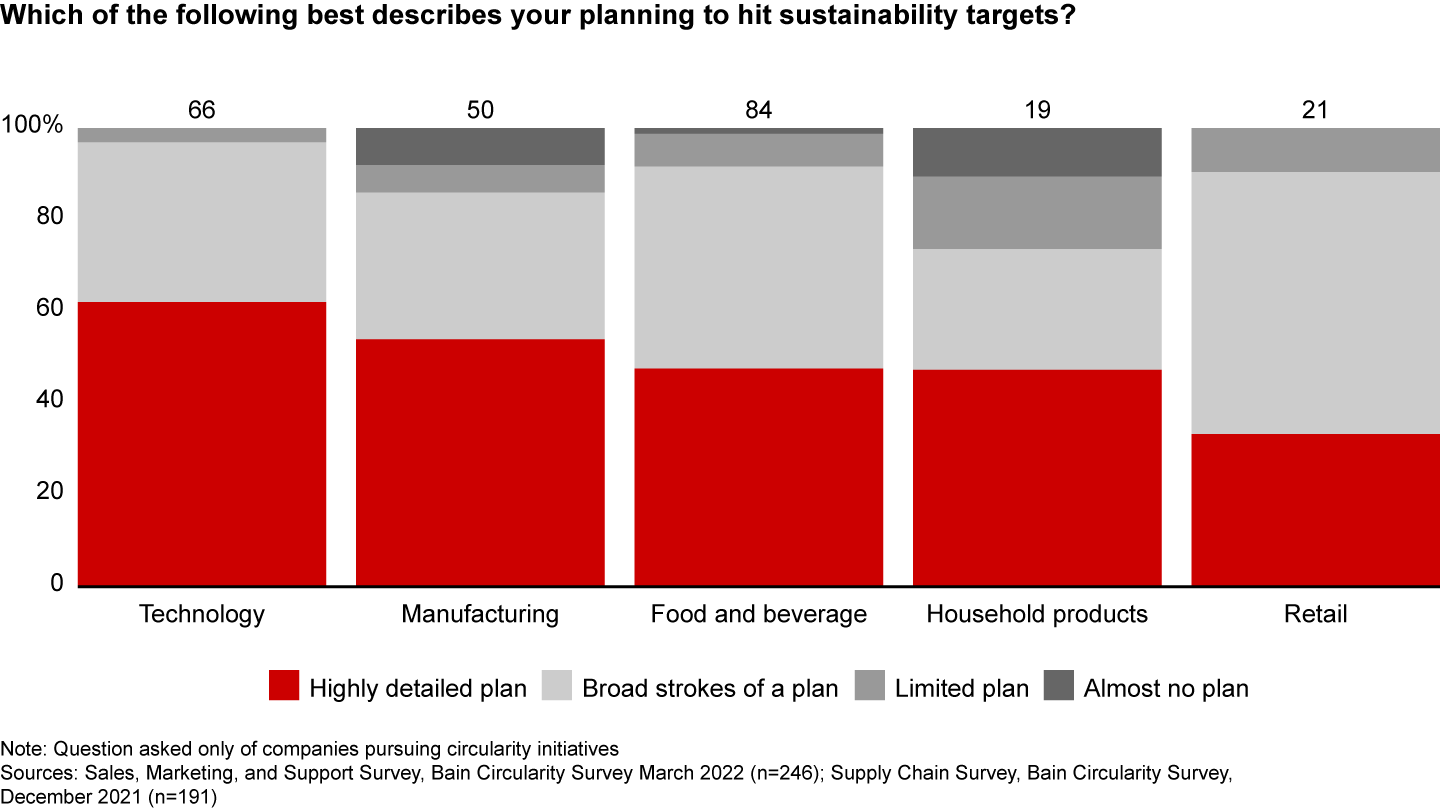
      Tech companies have more detailed sustainability plans than companies in other industries

      Some changes will be easier than others. But creating a more circular supply chain for any product is complex and will require the cooperation not only of the manufacturer, but also channel and other sales partners, along with the end consumer. Customers may not want to part with their old hardware or may not know the value in doing so.

      Priorities of successful circularity programs

      What can tech companies learn from circularity leaders that will help them develop momentum and generate new value? Successful circularity efforts focus on three priorities.

      • Identify new ways to create value. Companies that view circularity through an investor’s lens can get a jump on competitors by identifying new control points and business models that take advantage of them. Apple’s planned iPhone subscription model is a good example, since it tilts the business more toward recurring revenue, which could do for hardware providers what the as-a-service model did for software. Interestingly, although tech hardware companies on average have more confidence in their ability to achieve their circularity goals than nonhardware tech companies, they’re less confident of reaping the benefits.

      • Anticipate disruption. Leaders plan for the possibility of their profit pools being disrupted by more circular rivals. The more invested a company is in circularity, the more concerned it is about disruption because its leaders are more aware of innovation and may have an earlier view of which new upstarts and business models are gaining traction.

        As tech hardware players face the headwinds of commoditization, they can complement their investment in innovations for first-life products with an alternative profit stream from second- and third-life products, thus supporting the investment required to stay on the bleeding edge. For example, Dell’s direct sales model is conducive to reclaiming and reselling its products for a second life, and that has allowed the company to build a robust business around refurbished equipment.

      • Plan to scale. Companies will need to do three things to scale their circularity solutions. First, they’ll need to design products that can be repaired, refurbished, recaptured, and reused with less risk of damage, and are better suited for extracting recyclable materials. To ensure a pipeline of products to recycle, companies will need to retain ownership of the asset or create incentives for customers to return hardware, as some wireless carriers have with transparent pricing for buying back mobile devices when a customer upgrades.

        Second, supply chains will need to adapt to a more circular model, which means products must be more traceable. Knowing which products have gone to which customers in which regions, whether or not they have been returned, and where these products and their components are in the return value chain will be critical to supply planning. To achieve this, leaders need to develop their circularity efforts on platforms that suppliers and other external partners can support.

        Third, tech hardware makers will want to use technology to help disassemble products and optimize the mix of new and used. Apple uses artificial intelligence to predict the likely status of a returned device, the best channel to dispose of it (for example, resale or recycle), and the right offer to make on it.

      Circularity is emerging as a necessity, and the tech hardware companies that move assertively to develop expertise and find the right business models—before regulators define the opportunities for them—will be more likely to meet their sustainability goals, achieve greater resilience in their supply chain, and capture higher profits from green premiums and second- and third-use revenue streams.

      • Acknowledgments

        David Crawford, leader of Bain & Company’s Global Technology practice, and a team led by Stanley Liu, associate partner with the Technology & Cloud Services practice, prepared this report. 

        Bain Partners Ann Bosche, Mikaela Boyd, Mark Brinda, Christian Buecker, Tessa Bysong, David Crawford, Matthew Crupi, Jason Ding, James Dixon, Greg Fiore, Frank Ford, Jeff Fortner, Jonathan Frick, Peter Hanbury, Karen Harris, Simon Heap, Hans Joachim Heider, Josh Hinkel, Anne Hoecker, Jesse Klein, Jordan Lee, Neil Malik, Rakesh Mehrotra, Justin Murphy, Rohan Narayen, Dunigan O'Keeffe, Thomas Olsen, Bill Radzevych, Gene Rapoport, Paul Renno, Michael Schallehn, Christopher Schorling, Prasad Narasimhan Sulur, Sean Tanaka, Ravi Vijayaraghavan, Jue Wang, and Sophia Zou; Expert Partner Syed Ali; Associate Partners Jay Bhatnagar, Sukh Brar, Morgan Maxwell, and Nihar Naik; Senior Manager Parker DeRensis; and Eric Sheng, vice president, Data Science, wrote its chapters. 

        The authors wish to thank Bain Partners Steven Breeden, William Poindexter, and Prasad Sankaran; Associate Partners Peter Henle, Stanley Liu, and Morgan Maxwell; Senior Managers Alicia Avery, Roxie Bartholomew, Derek Croft, and Niranjana Narayanan; Consultants Adrian Armas, Britanny Biggs, Colleen Culbertson, Andi Frkovich, and Evan Taylor; Associate Consultants Matt Jenkins, Ezra Schwarzbaum, Josh Urquiaga, and Jorge Zamudio Bermejo; Practice Director Alex Smyth; Practice Senior Manager Elisabeth Bentley Duffy; and Jeff Bauter Engel, Nanette Byrnes, and David Sims for their editorial support.

      Value Evolution

      • The Rise of Growth Equity Investors

      • A Multicloud World

      • Welcome to Web3

      • The US-China Decoupling

      Competitive Battlegrounds

      • Defending against Disruption

      • The Engine 2 Imperative

      • AI’s Next Frontier

      • The Industrial IoT

      Operational Advantage

      • Beyond the Rule of 40

      • Sales Productivity

      • Consumption-Based Pricing

      • Software R&D Efficiencies

      • The Chip Shortage

      • The Circular Economy

      Read our 2022 Technology Report

      Explore the report Download PDF
      Auteurs
      • Headshot of Tessa Bysong
        Tessa Bysong
        Alumni, Chicago
      • Headshot of Jeff Fortner
        Jeff Fortner
        Associé, Seattle
      • Headshot of Peter Hanbury
        Peter Hanbury
        Associé, San Francisco
      • Headshot of Joshua Hinkel
        Joshua Hinkel
        Associé, Dallas
      Contactez-nous
      Synergies sectorielles
      • Cloud Computing
      • Hardware
      • Internet of Things
      • IT Services
      • Semiconductors
      • Software
      • Technologie
      Technology Report
      Four Ways Tech Companies Can Boost Sales Productivity, Even in a Downturn

      To grow revenue faster than sales and marketing expense, leading companies systematically improve their coverage models and invest in their sales reps’ productivity.

      Voir plus
      Technology Report
      Quantum Computing Moves from Theoretical to Inevitable

      Quantum will likely become part of a mosaic, working with classical computing to solve big problems.

      Voir plus
      CIO Insights
      Despite Tech Layoffs, Competition for Talent Remains Fierce

      Tech workers increasingly value career development opportunities and remote or hybrid work options, while compensation has soared.

      Voir plus
      Technology Report
      How Can We Meet AI’s Insatiable Demand for Compute Power?

      Technological innovation, new revenue, and public support may be needed to fund and supply enough electricity.

      Voir plus
      Technologie
      Using Hardware to Scale the Industrial Internet of Things

      Bain partners discuss the opportunity for hardware vendors to help companies develop their IoT pilots.

      Voir plus
      First published in septembre 2022
      Mots clés
      • CIO Insights
      • Cloud Computing
      • Hardware
      • Internet of Things
      • IT Services
      • Semiconductors
      • Software
      • Technologie
      • Technology Report

      Comment nous avons aidé nos clients

      Helping a Midsize ERP Player Compete against the Giants

      Lire l’étude de cas

      Amélioration de la Performance Aggressively growing an IT service provider with a high-performance culture

      Lire l’étude de cas

      Stratégie Client et Marketing Sales blueprint puts IT Services Co.'s growth back on track

      Lire l’étude de cas

      Vous souhaitez continuer cette conversation ?

      Nous aidons des dirigeants du monde entier à matérialiser des impacts et des résultats pérennes et créateurs de valeur dans leurs organisations.

      Les points de vue de Bain : notre perspective sur des problématiques auxquelles sont confrontées les entreprises à travers le monde, envoyés chaque mois dans votre boîte de réception. 

      *J’ai lu la politique de confidentialité et j’accepte les conditions.

      Merci de lire notre politique de confidentialité.
      Bain & Company
      Contactez-nous Sustainability Accessibility Conditions d’utilisation Politique de Confidentialité Cookie Policy Mentions Légales Sitemap Log In

      © 1996-2026 Bain & Company, Inc.

      Contacter Bain

      Comment pouvons-nous vous aider ?

      • Business inquiry
      • Career information
      • Press relations
      • Partnership request
      • Speaker request
      Voir tous les bureaux