

Etude


|
En Bref
As recently as the beginning of this year, oil and gas majors and other sector leaders were prominently committing to ambitious targets to decarbonize their energy portfolios. Companies found themselves under intense pressure to reduce the carbon intensity of their operations, supply chains and end products. Leaders were beginning to recognize that token investments would no longer cut it and had begun to deploy more new capital into clean energy businesses (see the Bain Brief “Rethinking Energy and Natural Resources for a Net-Zero Carbon Future”). Subsequent events have refocused everyone’s attention. As demand for oil and gas plummeted and prices crashed, many companies found themselves in an existential crisis. Most have had to slash operational costs by at least 25% and reduce 2020 capital expenditures by as much as 30%—cuts that make it extremely difficult to invest at a scale that can produce significant outcomes in carbon reduction at the pace needed. 
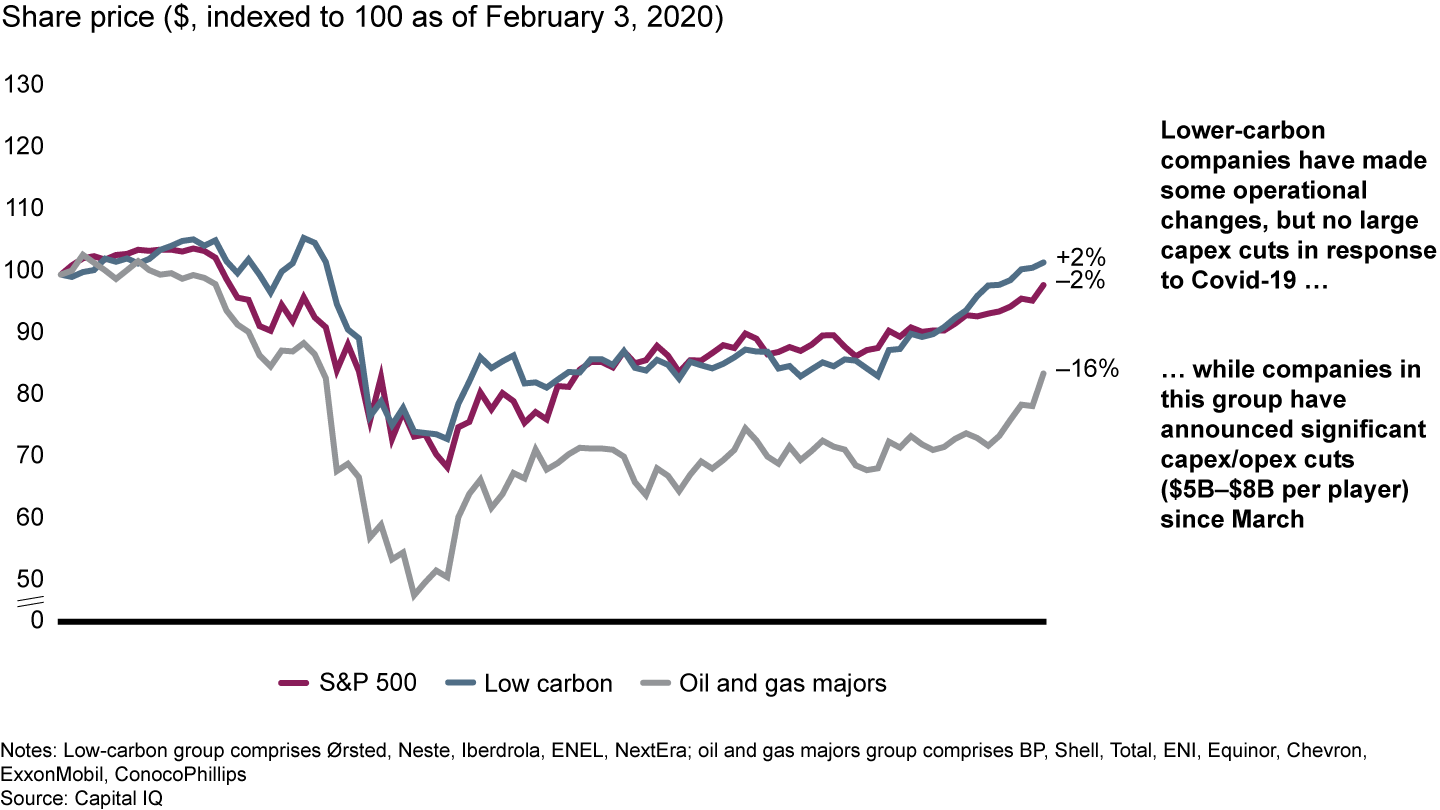
Macro Surveillance PlatformFor more detail on the business implications of coronavirus from Bain’s Macro Trends Group, log on to the Macro Surveillance Platform. Learn more about the platform > For some executives, the temptation to retreat or slow down on decarbonization commitments or execution must be very strong. Doing so, however, would constitute a strategic misstep, not only in terms of meeting long-term objectives but also for maintaining market value. Bain’s analysis of the performance of energy sector shares during the current crisis finds that companies with portfolios heavy in traditional hydrocarbon businesses initially see sharp declines, while those more assertively invested in greener fuels and low-carbon power generation have fared much better (see Figure 1). Even as the world’s attention has focused on the coronavirus pandemic, investors have kept their attention on longer-term viability.
Figure 1

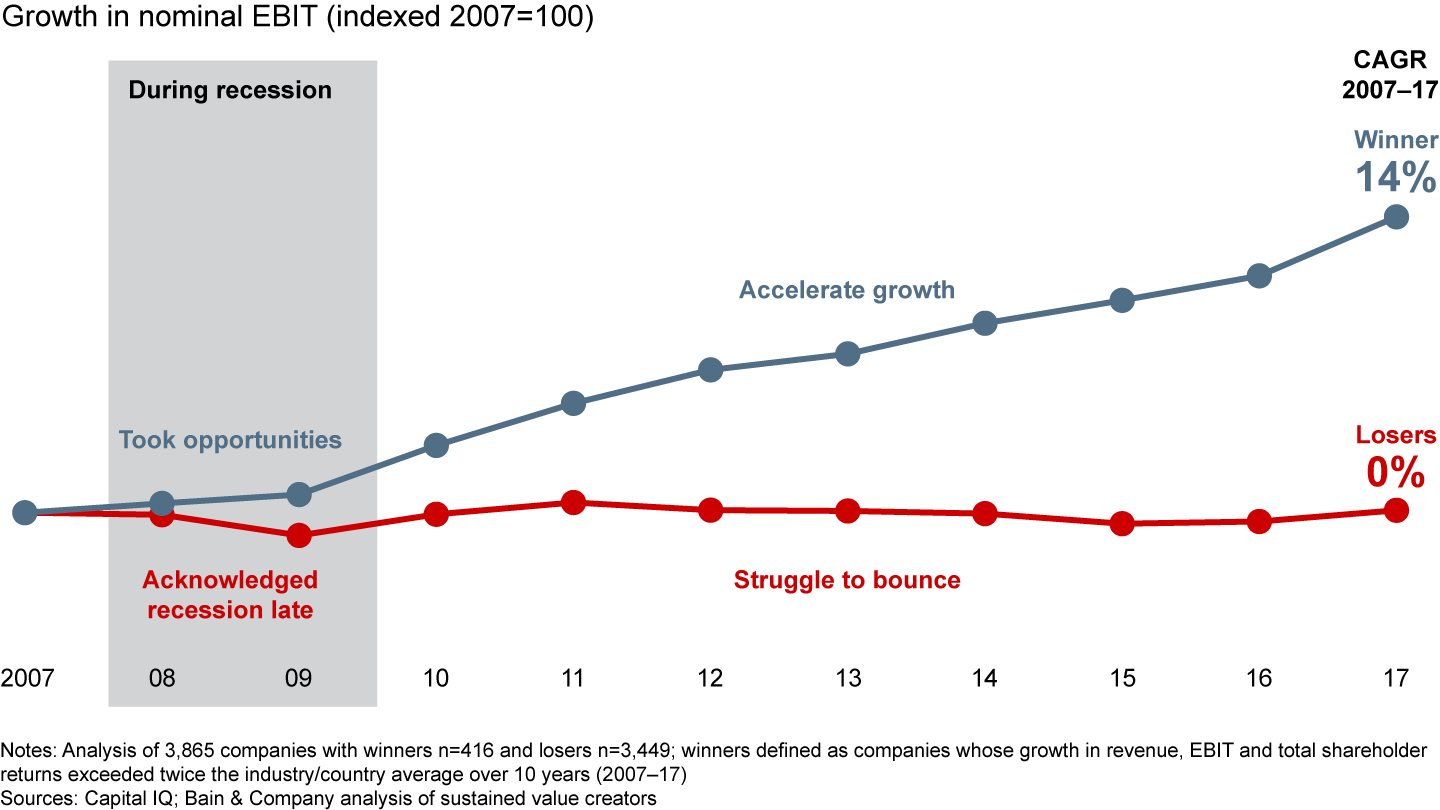
Investors also reward decisive action during a downturn, suggesting that what may seem to be the low-risk playbook of cutting costs and retreating to the core may be the higher-risk path for oil and gas players. Analysis of oil and gas valuations over three major economic recessions during the last 25 years confirms that “wait and watch” was a poor option. Across industry sectors, companies that took bold and effective action during the 2007–08 global financial crisis performed much better than those that retreated to precrisis approaches and activities (see Figure 2).
Figure 2

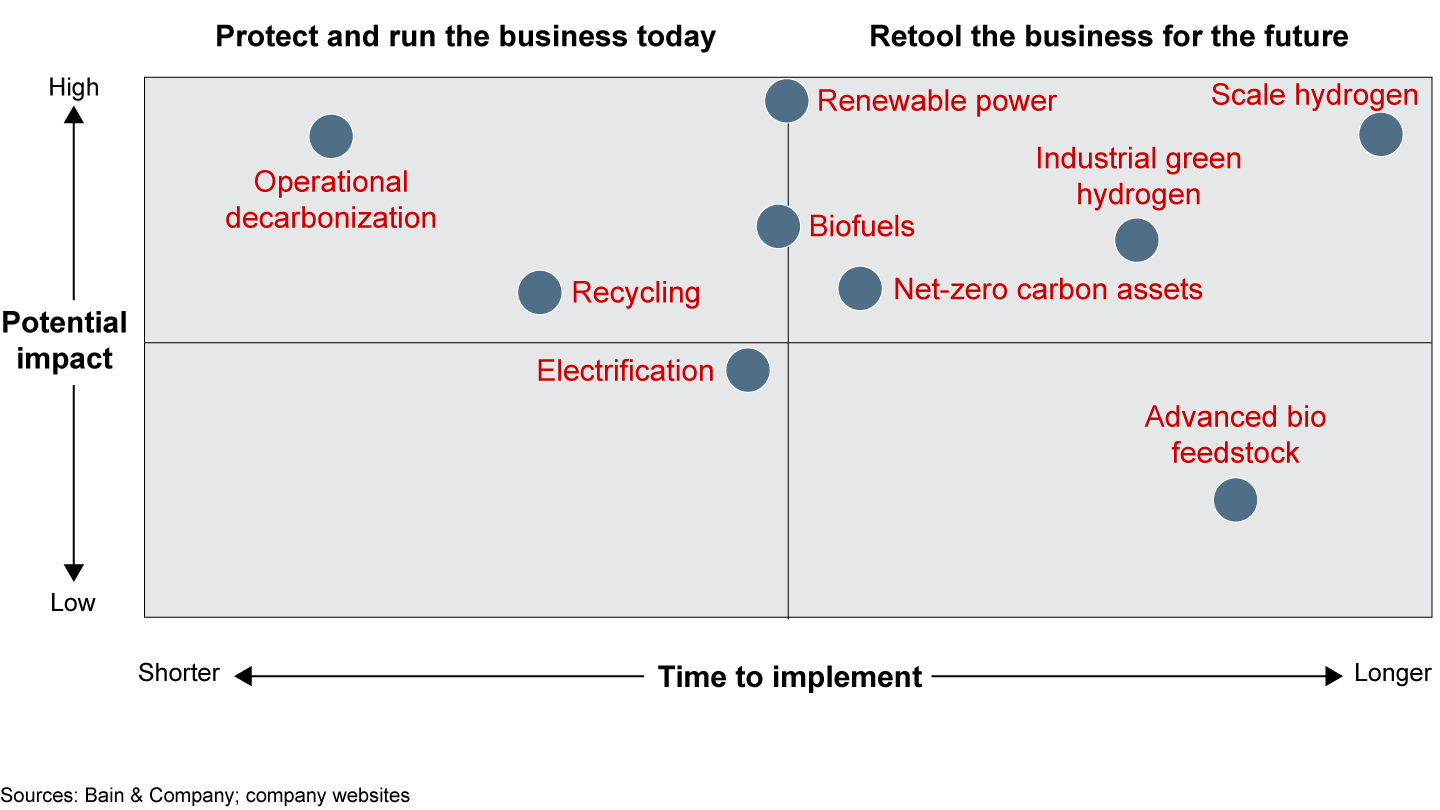
Act nowGiven that standing still is not an option, what should oil and gas companies be doing? The standard response might be to shelve mid- and longer-term sustainability research into initiatives that will take years to reach scale, such as large-scale hydrogen infrastructure. Energy storage and advanced biofuel feedstocks may also take a back seat, while plant electrification, carbon capture, operational decarbonization, plastics and lubricants recycling are more likely to push forward. For example, in late May, Equinor, Shell and Total made a final investment decision on their large carbon capture and storage project, Northern Lights, off Norway’s west coast. Less clear will be the scale and pace for development of low-carbon infrastructure, build-out of net-zero carbon assets, and larger-scale expansion of biofuel production and the next generation of renewable power assets (see Figure 3).
Figure 3

Steps to pursue a zero-carbon futureDuring the current crisis, oil and gas companies are freeing up company resources through new ways of working and lower levels of operational and capex activity. Some are diverting this expertise to initiatives that will help them reach their net-zero carbon goals (see Figure 4).
Figure 4


In this environment, leaders are bringing together the often fragmented and incremental sustainability efforts into a concentrated set of initiatives and establishing a transformation framework. Despite growing advocacy, initiatives and target setting, the oil and gas majors have yet to substantially reduce their Scope 1 and 2 carbon emissions: Between 2014 and 2018, eight majors reduced these emissions by only 5.6% on average. The Covid-19 slowdowns in industrial and commercial activity reduced global greenhouse gas emissions by about 17% in April, but that followed a decade of annual increases. Without concerted action, emissions are certain to spike back as lockdowns relax and resume their rise, and people and companies get back to work. To change the trajectory, a bolder approach is required.
These statements signal a strong desire among sector leaders to seize the opportunities in this moment in order to move the energy transition forward. The disruptions brought on by the coronavirus pandemic preclude any simple return to a previous status quo. Many traditional sources of capital are no longer available. Regeneration programs of nations and regional economic powers will give preference to greener initiatives; strings will be attached. Sector leaders who retool now for a more sustainable future will position themselves more competitively, for both funding and project approvals, ahead of those who hesitate or try to recreate the conditions that existed previously—and these are key elements in generating investment returns. The world has changed, and this is the moment to deliver sustainability gains while creating new value for the business. 
CoronavirusThe global Covid-19 pandemic has extracted a terrible human toll and spurred sweeping changes in the world economy. Across industries, executives have begun reassessing their strategies and repositioning their companies to thrive now and in the world beyond coronavirus.
|