


Etude


|
En Bref
Heads of sales organizations are reminded every day of how the sales battlefield has become more complex to manage. With the proliferation of digital tools, identifying the right technology applications can feel overwhelming, and once companies select their tools, they frequently fail to reap the anticipated value. With more routes to market, many heads of sales struggle to scale up processes to become more efficient—everything seems to remain bespoke. These inefficiencies eat away at sales productivity to the point where we estimate that sales reps now spend just one-third of their time communicating with customers. How can heads of sales break this cycle of complexity? High-growth companies have done so by overhauling their sales operations. For years, the sales operations team has toiled in the background, chronically undervalued and sometimes perceived as a wonkish group pounding the spreadsheets to monitor forecasts and track commissions. But the sales environment has changed in ways that raise the value of what is more aptly called commercial operations, with a broader, more strategic mandate than traditional sales ops. At best-in-class companies, commercial operations includes elements of go-to-market strategy, many of the activities performed by sales operations and marketing operations, and a layer of digital applications and advanced analytics. The group serves as control tower, engine room and nerve center combined, frequently leading the following activities:
Analysis of 200 business-to-business companies by Bain & Company and Dynata highlights how the leading companies (as defined by revenue and market share growth) are more mature than laggards in virtually all commercial operations capabilities and, in particular, on two dimensions: the caliber of talent and digital fluency (see Figure 1).
Figure 1
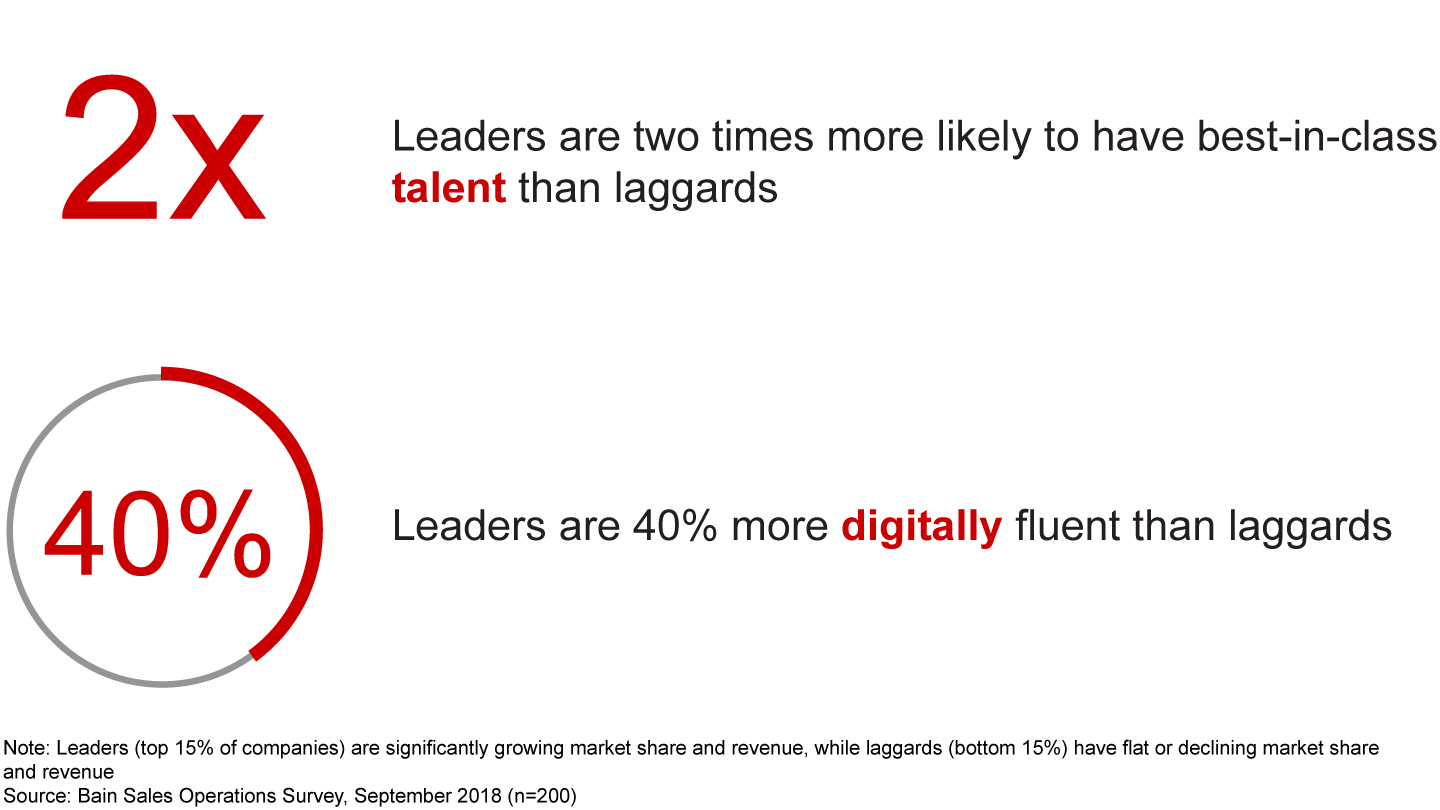

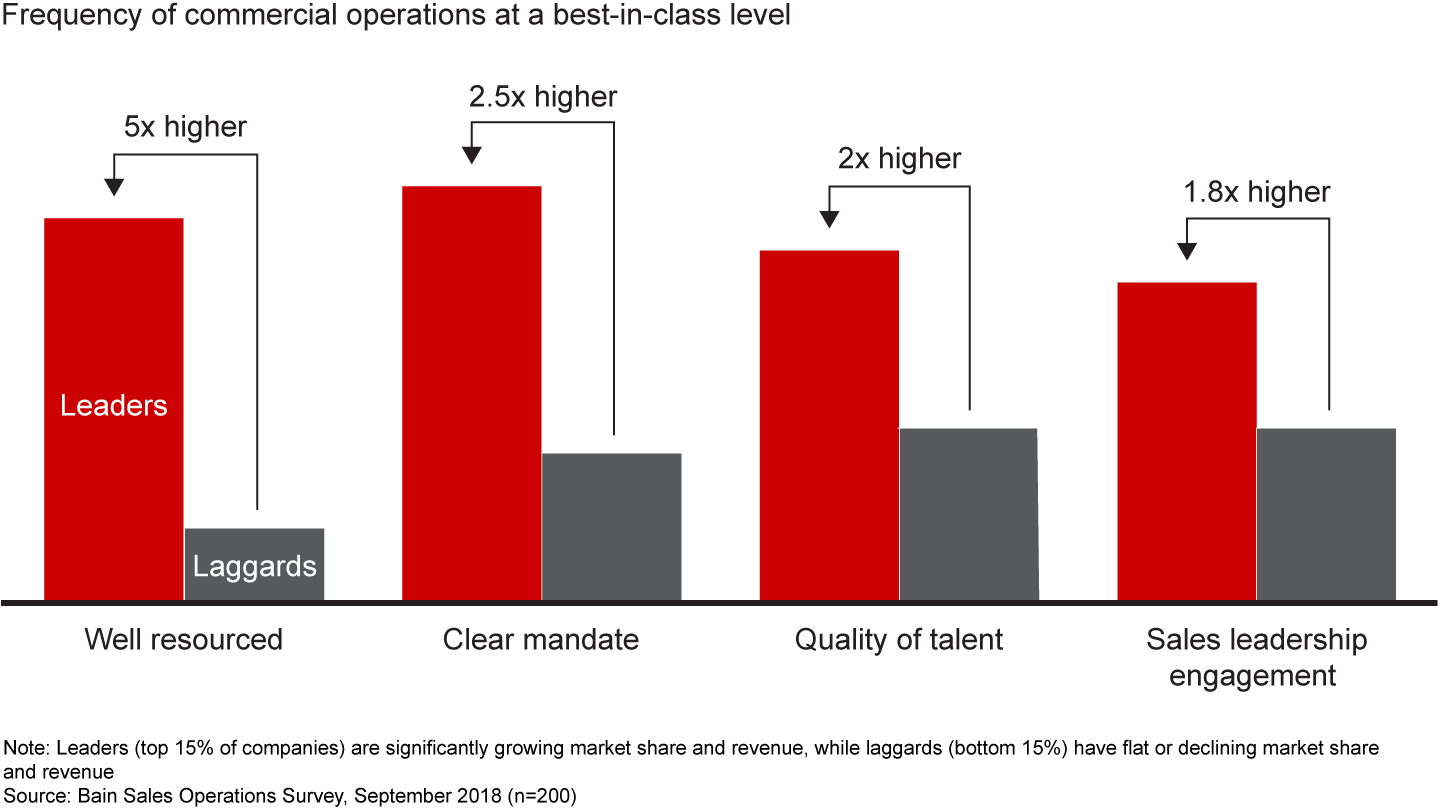
Leaders are two times more likely to have best-in-class talent in their commercial operations teams relative to laggards and five times more likely to have the appropriate level of resources for their needs (see Figure 2). They have specialists in areas such as advanced analytics for pipeline management or sales training and enablement. But regardless of their expertise, they combine strong intellect, creative problem solving, effective communication with colleagues and a willingness to roll up their sleeves to improve performance.
Figure 2

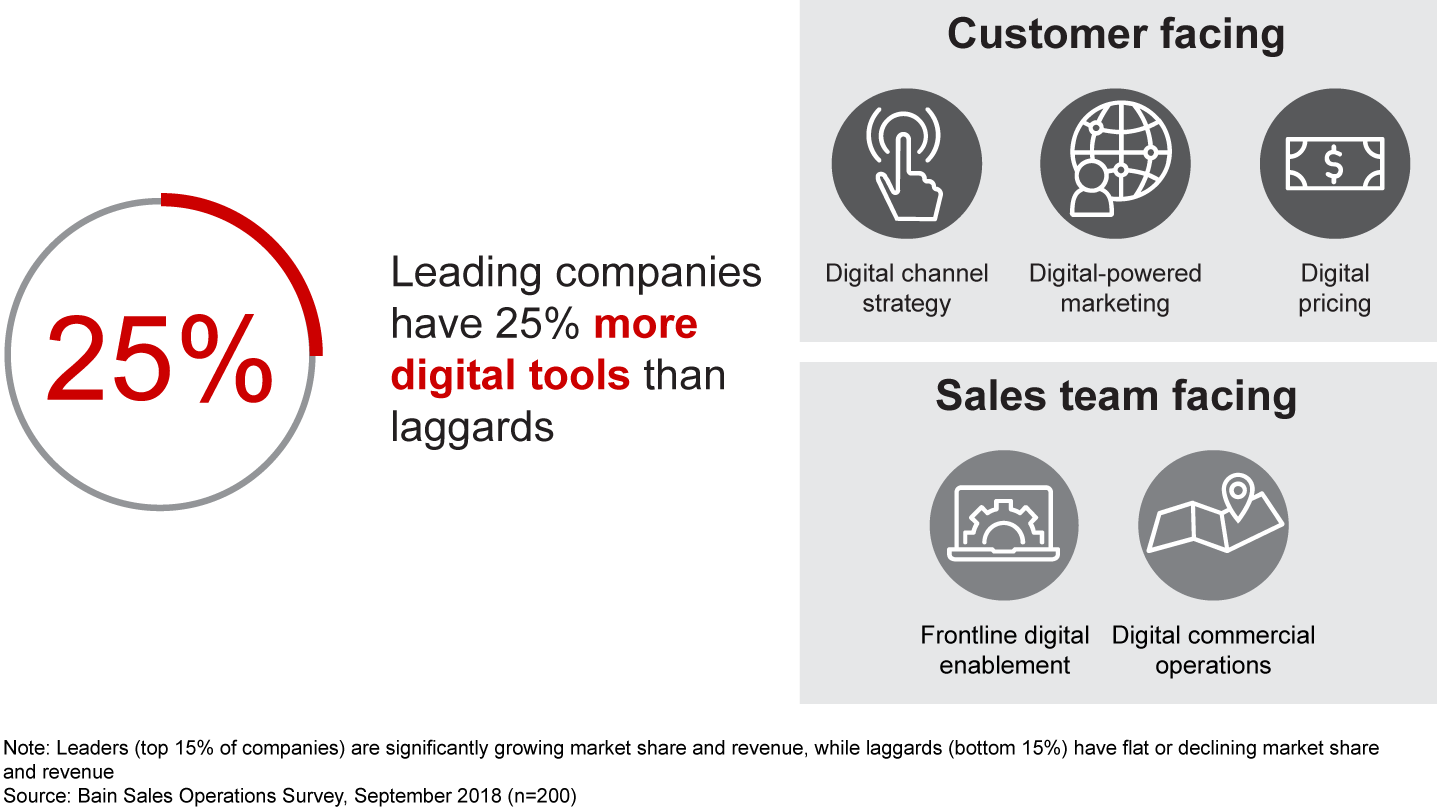
Whereas many of the laggards treat the sales ops group as a holding pen for less successful reps or a training ground for junior analytical resources, the best commercial ops teams now have seasoned, sophisticated professionals who head the function or have deep expertise in their discipline. Leading sales organizations also are 40% more digitally fluent than laggards, relying on commercial operations to encourage adoption and use of technology. These top performers have 25% more digital tools than other companies (see Figure 3). They manage data inputs to raise the quality of decision making, and they mine data for high-quality customer targeting and insights.
Figure 3

A technology company turnaroundConsider how one technology company continues to benefit from a high-caliber commercial operations group. The company had experienced a steady decline in revenue, its margins were eroding and its market capitalization reached a seven-year low. Stepping back for a reassessment, corporate leaders knew they needed to transform the go-to-market model. They recognized that they lacked the infrastructure to install and reinforce this change, so they tapped a seasoned internal executive to design and develop a commercial operations function. The new function focused on freeing up selling time for reps and making every sales hour more productive, in part through better use of technology. The team migrated to a new customer relationship management (CRM) system with an improved focus on sales team enablement. They quickly achieved universal adoption, added new features that the salesforce valued and incorporated CRM data into management reviews. They used digital account-planning tools to make frontline routines consistent. The group accessed third-party competitive intelligence and account intelligence to make sure that sales reps focused on the best opportunities. A new digital enablement hub included sales plays for reps to run with prospects and customers. In addition, using advanced analytics, the team invested in understanding what made the best reps successful, then redesigned hiring and training around those skills and behaviors. Building a robust commercial operations group that deployed more and better technology has contributed to major improvements in business results: The company has seen product revenue growing for the first time in five years, and its market capitalization has risen by 50%. Questions to frame the planExecutives committed to building a high-caliber commercial operations group can begin by asking the following set of foundational questions:
Successful sales organizations have broadened the mandate of commercial operations and determined which capabilities really matter. That’s what it takes to succeed in a more complex, digitally intensive selling environment. Greg Callahan and Chris Dent are principals and Jonathan Frick is a partner with Bain & Company’s Customer Strategy & Marketing practice. They are based, respectively, in Boston, Chicago and London. 
About the ResearchData powered by Dynata, a leading global first-party data and insights platform.
|