
Skip to Content
  • Offices

    Offices

    North & Latin America
    • Atlanta
    • Austin
    • Bogota
    • Boston
    • Buenos Aires
    • Chicago
    • Dallas
    • Denver
    • Houston
    • Los Angeles
    • Mexico City
    • Minneapolis
    • Monterrey
    • Montreal
    • New York
    • Rio de Janeiro
    • San Francisco
    • Santiago
    • São Paulo
    • Seattle
    • Silicon Valley
    • Toronto
    • Washington, DC
    Europe & Africa
    • Amsterdam
    • Athens
    • Berlin
    • Brussels
    • Copenhagen
    • Dusseldorf
    • Frankfurt
    • Helsinki
    • Istanbul
    • Johannesburg
    • Kyiv
    • Lisbon
    • London
    • Madrid
    • Milan
    • Munich
    • Oslo
    • Paris
    • Rome
    • Stockholm
    • Vienna
    • Warsaw
    • Zurich
    Middle East
    • Doha
    • Dubai
    • Riyadh
    Asia & Australia
    • Bangkok
    • Beijing
    • Bengaluru
    • Brisbane
    • Ho Chi Minh City
    • Hong Kong
    • Jakarta
    • Kuala Lumpur
    • Manila
    • Melbourne
    • Mumbai
    • New Delhi
    • Perth
    • Seoul
    • Shanghai
    • Singapore
    • Sydney
    • Tokyo
    See all offices
  • Alumni
  • Media Center
  • Subscribe
  • Contact
  • Global | English

    Select your region and language

    Global
    • Global (English)
    North & Latin America
    • Brazil (Português)
    • Argentina (Español)
    • Canada (Français)
    • Chile (Español)
    • Colombia (Español)
    Europe, Middle East, & Africa
    • France (Français)
    • DACH Region (Deutsch)
    • Italy (Italiano)
    • Spain (Español)
    • Greece (Elliniká)
    Asia & Australia
    • China (中文版)
    • Korea (한국어)
    • Japan (日本語)
  • Saved items (0)
    Saved items (0)

    You have no saved items.

    Bookmark content that interests you and it will be saved here for you to read or share later.

    Explore Bain Insights
  • Industries
    Main menu

    Industries

    • Aerospace & Defense
    • Agribusiness
    • Chemicals
    • Construction & Infrastructure
    • Consumer Products
    • Financial Services
    • Healthcare & Life Sciences
    • Industrial Machinery & Equipment
    • Media & Entertainment
      Industries
      Media & Entertainment
      • Media Lab
    • Metals
    • Mining
    • Oil & Gas
    • Paper & Packaging
    • Private Equity
      Industries
      Private Equity
      • Due Diligence
      • Exit Planning
      • Firm Strategy & Operations
      • Portfolio Value Creation
    • Social Impact
    • Retail
    • Technology
    • Telecommunications
      Industries
      Telecommunications
      • Capital Expenditure
      • Telco Digital Transformation
    • Transportation
    • Travel & Leisure
    • Utilities & Renewables
  • Consulting Services
    Main menu

    Consulting Services

    • Customer Experience
    • Sustainability
    • Innovation
    • M&A
    • Operations
    • People & Organization
    • Private Equity
    • Sales & Marketing
    • Strategy
    • AI, Insights, and Solutions
    • Technology
    • Transformation
  • Digital
  • Insights
    Main menu

    Insights

    • Industry Insights
    • Services Insights
    • Bain Books
    • Webinars
    • Bain Futures
    View all Insights
    Featured topics
    • Tariff Response
    • Artificial Intelligence
    • Thriving in Uncertainty
    • Executive Conversations
    • Macro Trends
    • M&A Report
    • Healthcare Private Equity Report
    • Paper & Packaging Report
    • Technology Report
    • CEO's Guide to Sustainability
    • CEO Insights
    • CFO Insights
    • COO Insights
    • CIO Insights
    • CMO Insights
    View all featured topics
  • About
    Main menu

    About

    • What We Do
    • What We Believe
    • Our People & Leadership
    • Client Results
    • Awards & Recognition
    • Global Affiliations
    Further: Our global responsibility
    • Sustainability
    • Social Impact
    • World Economic Forum
    Learn more about Further
  • Careers
    Main menu

    Careers

    • Work with Us
      Careers
      Work with Us
      • Find Your Place
      • Our Work Areas
      • Integrated Teams
      • Students
      • Internships & Programs
      • Recruiting Events
    • Life at Bain
      Careers
      Life at Bain
      • Blog: Inside Bain
      • Career Stories
      • Our People
      • Where We Work
      • Supporting Your Growth
      • Affinity Groups
      • Benefits
    • Impact Stories
    • Hiring Process
      Careers
      Hiring Process
      • What to Expect
      • Interviewing
    FIND JOBS
  • Offices
    Main menu

    Offices

    • North & Latin America
      Offices
      North & Latin America
      • Atlanta
      • Austin
      • Bogota
      • Boston
      • Buenos Aires
      • Chicago
      • Dallas
      • Denver
      • Houston
      • Los Angeles
      • Mexico City
      • Minneapolis
      • Monterrey
      • Montreal
      • New York
      • Rio de Janeiro
      • San Francisco
      • Santiago
      • São Paulo
      • Seattle
      • Silicon Valley
      • Toronto
      • Washington, DC
    • Europe & Africa
      Offices
      Europe & Africa
      • Amsterdam
      • Athens
      • Berlin
      • Brussels
      • Copenhagen
      • Dusseldorf
      • Frankfurt
      • Helsinki
      • Istanbul
      • Johannesburg
      • Kyiv
      • Lisbon
      • London
      • Madrid
      • Milan
      • Munich
      • Oslo
      • Paris
      • Rome
      • Stockholm
      • Vienna
      • Warsaw
      • Zurich
    • Middle East
      Offices
      Middle East
      • Doha
      • Dubai
      • Riyadh
    • Asia & Australia
      Offices
      Asia & Australia
      • Bangkok
      • Beijing
      • Bengaluru
      • Brisbane
      • Ho Chi Minh City
      • Hong Kong
      • Jakarta
      • Kuala Lumpur
      • Manila
      • Melbourne
      • Mumbai
      • New Delhi
      • Perth
      • Seoul
      • Shanghai
      • Singapore
      • Sydney
      • Tokyo
    See all offices
  • Alumni
  • Media Center
  • Subscribe
  • Contact
  • Global | English
    Main menu

    Select your region and language

    • Global
      Select your region and language
      Global
      • Global (English)
    • North & Latin America
      Select your region and language
      North & Latin America
      • Brazil (Português)
      • Argentina (Español)
      • Canada (Français)
      • Chile (Español)
      • Colombia (Español)
    • Europe, Middle East, & Africa
      Select your region and language
      Europe, Middle East, & Africa
      • France (Français)
      • DACH Region (Deutsch)
      • Italy (Italiano)
      • Spain (Español)
      • Greece (Elliniká)
    • Asia & Australia
      Select your region and language
      Asia & Australia
      • China (中文版)
      • Korea (한국어)
      • Japan (日本語)
  • Saved items  (0)
    Main menu
    Saved items (0)

    You have no saved items.

    Bookmark content that interests you and it will be saved here for you to read or share later.

    Explore Bain Insights
  • Industries
    • Industries

      • Aerospace & Defense
      • Agribusiness
      • Chemicals
      • Construction & Infrastructure
      • Consumer Products
      • Financial Services
      • Healthcare & Life Sciences
      • Industrial Machinery & Equipment
      • Media & Entertainment
      • Metals
      • Mining
      • Oil & Gas
      • Paper & Packaging
      • Private Equity
      • Social Impact
      • Retail
      • Technology
      • Telecommunications
      • Transportation
      • Travel & Leisure
      • Utilities & Renewables
  • Consulting Services
    • Consulting Services

      • Customer Experience
      • Sustainability
      • Innovation
      • M&A
      • Operations
      • People & Organization
      • Private Equity
      • Sales & Marketing
      • Strategy
      • AI, Insights, and Solutions
      • Technology
      • Transformation
  • Digital
  • Insights
    • Insights

      • Industry Insights
      • Services Insights
      • Bain Books
      • Webinars
      • Bain Futures
      View all Insights
      Featured topics
      • Tariff Response
      • Artificial Intelligence
      • Thriving in Uncertainty
      • Executive Conversations
      • Macro Trends
      • M&A Report
      • Healthcare Private Equity Report
      • Paper & Packaging Report
      • Technology Report
      • CEO's Guide to Sustainability
      • CEO Insights
      • CFO Insights
      • COO Insights
      • CIO Insights
      • CMO Insights
      View all featured topics
  • About
    • About

      • What We Do
      • What We Believe
      • Our People & Leadership
      • Client Results
      • Awards & Recognition
      • Global Affiliations
      Further: Our global responsibility
      • Sustainability
      • Social Impact
      • World Economic Forum
      Learn more about Further
  • Careers
    Popular Searches
    • Agile
    • Digital
    • Strategy
    Your Previous Searches
      Recently Visited Pages

      Content added to saved items

      Saved items (0)

      Removed from saved items

      Saved items (0)

      Report

      Customer Experience Tools and Trends: Let No Tool Stand Alone

      Customer Experience Tools and Trends: Let No Tool Stand Alone

      Our 2020 survey finds that the most successful companies integrate their CX tools into an overall management system.

      By Gerard du Toit, James Anderson, and Richard Hatherall

      • min read
      }

      Report

      Customer Experience Tools and Trends: Let No Tool Stand Alone
      en
      At a Glance
      • Bain’s new global survey of executives shows increased adoption of and satisfaction with two dozen customer experience tools. The gap in satisfaction widened between financial leaders and laggards.
      • Covid-19 has changed consumer and workplace behavior in ways that are accelerating the use of many tools.
      • It’s critical to select the appropriate tools for a particular use case, make a major effort and investment in a few tools, and integrate them into a well-oiled system. Returns are greater when tools are integrated within an IT system or with other tools.
      • Rapidly shifting customer needs and priorities put a premium on Agile modes of in-market testing.

      A retail health company advertising free consultations about a procedure wanted to raise the return on its campaign, as only 3% of leads eventually started the procedure. At the heart of the problem, the company had sorted potential customers into only two segments. By rigorously analyzing the journeys of each lead, the company created six segments and modeled the likelihood of customers in each segment showing up for their appointment. Using these segments and patient channel preferences, the company created more than three dozen automated marketing and scheduling journeys. As a result of these and other initiatives, completed consultations increased by more than 10% in the same clinics, flowing through to same-clinic revenue growth of more than 25%.

      Read more

      Customer Experience Tools and Trends

      Our insights share how the right CX tools make customers’ lives richer and more fulfilling and strengthen a company’s economics by holding down costs and securing new revenue streams.

      Advanced customer segmentation—the basis for a company to tailor its offerings and messages and serve each segment with a differentiated proposition—is just one of the 24 tools in four categories (sense, decide, act and manage) that can greatly enhance customers’ experience (see Figure 1). Such tools are proliferating, and companies globally have increased their adoption of them since Bain & Company’s first survey in 2018.

      Figure 1
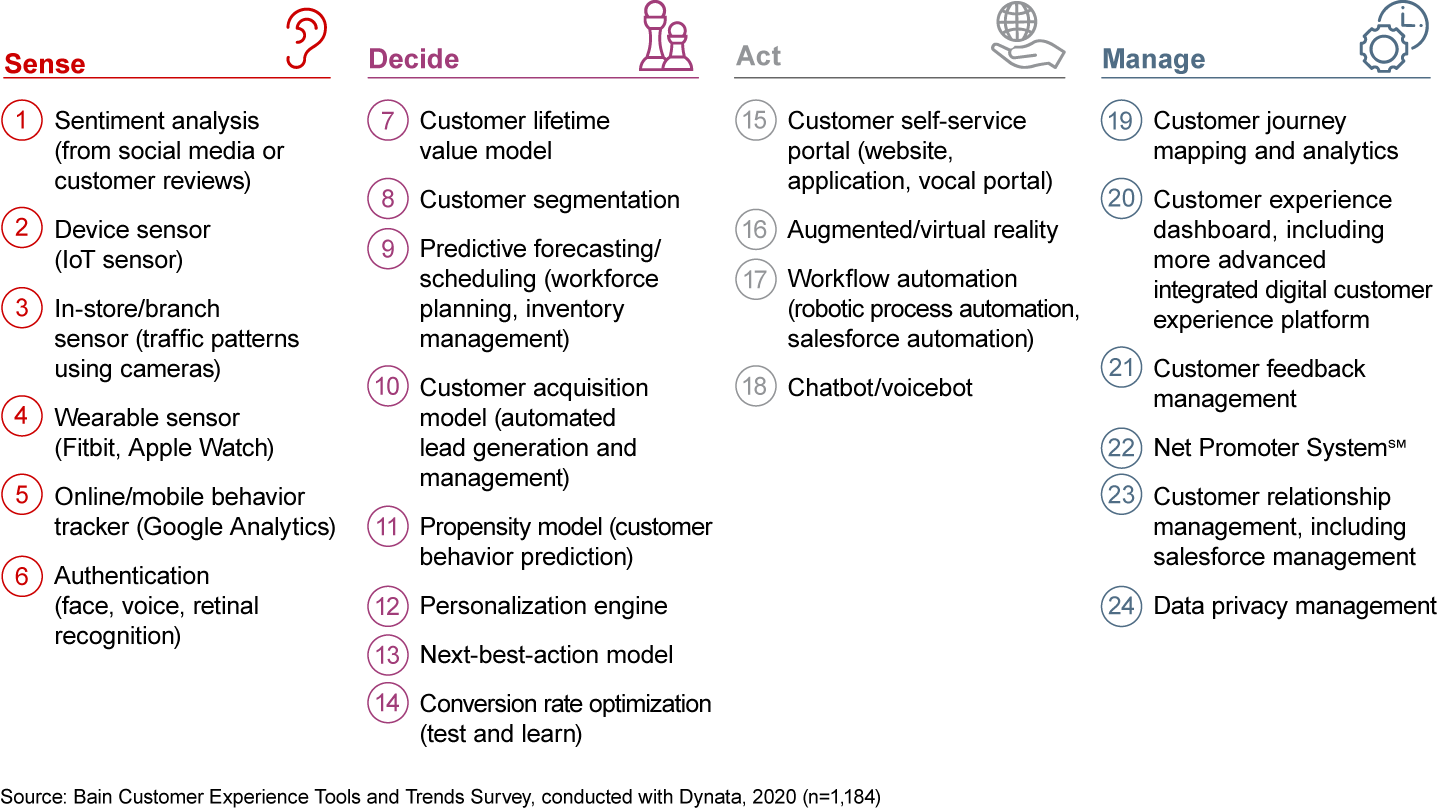
      Bain tested 24 customer experience tools in four categories
      Bain tested 24 customer experience tools in four categories
      Bain tested 24 customer experience tools in four categories

      This year's survey, conducted with Dynata, of almost 1,200 executives in a range of industries found the average rate of adoption was 59% for the two dozen tools analyzed. The financial leaders (defined by revenue growth over the previous five years and satisfaction with financial results) used more tools than the financial laggards. Leaders also were more satisfied with the tools, on average, than the laggards (see Figure 2).

      Figure 2
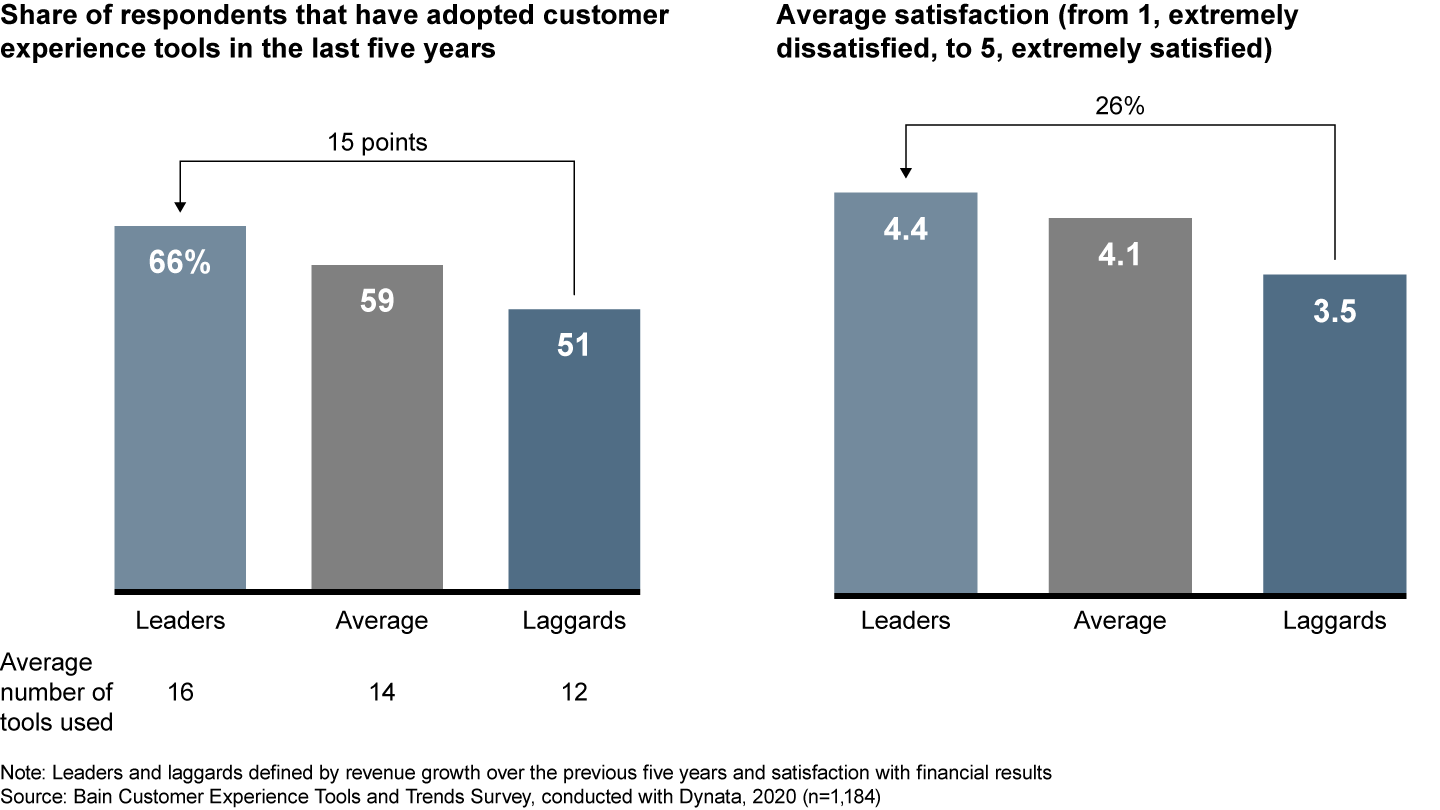
      Leaders typically invest in more tools and are more satisfied with their use
      Leaders typically invest in more tools and are more satisfied with their use
      Leaders typically invest in more tools and are more satisfied with their use

      Analyzing the leader–laggard gap helps underscore the point of investing in the customer experience: to increase the total lifetime value of a company’s customer base. Companies do this by making the experience simpler and more convenient, thereby earning more business from existing customers, retaining them longer and attracting new customers.

      This brief explores the main themes that emerged from the analysis.

      Covid-19 is accelerating the use of many tools

      Now that the world has weathered months of Covid-19, it’s clear that consumers’ priorities have rapidly shifted, with most people putting more value on reducing their health and financial risks, relieving their anxiety, and maintaining a sense of community and belonging. To keep up with these evolving priorities at a decent level of specificity, companies are using sensing tools to listen to and track their customers. Indeed, tools in the “sense” category show the strongest correlation between adoption and financial performance (see Figure 3).

      Figure 3
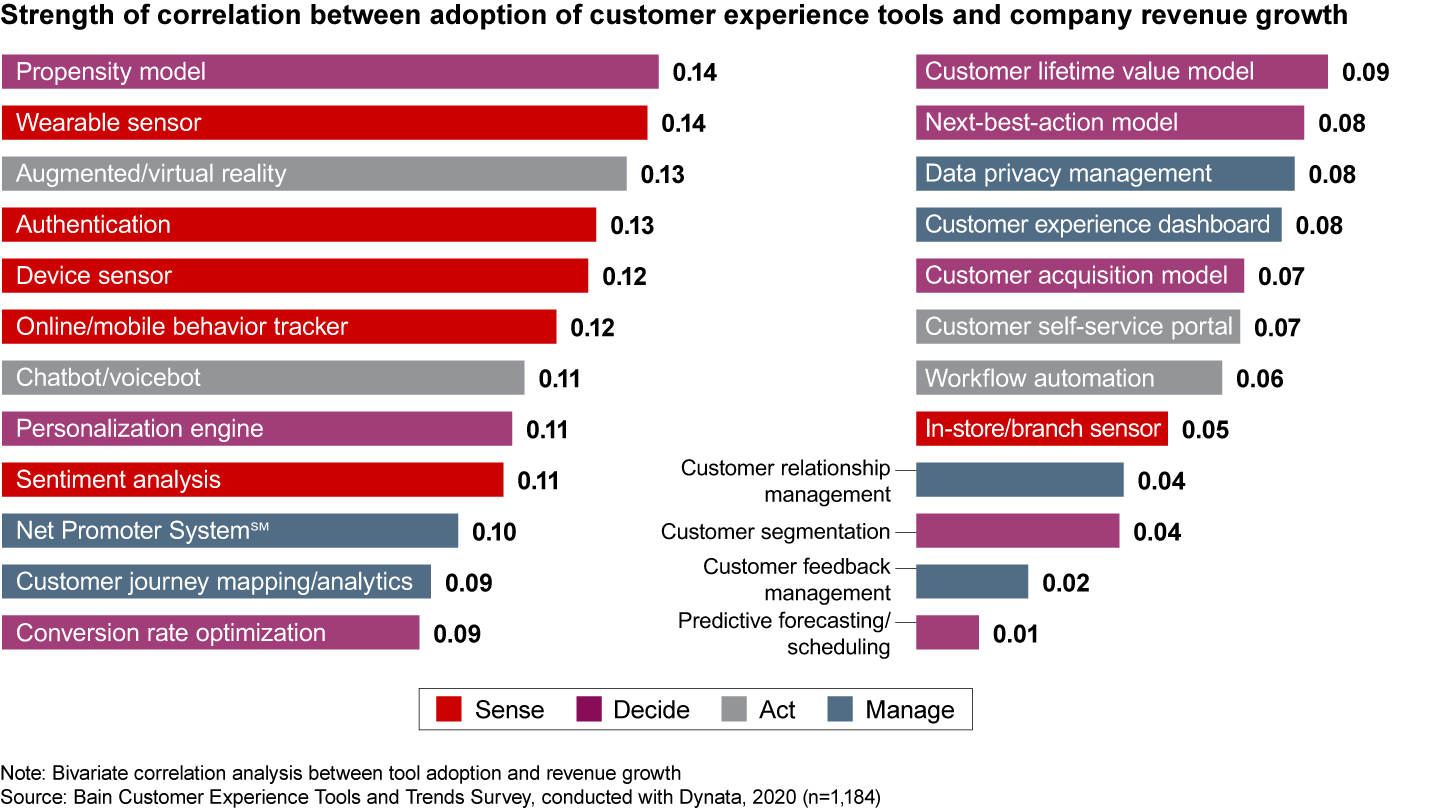
      Tools in the “sense” category show a higher correlation between adoption and financial performance
      Tools in the “sense” category show a higher correlation between adoption and financial performance
      Tools in the “sense” category show a higher correlation between adoption and financial performance

      The coronavirus set geographical and channel patterns in flux as well. For instance, urban centers have lost a huge volume of office workers and residents who may not return at previous levels, so foot traffic could remain low at retail stores in those neighborhoods. Meanwhile, online research and shopping for many products have soared.

      This shift from physical to digital, along with uncertainties about when physical sales might bounce back, raises the importance for retailers obtaining traffic and behavioral data quickly through in-store sensors and online trackers. Retailers and other direct-to-consumer companies will also benefit from a range of tools that help improve the at-home experience.

      A grocer in Europe, for instance, historically measured transactions, but not usage occasions. Now it’s working to determine what portion of shoppers will buy more pizza on the shelf to cook at home, or return to take-out pizza parlors. In the US, a large retailer set up a data decision-support hub to track trends at a state level, using internal and external data. That hub has already informed revisions of operational and functional plans for 2021.

      At the same time, the organizational disruption caused by lockdowns favors digital tools such as workflow automation, chatbots or voicebots, and self-service portals. Insurance company Suncorp in Australia automated processes previously outsourced to India, after the outsourcers’ agents had to shelter at home while lacking sufficient digital connections and hardware.

      By necessity, consumer resistance to bots and web chat has slightly eased during the pandemic, and conversational agents, which simulate voice or test conversations with customers, are on the rise. At Northwell Health in the US, a heavy influx of Covid-19 patients created a backlog of call-center queries. Northwell implemented a chatbot to diagnose patients and refer them to testing when necessary, and then to push out lab results. By reducing patients’ waiting and anxiety, bots thus enhanced the experience.

      When accelerating digital tools—whether equipping service teams to work virtually, or investing in bots, or tailoring products to new customer segments—companies should keep several principles in mind:

      • Make sure the new channel functions well before shutting off the old one.
      • Lean heavily on in-market tests. An insurer wanting to launch usage-based auto policies will need to test intensively, among demographic groups and by location, rather than assume that the recent spike in demand will last.
      • Emphasize flexibility over efficiency with IT systems. Transition from monolithic IT platforms to microservice, API-led (application programming interface) platforms, which can easily accommodate new tools bolted on.

      Integrate tools into an overall management system

      Leaders among the respondents typically invest in more tools than other companies and are more satisfied with them. Tools with the highest adoption rate help manage the experience holistically, including customer relationship management (CRM), customer feedback management and experience dashboard tools (see Figure 4).

      Figure 4
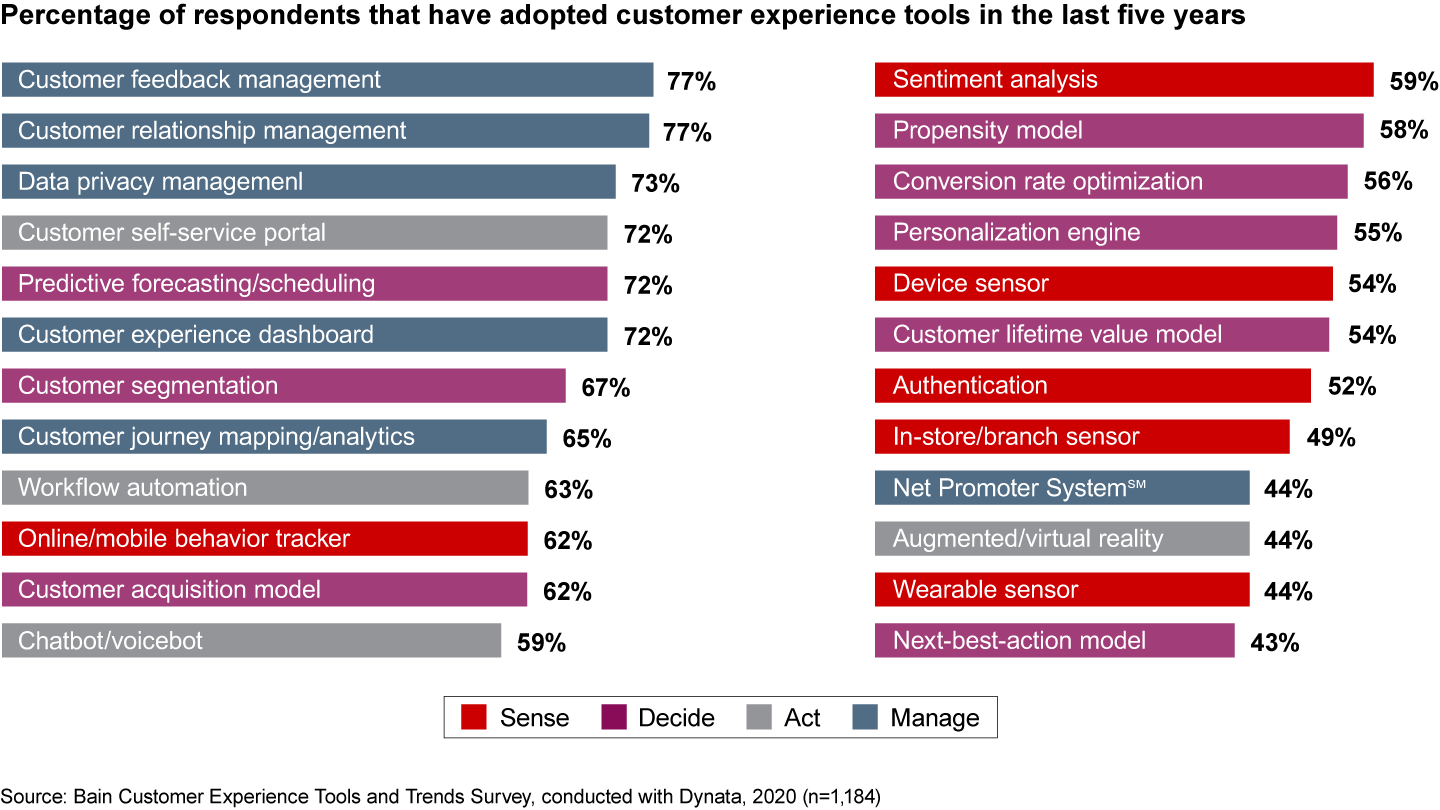
      Longstanding tools tend to be the most widely adopted
      Longstanding tools tend to be the most widely adopted
      Longstanding tools tend to be the most widely adopted

      Some of these tools, especially CRM systems, have been around for decades, allowing companies to refine them and become familiar and productive with the user interface. The leaders, though, take CRM to a higher level through emerging customer data platforms:

      • They use CRM to manage sales, marketing and service interactions.
      • They use diversified sources of data and integrate external with internal data, as well as online and offline data.
      • They use robotic process automation (RPA) to reduce manual, repetitive tasks.
      • They’re testing how artificial intelligence can significantly improve the CRM’s prospecting.

      Installing more tools alone doesn’t increase customer lifetime value or make customers’ lives easier. More important is selecting the appropriate tools for a particular use case, and integrating them into a well-oiled system. Bain’s survey finds greater returns to tools that are integrated within an IT system or with other tools. Tools connected to an enterprise resource planning system, for instance, have an 87% satisfaction rate among respondents, versus 73% satisfaction for tools that stand alone (see Figure 5). Moreover, companies must adapt operations to use their tools productively. If a tool doesn’t deliver the anticipated benefits, the fault may not lie with the tool itself, but rather with the processes surrounding the tool.

      Figure 5
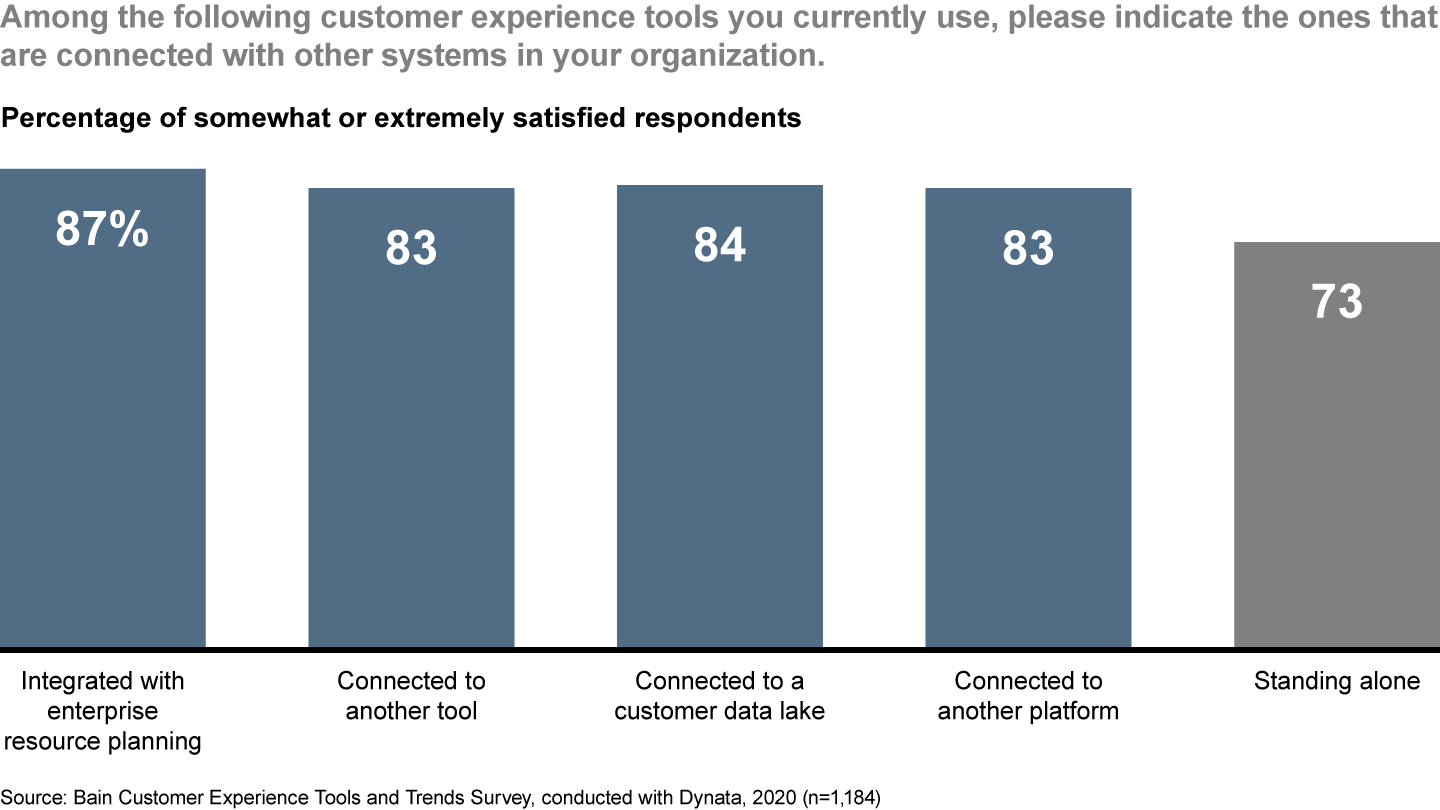
      Customer experience tools work best when integrated in IT systems or linked to other tools
      Customer experience tools work best when integrated in IT systems or linked to other tools
      Customer experience tools work best when integrated in IT systems or linked to other tools

      This makes intuitive sense, as any customer experience involves multiple corporate functions and channels. Tools used only by individual functions cannot connect the dots throughout the customer’s entire relationship with the company. By contrast, a manager using a dashboard that shows how leads move through the funnel and displays real-time loyalty and operational metrics will find it easier to make good decisions than if she had to find each of those data sets in separate places.

      Use unique sources of data and algorithms

      Relatively untapped sources of customer data, such as social media sentiment analysis to better predict demand for certain consumer goods, have grown more important for companies using device sensors and online behavior trackers. Advanced analytical tools in decision making, such as propensity models, also correlate closely with strong financial performance.

      Insurgent digital firms often have advanced furthest in this regard. Root sets car insurance rates using telematics that monitor driving through a smartphone app measuring roughly 200 variables. Prospective customers apply through Root’s completely digital process. Likewise, subscription fashion firm Stitch Fix uses algorithms to understand what an individual would like for her monthly box delivery and how the clothing will fit. An employee adds value by reviewing the algorithm’s recommendations to check whether it’s a good look.

      Companies also use data and analytics to enrich service interactions. An artificial intelligence-enhanced routing system for a contact center can mine contextual data on a customer’s past interactions and profile to predict her needs, while voice analysis can guide the agent in real time.

      Prescriptive analytics goes a step further, triggering outbound treatments such as targeted offers or messages, to enhance the customer relationship. These treatments are based not only on predicted behavior, but also on inferences about the most effective and economic content, timing and channel. For incumbent companies, prescriptive analytics may offer a critical defense against threats from digital natives, building on incumbents’ hidden asset: the data and history they amass about large numbers of customers.

      Data produced in the Net Promoter System℠, including the metric of loyalty known as the Net Promoter Score℠, is another route used by leading companies to gain deeper insight into the experience. The leaders use competitive NPS® benchmarks and employee NPS significantly more than other companies. While bottom-up NPS is scarce, since fewer than 10% of customers may respond to an NPS survey, a company can use the data exhaust from positive and negative incidents to accurately predict a loyalty score for each customer and thereby anticipate and prevent churn, or predict which customers will be open to cross-selling.

      To make sense of the many data sets now available, some companies have refined their management dashboards. One major telecommunications provider recently completed a customer experience command center with more than 150 data points, about half of them at the unique customer level, accessible through a multitiered dashboard. The data covers network performance (such as call setup success rates), channel performance (store foot traffic, call wait times), and customer journey performance (first 30 days experience, payment delays, churn). The company developed a predictive Net Promoter Score to estimate the loyalty of customers outside the survey, using data about these customers and their interactions. The command center ultimately aims to create a single source of insights about the experience and to spur customer-level, systematic improvements.

      Make customer lifetime value a key metric

      As more executives and investors realize that customers are the ultimate source of corporate value, companies have put more emphasis on identifying their most valuable customers and building those relationships. Given the importance of customer value, executives should track it as rigorously as they track other key assets, such as buildings, machinery and inventory. They also should disclose it consistently in their quarterly and annual earnings releases so that investors can make informed judgments about company performance and how it compares with that of industry peers.

      Some public companies, such as Costco, AMC Entertainment Holdings, Humana and American Express, increasingly report various types of customer value metrics. Most telecommunications companies—including Verizon, AT&T and T-Mobile—do as well. The utility company E.ON reports year-over-year customer counts in its audited financials. We’ll truly enter the age of customer capitalism when financial accounting-standards bodies enact rules that require reliable, auditable disclosure of customer-relationship health.

      Customer experience tools support that goal. For the near future, survey respondents expect adoption to rise for all two dozen tools, with the biggest lift for some of today’s nascent tools (see Figure 6). With customer behavior changing so fast, companies need better online trackers, better acquisition models and better recommendation engines. As customer data becomes more valuable, while consumers want to protect their personal data, privacy-management tools gain importance.

      Figure 6
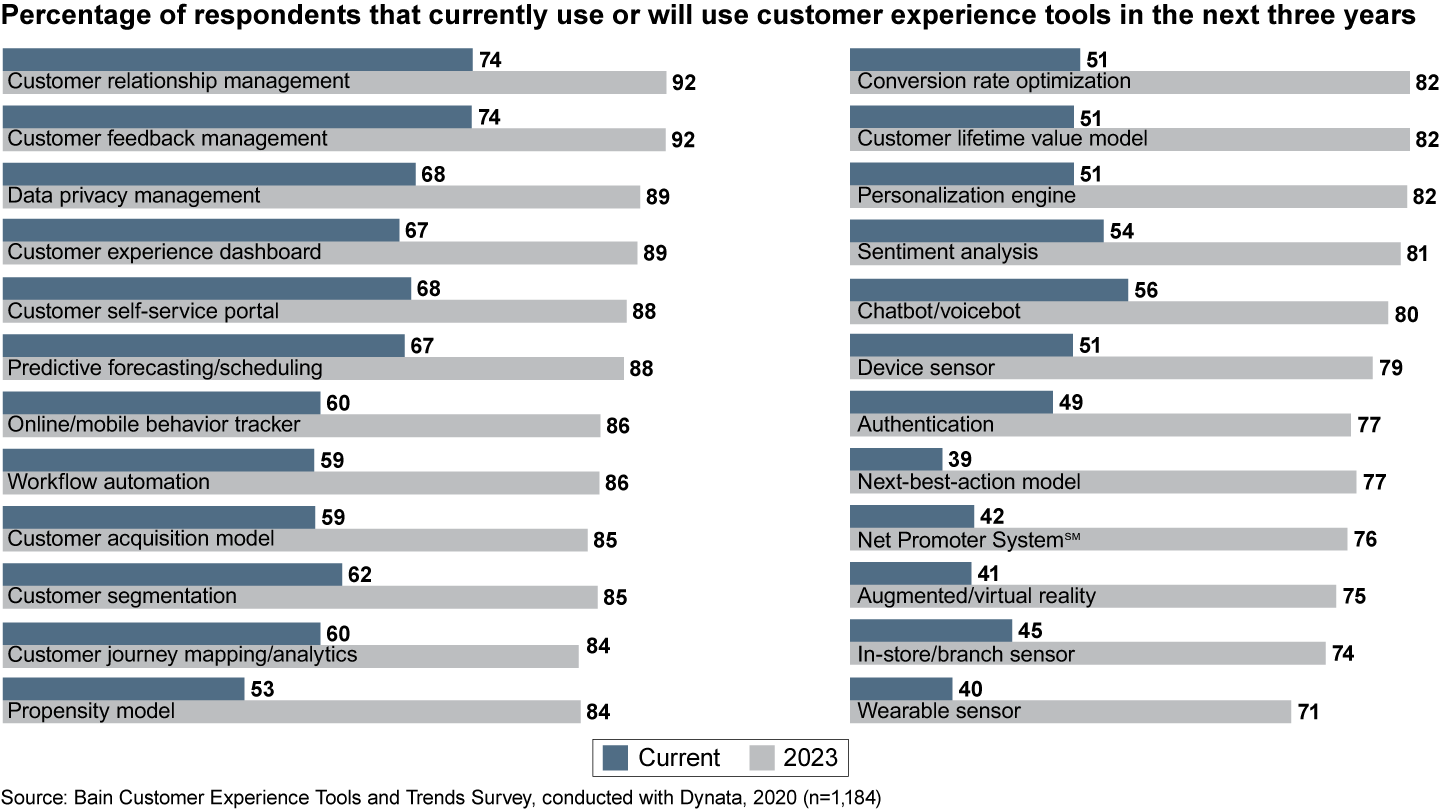
      Companies expect wider adoption of customer experience tools, with the biggest jumps mostly in newer tools
      Companies expect wider adoption of customer experience tools, with the biggest jumps mostly in newer tools
      Companies expect wider adoption of customer experience tools, with the biggest jumps mostly in newer tools

      Tool kit principles for shifting sands

      Innovation and experimentation with the customer experience has flourished over the past few years, with the relevant tools getting more powerful. However, a sizable gap remains between leading and lagging firms, and of course, digital insurgents continue to challenge any incumbent’s hold on its customer base. Covid-19 poses the additional challenge of how providers can allay customers’ concerns about safety, household finances and isolation. In this complicated environment, the leading firms keep the following tool kit principles in mind.

      • Test, test and test again. Customers’ needs and priorities are shifting more rapidly than in the past. That calls for rapid, Agile modes of in-market testing. The right tools must be in place, of course, but companies also need an operating rhythm that ensures fast feedback, allows teams to make fast course adjustments, and promotes behavior that improves both treatment of customers and business outcomes.
      • Identify the use case. It may sound obvious, but the point of a tool is to solve a problem. Each tool must serve specific use cases as well as the overall experience strategy.
      • Balance tool usage across each category in order to maximize value for customers.
      • Reap all of the practical business benefits that tools can produce. Every step to improve the experience through digital self-service, for example, should simultaneously reduce costs.

      Customers are enduring trying times. The tools discussed here can make their lives, and those of employees, richer and more fulfilling. They can also strengthen a company’s economics by holding down costs and securing new revenue streams. With careful linkage to use cases, the right set of tools embedded in a test-and-learn culture can substantially improve the experience and improve customer lifetime value.

      The authors would like to thank Martha Moreau, Basma Abdel Motaal, Ksenia Peresvetova, Mira Kalscheuer, Shreya Gandhi, Camille Lefebvre and Arnaud Bousquie for their contribution to the report.


      Net Promoter®, NPS®, NPS Prism®, and the NPS-related emoticons are registered trademarks, and Net Promoter Score℠, NPSx℠, and Net Promoter System℠ are service marks of Bain & Company, Inc., NICE Systems, Inc., and Fred Reichheld.

      About the Research

      Data powered by Dynata, a leading global first-party data and insights platform.

      Explore the tools

      Customer Experience Tools & Trends
      Chatbot or Voicebot
      Conversational agents simulate human interactions with customers and perform interactive voice or text conversations with customers.
      Customer Experience Tools
      Customer Experience Tools & Trends
      Conversion Rate Optimization
      Companies can analyze behavior on their websites, then enhance the content and user experience to convert more visitors into customers or leads.
      Customer Experience Tools
      Customer Experience Tools & Trends
      Customer Acquisition Model
      Customer acquisition models automatically identify the best potential leads and set up strategies to convert them into active customers.
      Customer Experience Tools
      Customer Experience Tools & Trends
      Customer Feedback Management
      A suite of tools helps companies measure and monitor feedback, which can inform customer strategy.
      Customer Experience Tools
      Customer Experience Tools & Trends
      Customer Lifetime Value Model
      By knowing the total amount of revenue a person will generate, companies can make better decisions on how to acquire and retain the customer.
      Customer Experience Tools
      Customer Experience Tools & Trends
      Customer Relationship Management
      Companies can organize, automate and synchronize every facet of customer interactions with CRM tools.
      Customer Experience Tools
      Customer Experience Tools & Trends
      Customer Segmentation
      Companies can separate a market into discrete customer groups, creating a way to identify underserved segments and develop unique products and services.
      Customer Experience Tools
      Customer Experience Tools & Trends
      Customer Self-Service Portal
      Customers can perform routine tasks and obtain information digitally without having to interact with an employee.
      Customer Experience Tools
      Customer Experience Tools & Trends
      In-Store or Branch Sensor
      Sensors in stores or branches use such technologies as barcode scanning to enhance in-store customer engagement and blend the physical and digital shopping experiences.
      Customer Experience Tools
      Customer Experience Tools & Trends
      Next-Best-Action Model
      Powered by artificial intelligence, next-best-action models recommend what a sales or service person should do with a customer in real time.
      Customer Experience Tools
      Customer Experience Tools & Trends
      Online or Mobile Behavior Tracker
      With online or mobile trackers, companies identify customer trends and motives through the analysis of web traffic and other digital data.
      Customer Experience Tools
      Customer Experience Tools & Trends
      Propensity Model
      Calculating the likelihood of a prospective or current customer’s next steps helps companies deliver better experiences, reduce churn and build value.
      Customer Experience Tools
      Customer Experience Tools & Trends
      Wearable Sensor
      Sensors worn directly by users measure such things as heart rate and activity, reinventing how humans interact with computers.
      Customer Experience Tools
      Customer Experience Tools & Trends
      Workflow Automation
      Workflow automation makes processes run with minimal human assistance, improving the quality and cost of the customer experience.
      Customer Experience Tools
      Customer Experience Tools & Trends
      Sentiment Analysis
      Sentiment analysis examines text data to help companies perceive the emotions of their customers or a broader audience.
      Customer Experience Tools
      Customer Experience Tools & Trends
      Device Sensor
      Companies use device sensors to gather real-time data about their interactions with customers.
      Customer Experience Tools
      Customer Experience Tools & Trends
      Authentication
      Detecting such features as fingerprints and voice, authentication tools can reliably identify users and improve the customer experience, while reducing cost and fraud.
      Customer Experience Tools
      Customer Experience Tools & Trends
      Predictive Forecasting or Scheduling
      By analyzing current and historical data, companies can better predict future demand or supply, as well as functional and operational metrics.
      Customer Experience Tools
      Customer Experience Tools & Trends
      Personalization Engine
      Personalization tools collect data from outside software and use advanced analytics to better understand an individual customer’s needs.
      Customer Experience Tools
      Customer Experience Tools & Trends
      Augmented or Virtual Reality
      While the technologies are in early stages of adoption, new possibilities for virtual and augmented reality tools are emerging.
      Customer Experience Tools
      Customer Experience Tools & Trends
      Customer Journey Mapping and Analytics
      Companies can use “journey maps” to visualize each potential interaction with a customer, then use the data to create a holistic view of the customer.
      Customer Experience Tools
      Customer Experience Tools & Trends
      Customer Experience Dashboard
      Customer experience dashboards mine various sources to create a consolidated view of vital customer data.
      Customer Experience Tools
      Customer Experience Tools & Trends
      Net Promoter System℠
      The Net Promoter System uses customer feedback to help companies embed customer advocacy throughout the business and create a foundation for growth.
      Customer Experience Tools
      Customer Experience Tools & Trends
      Data Privacy Management
      Privacy management tools address growing government regulation and public concerns over data security.
      Customer Experience Tools

      Additional tools

      Customer Experience Tools & Trends
      Customer Episode Design
      By designing future customer episodes, companies gain a view of the end-to-end customer experience rather than just the pieces of the internal process.
      Customer Experience Tools
      Customer Experience Tools & Trends
      Artificial Intelligence
      AI-based technologies and applications, like voice recognition, computer vision and process optimizations, are quickly finding their way into a wide number of industries.
      Customer Experience Tools
      Customer Experience Tools & Trends
      Automated Decision Engines
      Automated, real-time decision making can help a company test and learn from new customer experience efforts, with less human intervention.
      Customer Experience Tools
      Customer Experience Tools & Trends
      One-to-one Marketing
      One-to-one marketing can enhance the customer experience, make advertising more effective and increase customer retention, loyalty and sales.
      Customer Experience Tools
      Customer Experience Tools & Trends
      Salesforce Automation Tools
      By freeing salespeople from manual tasks, salesforce automation tools allow salespeople to spend more time serving customers.
      Customer Experience Tools
      Customer Experience Tools & Trends
      Omnichannel Customer Support
      While the ability to shift from in-store to online service has become table stakes, companies that can seamlessly integrate these channels deliver outstanding customer experiences.
      Customer Experience Tools
      Customer Experience Tools & Trends
      Next-Generation Contact Centers
      Next-generation contact centers use natural language processing, artificial intelligence and computational linguistics to interact with customers.
      Customer Experience Tools
      Customer Experience Tools & Trends
      Delivery Drones
      The retail industry, more than any other sector, has embraced drones as a way to speed delivery and delight customers.
      Customer Experience Tools
      Customer Experience Tools & Trends
      Blockchain
      Financial services firms have adopted blockchain technology most widely, but almost every industry has a range of potential use cases.
      Customer Experience Tools
      Customer Experience Tools & Trends
      Customer Episode Management
      By managing customer episodes, companies gain an end-to-end view of the customer experience rather than just pieces of the internal process.
      Customer Experience Tools
      Authors
      • Headshot of Gerard du Toit
        Gerard du Toit
        Partner, Boston
      • Headshot of James Anderson
        James Anderson
        Partner, London
      • Headshot of Richard Hatherall
        Richard Hatherall
        Advisory Partner, Sydney
      Contact us
      Related Consulting Services
      • AI, Insights, and Solutions
      • Customer Episode Design
      • Customer Experience
      • Customer Experience Leadership
      • Customer Value Management
      • Digital
      • Net Promoter System®
      How We Can Help
      • Customer Episode-led Costing
      • Customer Experience Analytics
      Customer Experience
      A Digital Reckoning for Insurance Companies

      With consumers relying more on online and mobile tools during the Covid-19 pandemic, can insurers deliver a better digital experience?

      Read More
      Customer Experience Tools & Trends
      Online or Mobile Behavior Tracker

      With online or mobile trackers, companies identify customer trends and motives through the analysis of web traffic and other digital data.

      Read More
      Customer Experience Tools & Trends
      Customer Acquisition Model

      Customer acquisition models automatically identify the best potential leads and set up strategies to convert them into active customers.

      Read More
      Customer Experience Tools & Trends
      Customer Feedback Management

      A suite of tools helps companies measure and monitor feedback, which can inform customer strategy.

      Read More
      Customer Experience Tools & Trends
      Customer Self-Service Portal

      Customers can perform routine tasks and obtain information digitally without having to interact with an employee.

      Read More
      Published in September 2020
      Tags
      • AI, Insights, and Solutions
      • Customer Episode Design
      • Customer Episode-led Costing
      • Customer Experience
      • Customer Experience Analytics
      • Customer Experience Leadership
      • Customer Experience Tools & Trends
      • Customer Value Management
      • Digital
      • Net Promoter System®

      How We've Helped Clients

      Customer Experience From Laggard to Leader: Desjardins Evolves Member Centricity for the Digital Age

      Read case study

      Customer Experience An Automaker Reinvents Customer Experience with a Focus on Key Episodes

      Read case study

      Customer Experience A Telco’s CX Transformation Powered by Tech and Data

      Read case study

      Ready to talk?

      We work with ambitious leaders who want to define the future, not hide from it. Together, we achieve extraordinary outcomes.

      Stay ahead in a rapidly changing world. Subscribe to Bain Insights, our monthly look at the critical issues facing global businesses.

      *I have read and understand Bain’s Privacy Notice.

      Please read and agree to the Privacy Policy.
      Bain & Company
      Contact us Sustainability Accessibility Terms of use Privacy Modern Slavery Act Statement Cookie Policy Sitemap Log In

      © 1996-2026 Bain & Company, Inc.

      Contact Bain

      How can we help you?

      • Business inquiry
      • Career information
      • Press relations
      • Partnership request
      • Speaker request
      See all offices