

Report

At a Glance
- First-half 2023 results picked up where 2022 left off as continued macro uncertainty kept a lid on investments, exits, and fund-raising.
- A full 12 months of relative inactivity is creating pressure on the industry to find ways to return more capital to limited partners.
- Top funds aren’t waiting for clear skies. They are reviewing portfolios, resetting value creation plans, and otherwise working to get things moving again.
After a year of sharply rising interest rates, a banking crisis, and widespread geopolitical turbulence, it’s no surprise that private equity (PE) activity continued to slump in 2023’s first half. Uncertainty is the enemy of dealmaking, and uncertainty has been swirling through global markets in abundance.

Bain’s 2023 Midyear Private Equity Update
Bain's Hugh MacArthur shares key takeaways from our 2023 Midyear Private Equity Report.
Investments, exits, and fund-raising have all limped along since midsummer of last year, when central bankers first started raising rates in response to spiking inflation. The ongoing volatility and economic uncertainty have left buyers and sellers at odds over what assets are really worth. Even when they can agree, financing deals can be a challenge.
How long the current doldrums will persist is, of course, anybody’s guess. But barring some sort of black swan event, nothing is fundamentally broken in the global economy (unlike in 2007, when major cracks appeared in the financial system). As the months tick by, pressure is building on the industry to get things moving again. Increasingly, the question being posed to general partners (GPs) is “What are you waiting for?”
The growing exit imperative
Sitting around because the market is down has never been a particularly effective strategy in private equity. History has shown that for dealmaking to commence in earnest, buyers and sellers need a reasonably stable economic environment—not necessarily an attractive one. Investors do require confidence in the five-year outlook for an industry and a company. But arguably, a clearer picture is emerging.
Public markets have rebounded strongly in 2023 with the S&P 500 jumping 16% in the first half and the tech-heavy Nasdaq shooting ahead by 32%. The IPO window has opened a crack, allowing several private equity-backed companies to file offerings. Inflation is moderating in most major economies (with the exception of the UK), and banks are cleaning up their balance sheets. Major lenders have managed to unload more than half of the “hung” leveraged buyout debt they committed to before the economy went sideways.
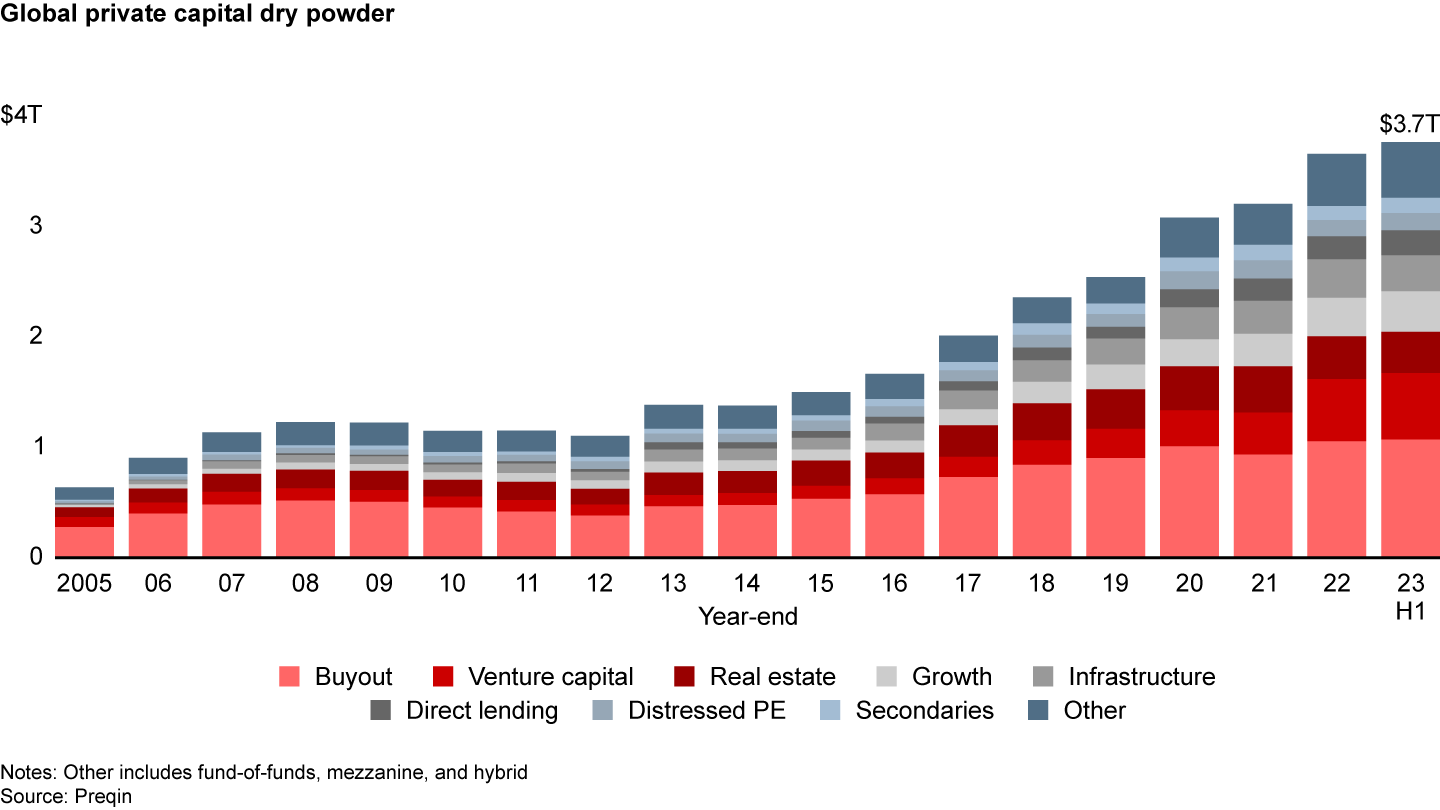
With the clock ticking on a record $3.7 trillion in dry powder ($1.1 trillion in buyout funds), alternative asset managers have ample incentive to get moving after four quarters of relative inactivity. They also face growing pressure to free up the massive glut of unexited portfolio companies jamming the fund-raising flywheel.
Buyout funds alone are sitting on a record $2.8 trillion in unexited assets—over four times the level held during the global financial crisis. That has precipitated a liquidity crunch for limited partners (LPs) that has contributed to the industry’s abrupt skid in fund-raising over the past 12 months. For cash-strapped LPs, DPI (distributed to paid-in capital) is becoming the new IRR (internal rate of return). When asked in a recent survey if liquidity concerns left them more inclined to cash out of a hypothetical investment or roll it over into a GP-led secondary, around 60% of LPs said they’d take the cash (see Figure 1). The message to fund managers: LPs would prefer you to generate liquidity than try to squeeze another half-turn of multiple from every last portfolio company.
Figure 1
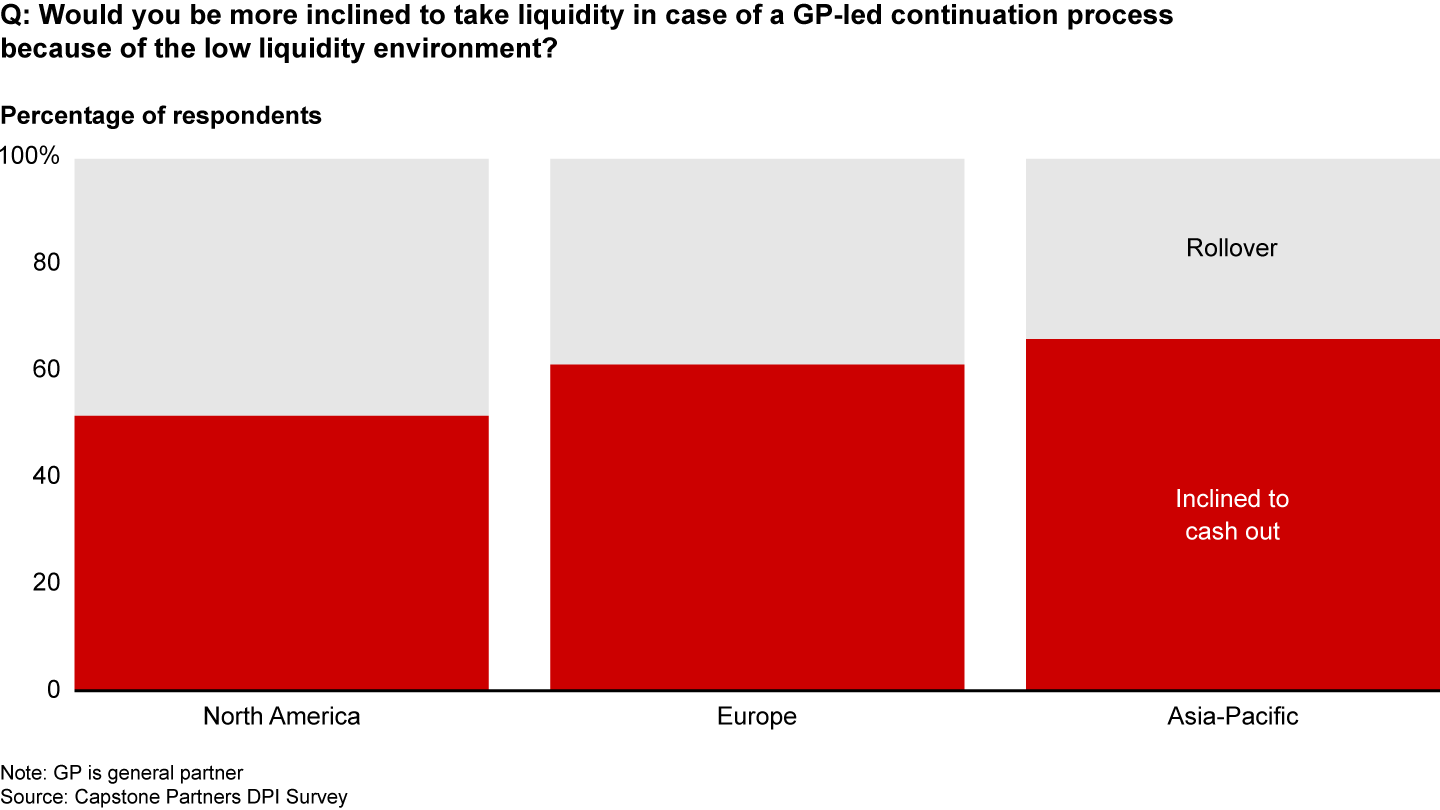

This suggests that Job 1 for the industry in the months ahead will be restarting the capital flywheel by increasing distributions to LPs—whether through exits, GP-led secondaries, recaps, or other liquidity solutions. Practically speaking, individual funds should be undergoing a portfolio review that balances the value to the firm of increasing DPI vs. the potential upside represented by holding specific assets.
The macro environment has changed significantly over the past 12 months, altering the assumptions behind many portfolio company deal theses. With that in mind, the decision to sell or hold an asset may come down to a pair of questions: Do you believe that exit conditions will be meaningfully different over the next 6 to 12 months? And does generating the return you were counting on require a value creation plan reset to account for all that’s changed on the macro front (including the possibility of higher-for-longer interest rates and, therefore, downward pressure on sale multiples)?
Waiting and hoping isn’t a strategy. It’s time to get moving.
Here's how the first six months of 2023 played out in more detail.
Investments
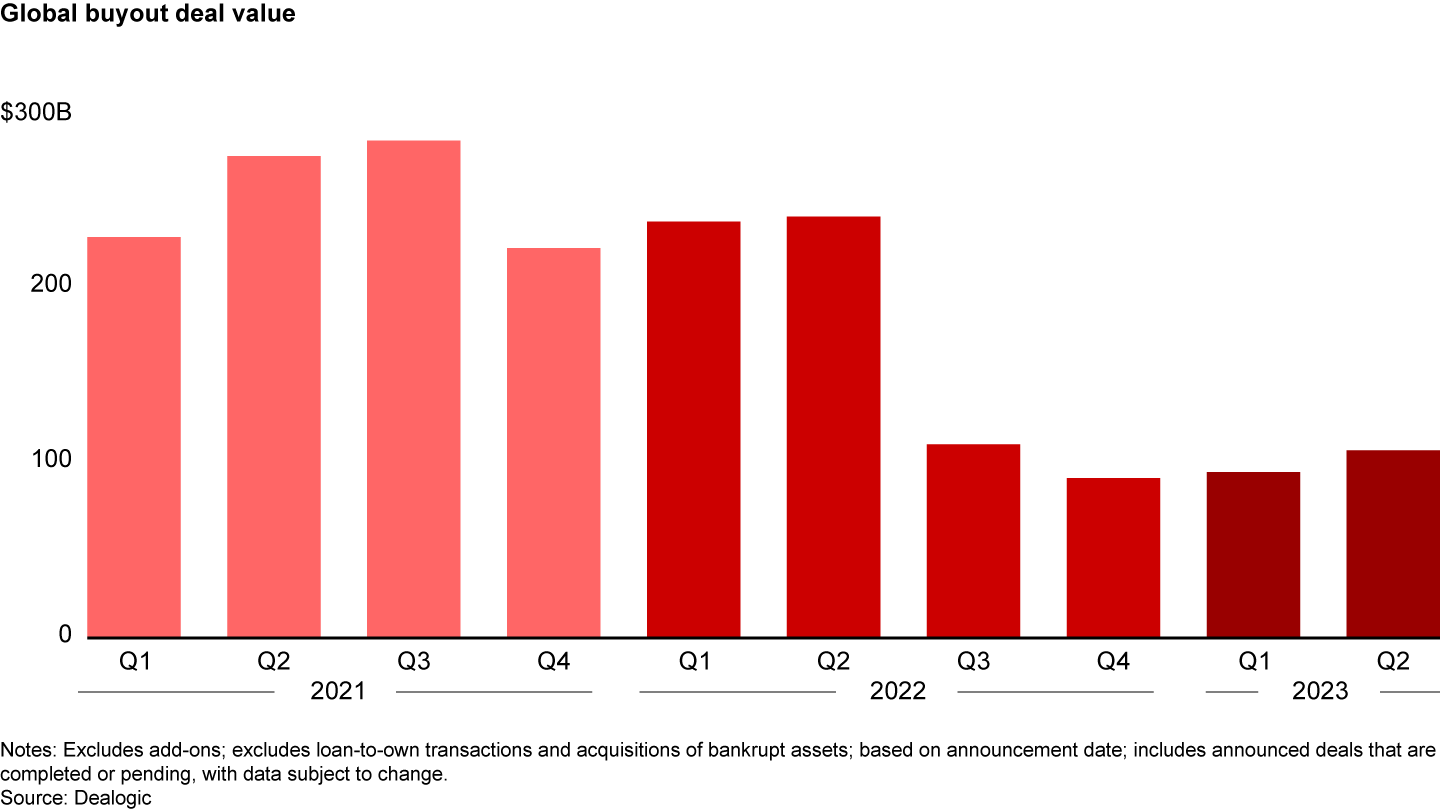
Globally, buyout funds generated $202 billion in deal value during the first half of 2023, a 58% decline from the same period a year ago. Annualized, that works out to $403 billion, which would be a 41% drop from 2022’s total.
In essence, 2023 picked up where 2022 left off, extending the downturn in activity to a full year (see Figures 2a and 2b). The 863 deals closed over the first half signal a 29% full-year decline from the pace in 2022. Add-ons continued to represent a significant share of the global buyout market, accounting for 9% of total deal value in the first half and 56% of deal count.
Figure 2a
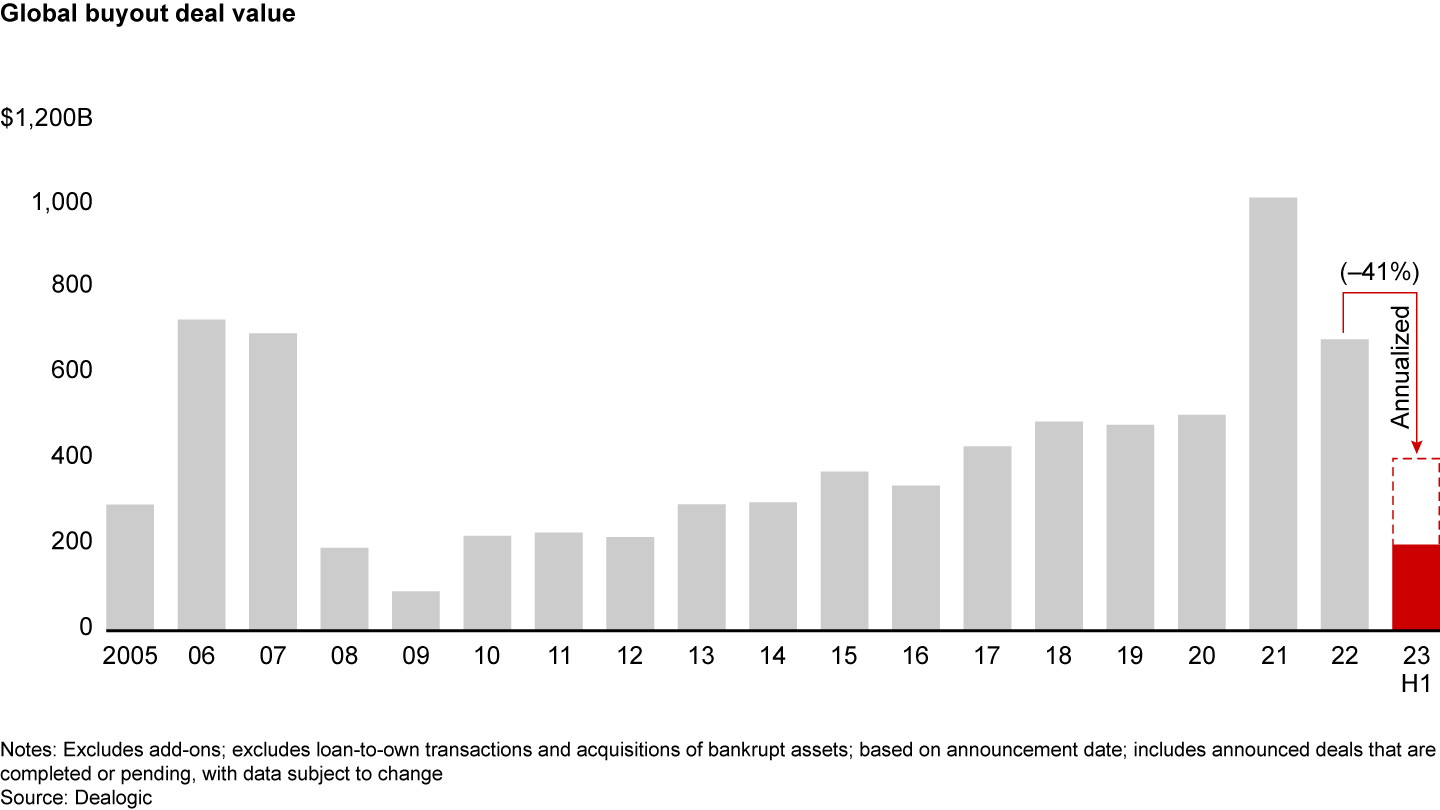

Figure 2b

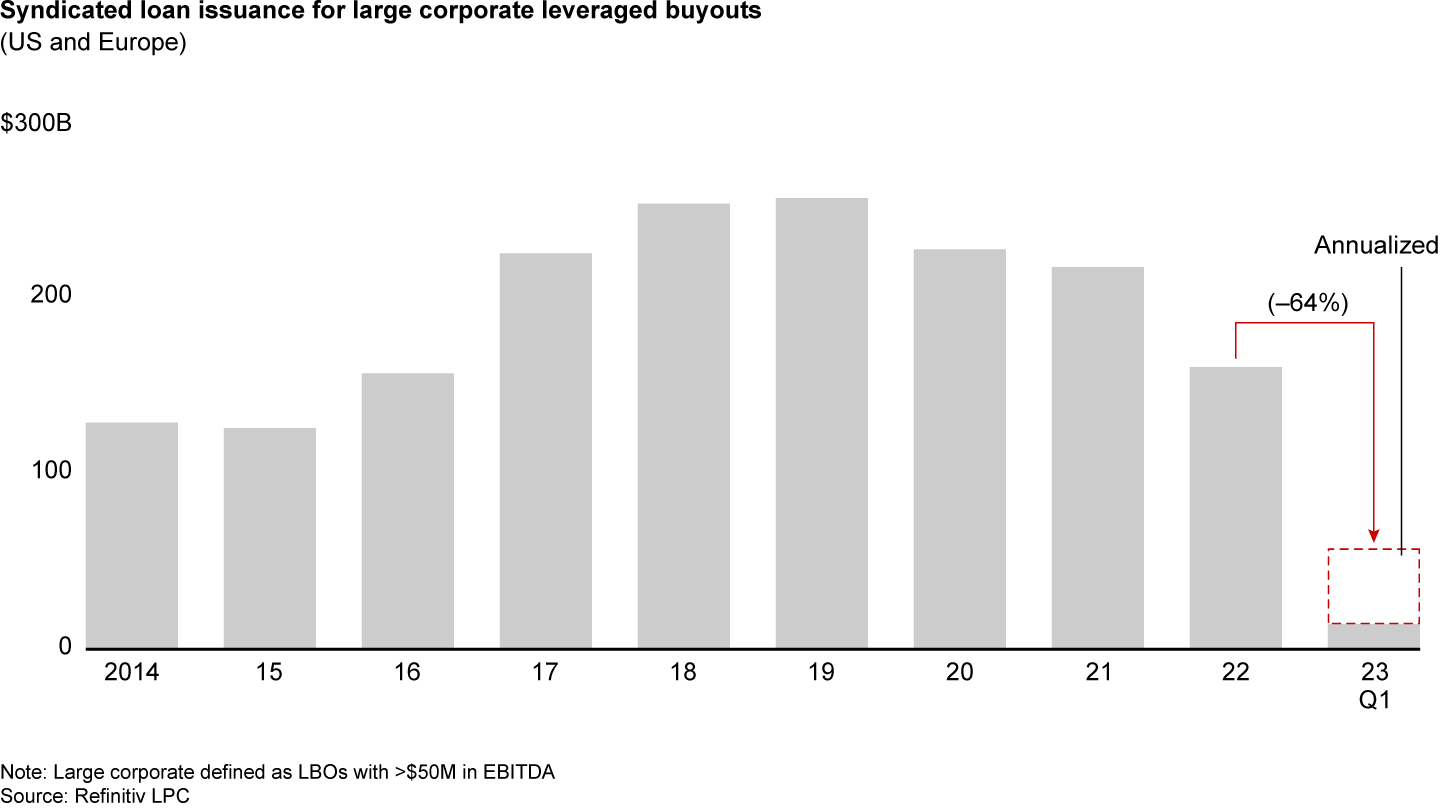
Dealmaking has suffered from jitters on the part of buyers and sellers struggling to make sense of an array of macro challenges. It also been harder to get a loan. Rising rates have pushed the price of any form of credit higher, and economic uncertainty has given bankers vertigo. On an annualized basis, syndicated loan issuance to large leveraged buyouts is down 64% from a year ago (see Figure 3). What’s kept the middle market alive is the continued growth of private credit. Direct lending has become a major factor in funding middle-market leveraged buyouts and is extending into larger and larger deals, usually as part of a consortium of lenders.
Figure 3

With both dealmaking and fund-raising slower, dry powder (or uncalled capital) is holding steady at $3.7 trillion (see Figure 4). Around 75% of buyout dry powder was raised within the last three years and is relatively fresh. That implies fund managers still have time to put money to work and aren’t feeling undue pressure to do so.
Figure 4

Exits
Where GPs are feeling significantly more pressure is on the sell side. If the trend in investment value has been grim over the past 12 months, the trend in exits has been worse.
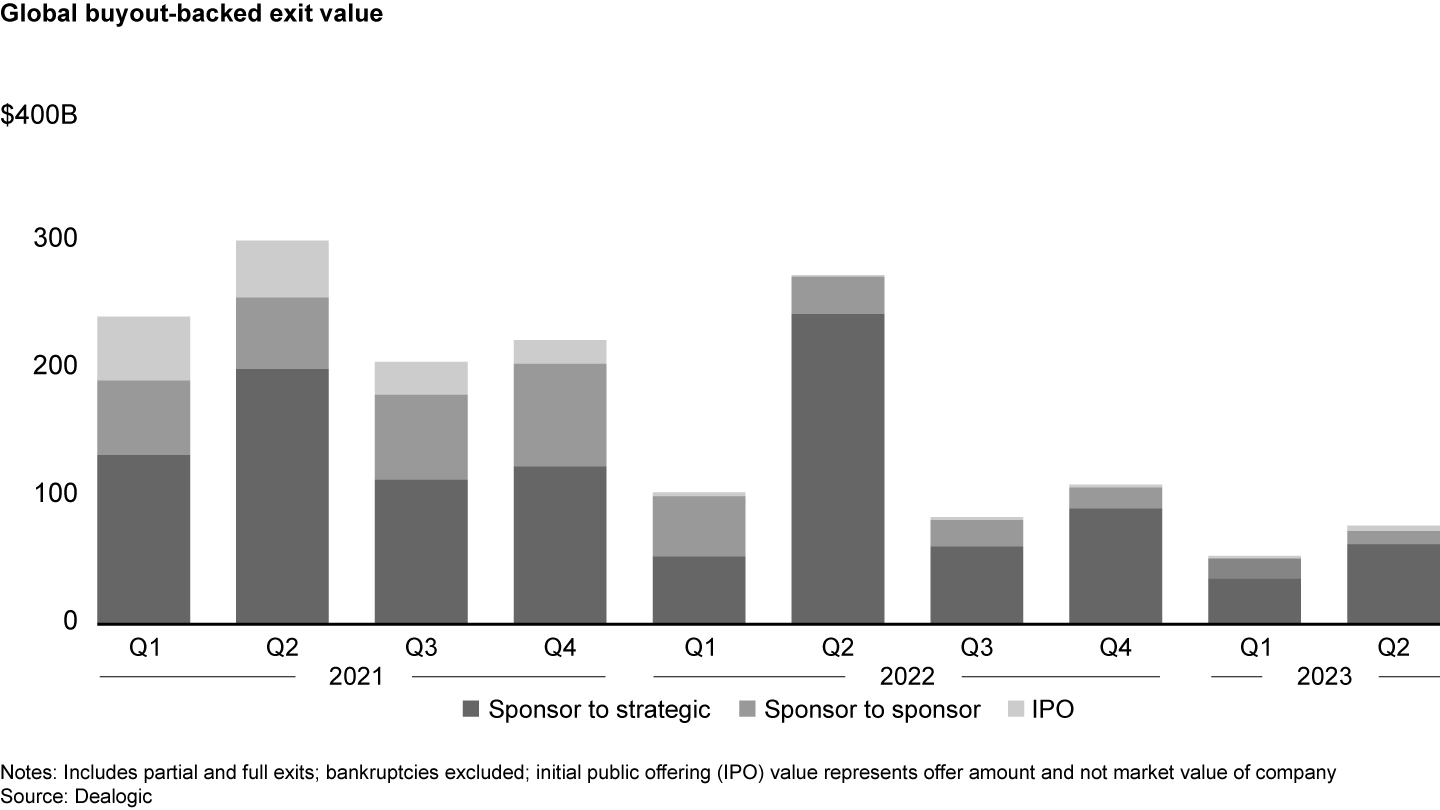
Most exit channels have languished since last year, leaving buyout managers with a towering backlog of unrealized assets that has slowed distributions to investors. Over the year’s first half, buyout-backed exits fell to $131 billion, a 65% decline from the same period a year ago. On an annualized basis, exit value is tracking down 54%, and exit count is off 30% compared with 2022 (see Figures 5a and 5b).
Figure 5a
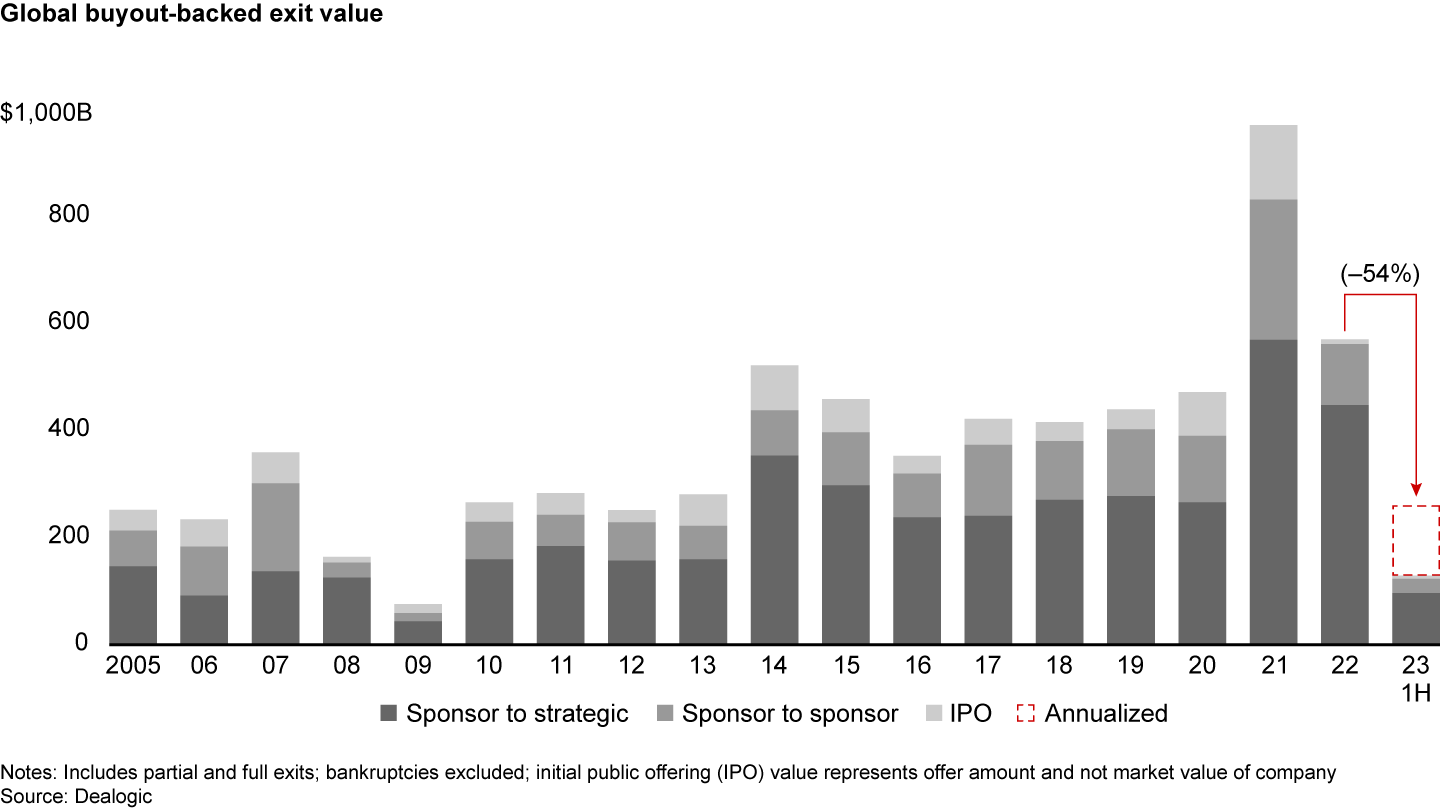

Figure 5b

The build-up in unexited assets has disrupted the cash-flow dynamics that drive the industry forward. Buyout funds have approximately 26,000 companies in their portfolios, representing a staggering $2.8 trillion in unrealized value. A majority of those assets are edging up against (or past) the typical five-year time frame for a PE exit. Nearly one-quarter have been held for longer than six years, and more than half have been held for more than four (see Figures 6a and 6b).
Figure 6a
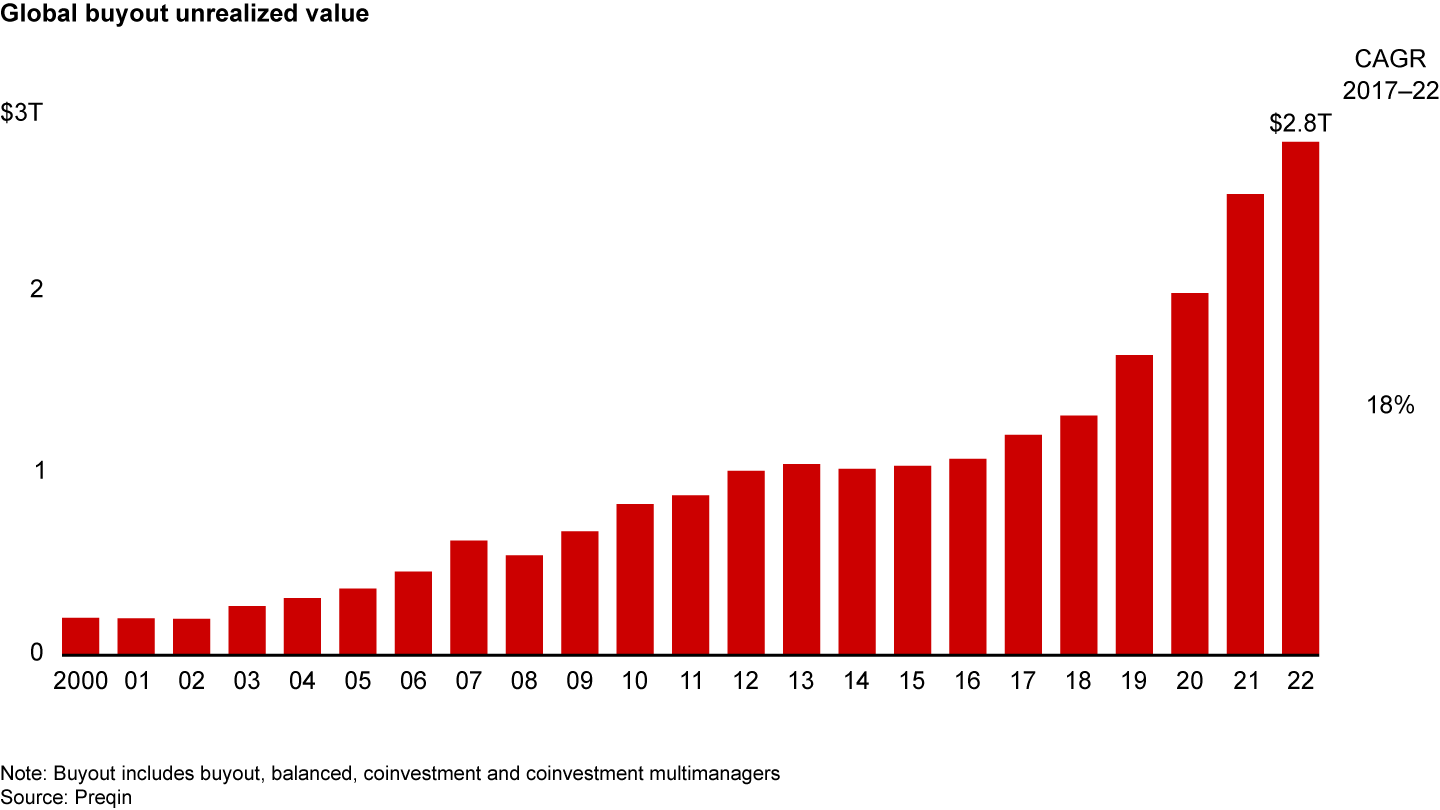

Figure 6b
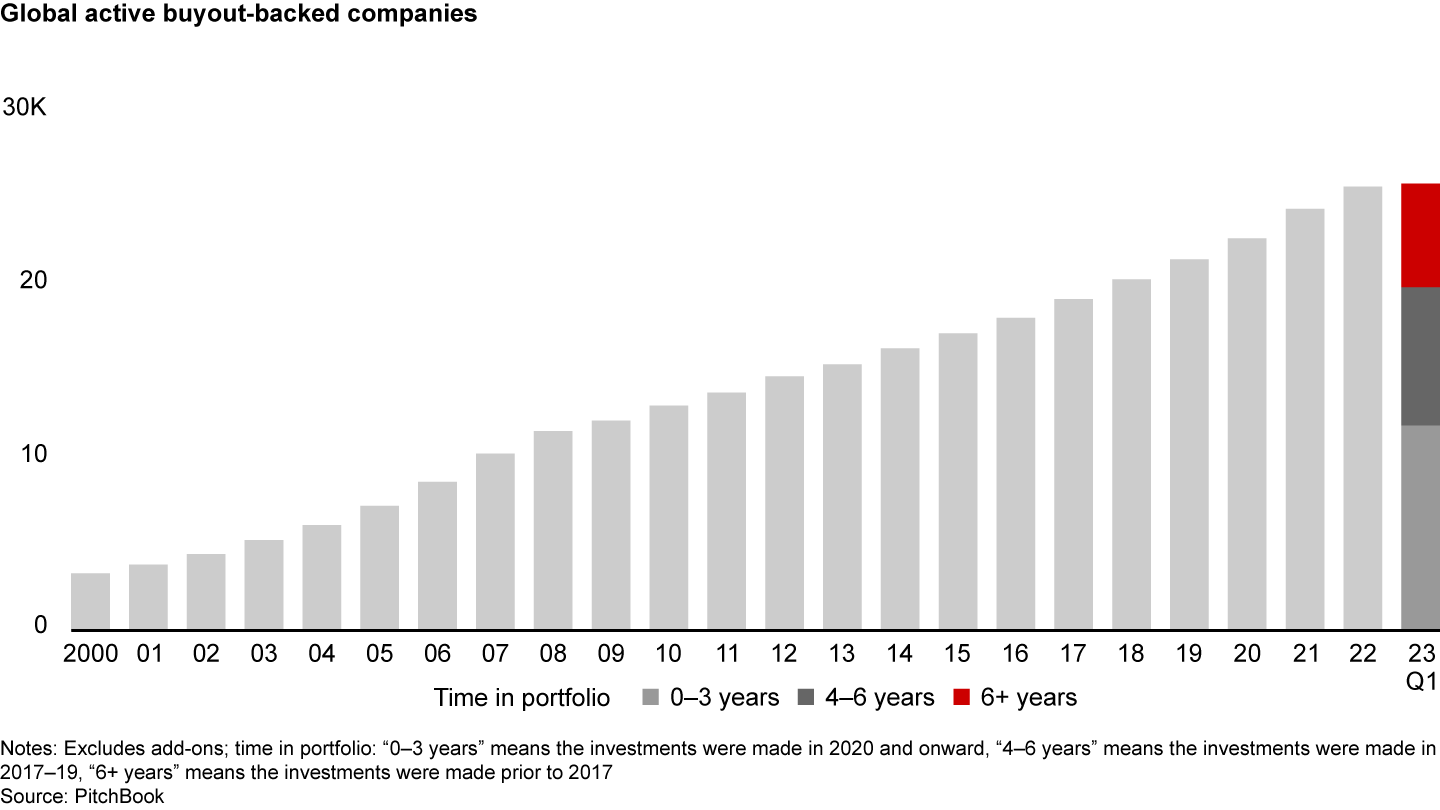

This unrealized value in buyout portfolios set an all-time record. It is now more than four times what it was during the depths of the global financial crisis. Weak cumulative distributions over the past five years have left LPs cash-flow negative on private equity allocations that represent a significantly larger slice of their overall portfolios than at the beginning of the current cycle. LPs’ private equity programs are also more mature today, and many are closing in on long-term target allocations, leaving them more heavily reliant on distributions to fund capital calls. No surprise, then, that investors are intent on getting money back from GPs before considering any new commitments.
Fund-raising
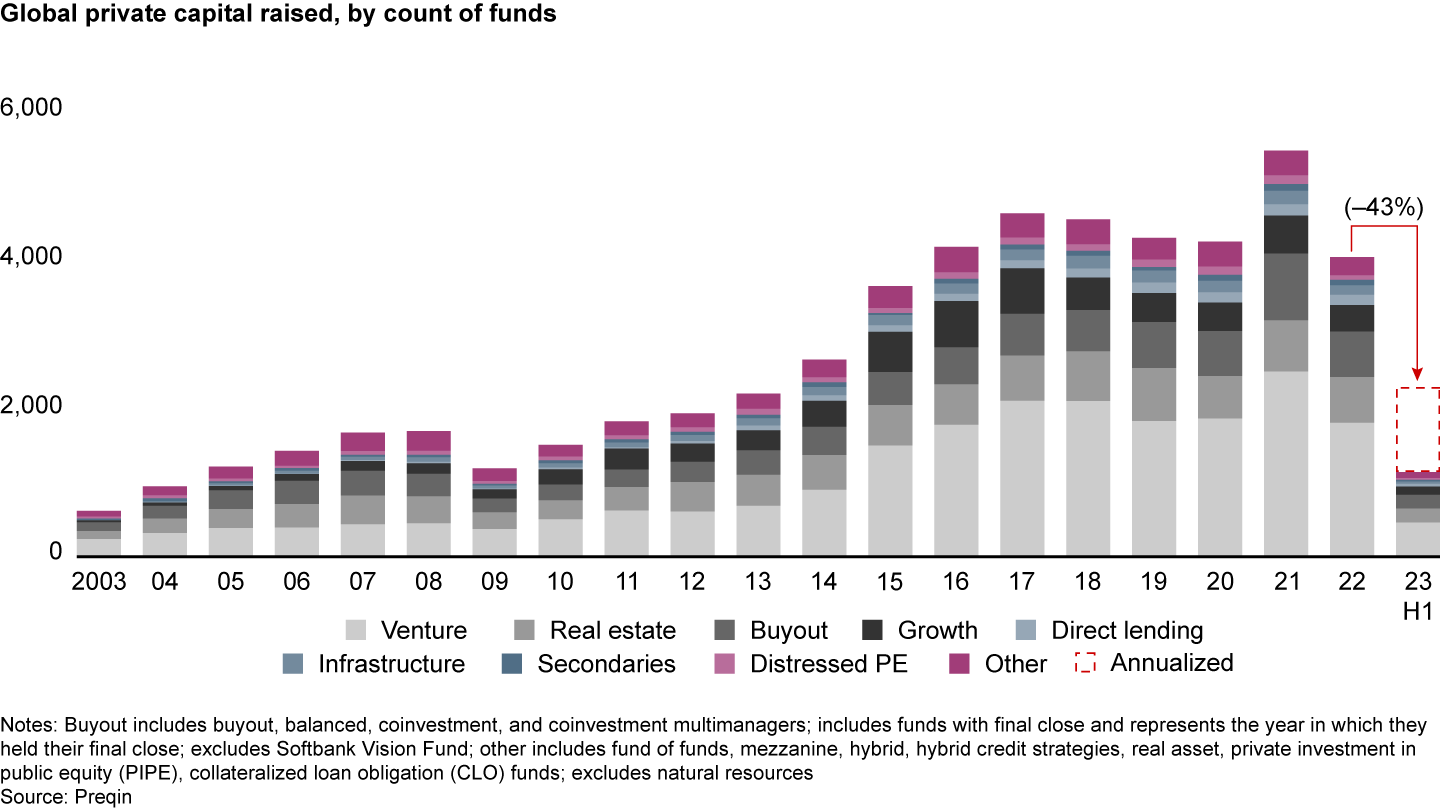
The LP cash squeeze is evident in the fund-raising malaise that has settled over the industry. The value of global private capital raised in the first six months fell to $517 billion, a 35% decline from the same period a year ago. On an annualized basis, global private capital fund-raising is on trend to drop 28% in terms of value and 43% in terms of funds closed compared with full-year 2022 (see Figures 7a and 7b).
Figure 7a
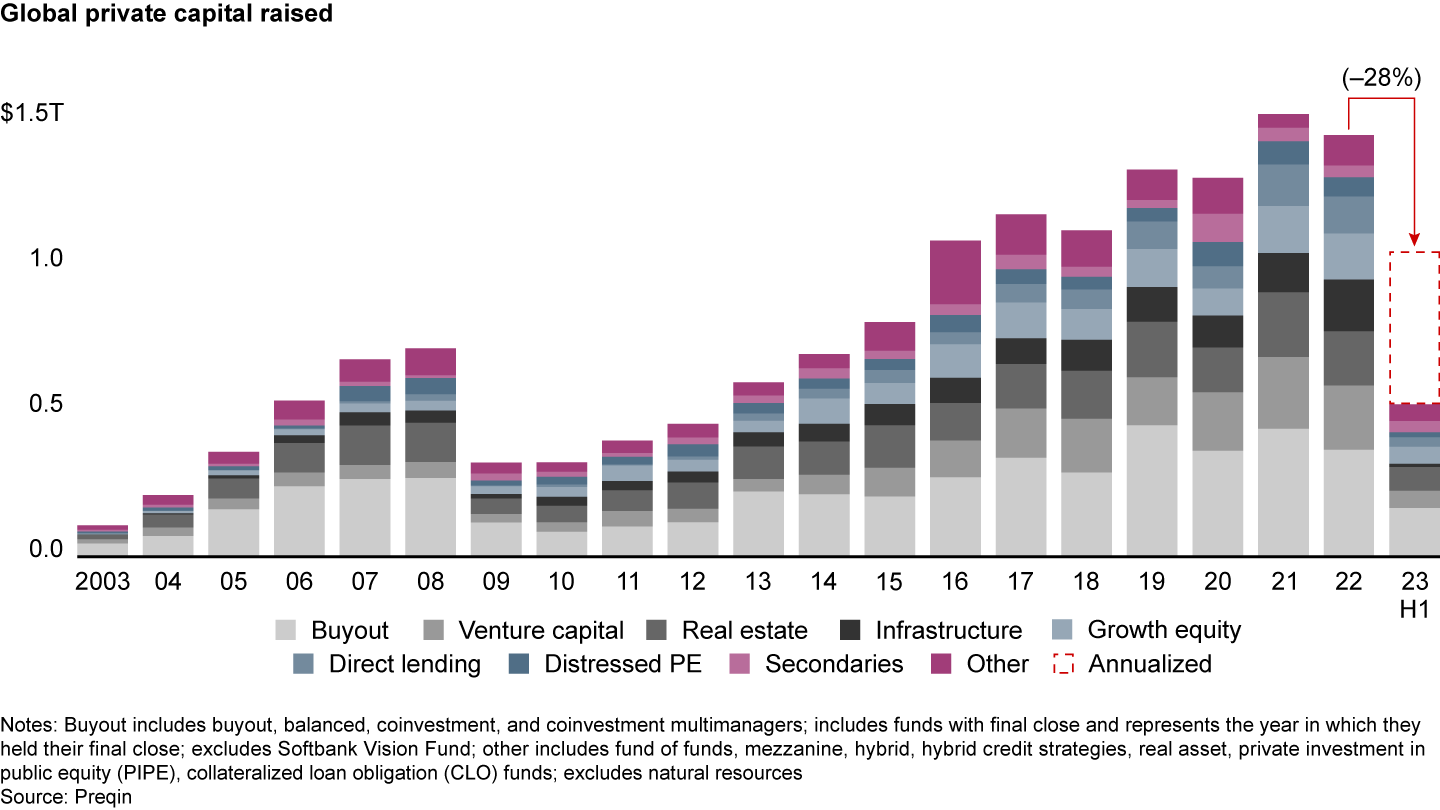

Figure 7b

It’s worth noting that fund-raising data is a lagging indicator that might make the current environment seem better than what GPs are actually experiencing on the road. That’s because some funds closing today were launched (and committed to) under much better circumstances in 2021 or 2022. A more forward-looking indicator is the current level of supply and demand. According to Preqin, 13,931 funds are on the road today seeking an aggregate $3.3 trillion in new capital. Yet based on first-half results, only around $1 trillion in LP allocations will be available. Put more simply, every $3 of current demand in the market is chasing just $1 of supply. This imbalance is the worst it’s been since the global financial crisis, and it may not improve in 2024 since many LPs may be pulling forward next year’s allocations to fund things they find attractive today.
For an industry that had grown used to raising larger and larger funds every three years or so, the current slowdown in available capital has come as a jolt. On the one hand (as we discuss in more depth here), increased competition is pressing funds to professionalize their capital-raising capabilities. But if GPs are to help their LPs free up more capital sooner, they’ll need a schedule and strategy to unlock the aging portfolio assets that are gumming up the system.
Time for a refresh
None of this is to suggest that these decisions are easy or straightforward. But as we noted above, the most practical approach is to review your portfolio through a new set of lenses—one that recalibrates the strategic value to the firm in freeing up more capital for LPs and one that determines how macro changes have altered upside assumptions for individual assets.
The objective is to sort portfolio companies based on their performance, remaining upside, and what you need to believe for value assumptions to pan out. This analysis will help identify where to cut losses on companies with no plausible path to greatness or when to accelerate the exit for great companies near the end of their runways.
For those in-between, a portfolio review can identify opportunities to refresh value creation plans (VCPs) based on current conditions. Firms also need to think harder and more strategically about building the right exit narrative for the next owner. Capturing value from the burst of innovation in artificial intelligence (AI), for instance, means rethinking investment priorities at any enterprise software company. A platform company halfway through a buy-and-build strategy may face major hurdles to generating its projected return, given the increased cost of acquisition debt.
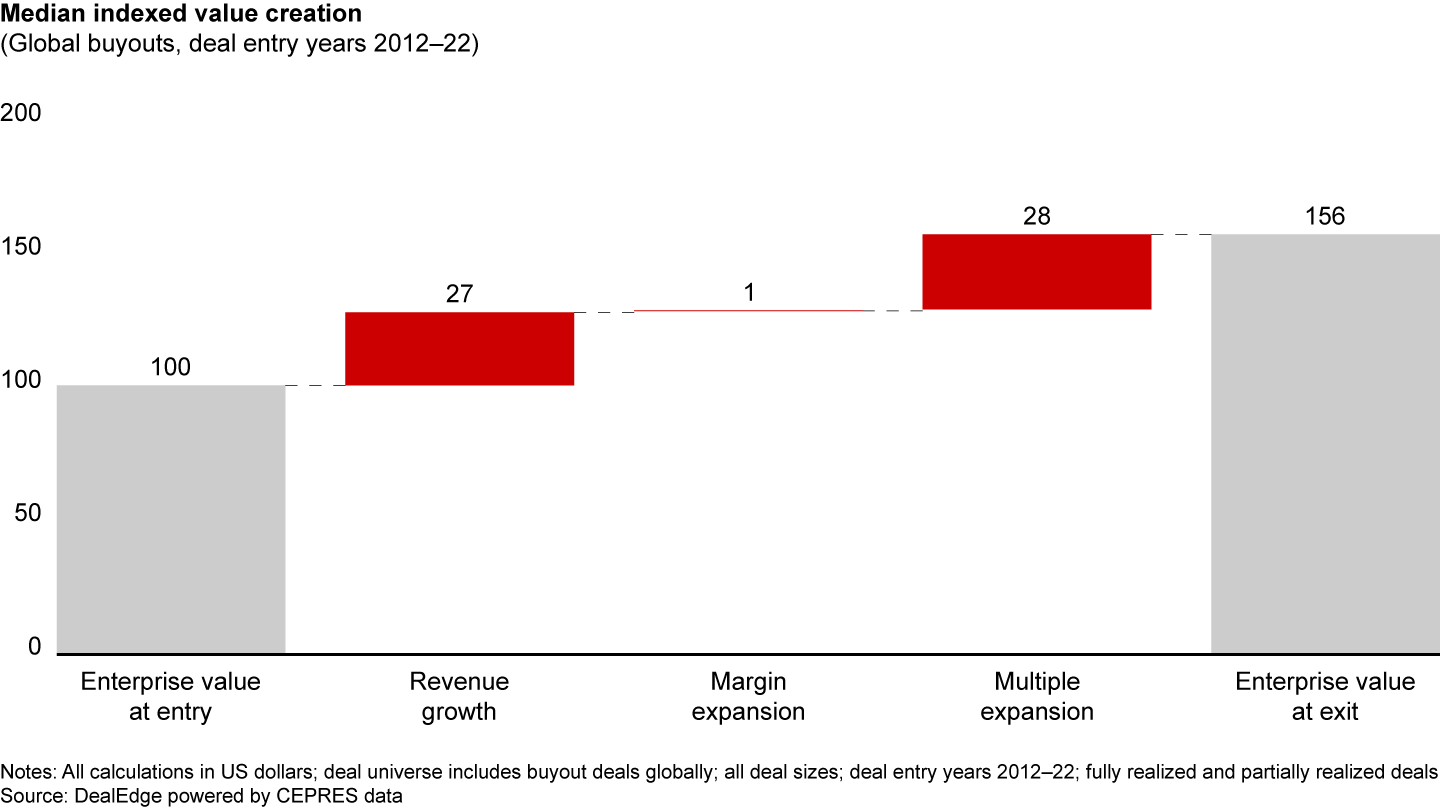
In a strong economy where buyers reward heady (if not necessarily profitable) revenue growth, funds have been able to get away with putting less emphasis on margin improvement. Indeed, a look back at the last cycle suggests that improving margins has been a stiff challenge for buyout funds. Nearly all the value creation between 2012 and 2022 has been attributable to revenue growth and multiple expansion. Margin expansion barely registers (see Figure 8).
Figure 8


DealEdge
Sharpen your strategic decision-making with private equity deal performance and operations analytics from DealEdge.
That’s not going to fly in today’s environment when GPs have to prove to the next buyer (not to mention to their LPs) that they know how to put a company on a path to sustainable, profitable growth. The funds getting it right are refreshing value creation plans to emphasize margins and revenues.
A VCP refresh for one private-equity-owned enterprise software company meant retrenching from an ambitious global expansion strategy and focusing instead on streamlining operations, improving product development, and building a stronger, more efficient commercial organization.
In the years before Covid, the company had expanded rapidly into a number of new geographies and spent heavily to set up offices there. While that produced a negative margin, the company was betting it would translate into big revenue gains. When the revenue failed to materialize, however, inefficiency across the company’s operations became all too apparent. Faced with widening losses at the beginning of 2022, the company took a reduction in force to save several million dollars in payroll and then proposed another layoff to save several million more.
The problem was, management was making these cuts without the benefit of real data and a clear analysis of why the company wasn’t operating more efficiently. To dial up the insight, the company deployed two diagnostic tools. The first focused on benchmarking the company’s costs—general and administrative expenses, R&D, marketing, IT, etc.—against an anonymous group of software companies with similar characteristics. The second gave the company a fine-grained look at how its head count and staffing compared with a smaller set of named rivals across functions and sub-functions, including, in some cases, a comparative analysis of tenure and pay scales.
In a matter of days, the company got its first real glimpse of how it stacked up cost-wise in the market. It wasn’t pretty. Finance, for instance, was beset with too many manual processes and a habit of overreporting. IT was bogged down with a huge Salesforce implementation that had too many seats and superfluous customization. R&D spent most of its time on maintenance, bug fixes, and bespoke solutions customers weren’t paying for. The sales organization needed a new coverage strategy to shift the focus from new customer acquisition to generating more net revenue from existing customers.

Strategic benchmarking capabilities
OPEXEngine offers comparisons of company performance and operating metrics of SaaS and software peers and market leaders.
Working with a team of functional experts, leadership tasked managers across the company with rethinking how they could do more with less. This analysis not only suggested how the company could operate more effectively, but it also identified significantly more cost-reduction opportunities than management had originally estimated. An 8% from the G&A budget, for instance, grew to 23%. Zero-basing a top-heavy, ineffective marketing organization is slated to shrink the budget by 40%.

Aura℠
Diligence demands knowledge of a company’s talent mix. Aura makes it accurate and easy to understand.
Moves like this aren’t rocket science; they are the nuts and bolts of value creation—enhanced by the wealth of new data and analytics tools available to diagnose problems and forge solutions. At a time when LPs are clamoring for liquidity solutions, the most effective GPs are finding ways to move aging assets off their books at acceptable returns while recalibrating how to drive value for the portfolio companies they plan to hold. Private equity funds have always found ways to turn end-of-cycle dynamics to their advantage. It’s never about standing still.
Published in July 2023