
Skip to Content
  • Bureaux

    Bureaux

    Amérique du Nord et Amérique du Sud
    • Atlanta
    • Austin
    • Bogota
    • Boston
    • Buenos Aires
    • Chicago
    • Dallas
    • Denver
    • Houston
    • Los Angeles
    • Mexico City
    • Minneapolis
    • Monterrey
    • Montreal
    • New York
    • Rio de Janeiro
    • San Francisco
    • Santiago
    • São Paulo
    • Seattle
    • Silicon Valley
    • Toronto
    • Washington, DC
    Europe, Moyen-Orient et Afrique
    • Amsterdam
    • Athens
    • Berlin
    • Brussels
    • Copenhagen
    • Doha
    • Dubai
    • Dusseldorf
    • Frankfurt
    • Helsinki
    • Istanbul
    • Johannesburg
    • Kyiv
    • Lisbon
    • London
    • Madrid
    • Milan
    • Munich
    • Oslo
    • Paris
    • Riyadh
    • Rome
    • Stockholm
    • Vienna
    • Warsaw
    • Zurich
    Asie et Australie
    • Bangkok
    • Beijing
    • Bengaluru
    • Brisbane
    • Ho Chi Minh City
    • Hong Kong
    • Jakarta
    • Kuala Lumpur
    • Manila
    • Melbourne
    • Mumbai
    • New Delhi
    • Perth
    • Seoul
    • Shanghai
    • Singapore
    • Sydney
    • Tokyo
    Voir tous les bureaux
  • Alumni
  • Presse
  • S’abonner
  • Contacter
  • France | Français

    Sélectionnez votre région et votre langue

    Global
    • Global (English)
    Amérique du Nord et Amérique du Sud
    • Brazil (Português)
    • Argentina (Español)
    • Canada (Français)
    • Chile (Español)
    • Colombia (Español)
    Europe, Moyen-Orient et Afrique
    • France (Français)
    • DACH Region (Deutsch)
    • Italy (Italiano)
    • Spain (Español)
    • Greece (Elliniká)
    Asie et Australie
    • China (中文版)
    • Korea (한국어)
    • Japan (日本語)
  • Saved items (0)
    Saved items (0)

    You have no saved items.

    Bookmark content that interests you and it will be saved here for you to read or share later.

    Explore Bain Insights
  • Expertises Sectorielles
    Menu principal

    Expertises Sectorielles

    • Aerospace et Défense
    • Agroalimentaire
    • Chimie
    • Infrastructures, BTP et Matériaux de Construction
    • Grande Consommation
    • Services Financiers
    • Santé
    • Engins & Equipements Industriels
    • Media et Divertissement
    • Metals
    • Mining
    • Pétrole & Gaz
    • Papier et Emballage
    • Private Equity
    • Secteur Public
    • Distribution
    • Technologie
    • Télécommunications
    • Transportation
    • Travel & Leisure
    • Utilities & Energies Renouvelables
  • Expertises Fonctionnelles
    Menu principal

    Expertises Fonctionnelles

    • Expérience Client
    • ESG
    • Innovation
    • Fusions et Acquisitions
    • Opérations
    • People & Organization
    • Private Equity
    • Sales & Marketing
    • Stratégie
    • IA, Perspectives et Solutions
    • Technology
    • Transformation
  • Digital
  • Points de Vue
  • À propos
    Menu principal

    À propos

    • Notre Activité
    • Nos Valeurs
    • Nos Collaborateurs et Notre Équipe Dirigeante
    • Notre Impact
    • Prix & Récompenses
    • Partenariats Internationaux
    • Evénements
    Further: Our global responsibility
    • Diversité et Inclusion
    • Impact Social
    • Sustainability
    • World Economic Forum
    Learn more about Further
  • Carrières
    Menu principal

    Carrières

    • Rejoignez-nous
      Carrières
      Rejoignez-nous
      • Find Your Place
      • Nos domaines d’expertise
      • Equipes multidisciplinaires
      • Étudiants
      • Stages et programmes
      • Événements de recrutement
    • La vie chez Bain
      Carrières
      La vie chez Bain
      • Blog: Inside Bain
      • Récits de carrière
      • Nos collaborateurs
      • Nos bureaux
      • Soutenir votre évolution professionnelle
      • Groupes d’affinités
      • Avantages chez Bain
    • Histoires d’impact
    • Notre processus de recrutement
      Carrières
      Notre processus de recrutement
      • Ce que vous pouvez attendre
      • Entretiens
    Trouver un poste
  • Bureaux
    Menu principal

    Bureaux

    • Amérique du Nord et Amérique du Sud
      Bureaux
      Amérique du Nord et Amérique du Sud
      • Atlanta
      • Austin
      • Bogota
      • Boston
      • Buenos Aires
      • Chicago
      • Dallas
      • Denver
      • Houston
      • Los Angeles
      • Mexico City
      • Minneapolis
      • Monterrey
      • Montreal
      • New York
      • Rio de Janeiro
      • San Francisco
      • Santiago
      • São Paulo
      • Seattle
      • Silicon Valley
      • Toronto
      • Washington, DC
    • Europe, Moyen-Orient et Afrique
      Bureaux
      Europe, Moyen-Orient et Afrique
      • Amsterdam
      • Athens
      • Berlin
      • Brussels
      • Copenhagen
      • Doha
      • Dubai
      • Dusseldorf
      • Frankfurt
      • Helsinki
      • Istanbul
      • Johannesburg
      • Kyiv
      • Lisbon
      • London
      • Madrid
      • Milan
      • Munich
      • Oslo
      • Paris
      • Riyadh
      • Rome
      • Stockholm
      • Vienna
      • Warsaw
      • Zurich
    • Asie et Australie
      Bureaux
      Asie et Australie
      • Bangkok
      • Beijing
      • Bengaluru
      • Brisbane
      • Ho Chi Minh City
      • Hong Kong
      • Jakarta
      • Kuala Lumpur
      • Manila
      • Melbourne
      • Mumbai
      • New Delhi
      • Perth
      • Seoul
      • Shanghai
      • Singapore
      • Sydney
      • Tokyo
    Voir tous les bureaux
  • Alumni
  • Presse
  • S’abonner
  • Contacter
  • France | Français
    Menu principal

    Sélectionnez votre région et votre langue

    • Global
      Sélectionnez votre région et votre langue
      Global
      • Global (English)
    • Amérique du Nord et Amérique du Sud
      Sélectionnez votre région et votre langue
      Amérique du Nord et Amérique du Sud
      • Brazil (Português)
      • Argentina (Español)
      • Canada (Français)
      • Chile (Español)
      • Colombia (Español)
    • Europe, Moyen-Orient et Afrique
      Sélectionnez votre région et votre langue
      Europe, Moyen-Orient et Afrique
      • France (Français)
      • DACH Region (Deutsch)
      • Italy (Italiano)
      • Spain (Español)
      • Greece (Elliniká)
    • Asie et Australie
      Sélectionnez votre région et votre langue
      Asie et Australie
      • China (中文版)
      • Korea (한국어)
      • Japan (日本語)
  • Saved items  (0)
    Menu principal
    Saved items (0)

    You have no saved items.

    Bookmark content that interests you and it will be saved here for you to read or share later.

    Explore Bain Insights
  • Expertises Sectorielles
    • Expertises Sectorielles

      • Aerospace et Défense
      • Agroalimentaire
      • Chimie
      • Infrastructures, BTP et Matériaux de Construction
      • Grande Consommation
      • Services Financiers
      • Santé
      • Engins & Equipements Industriels
      • Media et Divertissement
      • Metals
      • Mining
      • Pétrole & Gaz
      • Papier et Emballage
      • Private Equity
      • Secteur Public
      • Distribution
      • Technologie
      • Télécommunications
      • Transportation
      • Travel & Leisure
      • Utilities & Energies Renouvelables
  • Expertises Fonctionnelles
    • Expertises Fonctionnelles

      • Expérience Client
      • ESG
      • Innovation
      • Fusions et Acquisitions
      • Opérations
      • People & Organization
      • Private Equity
      • Sales & Marketing
      • Stratégie
      • IA, Perspectives et Solutions
      • Technology
      • Transformation
  • Digital
  • Points de Vue
  • À propos
    • À propos

      • Notre Activité
      • Nos Valeurs
      • Nos Collaborateurs et Notre Équipe Dirigeante
      • Notre Impact
      • Prix & Récompenses
      • Partenariats Internationaux
      • Evénements
      Further: Our global responsibility
      • Diversité et Inclusion
      • Impact Social
      • Sustainability
      • World Economic Forum
      Learn more about Further
  • Carrières
    Recherches les plus fréquentes
    • Agile
    • Digital
    • Stratégie
    Vos recherches précédentes
      Pages récemment visitées

      Content added to saved items

      Saved items (0)

      Removed from saved items

      Saved items (0)

      The Visionary CEO’s Guide to Sustainability

      Does a Purpose Help Brands Grow?

      Does a Purpose Help Brands Grow?

      There’s a distinct path to differentiating a brand by delivering higher-order Elements of Value®.

      Par Eric Almquist, Kelly Edwards, Philip Dowling, et Ashley King

      • min
      }

      Etude

      Does a Purpose Help Brands Grow?
      en
      En Bref
      • Brand purpose and environmental, social, and corporate governance (ESG) considerations are now key purchasing criteria for more than half of consumers globally, according to our recent survey.
      • The Elements of Value® provides a data-driven way for companies to understand the types and amount of value that consumers experience in their brands, and how that compares with other brands.
      • Our continuing research has led us to add seven ESG-related Elements of Value; brands that scored the highest on those elements achieved five times the revenue growth of those that scored the lowest.
      • To successfully differentiate, brands will not only embed sustainability values into their current products and actions; they’ll also make those values part of their core marketing efforts.

      This article is part of Bain’s 2023 CEO Sustainability Guide

      Explore the report

      The year was 2004, and Unilever’s Dove brand made an unlikely move. It erected a series of billboards replacing professional models with regular women. The goal of the pioneering campaign: to make women feel comfortable in their own skin and to create a world where beauty is a source of confidence and not anxiety. The campaign was extended across media, with results that were as dramatic as the marketing approach itself. While the body care subcategory in the US grew by an average 2.8% from 2004 to 2009, Dove’s revenues grew more than three times that—an average of 8.7%—and consumer goods companies in categories as diverse as household cleaners and yogurt caught a glimpse of a future in which inclusivity, as well as the other higher-order considerations, rose as growing factors for consumers.

      Just how vital is a brand’s purpose to consumers? Environmental, social, and corporate governance (ESG) concern is no longer a demand from a niche minority; it has become a top-three key purchasing criterion for more than half of consumers globally, according to our recent survey of nearly 200,000 consumers in four countries and nine consumer categories. Another significant finding with big implications for consumer goods companies is that consumers are personally “divesting” from brands with poor diversity, equity, and inclusion (DEI) and social track records. For example, 33% of the Generation Z consumers we surveyed (ages 18 to 24) in the US say they’d boycott a brand with bad labor practices.

      To understand what underpins a consumer’s perception of value, in 2015 we identified 30 fundamental types of value in their most essential and discrete forms. These Elements of Value® fall into four categories: functional, emotional, life changing, and global impact (see the Harvard Business Review article “The Elements of Value.”) The Elements of Value pyramid provides a data-driven way for companies to understand the types and amount of value that consumers experience in the brands they buy, and how that compares with other brands. EOV is focused on brand differentiation, whereas other brand metrics like brand awareness and brand power address brand salience. Focusing on both is critical to superior brand growth.

      Since introducing the Elements of Value, we’ve continued to monitor consumer behavior and adapt those elements where necessary. As consumer attitudes toward products and services shifted from “What does it do?” to “How does it make me feel?” “How does it change my life?” and “How does it change the world?” companies needed to evolve with them by also delivering higher-purpose elements such as “ethical,” “cares for the Earth,” or “inclusive.” Bain has responded to this shift by periodically updating the Elements of Value (see Figure 1). Using advanced statistical methods, we’ve replaced several elements from our pyramid in recent years, while identifying and adding seven unique and important sustainability-related values. The update provides companies with an effective method for tracking their ability to deliver on the values that are becoming increasingly important to consumers.

      Figure 1
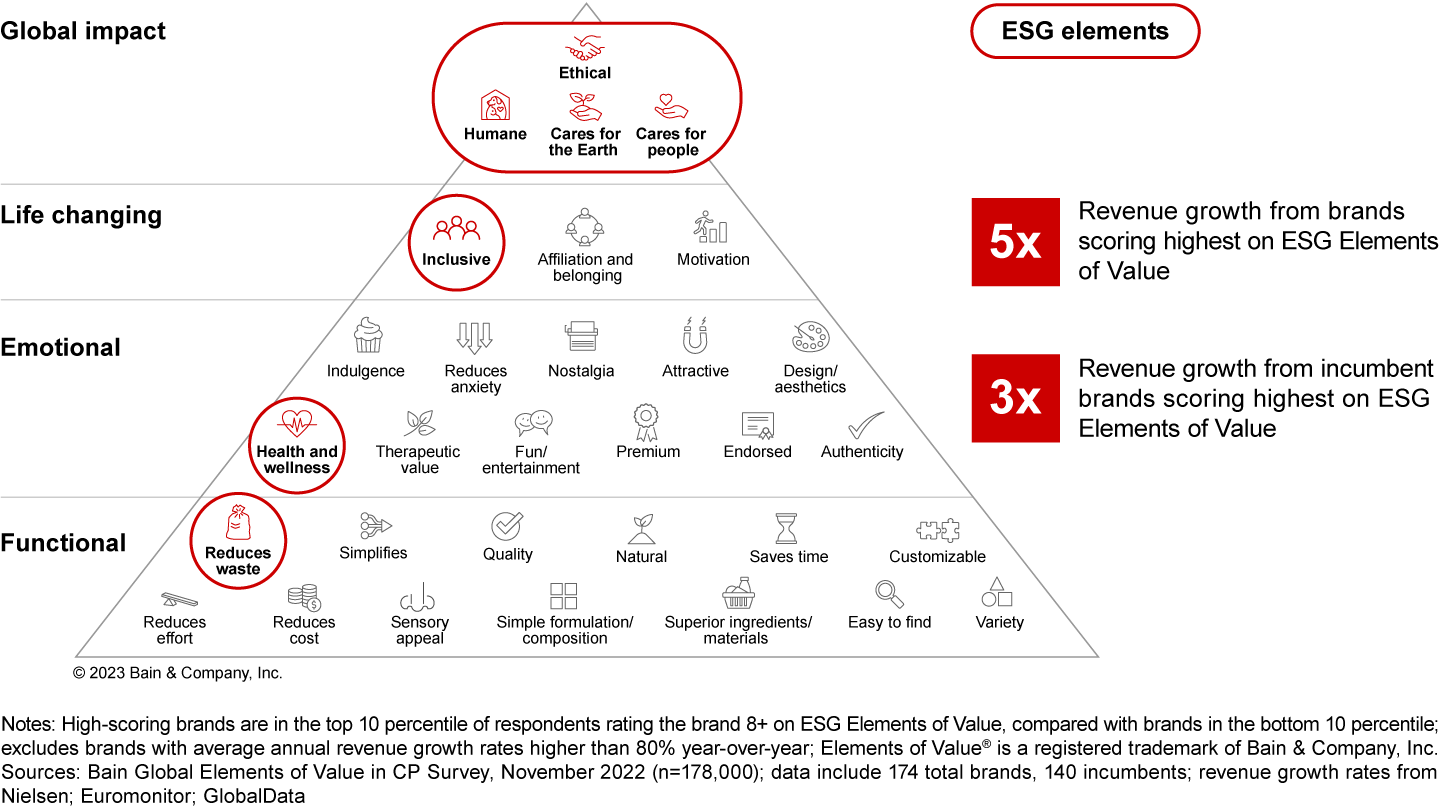
      Brands that differentiate on ESG Elements of Value® outperform on revenue growth
      Brands that differentiate on ESG Elements of Value® outperform on revenue growth
      Brands that differentiate on ESG Elements of Value® outperform on revenue growth

      Our continuing research demonstrates that the positive link between delivering elements and business outcomes holds. Most brands meet the threshold for such functional needs as “quality” and “sensory appeal,” attributes that are essentially table stakes for most categories (although table stakes vary somewhat by category and country). The more elements that a brand delivers, the better its revenue growth, household penetration, and repurchase rates. That outperformance multiplies when companies earn elevated scores on higher-order values.

      Across all brands, those that scored the highest on the seven sustainability elements achieved five times the revenue growth of those that scored the lowest, according to our research. When we looked only at incumbents, the revenue growth was three times better than competitors scoring the lowest on sustainability elements. In China, L’Occitane outdelivers on these elements, and in 2019 to 2021 achieved three times the revenue growth of a competitor that focused on table stakes elements. In Germany, Lindt outperforms on most emotional elements and earned more than twice the average revenue growth vs. similar chocolate brands sold in the German market.

      The message is clear: There’s a sizable opportunity for consumer goods companies to capture consumer interest in higher-purpose types of value. To successfully differentiate, brands will not only embed sustainability values in the core of their product, their actions, and category growth/innovation model; they’ll also follow a distinct path to make those values part of their core marketing efforts.

      Four actions can guide companies along that path.

      Get the table stakes right. Again, to reap the benefits of differentiation on Elements of Value, a brand must deliver table stakes elements. The requirements differ according to the product category. For example, it could mean “sensory appeal” in carbonated soft drinks or “quality” in body lotions. Also, depending on a brand’s value proposition, it could also mean delivering on more functional elements such as “reduces cost” or “reduces risk” before “inclusive” or “humane.”

      Find the right opportunities for differentiation. After understanding and delivering the table stakes elements, brands can determine how to differentiate their products from the competition across ESG and other elements.

      The level of competition in higher-order Elements of Value differs by categories and geographies, and the opportunity to differentiate depends on the degree of sustainability already embedded in brands in the category and market (see Figure 2). While Dove paved the way in body care, it wasn’t long before competitors joined in with inclusivity-focused messaging. As a result, body care is considered an advanced category as far as purpose is concerned. The same is true for yogurt. By comparison, beer, soft drinks, and chocolates are nascent categories for embedding higher-order elements. As such, they offer opportunities for brands to become an early leader and disrupt the category.

      Figure 2
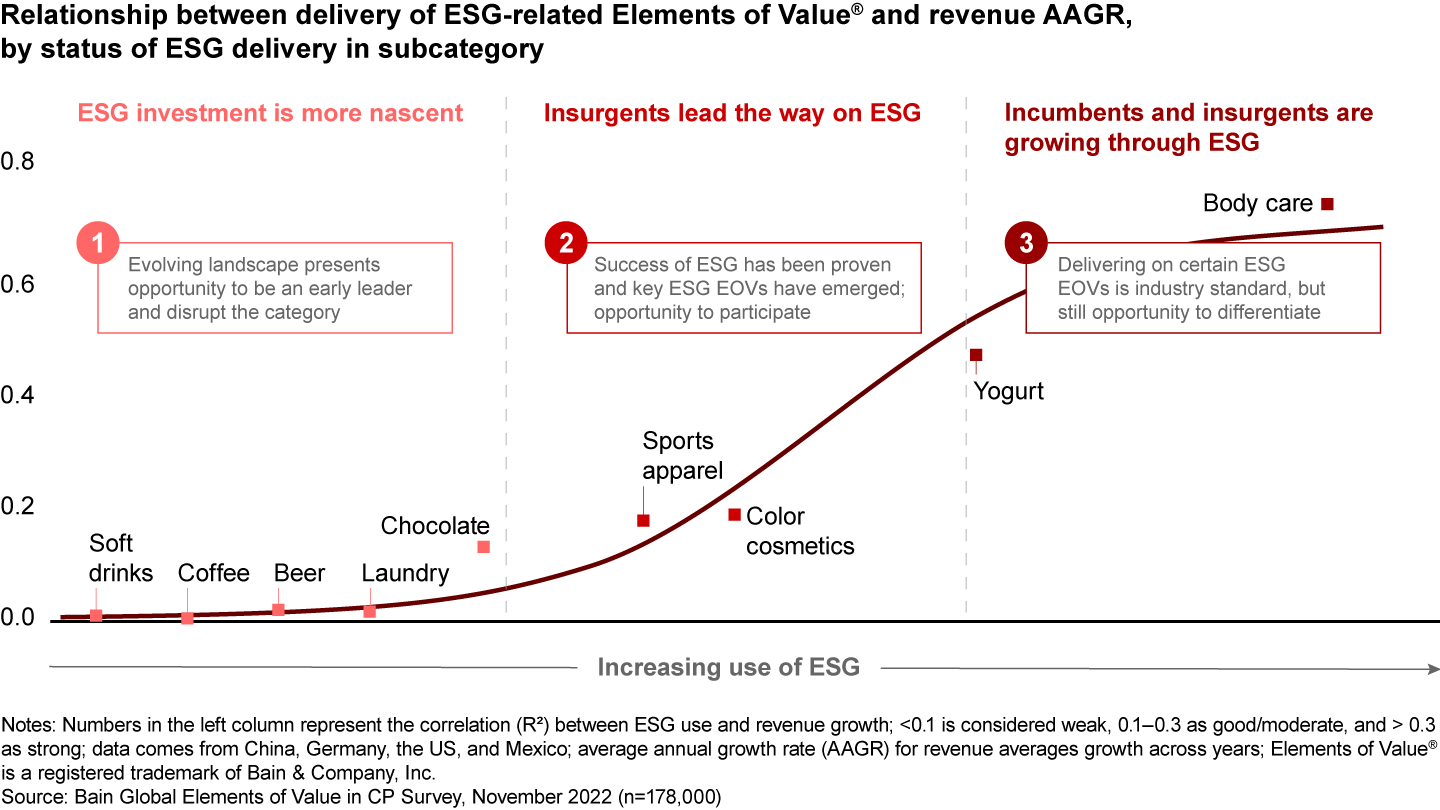
      There’s a high correlation between ESG and growth; nascent categories offer more opportunity to differentiate

      Unlock growth through actions and messaging targeted to specific consumer segments. Different consumer segments perceive different values from the same brands. The shift toward digital media that has drastically altered the brand marketer role—and provided access to the proliferation of valuable consumer data—has opened vast growth opportunities for companies to dial up different elements of the brand with different segments.

      Many insurgent brands are already successfully unlocking value for specific consumer segments through actions and messaging. For example, instead of relying on a mass message to all consumer segments, insurgent soft drink brand Zevia has identified specific segments that would respond most favorably to its messaging and targeted its efforts to those groups. As a result, it outperforms with “health-minded” consumers compared with many incumbent brands, which continue to take a broad-brush approach to marketing.

      For insurgents, the task now is reaching more mass consumer segments while not losing their insurgent differentiation by diluting the brand for the masses. On the other hand, incumbents need to strike a different balance by tailoring messaging for growth segments while being conscious not to stretch the brand too far across multiple segments. But for insurgents and incumbents alike, the purpose-related brand strategy cannot be just about communications and messaging. Without actions behind it, consumers will respond negatively by rejecting the brand. For example, our study of 4,000 US consumers found that 35% of baby boomers (over age 60) would avoid a brand purchase because of the brand’s negative treatment of employees, and 30% of Generation Z would reject a brand because of the company’s inability to share its DEI track record.

      Experiment at scale. In a hyperfragmented and competitive consumer environment, experimentation is the key to building out and activating a purpose-focused brand strategy (see the Bain Brief "Can Marketing Experimentation Become Your Superpower?”). Experimentation enables brands to determine the dimensions that speak to their consumers—whether they’re more concerned with water issues or social equity, for example. Brands can use experimentation to systematically narrow down alternatives, including sustainability actions (e.g., engaging in partnerships with nonprofits vs. producing more environmentally friendly products or packaging), core messages (e.g., educational vs. inspirational vs. call to action), wording, and photographs. The answer will dictate the right messaging and creative resources for the right audience. By measuring brand and sales uplift, experimentation also allows companies to understand observed (vs. stated) consumer behavior, providing data to determine the value of investing in ESG marketing to propel brand growth.

      A food company used experimentation to reboot the growth of its core product, an alternative spread that was widely perceived as unnatural and unhealthy. The company relaunched its brand as 100% plant-based, positioning it as being better for both health and the environment than other dairy substitutes. The company also switched from palm oil to other plant-based alternatives, redesigned packaging to be more environmentally friendly, and focused investment on delivering differential value to consumers based on two Elements of Value: “Cares for Earth” and “Health and wellness.” It also invested to create a community of engaged proponents of plant-based food.

      As part of the effort, the company experimented to find the highest-impact sustainability audiences, brand elements, and themes. In Experiment 1, it used existing creative to identify different audiences and establish a realistic baseline. In Experiment 2, the company developed and tested different creatives with modernized brand elements. And in Experiment 3, it tested winning creatives from Experiment 2 in different channels. Each variable built on the prior experiments to hone the campaigns before scaling them. The experimentation set the stage for a dramatic reversal in performance. The company turned a ‒3% to ‒6% net sales contraction into 3% sales growth.

      Yet, as our refinement of the Elements of Value suggests, consumer tastes and needs continually change, and companies need to be prepared to shift their strategy as those changes occur—and do it before the competition. Early movers on higher-order Elements of Value can outperform, according to our research, but brands must continue to differentiate to sustain their growth.

      To see how companies successfully keep raising the bar, consider the thoughtful moves taken by Lululemon. The apparel retailer originally was known for its exclusive, well-designed, and highly functional clothing, but has evolved to focus on inclusivity (its sizes now range up to 20), affiliation and belonging (the retailer offers online and in-store fitness classes), and motivation (inspirational messaging on shopping bags and in-store décor). This strategy of continually upping its game has helped Lululemon capture market share from its US competitors. From 2016 to 2021, the company increased its share of the sports apparel market by 1.5 percentage points at those competitors’ expense.

      So, brands with a clear view on delivering a differentiated higher-purpose consumer value can unlock substantial growth and disrupt an entire category. This growth, in turn, can fund a company's sustainability agenda, creating a virtuous cycle for a broader sustainability transformation. Yet brands can’t keep still. They’ll need to continously experiment with ways to stay in lockstep with what consumers value. And they’ll need to do it before competitors catch up.

      Read the Next Chapter

      Lower Costs, Faster Adoption: Closing the Sustainable Innovation Gap

      Read our 2023 CEO Sustainability Guide

      Explore the full report Download PDF
      Auteurs
      • Eric Almquist
        Former Advisory Partner, Boston
      • Headshot of Kelly Edwards
        Kelly Edwards
        Associé, Washington, DC
      • Headshot of Philip Dowling
        Philip Dowling
        Associé, Munich
      • Ashley King
        Associate Partner, Atlanta
      Contactez-nous
      Synergies sectorielles
      • Consumer-led Brand Growth
      • Grande Consommation
      Expertises fonctionnelles transverses
      • Brand Strategy
      • Développement Durable et Responsabilité Sociétale des Entreprises (RSE)
      • Diversity, Equity & Inclusion
      • Modern Marketing
      • Stratégie Client et Marketing
      Comment pouvons-nous vous aider ?
      • Elements of Value®
      CMO Insights
      The Great Reluctance

      As businesses reopen in the wake of Covid-19, they can adapt their offerings to address consumers’ risk aversion using a test-and-learn approach.

      Voir plus
      CMO Insights
      The 2026 Retail Executive Agenda

      Here are letters to the C-suite to help strengthen strategy, catalyze collaboration, and expand value creation in the AI age.

      Voir plus
      Grande Consommation
      LEAP to Win: A Playbook for Consumer Products Multinational Corporations in India

      Learn how to navigate—and win—in one of the world’s most promising emerging consumer products markets.

      Voir plus
      Elements of Value®
      After Years of Customer Loyalty Programs in Insurance, What Works, and What’s Next?

      Based on Bain’s 10 years of research, five themes describe the progress and challenges of earning customers’ advocacy in an increasingly digital experience.

      Voir plus
      CEO's Guide to Sustainability
      Selling Sustainability Means Decoding Consumers

      We asked more than 23,000 global consumers what they really want. What we found will surprise you.

      Voir plus

      Introduction

      • The Questions Every CEO Needs to Ask About Sustainability

      Levers of Change: Technology, Behavior, Policy

      • Selling Sustainability Means Decoding Consumers

      • Does a Purpose Help Brands Grow?

      • Lower Costs, Faster Adoption: Closing the Sustainable Innovation Gap

      • The Future Is Circular: How Companies Can Prepare to Grow in a Changing World

      • Leading with Vision: Harnessing the Climate Policy Response

      Sector Perspectives

      • Building Resilience in Your Business Strategy: Four Imperatives for Leaders

      • The Energy Transition’s Other Big Puzzle: Making the Math Work

      • Can Food and Agriculture Companies Raise Their Game?

      • Fires, Floods, and Loans: How Banks Can Deal with Increasing Climate Risks

      Making It Happen

      • Building a Data-Based Stakeholder Strategy

      • Operations and Supply Chain Decarbonization: Lower Emissions, Higher Performance

      • Making Business Do Better for Everyone

      • Organizing for Sustainability

      • A Talent Strategy for Sustainability: Skills Matter, but Mindset Is Everything

      First published in novembre 2023
      Mots clés
      • Brand Strategy
      • CEO's Guide to Sustainability
      • CMO Insights
      • Consumer-led Brand Growth
      • Développement Durable et Responsabilité Sociétale des Entreprises (RSE)
      • Diversity, Equity & Inclusion
      • Elements of Value®
      • Grande Consommation
      • Modern Marketing
      • Stratégie Client et Marketing

      Comment nous avons aidé nos clients

      Développement Durable et Responsabilité Sociétale des Entreprises (RSE) A Personal Care and Cosmetics Brand Charts a Course for Sustainability

      Lire l’étude de cas

      A CPG Player Targets a Promising Adjacent Market for its Legacy Brand

      Lire l’étude de cas

      Stratégie Client et Marketing Food Co. jump-starts growth with return to core brands

      Lire l’étude de cas

      Vous souhaitez continuer cette conversation ?

      Nous aidons des dirigeants du monde entier à matérialiser des impacts et des résultats pérennes et créateurs de valeur dans leurs organisations.

      Elements of Value® is a registered trademark of Bain & Company, Inc.

      Les points de vue de Bain : notre perspective sur des problématiques auxquelles sont confrontées les entreprises à travers le monde, envoyés chaque mois dans votre boîte de réception. 

      *J’ai lu la politique de confidentialité et j’accepte les conditions.

      Merci de lire notre politique de confidentialité.
      Bain & Company
      Contactez-nous Sustainability Accessibility Conditions d’utilisation Politique de Confidentialité Cookie Policy Mentions Légales Sitemap Log In

      © 1996-2026 Bain & Company, Inc.

      Contacter Bain

      Comment pouvons-nous vous aider ?

      • Business inquiry
      • Career information
      • Press relations
      • Partnership request
      • Speaker request
      Voir tous les bureaux