

Brief

In evidenza
- Asset management has become an increasingly difficult business, driven by new structural trends in customer behavior, regulation and technology.
- A collapse of the midtier, plain-vanilla, full-service model leaves asset managers with two basic strategic directions to pursue: Build the business to a large scale (for passive or active investment strategies), or develop a highly differentiated niche (active only).
- Each choice requires mastering a different set of factors that range from products to mergers and acquisitions to innovation within the operating model.
Asset management businesses may be sailing on a rising tide of wealth, but this ship could easily wreck on reefs hidden just below the surface.
True, financial wealth has been on a strong growth trajectory worldwide, riding a bull market in asset prices. In many emerging markets, private wealth accumulation has accompanied the expansion of the middle class. In developed markets, growth has come largely through pressure to shrink gaps in pension funding (and thereby increase savings for retirement), combined with a shift from traditional life insurance products to investment products. Asset management firms should benefit from this wealth expansion and from a growing trend of investors delegating more decisions to professionals.
However, the business is less stable than it appears. The easy money boom that began in 2012, marked by low interest rates and economic recovery in many countries, masked deeper secular trends in customer behavior and regulation. Customers generally have become increasingly cost-conscious; more sophisticated with regard to investment strategies; willing to make more stringent comparisons between products, prices and services; and less trusting of actively managed products. At the same time, market regulations, such as the Retail Distribution Review and the Markets in Financial Instruments Directive II, have called for investment advisers to provide full transparency on the total cost of investment products. Regulations also laid down stricter rules on inducements to push product sales. In response, asset managers have raised their annual spending on compliance, putting an additional squeeze on profits.
Matthias Memminger, a partner with Bain's Financial Services practice, explains why asset management firms need to focus on size or differentiation, or else face the risk of extinction.
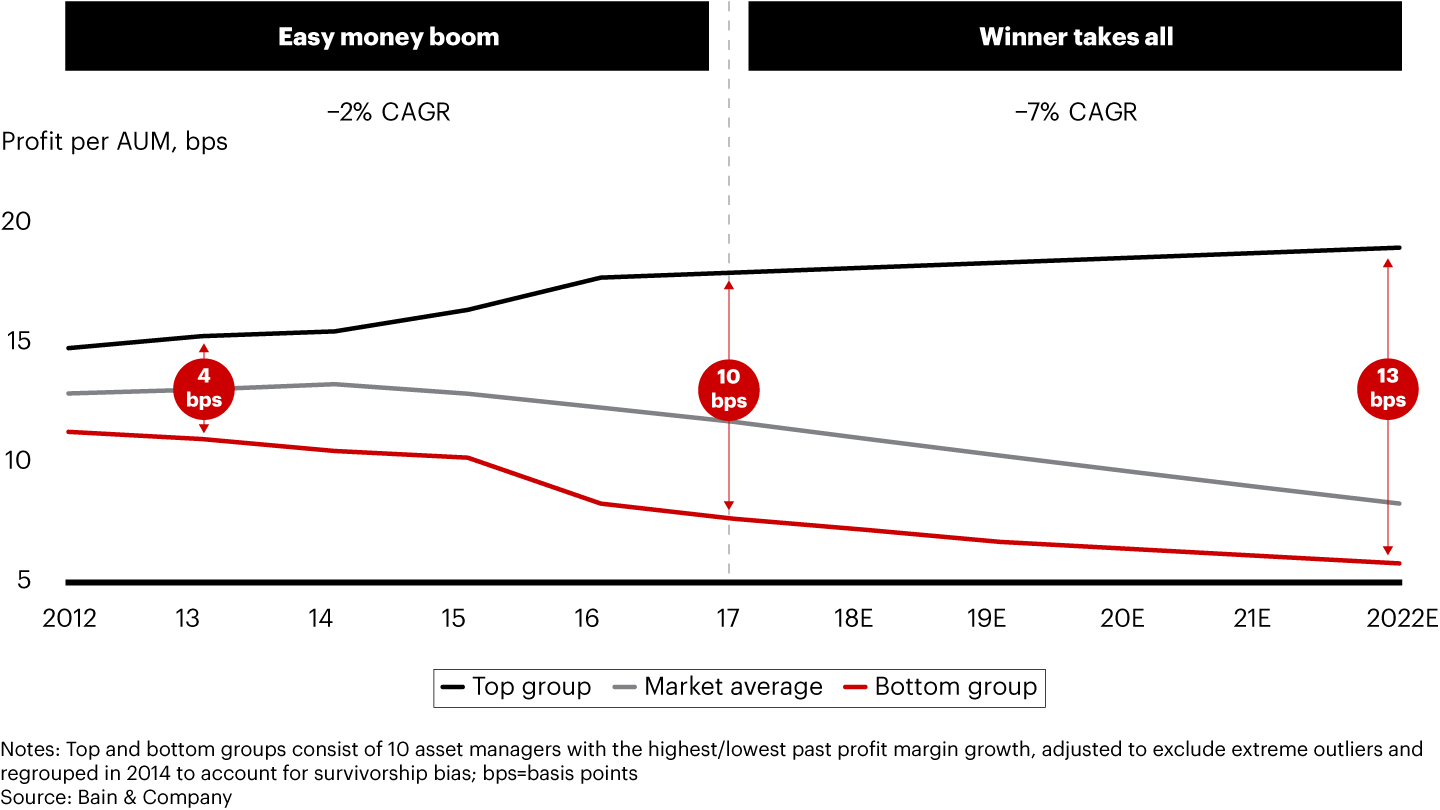
As a result, although asset management companies have enjoyed an average compound annual growth rate (CAGR) of 7% for assets under management (AUM) since 2012, their profits per asset decreased by a 2% CAGR, Bain & Company estimates. Looking ahead through 2022, our model projects just a 4% CAGR in AUM alongside a sharp decline in profits per asset at a negative 7% CAGR (see Figures 1 and 2).
This decline in profitability has accelerated the demand for technology investments that will simultaneously offer new types of value-adding products and services to customers and increase process efficiency and scalability.
Figure 1
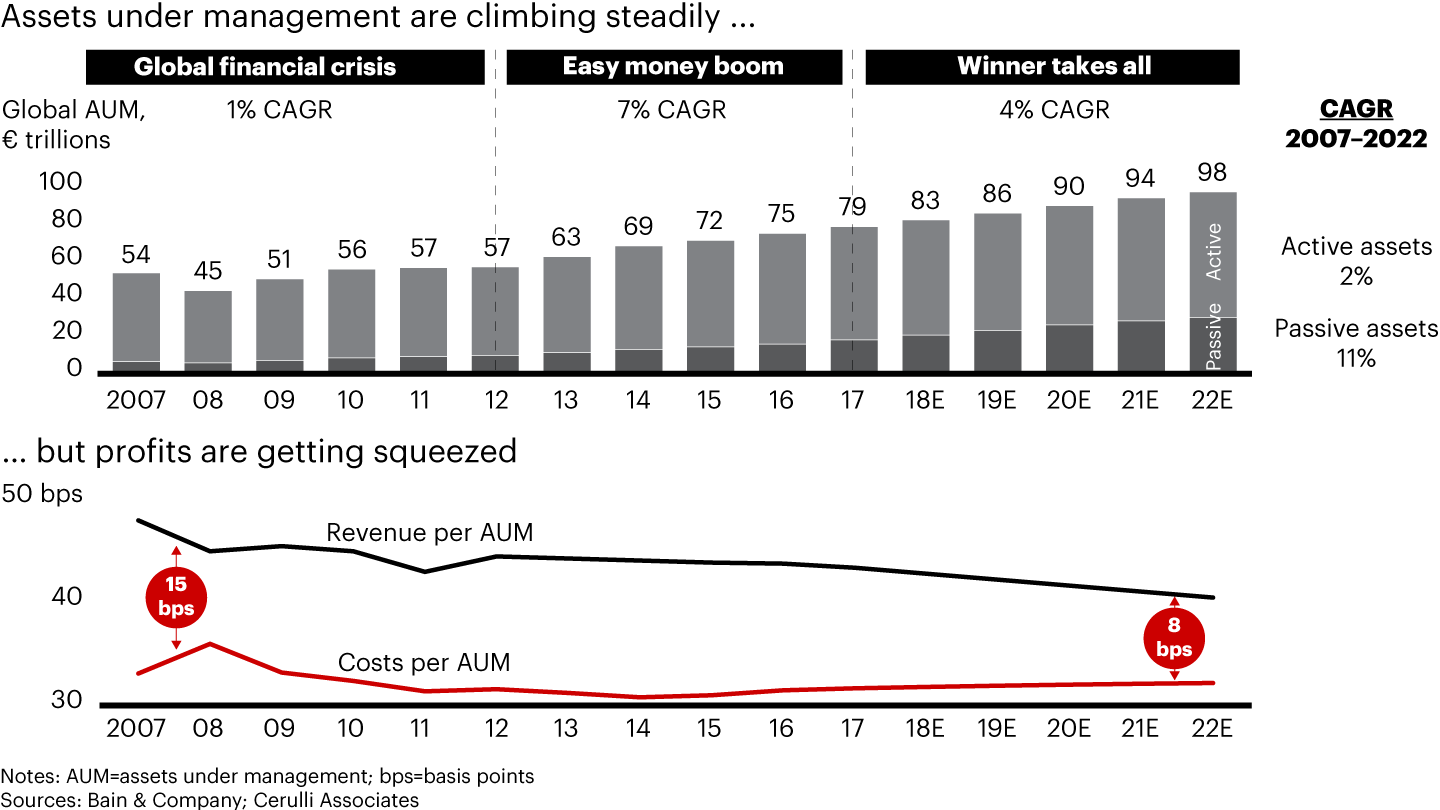

Regardless of technology, however, weaker firms will find it harder to realize their desired price point or to keep a lid on cost per asset; stronger firms, meanwhile, will seize a growing share of the market and the profit pool. We estimate that the spread in profits between the top 10 and bottom 10 companies will rise from 10 basis points in 2017 to 13 basis points by 2022, up from only 4 basis points in 2013. That will translate to a roughly €400 million profit difference for a midsized manager with €300 billion in assets in 2022. In addition, the estimated €81 billion global profit pool by 2022 will not have grown compared with 2007, making it even more difficult for weaker firms to grow or even maintain share.
In this less forgiving environment, asset management firms should reassess their strategies. In particular, a collapse of plain-vanilla, smaller or midsized firms with no competitive advantage, which we estimate represent about half of global AUM, is a highly likely scenario. Captive midfield players relying on the distribution network of their parent bank or insurance company have kept their market share so far, but they are bound to lose under the new regulatory regime. Winning firms with a few distinctive characteristics will benefit disproportionally from the shift of assets away from the middle.
The collapse of the middle leaves firms with two viable strategic directions as a means of escape from this valley of death. One route involves going big, with two variations: Large-scale companies such as BlackRock and Vanguard have spread their costs over a broad, predominantly passive asset base to achieve a strong scale position. Some firms, including Amundi and Fidelity, have large active investment portfolios with a broad range of products.
Figure 2

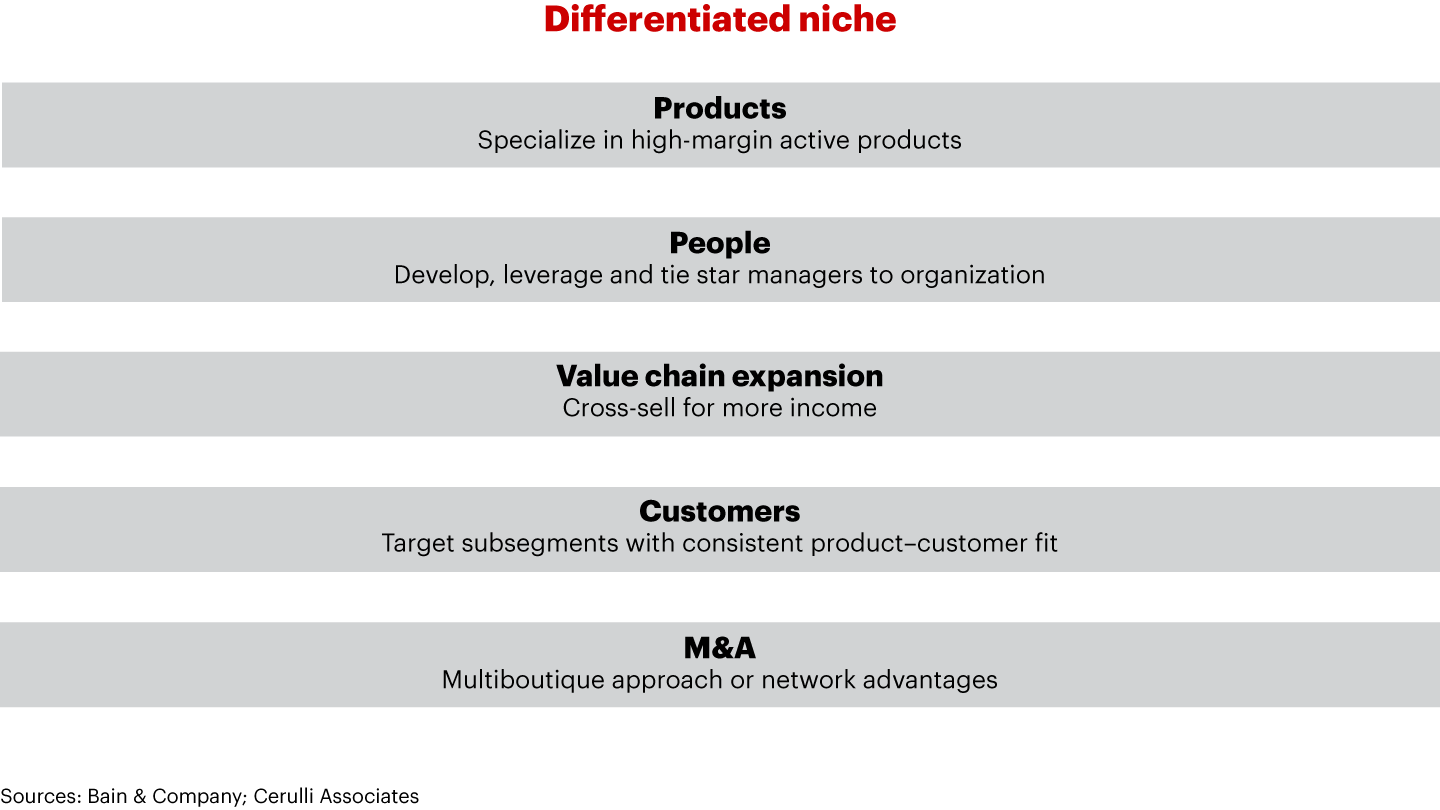
Taking a different route, firms can develop highly differentiated offerings that can justify the premium fees customers are asked to pay over time. Of late, the majority of institutional money has flowed to asset managers delivering high alpha. Such managers tend to carve out a niche focusing on a specific asset class, product, portfolio strategy or customer segment; examples include Zurich-based RobecoSAM, Nordea Asset Management of Sweden and boutique endowment funds in the US.
A few other companies, notably Natixis and Affiliated Managers Group, have built a strategically appealing business model that draws on both scale and differentiation. Their model consists of a portfolio of differentiated boutiques sharing one central client-facing platform.
Our research shows that moving in either direction requires taking stock of eight factors that contribute to success: products, value chain expansion, mergers and acquisitions (M&A), technology, operating models, employees, customers and distribution (see Figure 3 and 4). Depending on their respective points of departure and direction of travel, asset managers will want to focus on excelling in at least three to five areas, as detailed in the following three models.
Figure 3
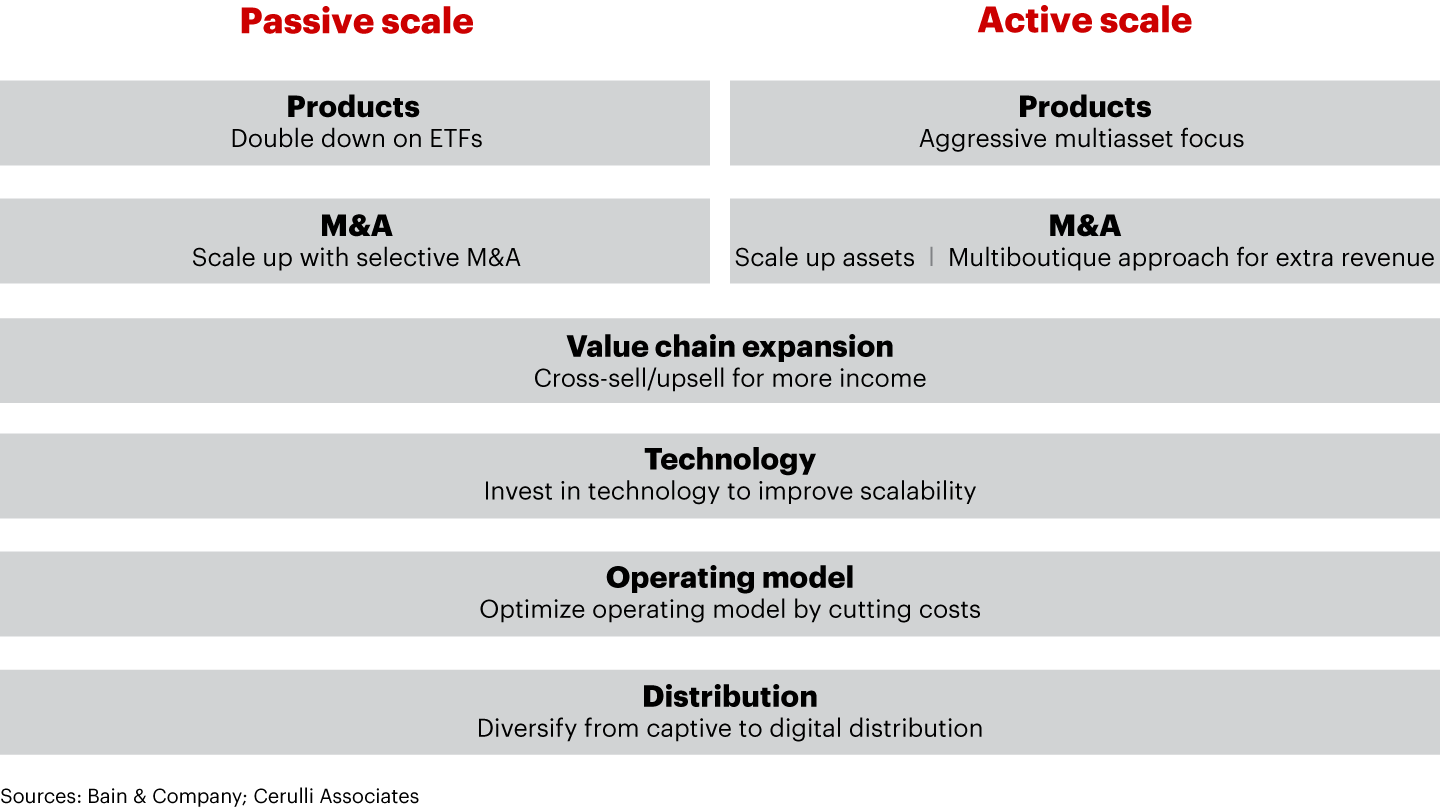

Figure 4

Model No. 1: Passive assets at scale
The rise of exchange-traded funds (ETFs) has helped spur a meaningful inflow of assets to large passive managers. BlackRock, Vanguard and State Street have a more than 75% combined global market share of ETF investments. For these large companies, an M&A strategy will likely focus more on acquiring new technological capabilities than on further building scale. By contrast, for passive asset managers without sufficient size, M&A will be one way to expand their book of business. And given the lower penetration of passive funds in Europe and Asia, there still could be room for a regional passive champion in those markets.
Let’s look at BlackRock’s experience. Among the eight factors that contribute to success in asset management, the company has excelled in three. First, in products: About 70% of AUM at BlackRock consist of passive products. The company is now the largest provider of ETFs, having captured an outsized share of investments flowing to this category.
Second, in M&A: Over time, BlackRock has consistently built and leveraged a scalable platform through its deals (Merrill Lynch Investment Managers for active, iShares for passive). Most recently, BlackRock has made bolt-on acquisitions that particularly improved the firm’s technology position and expanded its offerings.
Third, in technology: In recent years, BlackRock has stringently applied technology to accelerate the process of scaling up its business. In this context, BlackRock has focused on increased automation in portfolio investment to cut costs and more efficient product selling via platforms that are less expensive, faster and more convenient for clients. The firm’s Aladdin risk management platform has become a powerful tool for portfolio managers as well as a fast-growing business through licensing to other asset management firms. CEO Laurence Fink’s goal is to have one-third of revenue enabled by technology in the coming years.
Model No. 2: Active assets at scale
Many investors still seek out active management. Amundi, based in France, has mastered three factors crucial for success with this model: M&A, operating model and distribution. In a fragmented market, M&A is a promising option to meaningfully increase AUM and extend a company’s knowledge base, either through add-on acquisitions or a merger of equals. Amundi’s robust M&A history started with its founding as the merger of the asset management operations of Crédit Agricole and Société Générale. At the end of 2016, it acquired Pioneer Investments, forming Europe’s largest asset manager and diversifying its customer base toward retail customers, achieving cost synergies of €150 million along with significant scale benefits.
A viable operating model requires a low-cost base for continued scalability, supported by outsourcing of noncore, low-value processes. In this regard, Amundi has developed a highly efficient model, with a cost-to-income ratio of just 52%, compared with 73% for the industry average.
In distribution, Amundi recognized early on the trend of diversification away from captive channels toward open architecture. Although it traditionally relied on captive distribution through agreements with its prior parent banks, Amundi has pursued more open channels and has more than 1,000 third-party distribution partners.
Model No. 3: A differentiated niche
Which niches look attractive? Three product segments currently stand out as attractive opportunities: themed multiasset funds investing in topics such as mobility and clean technology; socially responsible investments; and alternative investments such as hedge funds, infrastructure and real estate. All of these can command higher fees if executed well, but they require distinct capabilities.
Nordea, for example, has built a strong position based on its stringent attention to products, employees and customers. Its products fall into two lines: active alpha and target return. Increasingly, Nordea has nurtured multiasset outcome strategies with predefined targets that consistently outperform market benchmarks. For example, the Nordea 1—Stable Return Fund was closed to new investors after €10.5 billion in inflows, making it one of Europe’s largest absolute return funds.
Regarding employees, asset management firms can exploit the power of star managers as long as they take a few precautionary steps to manage star risk: Tie compensation to investment success or distribution success or ownership tie-in, and employ supporting managers to ensure continuity. The Nordea 1—Stable Return Fund has been overseen by three managers since inception, with the risk minimized through a team approach in case one manager leaves the firm.
Nordea Asset Management’s focus on retail customers closely matches that of its parent bank’s retail business. It commands high average fees over a large European customer base, performing strongly in the Nordic countries and gaining ground in Germany, Italy and Spain.
Key questions for planning the battle
Regardless of whether asset managers choose to pursue the scale or niche route, they should start diagnosing their strengths and weaknesses relative to their competitors. They will need a clear-eyed view of where they should play and how they will win. Questions to plan the battle include the following:
- What is the most attractive set of investors and products for us in light of the market’s competitive structure and expected growth over the next five years?
- What key factors will likely have the greatest effect on our asset growth?
- What do our customers say about their highest priorities? Which Elements of Value® matter most to them?
- How do they view our performance across these elements? What do they say are our strengths and weaknesses?
- What shifts in distribution matter to our business?
- Which capabilities are essential for successfully serving our market, and how do we perform on those capabilities? By contrast, which capabilities are less critical and can be outsourced?
- Does our technology allow us to gain a competitive advantage?
- How do we measure up in cost effectiveness relative to core peers in our market? How will our cost position likely change when growing in this market?
With the easy money gone, firms do not have the luxury of delaying their next moves, as forward-looking competitors have already planned and started to execute their new strategy. Identifying and clearly defining a distinct strategy and focus—namely, what to do and what to stop doing—will be instrumental to success in this market. For firms that do get it right, the reward will be highly attractive: an ever-growing share of the world’s expanding wealth.
Matthias Memminger and Mike Kuehnel are partners and Cyrosch Kalateh is a manager with Bain & Company’s Financial Services practice. They are based, respectively, in Frankfurt, Frankfurt and Düsseldorf.
First published in luglio 2018