
Skip to Content
  • Uffici

    Uffici

    Nord e Sud America
    • Atlanta
    • Austin
    • Bogota
    • Boston
    • Buenos Aires
    • Chicago
    • Dallas
    • Denver
    • Houston
    • Los Angeles
    • Mexico City
    • Minneapolis
    • Monterrey
    • Montreal
    • New York
    • Rio de Janeiro
    • San Francisco
    • Santiago
    • São Paulo
    • Seattle
    • Silicon Valley
    • Toronto
    • Washington, DC
    Europa, Medio Oriente e Africa
    • Amsterdam
    • Athens
    • Berlin
    • Brussels
    • Copenhagen
    • Doha
    • Dubai
    • Dusseldorf
    • Frankfurt
    • Helsinki
    • Istanbul
    • Johannesburg
    • Kyiv
    • Lisbon
    • London
    • Madrid
    • Milan
    • Munich
    • Oslo
    • Paris
    • Riyadh
    • Rome
    • Stockholm
    • Vienna
    • Warsaw
    • Zurich
    Asia e Australia
    • Bangkok
    • Beijing
    • Bengaluru
    • Brisbane
    • Ho Chi Minh City
    • Hong Kong
    • Jakarta
    • Kuala Lumpur
    • Manila
    • Melbourne
    • Mumbai
    • New Delhi
    • Perth
    • Seoul
    • Shanghai
    • Singapore
    • Sydney
    • Tokyo
    Guarda tutti gli uffici
  • Alumni
  • Media Center
  • Iscriviti
  • Contattaci
  • Italy | Italiano

    Seleziona il tuo Paese e la tua lingua

    Global
    • Global (English)
    Nord e Sud America
    • Brazil (Português)
    • Argentina (Español)
    • Canada (Français)
    • Chile (Español)
    • Colombia (Español)
    Europa, Medio Oriente e Africa
    • France (Français)
    • DACH Region (Deutsch)
    • Italy (Italiano)
    • Spain (Español)
    • Greece (Elliniká)
    Asia e Australia
    • China (中文版)
    • Korea (한국어)
    • Japan (日本語)
  • Saved items (0)
    Saved items (0)

    You have no saved items.

    Contrassegna il contenuto che ti interessa e verrà salvato qui. Potrai leggerlo o condividerlo in seguito.

    Explore Bain Insights
  • Settori
    Menu principale

    Settori

    • Aerospazio e Difesa
    • Agribusiness
    • Chimica
    • Infrastrutture e Costruzioni
    • Beni di Largo Consumo
    • Servizi Finanziari
    • Sanità
    • Macchinari Industriali
    • Media & Intrattenimento
    • Industria Metallurgica
    • Industria Mineraria
    • Petrolio e Gas
    • Industria Cartaria e Packaging
    • Private Equity
    • Settore Sociale & Pubblico
    • Retail
    • Tecnologia
    • Telecomunicazioni
    • Compagnie Aeree & Trasporti
    • Viaggi e Svago
    • Utility e Rinnovabili
  • Servizi di Consulenza
    Menu principale

    Servizi di Consulenza

    • Customer Experience
    • ESG
    • Innovation
    • M&A and Divestitures
    • Operation
    • People & Organization
    • Private Equity
    • Sales & Marketing
    • Strategia
    • IA, Approfondimenti e Soluzioni
    • Tecnologia
    • Trasformazione
  • Digital
  • Tematiche
  • Informazioni su Bain
    Menu principale

    Informazioni su Bain

    • Che Cosa Facciamo
    • Quello in Cui Crediamo
    • Le Nostre Persone e la Leadership
    • Risultati
    • Premi e Riconoscimenti
    • Organizzazioni Globali
    Further: Our global responsibility
    • Diversità e Inclusione
    • Social Impact
    • Sustainability
    • World Economic Forum
    Learn more about Further
  • Careers
    Menu principale

    Careers

    • Work with Us
      Careers
      Work with Us
      • Find Your Place
      • Our Work Areas
      • Integrated Teams
      • Students
      • Internships & Programs
      • Recruiting Events
    • Life at Bain
      Careers
      Life at Bain
      • Blog: Inside Bain
      • Career Stories
      • Our People
      • Where We Work
      • Supporting Your Growth
      • Affinity Groups
      • Benefits
    • Impact Stories
    • Hiring Process
      Careers
      Hiring Process
      • What to Expect
      • Interviewing
    FIND JOBS
  • Uffici
    Menu principale

    Uffici

    • Nord e Sud America
      Uffici
      Nord e Sud America
      • Atlanta
      • Austin
      • Bogota
      • Boston
      • Buenos Aires
      • Chicago
      • Dallas
      • Denver
      • Houston
      • Los Angeles
      • Mexico City
      • Minneapolis
      • Monterrey
      • Montreal
      • New York
      • Rio de Janeiro
      • San Francisco
      • Santiago
      • São Paulo
      • Seattle
      • Silicon Valley
      • Toronto
      • Washington, DC
    • Europa, Medio Oriente e Africa
      Uffici
      Europa, Medio Oriente e Africa
      • Amsterdam
      • Athens
      • Berlin
      • Brussels
      • Copenhagen
      • Doha
      • Dubai
      • Dusseldorf
      • Frankfurt
      • Helsinki
      • Istanbul
      • Johannesburg
      • Kyiv
      • Lisbon
      • London
      • Madrid
      • Milan
      • Munich
      • Oslo
      • Paris
      • Riyadh
      • Rome
      • Stockholm
      • Vienna
      • Warsaw
      • Zurich
    • Asia e Australia
      Uffici
      Asia e Australia
      • Bangkok
      • Beijing
      • Bengaluru
      • Brisbane
      • Ho Chi Minh City
      • Hong Kong
      • Jakarta
      • Kuala Lumpur
      • Manila
      • Melbourne
      • Mumbai
      • New Delhi
      • Perth
      • Seoul
      • Shanghai
      • Singapore
      • Sydney
      • Tokyo
    Guarda tutti gli uffici
  • Alumni
  • Media Center
  • Iscriviti
  • Contattaci
  • Italy | Italiano
    Menu principale

    Seleziona il tuo Paese e la tua lingua

    • Global
      Seleziona il tuo Paese e la tua lingua
      Global
      • Global (English)
    • Nord e Sud America
      Seleziona il tuo Paese e la tua lingua
      Nord e Sud America
      • Brazil (Português)
      • Argentina (Español)
      • Canada (Français)
      • Chile (Español)
      • Colombia (Español)
    • Europa, Medio Oriente e Africa
      Seleziona il tuo Paese e la tua lingua
      Europa, Medio Oriente e Africa
      • France (Français)
      • DACH Region (Deutsch)
      • Italy (Italiano)
      • Spain (Español)
      • Greece (Elliniká)
    • Asia e Australia
      Seleziona il tuo Paese e la tua lingua
      Asia e Australia
      • China (中文版)
      • Korea (한국어)
      • Japan (日本語)
  • Saved items  (0)
    Menu principale
    Saved items (0)

    You have no saved items.

    Contrassegna il contenuto che ti interessa e verrà salvato qui. Potrai leggerlo o condividerlo in seguito.

    Explore Bain Insights
  • Settori
    • Settori

      • Aerospazio e Difesa
      • Agribusiness
      • Chimica
      • Infrastrutture e Costruzioni
      • Beni di Largo Consumo
      • Servizi Finanziari
      • Sanità
      • Macchinari Industriali
      • Media & Intrattenimento
      • Industria Metallurgica
      • Industria Mineraria
      • Petrolio e Gas
      • Industria Cartaria e Packaging
      • Private Equity
      • Settore Sociale & Pubblico
      • Retail
      • Tecnologia
      • Telecomunicazioni
      • Compagnie Aeree & Trasporti
      • Viaggi e Svago
      • Utility e Rinnovabili
  • Servizi di Consulenza
    • Servizi di Consulenza

      • Customer Experience
      • ESG
      • Innovation
      • M&A and Divestitures
      • Operation
      • People & Organization
      • Private Equity
      • Sales & Marketing
      • Strategia
      • IA, Approfondimenti e Soluzioni
      • Tecnologia
      • Trasformazione
  • Digital
  • Tematiche
  • Informazioni su Bain
    • Informazioni su Bain

      • Che Cosa Facciamo
      • Quello in Cui Crediamo
      • Le Nostre Persone e la Leadership
      • Risultati
      • Premi e Riconoscimenti
      • Organizzazioni Globali
      Further: Our global responsibility
      • Diversità e Inclusione
      • Social Impact
      • Sustainability
      • World Economic Forum
      Learn more about Further
  • Careers
    Ricerche più popolari
    • Agile
    • Digitale
    • Strategia
    La tue ricerche precedenti
      Pagine visitate

      Content added to saved items

      Saved items (0)

      Removed from saved items

      Saved items (0)

      Brief

      Bad decisions in history: Cautionary tales

      Bad decisions in history: Cautionary tales

      Bad decisions are like Trojan horses—you may not recognize the danger at first, but if you know your history, you’ll learn to keep them outside your walls.

      Di Paul Rogers, Marcia W. Blenko and Jenny Davis-Peccoud

      • Tempo di lettura min.

      Brief

      Bad decisions in history: Cautionary tales
      en

      History has been full of bad decisions. The Trojans brought the famous wooden horse inside their city walls, not realizing it was full of Greek soldiers who would open the gates from the inside. Napoleon decided to invade Russia and returned with just a tiny fraction of his once grand army. The Titanic was outfitted with only enough lifeboats for a third of the total passengers and crew it could carry.

      What goes wrong with decisions like these? Sometimes it’s just individual arrogance or foolishness that produces a bad decision. But we’re organizational specialists, and we like to search out what’s amiss in the system that produces the decision. 

      For instance: One of the keys to good decision making is assigning responsibility for all the essential roles in a decision, from recommending a course of action all the way through to executing it. The recommender plays a particularly big part by gathering input from the relevant people and getting signoffs from anyone who needs to approve the proposal.

      Then, too, a good decision process ensures that the right people offer input and are listened to. The Trojans heard from the priest Laocoön, the prophetess Cassandra and even Helen of Troy, all of whom cautioned that the horse might be a trick. Alas, no one paid attention. Laocoön was strangled by sea serpents for offering his opinion—another poor decision practice.

      The fact is, great decision processes require many elements of an organization to work in concert. When we talk to executives, we often use a wheel-shaped graphic to illustrate all the factors that can come into play (see Figure 1). Every element that’s out of kilter is likely to compromise decision making and execution.
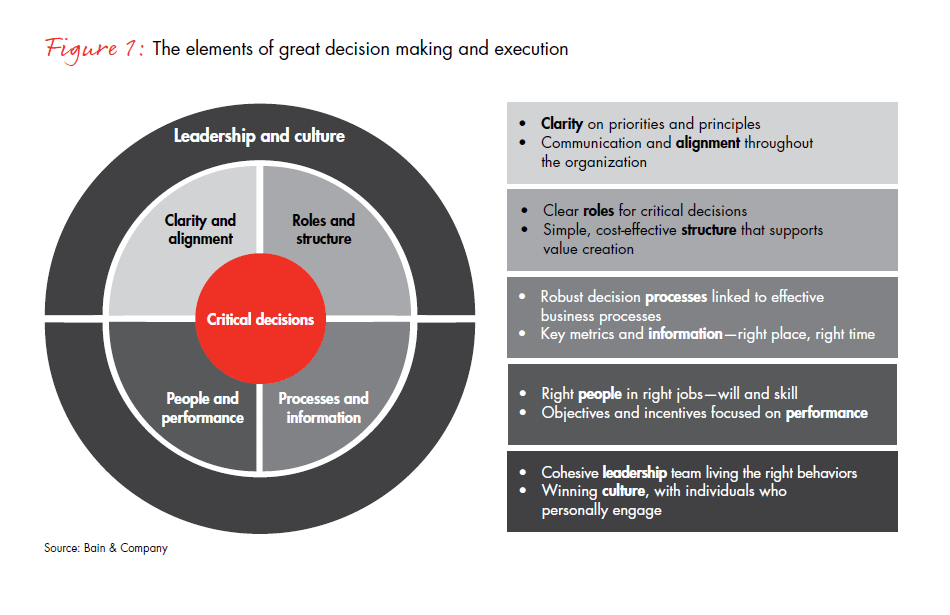

      di-bad-decisions-in-history-cautionary-tales-fig-01_embed

      Take Napoleon’s army. Yes, the weather was one reason the invasion of Russia failed, but poor organization and Napoleon’s own leadership style were big factors. When officers reported supply shortages or desertions, Napoleon would give them a public scolding, often followed by a demotion. Predictably, Napoleon’s generals began exaggerating troop strength and readiness, obscuring the true picture until the campaign was far advanced.

      Uncharacteristically, Napoleon lacked a clear vision in this case as well: Did he mean to occupy Moscow and Saint Petersburg? Carve up Russia between Sweden, Turkey and a revived Poland? He remained uncertain whether he would leave Moscow or winter there. By the time he decided to retreat, it was too late.

      Getting business decisions right is tough, too. A company has to make good choices time after time. It has to do so speedily—faster than competitors—and it has to ensure that decisions get translated into action. No wonder there are as many missteps in this sphere as in every other area of history. Think of Coca-Cola introducing New Coke, or Polaroid and Kodak stubbornly sticking to film-based photography for way too long. (For more such blunders, see Huffington Post’s blog entry “The Worst Business Decisions of All Time.”)

      When a company makes a really bad decision, it’s likely that more than one organizational element isn’t working right. The wheel can help you spotlight each individual trouble spot.

      Whatever else it may have lacked, for instance, Coca-Cola certainly didn’t have the information it needed to make a good decision about New Coke. The company had tested the taste of its new recipe with more than 200,000 consumers, but it never asked people whether they actually wanted a different variety of Coke to replace the old one. Turned out they didn’t.

      Polaroid and Kodak definitely lacked clarity on priorities and principles, not to mention alignment throughout the organization. Both companies’ R&D departments had actually developed path-breaking digital cameras. But the divisions that made and marketed film had little interest in encouraging or pursuing nonfilm technology.

      To be sure, the decisions that make the history books are huge, bet-the-company choices, the business equivalent of deciding to invade Russia. Most companies face such issues infrequently. But every company makes millions of decisions every year, from big strategic decisions like launching a new product line to week-in, week-out decisions about marketing, procurement or customer service. And even seemingly small decisions can go terribly wrong. In September 2011, for example, Bank of America announced that it would soon begin charging its debit card customers a $5 monthly fee. The move set off a firestorm of consumer protest and the bank was forced to back down.

      One thing we can learn from all these cautionary tales is that it’s easy for organizations to foul up their decision processes. When the decision stars fall out of alignment, a company can run into serious trouble quickly.

      So it’s worth reflecting on your decisions—the good, the bad and the ugly. Executives can learn much from the pitfalls of the past. They can study up on how to make and execute critical decisions well. On this score, we recommend the new book by Tom Davenport and Brook Manville, Judgment Calls—12 Stories of Big Decisions and the Teams That Got Them Right. And we hope you’ll read our own book, Decide & Deliver: 5 Steps to Breakthrough Performance in Your Organization.

      Bad decisions are a bit like Trojan horses—you may not recognize the danger at first, but if you know your history, you’ll soon learn to keep them outside your walls.

      Paul Rogers is the managing partner of Bain’s London office and leads Bain’s Global Organization practice. Marcia W. Blenko is a partner with Bain & Company and a senior member of the firm’s Global Organization practice. Jenny Davis-Peccoud is the senior director of Bain’s Global Organization practice. She is based in London.


      di-bad-decisions-in-history-cautionary-tales-fig-01_full
      Bain Book

      Decide & Deliver

      Learn more about the five steps that leading organizations use to make great decisions quickly and execute them effectively.

      Autori
      • Paul Rogers
        Former Partner, Middle East
      • Headshot of Marcia Blenko
        Marcia Blenko
        Advisory Partner, Boston
      • Headshot of Jenny Davis-Peccoud
        Jenny Davis-Peccoud
        Partner, Amsterdam
      Contattaci
      Servizi di consulenza collegati
      • Organizzazione
      Organizzazione
      Measuring decision effectiveness

      Good, fast decision making and execution produce good financial results.

      Leggi di più
      Organizzazione
      Your company is connected—but can it make and execute good decisions?

      The connected enterprise presents huge opportunities. If you focus on decisions first and connectivity second, you will be well positioned to capitalize on them.

      Leggi di più
      Organizzazione
      When a New Organizational Structure Isn’t Enough: How to Truly Live Your Operating Model

      The goal of any organizational redesign is for people to work differently, but that only happens if leaders invest in changing the work itself.

      Leggi di più
      Organizzazione
      Shift to Vertical: David Haines, Group CEO, Flora Food Group

      What does it take to stay connected to your customers when scale and complexity threaten to pull you away? 

      Leggi di più
      Organizzazione
      Leading with Dynamism: AI and the Future of Top Teams

      In the age of AI, dynamic leadership—not just digital tools—is a true competitive advantage.

      Leggi di più
      First published in dicembre 2012
      Tags
      • Organizzazione

      Come abbiamo aiutato i nostri clienti

      Organizzazione A Video Game Company Levels Up With a New Operating Model

      Leggi un caso di studio

      Organizzazione Building a winning media salesforce

      Leggi un caso di studio

      Organizzazione Powering a mining company's growth through cultural change

      Leggi un caso di studio

      Vuoi continuare la conversazione?

      Aiutiamo i leader globali e le loro aziende ad affrontare problemi e a cogliere le opportunità. Sosteniamo cambiamenti e otteniamo risultati duraturi.

      Bain Insights. Le nostre idee e punti di vista sulle tematiche che le aziende globali affrontano ogni giorno, arrivano nella tua email tutti i mesi.

      *Ho letto l'Informativa sulla Privacy e accetto i termini e le condizioni.

      Si prega di leggere e accettare l’Informativa sulla Privacy
      Bain & Company
      Contattaci Sustainability Accessibility Condizioni d’uso Privacy Cookie Policy Sitemap Log In

      © 1996-2026 Bain & Company, Inc.

      Contatta Bain

      Come posso aiutarti?

      • Business inquiry
      • Career information
      • Press relations
      • Partnership request
      • Speaker request
      Guarda tutti gli uffici