
Skip to Content
  • Uffici

    Uffici

    Nord e Sud America
    • Atlanta
    • Austin
    • Bogota
    • Boston
    • Buenos Aires
    • Chicago
    • Dallas
    • Denver
    • Houston
    • Los Angeles
    • Mexico City
    • Minneapolis
    • Monterrey
    • Montreal
    • New York
    • Rio de Janeiro
    • San Francisco
    • Santiago
    • São Paulo
    • Seattle
    • Silicon Valley
    • Toronto
    • Washington, DC
    Europa, Medio Oriente e Africa
    • Amsterdam
    • Athens
    • Berlin
    • Brussels
    • Copenhagen
    • Doha
    • Dubai
    • Dusseldorf
    • Frankfurt
    • Helsinki
    • Istanbul
    • Johannesburg
    • Kyiv
    • Lisbon
    • London
    • Madrid
    • Milan
    • Munich
    • Oslo
    • Paris
    • Riyadh
    • Rome
    • Stockholm
    • Vienna
    • Warsaw
    • Zurich
    Asia e Australia
    • Bangkok
    • Beijing
    • Bengaluru
    • Brisbane
    • Ho Chi Minh City
    • Hong Kong
    • Jakarta
    • Kuala Lumpur
    • Manila
    • Melbourne
    • Mumbai
    • New Delhi
    • Perth
    • Seoul
    • Shanghai
    • Singapore
    • Sydney
    • Tokyo
    Guarda tutti gli uffici
  • Alumni
  • Media Center
  • Iscriviti
  • Contattaci
  • Italy | Italiano

    Seleziona il tuo Paese e la tua lingua

    Global
    • Global (English)
    Nord e Sud America
    • Brazil (Português)
    • Argentina (Español)
    • Canada (Français)
    • Chile (Español)
    • Colombia (Español)
    Europa, Medio Oriente e Africa
    • France (Français)
    • DACH Region (Deutsch)
    • Italy (Italiano)
    • Spain (Español)
    • Greece (Elliniká)
    Asia e Australia
    • China (中文版)
    • Korea (한국어)
    • Japan (日本語)
  • Saved items (0)
    Saved items (0)

    You have no saved items.

    Contrassegna il contenuto che ti interessa e verrà salvato qui. Potrai leggerlo o condividerlo in seguito.

    Explore Bain Insights
  • Settori
    Menu principale

    Settori

    • Aerospazio e Difesa
    • Agribusiness
    • Chimica
    • Infrastrutture e Costruzioni
    • Beni di Largo Consumo
    • Servizi Finanziari
    • Sanità
    • Macchinari Industriali
    • Media & Intrattenimento
    • Industria Metallurgica
    • Industria Mineraria
    • Petrolio e Gas
    • Industria Cartaria e Packaging
    • Private Equity
    • Settore Sociale & Pubblico
    • Retail
    • Tecnologia
    • Telecomunicazioni
    • Compagnie Aeree & Trasporti
    • Viaggi e Svago
    • Utility e Rinnovabili
  • Servizi di Consulenza
    Menu principale

    Servizi di Consulenza

    • Customer Experience
    • ESG
    • Innovation
    • M&A and Divestitures
    • Operation
    • People & Organization
    • Private Equity
    • Sales & Marketing
    • Strategia
    • IA, Approfondimenti e Soluzioni
    • Tecnologia
    • Trasformazione
  • Digital
  • Tematiche
  • Informazioni su Bain
    Menu principale

    Informazioni su Bain

    • Che Cosa Facciamo
    • Quello in Cui Crediamo
    • Le Nostre Persone e la Leadership
    • Risultati
    • Premi e Riconoscimenti
    • Organizzazioni Globali
    Further: Our global responsibility
    • Diversità e Inclusione
    • Social Impact
    • Sustainability
    • World Economic Forum
    Learn more about Further
  • Careers
    Menu principale

    Careers

    • Work with Us
      Careers
      Work with Us
      • Find Your Place
      • Our Work Areas
      • Integrated Teams
      • Students
      • Internships & Programs
      • Recruiting Events
    • Life at Bain
      Careers
      Life at Bain
      • Blog: Inside Bain
      • Career Stories
      • Our People
      • Where We Work
      • Supporting Your Growth
      • Affinity Groups
      • Benefits
    • Impact Stories
    • Hiring Process
      Careers
      Hiring Process
      • What to Expect
      • Interviewing
    FIND JOBS
  • Uffici
    Menu principale

    Uffici

    • Nord e Sud America
      Uffici
      Nord e Sud America
      • Atlanta
      • Austin
      • Bogota
      • Boston
      • Buenos Aires
      • Chicago
      • Dallas
      • Denver
      • Houston
      • Los Angeles
      • Mexico City
      • Minneapolis
      • Monterrey
      • Montreal
      • New York
      • Rio de Janeiro
      • San Francisco
      • Santiago
      • São Paulo
      • Seattle
      • Silicon Valley
      • Toronto
      • Washington, DC
    • Europa, Medio Oriente e Africa
      Uffici
      Europa, Medio Oriente e Africa
      • Amsterdam
      • Athens
      • Berlin
      • Brussels
      • Copenhagen
      • Doha
      • Dubai
      • Dusseldorf
      • Frankfurt
      • Helsinki
      • Istanbul
      • Johannesburg
      • Kyiv
      • Lisbon
      • London
      • Madrid
      • Milan
      • Munich
      • Oslo
      • Paris
      • Riyadh
      • Rome
      • Stockholm
      • Vienna
      • Warsaw
      • Zurich
    • Asia e Australia
      Uffici
      Asia e Australia
      • Bangkok
      • Beijing
      • Bengaluru
      • Brisbane
      • Ho Chi Minh City
      • Hong Kong
      • Jakarta
      • Kuala Lumpur
      • Manila
      • Melbourne
      • Mumbai
      • New Delhi
      • Perth
      • Seoul
      • Shanghai
      • Singapore
      • Sydney
      • Tokyo
    Guarda tutti gli uffici
  • Alumni
  • Media Center
  • Iscriviti
  • Contattaci
  • Italy | Italiano
    Menu principale

    Seleziona il tuo Paese e la tua lingua

    • Global
      Seleziona il tuo Paese e la tua lingua
      Global
      • Global (English)
    • Nord e Sud America
      Seleziona il tuo Paese e la tua lingua
      Nord e Sud America
      • Brazil (Português)
      • Argentina (Español)
      • Canada (Français)
      • Chile (Español)
      • Colombia (Español)
    • Europa, Medio Oriente e Africa
      Seleziona il tuo Paese e la tua lingua
      Europa, Medio Oriente e Africa
      • France (Français)
      • DACH Region (Deutsch)
      • Italy (Italiano)
      • Spain (Español)
      • Greece (Elliniká)
    • Asia e Australia
      Seleziona il tuo Paese e la tua lingua
      Asia e Australia
      • China (中文版)
      • Korea (한국어)
      • Japan (日本語)
  • Saved items  (0)
    Menu principale
    Saved items (0)

    You have no saved items.

    Contrassegna il contenuto che ti interessa e verrà salvato qui. Potrai leggerlo o condividerlo in seguito.

    Explore Bain Insights
  • Settori
    • Settori

      • Aerospazio e Difesa
      • Agribusiness
      • Chimica
      • Infrastrutture e Costruzioni
      • Beni di Largo Consumo
      • Servizi Finanziari
      • Sanità
      • Macchinari Industriali
      • Media & Intrattenimento
      • Industria Metallurgica
      • Industria Mineraria
      • Petrolio e Gas
      • Industria Cartaria e Packaging
      • Private Equity
      • Settore Sociale & Pubblico
      • Retail
      • Tecnologia
      • Telecomunicazioni
      • Compagnie Aeree & Trasporti
      • Viaggi e Svago
      • Utility e Rinnovabili
  • Servizi di Consulenza
    • Servizi di Consulenza

      • Customer Experience
      • ESG
      • Innovation
      • M&A and Divestitures
      • Operation
      • People & Organization
      • Private Equity
      • Sales & Marketing
      • Strategia
      • IA, Approfondimenti e Soluzioni
      • Tecnologia
      • Trasformazione
  • Digital
  • Tematiche
  • Informazioni su Bain
    • Informazioni su Bain

      • Che Cosa Facciamo
      • Quello in Cui Crediamo
      • Le Nostre Persone e la Leadership
      • Risultati
      • Premi e Riconoscimenti
      • Organizzazioni Globali
      Further: Our global responsibility
      • Diversità e Inclusione
      • Social Impact
      • Sustainability
      • World Economic Forum
      Learn more about Further
  • Careers
    Ricerche più popolari
    • Agile
    • Digitale
    • Strategia
    La tue ricerche precedenti
      Pagine visitate

      Content added to saved items

      Saved items (0)

      Removed from saved items

      Saved items (0)

      Technology Report

      Digital Innovation: Getting the Architecture Foundations Right

      Digital Innovation: Getting the Architecture Foundations Right

      Modern architectures help companies make better use of technology.

      Di John Beaumont, Brendan O'Rourke, Bala Parameshwaran, e Neil Mulholland

      • Tempo di lettura min.
      }

      Report

      Digital Innovation: Getting the Architecture Foundations Right
      en
      In evidenza
      • Companies with modern technology architectures outperform their competitors with better customer service, more efficient operations, and stronger customer advocacy.
      • Modern architectures are Agile (able to adapt rapidly), real-time (putting data where it's needed), and intelligent (personalizing experiences using artificial intelligence and machine learning).
      • Only 13% of executives say that they are getting the business value they expected from their spending on technology.
      • Developing a better understanding of the connection between architecture and business value can help companies get a better return on those investments.

      This article is part of Bain's 2023 Technology Report.

      Explore the report

      Companies with modern architectures (Agile, real-time, intelligent) outperform competitors by delivering a better customer experience, more efficient operations, and stronger customer advocacy (see Figure 1). They can scale quickly to capture the benefits of technology innovations, which helps them become market leaders.

      But to capture those benefits, enterprise architecture needs to continuously evolve. This evolution happens gradually, taking a decade or more for technologies to move from cutting edge to mainstream. This stately pace may lull some tech executives into believing that they have ample time to put off complex change. And while moving quickly doesn’t guarantee success, we do see time and again that emerging leaders tend to adopt new technologies and architectural patterns early, which gives them time to climb the experience curve and achieve benefits well ahead of competitors.

      Amazon’s adoption in the early 2000s of cloud-based service interfaces, which exposed data and functionality across the organization internally and externally, is a famous example of this. Those early investments continue to pay off for the retail leader, which saw sales grow by 25% annually between 2016 and 2022, compared with a market average of 6%. Even today, only 14% of companies are using similar modern, service-oriented technologies.

      More recently, some neobanks that moved quickly to adopt a mobile-first customer experience saw growth rates of 52% a year between 2019 and 2022. One of these, Monzo, has a competitive cost position that allows it to serve twice as many customers per employee than traditional banks. Both outcomes are enabled by modern architectures based on microservices.

      Figure 1
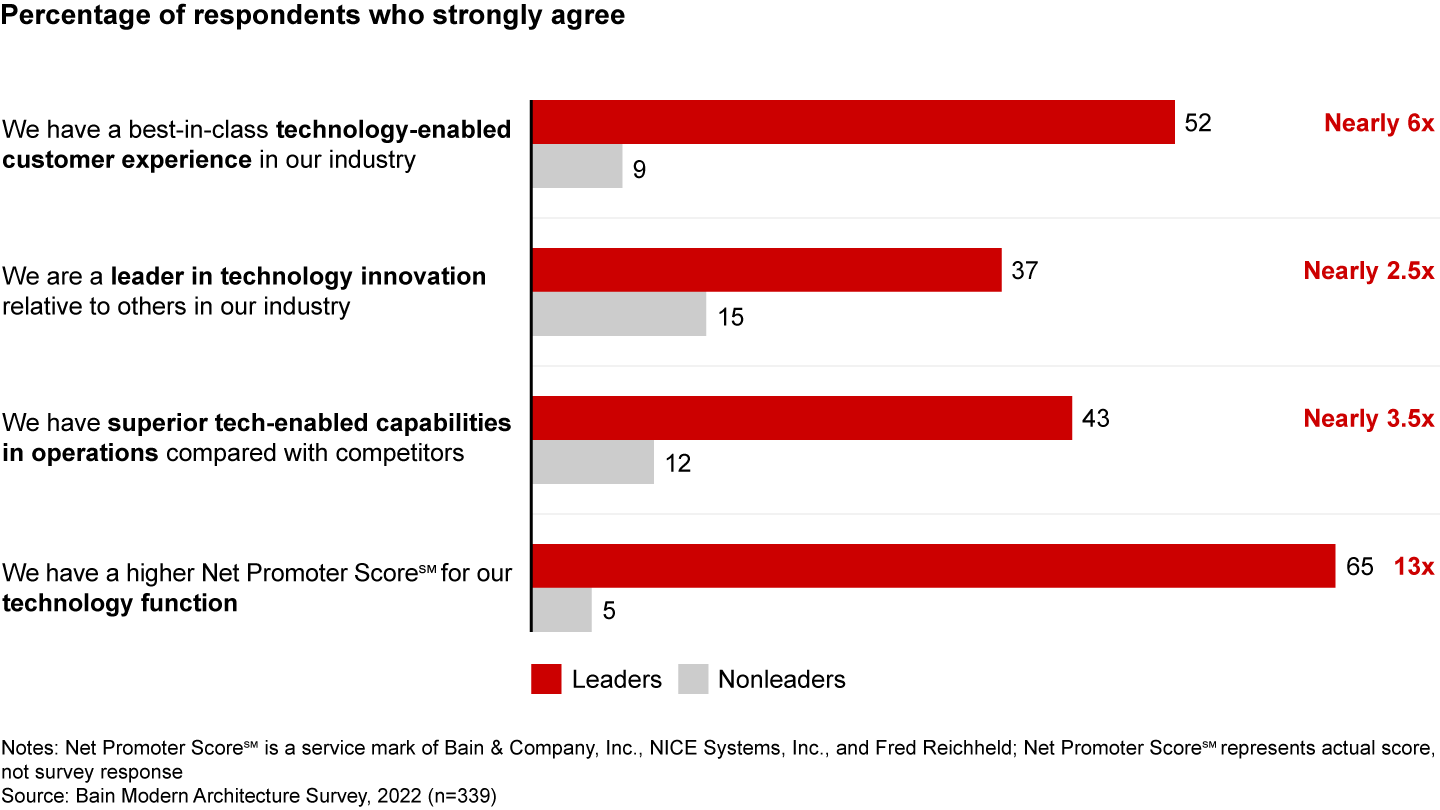
      Modern technology architecture helps companies outperform on many levels
      Modern technology architecture helps companies outperform on many levels
      Modern technology architecture helps companies outperform on many levels

      Getting architecture right

      Despite this clear record of success, only about 13% of executives surveyed said that they are getting the business value they expect for the amount they spend on technology. Most of these companies are constrained by their legacy technology and, in some cases, by a lack of understanding about what modern architecture is.

      • Agile: Modular, service-oriented architecture that enables quick changes.
      • Real-time: Utilizing event-based architecture to make data available when and where it is needed.
      • Intelligent: Embedded, mature, structured artificial intelligence (AI) and machine learning (ML) capabilities to ensure highly personalized customer and employee experiences.

      Modern architecture supports digital capabilities across the enterprise (from customer experience and intelligent engagement to the core business and operational systems) with data, security, integration, and cloud architecture. It’s also critical for scaling emerging technology. For example, scaling AI applications across the enterprise requires access to data in a format that AI models can understand. This transformation of data requires modern data architecture and integration capabilities, connecting silos that might otherwise separate customer engagement and operational systems.

      Commonwealth Bank of Australia (CBA) built a customer-engagement engine using AI and ML that enables its customer support function to suggest and personalize the best conversation to have with each customer in real time, whether they are in the branch, on the phone, online, or on a mobile device. Modern architecture enabled CBA to integrate data points from emergency sources and weather alert systems so that algorithms could monitor a situation in real time, which allowed the bank to support disaster recovery efforts during the Perth brush fires of 2021, offering personalized support to 80,000 clients. Those efforts paid off with a 6-point increase in its Net Promoter Score℠, which measures a customer’s likelihood of recommending CBA to peers.

      While the benefits of modernization are clear, companies don’t need to be cutting edge everywhere, but they do need to apply the appropriate architectural patterns to the appropriate business processes. For example, Amazon Prime recently moved away from a microservices-based architecture for streaming media. In considering the additional complexity of service-oriented architectures, the company decided that a "modular monolith” would deliver most of the benefits for much less cost.

      Companies that make a successful transition to modern enterprise architectures get a few things right.

      • They have a clear point of view on how architecture helps create business value, whether it is cost reduction, transformation, asset reuse, or risk reduction.
      • They modernize the capabilities that matter; not everything needs to be gold plated.
      • They enable agility, providing flexibility for innovation while standardizing less differentiated capabilities (for more, read the Bain Brief “A Modern Enterprise Architecture Is Essential for Scaling Agile”).
      • They build and own their architecture capabilities rather than relying on outsourced talent.

      Enterprise technology architecture isn’t something that most business leaders have had to think about, but they can’t afford to ignore it any longer. Together with the leaders of the technology function, they need to ask whether they have the right architecture to help them succeed. Building a modern architecture requires ongoing experimentation and a commitment to investment over the long term. But without it and its support for real-time data integration, Agile development, and new AI capabilities, companies cannot expect to maintain a competitive advantage in today’s markets.

      Read the Next Chapter

      The Talent Implications of Generative AI

      Read our 2023 Technology Report

      Download the PDF Explore the report
      Autori
      • Headshot of John Beaumont
        John Beaumont
        Partner, London
      • Headshot of Brendan O'Rourke
        Brendan O'Rourke
        Partner, London
      • Headshot of Bala Parameshwaran
        Bala Parameshwaran
        Partner, Boston
      • Neil Mulholland
        Chief Executive, Enterprise Blueprints, London
      Contattaci
      Industry collegate
      • Tecnologia
      Servizi di consulenza collegati
      • Digital
      • Enterprise Technology
      Come possiamo aiutarti
      • Systems & Architecture
      Technology Report
      Quantum Computing Moves from Theoretical to Inevitable

      Quantum will likely become part of a mosaic, working with classical computing to solve big problems.

      Leggi di più
      Tecnologia
      Software M&A

      The good news: Most deal best practices still apply to AI acquisitions.

      Leggi di più
      CIO Insights
      Tech Execs Lack Confidence in System Integrators

      Only 6% said that they would recommend their system integrators for an enterprise resource planning (ERP) transformation.

      Leggi di più
      Enterprise Technology
      Reimagining Merchandising in the Era of Agentic AI

      The future of merchandising is not better analysis, but faster, smarter execution—and agentic AI is what makes that possible.

      Leggi di più
      Technology Report
      How Can We Meet AI’s Insatiable Demand for Compute Power?

      Technological innovation, new revenue, and public support may be needed to fund and supply enough electricity.

      Leggi di più

      Value Evolution

      • Creating Value in Tech Throughout the Life Cycle

      • Preparing for Exit: A Buyer’s Market Is Coming for Tech Assets

      • AI Investors: Act Fast, Act Wisely

      • Technology Enters Its Post-Globalization Era

      Strategic Battlegrounds

      • You’re Out of Time to Wait and See on AI

      • How AI Is Recoding the Software Business Model

      • Generative AI and Cybersecurity: Strengthening Both Defenses and Threats

      • Taking the Hyperbole Out of the Metaverse

      • The Untapped Value at the Intelligent Edge

      • After the Chip Shortage, Fears of a Capacity Glut Are Overblown

      Operational Transformations

      • Digital Innovation: Getting the Architecture Foundations Right

      • The Talent Implications of Generative AI

      • How Enterprise Sales Can Supercharge Product-Led Growth

      • How Your Revenue Can Grow Faster Than Your Salesforce

      • Decarbonizing Technology Supply Chains

      First published in settembre 2023
      Tags
      • CIO Insights
      • Digital
      • Enterprise Technology
      • Systems & Architecture
      • Technology Report
      • Tecnologia

      Come abbiamo aiutato i nostri clienti

      Helping a Midsize ERP Player Compete against the Giants

      Leggi un caso di studio

      Aggressively growing an IT service provider with a high-performance culture

      Leggi un caso di studio

      Electronics manufacturer increases value of CRM investment

      Leggi un caso di studio

      Vuoi continuare la conversazione?

      Aiutiamo i leader globali e le loro aziende ad affrontare problemi e a cogliere le opportunità. Sosteniamo cambiamenti e otteniamo risultati duraturi.

      Net Promoter®, NPS®, NPS Prism®, and the NPS-related emoticons are registered trademarks and Net Promoter Score℠ and Net Promoter System℠ are service marks of Bain & Company, Inc., Satmetrix Systems, Inc., and Fred Reichheld.

      Bain Insights. Le nostre idee e punti di vista sulle tematiche che le aziende globali affrontano ogni giorno, arrivano nella tua email tutti i mesi.

      *Ho letto l'Informativa sulla Privacy e accetto i termini e le condizioni.

      Si prega di leggere e accettare l’Informativa sulla Privacy
      Bain & Company
      Contattaci Sustainability Accessibility Condizioni d’uso Privacy Cookie Policy Sitemap Log In

      © 1996-2026 Bain & Company, Inc.

      Contatta Bain

      Come posso aiutarti?

      • Business inquiry
      • Career information
      • Press relations
      • Partnership request
      • Speaker request
      Guarda tutti gli uffici