
Skip to Content
  • Uffici

    Uffici

    Nord e Sud America
    • Atlanta
    • Austin
    • Bogota
    • Boston
    • Buenos Aires
    • Chicago
    • Dallas
    • Denver
    • Houston
    • Los Angeles
    • Mexico City
    • Minneapolis
    • Monterrey
    • Montreal
    • New York
    • Rio de Janeiro
    • San Francisco
    • Santiago
    • São Paulo
    • Seattle
    • Silicon Valley
    • Toronto
    • Washington, DC
    Europa, Medio Oriente e Africa
    • Amsterdam
    • Athens
    • Berlin
    • Brussels
    • Copenhagen
    • Doha
    • Dubai
    • Dusseldorf
    • Frankfurt
    • Helsinki
    • Istanbul
    • Johannesburg
    • Kyiv
    • Lisbon
    • London
    • Madrid
    • Milan
    • Munich
    • Oslo
    • Paris
    • Riyadh
    • Rome
    • Stockholm
    • Vienna
    • Warsaw
    • Zurich
    Asia e Australia
    • Bangkok
    • Beijing
    • Bengaluru
    • Brisbane
    • Ho Chi Minh City
    • Hong Kong
    • Jakarta
    • Kuala Lumpur
    • Manila
    • Melbourne
    • Mumbai
    • New Delhi
    • Perth
    • Seoul
    • Shanghai
    • Singapore
    • Sydney
    • Tokyo
    Guarda tutti gli uffici
  • Alumni
  • Media Center
  • Iscriviti
  • Contattaci
  • Italy | Italiano

    Seleziona il tuo Paese e la tua lingua

    Global
    • Global (English)
    Nord e Sud America
    • Brazil (Português)
    • Argentina (Español)
    • Canada (Français)
    • Chile (Español)
    • Colombia (Español)
    Europa, Medio Oriente e Africa
    • France (Français)
    • DACH Region (Deutsch)
    • Italy (Italiano)
    • Spain (Español)
    • Greece (Elliniká)
    Asia e Australia
    • China (中文版)
    • Korea (한국어)
    • Japan (日本語)
  • Saved items (0)
    Saved items (0)

    You have no saved items.

    Contrassegna il contenuto che ti interessa e verrà salvato qui. Potrai leggerlo o condividerlo in seguito.

    Explore Bain Insights
  • Settori
    Menu principale

    Settori

    • Aerospazio e Difesa
    • Agribusiness
    • Chimica
    • Infrastrutture e Costruzioni
    • Beni di Largo Consumo
    • Servizi Finanziari
    • Sanità
    • Macchinari Industriali
    • Media & Intrattenimento
    • Industria Metallurgica
    • Industria Mineraria
    • Petrolio e Gas
    • Industria Cartaria e Packaging
    • Private Equity
    • Settore Sociale & Pubblico
    • Retail
    • Tecnologia
    • Telecomunicazioni
    • Compagnie Aeree & Trasporti
    • Viaggi e Svago
    • Utility e Rinnovabili
  • Servizi di Consulenza
    Menu principale

    Servizi di Consulenza

    • Customer Experience
    • ESG
    • Innovation
    • M&A and Divestitures
    • Operation
    • People & Organization
    • Private Equity
    • Sales & Marketing
    • Strategia
    • IA, Approfondimenti e Soluzioni
    • Tecnologia
    • Trasformazione
  • Digital
  • Tematiche
  • Informazioni su Bain
    Menu principale

    Informazioni su Bain

    • Che Cosa Facciamo
    • Quello in Cui Crediamo
    • Le Nostre Persone e la Leadership
    • Risultati
    • Premi e Riconoscimenti
    • Organizzazioni Globali
    Further: Our global responsibility
    • Diversità e Inclusione
    • Social Impact
    • Sustainability
    • World Economic Forum
    Learn more about Further
  • Careers
    Menu principale

    Careers

    • Work with Us
      Careers
      Work with Us
      • Find Your Place
      • Our Work Areas
      • Integrated Teams
      • Students
      • Internships & Programs
      • Recruiting Events
    • Life at Bain
      Careers
      Life at Bain
      • Blog: Inside Bain
      • Career Stories
      • Our People
      • Where We Work
      • Supporting Your Growth
      • Affinity Groups
      • Benefits
    • Impact Stories
    • Hiring Process
      Careers
      Hiring Process
      • What to Expect
      • Interviewing
    FIND JOBS
  • Uffici
    Menu principale

    Uffici

    • Nord e Sud America
      Uffici
      Nord e Sud America
      • Atlanta
      • Austin
      • Bogota
      • Boston
      • Buenos Aires
      • Chicago
      • Dallas
      • Denver
      • Houston
      • Los Angeles
      • Mexico City
      • Minneapolis
      • Monterrey
      • Montreal
      • New York
      • Rio de Janeiro
      • San Francisco
      • Santiago
      • São Paulo
      • Seattle
      • Silicon Valley
      • Toronto
      • Washington, DC
    • Europa, Medio Oriente e Africa
      Uffici
      Europa, Medio Oriente e Africa
      • Amsterdam
      • Athens
      • Berlin
      • Brussels
      • Copenhagen
      • Doha
      • Dubai
      • Dusseldorf
      • Frankfurt
      • Helsinki
      • Istanbul
      • Johannesburg
      • Kyiv
      • Lisbon
      • London
      • Madrid
      • Milan
      • Munich
      • Oslo
      • Paris
      • Riyadh
      • Rome
      • Stockholm
      • Vienna
      • Warsaw
      • Zurich
    • Asia e Australia
      Uffici
      Asia e Australia
      • Bangkok
      • Beijing
      • Bengaluru
      • Brisbane
      • Ho Chi Minh City
      • Hong Kong
      • Jakarta
      • Kuala Lumpur
      • Manila
      • Melbourne
      • Mumbai
      • New Delhi
      • Perth
      • Seoul
      • Shanghai
      • Singapore
      • Sydney
      • Tokyo
    Guarda tutti gli uffici
  • Alumni
  • Media Center
  • Iscriviti
  • Contattaci
  • Italy | Italiano
    Menu principale

    Seleziona il tuo Paese e la tua lingua

    • Global
      Seleziona il tuo Paese e la tua lingua
      Global
      • Global (English)
    • Nord e Sud America
      Seleziona il tuo Paese e la tua lingua
      Nord e Sud America
      • Brazil (Português)
      • Argentina (Español)
      • Canada (Français)
      • Chile (Español)
      • Colombia (Español)
    • Europa, Medio Oriente e Africa
      Seleziona il tuo Paese e la tua lingua
      Europa, Medio Oriente e Africa
      • France (Français)
      • DACH Region (Deutsch)
      • Italy (Italiano)
      • Spain (Español)
      • Greece (Elliniká)
    • Asia e Australia
      Seleziona il tuo Paese e la tua lingua
      Asia e Australia
      • China (中文版)
      • Korea (한국어)
      • Japan (日本語)
  • Saved items  (0)
    Menu principale
    Saved items (0)

    You have no saved items.

    Contrassegna il contenuto che ti interessa e verrà salvato qui. Potrai leggerlo o condividerlo in seguito.

    Explore Bain Insights
  • Settori
    • Settori

      • Aerospazio e Difesa
      • Agribusiness
      • Chimica
      • Infrastrutture e Costruzioni
      • Beni di Largo Consumo
      • Servizi Finanziari
      • Sanità
      • Macchinari Industriali
      • Media & Intrattenimento
      • Industria Metallurgica
      • Industria Mineraria
      • Petrolio e Gas
      • Industria Cartaria e Packaging
      • Private Equity
      • Settore Sociale & Pubblico
      • Retail
      • Tecnologia
      • Telecomunicazioni
      • Compagnie Aeree & Trasporti
      • Viaggi e Svago
      • Utility e Rinnovabili
  • Servizi di Consulenza
    • Servizi di Consulenza

      • Customer Experience
      • ESG
      • Innovation
      • M&A and Divestitures
      • Operation
      • People & Organization
      • Private Equity
      • Sales & Marketing
      • Strategia
      • IA, Approfondimenti e Soluzioni
      • Tecnologia
      • Trasformazione
  • Digital
  • Tematiche
  • Informazioni su Bain
    • Informazioni su Bain

      • Che Cosa Facciamo
      • Quello in Cui Crediamo
      • Le Nostre Persone e la Leadership
      • Risultati
      • Premi e Riconoscimenti
      • Organizzazioni Globali
      Further: Our global responsibility
      • Diversità e Inclusione
      • Social Impact
      • Sustainability
      • World Economic Forum
      Learn more about Further
  • Careers
    Ricerche più popolari
    • Agile
    • Digitale
    • Strategia
    La tue ricerche precedenti
      Pagine visitate

      Content added to saved items

      Saved items (0)

      Removed from saved items

      Saved items (0)

      Technology Report

      How to Compete and Win in the Multicloud World

      How to Compete and Win in the Multicloud World

      After a crash in valuations, multicloud infrastructure software vendors (ISVs) and “hyperscaler” cloud service providers battle for the cloud software market, each bringing unique strengths.

      Di Matthew Crupi, Mark Brinda, Morgan Maxwell, e Bill Radzevych

      • Tempo di lettura min.
      }

      Report

      How to Compete and Win in the Multicloud World
      en
      In evidenza
      • The multicloud software market has grown tremendously in recent years, but not all companies can survive.
      • Three factors will determine an ISV’s likelihood to succeed in a given market: whether customers will pay for premium functionality, whether they want to avoid locking into walled gardens, and whether hyperscalers’ benefits of scale provide a unique advantage.

      This article is part of Bain's 2022 Technology Report.

      Explore the report

      After the valuations of multicloud infrastructure software vendors shot into the stratosphere over the past three years only to start crashing down to earth in late 2021, investors and enterprise customers are left wondering, who will survive and thrive?

      It’s one of the most consequential questions in technology right now, because it has significant bearing on who will win the cloud software market: multicloud infrastructure software vendors (ISVs), hyperscaler cloud service providers, or on-premise originators (see definitions of these three groups in “Cloud Software Competitors” below).

      Multicloud ISVs’ rapid growth in value indicated an expectation of transformative market penetration and massive revenue growth over the next few years. Indeed, revenue growth of top multicloud ISVs has exceeded that of both hyperscalers and on-premise originators, increasing by a median of 44% from 2019 to 2020 and 50% from 2020 to 2021 (see Figure 1). Their market valuations increased by a median of 157% from 2019 to 2020 and 25% from 2020 to 2021. Some ISVs enjoyed valuations 50 times higher than their annual revenue, more than triple the average software multiple.

      Figure 1
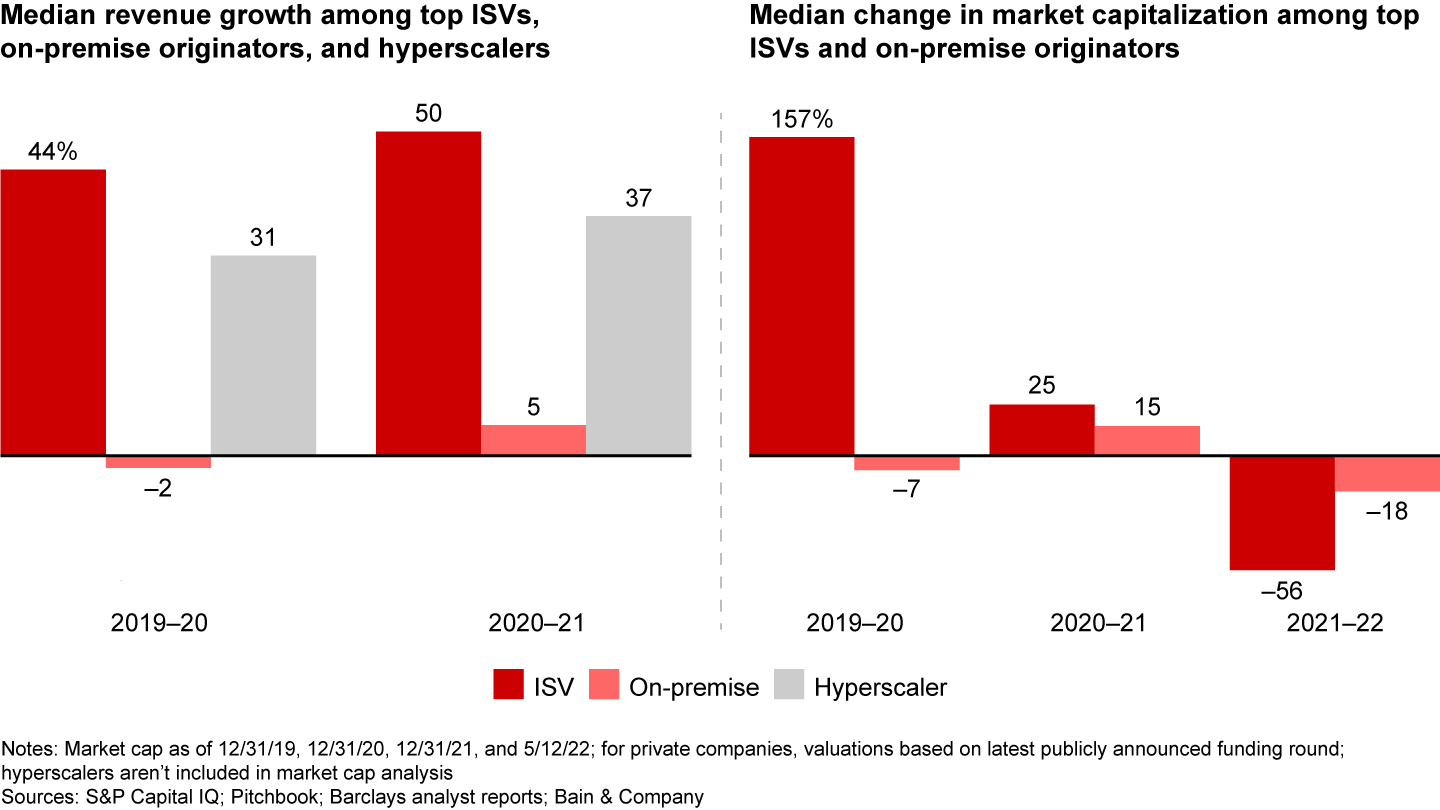
      Infrastructure software vendors grew quickly and were highly valued through 2021, but they’ve been hit hard this year
      • Cloud Software Competitors

        Three major categories of organizations are building out the cloud’s infrastructure, middleware, and management software markets.

        • On-premise originators. Companies providing infrastructure and analytics, including hardware, software, and middleware layers of the technology stack. Examples with on-premise roots include VMware, a virtualization company that has moved from on-premise to multicloud, and Teradata, which now offers software subscriptions in the cloud in place of an on-premise, hardware-centric product portfolio. 
        • Multicloud infrastructure software vendors (ISVs). Cloud-native, hybrid-native (combining on-premise systems with cloud), or open-source software-as-a-service (SaaS) companies offering solutions that integrate with the hyperscalers’ cloud infrastructure. Examples include Datadog, Snowflake, and Twilio.
        • Hyperscalers. The largest cloud service providers that have built a growing portfolio of services running on top of their own platforms. Examples include Amazon Web Services, Microsoft Azure, and Google Cloud. These services either compete with or complement solutions from the multicloud ISVs.

      It wasn’t sustainable. As macroeconomic challenges dragged down the stock market overall, multicloud ISV valuations declined even more steeply, even as their revenue growth often exceeded expectations. In time, it will become clear whether this is an overcorrection or a reset that better reflects intrinsic value. However that plays out, it’s increasingly clear that the competition between multicloud ISVs and hyperscalers will determine the future of the cloud software market. As investors and enterprises evaluate their cloud strategies, here’s our guide to what will determine the winners.

      Three swing factors

      The strength of a multicloud ISV’s advantage in a segment hinges on three characteristics.

      • Customers’ willingness to pay a premium for best-of-breed solutions. Multicloud ISVs have an opening to differentiate themselves in parts of the cloud stack located further from hyperscalers’ core offerings. Customers already choose ISVs when they need best-in-class technology, and for certain key purchase criteria (see Figure 2).
      • Strong customer preference for cloud infrastructure flexibility. Multicloud ISV solutions that work consistently across computing environments are well suited to buyers that want to avoid vendor lock-in and simplify their multicloud or hybrid environments.
      • Relatively limited benefit from scale. ISVs are more likely to succeed when this key advantage of hyperscalers’ platforms isn’t critical.
      Figure 2
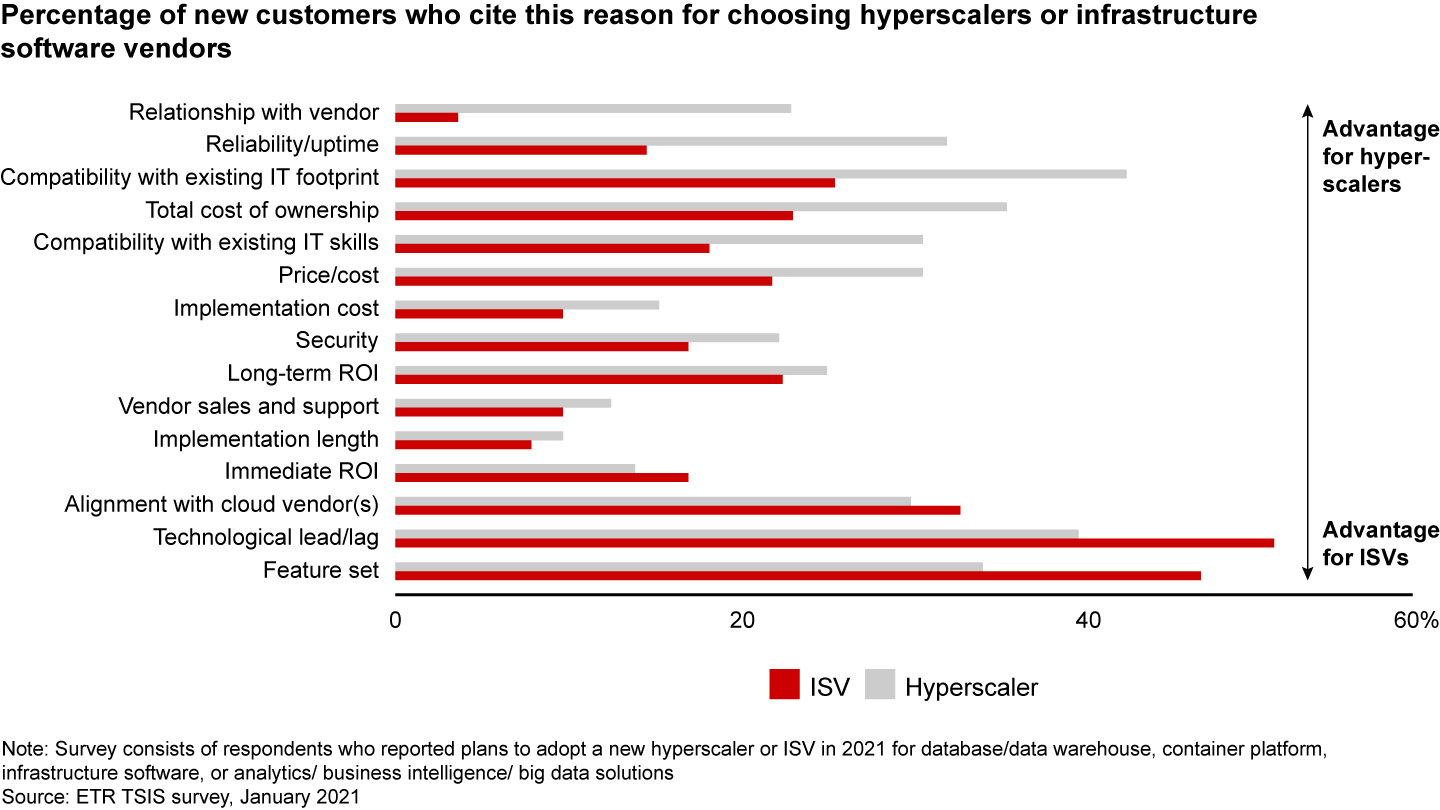
      Customers choose cloud-native infrastructure software vendors for high-quality technology, and hyperscalers for reliability, integration with existing IT, and cost

      The future of ISVs

      These three swing factors help clarify when ISVs are better positioned to win, when they’ll face fierce competition from hyperscalers, and when hyperscalers have the advantage.

      • ISVs are in a good position to win when best-in-class technology and cloud infrastructure flexibility are paramount. Examples include cybersecurity and app monitoring. In cybersecurity, despite hyperscalers’ moves to bolster their offerings (such as Google Cloud Platform’s $5.4 billion Mandiant acquisition), multicloud ISVs will be formidable competition, well positioned on all three swing factors. Cloudflare, for example, has upped the game for web performance and security with its differentiated software architecture and innovation. The combination has powered the company beyond investor analysts’ revenue growth expectations, more than tripling its total addressable market estimate from $32 billion in 2018 just before its 2019 IPO to over $100 billion.
      • ISVs and hyperscalers will engage in fierce competition when best-in-breed technology may be beneficial but not necessary. Examples include data warehousing and database management. In data warehousing, we believe multicloud ISVs can continue carving out leading positions in the market, but doing so will require overcoming strong hyperscaler presence and investment, as well as managing the complex relationship between ISVs and hyperscalers in those market segments where they both compete and partner. Snowflake has enjoyed a spectacular rise, including the largest software IPO at that point in history. Similarly, Databricks has demonstrated exceptional strength, reaching $800 million in annual recurring revenue in 2021, 80% more than in 2020.
      • Hyperscalers could capture the majority of profit pools when they have a distinct technological edge, a significant lead in the market, or an overwhelming advantage from scale. This may include areas within artificial intelligence (AI) and machine learning (ML), such as AI developer frameworks or vision and natural language processing. Hyperscalers get differentiated benefit of scale from training AI/ML solutions on large data sets and across multiple tools. In this segment, customers are already voting with their dollars, spending around 60% of their AI/ML budgets on hyperscalers’ tools, compared with 25% on multicloud ISV solutions, according to a 2022 Bain survey. We still expect to see ISVs winning in areas of AI further from the hyperscaler core, however, including cases involving proprietary data or domain-specific functionality. 

      Implications for ISVs, hyperscalers, and on-premise originators

      As the cloud services industry matures, multicloud ISVs should play a larger role in the market, but hyperscalers will maintain a strong competitive position, and on-premise originators have an opportunity to carve out their own valuable niche.

      On-premise originators have two important strengths to draw upon: a large installed base of customers and well-known brand names. Rather than trying to beat hyperscalers, we expect more on-premise originators to form partnerships and invest in making their leading software offerings work seamlessly on top of hyperscalers’ platforms.

      Critical questions for on-premise originators to consider as they crystallize their strategies:

      • What’s the source of our competitive differentiation from hyperscalers and multicloud ISVs today? What will it be in the future?
      • How can we partner with hyperscalers to keep customers from seeking a new solution?

      Successful multicloud ISVs will disproportionately invest in products located further from the hyperscaler core that have hybrid or multicloud requirements and limited benefits from scale. By maintaining a focus on customer needs and delivering best-in-class solutions, they can continue to win. One wild card to watch is regulation. If regulators require more standardization and interoperability, that’s likely to benefit multicloud ISVs.

      Critical questions for multicloud ISV leadership teams:

      • Do hyperscalers view our markets as must-win battlegrounds or as distant adjacency bets?
      • In markets with attractive swing factors, how can we create maximum value?

      The most effective hyperscalers will assess their portfolio of services to determine where their scale delivers a needle-moving competitive advantage and where best-of-breed players have the edge. As their service offerings expand from hundreds today to potentially thousands in the future, hyperscalers will need to effectively manage that complexity while remaining an easy-to-use one-stop shop for customers.

      Critical questions for hyperscalers:

      • Which priority areas of our core business should we invest in to ensure we stay ahead of the competition?
      • In which limited number of critical adjacent software markets should we invest? How will these further differentiate us from other hyperscalers?

      Read the Next Chapter

      Web3 Could Rewrite the Rules on User Identity

      Value Evolution

      • The Rise of Growth Equity Investors

      • A Multicloud World

      • Welcome to Web3

      • The US-China Decoupling

      Competitive Battlegrounds

      • Defending against Disruption

      • The Engine 2 Imperative

      • AI’s Next Frontier

      • The Industrial IoT

      Operational Advantage

      • Beyond the Rule of 40

      • Sales Productivity

      • Consumption-Based Pricing

      • Software R&D Efficiencies

      • The Chip Shortage

      • The Circular Economy

      Read our 2022 Technology Report

      Explore the report Download PDF
      Autori
      • Headshot of Matthew Crupi
        Matthew Crupi
        Partner, Dallas
      • Headshot of Mark Brinda
        Mark Brinda
        Partner, New York
      • Headshot of Morgan Maxwell
        Morgan Maxwell
        Partner, Dallas
      • Headshot of Bill Radzevych
        Bill Radzevych
        Partner, Seattle
      Contattaci
      Industry collegate
      • Cloud Computing
      • Hardware
      • Internet of Things
      • IT Services
      • Semiconductors
      • Software
      • Tecnologia
      Technology Report
      How Companies Can Build a Supply Chain for the Circular Economy

      Reselling and recycling products can offer tech hardware providers a competitive advantage.

      Leggi di più
      Technology Report
      Will Agentic AI Disrupt SaaS?

      Disruption is mandatory. Obsolescence is optional.

      Leggi di più
      CIO Insights
      Despite Tech Layoffs, Competition for Talent Remains Fierce

      Tech workers increasingly value career development opportunities and remote or hybrid work options, while compensation has soared.

      Leggi di più
      Technology Report
      State of the Art of Agentic AI Transformation

      Tech-forward enterprises have cracked the code on ROI for AI. Falling behind is riskier than ever as the next wave of agentic AI raises the stakes.

      Leggi di più
      Tecnologia
      Using Hardware to Scale the Industrial Internet of Things

      Bain partners discuss the opportunity for hardware vendors to help companies develop their IoT pilots.

      Leggi di più
      First published in settembre 2022
      Tags
      • CIO Insights
      • Cloud Computing
      • Hardware
      • Internet of Things
      • IT Services
      • Semiconductors
      • Software
      • Technology Report
      • Tecnologia

      Come abbiamo aiutato i nostri clienti

      Sostenibilità e Corporate Responsibility Can Microchips Turbocharge Sustainability Improvement?

      Leggi un caso di studio

      A Go-to-Market Redesign Helps a Tech Company Thrive

      Leggi un caso di studio

      Helping a Midsize ERP Player Compete against the Giants

      Leggi un caso di studio

      Vuoi continuare la conversazione?

      Aiutiamo i leader globali e le loro aziende ad affrontare problemi e a cogliere le opportunità. Sosteniamo cambiamenti e otteniamo risultati duraturi.

      Bain Insights. Le nostre idee e punti di vista sulle tematiche che le aziende globali affrontano ogni giorno, arrivano nella tua email tutti i mesi.

      *Ho letto l'Informativa sulla Privacy e accetto i termini e le condizioni.

      Si prega di leggere e accettare l’Informativa sulla Privacy
      Bain & Company
      Contattaci Sustainability Accessibility Condizioni d’uso Privacy Cookie Policy Sitemap Log In

      © 1996-2026 Bain & Company, Inc.

      Contatta Bain

      Come posso aiutarti?

      • Business inquiry
      • Career information
      • Press relations
      • Partnership request
      • Speaker request
      Guarda tutti gli uffici