
Skip to Content
  • Uffici

    Uffici

    Nord e Sud America
    • Atlanta
    • Austin
    • Bogota
    • Boston
    • Buenos Aires
    • Chicago
    • Dallas
    • Denver
    • Houston
    • Los Angeles
    • Mexico City
    • Minneapolis
    • Monterrey
    • Montreal
    • New York
    • Rio de Janeiro
    • San Francisco
    • Santiago
    • São Paulo
    • Seattle
    • Silicon Valley
    • Toronto
    • Washington, DC
    Europa, Medio Oriente e Africa
    • Amsterdam
    • Athens
    • Berlin
    • Brussels
    • Copenhagen
    • Doha
    • Dubai
    • Dusseldorf
    • Frankfurt
    • Helsinki
    • Istanbul
    • Johannesburg
    • Kyiv
    • Lisbon
    • London
    • Madrid
    • Milan
    • Munich
    • Oslo
    • Paris
    • Riyadh
    • Rome
    • Stockholm
    • Vienna
    • Warsaw
    • Zurich
    Asia e Australia
    • Bangkok
    • Beijing
    • Bengaluru
    • Brisbane
    • Ho Chi Minh City
    • Hong Kong
    • Jakarta
    • Kuala Lumpur
    • Manila
    • Melbourne
    • Mumbai
    • New Delhi
    • Perth
    • Seoul
    • Shanghai
    • Singapore
    • Sydney
    • Tokyo
    Guarda tutti gli uffici
  • Alumni
  • Media Center
  • Iscriviti
  • Contattaci
  • Italy | Italiano

    Seleziona il tuo Paese e la tua lingua

    Global
    • Global (English)
    Nord e Sud America
    • Brazil (Português)
    • Argentina (Español)
    • Canada (Français)
    • Chile (Español)
    • Colombia (Español)
    Europa, Medio Oriente e Africa
    • France (Français)
    • DACH Region (Deutsch)
    • Italy (Italiano)
    • Spain (Español)
    • Greece (Elliniká)
    Asia e Australia
    • China (中文版)
    • Korea (한국어)
    • Japan (日本語)
  • Saved items (0)
    Saved items (0)

    You have no saved items.

    Contrassegna il contenuto che ti interessa e verrà salvato qui. Potrai leggerlo o condividerlo in seguito.

    Explore Bain Insights
  • Settori
    Menu principale

    Settori

    • Aerospazio e Difesa
    • Agribusiness
    • Chimica
    • Infrastrutture e Costruzioni
    • Beni di Largo Consumo
    • Servizi Finanziari
    • Sanità
    • Macchinari Industriali
    • Media & Intrattenimento
    • Industria Metallurgica
    • Industria Mineraria
    • Petrolio e Gas
    • Industria Cartaria e Packaging
    • Private Equity
    • Settore Sociale & Pubblico
    • Retail
    • Tecnologia
    • Telecomunicazioni
    • Compagnie Aeree & Trasporti
    • Viaggi e Svago
    • Utility e Rinnovabili
  • Servizi di Consulenza
    Menu principale

    Servizi di Consulenza

    • Customer Experience
    • ESG
    • Innovation
    • M&A and Divestitures
    • Operation
    • People & Organization
    • Private Equity
    • Sales & Marketing
    • Strategia
    • IA, Approfondimenti e Soluzioni
    • Tecnologia
    • Trasformazione
  • Digital
  • Tematiche
  • Informazioni su Bain
    Menu principale

    Informazioni su Bain

    • Che Cosa Facciamo
    • Quello in Cui Crediamo
    • Le Nostre Persone e la Leadership
    • Risultati
    • Premi e Riconoscimenti
    • Organizzazioni Globali
    Further: Our global responsibility
    • Diversità e Inclusione
    • Social Impact
    • Sustainability
    • World Economic Forum
    Learn more about Further
  • Careers
    Menu principale

    Careers

    • Work with Us
      Careers
      Work with Us
      • Find Your Place
      • Our Work Areas
      • Integrated Teams
      • Students
      • Internships & Programs
      • Recruiting Events
    • Life at Bain
      Careers
      Life at Bain
      • Blog: Inside Bain
      • Career Stories
      • Our People
      • Where We Work
      • Supporting Your Growth
      • Affinity Groups
      • Benefits
    • Impact Stories
    • Hiring Process
      Careers
      Hiring Process
      • What to Expect
      • Interviewing
    FIND JOBS
  • Uffici
    Menu principale

    Uffici

    • Nord e Sud America
      Uffici
      Nord e Sud America
      • Atlanta
      • Austin
      • Bogota
      • Boston
      • Buenos Aires
      • Chicago
      • Dallas
      • Denver
      • Houston
      • Los Angeles
      • Mexico City
      • Minneapolis
      • Monterrey
      • Montreal
      • New York
      • Rio de Janeiro
      • San Francisco
      • Santiago
      • São Paulo
      • Seattle
      • Silicon Valley
      • Toronto
      • Washington, DC
    • Europa, Medio Oriente e Africa
      Uffici
      Europa, Medio Oriente e Africa
      • Amsterdam
      • Athens
      • Berlin
      • Brussels
      • Copenhagen
      • Doha
      • Dubai
      • Dusseldorf
      • Frankfurt
      • Helsinki
      • Istanbul
      • Johannesburg
      • Kyiv
      • Lisbon
      • London
      • Madrid
      • Milan
      • Munich
      • Oslo
      • Paris
      • Riyadh
      • Rome
      • Stockholm
      • Vienna
      • Warsaw
      • Zurich
    • Asia e Australia
      Uffici
      Asia e Australia
      • Bangkok
      • Beijing
      • Bengaluru
      • Brisbane
      • Ho Chi Minh City
      • Hong Kong
      • Jakarta
      • Kuala Lumpur
      • Manila
      • Melbourne
      • Mumbai
      • New Delhi
      • Perth
      • Seoul
      • Shanghai
      • Singapore
      • Sydney
      • Tokyo
    Guarda tutti gli uffici
  • Alumni
  • Media Center
  • Iscriviti
  • Contattaci
  • Italy | Italiano
    Menu principale

    Seleziona il tuo Paese e la tua lingua

    • Global
      Seleziona il tuo Paese e la tua lingua
      Global
      • Global (English)
    • Nord e Sud America
      Seleziona il tuo Paese e la tua lingua
      Nord e Sud America
      • Brazil (Português)
      • Argentina (Español)
      • Canada (Français)
      • Chile (Español)
      • Colombia (Español)
    • Europa, Medio Oriente e Africa
      Seleziona il tuo Paese e la tua lingua
      Europa, Medio Oriente e Africa
      • France (Français)
      • DACH Region (Deutsch)
      • Italy (Italiano)
      • Spain (Español)
      • Greece (Elliniká)
    • Asia e Australia
      Seleziona il tuo Paese e la tua lingua
      Asia e Australia
      • China (中文版)
      • Korea (한국어)
      • Japan (日本語)
  • Saved items  (0)
    Menu principale
    Saved items (0)

    You have no saved items.

    Contrassegna il contenuto che ti interessa e verrà salvato qui. Potrai leggerlo o condividerlo in seguito.

    Explore Bain Insights
  • Settori
    • Settori

      • Aerospazio e Difesa
      • Agribusiness
      • Chimica
      • Infrastrutture e Costruzioni
      • Beni di Largo Consumo
      • Servizi Finanziari
      • Sanità
      • Macchinari Industriali
      • Media & Intrattenimento
      • Industria Metallurgica
      • Industria Mineraria
      • Petrolio e Gas
      • Industria Cartaria e Packaging
      • Private Equity
      • Settore Sociale & Pubblico
      • Retail
      • Tecnologia
      • Telecomunicazioni
      • Compagnie Aeree & Trasporti
      • Viaggi e Svago
      • Utility e Rinnovabili
  • Servizi di Consulenza
    • Servizi di Consulenza

      • Customer Experience
      • ESG
      • Innovation
      • M&A and Divestitures
      • Operation
      • People & Organization
      • Private Equity
      • Sales & Marketing
      • Strategia
      • IA, Approfondimenti e Soluzioni
      • Tecnologia
      • Trasformazione
  • Digital
  • Tematiche
  • Informazioni su Bain
    • Informazioni su Bain

      • Che Cosa Facciamo
      • Quello in Cui Crediamo
      • Le Nostre Persone e la Leadership
      • Risultati
      • Premi e Riconoscimenti
      • Organizzazioni Globali
      Further: Our global responsibility
      • Diversità e Inclusione
      • Social Impact
      • Sustainability
      • World Economic Forum
      Learn more about Further
  • Careers
    Ricerche più popolari
    • Agile
    • Digitale
    • Strategia
    La tue ricerche precedenti
      Pagine visitate

      Content added to saved items

      Saved items (0)

      Removed from saved items

      Saved items (0)

      Brief

      How to Outgrow Your Competitors: Lessons from US Brand Winners

      How to Outgrow Your Competitors: Lessons from US Brand Winners

      One in five brands consistently performs better than the category average. Here’s what they do differently.

      Di John Blasberg, Eileen Shy, Russ Torres and Guy Brusselmans

      • Tempo di lettura min.
      }

      Brief

      How to Outgrow Your Competitors: Lessons from US Brand Winners
      en

      With activists’ investments in consumer goods companies up nearly fourfold in the past decade, brands face an ultimatum: Prove your right to invest in growth or pursue major cost-reduction programs. But as many are discovering, opting for growth has never been as hard as it is today. Global sales for consumer goods companies grew 7% annually during the past decade, but the rate dropped to 1.5% over the last two years. The harsh reality is that even for the top consumer goods companies, few brands consistently succeed.

      While growth may be difficult, a recent Bain analysis of 549 top brands in the US shows that one in five brands consistently gained share in their category each and every year between 2010 and 2014. We call them “brand winners,” and they exist in all categories. They can be big or small companies and sell premium or value products. So what sets these brand winners apart?

      Our analysis of the shopping behavior of 100,000 US households, based on IRI household panel data1, provides valuable insights into how these brands beat the odds in the race for sustainable growth. We found that they all share one fundamental trait: They grow household penetration (defined as the percentage of households in a market buying a particular brand in a given year) faster, on average, than their competitors, whereas the group of non-winners saw declines in penetration (see Figure 1). 

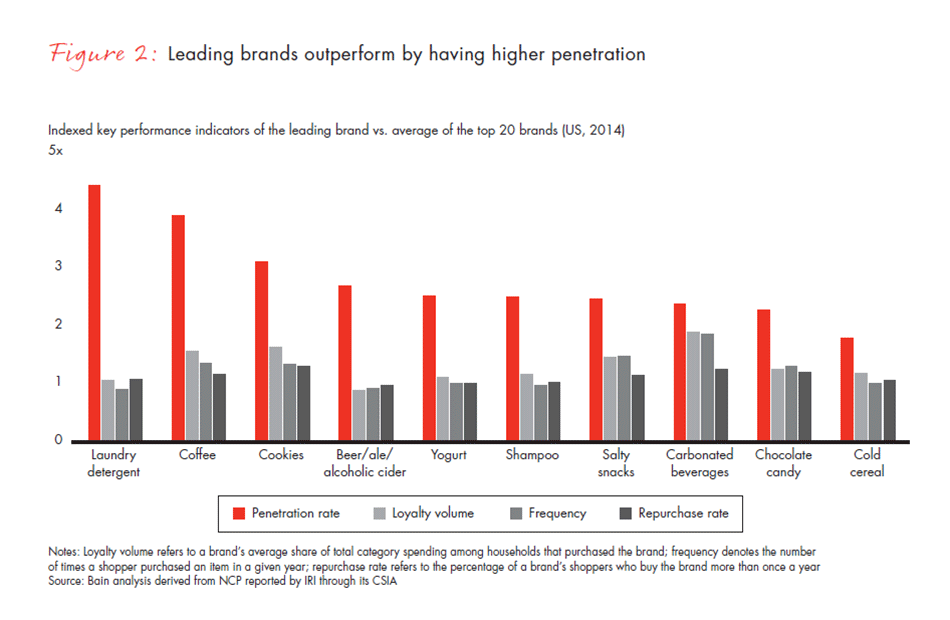
      Across categories and countries, increasing penetration is the primary way to build big brands. This is a key insight from the research of the Ehrenberg-Bass Institute for Marketing Science, summarized by Professor Byron Sharp, director of the Institute, in his book How Brands Grow, based on decades of observations of buying behavior. Our analysis proves that the connection between increased household penetration and category share gains holds just as true in the US as in other markets we have observed. Despite common beliefs, brands won’t sustainably gain share by getting heavy users to buy more of their products. Instead, brands need to sell a bit more to many more people (see Figure 2).
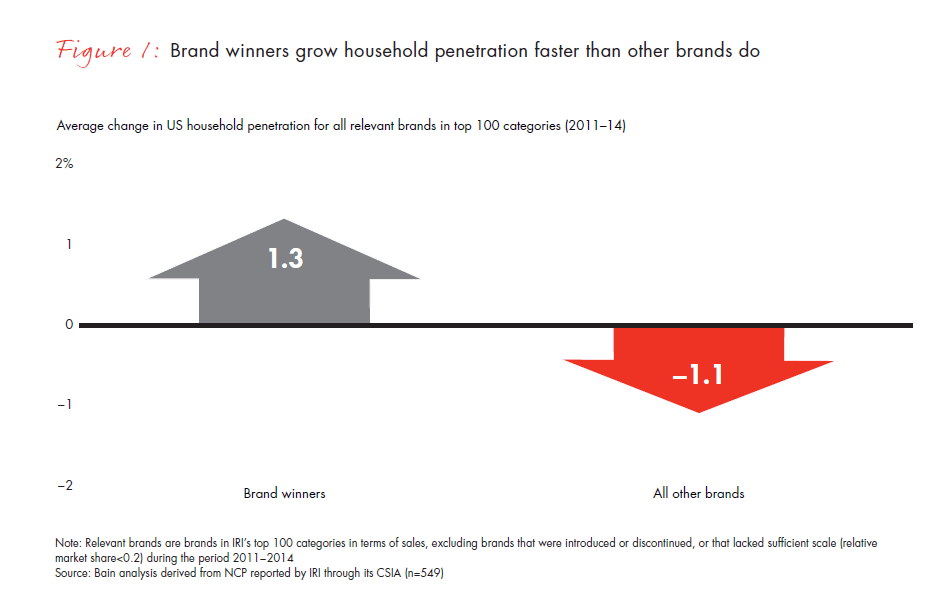
      us-shopper-2015-fig1_embed

      us-shopper-2015-fig2_embed

      Our work with clients on growth strategies has shown that the best companies spur penetration increases and outperform their competitors by thoughtfully investing in three key areas: assortment effectiveness, brand memorability and shopper visibility. Our latest research on brand winners has reinforced this observation. Even more striking is the finding that winners stand out from the rest of the pack not necessarily by outspending their competitors in these areas, but by spending more effectively.

      Here are three important lessons from the brand winners on how to improve penetration and outpace competitors without outspending them.

      Innovate less but more effectively to improve penetration. Our research shows that brand winners use innovation to help fuel growth, but they do so selectively. They introduce 40% fewer products than their rivals, but their innovations are 25% more likely to achieve growth every year following the product launch. Rather than measuring success based on high innovation rates, these companies invest to understand what can truly bring new users to their brand. For example, brand winners often focus on innovations that are less sexy, such as new pack sizes to serve different channels, occasions and price points. They rely on deep insights about consumer repertoires to guide these innovations, launching products that tap opportunity in more baskets rather than cannibalize existing sales. Not only does this lead to higher innovation success rates, it also frees up resources to continue investing behind core brands. (For more about this, see the Bain Brief “Innovation in consumer goods: Heroes to the rescue.”)

      Look at the experiences of two competing brands in the liquid body wash category. In a four-year period when category sales rose 4%, Dove increased sales by 11% while Olay lost share and saw just 3% sales growth. During this time, Dove launched roughly half as many new products as Olay did, but its innovation success rate was about three times more. Dove’s more focused approach allowed it to grow penetration and expand its base by fully supporting new products and existing offerings alike. Over the years, successful innovations like Dove’s men’s line expanded penetration and, with regular support, have now become part of the brand’s core portfolio.

      Eileen Shy, a partner with Bain's Consumer Products practice, discusses how winning brands succeed by focusing on household penetration.

      Spend better, not necessarily more, to build brand memorability. Consumers are bombarded with thousands of commercial messages each day, yet most of them buy a particular brand only once or twice a year. Spending at scale on above-the-line advertising to achieve threshold share of voice is table stakes (spend too little and it isn’t worth spending at all). However, spending effectively ensures the brand will be in shoppers’ consideration set at important buying and consumption moments. Frequency of messaging is key. Consistency is crucial. Rather than trying to stay fresh by routinely switching messaging and running campaigns in waves, winners build brand memorability by steadily and repeatedly reinforcing a brand’s audio and visual cues and nurturing brand memes around consumer-relevant needs and occasions.

      Consider two cereal brands: Cinnamon Toast Crunch and Honey Bunches of Oats. Both spent above threshold scale and at similar levels in above-the-line advertising over the last four years. However, Cinnamon Toast Crunch grew sales by 5.7% annually, while Honey Bunches of Oats saw sales shrink by 3.0%. Why the big difference? Among other factors, the different approaches to above-the-line advertising played a critical role. While Cinnamon Toast Crunch focused on a few compelling and consistent campaigns (“Crave those crazy squares”) linked to breakfast as a consumer moment, Honey Bunches of Oats ran multiple campaigns, each with different messages and unclear linkages to consumption occasions. Cinnamon Toast Crunch consistently highlighted strong brand visual cues (blue and white colors and squares), which were reinforced across channels, including online interactive brand content, whereas Honey Bunches of Oats did not.

      Ensure broad and effective in-store presence to optimize shopper visibility. Shoppers make 50% to 60% of their purchase decisions in the store. Brands that ensure core products are readily available in various sizes, formats and price points, in as many stores as possible, with prominent visibility on shelves and at other key consideration points in the store, increase their chances of landing in consumers’ baskets. The trouble is brands have many more SKUs than they have slots on the shelf, so hero SKUs—those proven winners contributing the bulk of sales and profits—frequently lack the distribution and shelf space they deserve. Penetration-building SKUs are crowded out by less productive, cannibalistic SKUs.

      Winning brands stress the importance of perfect sales execution. They start by creating a picture of success: a vision of which brands and SKUs to place in each store, where to place them, how many facings, the type of layout and what promotions to activate in a way that will best convince shoppers to buy. They measure execution of that vision and clearly link results to incentive plans. Based on our experience, companies that rediscover the potential inside each store can watch sales grow by an additional 5% to 15% each year, depending on category and market dynamics.

      Why is this so difficult?

      As many brands have discovered, becoming a winner in today’s tough growth environment requires a fundamental shift in mindset. That means paying less attention to such metrics as loyalty, spending per basket or innovation renewal rates. Instead, brands need to intensify their focus on one measure of success: increased household penetration.

      Becoming a brand winner also requires counterintuitive behavior changes. For example, consumer products companies have relied on new products to fuel growth for years. However, almost any properly supported new product will generate sales in its introductory year. What is harder to measure is what a company would have gained by culling back to innovations that grow penetration and putting more resources behind existing hero products. Winners see the value in focusing the cost and complexity of innovation on products that grow penetration to the next level while fully supporting heroes.

      Similarly, brand managers have long been accustomed to regularly refreshing advertising messaging, so it’s a big change to stick with consistent themes that reinforce a hero product’s distinctiveness for long periods of time. Another behavioral shift: making the big move from a “sales as art” approach, heavily focused on sell-in and price-based promotions, to a “sales as a science” strategy aimed at optimizing shopper visibility and perfect execution.

      These shifts require new ways of thinking about resources and capabilities. As an initial step, companies should ask five key questions:

      1. Are we measuring penetration as a key performance indicator across all functions?
      2. Have we designed the product range and innovation plan to maximize incremental penetration?
      3. Will our advertising and promotions strategies affordably build lasting memorability?
      4. Do we have effective processes and routines to ensure perfect sales execution?
      5. Are we saddled with excess cost or complexity that inhibits our ability to support scale investments in the growth of hero products?

      In an era of slowing growth, and with investor activism at its peak, it is possible to gain enough household penetration to join the ranks of brand winners. But it will take the right answers to these five questions—and unwavering focus.

      John Blasberg is a Bain & Company partner based in Boston. Eileen Shy is a partner based in New York. Russ Torres and Guy Brusselmans are partners based in Chicago and Brussels, respectively. All are members of Bain’s Consumer Products practice. Charlotte Apps, a practice area manager with Bain’s Consumer Products practice, and Yael Mohan, a Boston-based manager, also contributed to this article.

      1 The information contained herein is based in part on data reported by IRI through its Consumer and Shopper Insights Advantage (CSIA) service, as interpreted by Bain & Company. The information contains estimates derived from approximately 100,000 households maintained in the National Consumer PanelTM (NCP) and is subject to general errors and statistical assumptions associated with market research. 


      us-shopper-2015-fig1_full

      us-shopper-2015-fig2_full
      Autori
      • Headshot of John Blasberg
        John Blasberg
        Partner, Boston
      • Headshot of Eileen Shy
        Eileen Shy
        Partner, New York
      • Headshot of Guy Brusselmans
        Guy Brusselmans
        Partner, Stockholm
      Contattaci
      Industry collegate
      • Beni di Largo Consumo
      Servizi di consulenza collegati
      • Modern Marketing
      Beni di Largo Consumo
      Winning with Brands

      What will it take to keep brands thriving?

      Leggi di più
      Beni di Largo Consumo
      Innovation in Consumer Goods: Heroes to the Rescue

      What do most successful consumer goods innovations have in common? They’re built from “hero” products.

      Leggi di più
      Beni di Largo Consumo
      Repeatable M&A in Consumer Goods

      Mergers and acquisitions deliver better results for consumer goods companies than for companies in other industries. Why, then, are so many consumer goods companies settling for occasional deals instead of building a repeatable model for doing lots of them—and doing them right?

      Leggi di più
      Beni di Largo Consumo
      A Field Guide to Modern Marketing

      As marketing groups contend with new channels and tech-intensive consumer behaviors, here’s how they can navigate the shifting landscape.

      Leggi di più
      Beni di Largo Consumo
      Insurgent Q&A: Chomps Cofounder Rashid Ali

      “Our retail expansion story isn’t about taking share—it’s about growing the category.”

      Leggi di più
      First published in settembre 2015
      Tags
      • Beni di Largo Consumo
      • Modern Marketing

      Come abbiamo aiutato i nostri clienti

      A Food Company’s Bold Play to Restore Margin and Growth

      Leggi un caso di studio

      Sostenibilità e Corporate Responsibility A Consumer Products Giant Accelerates Its Sustainability Agenda

      Leggi un caso di studio

      Strategia Designing a Sales Compensation Plan Based on an Unusual Metric

      Leggi un caso di studio

      Vuoi continuare la conversazione?

      Aiutiamo i leader globali e le loro aziende ad affrontare problemi e a cogliere le opportunità. Sosteniamo cambiamenti e otteniamo risultati duraturi.

      Bain Insights. Le nostre idee e punti di vista sulle tematiche che le aziende globali affrontano ogni giorno, arrivano nella tua email tutti i mesi.

      *Ho letto l'Informativa sulla Privacy e accetto i termini e le condizioni.

      Si prega di leggere e accettare l’Informativa sulla Privacy
      Bain & Company
      Contattaci Sustainability Accessibility Condizioni d’uso Privacy Cookie Policy Sitemap Log In

      © 1996-2026 Bain & Company, Inc.

      Contatta Bain

      Come posso aiutarti?

      • Business inquiry
      • Career information
      • Press relations
      • Partnership request
      • Speaker request
      Guarda tutti gli uffici