
Skip to Content
  • Uffici

    Uffici

    Nord e Sud America
    • Atlanta
    • Austin
    • Bogota
    • Boston
    • Buenos Aires
    • Chicago
    • Dallas
    • Denver
    • Houston
    • Los Angeles
    • Mexico City
    • Minneapolis
    • Monterrey
    • Montreal
    • New York
    • Rio de Janeiro
    • San Francisco
    • Santiago
    • São Paulo
    • Seattle
    • Silicon Valley
    • Toronto
    • Washington, DC
    Europa, Medio Oriente e Africa
    • Amsterdam
    • Athens
    • Berlin
    • Brussels
    • Copenhagen
    • Doha
    • Dubai
    • Dusseldorf
    • Frankfurt
    • Helsinki
    • Istanbul
    • Johannesburg
    • Kyiv
    • Lisbon
    • London
    • Madrid
    • Milan
    • Munich
    • Oslo
    • Paris
    • Riyadh
    • Rome
    • Stockholm
    • Vienna
    • Warsaw
    • Zurich
    Asia e Australia
    • Bangkok
    • Beijing
    • Bengaluru
    • Brisbane
    • Ho Chi Minh City
    • Hong Kong
    • Jakarta
    • Kuala Lumpur
    • Manila
    • Melbourne
    • Mumbai
    • New Delhi
    • Perth
    • Seoul
    • Shanghai
    • Singapore
    • Sydney
    • Tokyo
    Guarda tutti gli uffici
  • Alumni
  • Media Center
  • Iscriviti
  • Contattaci
  • Italy | Italiano

    Seleziona il tuo Paese e la tua lingua

    Global
    • Global (English)
    Nord e Sud America
    • Brazil (Português)
    • Argentina (Español)
    • Canada (Français)
    • Chile (Español)
    • Colombia (Español)
    Europa, Medio Oriente e Africa
    • France (Français)
    • DACH Region (Deutsch)
    • Italy (Italiano)
    • Spain (Español)
    • Greece (Elliniká)
    Asia e Australia
    • China (中文版)
    • Korea (한국어)
    • Japan (日本語)
  • Saved items (0)
    Saved items (0)

    You have no saved items.

    Contrassegna il contenuto che ti interessa e verrà salvato qui. Potrai leggerlo o condividerlo in seguito.

    Explore Bain Insights
  • Settori
    Menu principale

    Settori

    • Aerospazio e Difesa
    • Agribusiness
    • Chimica
    • Infrastrutture e Costruzioni
    • Beni di Largo Consumo
    • Servizi Finanziari
    • Sanità
    • Macchinari Industriali
    • Media & Intrattenimento
    • Industria Metallurgica
    • Industria Mineraria
    • Petrolio e Gas
    • Industria Cartaria e Packaging
    • Private Equity
    • Settore Sociale & Pubblico
    • Retail
    • Tecnologia
    • Telecomunicazioni
    • Compagnie Aeree & Trasporti
    • Viaggi e Svago
    • Utility e Rinnovabili
  • Servizi di Consulenza
    Menu principale

    Servizi di Consulenza

    • Customer Experience
    • ESG
    • Innovation
    • M&A and Divestitures
    • Operation
    • People & Organization
    • Private Equity
    • Sales & Marketing
    • Strategia
    • IA, Approfondimenti e Soluzioni
    • Tecnologia
    • Trasformazione
  • Digital
  • Tematiche
  • Informazioni su Bain
    Menu principale

    Informazioni su Bain

    • Che Cosa Facciamo
    • Quello in Cui Crediamo
    • Le Nostre Persone e la Leadership
    • Risultati
    • Premi e Riconoscimenti
    • Organizzazioni Globali
    Further: Our global responsibility
    • Diversità e Inclusione
    • Social Impact
    • Sustainability
    • World Economic Forum
    Learn more about Further
  • Careers
    Menu principale

    Careers

    • Work with Us
      Careers
      Work with Us
      • Find Your Place
      • Our Work Areas
      • Integrated Teams
      • Students
      • Internships & Programs
      • Recruiting Events
    • Life at Bain
      Careers
      Life at Bain
      • Blog: Inside Bain
      • Career Stories
      • Our People
      • Where We Work
      • Supporting Your Growth
      • Affinity Groups
      • Benefits
    • Impact Stories
    • Hiring Process
      Careers
      Hiring Process
      • What to Expect
      • Interviewing
    FIND JOBS
  • Uffici
    Menu principale

    Uffici

    • Nord e Sud America
      Uffici
      Nord e Sud America
      • Atlanta
      • Austin
      • Bogota
      • Boston
      • Buenos Aires
      • Chicago
      • Dallas
      • Denver
      • Houston
      • Los Angeles
      • Mexico City
      • Minneapolis
      • Monterrey
      • Montreal
      • New York
      • Rio de Janeiro
      • San Francisco
      • Santiago
      • São Paulo
      • Seattle
      • Silicon Valley
      • Toronto
      • Washington, DC
    • Europa, Medio Oriente e Africa
      Uffici
      Europa, Medio Oriente e Africa
      • Amsterdam
      • Athens
      • Berlin
      • Brussels
      • Copenhagen
      • Doha
      • Dubai
      • Dusseldorf
      • Frankfurt
      • Helsinki
      • Istanbul
      • Johannesburg
      • Kyiv
      • Lisbon
      • London
      • Madrid
      • Milan
      • Munich
      • Oslo
      • Paris
      • Riyadh
      • Rome
      • Stockholm
      • Vienna
      • Warsaw
      • Zurich
    • Asia e Australia
      Uffici
      Asia e Australia
      • Bangkok
      • Beijing
      • Bengaluru
      • Brisbane
      • Ho Chi Minh City
      • Hong Kong
      • Jakarta
      • Kuala Lumpur
      • Manila
      • Melbourne
      • Mumbai
      • New Delhi
      • Perth
      • Seoul
      • Shanghai
      • Singapore
      • Sydney
      • Tokyo
    Guarda tutti gli uffici
  • Alumni
  • Media Center
  • Iscriviti
  • Contattaci
  • Italy | Italiano
    Menu principale

    Seleziona il tuo Paese e la tua lingua

    • Global
      Seleziona il tuo Paese e la tua lingua
      Global
      • Global (English)
    • Nord e Sud America
      Seleziona il tuo Paese e la tua lingua
      Nord e Sud America
      • Brazil (Português)
      • Argentina (Español)
      • Canada (Français)
      • Chile (Español)
      • Colombia (Español)
    • Europa, Medio Oriente e Africa
      Seleziona il tuo Paese e la tua lingua
      Europa, Medio Oriente e Africa
      • France (Français)
      • DACH Region (Deutsch)
      • Italy (Italiano)
      • Spain (Español)
      • Greece (Elliniká)
    • Asia e Australia
      Seleziona il tuo Paese e la tua lingua
      Asia e Australia
      • China (中文版)
      • Korea (한국어)
      • Japan (日本語)
  • Saved items  (0)
    Menu principale
    Saved items (0)

    You have no saved items.

    Contrassegna il contenuto che ti interessa e verrà salvato qui. Potrai leggerlo o condividerlo in seguito.

    Explore Bain Insights
  • Settori
    • Settori

      • Aerospazio e Difesa
      • Agribusiness
      • Chimica
      • Infrastrutture e Costruzioni
      • Beni di Largo Consumo
      • Servizi Finanziari
      • Sanità
      • Macchinari Industriali
      • Media & Intrattenimento
      • Industria Metallurgica
      • Industria Mineraria
      • Petrolio e Gas
      • Industria Cartaria e Packaging
      • Private Equity
      • Settore Sociale & Pubblico
      • Retail
      • Tecnologia
      • Telecomunicazioni
      • Compagnie Aeree & Trasporti
      • Viaggi e Svago
      • Utility e Rinnovabili
  • Servizi di Consulenza
    • Servizi di Consulenza

      • Customer Experience
      • ESG
      • Innovation
      • M&A and Divestitures
      • Operation
      • People & Organization
      • Private Equity
      • Sales & Marketing
      • Strategia
      • IA, Approfondimenti e Soluzioni
      • Tecnologia
      • Trasformazione
  • Digital
  • Tematiche
  • Informazioni su Bain
    • Informazioni su Bain

      • Che Cosa Facciamo
      • Quello in Cui Crediamo
      • Le Nostre Persone e la Leadership
      • Risultati
      • Premi e Riconoscimenti
      • Organizzazioni Globali
      Further: Our global responsibility
      • Diversità e Inclusione
      • Social Impact
      • Sustainability
      • World Economic Forum
      Learn more about Further
  • Careers
    Ricerche più popolari
    • Agile
    • Digitale
    • Strategia
    La tue ricerche precedenti
      Pagine visitate

      Content added to saved items

      Saved items (0)

      Removed from saved items

      Saved items (0)

      The Visionary CEO’s Guide to Sustainability

      Leading with Vision: Harnessing the Climate Policy Response

      Leading with Vision: Harnessing the Climate Policy Response

      As global warming progresses, government intervention will grow bolder and a company’s ability to understand and navigate policy uncertainty more critical.

      Di Katherine Dixon, Cate Hight, Yang Liu, e Grant Dougans

      • Tempo di lettura min.
      }

      Report

      Leading with Vision: Harnessing the Climate Policy Response
      en
      At a Glance
      • The ability to influence policy—and, in turn, customer choices and supply chain dynamics—will be one of the differentiating corporate capabilities of the energy transition.
      • Three policy scenarios illustrate how governments will reshape market dynamics over the coming decade.

      This article is part of Bain’s 2023 CEO Sustainability Guide

      Explore the report

      As humanity—with a still-growing population and appetite for energy—tests the limits of our planetary boundaries, the pressure on governments to act is intensifying.

      Progress has been made in the transition away from fossil fuels over the past two decades. Clean technologies are taking off across many parts of the global economy. Solar sets new records for deployment each year, with renewables projected by the International Energy Agency to account for 90% of new electricity generation capacity globally between 2022 and 2027. Electric vehicle sales reach new highs each year, and heat pumps are on an exponential growth curve in many markets. Meanwhile, climate commitments from countries and companies have proliferated, reinforcing the political consensus around achieving the Paris goals. Some 90% of global GDP is now covered by net-zero targets.

      The policy imperative

      Still, the world is a long way from a 1.5-degree future: Clean energy is growing, but so is fossil fuel consumption. To reach net zero by midcentury, it won’t be enough just to keep adding to the supply of renewable energy. Achieving net zero requires the total transformation of the energy system that underpins our economies—including the transition of the 80% of energy demand that is not currently electrified.

      But while we have seen how fast the transition can go when the interests of business and government align, economic incentives and the long-term interest of humanity in a stable climate are often in conflict. Publicly listed companies representing about one-third of the global economy have set or committed to science-based climate targets. Few will meet them, absent wider changes in the market environment.

      Take, for example, a hypothetical large consumer goods retailer. It could meet its 2030 goals incrementally by adopting sustainable packaging, optimizing supply chains, and investing in energy-efficient processes. But, when the chief sustainability officer looks further out, the transition feels beyond the company’s control; its ability to meet those climate commitments will depend on the availability of low-carbon freight services and manufacturing technologies, not to mention the building, heat, and power sectors. 

      For many companies, the path to net zero exists in theory but not in practice. Solutions to transition shipping, aviation, and steel are well understood. But deploying them at scale depends on bunkering infrastructure and low-carbon vessels, the scaling of hydrogen or synthetic fuel technologies, and the replacement or retrofitting of steel plants. In all of these cases, the transition will likely involve replacing economically efficient technologies with less efficient ones, making the business case all the harder for competitive industries in globally integrated markets.

      We have a term for when economic incentives do not price in damaging outcomes for society, such as extreme climate change: It’s called market failure. But despite the systemic nature of the transition challenge, the pressure at the enterprise level is intensifying. Many investor groups, consumers, and governments are demanding transparency, ambitious targets, and tangible actions toward carbon reduction. Those in the highest-emitting sectors, and particularly the energy sector, can feel this pressure most acutely. Executives from a variety of industries have begun to call for more government intervention.  

      Clean technologies only scale up when they make money. It is the generation of free cash flows that creates the potential for a virtuous circle of reinvestment. In contrast, managers that commit to driving the transition in opposition to commercial realities risk eroding company value. Pouring money into a low-carbon production capacity with no pathway to profitability is not a solid strategy for scaling low-carbon solutions.

      Acknowledging market failure doesn’t mean giving up. Society needs business leaders to take risks, drive innovation, and transform their industries. But in the case of climate, governments also need them to get much louder and more precise about what’s necessary for individual sectors to accelerate the transition. The rewiring of our energy system will only be possible with more rapid scaling of clean technology adoption across both energy demand and supply sectors. All of that will require policy.

      Upskilling on policy

      As the physical, political, and economic impacts of global warming become more real, government intervention is likely to become bolder and more wide ranging. Done right, these actions will accelerate development and diffusion of clean-energy technologies across all sectors of the global economy—as, in some instances, the invisible hand of the market is being replaced by the strong arm of the state.

      This inevitable policy response will play out in different ways in different places, shaped by the political systems and national interests of the major powers.

      • In China, a strong state system will provide significant direct support for strategic national industries, incentivizing and enabling the rapid development and deployment of clean-energy technologies.
      • Fiscal incentives from the world’s lender of last resort—in the form of tax breaks for clean technologies and jobs—have created a magnetic pull for green capital toward US industries.
      • European policy is also shifting. For two decades, the continent drove the decoupling of emissions from growth through regulation and pricing. But with the low-hanging fruit picked, no fiscal union, and fragmented politics, the continent faces tough choices—and the level playing field is giving way to increasing national state aid, challenging the integrity of the single market.

      Against this backdrop, all companies will need to anticipate disruptive change. Transition policy—driven by climate but increasingly also by security and affordability—is becoming conflated with trade and industrial policy, as governments navigate a more complex foreign policy environment and race to capture technological advantage in a world with constrained resources and supply-side shocks (see Figure 1).

      Figure 1
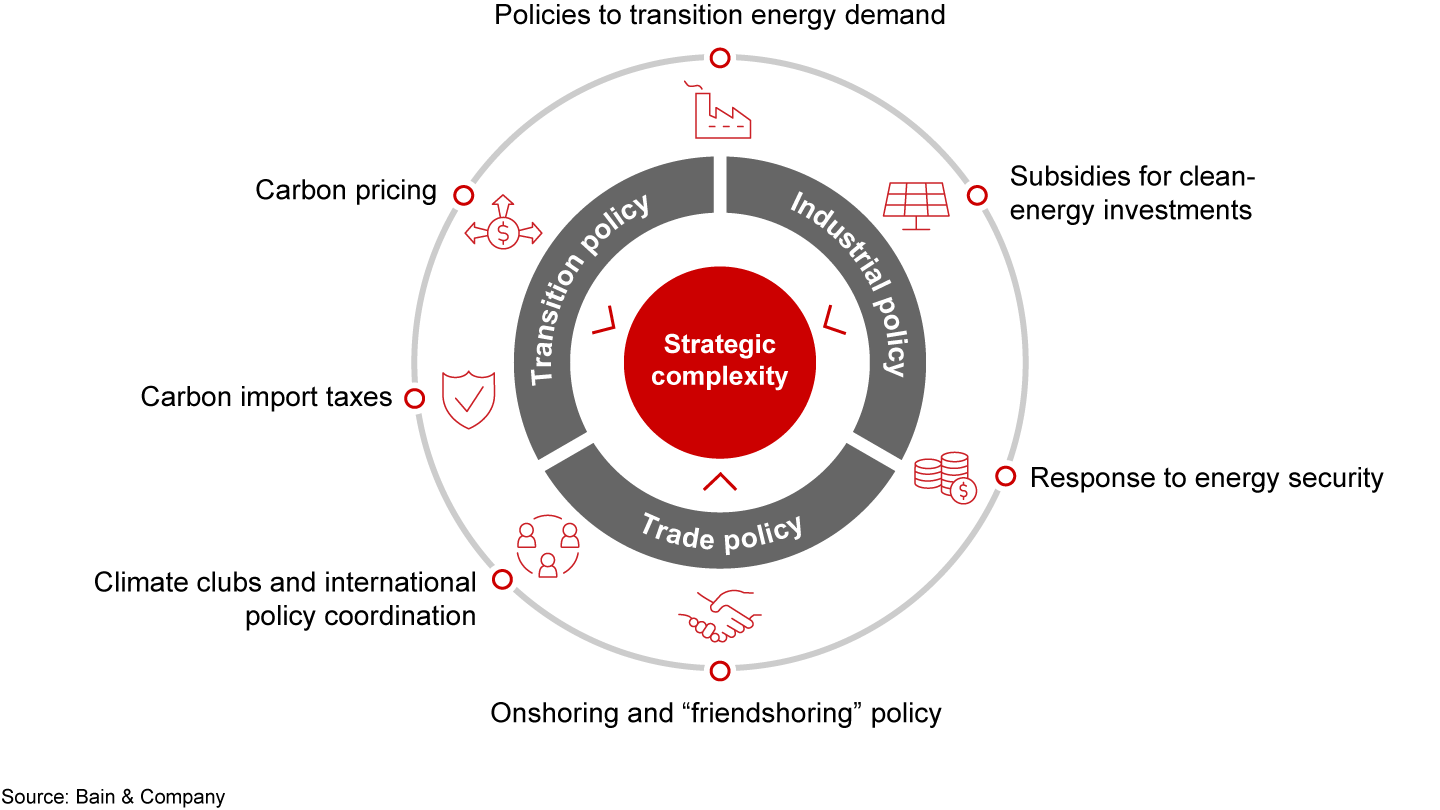
      Big policy uncertainties will shape investment and the energy transition

      For companies, resisting progress is always a risky strategy. And when it comes to the energy system, the underlying dynamics of transition make change inevitable. Those able to stay ahead of the curve by enabling their customers and suppliers to overcome transition barriers will secure the greatest commercial advantage.

      The ability to understand and navigate policy uncertainty will be differentiating. Policy-driven markets will bring exceptional margins for those with foresight, as other market participants fail to anticipate new sources of green demand. Policy will facilitate or impede global supply chains. And there will be stranded assets and capabilities when regulations outpace expectations.  

      There are five types of policies that corporations will need to engage on (see Figure 2).

      Figure 2
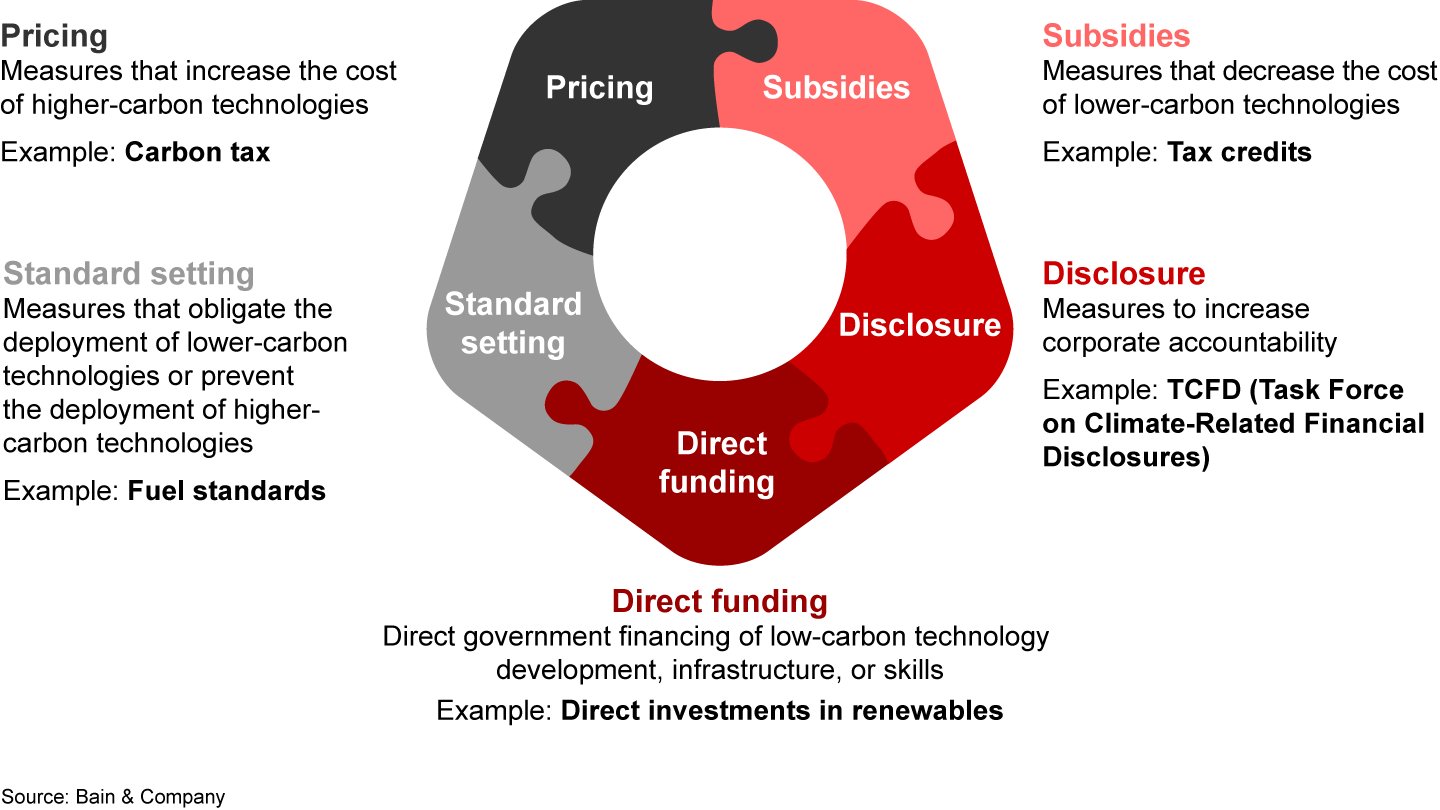
      The policies transforming the energy system reflect the five ways governments can shape markets

      Three policy scenarios

      In service of transition trade and industrial policy objectives, governments are already intervening in ways that will disrupt many sectors, as these three examples illustrate.

      Thriving in a world in which policy is decisive

      All companies will need to navigate this transition. Those that lead will operate with vision, purpose, and pragmatism. Not only will they manage uncertainties, ensuring that their business strategy is credible under a range of policy scenarios, but they will harness the new opportunities presented by policy.  

      Those that truly thrive will not just react.

      They will understand how policy is influencing the dynamics of innovation and technology to transform their industry.

      They will anticipate how markets are being shaped, created, and destroyed by governments and invest in new, low-carbon business models and supply chains ahead of demand.

      They will work with governments to leverage industrial strategy to overcome transition barriers as they invest in early-stage technology.

      They will capture exceptional margins by getting ahead of policy-driven sources of demand, then enjoy a cost advantage as technology diffuses through global markets.

      And their corporate affairs teams will be deeply expert in the critical geographies and sectors in which future value is created, building alliances across value chains and influencing the rules of the game.

      This ability to influence policy, and therefore customer choices and supply chain dynamics, will be one of the truly differentiating capabilities during the transition to a net-zero energy system. Because in a world in which policy is decisive, management teams that proactively shape their market environment’s policy and stakeholder landscape will not only build stronger businesses that are better able to manage risks; they will also help push forward the changes our global economy requires.

      Read the Next Chapter

      Building Resilience in Your Business Strategy: Four Imperatives for Leaders 

      Read our 2023 CEO Sustainability Guide

      Explore the full report Download PDF
      Autori
      • Headshot of Katherine Dixon
        Katherine Dixon
        Alumni, Paris
      • Headshot of Cate Hight
        Cate Hight
        Partner, Washington, DC
      • Headshot of Yang Liu
        Yang Liu
        Partner, Beijing
      • Headshot of Grant Dougans
        Grant Dougans
        Partner, Washington, DC
      Contattaci
      Industry collegate
      • Beni di Largo Consumo
      • Energia e Risorse Naturali
      • Gestione del Rischio, Finanza e Regolamentazione
      • Industria 4.0 e Servizi
      • Retail
      Servizi di consulenza collegati
      • Corporate Strategy
      • Sostenibilità e Corporate Responsibility
      • Strategia
      Come possiamo aiutarti
      • Climate Change
      CEO's Guide to Sustainability
      From Sustainability Commitments to Impact: Four Pragmatic Questions for Visionary CEOs

      Amid competing priorities, CEOs and consumers still say sustainability matters. By acting now, companies can set the stage for profitable growth.

      Leggi di più
      Industria 4.0 e Servizi
      Embracing the “Do-Say” Gap

      Three pragmatic questions that shift sustainability from ambition to action.

      Leggi di più
      Climate Change
      Financing Climate Solutions in Brazil

      A study conducted by Bain, in partnership with BNDES, highlights both the challenges and the opportunities to accelerate the climate transition.

      Leggi di più
      Energia e Risorse Naturali
      What’s Ahead for Energy Executives in 2025

      Bain partners discuss findings from our latest survey of energy executives and how today's challenges are reshaping priorities across sectors.

      Leggi di più
      CEO's Guide to Sustainability
      The Sustainability Puzzle: What Do Consumers Really Want?

      How businesses can unlock the challenge of helping consumers live sustainably.

      Leggi di più

      Introduction

      • The Questions Every CEO Needs to Ask About Sustainability

      Levers of Change: Technology, Behavior, Policy

      • Selling Sustainability Means Decoding Consumers

      • Does a Purpose Help Brands Grow?

      • Lower Costs, Faster Adoption: Closing the Sustainable Innovation Gap

      • The Future Is Circular: How Companies Can Prepare to Grow in a Changing World

      • Leading with Vision: Harnessing the Climate Policy Response

      Sector Perspectives

      • Building Resilience in Your Business Strategy: Four Imperatives for Leaders

      • The Energy Transition’s Other Big Puzzle: Making the Math Work

      • Can Food and Agriculture Companies Raise Their Game?

      • Fires, Floods, and Loans: How Banks Can Deal with Increasing Climate Risks

      Making It Happen

      • Building a Data-Based Stakeholder Strategy

      • Operations and Supply Chain Decarbonization: Lower Emissions, Higher Performance

      • Making Business Do Better for Everyone

      • Organizing for Sustainability

      • A Talent Strategy for Sustainability: Skills Matter, but Mindset Is Everything

      First published in novembre 2023
      Tags
      • Beni di Largo Consumo
      • CEO's Guide to Sustainability
      • Climate Change
      • Corporate Strategy
      • Energia e Risorse Naturali
      • Gestione del Rischio, Finanza e Regolamentazione
      • Industria 4.0 e Servizi
      • Retail
      • Sostenibilità e Corporate Responsibility
      • Strategia

      Come abbiamo aiutato i nostri clienti

      With Sophisticated Customer Segmentation, a Travel Company Sets Sail

      Leggi un caso di studio

      Sostenibilità e Corporate Responsibility A Manufacturer Vows to “Push to Zero” Carbon Emissions

      Leggi un caso di studio

      Strategia Focus on core delivers growth for retailer

      Leggi un caso di studio

      Vuoi continuare la conversazione?

      Aiutiamo i leader globali e le loro aziende ad affrontare problemi e a cogliere le opportunità. Sosteniamo cambiamenti e otteniamo risultati duraturi.

      Bain Insights. Le nostre idee e punti di vista sulle tematiche che le aziende globali affrontano ogni giorno, arrivano nella tua email tutti i mesi.

      *Ho letto l'Informativa sulla Privacy e accetto i termini e le condizioni.

      Si prega di leggere e accettare l’Informativa sulla Privacy
      Bain & Company
      Contattaci Sustainability Accessibility Condizioni d’uso Privacy Cookie Policy Sitemap Log In

      © 1996-2026 Bain & Company, Inc.

      Contatta Bain

      Come posso aiutarti?

      • Business inquiry
      • Career information
      • Press relations
      • Partnership request
      • Speaker request
      Guarda tutti gli uffici