
Skip to Content
  • Uffici

    Uffici

    Nord e Sud America
    • Atlanta
    • Austin
    • Bogota
    • Boston
    • Buenos Aires
    • Chicago
    • Dallas
    • Denver
    • Houston
    • Los Angeles
    • Mexico City
    • Minneapolis
    • Monterrey
    • Montreal
    • New York
    • Rio de Janeiro
    • San Francisco
    • Santiago
    • São Paulo
    • Seattle
    • Silicon Valley
    • Toronto
    • Washington, DC
    Europa, Medio Oriente e Africa
    • Amsterdam
    • Athens
    • Berlin
    • Brussels
    • Copenhagen
    • Doha
    • Dubai
    • Dusseldorf
    • Frankfurt
    • Helsinki
    • Istanbul
    • Johannesburg
    • Kyiv
    • Lisbon
    • London
    • Madrid
    • Milan
    • Munich
    • Oslo
    • Paris
    • Riyadh
    • Rome
    • Stockholm
    • Vienna
    • Warsaw
    • Zurich
    Asia e Australia
    • Bangkok
    • Beijing
    • Bengaluru
    • Brisbane
    • Ho Chi Minh City
    • Hong Kong
    • Jakarta
    • Kuala Lumpur
    • Manila
    • Melbourne
    • Mumbai
    • New Delhi
    • Perth
    • Seoul
    • Shanghai
    • Singapore
    • Sydney
    • Tokyo
    Guarda tutti gli uffici
  • Alumni
  • Media Center
  • Iscriviti
  • Contattaci
  • Italy | Italiano

    Seleziona il tuo Paese e la tua lingua

    Global
    • Global (English)
    Nord e Sud America
    • Brazil (Português)
    • Argentina (Español)
    • Canada (Français)
    • Chile (Español)
    • Colombia (Español)
    Europa, Medio Oriente e Africa
    • France (Français)
    • DACH Region (Deutsch)
    • Italy (Italiano)
    • Spain (Español)
    • Greece (Elliniká)
    Asia e Australia
    • China (中文版)
    • Korea (한국어)
    • Japan (日本語)
  • Saved items (0)
    Saved items (0)

    You have no saved items.

    Contrassegna il contenuto che ti interessa e verrà salvato qui. Potrai leggerlo o condividerlo in seguito.

    Explore Bain Insights
  • Settori
    Menu principale

    Settori

    • Aerospazio e Difesa
    • Agribusiness
    • Chimica
    • Infrastrutture e Costruzioni
    • Beni di Largo Consumo
    • Servizi Finanziari
    • Sanità
    • Macchinari Industriali
    • Media & Intrattenimento
    • Industria Metallurgica
    • Industria Mineraria
    • Petrolio e Gas
    • Industria Cartaria e Packaging
    • Private Equity
    • Settore Sociale & Pubblico
    • Retail
    • Tecnologia
    • Telecomunicazioni
    • Compagnie Aeree & Trasporti
    • Viaggi e Svago
    • Utility e Rinnovabili
  • Servizi di Consulenza
    Menu principale

    Servizi di Consulenza

    • Customer Experience
    • ESG
    • Innovation
    • M&A and Divestitures
    • Operation
    • People & Organization
    • Private Equity
    • Sales & Marketing
    • Strategia
    • IA, Approfondimenti e Soluzioni
    • Tecnologia
    • Trasformazione
  • Digital
  • Tematiche
  • Informazioni su Bain
    Menu principale

    Informazioni su Bain

    • Che Cosa Facciamo
    • Quello in Cui Crediamo
    • Le Nostre Persone e la Leadership
    • Risultati
    • Premi e Riconoscimenti
    • Organizzazioni Globali
    Further: Our global responsibility
    • Diversità e Inclusione
    • Social Impact
    • Sustainability
    • World Economic Forum
    Learn more about Further
  • Careers
    Menu principale

    Careers

    • Work with Us
      Careers
      Work with Us
      • Find Your Place
      • Our Work Areas
      • Integrated Teams
      • Students
      • Internships & Programs
      • Recruiting Events
    • Life at Bain
      Careers
      Life at Bain
      • Blog: Inside Bain
      • Career Stories
      • Our People
      • Where We Work
      • Supporting Your Growth
      • Affinity Groups
      • Benefits
    • Impact Stories
    • Hiring Process
      Careers
      Hiring Process
      • What to Expect
      • Interviewing
    FIND JOBS
  • Uffici
    Menu principale

    Uffici

    • Nord e Sud America
      Uffici
      Nord e Sud America
      • Atlanta
      • Austin
      • Bogota
      • Boston
      • Buenos Aires
      • Chicago
      • Dallas
      • Denver
      • Houston
      • Los Angeles
      • Mexico City
      • Minneapolis
      • Monterrey
      • Montreal
      • New York
      • Rio de Janeiro
      • San Francisco
      • Santiago
      • São Paulo
      • Seattle
      • Silicon Valley
      • Toronto
      • Washington, DC
    • Europa, Medio Oriente e Africa
      Uffici
      Europa, Medio Oriente e Africa
      • Amsterdam
      • Athens
      • Berlin
      • Brussels
      • Copenhagen
      • Doha
      • Dubai
      • Dusseldorf
      • Frankfurt
      • Helsinki
      • Istanbul
      • Johannesburg
      • Kyiv
      • Lisbon
      • London
      • Madrid
      • Milan
      • Munich
      • Oslo
      • Paris
      • Riyadh
      • Rome
      • Stockholm
      • Vienna
      • Warsaw
      • Zurich
    • Asia e Australia
      Uffici
      Asia e Australia
      • Bangkok
      • Beijing
      • Bengaluru
      • Brisbane
      • Ho Chi Minh City
      • Hong Kong
      • Jakarta
      • Kuala Lumpur
      • Manila
      • Melbourne
      • Mumbai
      • New Delhi
      • Perth
      • Seoul
      • Shanghai
      • Singapore
      • Sydney
      • Tokyo
    Guarda tutti gli uffici
  • Alumni
  • Media Center
  • Iscriviti
  • Contattaci
  • Italy | Italiano
    Menu principale

    Seleziona il tuo Paese e la tua lingua

    • Global
      Seleziona il tuo Paese e la tua lingua
      Global
      • Global (English)
    • Nord e Sud America
      Seleziona il tuo Paese e la tua lingua
      Nord e Sud America
      • Brazil (Português)
      • Argentina (Español)
      • Canada (Français)
      • Chile (Español)
      • Colombia (Español)
    • Europa, Medio Oriente e Africa
      Seleziona il tuo Paese e la tua lingua
      Europa, Medio Oriente e Africa
      • France (Français)
      • DACH Region (Deutsch)
      • Italy (Italiano)
      • Spain (Español)
      • Greece (Elliniká)
    • Asia e Australia
      Seleziona il tuo Paese e la tua lingua
      Asia e Australia
      • China (中文版)
      • Korea (한국어)
      • Japan (日本語)
  • Saved items  (0)
    Menu principale
    Saved items (0)

    You have no saved items.

    Contrassegna il contenuto che ti interessa e verrà salvato qui. Potrai leggerlo o condividerlo in seguito.

    Explore Bain Insights
  • Settori
    • Settori

      • Aerospazio e Difesa
      • Agribusiness
      • Chimica
      • Infrastrutture e Costruzioni
      • Beni di Largo Consumo
      • Servizi Finanziari
      • Sanità
      • Macchinari Industriali
      • Media & Intrattenimento
      • Industria Metallurgica
      • Industria Mineraria
      • Petrolio e Gas
      • Industria Cartaria e Packaging
      • Private Equity
      • Settore Sociale & Pubblico
      • Retail
      • Tecnologia
      • Telecomunicazioni
      • Compagnie Aeree & Trasporti
      • Viaggi e Svago
      • Utility e Rinnovabili
  • Servizi di Consulenza
    • Servizi di Consulenza

      • Customer Experience
      • ESG
      • Innovation
      • M&A and Divestitures
      • Operation
      • People & Organization
      • Private Equity
      • Sales & Marketing
      • Strategia
      • IA, Approfondimenti e Soluzioni
      • Tecnologia
      • Trasformazione
  • Digital
  • Tematiche
  • Informazioni su Bain
    • Informazioni su Bain

      • Che Cosa Facciamo
      • Quello in Cui Crediamo
      • Le Nostre Persone e la Leadership
      • Risultati
      • Premi e Riconoscimenti
      • Organizzazioni Globali
      Further: Our global responsibility
      • Diversità e Inclusione
      • Social Impact
      • Sustainability
      • World Economic Forum
      Learn more about Further
  • Careers
    Ricerche più popolari
    • Agile
    • Digitale
    • Strategia
    La tue ricerche precedenti
      Pagine visitate

      Content added to saved items

      Saved items (0)

      Removed from saved items

      Saved items (0)

      Brief

      Managing Uncertainty in the Food Supply Chain during the Pandemic

      Managing Uncertainty in the Food Supply Chain during the Pandemic

      Lockdowns, demand shifts and ongoing risks to prices, production and spending create extensive challenges across several growing seasons.

      Di Scott Duncan e Dalton Maine

      • Tempo di lettura min.
      }

      Brief

      Managing Uncertainty in the Food Supply Chain during the Pandemic
      en
      In evidenza
      • The agriculture sector manages uncertainty every year, but the events of 2020 are testing even the most seasoned professionals.
      • The Covid-19 pandemic has disrupted the agriculture supply chain in many ways, including reduced demand for ethanol made from corn, a near-collapse in dining away from home, and closures of meat processing plants.
      • These disruptions could reduce prices significantly for some of the world’s biggest crops, including corn, soy and sugarcane. When prices drop, growers spend less on seed, equipment and chemicals, creating a ripple effect of disruption through the entire sector.
      • Growers, protein producers and the businesses that depend on them will need to pay close attention to the signposts that indicate the direction prices might take, including crop yields and feed consumption in major markets, trade dynamics and the demand for biofuels.

      The Covid-19 pandemic is unlike any previous crisis. The speed and spread of the pandemic, combined with the global reaction that has kept people at home and separated employees from their work and consumers from their favorite restaurants, has forced rapid changes in the food supply chain. Crop growers and animal producers, as well as the companies that supply them, are only beginning to understand how the pandemic will affect the agricultural value chain—including biofuel production, food processing, protein production, crop production and prices, land use, crop inputs and equipment sales.

      While the agriculture industry faces intrinsic uncertainty with every growing season, few leadership teams have experienced this level of uncertainty across this many variables, with outcomes dependent not only on the weather and global markets, but also on the vagaries of a virus and the reaction by individuals, businesses and governments. Without precedent, there’s no clear roadmap to follow. But the way forward is to understand the connections among these dynamics and watch for signposts that indicate which scenarios are unfolding.

      Disruptions to the agriculture supply chain

      The pandemic has already proved highly disruptive to agriculture, globally and in the US, with impacts that include:

      • Decline in ethanol demand. As Americans sheltered at home during April and May, gasoline use fell by about 50%. Half of US ethanol production, which is derived from corn, went offline in April, and although production and crush margins rebounded with rising oil prices in May, the new long-term baseline is likely to be about 20% below our historical norm (see Figure 1). Similar complications are affecting demand for Brazilian sugarcane ethanol.
      Figure 1
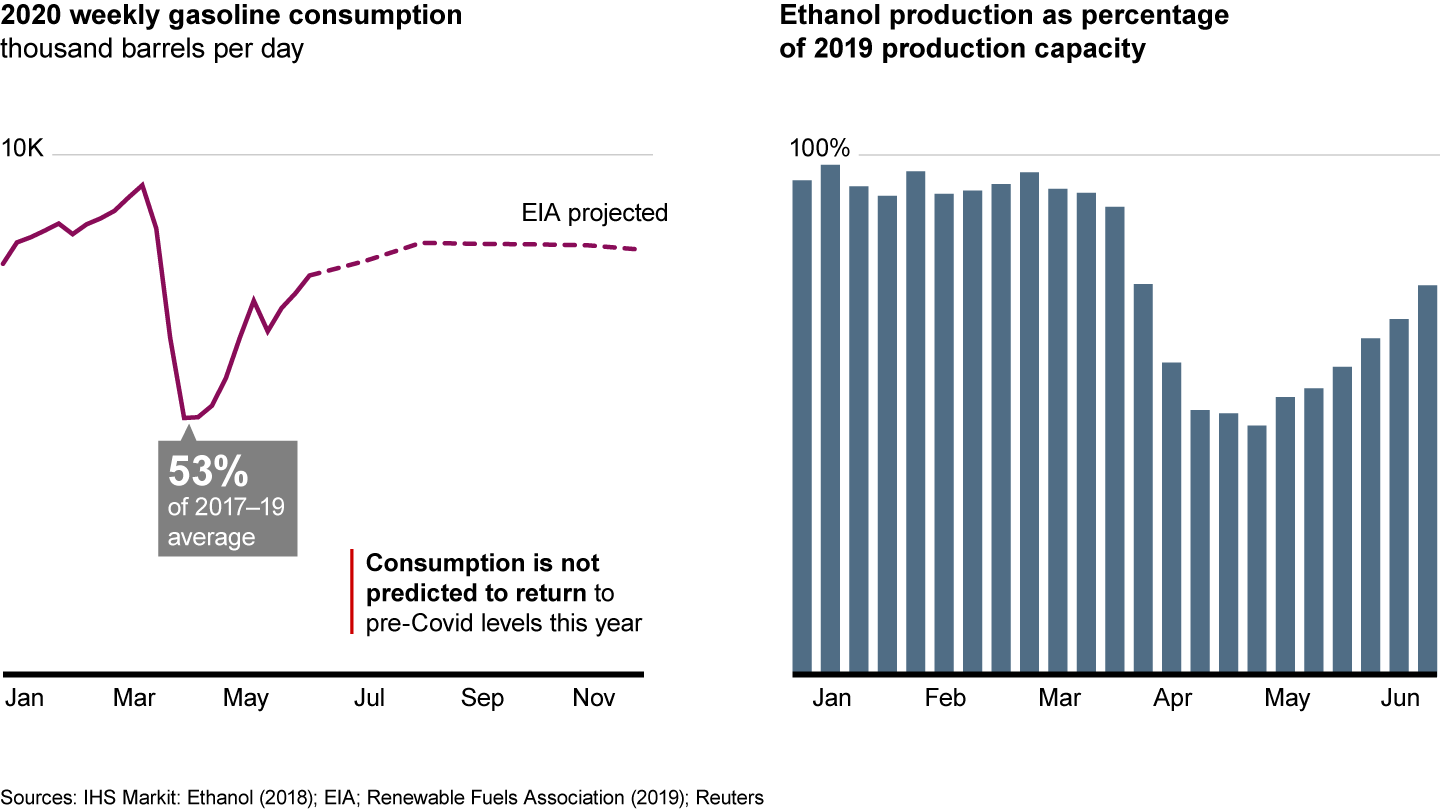
      Ethanol production fell dramatically as restrictions on movement went into place, but has since rebounded
      Ethanol production fell dramatically as restrictions on movement went into place, but has since rebounded
      Ethanol production fell dramatically as restrictions on movement went into place, but has since rebounded
      • Collapse of dining away from home. About half of all beef and chicken and three-fourths of pork consumed in the US is consumed away from home. But as lockdowns closed restaurants, away-from-home consumption fell dramatically—by more than half across all food service in April, and by as much as 90% at some sit-down establishments. Demand in the coming months will continue to be difficult for suppliers to predict as some markets reopen and then return to lockdown status again. The shifts have created a significant misalignment between what producers are able to make (for example, 40-pound boxes designed for food service) vs. what’s in demand (smaller retail and consumer packaging).
      • Disruptions in the grain and protein supply chains. Covid-19 has exposed weak points in the highly specialized food supply chains for meat, dairy and eggs. Meat processors had to first contend with reorienting their output from away-from-home dining to retail distribution. Then, their own susceptibility to the pandemic became an even bigger challenge: Covid-19 outbreaks in plants forced closures starting in March. At the peak, capacity in beef and pork fell by half (see Figure 2). Meat processing has since rebounded with measures in place to limit further spread, but continuing waves of outbreaks may continue to make meat processors Covid hotspots across the US, South America and Europe. This uncertainty, paired with the mismatch of processing capacity to demand (large, restaurant packaging vs. smaller retail portions), has ramifications back to the producers of animals and the growers of the crops that feed them. Poultry producers rightsized quickly; however, substantial numbers of cattle and hogs were backlogged when packers had to shut down. Thus producer profitability has taken a big hit, and there could be a meaningful decline in the need for animal feed (including corn, soybean and wheat) in the near and medium term.
      Figure 2
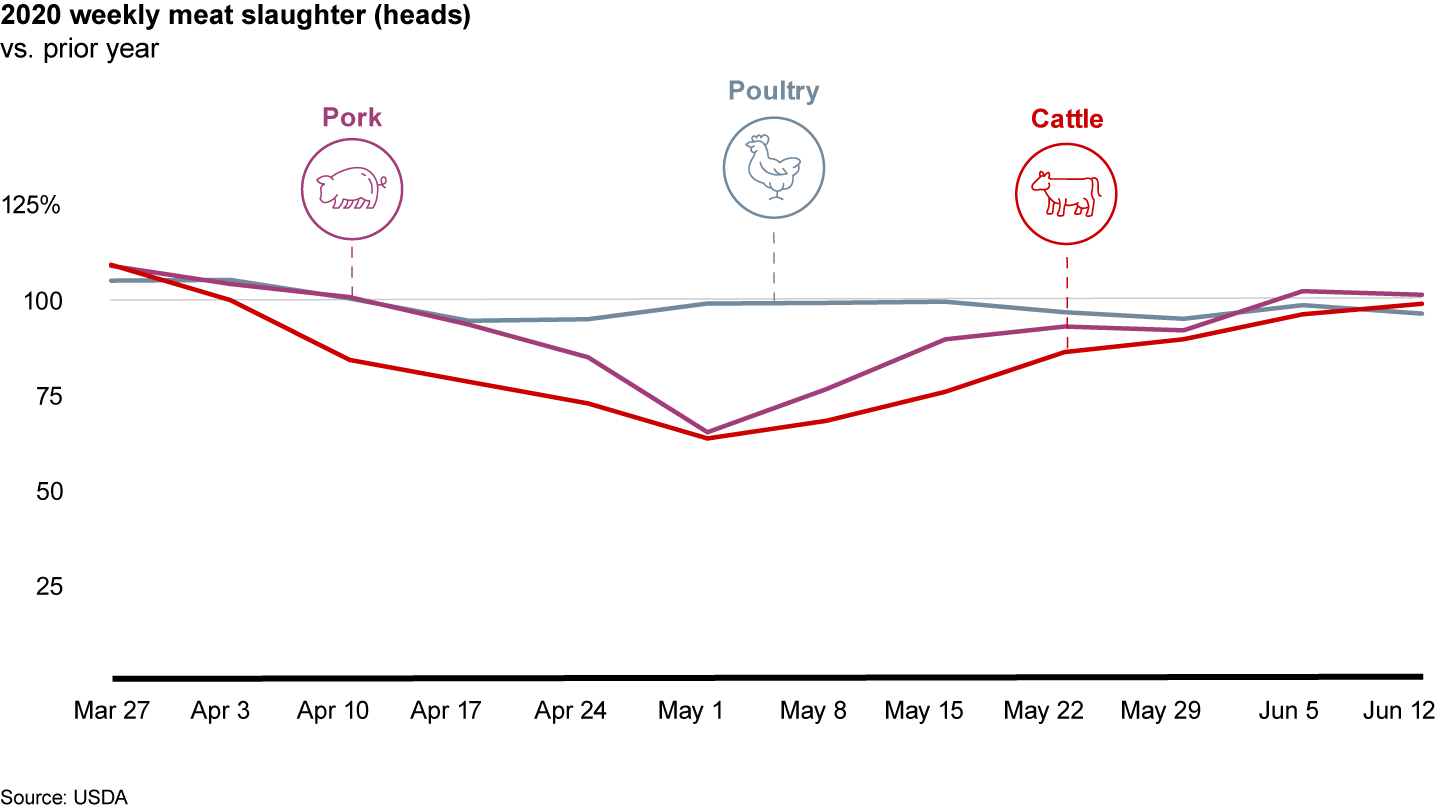
      Outbreaks at processing plants forced packers to idle plants in April and May
      Outbreaks at processing plants forced packers to idle plants in April and May
      Outbreaks at processing plants forced packers to idle plants in April and May

      Effects on prices and spending

      These disruptions could reduce prices significantly for three of the world’s most important crops: corn, soy and sugarcane (see Figure 3). Crop prices could continue to drop significantly, driven by a perfect storm of high beginning stocks, a potentially robust 2020 growing season, and demand destruction across both biofuels and animal feed. Wheat prices have proved more resilient in this crisis compared with corn and soy, partly due to consumers returning to the center of the supermarket to stock up on traditional staples like flour, pasta and processed foods. While other sectors may recover more rapidly, the high stocks-to-use ratios of primary row crops could depress prices beyond the current season, as growers hold on to their surpluses, hoping to wait out the current low prices.

      Figure 3
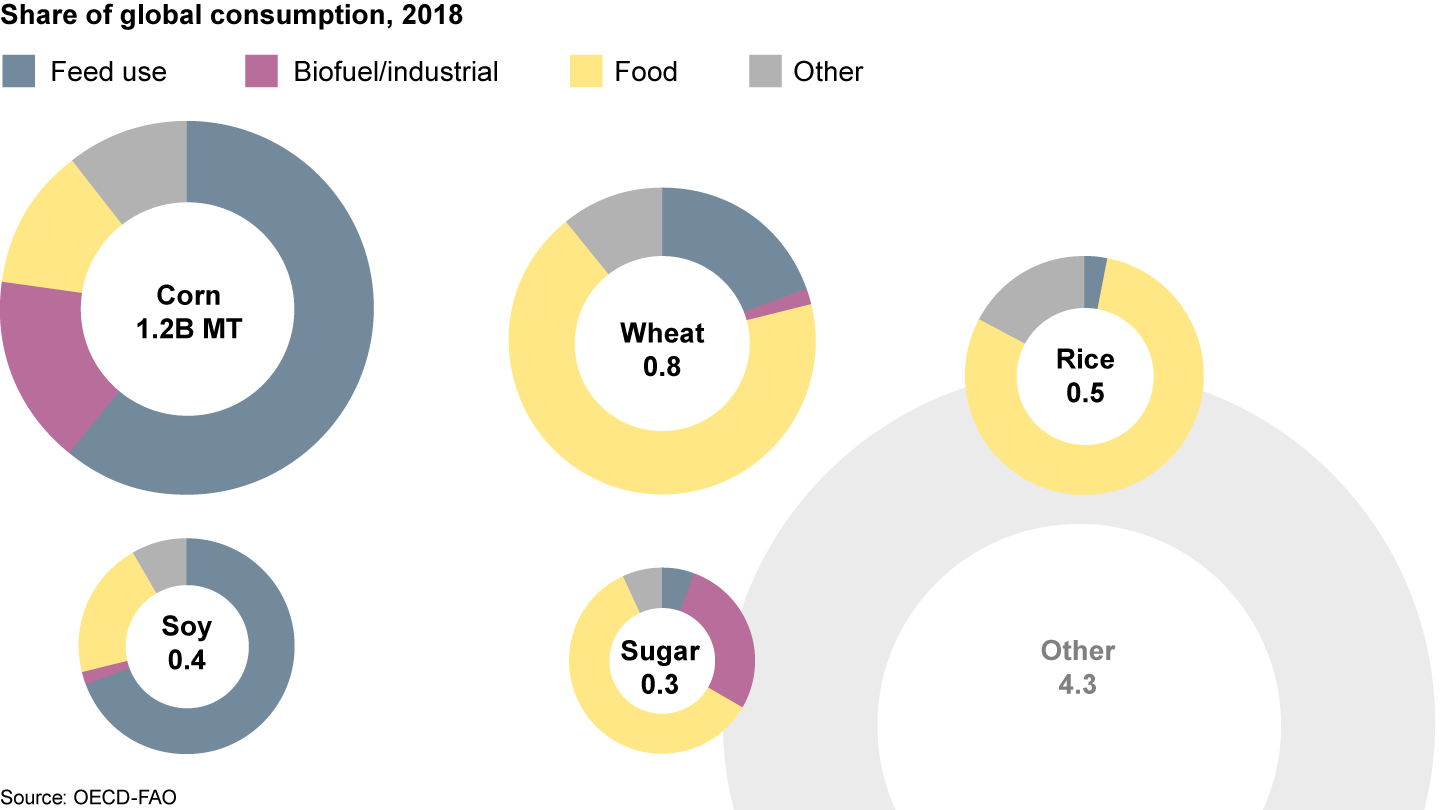
      Corn and soy are among the world’s most important crops; most of the supply is used for purposes other than human food
      Corn and soy are among the world’s most important crops; most of the supply is used for purposes other than human food
      Corn and soy are among the world’s most important crops; most of the supply is used for purposes other than human food

      Lower prices will create significant financial stress for growers, who traditionally respond to income shocks by reducing their operating and capital expenses. About 40% of a grower’s operating expenses are variable, spent mostly on crop inputs—so their decisions will materially affect providers of seed, fertilizers and chemicals. In terms of capex, Bain’s analysis finds that, over the past 20 years, grower income has proved a good indicator of how farmers will spend on equipment, with a correlation better than 70% (see Figure 4). Given that, low crop prices could impede the long-hoped-for recovery of the agricultural equipment sector in the US and Europe.

      Figure 4
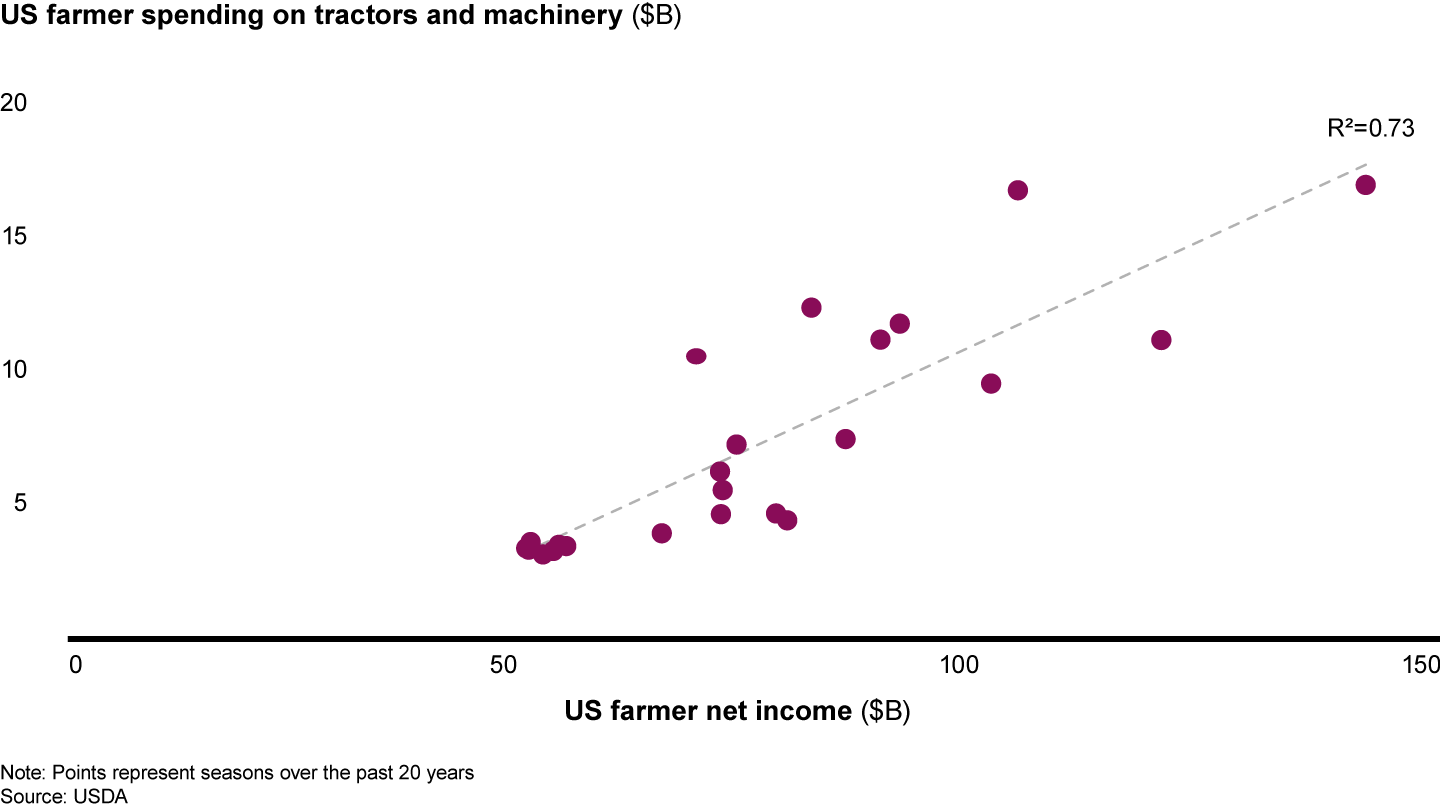
      Over the past two decades, grower income has proven a reliable indicator of spending on tractors and other farm machinery
      Over the past two decades, grower income has proven a reliable indicator of spending on tractors and other farm machinery
      Over the past two decades, grower income has proven a reliable indicator of spending on tractors and other farm machinery

      Tracking possible scenarios

      Executives who work in agriculture are accustomed to dealing with uncertainty; this season puts their skills to the test. In thinking about what the short term will bring and how they ought to respond, two things matter more than the rest: the end of pandemic-response behaviors (dining out and a return to normal driving patterns in particular), and the crop yields over the next season in the US and Brazil. Growers, protein producers and the businesses that supply them will need to pay close attention to these factors, as they can provide insight about future demand and pricing. This year, they’ll need to pay close attention to other critical signposts as well.

      • US and China animal feed consumption. Protein producers’ decisions about herd size, including how many animals to send to slaughter and how many to hold, will be one important indicator of upcoming demand for protein eaten away from home, as well as the demand for animal feed. In China, an important factor will be how quickly swine herds are rebuilt to replace those lost to African swine fever.
      • US-China trade dynamics. China’s decision in June, asking state-owned companies to stop purchases of soybeans and pork from the US, is one important signpost about the state of the trade relationship between the US and China. Despite the rhetoric, trade continues, although there are now reports of inspection delays. A reversal of the public stance could be an important outlet for US crop and protein producers. Continued pressure and saber rattling could continue to depress the US export market.
      • Demand for biofuels. Support for the US ethanol industry, which absorbs up to 40% of the corn output in a given year, can vary from one US administration to another. With an election cycle coming up, renewable fuel standards and other environmental regulations could change, which could materially affect the short- and long-term demand for corn.

      Looking ahead

      The next few years are likely to continue to be a difficult period for growers, producers and others in the agricultural sector, as lower crop prices continue to exert pressure on farmer incomes. Among protein producers, declines in animal feed prices may begin to ameliorate some of the damage wreaked by demand destruction and continued uncertainty in production capacity. In recession periods, consumers tend to switch to lower-value proteins, so producers will want to monitor economic conditions closely to help make decisions about herd size and relevant investments.

      Few sectors offer as much uncertainty as agriculture faces in 2020, but companies have to determine strategy under uncertain conditions all the time. Fortunately, there are proven ways to navigate a wide range of outcomes that growers, producers and others supporting the sector can be doing today to ensure a robust and resilient strategy in the face of these uncertainties.

      • One of these is defining the range of uncertainties they face, and then cutting through the noise separating those that matter from those that don’t. For example, contemplating the worst-case scenario in crop prices could lead executives to want to build more resiliency in the company’s balance sheet, customer bases and long-term investments.
      • Another is creating a set of probable scenarios for how the next few growing seasons may unfold. Take the time to discuss the threats and opportunities that these scenarios present and the implications on different parts of the portfolio, including products, geographies and customers.
      • Devising a specific set of strategic options can help set the balance between a commitment to one course of action, while still allowing the flexibility to adjust positions as scenarios change.
      • Identifying a clear set of signposts that signal important changes (such as crop yields, trade conditions, market pricing and consumers’ response to the Covid-19 pandemic) can inform decisions about when to trigger actions that have already been thought through, giving the company a head start in its ability to respond to a rapidly changing market.
      • Finally, developing a mergers and acquisitions strategy as tough market conditions persist can help companies take action when viable acquisition targets emerge.

      The authors would like to thank Derek Tarlecki, a Bain principal based in Dallas, for his contributions.

      Autori
      • Headshot of Scott Duncan
        Scott Duncan
        Partner, Chicago
      • Headshot of Dalton Maine
        Dalton Maine
        Partner, Chicago
      Contattaci
      Industry collegate
      • Agribusiness
      • Energia e Risorse Naturali
      Coronavirus
      How Agribusiness Will Weather the Covid-19 Storm

      In this webinar, Bain partners discuss possible long-term repercussions of the Covid-19 pandemic on the agribusiness sector.

      Leggi di più
      Coronavirus
      Cash Management Practices to Weather a Downturn

      Take an honest look at the business, and decide where to improve.

      Leggi di più
      Agribusiness
      Fueling the Future: How Business, Finance, and Policy Can Accelerate the Clean Fuels Market

      Why global clean fuel ambitions are outpacing investment, and what leaders must do to unlock capital and scale viable projects.

      Leggi di più
      Coronavirus
      Ramping Up Online Grocery without Breaking the Bank

      Bain’s Marc-André Kamel discusses the challenges that online grocery presents for retailers and CPGs and how they can pair up to find a winning solution.

      Leggi di più
      Agribusiness
      Sustaining Capital: From Chaos to Discipline

      Fragmented budgets, poor visibility, and missed forecasts are fixable with the right approach.

      Leggi di più
      First published in agosto 2020
      Tags
      • Agribusiness
      • Coronavirus
      • Energia e Risorse Naturali

      Come abbiamo aiutato i nostri clienti

      An Environmental Services Company Captures Massive Savings from a Merger

      Leggi un caso di studio

      Strategia New products propel profitability for metals manufacturer

      Leggi un caso di studio

      Revitalizing a utility's market position with customer loyalty

      Leggi un caso di studio

      Vuoi continuare la conversazione?

      Aiutiamo i leader globali e le loro aziende ad affrontare problemi e a cogliere le opportunità. Sosteniamo cambiamenti e otteniamo risultati duraturi.

      Bain Insights. Le nostre idee e punti di vista sulle tematiche che le aziende globali affrontano ogni giorno, arrivano nella tua email tutti i mesi.

      *Ho letto l'Informativa sulla Privacy e accetto i termini e le condizioni.

      Si prega di leggere e accettare l’Informativa sulla Privacy
      Bain & Company
      Contattaci Sustainability Accessibility Condizioni d’uso Privacy Cookie Policy Sitemap Log In

      © 1996-2026 Bain & Company, Inc.

      Contatta Bain

      Come posso aiutarti?

      • Business inquiry
      • Career information
      • Press relations
      • Partnership request
      • Speaker request
      Guarda tutti gli uffici