

Report

In evidenza
- Online grocery in the US is on the cusp of a major increase in consumer adoption, with e-commerce penetration expected to at least triple in the next decade.
- But online shopping is not yet consistently more convenient in the consumer’s mind; this convenience gap is limiting the broader adoption of online grocery shopping.
- Incumbent grocers have a rare opportunity to shape consumers’ digital habits and deliver higher levels of convenience through online grocery shopping.
- Digital tools are only just beginning to help address customer pain points and deliver the right marketing message at the right time, both online and in-store.
Two decades after online grocers rushed into IPOs during the dot-com boom, the US has yet to fully embrace online grocery shopping. A humble 3% of US grocery spending occurs online today, whereas other retail categories have witnessed much deeper e-commerce penetration—from 20% for footwear to 40% for consumer electronics. Furthermore, the grocery category remains one of the rare exceptions where the US lags other countries; online grocery penetration reaches 10% to 15% in countries such as the UK and South Korea.
But now, the US is on the cusp of a major increase in consumer adoption of digital shopping in this sector: e-commerce penetration is expected to at least triple in the next decade. New research of more than 8,000 grocery shoppers across the US by Bain & Company and Google outlines what retailers can do to capitalize on the opportunity ahead. But it won’t be easy. Grocery shopping habits are deeply ingrained, and online grocery providers continue to struggle with persuading customers to adopt online shopping fully after an initial trial. While 25% of the consumers surveyed by Bain and Google used an online grocery service in the last year, only 26% of those users, or 6% of all consumers, say they have been placing orders more than once a month. Even then, these most active adopters continue to split their baskets across both online and offline retailers. Consumers also remain highly dependent on familiar “analog” tools, such as written lists, to aid planning and shopping.
Written in collaboration with
Written in collaboration with

However, the Bain and Google findings suggest that changing these shopping patterns is not an insurmountable challenge for omnichannel grocery retailers. In fact, retailers have a strategic opportunity in an otherwise habit-driven category to shape consumer behavior and gain share. They can seize this opportunity by addressing three imperatives:
- Bridge the convenience gap between in-store and online shopping. Reimagine each step of the shopping journey to remove friction in the online experience, then encourage repeat use to make it even easier.
- Capitalize on the incumbent advantage now. Build on the preference consumers have for their “home store” and create a loyal customer before competitors do.
- Invest to make digital an edge. Use digital tools and touchpoints to influence and assist shoppers during online transactions and in-store trips.

Overcoming the Convenience Gap in Online Grocery Shopping
There’s a huge digital opportunity for traditional grocers, but are they up to the task?
Bridging the convenience gap
The vast majority of US consumers still prefer to go to a store to browse and buy groceries but their embrace of e-commerce in other categories means they have high expectations for shopping online. Consumers are used to getting the right product at the right time—through online navigation and checkout processes that have been tirelessly engineered to minimize clicks and maximize conversion. When shopping online for virtually anything, consumers expect convenience.
But what does “convenience” mean when buying groceries online? It boils down to an experience that saves time, while also creating an intuitive and frictionless shopping experience from start to finish.
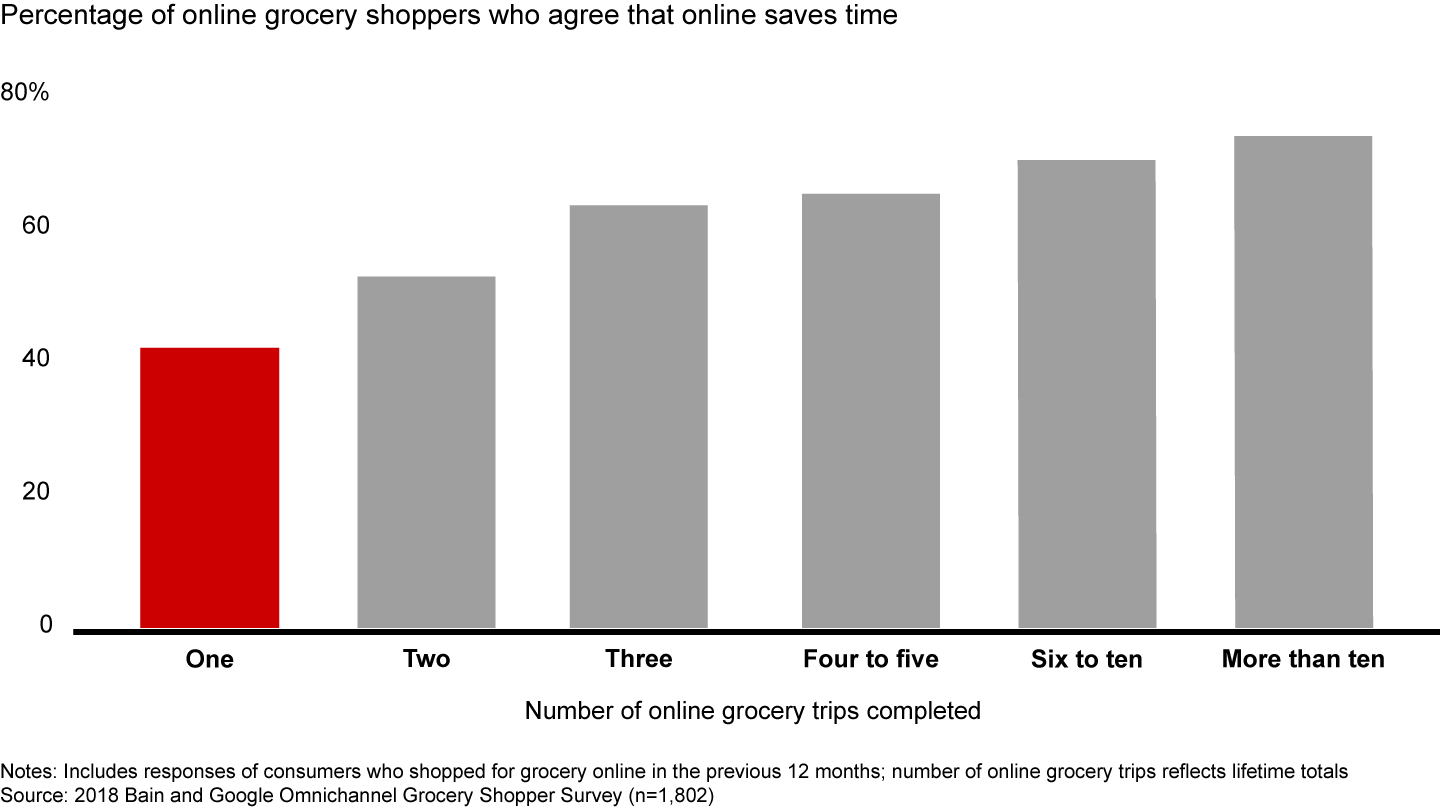
By these definitions, grocery retailers today are not yet consistently delivering a more convenient experience online. In fact, among online grocery shoppers who say they have shopped online for groceries just once in the past 12 months, only 42% report that the online experience saves them time (see Figure 1). This disappointment and perceived convenience gap is a major impediment to regular adoption of online grocery shopping in the US today.
Figure 1

Breaking down the end-to-end grocery shopping journey into discrete steps reveals exactly where the convenience gap exists today and where retailers should focus their efforts. While researching and list building should in fact be easier online, the browsing and shopping phase of the journey today can frustrate the online experience (see Figure 2).
Figure 2
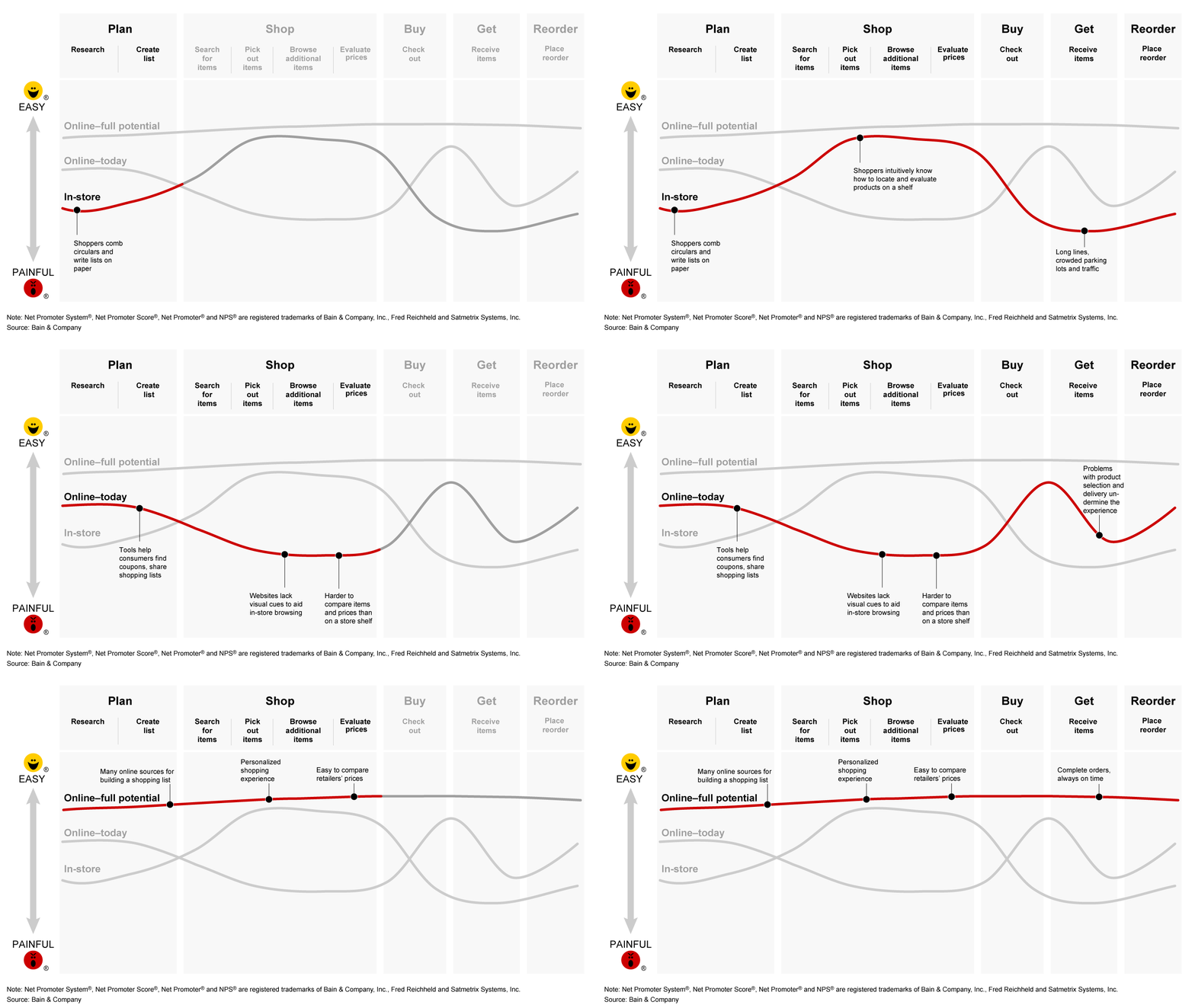

Traditional grocers have decades of experience optimizing their physical displays, studying their customers and arranging products on shelves to best align with how shoppers think. They have trained consumers to navigate store shelves quickly to find what they want (or discover products they did not even realize they wanted). Walking the aisles allows customers to easily and intuitively browse, seek inspiration, educate themselves, compare product attributes and make price trade-offs in ways that are difficult for algorithms to replicate today. Shoppers instinctively know that lower-priced options typically sit near the bottom of shelves. Discount tags are easy to spot, and shoppers understand that private-label offerings next to name brands are often directly comparable products offered at lower prices.
Online grocery shopping has not yet found a way to digitally replicate these cues simply and intuitively. Consumers report that browsing aisles is one of the most enjoyable elements of in-store shopping. Browsing groceries via a web browser, on the other hand, can be a challenge—irrelevant search results, unhelpful product recommendations and limited filtering options increase the time required to fill a basket.
These inconveniences add up and represent a major obstacle for most new adopters. E-commerce is expected to make life easier, but the Bain and Google survey found that it takes at least a few attempts with online grocery to begin to perceive a real benefit. Sixty-three percent of online grocery shoppers who said they have shopped for groceries online three times say that online grocery shopping saved them time, compared with a trip to the store. That’s a jump of 21 percentage points from first-time online shoppers (see Figure 1).
Online grocery does get easier as consumers become more familiar with a given retailer. They build familiarity with the web page and browsing layout, can easily reorder items from past purchases, and begin to benefit from personalized recommendations and other features. To keep that shopper, retailers need to stimulate repeat trials—investing to acquire the shopper not just once, but three or more times to convince the customer of the benefits of shopping online. Now is the time for retailers to experiment with bounce-back offers to encourage follow-up visits, reminders and multitrip discounts to help move consumers from trial to new-habit-forming adoption.
Stephen Caine, a partner with Bain's Retail practice, describes how omnichannel grocers can tackle issues of customer convenience by personalizing the digital experience.
Some retail companies—in the US and elsewhere—are already seizing the opportunity to close online grocery’s convenience gap by launching innovative features. In the UK, for example, Tesco’s online shoppers are told how long their produce is likely to remain fresh, and if they want to buy a single banana, they can select by quantity instead of weight. Also in the UK, mySupermarket compares prices across grocery chains, highlighting offers and inviting users to switch to a different store if their basket of goods would be cheaper elsewhere. While the right solutions will vary for each retailer and customer segment, ongoing innovation to address shopper pain points and deliver new and better experiences will be required to stay in the game.
Innovations like those above—coupled with continuous improvement on table-stakes execution such as accurate orders and punctual deliveries—promise to close the gap between the online and in-store experience. And retailers are starting to push the envelope. Walmart has applied for patents to create a virtual-reality shopping feature that would better replicate the physical advantages of a store; shoppers would don VR headsets and sensory gloves to “feel” products.
By reimagining each step of the shopper journey, retailers can set a new standard for grocery convenience. Imagine, for instance, entering an online store to find a shelf personalized for you, with frequently purchased items alongside customized recommendations. Technology has the potential to deliver unprecedented convenience and value in the grocery experience, and omnichannel retailers have the opportunity to take greatest advantage of it across both online and in-store experiences.
The incumbent advantage
When it comes to building share online, traditional grocers have an unexpectedly powerful advantage, the Bain and Google research found. Consumers who had not used an online grocery service in the past year were asked which one they would select if they had to give it a try. Almost all (96%) said they would look first to a traditional brick-and-mortar retailer for home delivery, and 85% would select a store they already visit (see Figure 3).
Figure 3
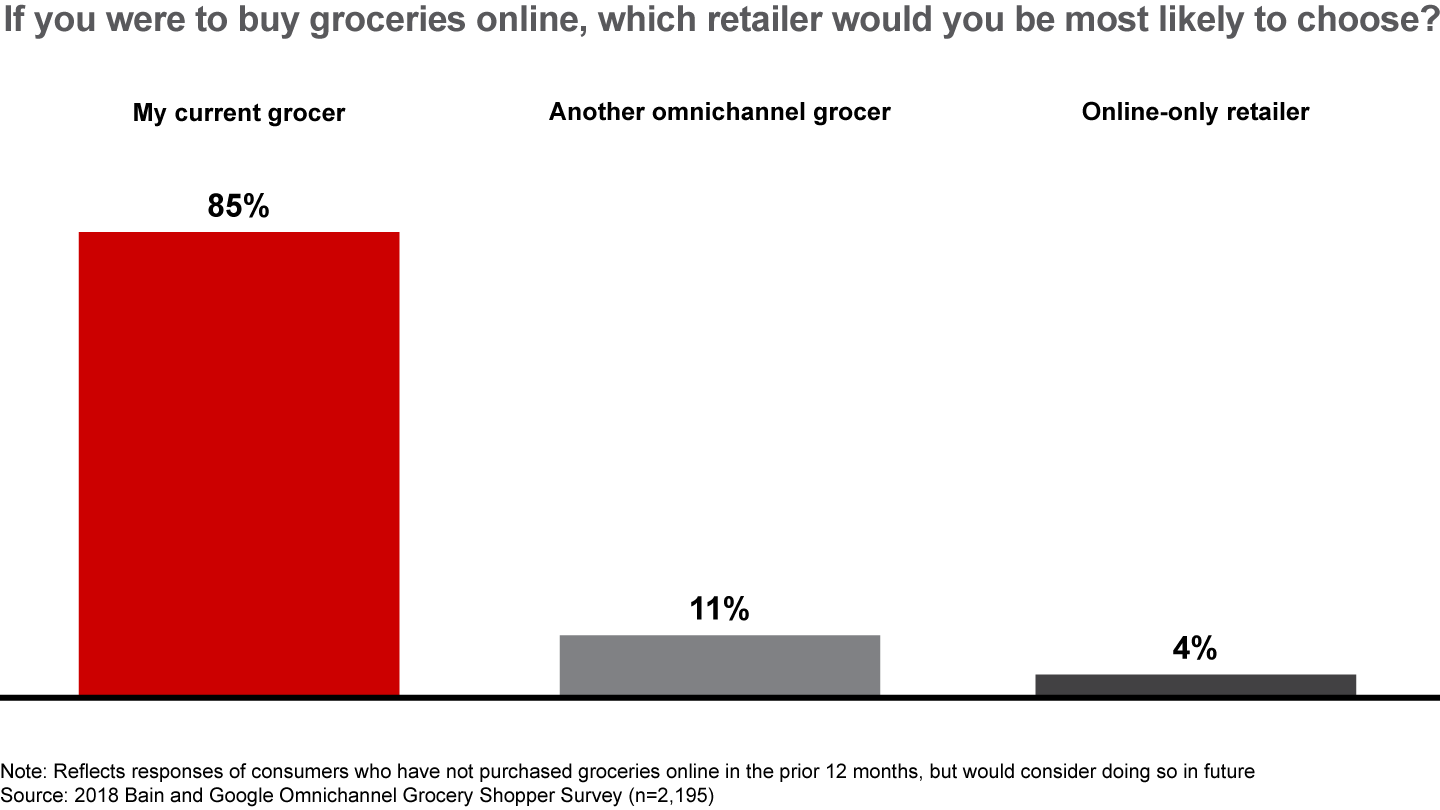

This home-store bias makes sense, since we know that grocery shoppers have strong relationships with the stores they use for routine trips. Shoppers have already made well-informed decisions about which retailers they trust; they know their assortment, layout and prices for the items they buy frequently. Unseating these habits is difficult. Only 17% of consumers surveyed say they have tried a new retailer in their area within the last three months, and only 25% said they are likely to try a new retailer for a routine grocery trip. Furthermore, traditional retailers have another ace up their sleeve: click-and-collect services, a powerful draw that online-only platforms struggle to replicate.
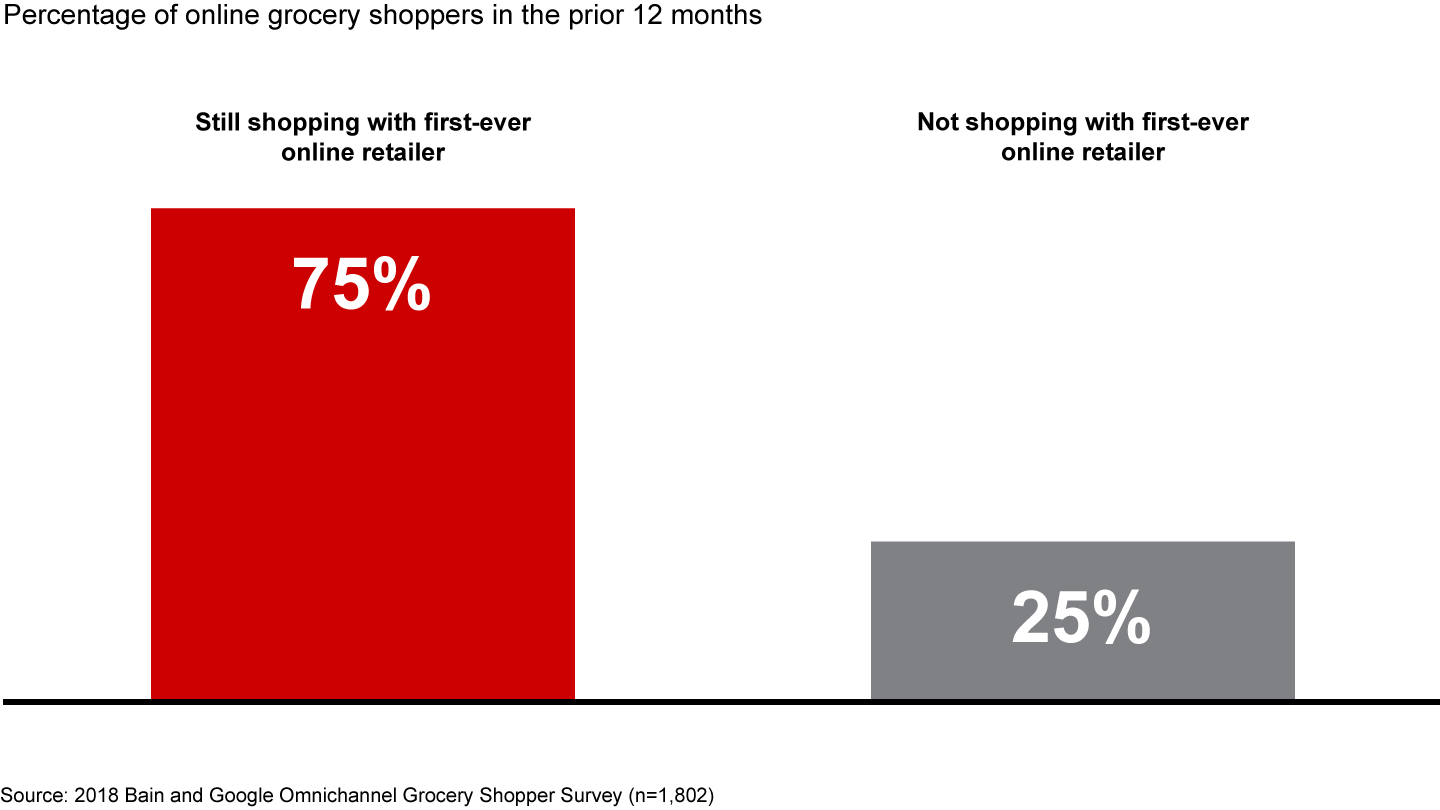
Why is winning a first trial so important? Because there is a general consumer stickiness when it comes to online grocery: 75% of online grocery shoppers say they are still using the first online grocer they tried (see Figure 4). Knowing that existing consumers are likely to try their online offering first, omnichannel retailers are well-positioned to keep these shoppers for continued visits and purchases, as long as they deliver an experience that delights the shopper.
Figure 4

A discussion of online grocery adoption cannot be complete without a look at the elephant in the checkout line: Amazon. Amazon’s market-leading share of online grocery purchases is estimated to be as high as 38%, if you include a broad range of nonfood items in the grocery definition. Amazon has time and again proven its ability to reimagine shopping in numerous retail categories. With Amazon continuing to invest heavily in grocery, how can legacy retailers aspire to be pacesetters?
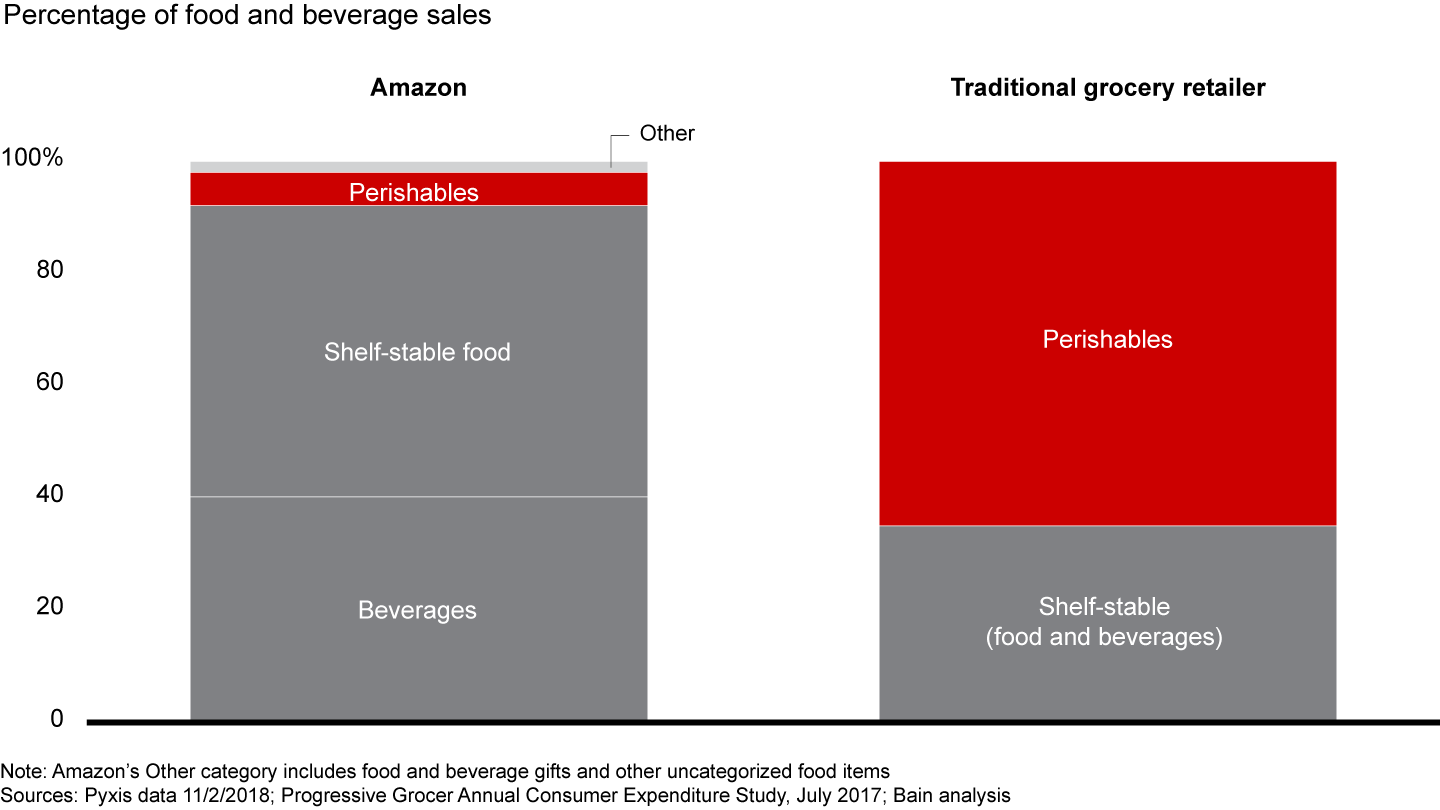
While the e-commerce leader is indeed a formidable competitor that should not be underestimated, a look into Amazon’s grocery sales reveals a lower penetration in key grocery categories than one might expect. Data from market research firm Pyxis, which uses SKU-level e-commerce transaction data to analyze online sales, reveals that most of Amazon’s grocery shoppers are not buying a full basket of goods. The vast majority of grocery items are beverages and shelf-stable items (see Figure 5). Perishables account for only 6% of Amazon food sales, in contrast to 65% of sales at a traditional grocer. Amazon certainly cannot be ignored, but its online grocery presence has a long way to go to truly replace a full grocery shopping trip.
Figure 5

Make digital an edge
Although the shift online will rapidly accelerate, Bain expects the majority of grocery spending will still occur in physical stores in 2030. Traditional grocers have the opportunity to embrace digital tools to increase convenience for in-store shoppers, helping to strengthen customer stickiness.
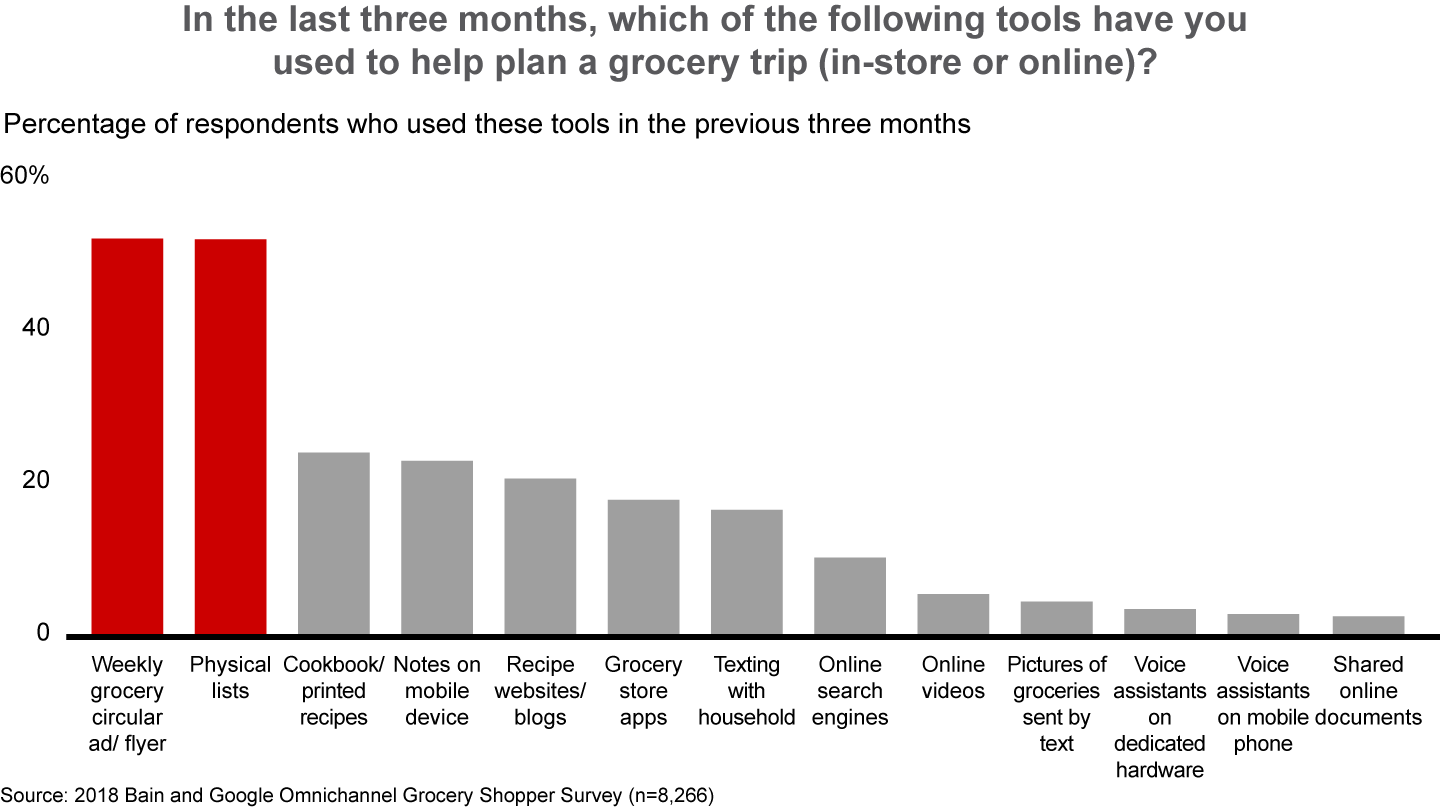
Grocery planning today is quite paper-based. According to the Bain and Google research, 52% of all grocery shoppers say they use physical, handwritten lists to plan a grocery trip (see Figure 6).
Figure 6

But physical tools are falling short in crucial ways. Consumers often want to share lists among household members and need them readily available whenever they think about groceries. To hack their way around these limitations, shoppers are using supplementary digital tools such as text messages and mobile phone notes, but they clearly are on the lookout for a more comprehensive, simpler solution. Grocery shoppers who have not shopped online in the past 12 months say that building a shopping list and having ways to compare prices are the two features they would value most from an online grocery retailer. This contrasts with more advanced features such as personalized recommendations and substitution algorithms that retailers could pour significant funds into, but matter less to consumers.
Voice assistants and grocery apps are two tools well-positioned to deliver on these urgent shopper needs.
Voice assistants such as Alexa, Siri, Cortana and Google Assistant, though at an early point on the adoption curve, offer immense potential for simplifying shopping lists. Only 4% of grocery shoppers say they have adopted voice assistants on dedicated devices for grocery planning, much lower than the estimated 23% to 32% of US adults who own smart speakers. But adopters are using them frequently—66% of grocery shoppers who use voice assistants say they use the tool weekly or more frequently for grocery planning.
Grocery apps, such as those operated by Target and Kroger, help shoppers research prices and digitalize at least some of their list building. Furthermore, they can effectively deliver coupons, which, in digital form, are easily browsed, shared, stored and redeemed—both in stores and online. When consumers redeem coupons online, they do not need to hunt down items on the shelves (and triple-check that the exact flavor and pack size is eligible).
These digital tools are moving grocery planning online, providing insight into what products people are exploring, and when and how shoppers make decisions. Incumbent grocery retailers can call on one of their most valuable assets—their own shopper data—to seize this opportunity and deliver targeted messages to shoppers at the right time. Grocers can triangulate their data with data from other sources to decode the signals that consumers send when they prepare for a shopping trip. For instance, calendars or social media patterns might indicate consumers preparing for a special occasion; map searches for “grocery stores near me” in the late afternoon may reveal the need for groceries to cook or eat that night.
Manufacturers and retailers also have the opportunity to coordinate, combining their understandings of the consumer to improve the relevance of their messaging. Manufacturers can target a retailers’ frequent shoppers with custom deals and messages, in turn helping to drive traffic to stores or online. Retailers can provide manufacturers with the opportunity to message new products and deals to the right shoppers. Working together, they can promote each other, reaching consumers with relevant messages that can ease shopper decision making.
Many retailers are already getting started. Kroger recently launched an app called OptUP, which helps consumers make more health-conscious purchases while shopping in stores through personalized recommendations generated from their shopping history. Proprietary data underpins a partnership between Southeastern Grocers, the parent company of Winn-Dixie and BI-LO, and digital promotions specialist Quotient Technology. The two are collaborating on personalized ad messages based on Southeastern’s near real-time point-of-sale information.
Retailers who can deliver frictionless omnichannel experiences, investing in digital experiences and tools that save time for consumers shopping online or in stores, will emerge as winners in this rapidly changing grocery landscape.
Recap. Three imperatives for grocers in the digital age
- Attack the convenience gap by reimagining the end-to-end grocery experience. Convert online experimentation into regular adoption by breaking down the shopper journey and reimagining each step, delivering an experience that goes well beyond in-store shopping. The key is embracing technology to improve convenience where it matters most to consumers, while delivering innovative and personalized experiences.
- Leverage home court advantage by nailing execution and investing in shopper trial. Consumers are looking to their trusted “home store” to lead them into online grocery shopping. When they take these first steps, consistent execution is vital or a loyal customer could be lost. Shoppers need at least three transactions to recognize clearly the convenience and benefits of online, so don’t hold back on customer acquisition and retrial incentives.
- Invest in the digital toolbox and meet shoppers online. Make shoppers’ lives easier by helping them move historically offline tasks such as couponing, list making, price comparisons and recipe searches to digital. Then embrace these digital sources and tools to reach consumers with the right marketing message exactly when they are making critical buying decisions.
Stephen Caine and Michelle Paratore are members of Bain & Company’s Retail practice. Stephen is a partner based in Chicago; Michelle is a principal in San Francisco.
Written in collaboration with
Written in collaboration with

With additional research from: Pyxis
Pyxis is a consumer behavior analytics firm that analyzes billions of e-commerce and in-store purchases conducted by millions of consumers. Pyxis uses its SKU-level data and proprietary algorithms to generate detailed reports about market share, market size, customer loyalty and pricing power for leading consumer companies. To learn more about Pyxis, visit www.pyxisintel.com.
First published in febbraio 2019