

Global Private Equity Report

In evidenza
- Private equity caught some traction in 2024 as investments and exits finally reversed their two-year declines.
- Fund-raising, meanwhile, lagged as limited partners kept a check on allocations in the face of prolonged asset holding periods.
- When capital finally starts flowing again, the winners will be funds with a clear, differentiated strategy and a record of consistent performance.
This article is part of Bain’s 2025 Global Private Equity Report
Few would contest that the past few years in private equity have been the industry’s most challenging period since the global financial crisis. The good news: Dealmaking appears to have turned the corner.
Investments and exits reflected both a strong desire among general partners (GPs) to get deals done and an improved macroeconomic environment highlighted by slowly ebbing central bank rates (see Figure 1a).
Figure 1a
Whether the momentum can build in 2025 will largely depend on macro conditions and policy. The industry is certainly anxious to make deals, but the year’s early slowdown in M&A activity globally suggests that the dreaded U word (uncertainty) continues to keep markets on edge. With inflation and interest rates in the balance, investors are looking for clarity amid back-and-forth signals regarding tariffs and other macro issues.
The fund-raising environment, meanwhile, bucked the upward trend (see Figure 1b). As limited partners (LPs) continued to steer the most capital toward the largest, most experienced funds with the strongest track records, life remained hard for most other funds.
Figure 1b
The slowdown isn’t surprising. Fund-raising is a lagging indicator that responds to industry cash flows. The heavy drawdowns of capital to feed the dealmaking beast in 2021 were followed by an abrupt skid in exit activity when interest rates spiked and dealmaking slumped. The resulting slowdown in distributions caused LPs to cut back on new allocations.
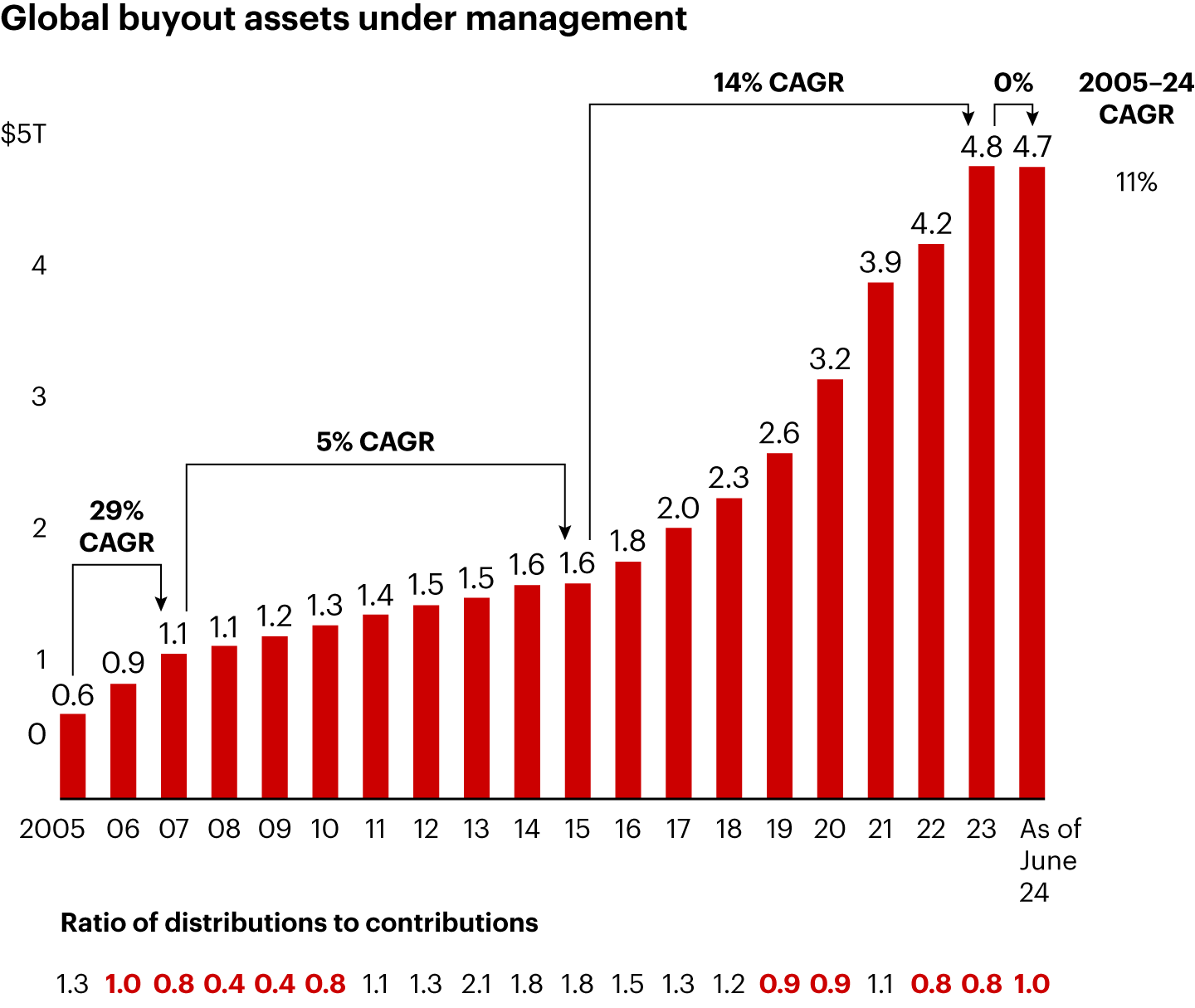
This pattern is similar to what we saw after the global financial crisis (see Figure 2). Rapid growth in assets under management (AUM) in the run-up to the crisis was followed by a slowdown in exits similar to the one we’ve seen more recently. That produced a negative balance of distributions to contributions, which caused AUM growth to slow for eight years before picking up steam again as buyout fund-raising exploded. It appears now that growth has leveled off once more as the negative cash flow balance of the past few years comes home to roost.
Figure 2

Appunti: Buyout category includes buyout, balanced, coinvestment, and coinvestment multimanager fund types; ratio of distributions to contributions through Q3 2024; discrepancies in bar heights displaying the same value are due to rounding differences
Sources: Preqin; MSCIPersistent sluggishness in exit volume will continue to pressure the industry to generate liquidity creatively. GPs have turned to a broad array of strategies and financial mechanisms to either return capital directly to investors in lieu of a full exit or to curtail incremental capital calls that would only widen the cash flow deficit. Incredibly, 30% of the companies currently in buyout portfolios have undergone some sort of liquidity event, with the industry raising a total of $410 billion via minority interests, dividend recapitalizations, secondaries, and net asset value (NAV) loans.
Still, none of this will be sufficient to alleviate the hangover from the industry’s two-and-a-half-year exit slowdown. An uptick in activity helped the industry break even on cash flow in 2024, but as Figure 2 shows, contributions from LPs have equaled or outweighed fund distributions in five of the last six years. Buyout distributions as a proportion of NAV have fallen to record lows.
This suggests the outsize capital flows the industry got used to before the pandemic are unlikely to resume in the near future. Capital will continue to consolidate in the hands of top performers and scale funds with the most fund-raising clout. That spells a clear mandate for GPs: If you can’t offer investors a differentiated value proposition, raising your next fund is going to be a serious challenge.
Top-quartile funds have always stood out from lesser performers in fund-raising, but the gap has widened substantially in recent years (see Figure 3).
Figure 3
Trying to predict with any certainty the future trajectory of interest rates is never a good idea—especially given ongoing trade policy uncertainty. But the consensus among economists is that, absent black swans, the cyclical headwinds that have held back dealmaking since mid-2022 should continue to moderate and give dealmakers a push. It helps that the industry is gradually emerging from the shadow produced by the unprecedented dealmaking spree in 2021, which pulled forward many deals that might otherwise have been available in subsequent years.
What we do know is this: When the recovery does accelerate (and it will eventually), it should look very different from the recoveries of the past. As we discuss in “This Time It’s Different: The Strategic Imperative in Private Equity,” the cost of generating market-beating returns is only going up, even as fees are in retreat. The industry also is undergoing a number of other structural changes that will significantly alter the basis of competition for investment opportunities and new capital in the years ahead. The future of private capital in some ways has never been brighter. But assuring a place among the top-tier performers attracting capital is only getting harder.
Here’s a closer look at what happened in 2024.
Investments
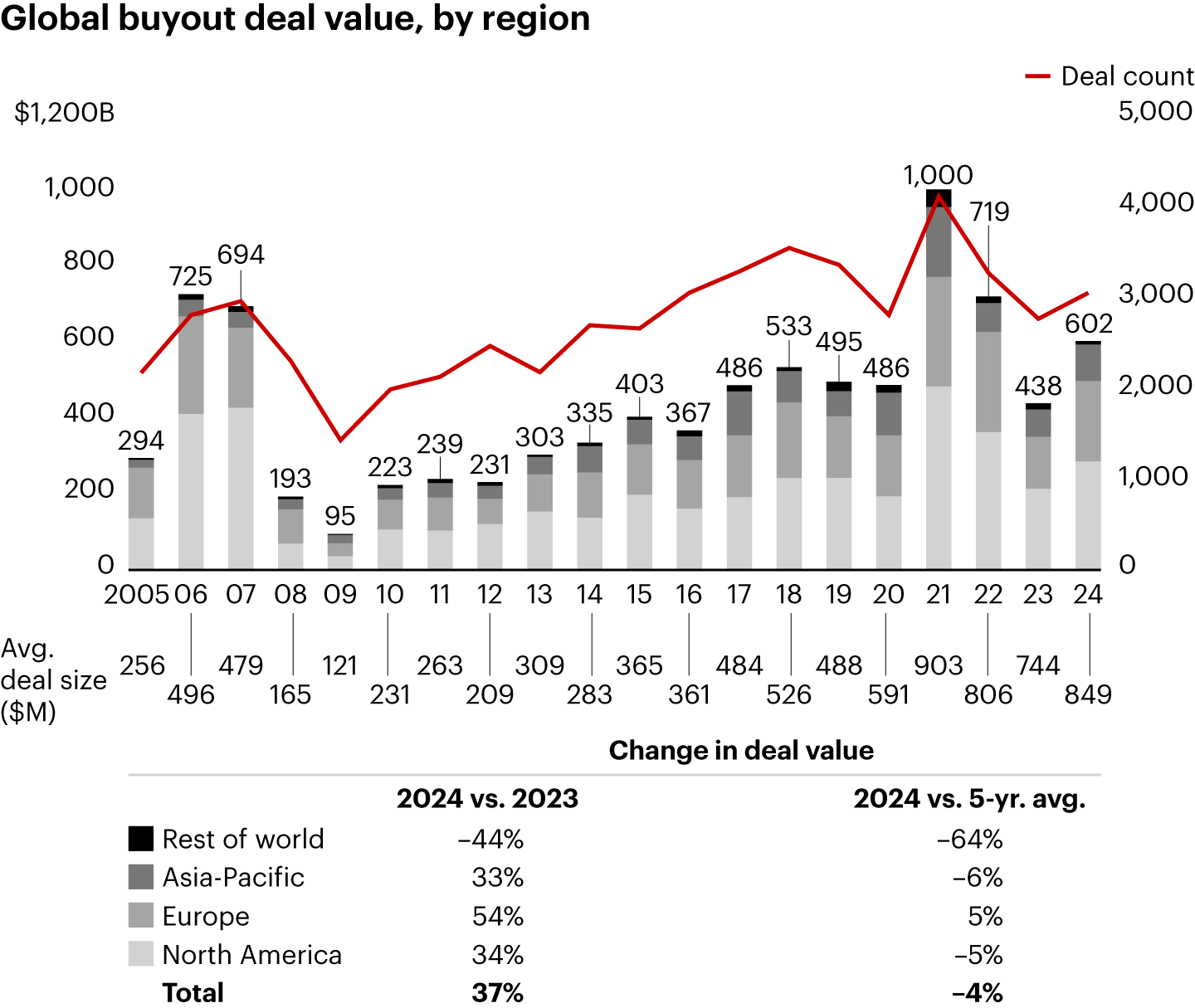
After the worst decline in dealmaking since the global financial crisis, buyout investment value took a bounce back in 2024, increasing 37% year over year to $602 billion, excluding add-on deals (see Figure 4). Easing interest rates and greater comfort with the macro outlook were the chief factors narrowing what had been a yawning gap between buyer and seller expectations. An 83% increase in syndicated loan issuance and the ongoing growth of private credit also helped grease the skids for GPs anxious to put $282 billion in aging dry powder to work.
Figure 4

Appunti: Excludes add-ons, special-purpose acquisition companies, loan-to-own transactions, and acquisitions of bankrupt assets; based on announcement date; includes announced deals that are completed or pending, with data subject to change; geography based on target’s location; average deal size calculated using deals with disclosed value only
Sources: Dealogic; Bain analysisWhile the number of deals increased 10% year over year to around 3,000, the growth in value far outstripped the growth in count as the average deal size globally jumped to $849 million, the second-highest total historically. Deals of $1 billion or more made up 77% of the value total.
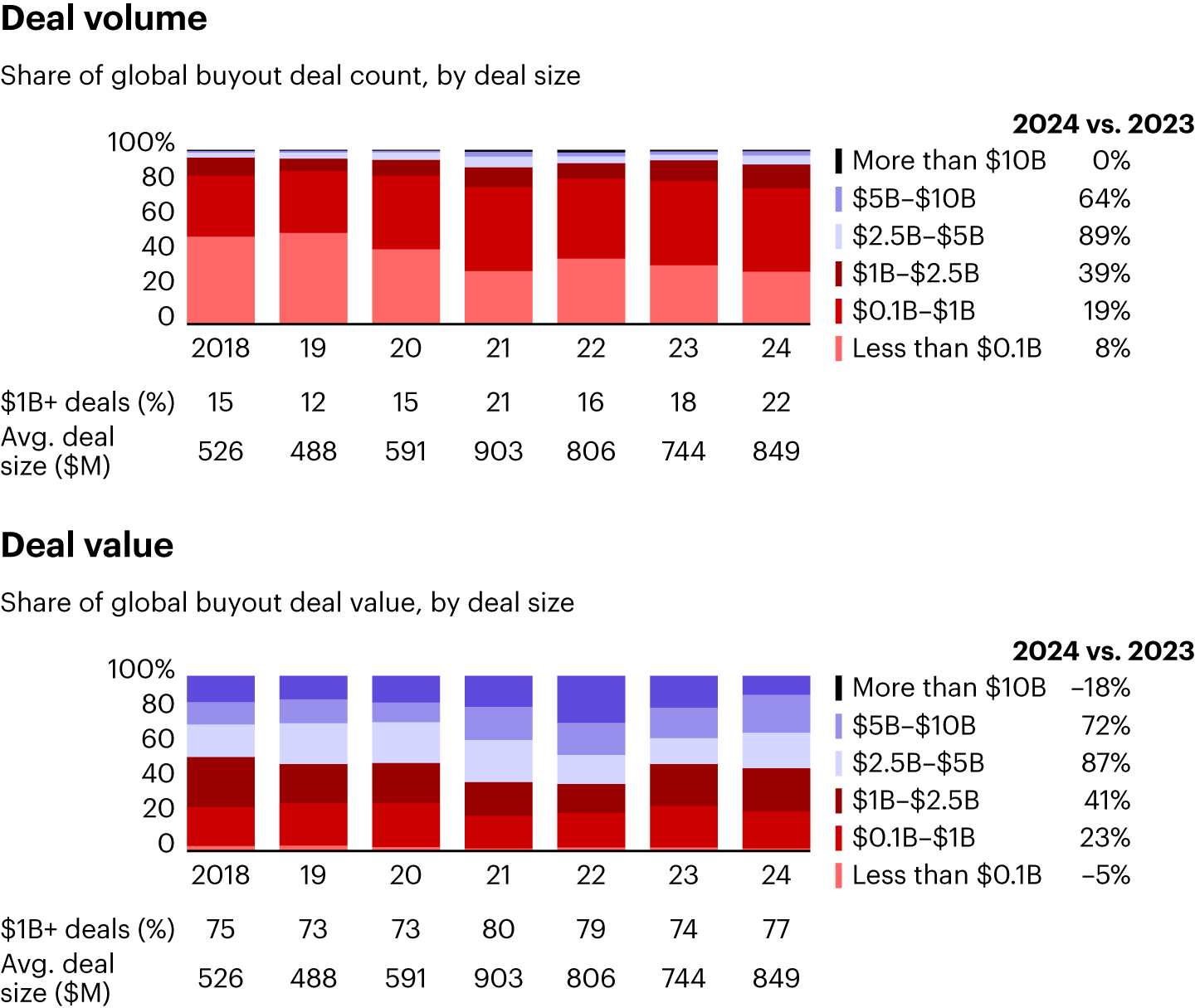
North American deal value grew 34% off a 9% increase in deal count, while deal value in Europe grew 54%, also on a 9% uplift in the number of transactions (see Figure 5). Deals valued between $2.5 billion and $10 billion continued to grow as a percentage of total value in both regions (see Figure 6). Asia-Pacific deal value grew 11% on slightly fewer deals. A number of countries in the region had double-digit growth, but that was overshadowed by slower growth in China and a decline in Japan, which suffered by comparison to a breakout year in 2023. As recently as 2020, China represented half of all Asia-Pacific deal value, but that share fell to just over 25% in 2024.
Figure 5


Appunti: North America and Europe—excludes add-ons, special-purpose acquisition companies, loan-to-own transactions, and acquisitions of bankrupt assets; based on announcement date; includes announced deals that are completed or pending, with data subject to change; geography based on target’s location; deal count includes all deals, including those with no disclosed value; Asia-Pacific—includes buyout, growth, early-stage, private investment in public equity, turnaround, and other deals; excludes add-ons and real estate; deal value excludes deals with announced value less than $10 million; deal count excludes deals with no disclosed value; includes investments that have closed and those at agreement-in-principle or definitive agreement stage
Sources: Dealogic; AVCJ; Bain analysis
Figure 6

Appunti: Excludes add-ons, special-purpose acquisition companies, loan-to-own transactions, and acquisitions of bankrupt assets; based on announcement date; includes announced deals that are completed or pending, with data subject to change; geography based on target’s location; average deal size calculated using deals with disclosed value only
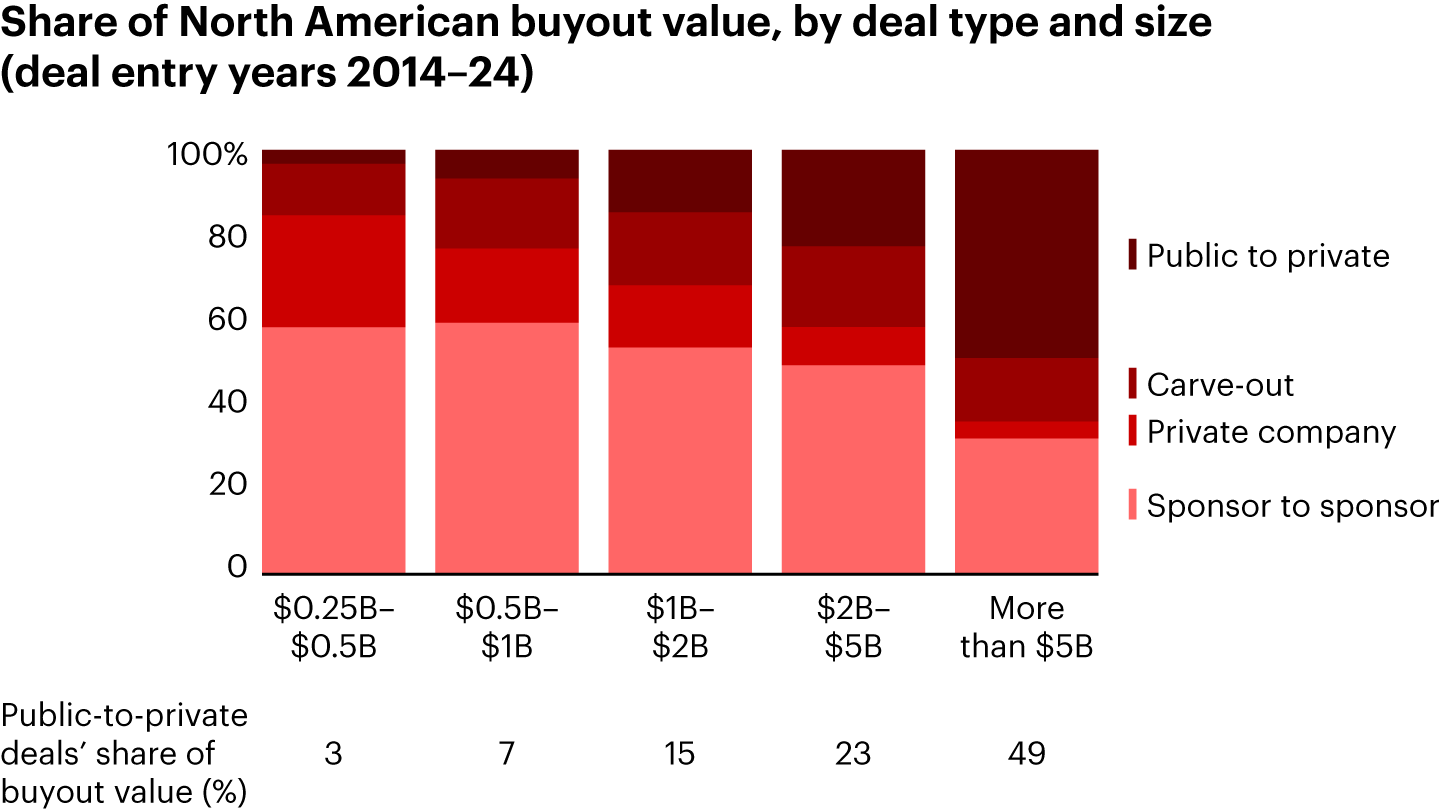
Sources: Dealogic; Bain analysisPublic-to-private (P2P) deals, like the $8.4 billion buyout of Smartsheet by Vista Equity Partners and Blackstone, continued to dominate the high end of the market. P2P deals increased to close to $250 billion globally in 2024 and represented almost 50% of deals valued at $5 billion or more in North America (see Figure 7). This level of take-private activity might seem counterintuitive given the run-up in the US public equity markets. But specialists are clearly finding opportunities to take advantage of mispriced assets in the US, and European public markets have been much less robust.
Figure 7

Appunti: Includes North American transactions greater than $250 million in value; SPS-provided median enterprise value estimate used for each deal type, year, and size range
Sources: SPS by With Intelligence; Bain analysisThe technology sector remained private equity’s staple, representing 33% of buyout deals by value and 26% by volume (see Figure 8). Activity also percolated at the intersection of tech and healthcare, including KKR’s acquisition of a 50% stake in healthcare analytics company Cotiviti from Veritas Capital, which valued the company at around $10 billion. Among other sectors, financial services deal value grew 92% year over year and industrials 81%, both bouncing back after a particularly challenging 2023. Insurance deals such as Sixth Street’s $5 billion P2P deal for Enstar stood out.
Figure 8


Appunti: Excludes add-ons, special-purpose acquisition companies, loan-to-own transactions, and acquisitions of bankrupt assets; based on announcement date; includes announced deals that are completed or pending, with data subject to change
Fonte: DealogicA closer look at the factors that precipitated 2024’s dealmaking rebound shows that conditions improved substantially during the year despite ongoing crosscurrents.
The dry powder situation is certainly maintaining pressure on dealmakers. While the buyout industry’s stockpile of unspent capital fell slightly from $1.3 trillion to $1.2 trillion, the value of aging dry powder (that held for four years or longer) ticked up to 24% of the total, from 20% in 2022. That suggests GPs are struggling to find first-rate, affordable targets (see Figure 9).
Figure 9
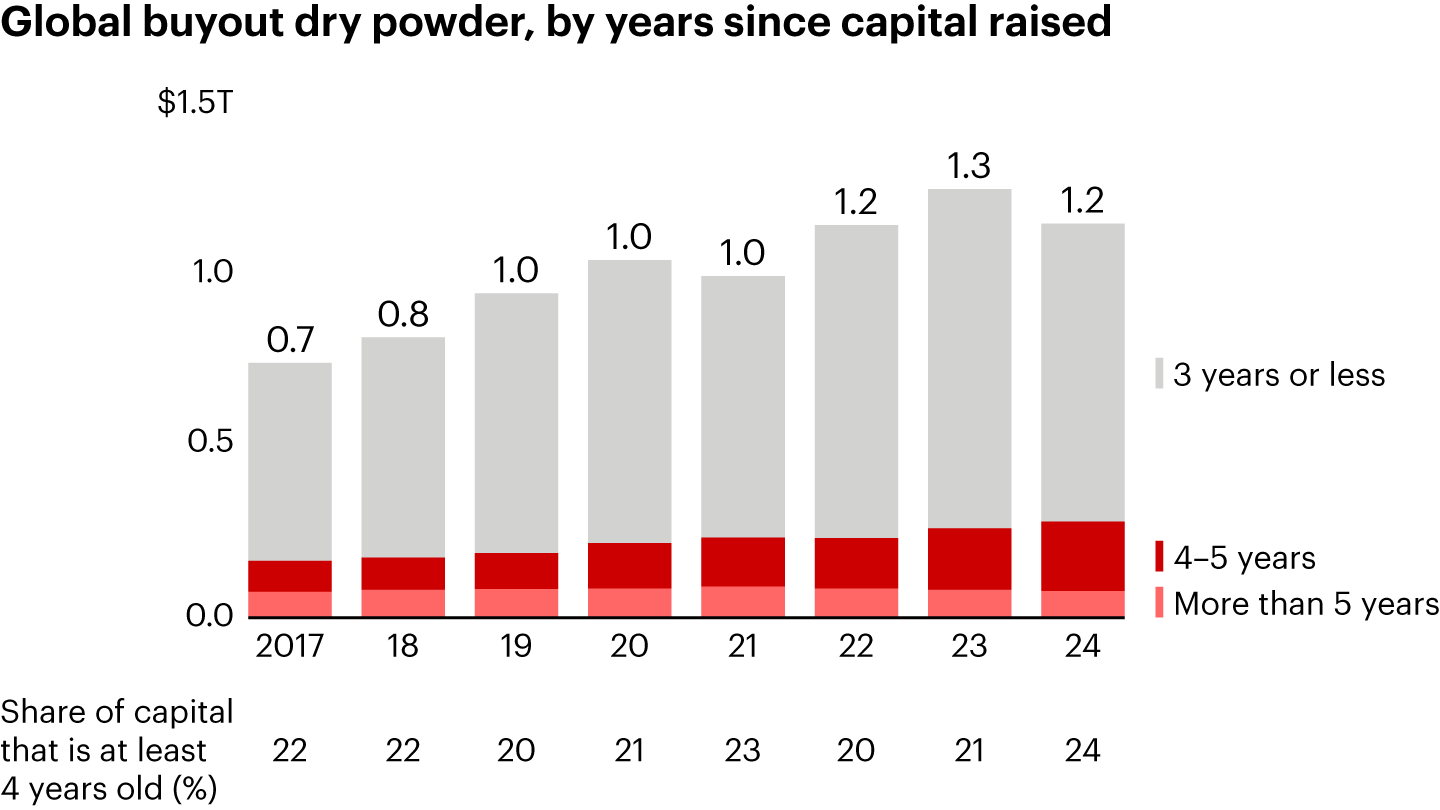

Appunti: Buyout category includes buyout, balanced, coinvestment, and coinvestment multimanager fund types; assumes average investment period of five years; percentage split of capital in 2024 based on data through Q2 2024, forecast to year-end 2024; discrepancies in bar heights displaying the same value are due to rounding differences
Sources: Preqin; Bain analysisMacro headwinds, brought on by inflation and the subsequent spike in interest rates since 2022, have eased off, and economists are expecting central banks to keep cutting as inflation settles down (see Figure 10). Yet the pace of easing slowed in the US over the winter amid strong labor markets and uncertainty about the incoming administration’s tariff intentions.
Figure 10
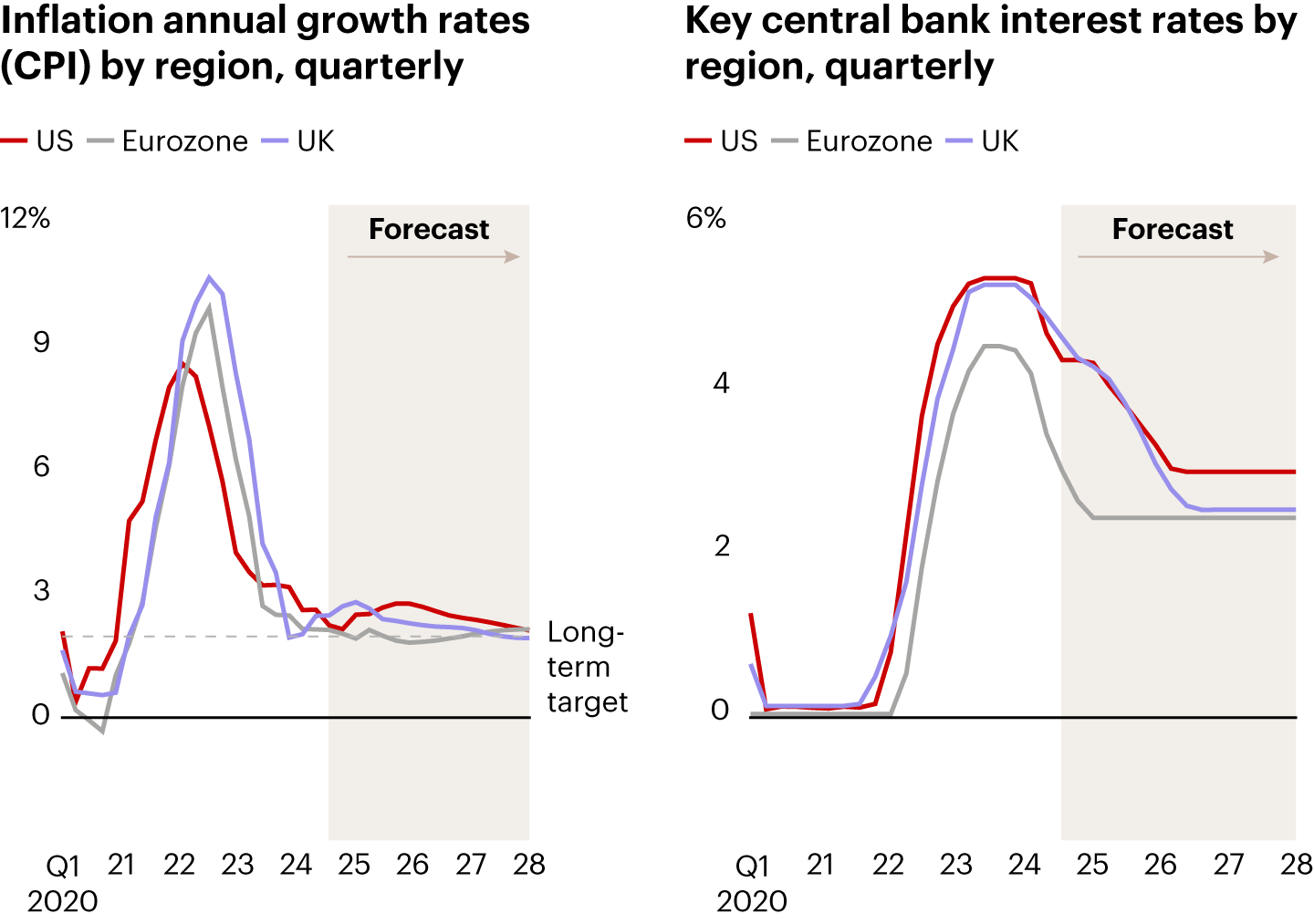

Appunti: Forecast based on Moody’s baseline scenario as of January 2025; CPI is not seasonally adjusted; interest rates are the federal funds rate (US), ECB refinancing rate (eurozone), and Bank of England base rate (UK)
Sources: Moody’s; US Bureau of Labor Statistics; European Commission; UK Office for National Statistics; US Board of Governors of the Federal Reserve System; European Central Bank; Bank of EnglandStill-high interest rates continued to take a chunk out of add-on transactions, which represented 11% of buyout deal value, vs. a peak of 40% in 2015. As financing costs took off, it became more and more difficult to make buy-and-build strategies pencil out, and bolt-on acquisitions were less affordable.
It didn’t help that asset prices continued to soar. After slacking off some in 2023, the average deal multiple in North America shot back 7% to 11.9 times earnings before interest, taxes, depreciation, and amortization (EBITDA), an SPI by StepStone analysis shows. European multiples, meanwhile, jumped to a new record of 12.1 times EBITDA (see Figure 11).
Figure 11
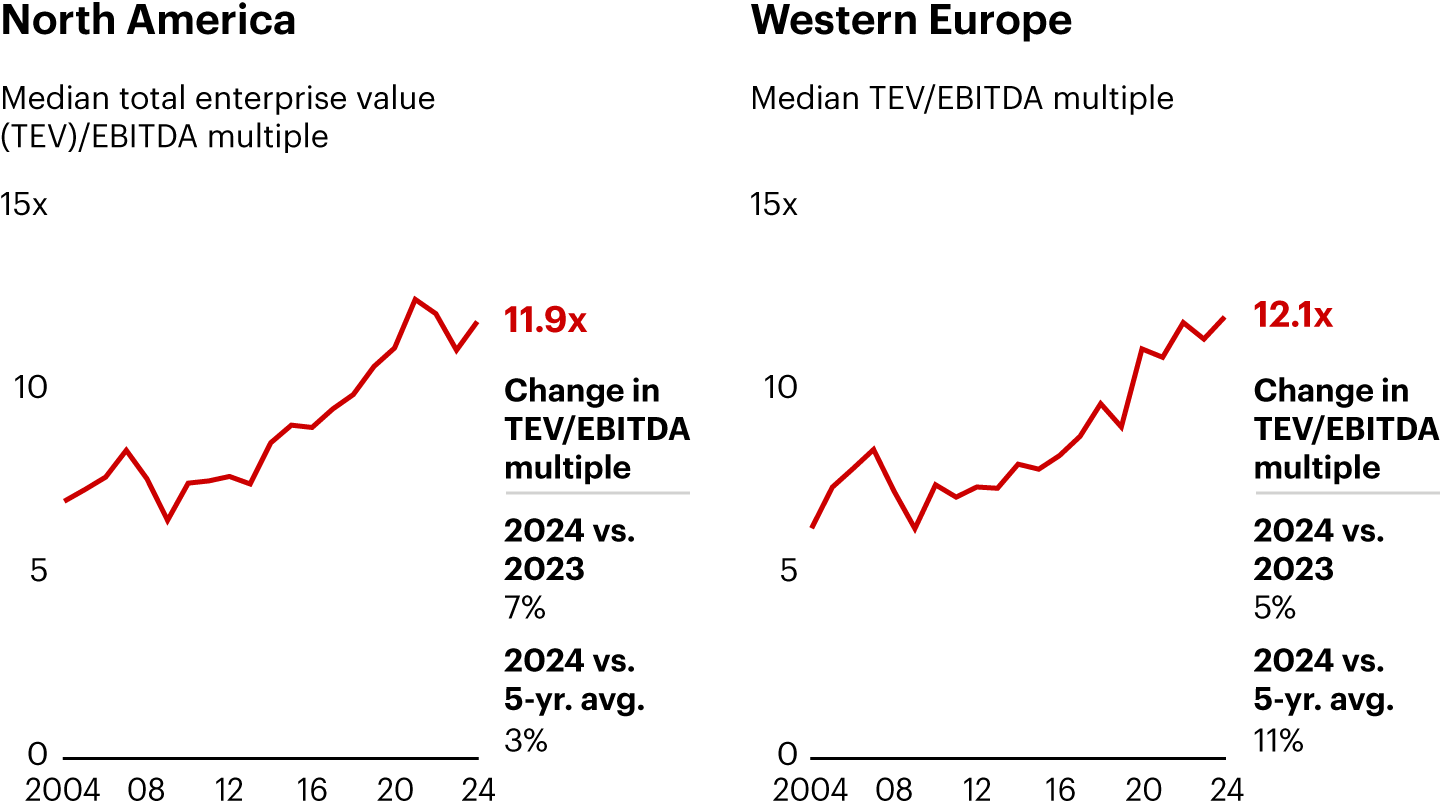

Note: Data as of September 30, 2024
Fonte: SPI by StepStoneThe shape-shifting in the debt market also continued. Leveraged loan yields in the US tracked down 1.4 percentage points during the year as rates softened and prices eased. But debt ratios only responded slightly, climbing to 4.9 times EBITDA, well below prepandemic levels. Syndicated loan volume grew by 83% to $110 billion, but it too remains depressed (see Figure 12).
Figure 12
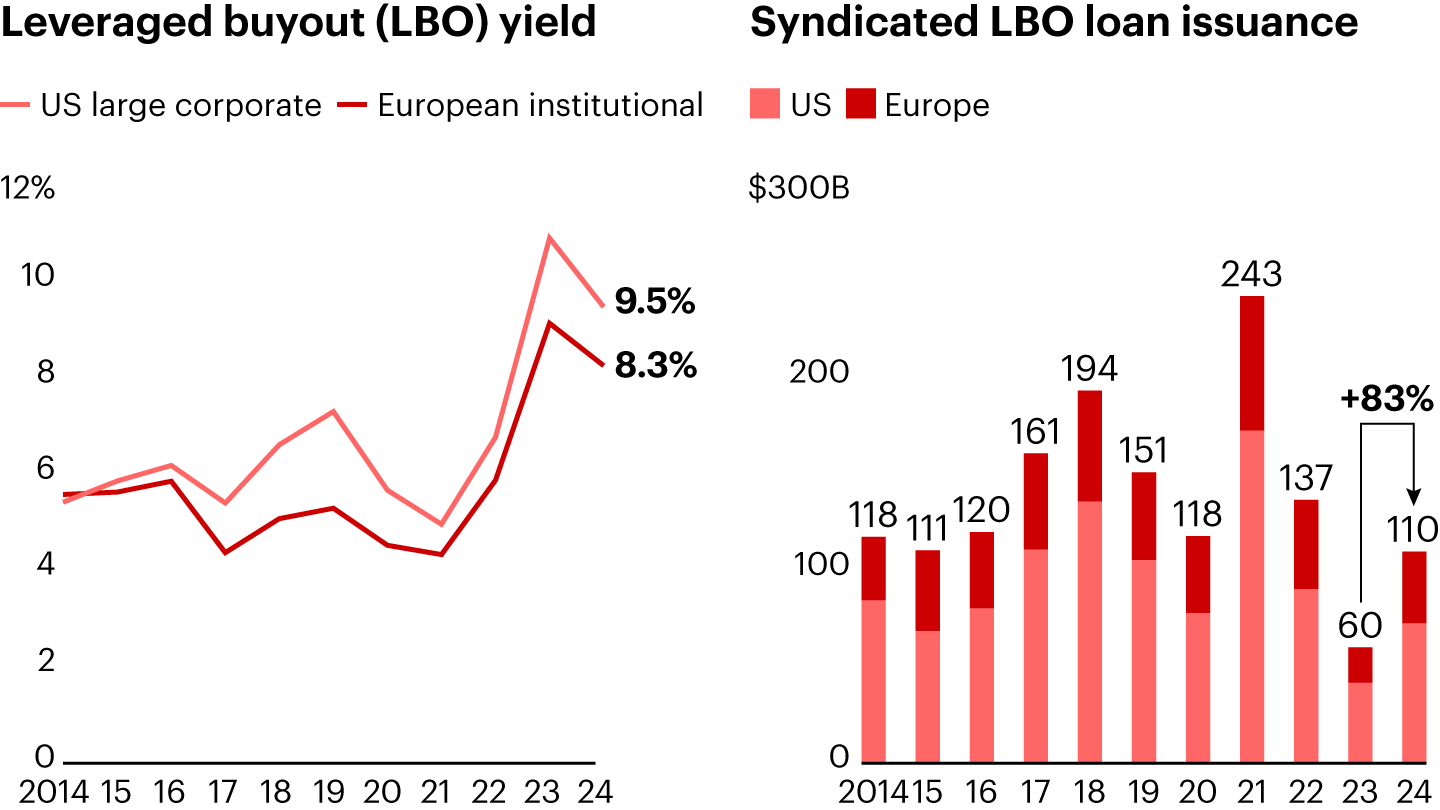

Appunti: European institutional yield includes all tracked LBO deals, regardless of size; US large corporate defined as LBOs with more than $50 million in EBITDA
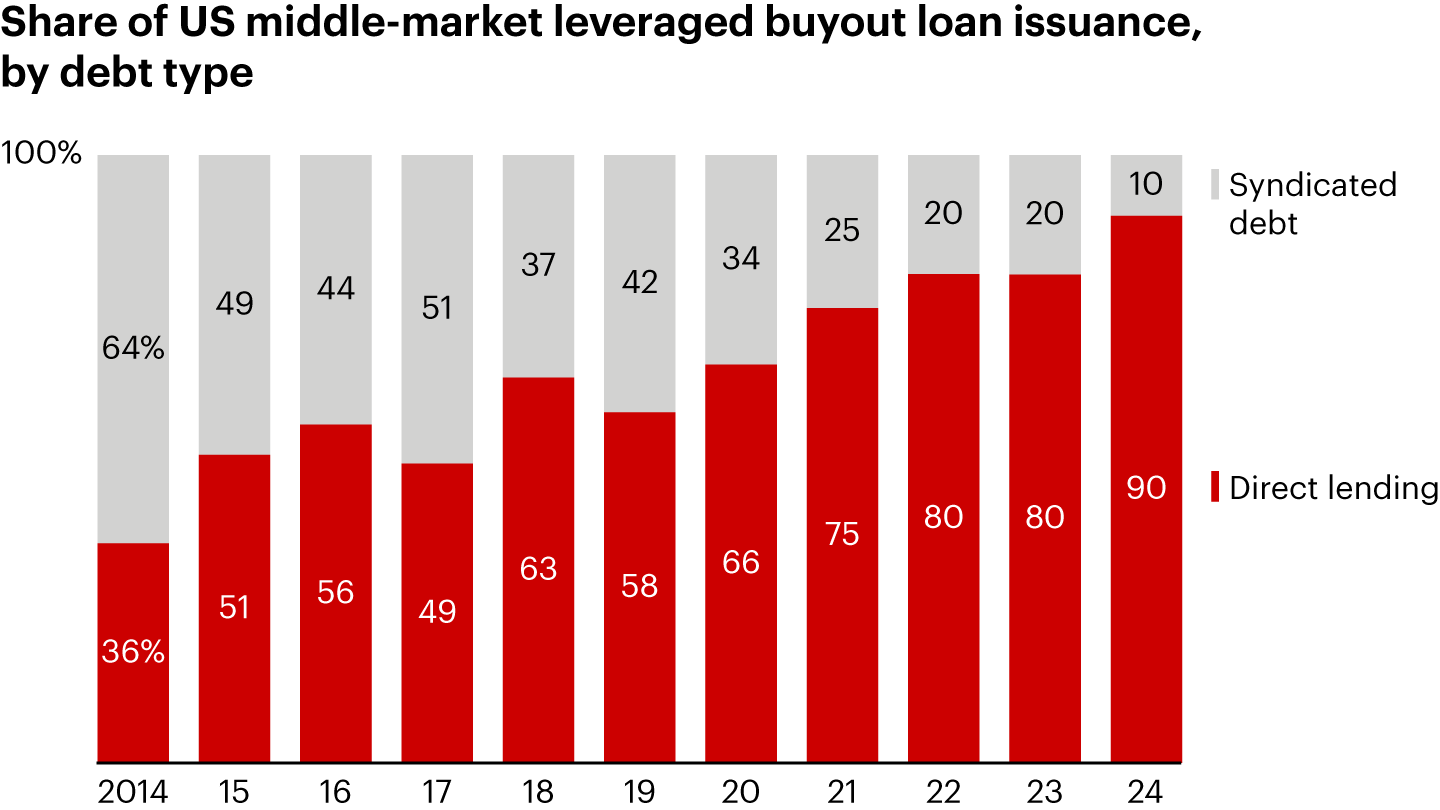
Sources: PitchBook LCD; LSEGTraditional banks have maintained their focus on scale deals, where syndication is important and the fees make it worth their time. However, direct lenders have been more than happy to step into the other parts of the market. Over the past decade, private credit has boosted its share of middle-market loan issuance to 90% from 36% (see Figure 13). Most larger deals are still out of reach for private lenders, but that’s changing too.
Figure 13

Appunti: Middle market includes issuers with revenues less than $500 million and total loan package less than $500 million; direct lending includes nonsyndicated facilities, including club lending
Fonte: LSEG LPCFaced with higher debt costs and lower leverage ratios, GPs have increasingly turned to coinvestment—the practice of offering LPs direct equity stakes in deals. A StepStone survey covering 145 GPs and 420 funds showed that coinvestment volume has risen approximately 30% since before the pandemic.
LPs are enthusiastic to get a piece of the action with more control and lower fees. Still, the demand outstrips supply. According to StepStone, only half of the LPs with an appetite for coinvestment have been able to participate.
GPs tend to prioritize the LPs they already know and those that are able to move quickly and decisively. To get up to speed, many institutional investors are building or expanding their capabilities. CalSTRS, for instance, has grown its private equity team substantially in recent years to support coinvestments. Other large institutions, including CalPERS, OCERS, and Texas Teachers, have significantly expanded the coinvestment allocation in their portfolios.
Refinancing in the US and Europe jumped almost 80% to around $380 billion in 2024. Maturing loans spurred $119 billion of that, but lower financing costs were a major factor, as US spreads for both direct and syndicated leveraged loans fell more than 100 basis points.
Global M&A activity remained muted in 2024, growing 13% in deal value to $3.6 trillion. As a result, buyout’s share of the market grew to 19% by value, up from 16% in 2023.
Exits
While both the value and number of global exits showed signs of life in 2024, selling enough companies to keep LPs happy remains a challenge for private equity funds.
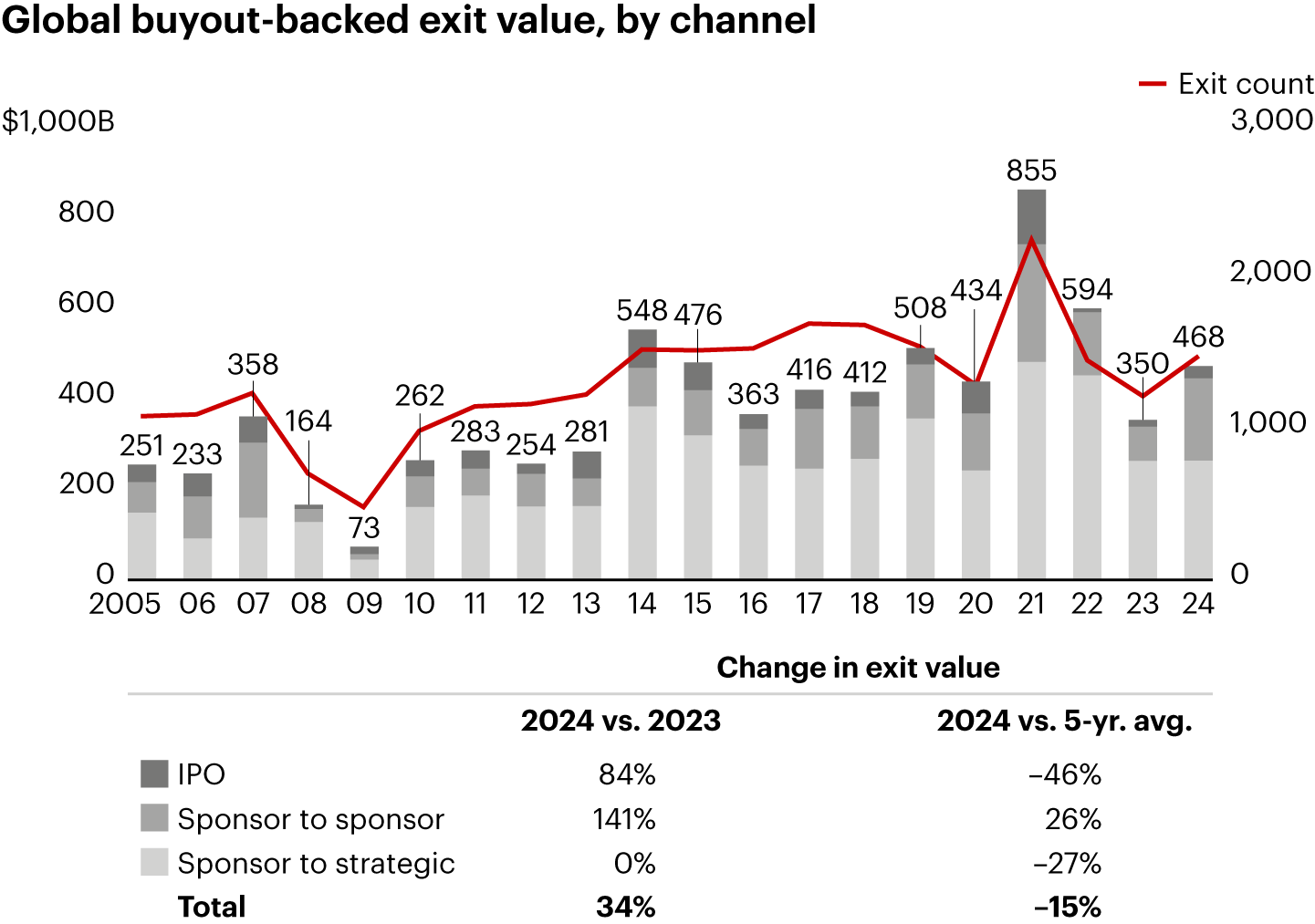
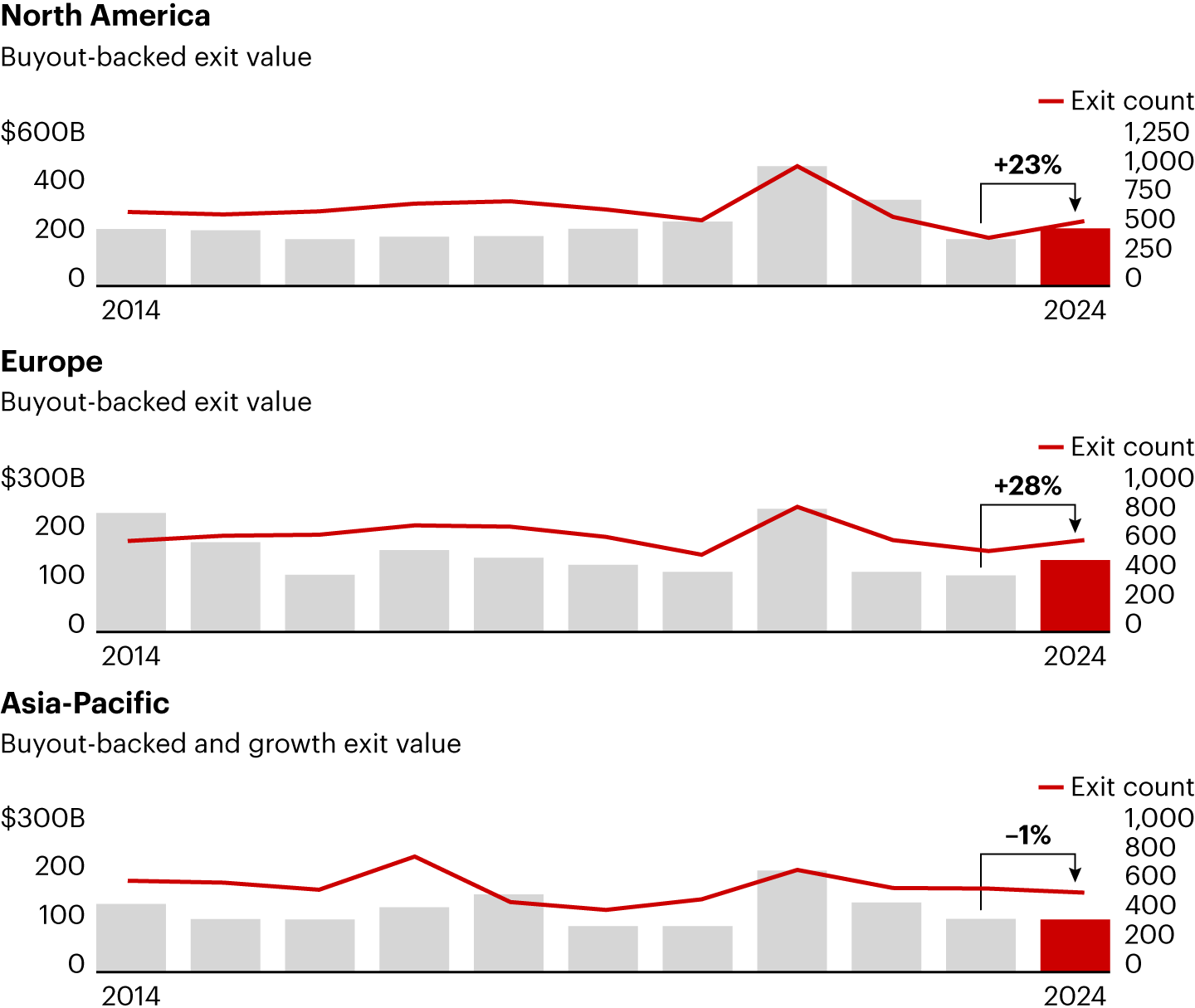
Global exit value jumped 34% year over year to $468 billion while exit count rose 22% to 1,470 (see Figure 14). Activity was strong in both North America and Europe relative to 2023 but was broadly flat in Asia, with significant declines in China offsetting growth in other countries (see Figure 15).
Figure 14

Appunti: Includes partial and full exits; excludes special-purpose acquisition companies and bankruptcies; IPO value represents offer amount and not market value of company
Fonte: Dealogic
Figure 15

Appunti: Includes IPO data; IPO value represents offer amount and not market value of company; North America and Europe—includes partial and full exits; excludes special-purpose acquisition companies and bankruptcies; Asia-Pacific—includes buyout, growth, and venture exits; excludes real estate and deals with announced value less than $10 million; includes investments that have closed and those at agreement-in-principle or definitive agreement stage
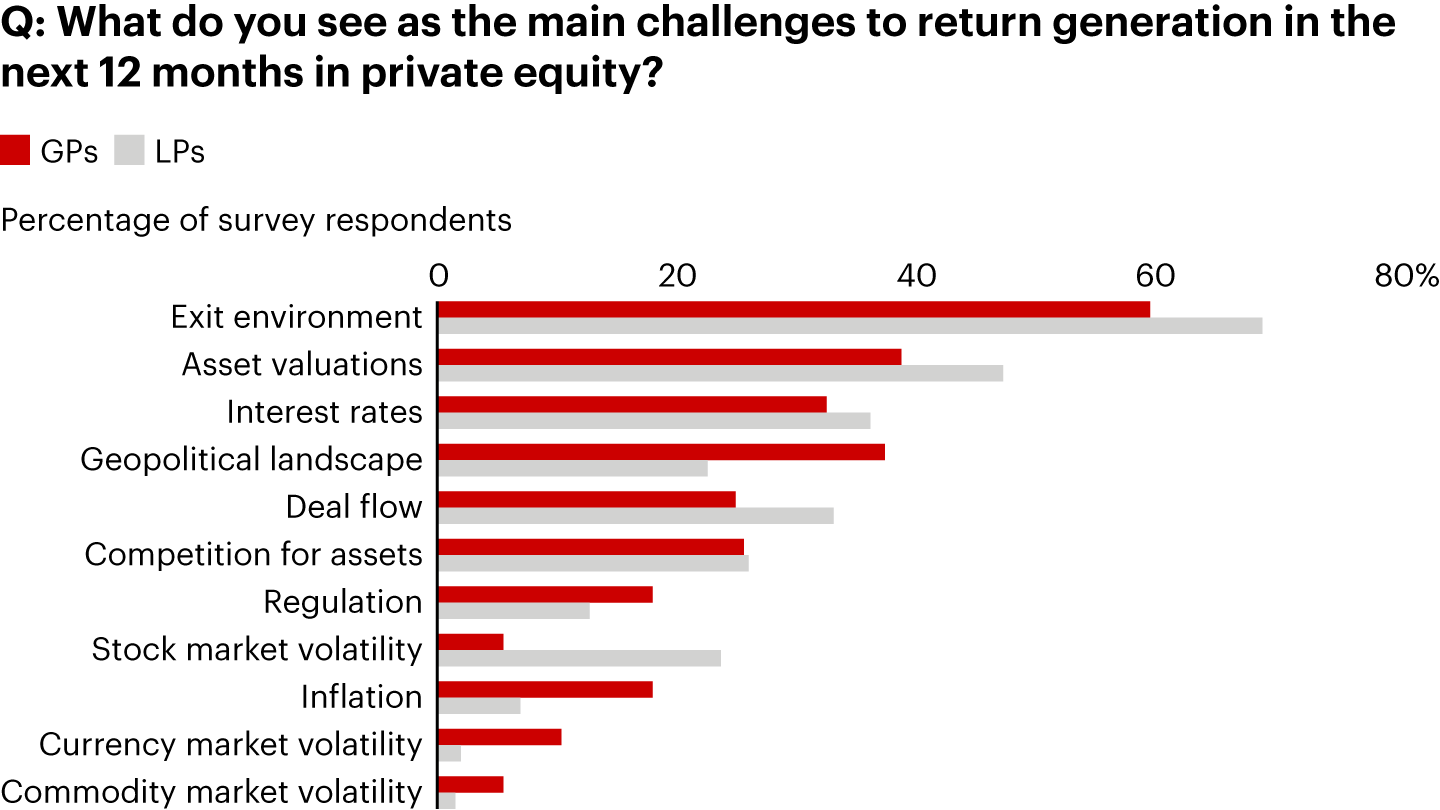
Sources: Dealogic; AVCJ; Bain analysisDespite the green shoots of recovery, both deal value and count remained well below their five-year averages and aren’t keeping up with the industry’s scale. Buyout funds are holding almost twice the assets they were in 2019, but exit value is at about the same level. This explains why both LPs and GPs see the exit environment as the biggest impediment to strong returns (see Figure 16).
Figure 16

A 141% increase in deals between sponsors (from a very low base in 2023) best explains the increase in exits. Sponsor-to-sponsor exits totaled $181 billion, helped by a 48% jump in deal size, and accounted for 6 of the 10 largest exits globally, including Blackstone’s $16 billion acquisition of AirTrunk.
Strategic deals (sales to corporate buyers) were flat year over year at $261 billion. But several sponsors managed to complete scale deals with corporate buyers, including Leonard Green and Berkshire Partners’ sale of SRS Distribution to Home Depot for a little more than $18 billion and the €4.2 billion sale of Spain’s Dorna Sports to Liberty Media in a deal completed by Bridgepoint and Canadian pension fund CPPIB.
The IPO channel remained sluggish in 2024, representing just 6% of exits by value. ADIA, EQT, and GIC managed to take Swiss healthcare company Galderma Group public for $2.6 billion. But macro and geopolitical uncertainty kept many offerings on the shelf despite the broader rally in public markets.
The outlook for 2025 is cloudy. A number of companies have filed S-1s or F-1s as of late 2024, including Vista-backed Solera, which hopes to fetch a valuation of $10 billion to $13 billion. Yet many private investors view IPOs as the channel of last resort, relying on it only for assets that are too big to sell otherwise. Not only are IPOs a hassle, but they extend the length of time to a full exit and risk swings in value.
In lieu of better options in traditional exit channels, GPs have continued to look for other solutions. Minority stakes—deals to monetize a slice of a portfolio company either to fund growth or give investors a payout—stood at $116 billion in 2024, or 24% of the exit total.
After two years of exit declines, 2024’s uptick across channels is certainly a welcome relief. But it continues to be overshadowed by the towering $3.6 trillion of unrealized value represented by 29,000 unsold companies (see Figure 17). That number leveled off in 2024.
Figure 17
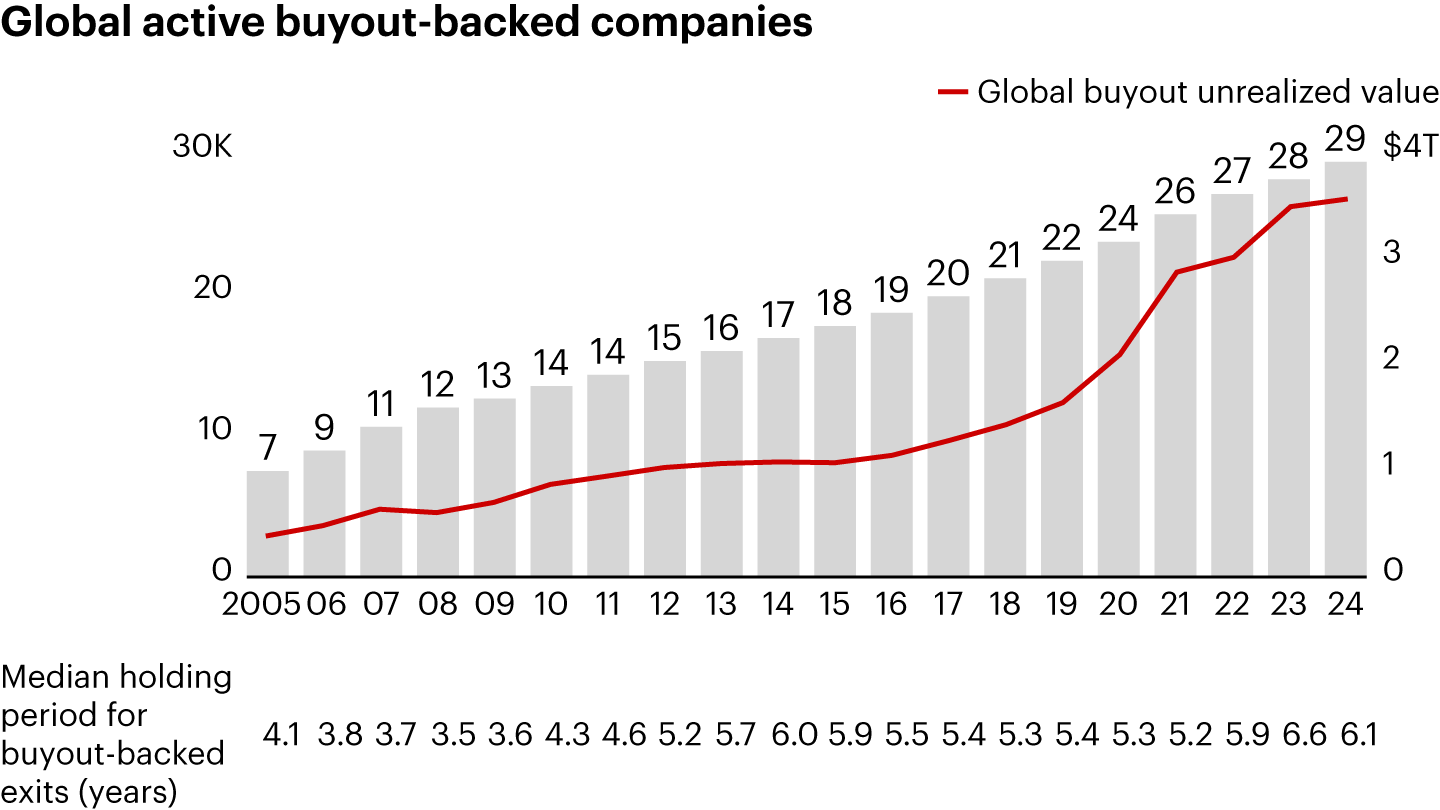

Appunti: Excludes add-ons; buyout category includes buyout, balanced, coinvestment, and coinvestment multimanager fund types; global buyout unrealized value through June 2024
Sources: PitchBook; PreqinThere’s probably a lag in these numbers. At the moment, the abnormally large fund vintages of 2021 and 2022 are holding down the median age of these unsold companies, which might be making the situation look better than it is. Given the lofty acquisition prices at which those deals were executed, it’s reasonable to ask whether the opposite effect will take hold in coming years if sponsors struggle to exit these expensive assets at reasonable returns. As we’ll see in the next section, that pattern wouldn’t be unprecedented.
Liquidity
A closer look at the buyout industry’s liquidity quandary goes a long way in explaining the growing pressure GPs are feeling to monetize assets.
It starts with a simple statement: With the exception of a spike in 2021, the amount of capital returned to investors is not keeping pace with the industry’s increasing scale. While global buyout AUM has tripled over the past decade, distributions as a percentage of NAV have fallen from an average of 29% from 2014 to 2017 to 11% today (see Figure 18).
Figure 18
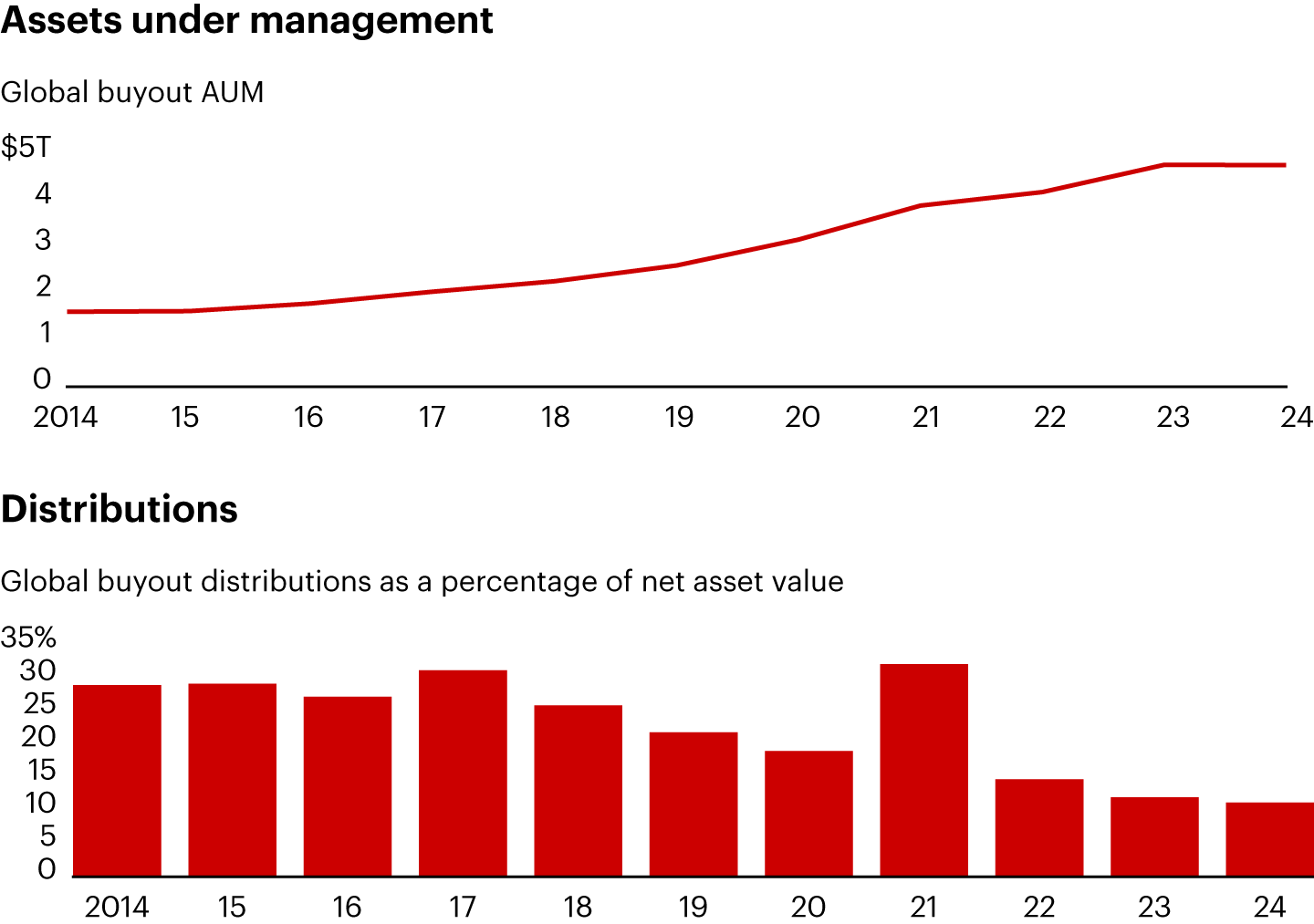

Appunti: Buyout category includes buyout, balanced, coinvestment, and coinvestment multimanager fund types; global buyout AUM through June 2024; global buyout distributions as percentage of NAV through Q3 2024, annualized
Sources: Preqin; MSCI; Bain analysisWhat history tells us is that periods like this take time to unwind (see Figure 19). The normal fund payback schedule follows what the industry calls a J curve—funds call pledged capital, put it to work, and pay it back.
The abrupt skid in exits brought on by the postpandemic spike in interest rates is resulting in a J curve that mirrors 2005–06. It’s raising fears that the capital lodged in current portfolios will take equally long, or even longer, to pay back.
Figure 19
One difference between then and now is the growing prevalence of liquidity mechanisms such as minority stakes, secondaries (especially continuation funds), NAV loans, and dividend recaps. These allow GPs to generate cash and keep hold of an asset until its return can ripen more fully. These financial tools aren’t a replacement for exits. But in 2024, they definitely helped to improve cash flow. Combined with the uptick in exits and a slower pace of drawdowns, these liquidity mechanisms helped push the industry’s cash flow balance to breakeven (see Figure 20).
Figure 20
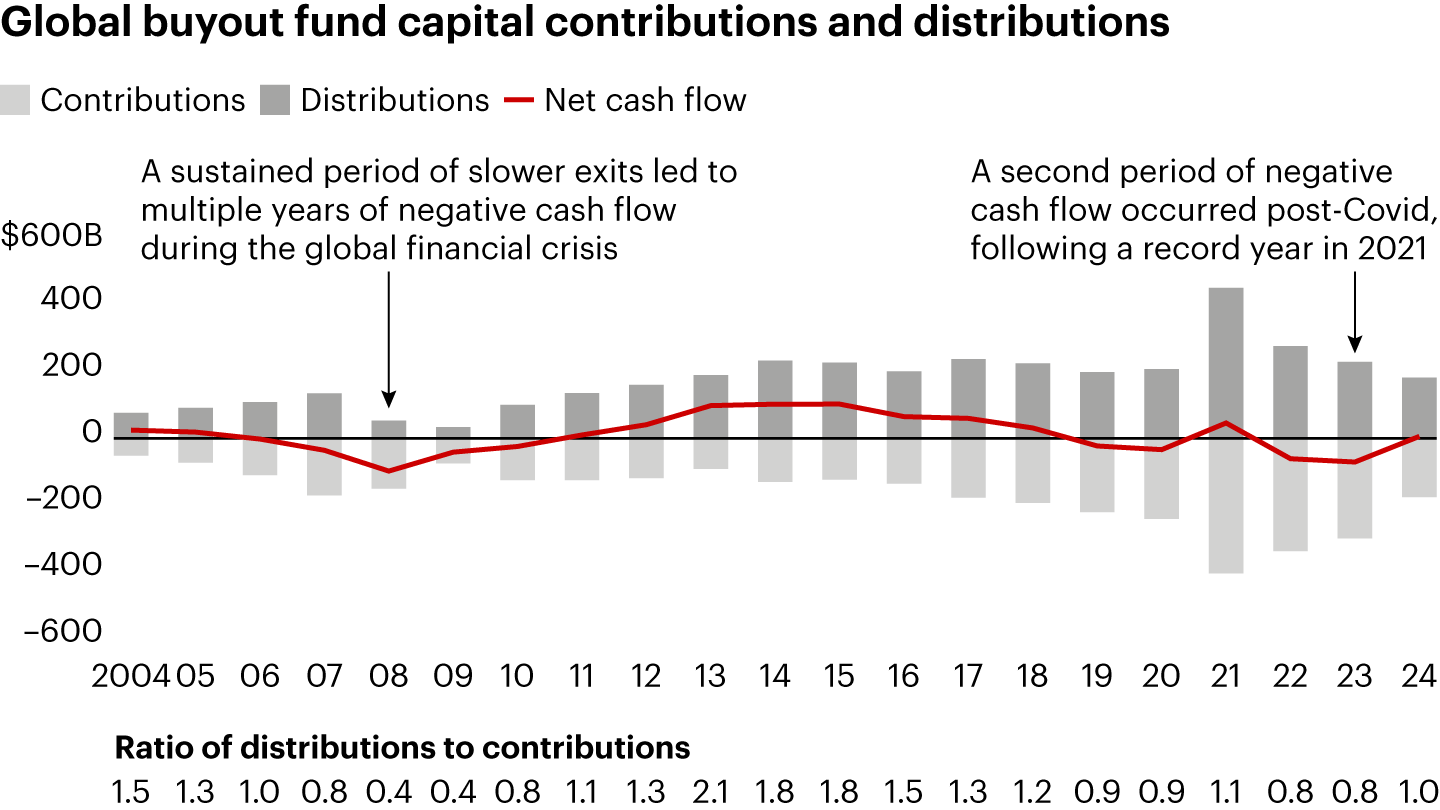

Note: Data through Q3 2024
Fonte: MSCIThe degree to which funds are using the full range of tools to generate liquidity—and how that usage has grown amid the souring exit environment—becomes clear in data from StepStone. The analysis looks at current portfolio companies purchased as far back as 2014 and that have been held for at least five years.
From 2014 to 2016, the fully realized portion of total portfolio company realizations averaged around 44%. But for the 2019 vintage, the last one with a five-year record, that portion had dropped closer to 20%. Most companies in 2019 matured in the middle of the exit downturn, forcing sponsors to generate liquidity through other mechanisms. The result was that partial realizations accounted for 65% of total realizations for the 2019 vintage, vs. 37% for 2014 (see Figure 21).
Figure 21
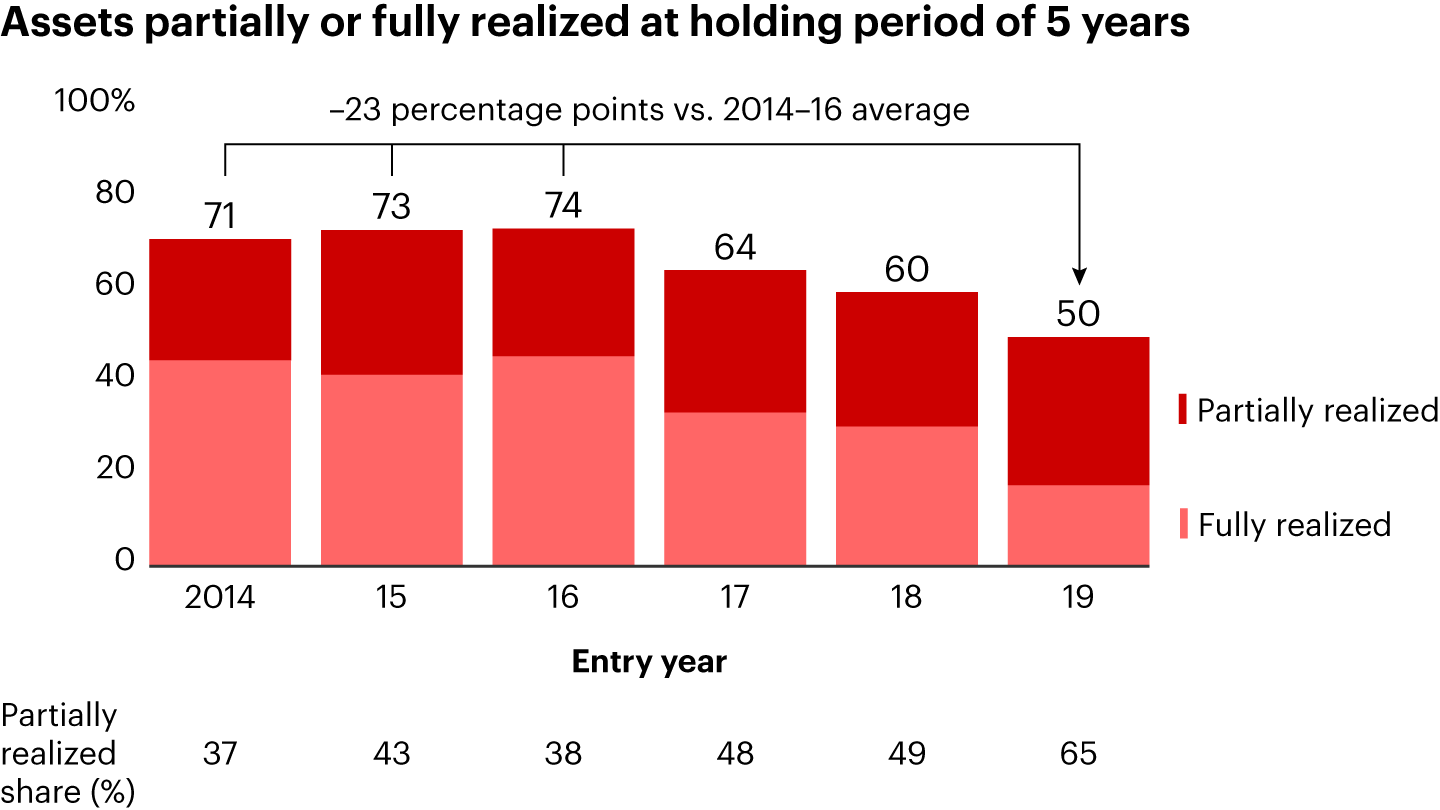

Appunti: Partially realized defined as investments with liquidity events valued between 5% and 90% of total company value; fully realized defined as investments with liquidity events valued at 90% or more of total company value
Fonte: SPI by StepStoneOverall, about 30% of companies currently held in buyout portfolios have undergone some sort of liquidity event. Not surprisingly, the likelihood of a partial realization rises with the age of the asset and how well it has performed to date (see Figure 22).
Figure 22
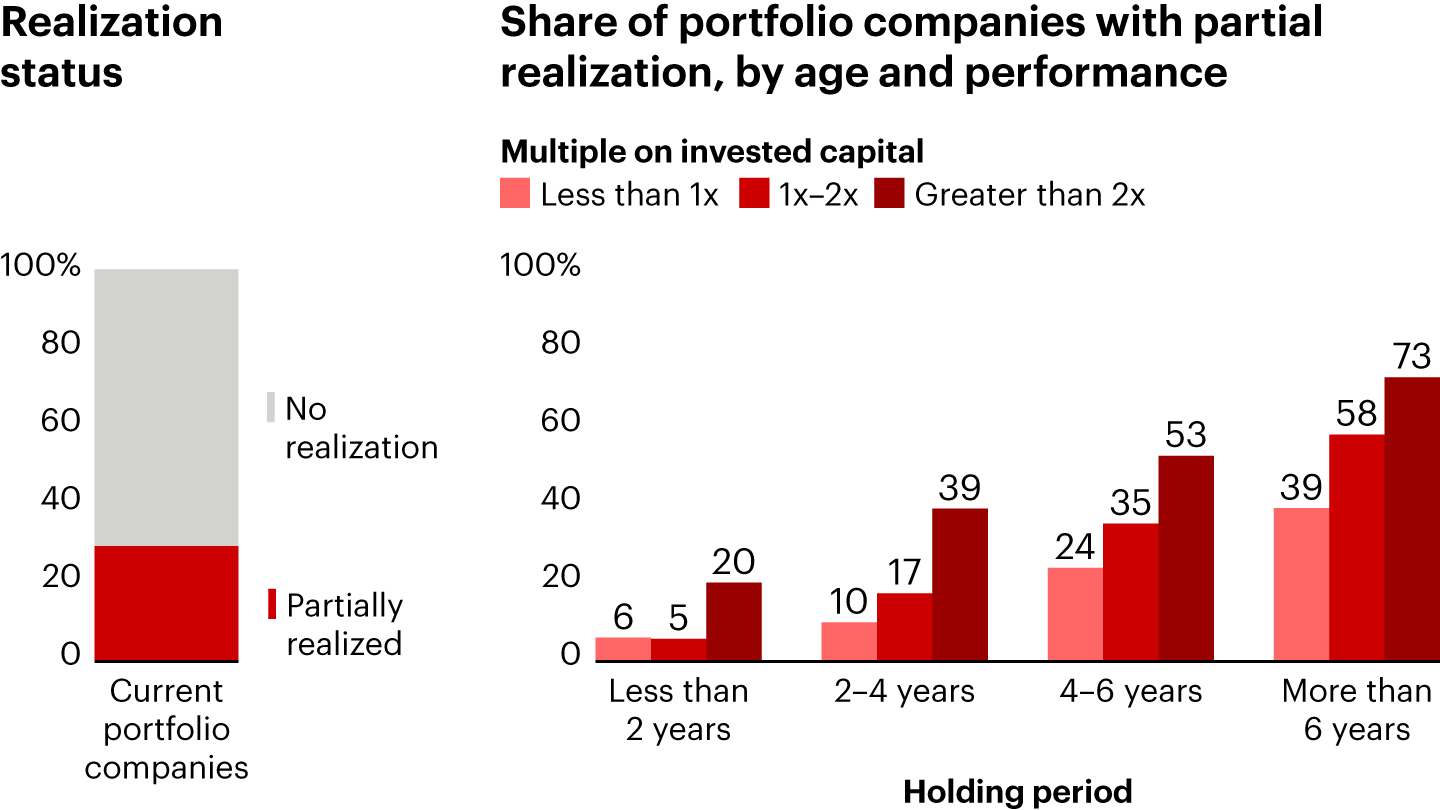

Appunti: Partially realized defined as investments with liquidity events valued between 5% and 90% of total company value; fraction calculated based on the number of partially realized companies divided by the number of unrealized and partially realized companies; includes buyout deals with entry investment date between 2004 and 2024
Fonte: SPI by StepStoneThe growth of the secondaries market also reflects the demand for liquidity. These funds, designed to raise cash by moving one or more assets out of a private equity portfolio into a new vehicle, raised $102 billion in 2024, pushing total secondaries AUM to $601 billion (see Figure 23). GP-led secondaries are typically continuation vehicles (CVs), and over the last five years, the number of CVs has grown fourfold while total value has increased almost threefold. Firms including KSL Capital Partners and Astorg raised multibillion-dollar CVs in 2024.
Figure 23
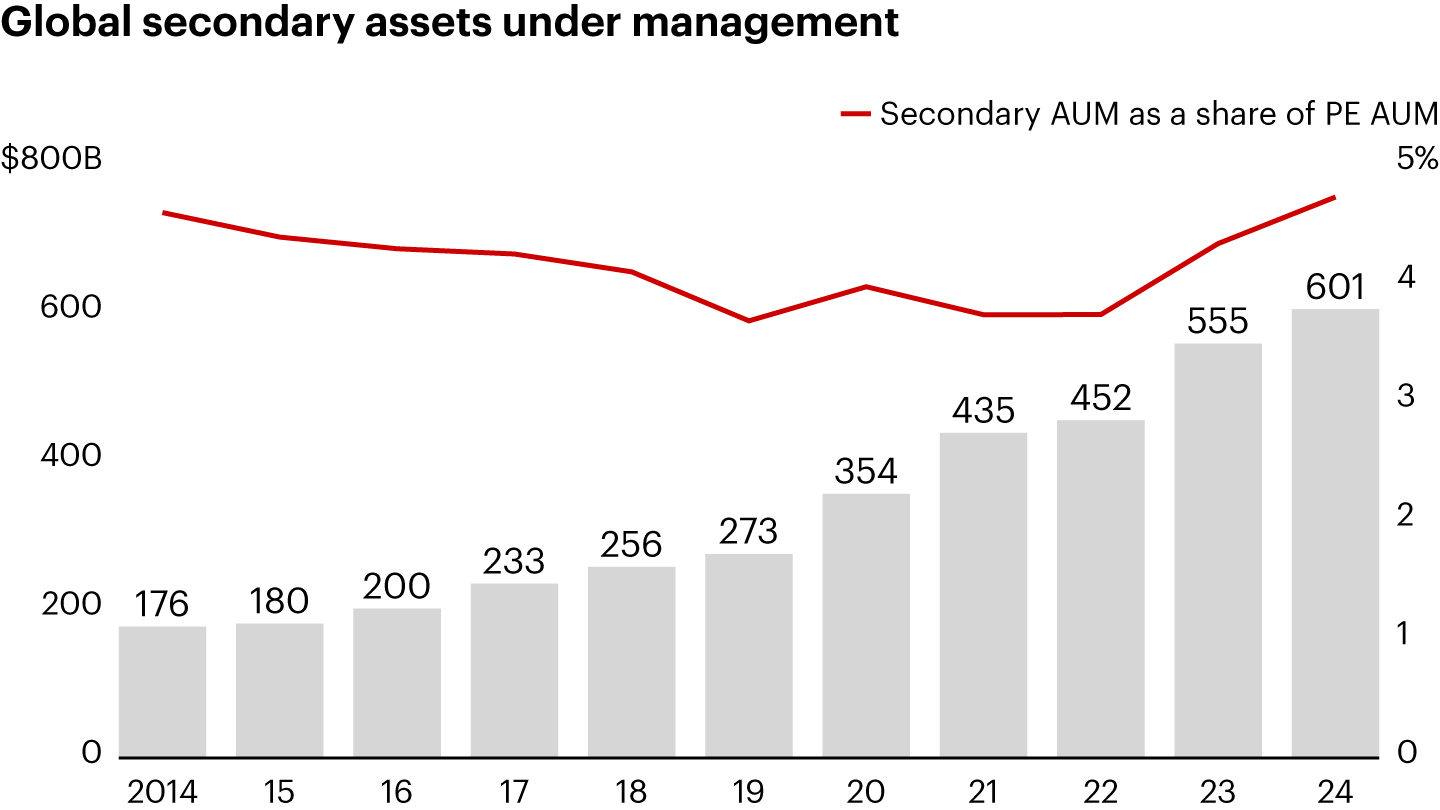

Appunti: Data through June 2024; includes private equity, real estate, infrastructure, and direct secondaries
Fonte: PreqinIt’s clear that these funds have staying power. While the current growth spurt owes much to the industry’s liquidity issues, the funds are generating returns for their originators on par with the broader buyout sector, with a narrower dispersion of returns.
NAV loans have grown steadily in recent years as well, as they provide GPs with relatively efficient ways to fund growth or add-on acquisitions. Increasingly, they also offer GPs a way to invest 100% of LPs’ commitments, vs. the full amount less the value of fees. Bridging that gap with a loan allows GPs to put more money to work on behalf of investors while making money on the spread between the NAV loan cost and the deal’s return. According to S&P Global, market participants expect that the $150 billion in NAV facilities currently in the market will double within the next two years.
Despite the rising popularity with GPs, LPs’ perceptions of NAV financing are mixed, particularly when it is used to provide financially engineered distributions. A survey by Capstone Partners suggests that around three-quarters of LPs are neutral to positive on GP-led secondaries as a mechanism to create liquidity, while close to 40% are neutral to positive on NAV loans.
Fund-raising
Fund-raising across private asset classes fell for the third year in a row, ending 2024 at $1.1 trillion, down 24% year over year and 40% off the all-time peak of $1.8 trillion in 2021 (see Figure 24). The number of funds closed dropped 28% to 3,000, which is about half the annual pace the industry was keeping before the Covid-19 pandemic.
Figure 24
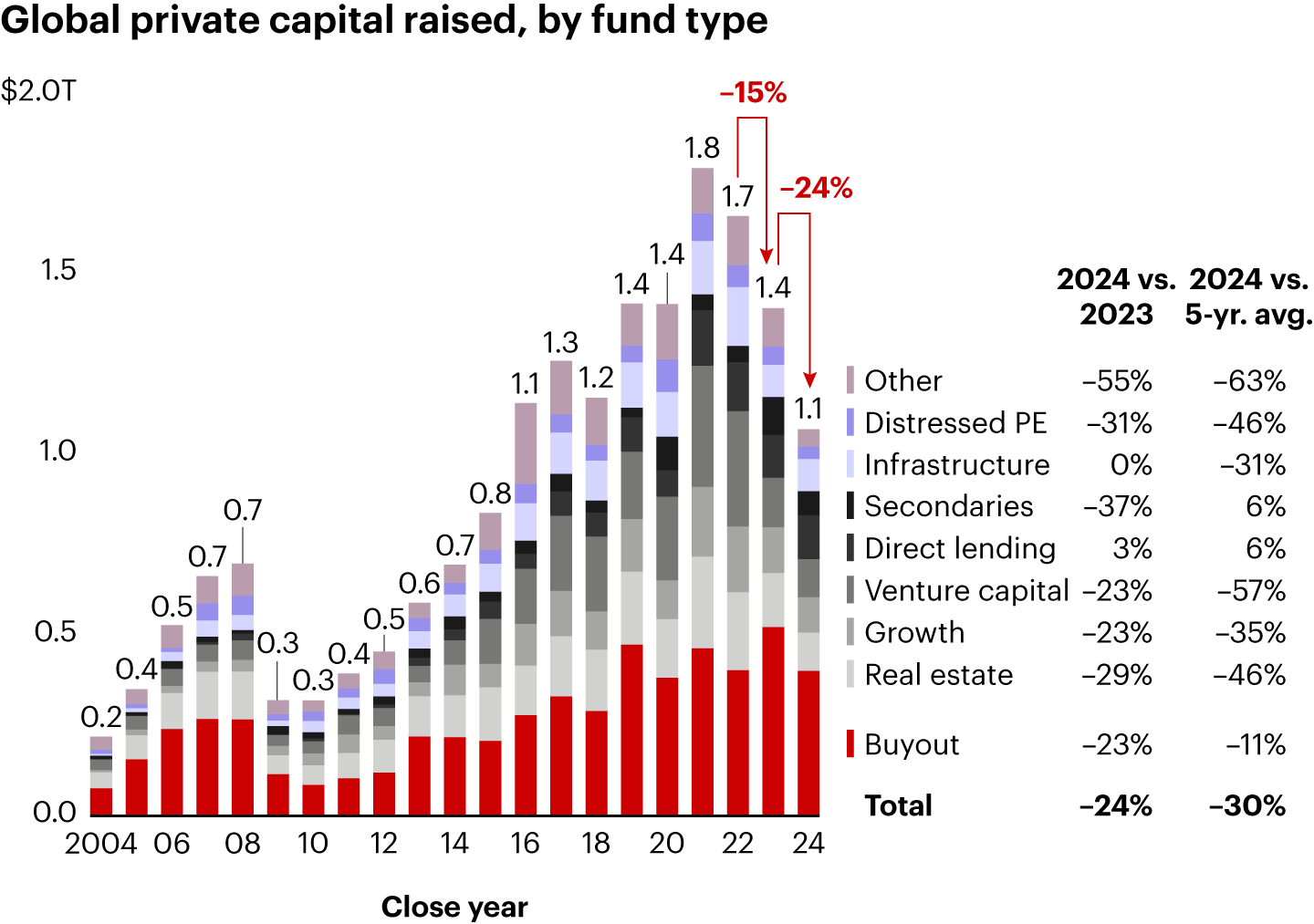

Appunti: Includes closed-end and commingled funds only; buyout category includes buyout, balanced, coinvestment, and coinvestment multimanager fund types; includes funds with final close and represents the year in which they held their final close; excludes SoftBank Vision Fund; other category includes fund of funds and mezzanine and excludes natural resources
Fonte: PreqinOnly two asset classes escaped declines. Infrastructure fund-raising was flat at $89 billion, although still 31% off its five-year average. Direct lending, meanwhile, was the year’s clear winner, with a 3% increase to $123 billion, which represents a 6% hike over its five-year average. As noted earlier, direct lending funds are taking full advantage of a pullback in high-yield bank lending as well as growth in innovative deal structures.
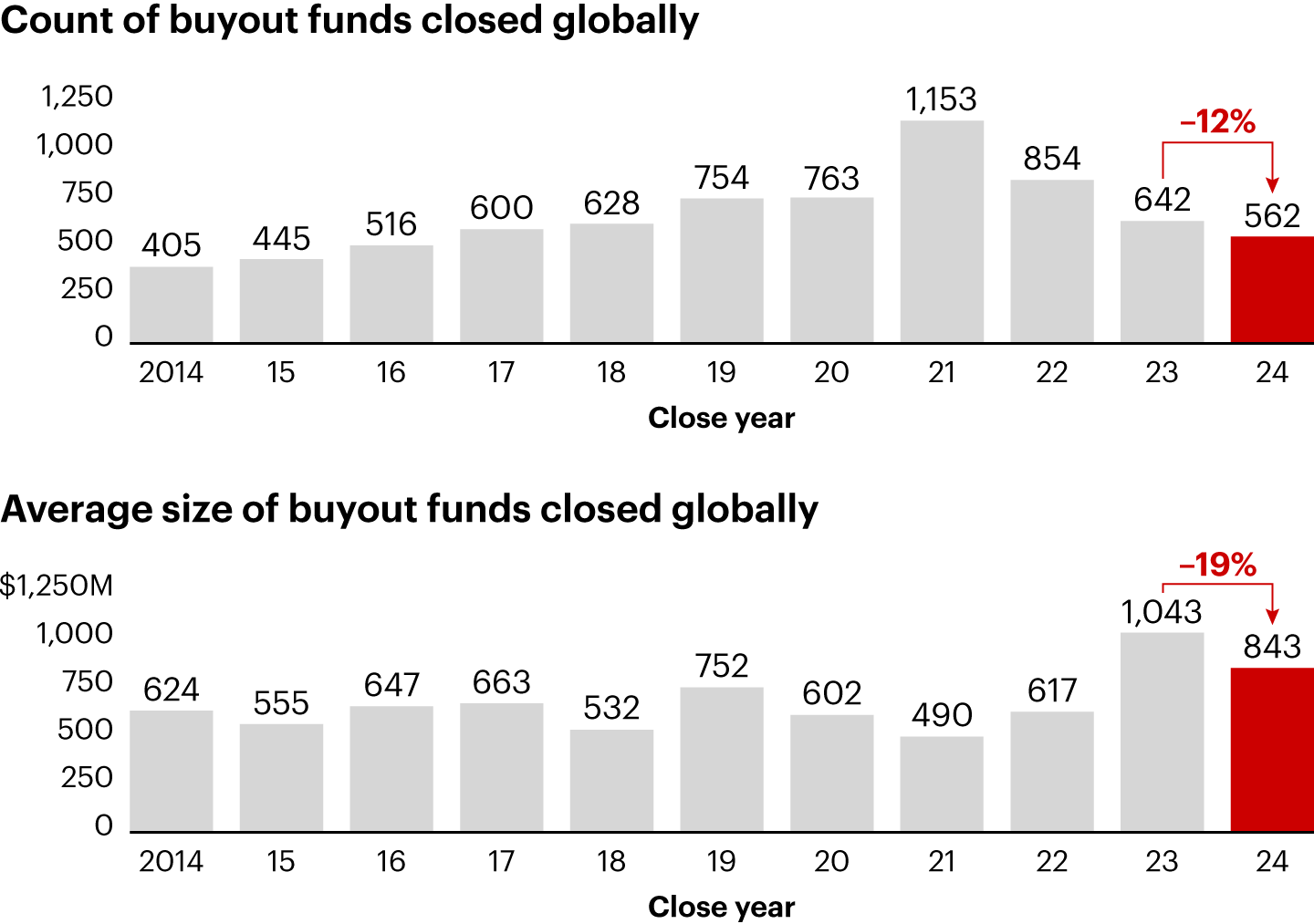
While the industry’s largest asset class—buyout—continued to capture more than a third (38%) of all private fund-raising, buyout funds raised 23% less than in 2023. The $401 billion in hand at the end of 2024 was about 11% below buyout’s five-year average. North America took the biggest hit with a 34% decline in funds raised, while Europe was essentially flat and Asia-Pacific came in 13% higher (see Figure 25). The number of funds in the market declined by 12% to 562, and average fund size slipped 19% to $843 million (see Figure 26).
Figure 25
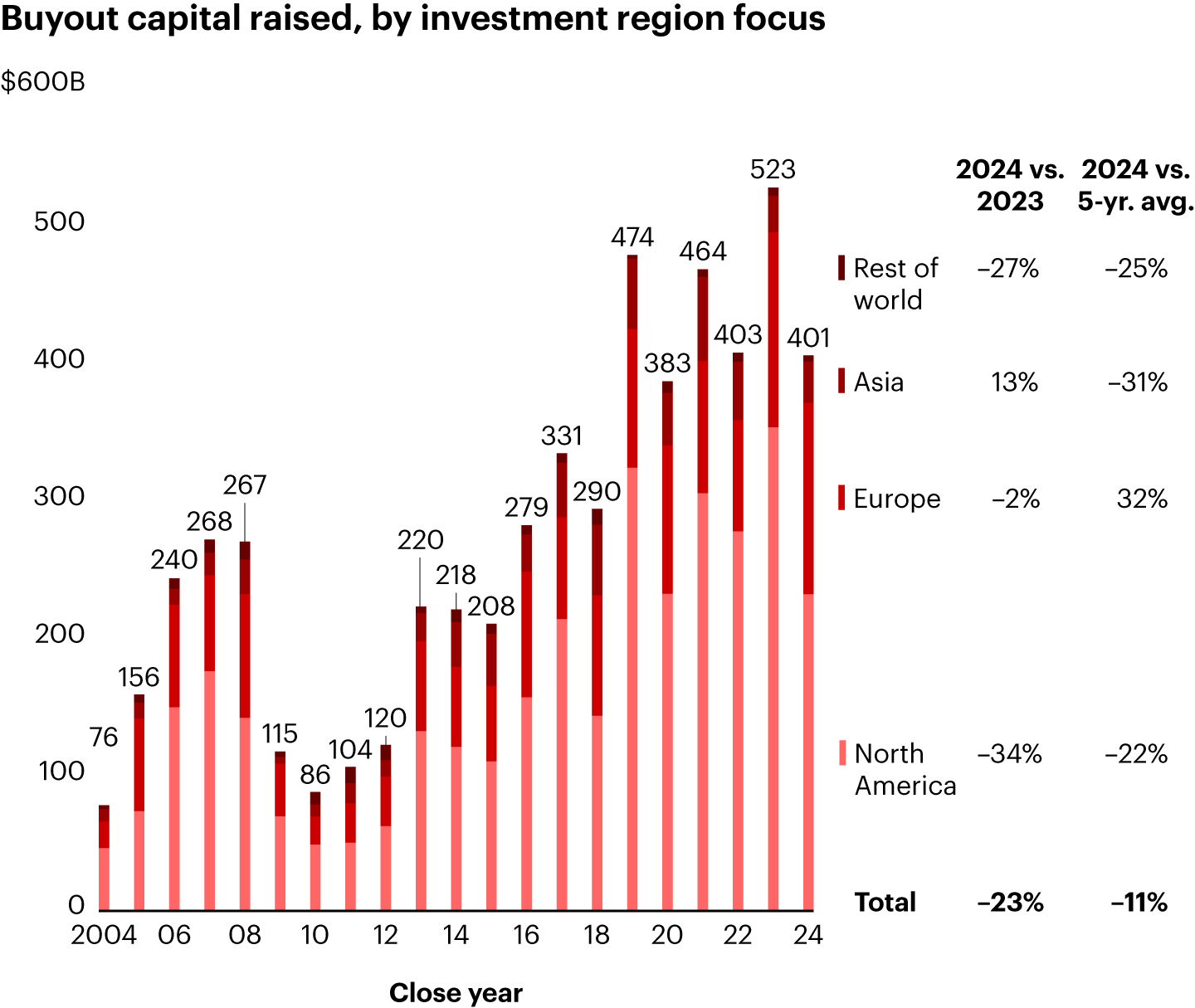

Appunti: Includes closed-end and commingled funds only; buyout category includes buyout, balanced, coinvestment, and coinvestment multimanager fund types; includes funds with final close and represents the year in which they held their final close; excludes SoftBank Vision Fund
Sources: Preqin; Bain analysis
Figure 26

Appunti: Includes closed-end and commingled funds only; count includes all buyout funds closed, including those for which the value of final funds raised is not available; average size is total funds raised across all buyout funds for which the value of final funds raised is available, divided by the total number of buyout funds for which the value of funds raised is known; buyout category includes buyout, balanced, coinvestment, and coinvestment multimanager fund types; excludes SoftBank Vision Fund
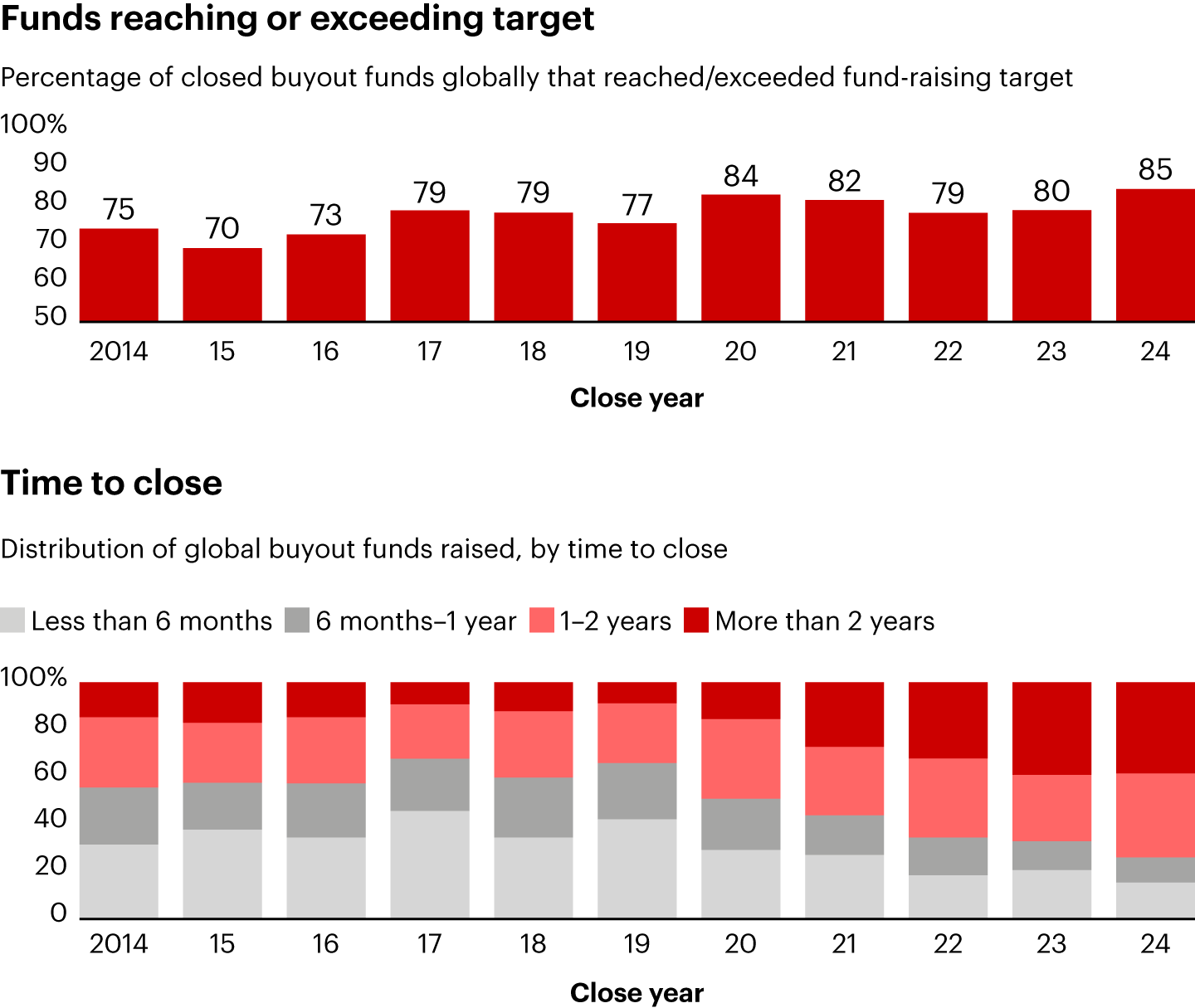
Fonte: PreqinWhile the number of buyout funds meeting or exceeding their fund-raising target in 2024 edged up to 85% from 80% in 2023, average time on the road stood at approximately 20 months, not much different than the average in 2022 and 2023, and almost double the typical pace of around 11 months seen before the pandemic. Most notable is the percentage of funds taking two years or more to close. That stood at 38% in 2024, up from 9% in 2019 (see Figure 27).
Figure 27

Appunti: Percentage of funds that reached/exceeded target based on share of count; distribution of global buyout funds raised by time to close includes only those funds for which date of launch is available; includes all buyout funds that closed in the respective year for which both the fund-raising target and the value of final funds raised is known; buyout category includes buyout, balanced, coinvestment, and coinvestment multimanager fund types; excludes SoftBank Vision Fund
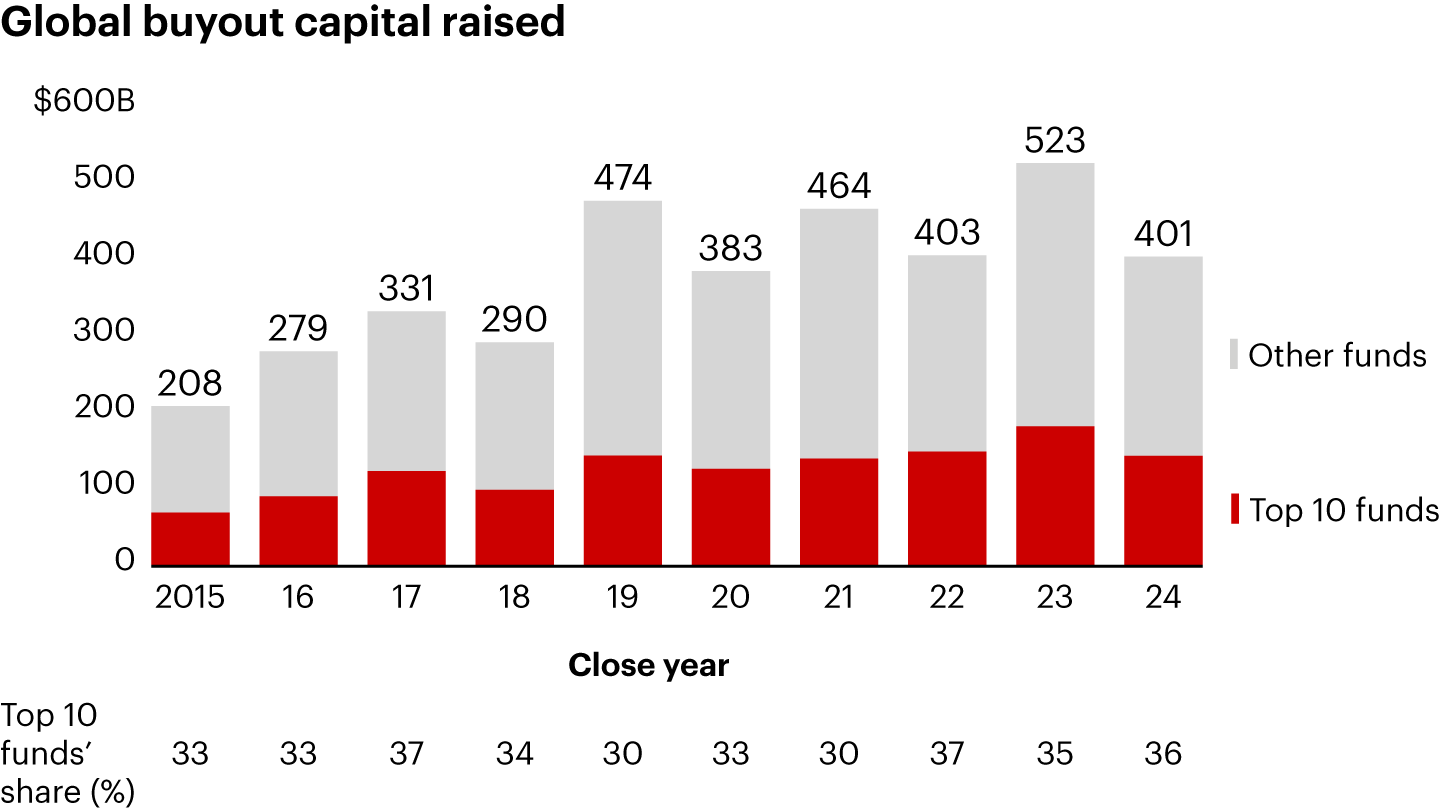
Sources: Preqin; Bain analysisLPs in 2024 continued to funnel capital to the largest, most experienced funds. The top 10 funds in capital raised captured 36% of the pie (see Figure 28). Essentially all capital (98%) went to experienced fund managers, and 40% went to funds raising $5 billion or more—a trend that has persisted since 2016.
Figure 28

Appunti: Top 10 funds defined as the largest 10 funds raised by value in a single year, independent of other years’ fund-raising levels; includes closed-end and commingled funds only; buyout category includes buyout, balanced, coinvestment, and coinvestment multimanager fund types; includes only those funds with final close data; excludes SoftBank Vision Fund
Sources: Preqin; Bain analysisOffering coinvestment is a good way to help attract capital in a highly competitive fund-raising environment. It gives LPs an opportunity to negotiate better economic terms, take a more active role in portfolio company management, and cultivate deeper relationships with GPs.
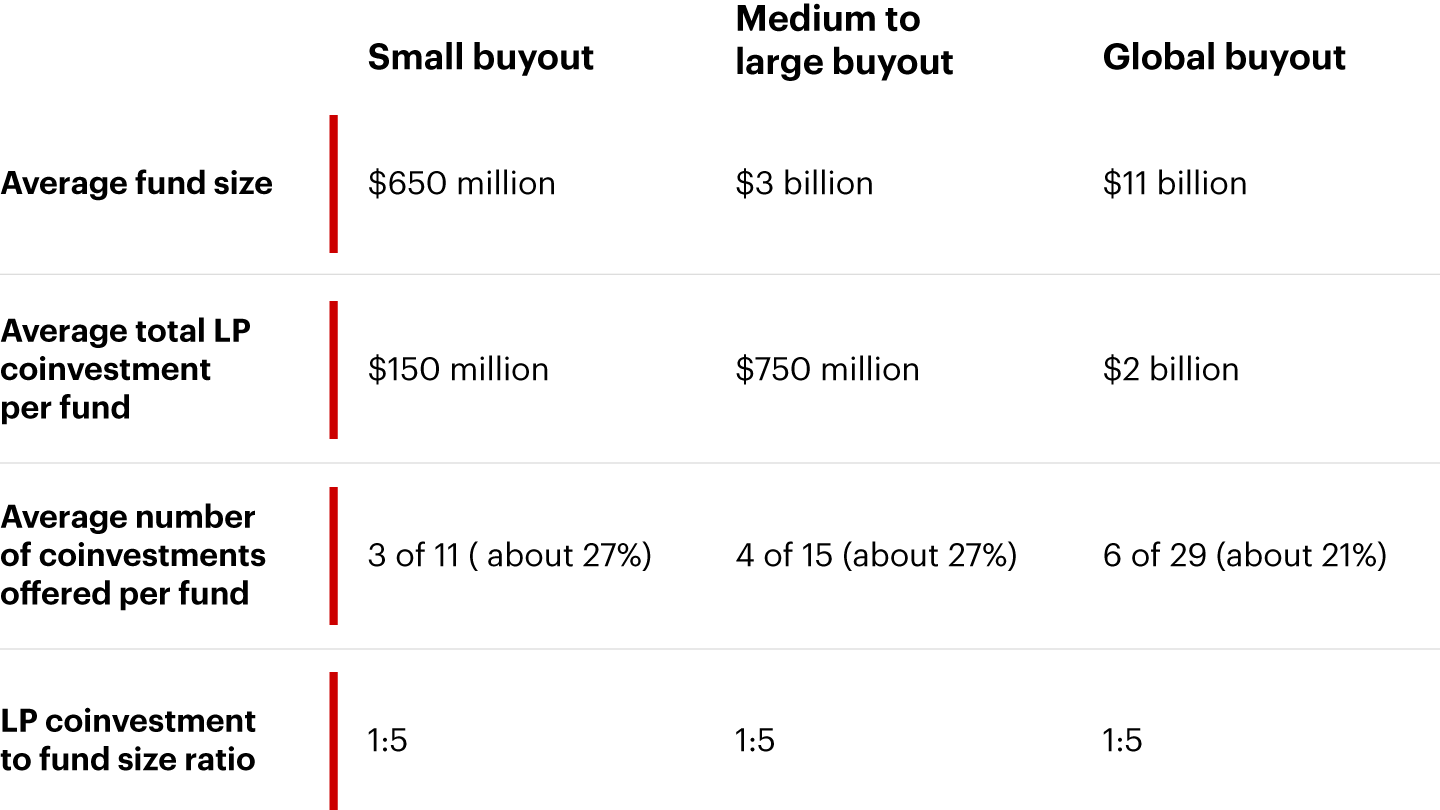
A StepStone survey of 145 GPs shows that, on average, the ratio of coinvestment capital to fund size is consistent at 1:5, or 20 cents on the dollar (see Figure 29). The number of coinvestment opportunities offered increases with fund size. An $11 billion global buyout fund, for instance, will attract $2 billion in coinvestment and offer six coinvestment opportunities, on average. It’s important to note, however, that this number can vary widely from fund to fund.
Figure 29

Appunti: StepStone survey covered more than 1,700 private equity buyout coinvestments completed by more than 145 GPs and 420 funds; includes buyout coinvestments from 2005 to 2023 for which StepStone tracks parent fund data; portfolio companies per fund represents the average for each sector, per SPI by StepStone
Fonte: StepStone Coinvestment Survey, September 2023The recent sharp drop in the number of funds on the road is a common pattern following periods of economic shock (see Figure 30). Typically, average fund size drops precipitously as well, but this time has been different. While the number of funds closing in the wake of the recent interest rate shock has dropped as usual, average fund size rose sharply until 2024. The average of $843 million, in fact, is well above the five-year average. The reason is clear: Investors are increasingly looking for the safe haven of large, experienced funds, especially those that offer a value proposition that stands out from the crowd.
Figure 30
This size/differentiation premium is also apparent in the turnover among the top 20 buyout firms over the past 15 years, measured by buyout capital raised. The incumbents tend to be scale firms with the resources and capabilities to win across multiple asset classes (e.g., Blackstone, CVC, KKR, Apollo, and TPG). Those that have joined more recently are firms with a clear focus, expertise, or capability set that enables them to consistently generate alpha—tech specialists like Thoma Bravo and Vista, for instance—or those with a particularly disciplined approach to buyout, like CD&R.
Returns
Buyout funds continue to outperform public markets in all regions across time horizons longer than five years (see Figure 31). But the trend over the past three years has been slightly downward, with 10-year returns falling 3 percentage points in North America and 1.5 points in Europe.
Figure 31
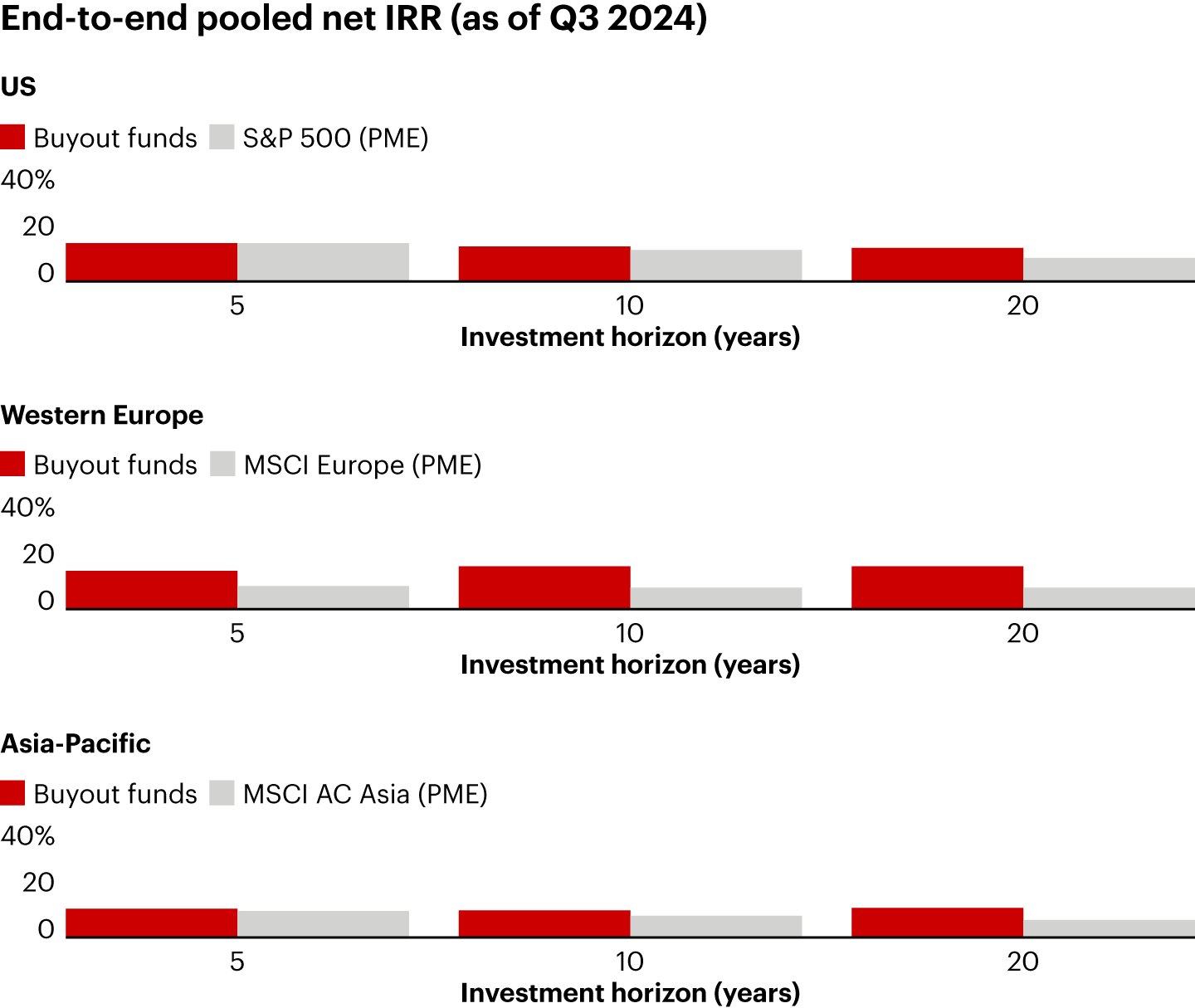

Appunti: Data for US and Asia-Pacific calculated in US dollars; data for Europe calculated in euros; public market equivalents calculated using the Long-Nickels index comparison method, an IRR-based methodology that makes meaningful comparisons between private capital investments and indexes; methodology assumes buying and selling the index according to the timing and size of the cash flows between the investor and the private investment; Western Europe includes 32 countries, as defined by MSCI
Fonte: MSCIAt the same time, public equities globally had a banner year in 2024, especially in the US, where a surge in tech stocks led by the Magnificent 7 drove the S&P 500 index to a 23% return. This run-up compressed the delta between average public and private 10-year returns in the US. In Europe, where public indexes are more balanced across industries, the gap in 10-year returns favoring private equity is much more consistent (see Figure 32).
Figure 32
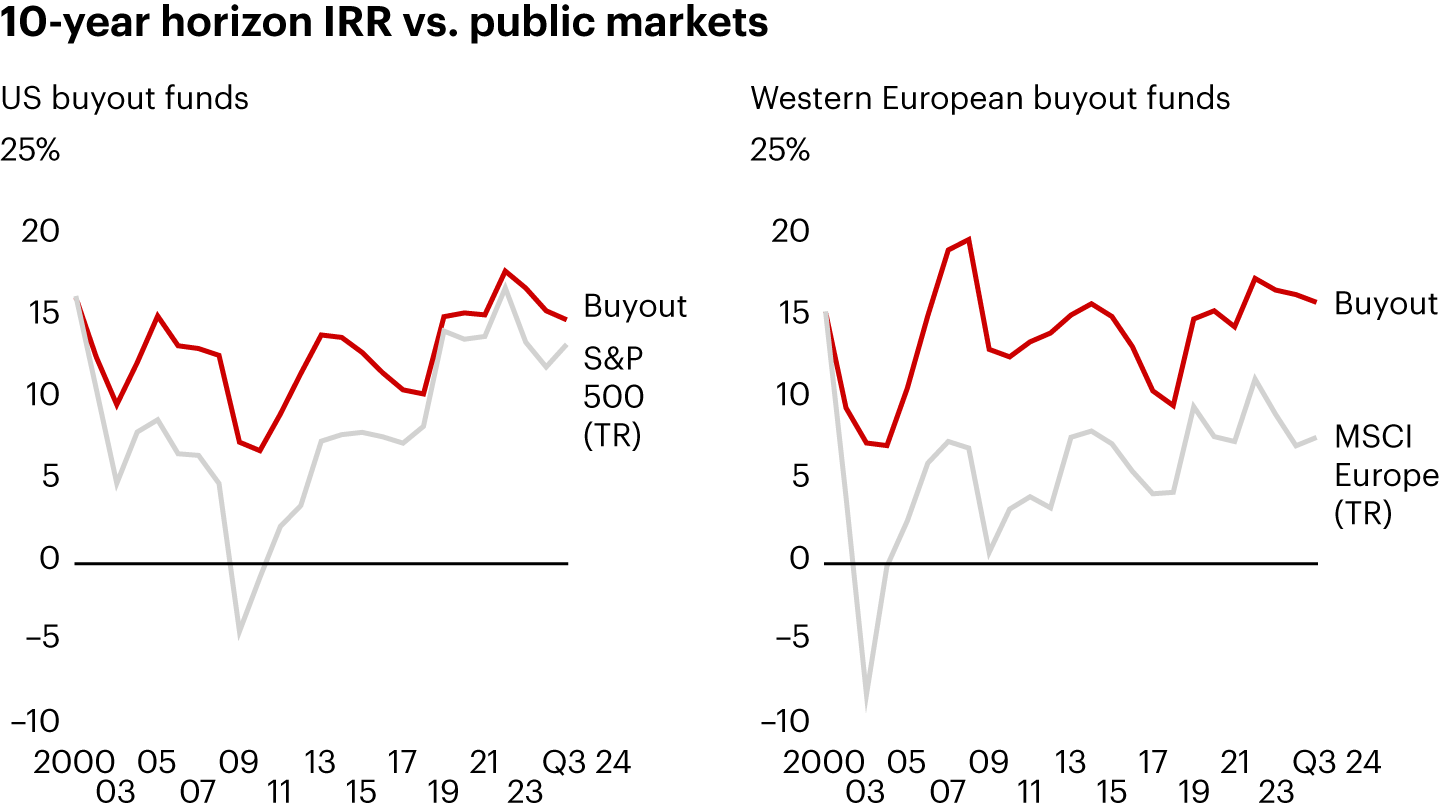

Appunti: MSCI TR calculated using public market equivalents via the Long-Nickels index comparison method, an IRR-based methodology that makes meaningful comparisons between private capital investments and indexes; methodology assumes buying and selling the index according to the timing and size of the cash flows between the investor and the private investment; Western Europe includes 32 countries, as defined by MSCI
Fonte: MSCIOf course, what matters most to private equity’s bread-and-butter investors is the opportunity to capture top-tier results, not averages. It’s also true that buyout returns overall are more balanced. The tech concentration in the S&P 500 is a turn-off for many investors. Indeed, one of the main drivers behind the growth of retail capital is that private equity funds can offer much better diversification for wealthy individuals.
Yet any fund aspiring to top-tier performance needs to understand that generating alpha has never been more challenging. Fierce competition for deals ensures multiples remain high. Elevated debt costs make it more difficult to capture value through leverage. Fees are under pressure, and costs are rising for everything from generating differentiated insights to running a world-class investor relations function.
What all this suggests is that, while the industry may be recovering from its latest shock to the system, strong performance is getting harder, not easier. Upturns inevitably present plenty of opportunities to lead. But the winners in the years ahead will be the funds that can demonstrate a consistent, differentiated model for value creation today and a clear strategy for maintaining growth and performance over the long term.