
Skip to Content
  • Uffici

    Uffici

    Nord e Sud America
    • Atlanta
    • Austin
    • Bogota
    • Boston
    • Buenos Aires
    • Chicago
    • Dallas
    • Denver
    • Houston
    • Los Angeles
    • Mexico City
    • Minneapolis
    • Monterrey
    • Montreal
    • New York
    • Rio de Janeiro
    • San Francisco
    • Santiago
    • São Paulo
    • Seattle
    • Silicon Valley
    • Toronto
    • Washington, DC
    Europa, Medio Oriente e Africa
    • Amsterdam
    • Athens
    • Berlin
    • Brussels
    • Copenhagen
    • Doha
    • Dubai
    • Dusseldorf
    • Frankfurt
    • Helsinki
    • Istanbul
    • Johannesburg
    • Kyiv
    • Lisbon
    • London
    • Madrid
    • Milan
    • Munich
    • Oslo
    • Paris
    • Riyadh
    • Rome
    • Stockholm
    • Vienna
    • Warsaw
    • Zurich
    Asia e Australia
    • Bangkok
    • Beijing
    • Bengaluru
    • Brisbane
    • Ho Chi Minh City
    • Hong Kong
    • Jakarta
    • Kuala Lumpur
    • Manila
    • Melbourne
    • Mumbai
    • New Delhi
    • Perth
    • Seoul
    • Shanghai
    • Singapore
    • Sydney
    • Tokyo
    Guarda tutti gli uffici
  • Alumni
  • Media Center
  • Iscriviti
  • Contattaci
  • Italy | Italiano

    Seleziona il tuo Paese e la tua lingua

    Global
    • Global (English)
    Nord e Sud America
    • Brazil (Português)
    • Argentina (Español)
    • Canada (Français)
    • Chile (Español)
    • Colombia (Español)
    Europa, Medio Oriente e Africa
    • France (Français)
    • DACH Region (Deutsch)
    • Italy (Italiano)
    • Spain (Español)
    • Greece (Elliniká)
    Asia e Australia
    • China (中文版)
    • Korea (한국어)
    • Japan (日本語)
  • Saved items (0)
    Saved items (0)

    You have no saved items.

    Contrassegna il contenuto che ti interessa e verrà salvato qui. Potrai leggerlo o condividerlo in seguito.

    Explore Bain Insights
  • Settori
    Menu principale

    Settori

    • Aerospazio e Difesa
    • Agribusiness
    • Chimica
    • Infrastrutture e Costruzioni
    • Beni di Largo Consumo
    • Servizi Finanziari
    • Sanità
    • Macchinari Industriali
    • Media & Intrattenimento
    • Industria Metallurgica
    • Industria Mineraria
    • Petrolio e Gas
    • Industria Cartaria e Packaging
    • Private Equity
    • Settore Sociale & Pubblico
    • Retail
    • Tecnologia
    • Telecomunicazioni
    • Compagnie Aeree & Trasporti
    • Viaggi e Svago
    • Utility e Rinnovabili
  • Servizi di Consulenza
    Menu principale

    Servizi di Consulenza

    • Customer Experience
    • ESG
    • Innovation
    • M&A and Divestitures
    • Operation
    • People & Organization
    • Private Equity
    • Sales & Marketing
    • Strategia
    • IA, Approfondimenti e Soluzioni
    • Tecnologia
    • Trasformazione
  • Digital
  • Tematiche
  • Informazioni su Bain
    Menu principale

    Informazioni su Bain

    • Che Cosa Facciamo
    • Quello in Cui Crediamo
    • Le Nostre Persone e la Leadership
    • Risultati
    • Premi e Riconoscimenti
    • Organizzazioni Globali
    Further: Our global responsibility
    • Diversità e Inclusione
    • Social Impact
    • Sustainability
    • World Economic Forum
    Learn more about Further
  • Careers
    Menu principale

    Careers

    • Work with Us
      Careers
      Work with Us
      • Find Your Place
      • Our Work Areas
      • Integrated Teams
      • Students
      • Internships & Programs
      • Recruiting Events
    • Life at Bain
      Careers
      Life at Bain
      • Blog: Inside Bain
      • Career Stories
      • Our People
      • Where We Work
      • Supporting Your Growth
      • Affinity Groups
      • Benefits
    • Impact Stories
    • Hiring Process
      Careers
      Hiring Process
      • What to Expect
      • Interviewing
    FIND JOBS
  • Uffici
    Menu principale

    Uffici

    • Nord e Sud America
      Uffici
      Nord e Sud America
      • Atlanta
      • Austin
      • Bogota
      • Boston
      • Buenos Aires
      • Chicago
      • Dallas
      • Denver
      • Houston
      • Los Angeles
      • Mexico City
      • Minneapolis
      • Monterrey
      • Montreal
      • New York
      • Rio de Janeiro
      • San Francisco
      • Santiago
      • São Paulo
      • Seattle
      • Silicon Valley
      • Toronto
      • Washington, DC
    • Europa, Medio Oriente e Africa
      Uffici
      Europa, Medio Oriente e Africa
      • Amsterdam
      • Athens
      • Berlin
      • Brussels
      • Copenhagen
      • Doha
      • Dubai
      • Dusseldorf
      • Frankfurt
      • Helsinki
      • Istanbul
      • Johannesburg
      • Kyiv
      • Lisbon
      • London
      • Madrid
      • Milan
      • Munich
      • Oslo
      • Paris
      • Riyadh
      • Rome
      • Stockholm
      • Vienna
      • Warsaw
      • Zurich
    • Asia e Australia
      Uffici
      Asia e Australia
      • Bangkok
      • Beijing
      • Bengaluru
      • Brisbane
      • Ho Chi Minh City
      • Hong Kong
      • Jakarta
      • Kuala Lumpur
      • Manila
      • Melbourne
      • Mumbai
      • New Delhi
      • Perth
      • Seoul
      • Shanghai
      • Singapore
      • Sydney
      • Tokyo
    Guarda tutti gli uffici
  • Alumni
  • Media Center
  • Iscriviti
  • Contattaci
  • Italy | Italiano
    Menu principale

    Seleziona il tuo Paese e la tua lingua

    • Global
      Seleziona il tuo Paese e la tua lingua
      Global
      • Global (English)
    • Nord e Sud America
      Seleziona il tuo Paese e la tua lingua
      Nord e Sud America
      • Brazil (Português)
      • Argentina (Español)
      • Canada (Français)
      • Chile (Español)
      • Colombia (Español)
    • Europa, Medio Oriente e Africa
      Seleziona il tuo Paese e la tua lingua
      Europa, Medio Oriente e Africa
      • France (Français)
      • DACH Region (Deutsch)
      • Italy (Italiano)
      • Spain (Español)
      • Greece (Elliniká)
    • Asia e Australia
      Seleziona il tuo Paese e la tua lingua
      Asia e Australia
      • China (中文版)
      • Korea (한국어)
      • Japan (日本語)
  • Saved items  (0)
    Menu principale
    Saved items (0)

    You have no saved items.

    Contrassegna il contenuto che ti interessa e verrà salvato qui. Potrai leggerlo o condividerlo in seguito.

    Explore Bain Insights
  • Settori
    • Settori

      • Aerospazio e Difesa
      • Agribusiness
      • Chimica
      • Infrastrutture e Costruzioni
      • Beni di Largo Consumo
      • Servizi Finanziari
      • Sanità
      • Macchinari Industriali
      • Media & Intrattenimento
      • Industria Metallurgica
      • Industria Mineraria
      • Petrolio e Gas
      • Industria Cartaria e Packaging
      • Private Equity
      • Settore Sociale & Pubblico
      • Retail
      • Tecnologia
      • Telecomunicazioni
      • Compagnie Aeree & Trasporti
      • Viaggi e Svago
      • Utility e Rinnovabili
  • Servizi di Consulenza
    • Servizi di Consulenza

      • Customer Experience
      • ESG
      • Innovation
      • M&A and Divestitures
      • Operation
      • People & Organization
      • Private Equity
      • Sales & Marketing
      • Strategia
      • IA, Approfondimenti e Soluzioni
      • Tecnologia
      • Trasformazione
  • Digital
  • Tematiche
  • Informazioni su Bain
    • Informazioni su Bain

      • Che Cosa Facciamo
      • Quello in Cui Crediamo
      • Le Nostre Persone e la Leadership
      • Risultati
      • Premi e Riconoscimenti
      • Organizzazioni Globali
      Further: Our global responsibility
      • Diversità e Inclusione
      • Social Impact
      • Sustainability
      • World Economic Forum
      Learn more about Further
  • Careers
    Ricerche più popolari
    • Agile
    • Digitale
    • Strategia
    La tue ricerche precedenti
      Pagine visitate

      Content added to saved items

      Saved items (0)

      Removed from saved items

      Saved items (0)

      Technology Report

      Prepare for the Coming AI Chip Shortage

      Prepare for the Coming AI Chip Shortage

      While businesses couldn’t predict the pandemic, they can guard against the next big threat to semiconductor supply chains.

      Di Peter Hanbury, Anne Hoecker, e Michael Schallehn

      • Tempo di lettura min.
      }

      Report

      Prepare for the Coming AI Chip Shortage
      en
      In evidenza
      • The AI-driven surge in demand for graphics processing units alone could increase total demand for certain upstream components by 30% or more by 2026.
      • Just as the pandemic created a surge in PC demand, a coming wave of AI-enabled devices will likely accelerate smartphone and PC upgrade purchases.
      • These two trends, along with continued geopolitical tensions and other supply risks, could trigger the next semiconductor shortage.
      • Proactive measures, including long-term purchase agreements and supply chain diversification, will be critical to mitigating looming risks.

      This article is part of Bain's 2024 Technology Report.

      Explore the report

      The supply and demand of semiconductors is a delicate balance that can be quickly shaken, as the industry and its customers know all too well after the past few years. Although the pandemic-induced chip shortage has passed, executives are starting to prepare for the next potential crunch caused by (you guessed it) artificial intelligence.

      Accelerating adoption of AI across industries will pressure the supply of graphics processing units (GPUs) for data centers, as a seemingly insatiable demand for computing resources to train and operate large language models (LLMs) collides with supply chain constraints. In addition, the coming proliferation of AI-enabled devices appears poised to jumpstart a wave of purchases of new personal computers (PCs) and smartphones, which has major implications for the broader semiconductor supply chain.

      The semiconductor supply chain is incredibly complex, and a demand increase of about 20% or more has a high likelihood of upsetting the equilibrium and causing a chip shortage. The AI explosion across the confluence of the large end markets could easily surpass that threshold, creating vulnerable chokepoints throughout the supply chain (see Figure 1).

      Figure 1
      Surging demand for AI computing power will strain the supply chains for data center chips, personal computers, and smartphones

      Balancing semiconductor supply and demand has always been difficult given the industry’s fast-moving technologies, large capital requirements, and long lead times to add production capacity. But chip suppliers and buyers must act quickly to get ahead of this next, potentially massive crunch. Let’s unpack how things could play out across potential demand and supply shocks.

      Data center demand

      Generative AI’s breakthrough in late 2022 has so far been a boon for the semiconductor industry. The sales and valuation of chipmakers have grown enormously, from leading GPU sellers such as Nvidia to vendors who supply other chips into data centers, including Broadcom (switches) and SK Hynix (high-bandwidth memory). Spending on data centers and the specialized chips that power them shows no signs of slowing. Major cloud service providers are expected to increase their year-over-year capital spending by 36% in 2024, spurred in large part by investments in AI and accelerated computing. GPU demand will continue to grow as LLMs expand capabilities to processing multiple data types simultaneously (text, images, and audio) and as venture capitalists pour even more money into AI start-ups.

      If data center demand for current-generation GPUs doubled by 2026—a reasonable assumption given current trajectory—suppliers of key components would need to increase their output by 30% or more in some cases, based on Bain’s forecasting model that accounts for the intricacies of the multi-level semiconductor supply chain (see Figure 1 above). This pull-through demand will be concentrated in advanced packaging and memory. In the scenario above, makers of chip-on-wafer-on-substrate (CoWoS) packaging components would need to almost triple production capacity by 2026.

      To enable AI growth, a complex web of supply chain elements must come together, from constructing data centers and wafer fabs to securing access to advanced packaging and sufficient electricity. Obtaining many of these crucial elements involves long lead times that may make it impossible to keep up with demand (see Figure 2).

      Figure 2
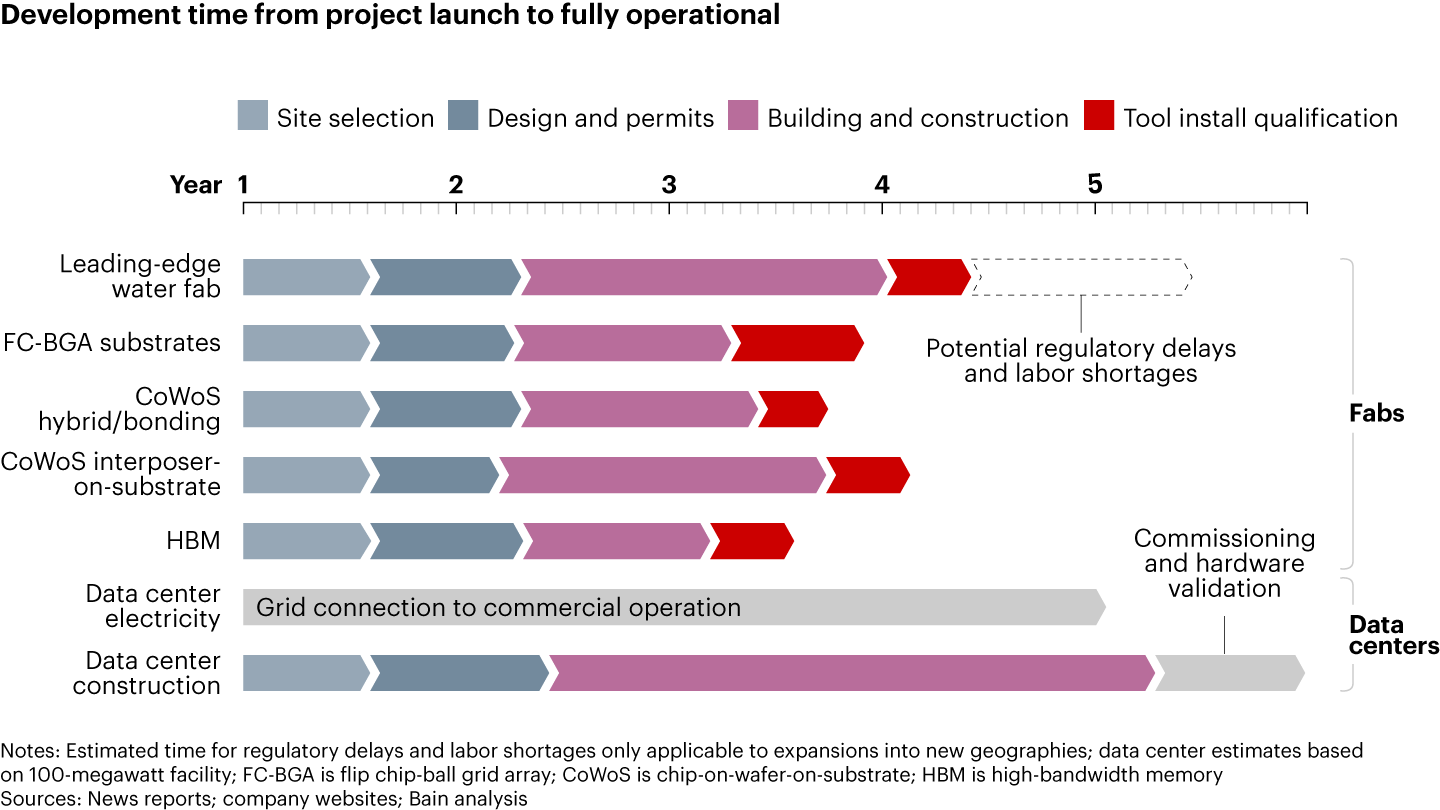
      A complex set of components, resources, and services must come together to meet demand for AI computing power

      Importantly, many of these supply chain elements are shared with other parts of the technology ecosystem, and they’re all subject to capital, geopolitical, and timing risks. One missing chip could derail the entire system, like in the last shortage when new cars sat unsold in lots because they lacked a critical chip.

      PC and smartphone demand

      Personal device makers are already rapidly embedding AI capabilities directly into their products. To accommodate neural processing engines for on-device AI, the average notebook core processing unit (CPU) and smartphone processor have respectively added about 5% and 16% more silicon surface area, according to our benchmarking.

      More importantly, as AI applications grow in usefulness, buyers looking to upgrade could accelerate their new device purchases, causing an uptick in demand similar to how the pandemic spurred a short-term surge in PC demand (see Figure 3).

      Figure 3
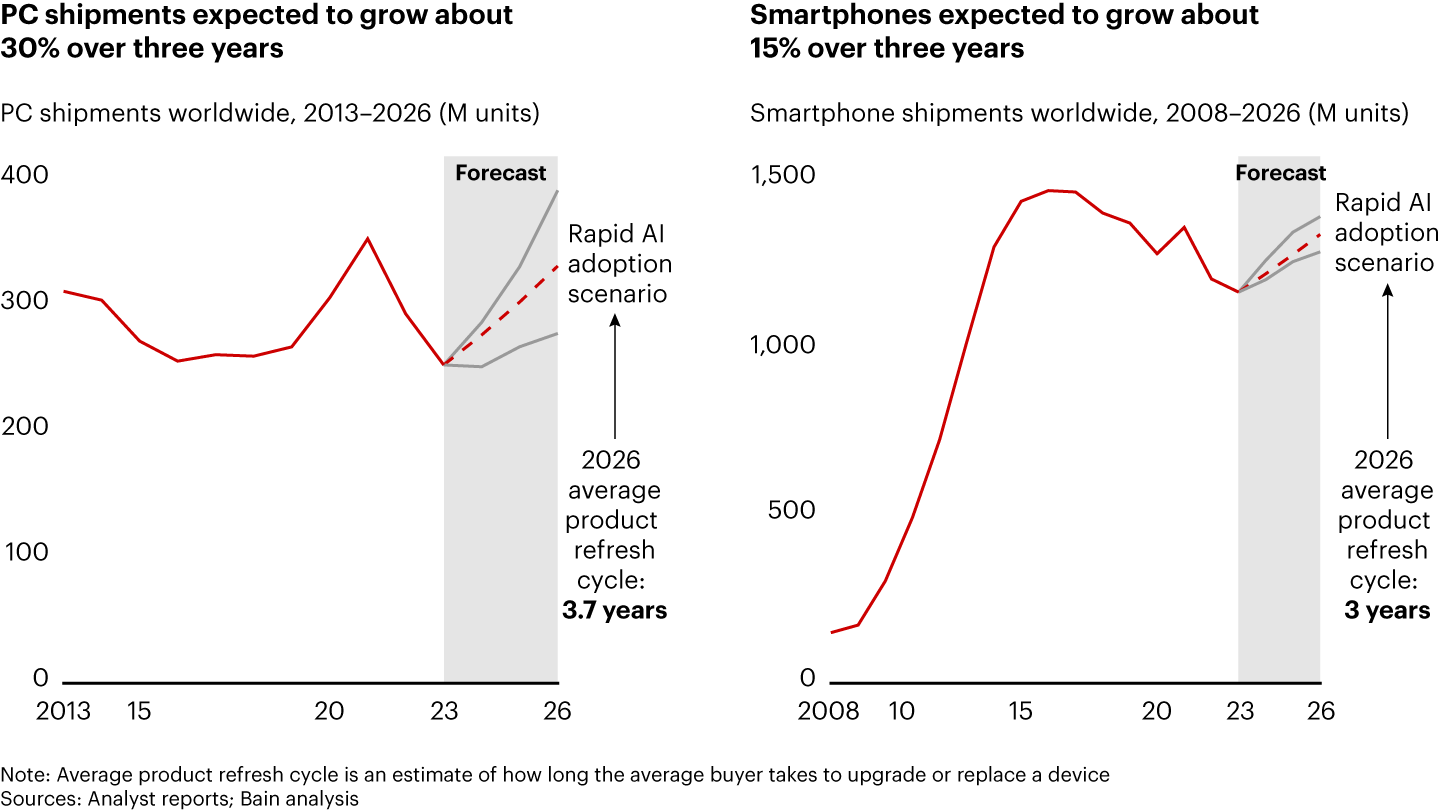
      AI could sharply accelerate PC and smartphone sales, similar to how the pandemic created a surge in PC demand

      Compared with GPUs, AI demand will have a wider effect on semiconductor supply chains for smartphones and PCs given the long list of components associated with these devices. The most vulnerable link in these devices’ supply chains will be bleeding-edge fabs that manufacture the most advanced chips. In a rapid AI adoption scenario that spurs 31% PC sales growth and 15% smartphone growth between 2023 and 2026, bleeding-edge fabs would need to raise output by an estimated 25% to 35%. This would require building four or five additional bleeding-edge fabs costing an estimated $40 billion to $75 billion, which would help justify the many fabs that major foundries are already building.

      Don’t forget the supply risks

      Extreme weather, natural disasters, geopolitical strife, a pandemic, and other major disruptions over the past decade have made abundantly clear how supply shocks can severely limit the industry’s ability to meet demand. Much of the pressure on GPU supply over the last 18 months was caused by disruptions to less visible elements of the supply chain, such as CoWoS advanced packaging capabilities.

      Geopolitical tensions, trade restrictions, and multinational tech companies’ decoupling of their supply chains from China continue to pose serious risks to semiconductor supply. Delays in factory construction, materials shortages, and other unpredictable factors could also create pinch points. Without accounting for these uncertainties, we expect the largest supply risks to come from larger demand for high-bandwidth memory components, advanced packaging fab and tool construction, and substrate fab construction. 

      Takeaways for executives

      For semiconductor buyers across industries, navigating these supply chain intricacies starts with a deep understanding of the components being sourced. Effective leaders will pay extra attention to components that intersect with AI data centers, such as switches, transceivers, and power management integrated circuits. They’ll closely monitor PC and smartphone refresh cycles, as well as related peripherals like Wi-Fi routers and network equipment. A surge in these areas will have cascading effects across the supply chain that must each be closely tracked. 

      Leading companies will apply lessons from the most recent chip crunch to keep their inventories safely balanced between shortages and gluts. They’ll sign long-term purchase agreements to secure access to chips and manufacturing capacity based on anticipated future needs (and they’ll share this visibility with their suppliers). The “just-in-time” inventory strategy that dominated the past several decades will continue giving way to a “just-in-case” approach that’s higher cost but more resilient. More companies will design products to use industry-standard semiconductors where possible instead of application-specific chips. They’ll also continue to invest in supply chain resilience against geopolitical uncertainties such as tariffs or regulations. Lastly, they’ll monitor silicon advanced packaging and substrate supply as closely as they do front-end semiconductor manufacturing capacity.

      Executives may still feel weary from the semiconductor supply disruptions spurred by the pandemic, but there's no time to rest because the next big supply shock looms. This time, however, the signs are clear, and the industry has a chance to prepare. The path forward demands vigilance, strategic foresight, and swift action to reinforce supply chains. With proactive measures, business leaders can ensure their resilience and success in an increasingly AI-enabled world.

      Read the Next Chapter

      Thriving as the Software Cycle Slows

      Read our 2024 Technology Report

      Download the PDF Explore the report

      More from the report

      • Commercializing Innovation

      • Investing in a Shifting Market

      • Scope M&A

      • Sovereign AI

      • Top AI Functions

      • The AI Opportunity

      • Big and Small Computing

      • The AI Chip Shortage

      • The Software Cycle

      • AI in Tech Services

      • Deploying Generative AI

      • Software Development Efficiency

      • Customer Success

      • AI Everywhere

      Autori
      • Headshot of Peter Hanbury
        Peter Hanbury
        Partner, San Francisco
      • Headshot of Anne Hoecker
        Anne Hoecker
        Partner, Silicon Valley
      • Headshot of Michael Schallehn
        Michael Schallehn
        Partner, Silicon Valley
      Contattaci
      Industry collegate
      • Industria 4.0 e Servizi
      • Semiconductors
      • Tecnologia
      Servizi di consulenza collegati
      • AI, Insights, and Solutions
      • Digital
      • Supply Chain
      Come possiamo aiutarti
      • Artificial Intelligence
      Technology Report
      Quantum Computing Moves from Theoretical to Inevitable

      Quantum will likely become part of a mosaic, working with classical computing to solve big problems.

      Leggi di più
      Tecnologia
      The Chip Shortage Recovery Has Turned a Corner

      Semiconductor delivery times have shortened, but they remain higher than prepandemic levels.

      Leggi di più
      Artificial Intelligence Insights
      What Business Leaders Need to Know About AI Sovereignty

      Aligning business strategy with national AI priorities is necessary to compete and scale.

      Leggi di più
      Artificial Intelligence Insights
      AI Is Revolutionizing Industrial Operations

      Supply chain planning, procurement enhancements, manufacturing optimization, and engineering augmentation are emerging AI opportunities.

      Leggi di più
      Technology Report
      How Can We Meet AI’s Insatiable Demand for Compute Power?

      Technological innovation, new revenue, and public support may be needed to fund and supply enough electricity.

      Leggi di più
      First published in settembre 2024
      Tags
      • AI, Insights, and Solutions
      • Artificial Intelligence
      • Artificial Intelligence Insights
      • CIO Insights
      • Digital
      • Industria 4.0 e Servizi
      • Semiconductors
      • Supply Chain
      • Technology Report
      • Tecnologia

      Come abbiamo aiutato i nostri clienti

      Sostenibilità e Corporate Responsibility Can Microchips Turbocharge Sustainability Improvement?

      Leggi un caso di studio

      Supply Chain Security Mitigates a Sovereign Wealth Fund’s Construction Disruptions

      Leggi un caso di studio

      Helping a Midsize ERP Player Compete against the Giants

      Leggi un caso di studio

      Vuoi continuare la conversazione?

      Aiutiamo i leader globali e le loro aziende ad affrontare problemi e a cogliere le opportunità. Sosteniamo cambiamenti e otteniamo risultati duraturi.

      Bain Insights. Le nostre idee e punti di vista sulle tematiche che le aziende globali affrontano ogni giorno, arrivano nella tua email tutti i mesi.

      *Ho letto l'Informativa sulla Privacy e accetto i termini e le condizioni.

      Si prega di leggere e accettare l’Informativa sulla Privacy
      Bain & Company
      Contattaci Sustainability Accessibility Condizioni d’uso Privacy Cookie Policy Sitemap Log In

      © 1996-2026 Bain & Company, Inc.

      Contatta Bain

      Come posso aiutarti?

      • Business inquiry
      • Career information
      • Press relations
      • Partnership request
      • Speaker request
      Guarda tutti gli uffici