
Skip to Content
  • Uffici

    Uffici

    Nord e Sud America
    • Atlanta
    • Austin
    • Bogota
    • Boston
    • Buenos Aires
    • Chicago
    • Dallas
    • Denver
    • Houston
    • Los Angeles
    • Mexico City
    • Minneapolis
    • Monterrey
    • Montreal
    • New York
    • Rio de Janeiro
    • San Francisco
    • Santiago
    • São Paulo
    • Seattle
    • Silicon Valley
    • Toronto
    • Washington, DC
    Europa, Medio Oriente e Africa
    • Amsterdam
    • Athens
    • Berlin
    • Brussels
    • Copenhagen
    • Doha
    • Dubai
    • Dusseldorf
    • Frankfurt
    • Helsinki
    • Istanbul
    • Johannesburg
    • Kyiv
    • Lisbon
    • London
    • Madrid
    • Milan
    • Munich
    • Oslo
    • Paris
    • Riyadh
    • Rome
    • Stockholm
    • Vienna
    • Warsaw
    • Zurich
    Asia e Australia
    • Bangkok
    • Beijing
    • Bengaluru
    • Brisbane
    • Ho Chi Minh City
    • Hong Kong
    • Jakarta
    • Kuala Lumpur
    • Manila
    • Melbourne
    • Mumbai
    • New Delhi
    • Perth
    • Seoul
    • Shanghai
    • Singapore
    • Sydney
    • Tokyo
    Guarda tutti gli uffici
  • Alumni
  • Media Center
  • Iscriviti
  • Contattaci
  • Italy | Italiano

    Seleziona il tuo Paese e la tua lingua

    Global
    • Global (English)
    Nord e Sud America
    • Brazil (Português)
    • Argentina (Español)
    • Canada (Français)
    • Chile (Español)
    • Colombia (Español)
    Europa, Medio Oriente e Africa
    • France (Français)
    • DACH Region (Deutsch)
    • Italy (Italiano)
    • Spain (Español)
    • Greece (Elliniká)
    Asia e Australia
    • China (中文版)
    • Korea (한국어)
    • Japan (日本語)
  • Saved items (0)
    Saved items (0)

    You have no saved items.

    Contrassegna il contenuto che ti interessa e verrà salvato qui. Potrai leggerlo o condividerlo in seguito.

    Explore Bain Insights
  • Settori
    Menu principale

    Settori

    • Aerospazio e Difesa
    • Agribusiness
    • Chimica
    • Infrastrutture e Costruzioni
    • Beni di Largo Consumo
    • Servizi Finanziari
    • Sanità
    • Macchinari Industriali
    • Media & Intrattenimento
    • Industria Metallurgica
    • Industria Mineraria
    • Petrolio e Gas
    • Industria Cartaria e Packaging
    • Private Equity
    • Settore Sociale & Pubblico
    • Retail
    • Tecnologia
    • Telecomunicazioni
    • Compagnie Aeree & Trasporti
    • Viaggi e Svago
    • Utility e Rinnovabili
  • Servizi di Consulenza
    Menu principale

    Servizi di Consulenza

    • Customer Experience
    • ESG
    • Innovation
    • M&A and Divestitures
    • Operation
    • People & Organization
    • Private Equity
    • Sales & Marketing
    • Strategia
    • IA, Approfondimenti e Soluzioni
    • Tecnologia
    • Trasformazione
  • Digital
  • Tematiche
  • Informazioni su Bain
    Menu principale

    Informazioni su Bain

    • Che Cosa Facciamo
    • Quello in Cui Crediamo
    • Le Nostre Persone e la Leadership
    • Risultati
    • Premi e Riconoscimenti
    • Organizzazioni Globali
    Further: Our global responsibility
    • Diversità e Inclusione
    • Social Impact
    • Sustainability
    • World Economic Forum
    Learn more about Further
  • Careers
    Menu principale

    Careers

    • Work with Us
      Careers
      Work with Us
      • Find Your Place
      • Our Work Areas
      • Integrated Teams
      • Students
      • Internships & Programs
      • Recruiting Events
    • Life at Bain
      Careers
      Life at Bain
      • Blog: Inside Bain
      • Career Stories
      • Our People
      • Where We Work
      • Supporting Your Growth
      • Affinity Groups
      • Benefits
    • Impact Stories
    • Hiring Process
      Careers
      Hiring Process
      • What to Expect
      • Interviewing
    FIND JOBS
  • Uffici
    Menu principale

    Uffici

    • Nord e Sud America
      Uffici
      Nord e Sud America
      • Atlanta
      • Austin
      • Bogota
      • Boston
      • Buenos Aires
      • Chicago
      • Dallas
      • Denver
      • Houston
      • Los Angeles
      • Mexico City
      • Minneapolis
      • Monterrey
      • Montreal
      • New York
      • Rio de Janeiro
      • San Francisco
      • Santiago
      • São Paulo
      • Seattle
      • Silicon Valley
      • Toronto
      • Washington, DC
    • Europa, Medio Oriente e Africa
      Uffici
      Europa, Medio Oriente e Africa
      • Amsterdam
      • Athens
      • Berlin
      • Brussels
      • Copenhagen
      • Doha
      • Dubai
      • Dusseldorf
      • Frankfurt
      • Helsinki
      • Istanbul
      • Johannesburg
      • Kyiv
      • Lisbon
      • London
      • Madrid
      • Milan
      • Munich
      • Oslo
      • Paris
      • Riyadh
      • Rome
      • Stockholm
      • Vienna
      • Warsaw
      • Zurich
    • Asia e Australia
      Uffici
      Asia e Australia
      • Bangkok
      • Beijing
      • Bengaluru
      • Brisbane
      • Ho Chi Minh City
      • Hong Kong
      • Jakarta
      • Kuala Lumpur
      • Manila
      • Melbourne
      • Mumbai
      • New Delhi
      • Perth
      • Seoul
      • Shanghai
      • Singapore
      • Sydney
      • Tokyo
    Guarda tutti gli uffici
  • Alumni
  • Media Center
  • Iscriviti
  • Contattaci
  • Italy | Italiano
    Menu principale

    Seleziona il tuo Paese e la tua lingua

    • Global
      Seleziona il tuo Paese e la tua lingua
      Global
      • Global (English)
    • Nord e Sud America
      Seleziona il tuo Paese e la tua lingua
      Nord e Sud America
      • Brazil (Português)
      • Argentina (Español)
      • Canada (Français)
      • Chile (Español)
      • Colombia (Español)
    • Europa, Medio Oriente e Africa
      Seleziona il tuo Paese e la tua lingua
      Europa, Medio Oriente e Africa
      • France (Français)
      • DACH Region (Deutsch)
      • Italy (Italiano)
      • Spain (Español)
      • Greece (Elliniká)
    • Asia e Australia
      Seleziona il tuo Paese e la tua lingua
      Asia e Australia
      • China (中文版)
      • Korea (한국어)
      • Japan (日本語)
  • Saved items  (0)
    Menu principale
    Saved items (0)

    You have no saved items.

    Contrassegna il contenuto che ti interessa e verrà salvato qui. Potrai leggerlo o condividerlo in seguito.

    Explore Bain Insights
  • Settori
    • Settori

      • Aerospazio e Difesa
      • Agribusiness
      • Chimica
      • Infrastrutture e Costruzioni
      • Beni di Largo Consumo
      • Servizi Finanziari
      • Sanità
      • Macchinari Industriali
      • Media & Intrattenimento
      • Industria Metallurgica
      • Industria Mineraria
      • Petrolio e Gas
      • Industria Cartaria e Packaging
      • Private Equity
      • Settore Sociale & Pubblico
      • Retail
      • Tecnologia
      • Telecomunicazioni
      • Compagnie Aeree & Trasporti
      • Viaggi e Svago
      • Utility e Rinnovabili
  • Servizi di Consulenza
    • Servizi di Consulenza

      • Customer Experience
      • ESG
      • Innovation
      • M&A and Divestitures
      • Operation
      • People & Organization
      • Private Equity
      • Sales & Marketing
      • Strategia
      • IA, Approfondimenti e Soluzioni
      • Tecnologia
      • Trasformazione
  • Digital
  • Tematiche
  • Informazioni su Bain
    • Informazioni su Bain

      • Che Cosa Facciamo
      • Quello in Cui Crediamo
      • Le Nostre Persone e la Leadership
      • Risultati
      • Premi e Riconoscimenti
      • Organizzazioni Globali
      Further: Our global responsibility
      • Diversità e Inclusione
      • Social Impact
      • Sustainability
      • World Economic Forum
      Learn more about Further
  • Careers
    Ricerche più popolari
    • Agile
    • Digitale
    • Strategia
    La tue ricerche precedenti
      Pagine visitate

      Content added to saved items

      Saved items (0)

      Removed from saved items

      Saved items (0)

      Brief

      The Sustainable Brands in Your Future

      The Sustainable Brands in Your Future

      Consumers demand sustainable goods, but why are so many brands late to the game?

      Di François Faelli, Jean-Charles van den Branden, Jenny Davis-Peccoud and Magali Deryckere

      • Tempo di lettura min.
      }

      Brief

      The Sustainable Brands in Your Future
      en
      In evidenza
      • Traditional consumer goods companies are missing out on the opportunity to embed sustainability into their brands, an effort that can significantly boost growth. 
      • Our interviews with 20 senior executives at top consumer goods companies in Europe determined that three obstacles prevent companies from making sustainability part of their brand DNA: delivering consumer value, finding affordable solutions and using operating models that thwart their efforts. 
      • Nevertheless, some companies have embedded sustainability into their brands and now far outperform competitors. Winners follow a structured playbook that brings sustainability authentically into their brands, engages actively with consumers and aligns functions to deliver it.

      Many consumer goods companies have made solid gains to promote sustainability through such moves as reducing their carbon footprint and water usage. However, relatively few have made sustainability a big part of their brands. To understand the obstacles keeping them from developing sustainable brands, Bain & Company recently interviewed senior excutives at 20 of the largest European consumer goods companies. In those interviews, 100% of participants said they made sustainability a priority and are devoting more time to it. But only 5% said they had successfully embedded sustainability in their brands.

      The multiple rewards of building sustainable brands are well-documented. Fully 90% of consumers said they would switch to sustainable brands if price and quality were equal. The power of sustainability to boost a brand’s performance is reflected in the success of insurgent brands, many of which have sustainability at their heart. On average, insurgent brands grow 186 times the average rate of their product categories. Incumbent brands can use sustainability to reignite their relevance, as seen in the 5- to 6-times-higher growth rates for those that do so.

      If the message is so clear, why are so many traditional brands late to the game? Executives cited three main barriers (see Figure 1).

      Figure 1
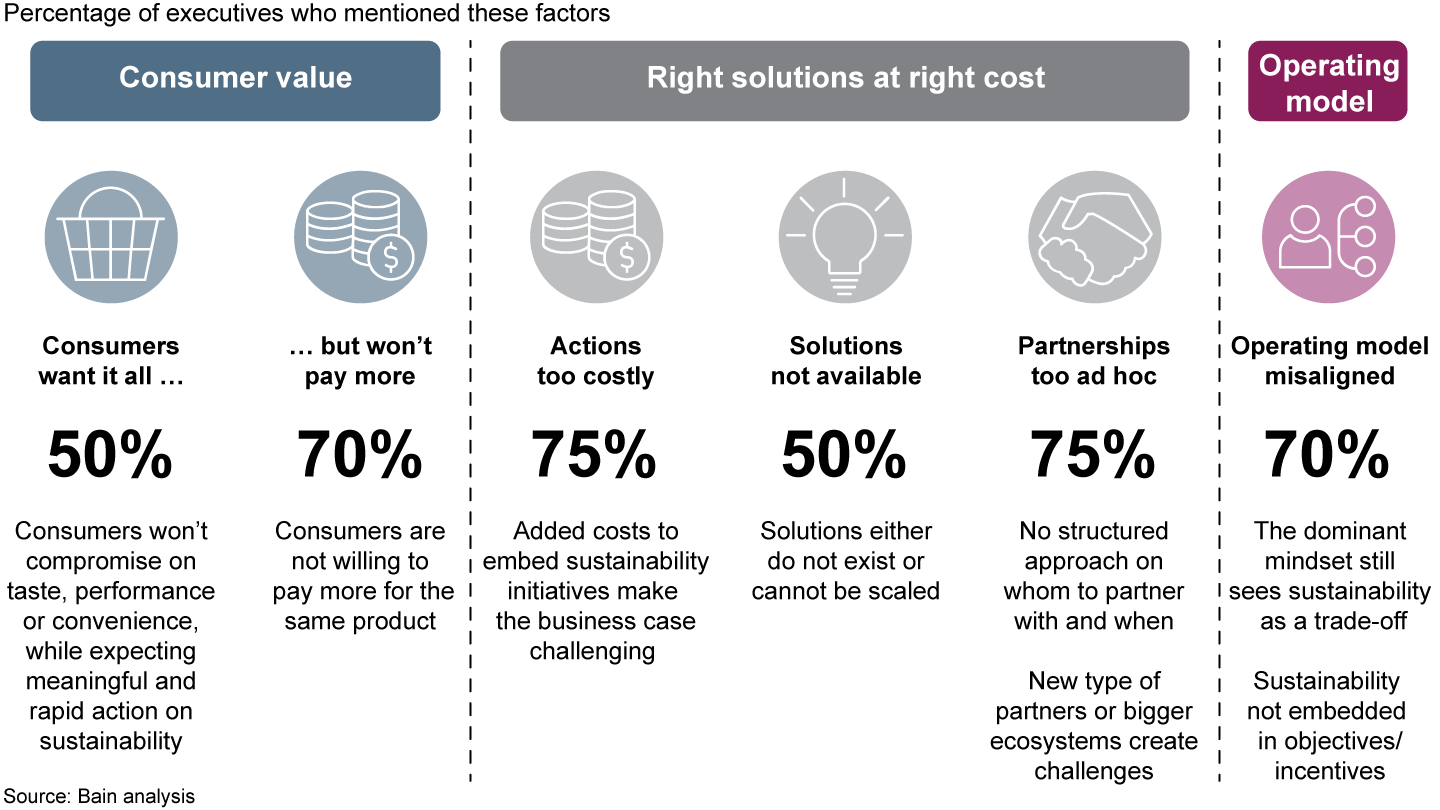
      Brands can embed sustainability by surmounting barriers in three areas

      Consumers want it all

      On the one hand, consumers want sustainable products. Yet consumers also demonstrate an unwillingness to compromise on taste, convenience, quality and price for sustainability―and often perceive a trade-off. Consumer goods companies can overcome this obstacle by authentically making sustainability one of the reasons consumers love their brand. That starts by establishing a sustainability ambition and asking a fundamental question: How strongly do we want to tie our brand purpose and proposition to sustainability?

      There is a science that can help brands address this choice. To understand what underpins a consumer’s perception of brand value, we identified 30 Elements of Value® in four categories: functional, emotional, life-changing and global impact (see Figure 2). When making sustainability part of the value proposition, a common route is to start at the bottom of the Elements of Value pyramid with threshold-level sustainability elements. For example, many brands deliver on the quality element (a functional element) by removing artificial colors and flavors. The most successful brands then push further, using sustainability to bring out higher-level elements. After a decade-long campaign focusing on “real beauty,” Dove’s beauty products score well on wellness (an emotional element) and are now aiming for life-changing as the brand connects with broader social issues.

      Figure 2
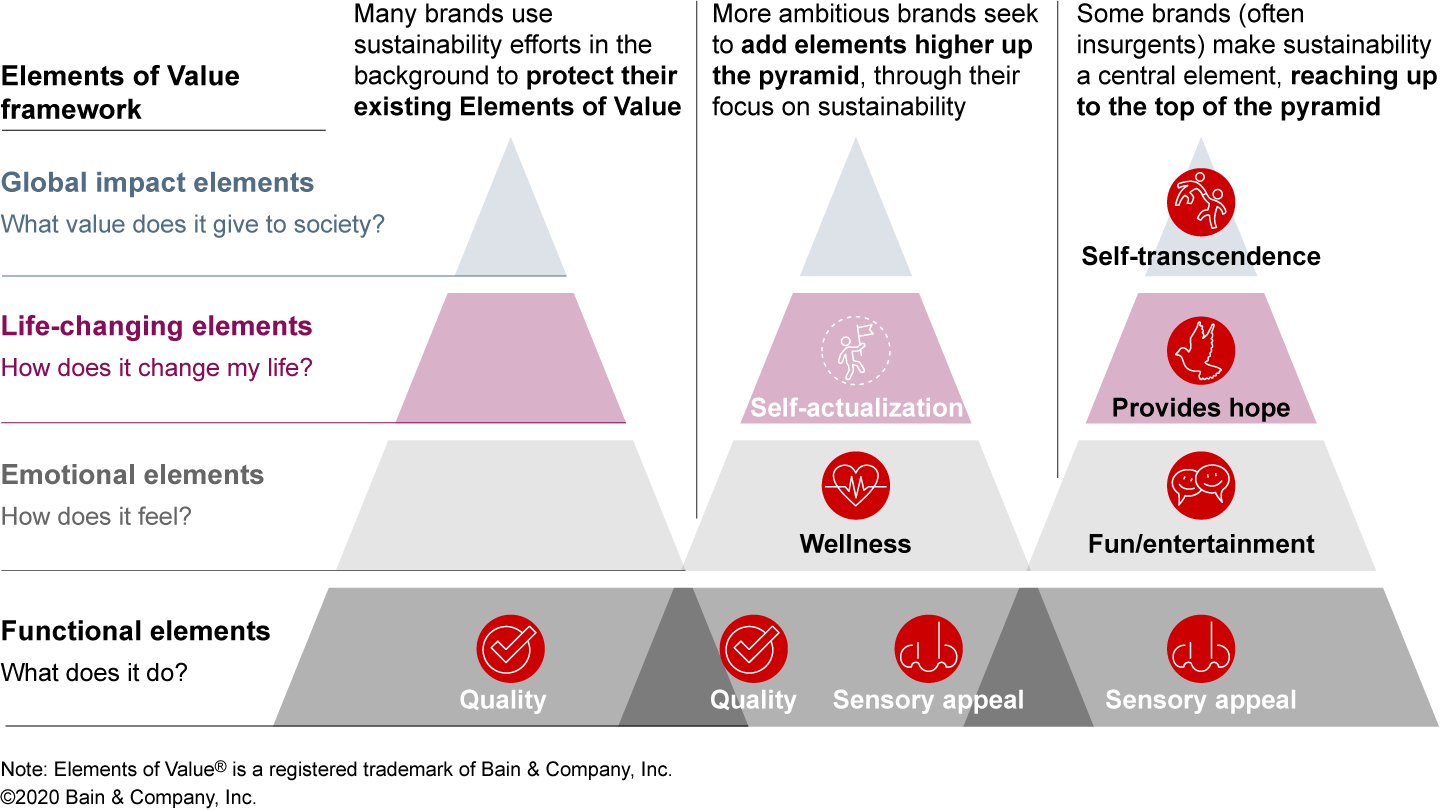
      The level of a brand’s ambition for sustainability can influence its Elements of Value®

      However, brands that achieve the most from sustainability climb the pyramid to the top―delivering elements at all four levels. For example, Dutch chocolate brand Tony's Chocolonely’s campaigns for “slave-free chocolate” are at the core of its identity. Its elements of value reach the top of the pyramid. The higher you go, the more benefit to be gained. Our recent analysis of more than 13,000 brands shows that those delivering on global impact elements earn twice the revenue growth, three times the customer loyalty and four times the household penetration growth of average brands.

      After determining how ambitiously to embed sustainability into their DNA, winning brands decide which specific sustainability topics they want to use to actively engage with consumers (call them “swords”) and which they want to use as protection (“shields”) against the risk of “greenwashing.” Tony’s Chocolonely, for example, informs consumers about slavery issues related to chocolate and how the company is working to end child and slave labor. While the company also drives progress in such areas as reducing plastic and CO2 emissions, it does not promote these efforts as actively, in order to avoid diluting the power of its “slave-free” sword. However, it ensures that the shields of the brand are in place.

      Based on their ambition and chosen shields and swords, brands need to make well-thought-out changes within and beyond their product offerings. The moves within an offering include portfolio adaptations to deliver more sustainable products, such as renovations to best-selling SKUs, core extensions, adjacencies and even new business models. Changes inside the offering should represent the bulk of the effort―as much as 90%. Any remaining energy may be devoted to additional community or philanthropic activities to reinforce the brand’s contributions to the global sustainability agenda.

      To bring sustainability messages authentically to consumers, the best brands develop a sensitive consumer-engagement strategy. Our research found that brands must devote a higher share of voice to sustainability―in both the volume and percentage of its messages―if they want to change consumer perception.  For example, following its carve-out from Unilever, Upfield (whose brands include Becel and Flora) repositioned itself as one of the world’s leading plant-based food companies, with the singular vision of “A Better Plant-Based Future.” Sustainability is now central to its communications strategy across all brands and markets, supported with product innovations such as plant butter, and vegan cheese and cream. Markets test and learn to identify the best way of bringing sustainability messages to life for their target consumers, and how to balance this with core performance messages. This sustainability-centered strategy has helped Upfield return to growth, reversing more than 10 years of decline.

      Despite the need to thoughtfully communicate, many companies have so far failed to embed sustainability in a large share of their top brands’ communication, according to our research (see Figure 3).

      Figure 3
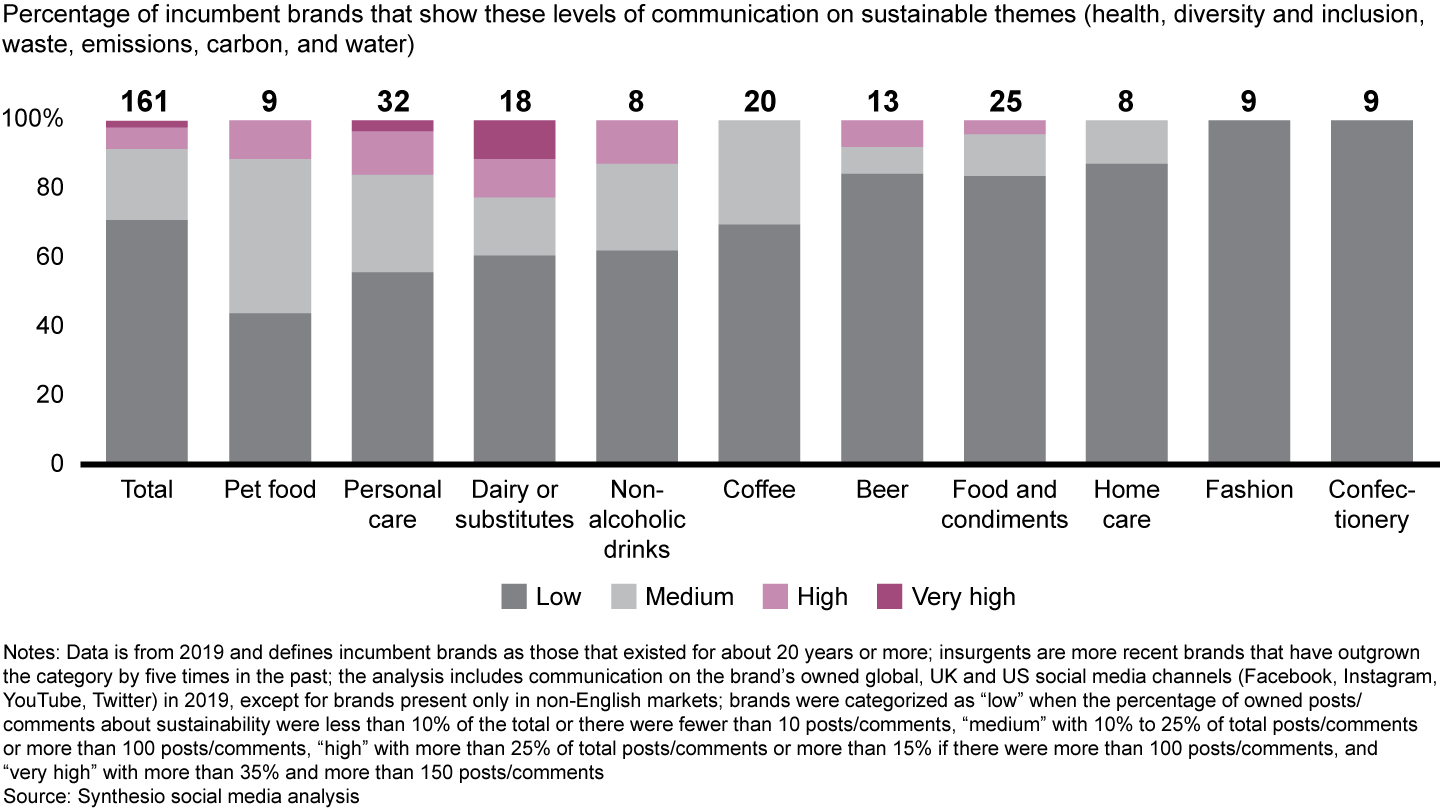
      About 90% of incumbent brands do not embed sustainability frequently in their communications

      Finally, there is the issue of pricing. Some brands have overcome the tough situation in which consumers will not pay more for what they perceive as the same product and retailers will not readily accept price increases, even for sustainable goods. Some winning brands price below the elasticity barrier, but with modest increases as they make continuous improvements. Others have found that retailers and consumers are more willing to accept higher prices if, say, the proceeds go directly to farmers or help fund sustainability causes. Other brands have raised prices with major product changes, including sustainability, or with the introduction of new sustainable product lines. Of course, not all the value will result from increased prices; greater volume growth, market share gain and repeat purchases, even at the same price, are all benefits sustainable brands can garner.

      Where are the solutions?

      The second hurdle involves the difficulty of finding the right solutions at the right cost. Half of the executives interviewed said solutions are not available, and 75% said that added costs hurt the business case for sustainability.

      The reality is that companies can position themselves to overcome these issues. For example, to mitigate the cost impact from sustainability, the best companies explore three areas. They manage costs within the company. One company used better packaging—thinner containers, improved shapes that are more efficient to produce and easier to stack—to cut costs as much as 11% while substantially reducing materials requirements, including the use of plastic. Leaders also manage costs throughout the industry, by defining higher industrywide minimum standards or forming associations to support activities such as bottle collection and recycling. And they manage costs with innovative approaches along the value chain through such moves as pooling volumes.

      Uncooperative operating models

      Our executive interviews underscored a final major hurdle to embedding sustainability into brands: existing operating models hold them back. Managers cling to a financial value mindset, or sustainability feels like the private domain of a separate team. Moreover, time horizons and incentives are not in line with sustainability targets.

      The best brands take a cross-functional approach, embedding sustainability within divisions and business units while linking incentives to sustainability targets. These companies treat sustainability as it if were any other business process. Perhaps most important, top leadership inspires a culture that fosters sustainability in brands.

      It all may sound daunting, but when consumer products executives work to overcome sustainability’s three biggest hurdles, they typically watch the benefits multiply. Their brands outpace competitors in growth, older brands gain new relevance in consumers’ eyes and their passion reignites employee engagement. Helping the planet helps these companies thrive.


      Elements of Value® is a registered trademark of Bain & Company, Inc.

      Autori
      • Headshot of François Faelli
        François Faelli
        Partner, Brussels
      • Headshot of Jean-Charles van den Branden
        Jean-Charles van den Branden
        Partner, Brussels
      • Headshot of Jenny Davis-Peccoud
        Jenny Davis-Peccoud
        Partner, Amsterdam
      • Headshot of Magali Deryckere
        Magali Deryckere
        Partner, Brussels
      Contattaci
      Industry collegate
      • Beni di Largo Consumo
      • Consumer-led Brand Growth
      Servizi di consulenza collegati
      • Sostenibilità e Corporate Responsibility
      Beni di Largo Consumo
      Does a Purpose Help Brands Grow?

      There’s a distinct path to differentiating a brand by delivering higher-order Elements of Value®.

      Leggi di più
      Beni di Largo Consumo
      LEAP to Win: A Playbook for Consumer Products Multinational Corporations in India

      Learn how to navigate—and win—in one of the world’s most promising emerging consumer products markets.

      Leggi di più
      Sostenibilità e Corporate Responsibility
      How AI Is Starting to Transform Circular Packaging

      There are 15 AI use cases companies across the value chain can use today to accelerate circularity.

      Leggi di più
      Beni di Largo Consumo
      Insurgent Brands 2024

      Bain & Company’s eighth annual review recognizes 97 high-growth US consumer products brands, including 48 newcomers to the list.

      Leggi di più
      Beni di Largo Consumo
      Exploring AI for Packaging Circularity

      AI is already creating value across the packaging lifecycle, from optimising design and reducing material use to improving sorting and traceability.

      Leggi di più
      First published in dicembre 2020
      Tags
      • Beni di Largo Consumo
      • Consumer-led Brand Growth
      • Sostenibilità e Corporate Responsibility

      Come abbiamo aiutato i nostri clienti

      Sostenibilità e Corporate Responsibility A Personal Care and Cosmetics Brand Charts a Course for Sustainability

      Leggi un caso di studio

      A CPG Player Targets a Promising Adjacent Market for its Legacy Brand

      Leggi un caso di studio

      Strategia Food Co. jump-starts growth with return to core brands

      Leggi un caso di studio

      Vuoi continuare la conversazione?

      Aiutiamo i leader globali e le loro aziende ad affrontare problemi e a cogliere le opportunità. Sosteniamo cambiamenti e otteniamo risultati duraturi.

      Bain Insights. Le nostre idee e punti di vista sulle tematiche che le aziende globali affrontano ogni giorno, arrivano nella tua email tutti i mesi.

      *Ho letto l'Informativa sulla Privacy e accetto i termini e le condizioni.

      Si prega di leggere e accettare l’Informativa sulla Privacy
      Bain & Company
      Contattaci Sustainability Accessibility Condizioni d’uso Privacy Cookie Policy Sitemap Log In

      © 1996-2026 Bain & Company, Inc.

      Contatta Bain

      Come posso aiutarti?

      • Business inquiry
      • Career information
      • Press relations
      • Partnership request
      • Speaker request
      Guarda tutti gli uffici