

Brief

The best strategy in the world isn’t worth much if a company must battle its own internal complexity to execute. If overlooked, complexity proliferates as a natural consequence of a company’s success. And if unchecked, complexity can quickly become a company’s single biggest barrier to growth.
Clearly, organizations of the 21st century will never be simple. Globalization, technological disruption and digital connectivity create the need for more sophisticated, matrix-based organizations. But the best-performing companies manage to be as simple as possible. They tackle the root causes of complexity, not a symptom. They protect their core business from the “horizontal rain” of excess management layers, blurred accountability and inefficient processes. Simplifying structures and processes can liberate energy and purpose throughout an entire organization, delivering sustainable cost reductions in excess of 20% while creating a more effective and agile company.
The symptoms of excess complexity may look different from one company to the next, but they grow out of a common set of root causes. The key to identifying those causes is a rigorous examination of the business footprint, the operating model and its processes. In our experience, the greatest gains come from eliminating complexity that grows in the many interfaces where business units and functions meet, where responsibility for decisions can get blurred. It’s all about reducing activity. The goal: Do less, do it better, do it only once, and do it in the right place.
Six practical actions can help leadership teams tackle complexity decisively and prevent costs from creeping back into simpler, more streamlined operations (see Figure 1).
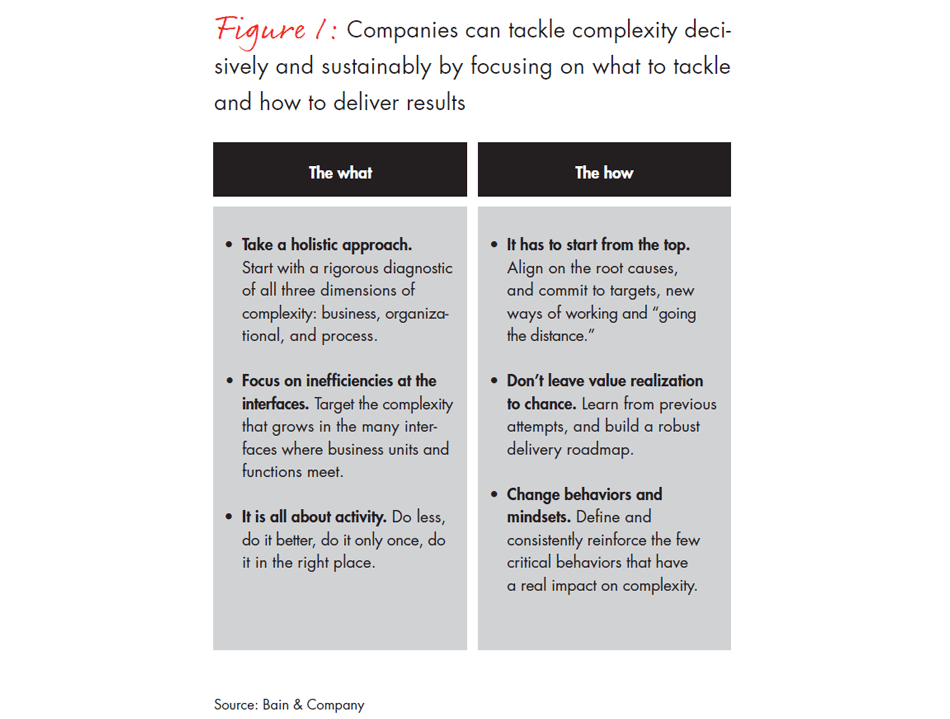
1. Take a holistic approach
Complexity can rear its head in many ways. A common and costly management pitfall is jumping too quickly to fix isolated symptoms before investigating the more complete picture. Reducing complexity piecemeal risks wasting time and effort to fine-tune the squeakiest wheels when the problem is systemic to the business. For example, don’t bother implementing a new ERP (enterprise resource planning) system or streamlining management structures if your business footprint or operating model are fundamentally flawed.
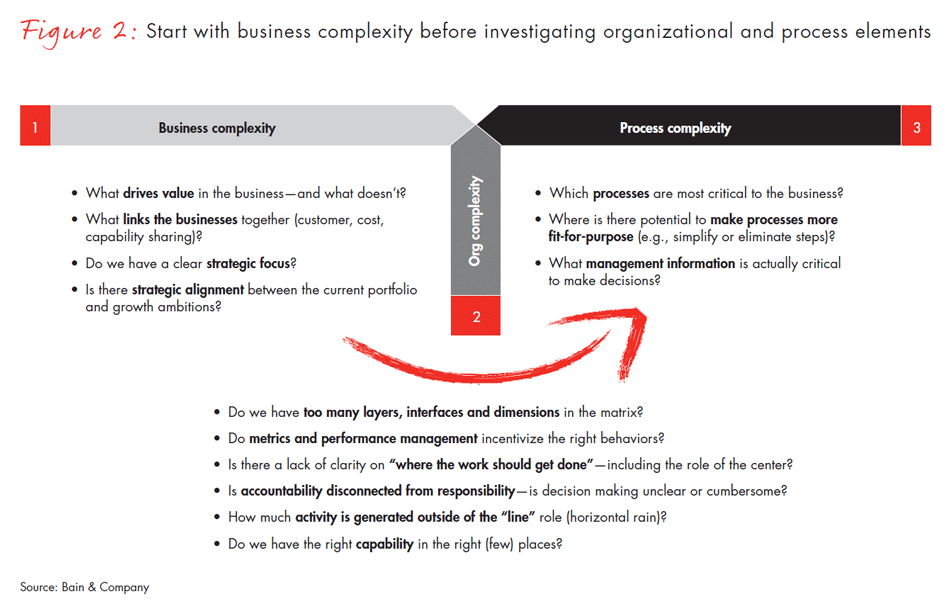
The most effective approach starts with the strategic and moves to the tactical. Successful companies begin with a rigorous diagnostic of all three dimensions of complexity: business complexity, including strategic misalignment; organizational complexity, such as lack of clarity about where work should get done; and process complexity, including core processes that are not fit for purpose. They also apply a clear hierarchy to these issues, addressing business complexity first, then organizational complexity and finally process complexity (see Figure 2).
2. Focus on inefficiencies at the interfaces
The key to conquering complexity is identifying its origins. A holistic approach helps, but the root causes are sometimes obscured because complexity tends to grow in the seams between organizational units. It flourishes between corporate and business units through misalignment of strategy and hence priorities; between business units and support functions where a disconnect over appropriate services can lead to bloated costs; and between business units themselves when they act as silos, leading to a fragmented view of customers or lengthy internal transfer pricing negotiations.
To avoid a never-ending diagnostic, the most effective companies look across the whole organization and, more specifically, at its interfaces, targeting the “horizontal rain” that prevents the core from operating efficiently. They fill in the big picture with deeper analysis of a representative cross-section of the organization, including selected business units and functions. Through extensive interviews with the management team, an integrated diagnostic brings facts and specifics to the table to adjust for individual bias, and it assembles multiple perspectives into a complete view.
Attacking complexity at the seams of an organization can have dramatic results. One multinational oil and gas company, for example, was struggling with functional activities such as finance and human resources that spread more than five layers of management deep. By reducing functional activity to two to three layers, the company was able to reduce support function costs by 25%. The move not only eliminated massive duplication and excess activity, it increased responsiveness and transparency throughout the organization, making gains more sustainable.
3. It is all about activity
At its core, complexity reduction is all about activity reduction. In practice, that means eliminating activities that don’t generate value, improving efficiency, rooting out duplication and making sure work is performed in the most appropriate location. The most sustainable solutions target wasteful activities. Highly efficient organizations trim functional activities, for example, to match local needs rather than using a best-in-class approach globally. They also limit ad hoc reporting requests from executives and streamline governance to speed decision making and free up executive time. And, they adhere to the complexity reduction mantra: Do less, do it better, do it only once, and do it in the right place.
Common business wisdom assumes that reducing headcount results in reduced activity. Indeed, many leadership teams focus primarily on costs and headcount, squeezing out 10% here and there, mandating companywide reduction targets or relying on blunt benchmarking tools. While this approach can produce short-term benefits, costs usually creep back in a year or two if the organization is still being asked to deliver the same amount and type of work.
Streamlining activity revitalizes the business, the corporate level and the front line. One leading petrochemical company made most of its decisions by committee, a complex approach that delayed critical decisions and sapped its agility. By reducing the number of committees from 24 to 9, cutting the number of participants in each and clarifying decision rights with a bias toward a single accountable individual, executives cut down the amount of time spent on governance by more than 50%, enabling them to focus on the business.
4. It has to start from the top
When leadership teams decide to reduce complexity and change their own ways of working, things happen. When they resist, efforts to tackle complexity are bound to fail. Employees are keenly perceptive about the depth of commitment at the top for restructuring programs. Cuts that avoid streamlining top layers or protect individual executive fiefdoms send conflicting messages about the case for change and can quickly discredit a complexity reduction program.
By contrast, the process runs more smoothly and more effectively when executive teams align quickly on three things: the root causes of complexity, which make the case for change; a few bold actions to address complexity decisively and sustainably; and the size of the prize. Presenting a unified front to the organization matters. A powerful mechanism to accomplish this is through a joint presentation by executives to the top two or three layers of management in which individuals acknowledge mistakes from the past and personally “sign in blood” to the case for change, actions and targets, echoing the CEO’s key messages. Few things demonstrate as clearly to the organization that the leadership team is pulling in the same direction.
At the multinational oil and gas company, the CEO gathered the top 500 managers for one multiday summit. The message was clear: You are on the bus or on the road. Participants understood there would be no compromises on the way forward. One year later the management team looked very different, but every executive on it was fully committed to the change.
5. Don’t leave value realization to chance
Even when companies identify the right issues and design the right solutions, many complexity reduction programs still fall short of delivering anticipated gains. Why? The reason is often weak implementation. Individuals leading the program need coaching and senior management support throughout the entire process. Companies that restructure and reduce headcount and then six months later hand off responsibility for implementation to the business undercut their chances of success. Indeed, without strong and visible backing by top management, complexity reduction programs risk death by a thousand cuts.
The most successful companies learn from past failures. The leadership team takes an introspective approach when things go wrong and uses the lessons learned to get it right the next time. Before initiating a complexity reduction program, for example, the team agrees on what needs to be done differently. That includes identifying risks of failure and ways to mitigate them. The assessment should identify specific actions to address each risk factor and improve the outcome of the program.
One month before launching the diagnostic phase of the project, the petrochemical company started discussing implementation challenges and asking executives why previous initiatives aimed at delivering cost reduction had not succeeded. With this perspective, the leadership team agreed on three key actions that would break with past implementation approaches and greatly increase the likelihood of success. These became guiding principles for a sustained cost transformation that is on track to remove more than $500 million in cash fixed costs.
Executing successfully also requires strong governance mechanisms. The conventional program office typically focuses on the mechanics and process of tracking savings. By contrast, a system of governance with a broader charter can oversee the value created, the program management processes and the coaching to help people succeed in executing the change. This type of Results Delivery® office ensures that the key sponsors of change stay committed to their goals and that managers have drafted robust savings roadmaps. These roadmaps spell out in practical terms how to get from an idea to money in the bank, detailing how key stakeholders will co-create solutions, how business leaders should be aligned and how to progressively roll out pilots.
6. Change behaviors and mindsets
Winning the battle against complexity and making gains stick require a companywide change in behavior and mindset. This aspect of complexity reduction is one of the most challenging to get right, but a couple of guidelines can improve the chances for success. Many business leaders make the mistake of trying to change too many behaviors at once—sometimes as many as 20 or more. They often neglect to spell out what the change means for the company and overlook the mechanisms needed to reinforce the right behaviors. Research shows that mechanisms such as role modeling, praise and the right incentives are four times more effective at changing behaviors than top-down communication about what needs to change.
Keep it simple. Define a few critical desired behaviors (no more than three) that have a major impact on complexity; spell out practical implications for management and the front line; and use day-to-day reinforcement mechanisms such as role modeling, feedback and coaching, which are complementary and often even more effective than financial incentives. Follow-through is critical to ensure that new behaviors become permanent. Tactics might include the CEO citing bad behaviors in executive meetings or instructing the front line to discuss how to work together more efficiently at weekly team meetings.
Under its new operating model, the petrochemical company focused on three behaviors that would make a real difference. One was to have each individual vow to “act as a team player and in the best interest of the group.” Before announcing the change initiative, the executive team met with 40 newly appointed top managers to discuss the three key behaviors and secure their personal commitment to reinforce them day-to-day through their own actions. That consensus-building step was a turning point. Soon afterward, the new mindset began producing cost savings. Business units, for example, began to take an integrated view of contracts and started bundling purchase orders instead of negotiating separately with the same suppliers. Doing so allowed managers to identify the best supplier and reduce the purchase price by nearly 20% on a key commodity product.
Monday morning, 8am complexity check
Complexity is the new normal. Companies that address it decisively and sustainably will create a strong competitive advantage over the next decade. But that means staying alert to complex structures and processes creeping into the business. Addressing the following questions with senior executives may help focus that effort:
- Are costs inexorably rising—no matter what cost containment programs are put in place?
- Is it hard to understand what drives business performance at the front line?
- Is it hard to understand who is accountable for what?
- Does it take management too long to make decisions?
Complexity reduction is a major undertaking. Getting simple can require a multiyear transformational journey that leaves no corner of the company untouched. But the reward is equal in scope—decisive improvements in performance that are sustainable.
Torsten Lichtenau and John Smith are partners in Bain & Company’s London office. Sophie Horrocks is a principal in the London office.
Results Delivery® is a registered trademark of Bain & Company, Inc.
First published in giugno 2015