
Skip to Content
  • Uffici

    Uffici

    Nord e Sud America
    • Atlanta
    • Austin
    • Bogota
    • Boston
    • Buenos Aires
    • Chicago
    • Dallas
    • Denver
    • Houston
    • Los Angeles
    • Mexico City
    • Minneapolis
    • Monterrey
    • Montreal
    • New York
    • Rio de Janeiro
    • San Francisco
    • Santiago
    • São Paulo
    • Seattle
    • Silicon Valley
    • Toronto
    • Washington, DC
    Europa, Medio Oriente e Africa
    • Amsterdam
    • Athens
    • Berlin
    • Brussels
    • Copenhagen
    • Doha
    • Dubai
    • Dusseldorf
    • Frankfurt
    • Helsinki
    • Istanbul
    • Johannesburg
    • Kyiv
    • Lisbon
    • London
    • Madrid
    • Milan
    • Munich
    • Oslo
    • Paris
    • Riyadh
    • Rome
    • Stockholm
    • Vienna
    • Warsaw
    • Zurich
    Asia e Australia
    • Bangkok
    • Beijing
    • Bengaluru
    • Brisbane
    • Ho Chi Minh City
    • Hong Kong
    • Jakarta
    • Kuala Lumpur
    • Manila
    • Melbourne
    • Mumbai
    • New Delhi
    • Perth
    • Seoul
    • Shanghai
    • Singapore
    • Sydney
    • Tokyo
    Guarda tutti gli uffici
  • Alumni
  • Media Center
  • Iscriviti
  • Contattaci
  • Italy | Italiano

    Seleziona il tuo Paese e la tua lingua

    Global
    • Global (English)
    Nord e Sud America
    • Brazil (Português)
    • Argentina (Español)
    • Canada (Français)
    • Chile (Español)
    • Colombia (Español)
    Europa, Medio Oriente e Africa
    • France (Français)
    • DACH Region (Deutsch)
    • Italy (Italiano)
    • Spain (Español)
    • Greece (Elliniká)
    Asia e Australia
    • China (中文版)
    • Korea (한국어)
    • Japan (日本語)
  • Saved items (0)
    Saved items (0)

    You have no saved items.

    Contrassegna il contenuto che ti interessa e verrà salvato qui. Potrai leggerlo o condividerlo in seguito.

    Explore Bain Insights
  • Settori
    Menu principale

    Settori

    • Aerospazio e Difesa
    • Agribusiness
    • Chimica
    • Infrastrutture e Costruzioni
    • Beni di Largo Consumo
    • Servizi Finanziari
    • Sanità
    • Macchinari Industriali
    • Media & Intrattenimento
    • Industria Metallurgica
    • Industria Mineraria
    • Petrolio e Gas
    • Industria Cartaria e Packaging
    • Private Equity
    • Settore Sociale & Pubblico
    • Retail
    • Tecnologia
    • Telecomunicazioni
    • Compagnie Aeree & Trasporti
    • Viaggi e Svago
    • Utility e Rinnovabili
  • Servizi di Consulenza
    Menu principale

    Servizi di Consulenza

    • Customer Experience
    • ESG
    • Innovation
    • M&A and Divestitures
    • Operation
    • People & Organization
    • Private Equity
    • Sales & Marketing
    • Strategia
    • IA, Approfondimenti e Soluzioni
    • Tecnologia
    • Trasformazione
  • Digital
  • Tematiche
  • Informazioni su Bain
    Menu principale

    Informazioni su Bain

    • Che Cosa Facciamo
    • Quello in Cui Crediamo
    • Le Nostre Persone e la Leadership
    • Risultati
    • Premi e Riconoscimenti
    • Organizzazioni Globali
    Further: Our global responsibility
    • Diversità e Inclusione
    • Social Impact
    • Sustainability
    • World Economic Forum
    Learn more about Further
  • Careers
    Menu principale

    Careers

    • Work with Us
      Careers
      Work with Us
      • Find Your Place
      • Our Work Areas
      • Integrated Teams
      • Students
      • Internships & Programs
      • Recruiting Events
    • Life at Bain
      Careers
      Life at Bain
      • Blog: Inside Bain
      • Career Stories
      • Our People
      • Where We Work
      • Supporting Your Growth
      • Affinity Groups
      • Benefits
    • Impact Stories
    • Hiring Process
      Careers
      Hiring Process
      • What to Expect
      • Interviewing
    FIND JOBS
  • Uffici
    Menu principale

    Uffici

    • Nord e Sud America
      Uffici
      Nord e Sud America
      • Atlanta
      • Austin
      • Bogota
      • Boston
      • Buenos Aires
      • Chicago
      • Dallas
      • Denver
      • Houston
      • Los Angeles
      • Mexico City
      • Minneapolis
      • Monterrey
      • Montreal
      • New York
      • Rio de Janeiro
      • San Francisco
      • Santiago
      • São Paulo
      • Seattle
      • Silicon Valley
      • Toronto
      • Washington, DC
    • Europa, Medio Oriente e Africa
      Uffici
      Europa, Medio Oriente e Africa
      • Amsterdam
      • Athens
      • Berlin
      • Brussels
      • Copenhagen
      • Doha
      • Dubai
      • Dusseldorf
      • Frankfurt
      • Helsinki
      • Istanbul
      • Johannesburg
      • Kyiv
      • Lisbon
      • London
      • Madrid
      • Milan
      • Munich
      • Oslo
      • Paris
      • Riyadh
      • Rome
      • Stockholm
      • Vienna
      • Warsaw
      • Zurich
    • Asia e Australia
      Uffici
      Asia e Australia
      • Bangkok
      • Beijing
      • Bengaluru
      • Brisbane
      • Ho Chi Minh City
      • Hong Kong
      • Jakarta
      • Kuala Lumpur
      • Manila
      • Melbourne
      • Mumbai
      • New Delhi
      • Perth
      • Seoul
      • Shanghai
      • Singapore
      • Sydney
      • Tokyo
    Guarda tutti gli uffici
  • Alumni
  • Media Center
  • Iscriviti
  • Contattaci
  • Italy | Italiano
    Menu principale

    Seleziona il tuo Paese e la tua lingua

    • Global
      Seleziona il tuo Paese e la tua lingua
      Global
      • Global (English)
    • Nord e Sud America
      Seleziona il tuo Paese e la tua lingua
      Nord e Sud America
      • Brazil (Português)
      • Argentina (Español)
      • Canada (Français)
      • Chile (Español)
      • Colombia (Español)
    • Europa, Medio Oriente e Africa
      Seleziona il tuo Paese e la tua lingua
      Europa, Medio Oriente e Africa
      • France (Français)
      • DACH Region (Deutsch)
      • Italy (Italiano)
      • Spain (Español)
      • Greece (Elliniká)
    • Asia e Australia
      Seleziona il tuo Paese e la tua lingua
      Asia e Australia
      • China (中文版)
      • Korea (한국어)
      • Japan (日本語)
  • Saved items  (0)
    Menu principale
    Saved items (0)

    You have no saved items.

    Contrassegna il contenuto che ti interessa e verrà salvato qui. Potrai leggerlo o condividerlo in seguito.

    Explore Bain Insights
  • Settori
    • Settori

      • Aerospazio e Difesa
      • Agribusiness
      • Chimica
      • Infrastrutture e Costruzioni
      • Beni di Largo Consumo
      • Servizi Finanziari
      • Sanità
      • Macchinari Industriali
      • Media & Intrattenimento
      • Industria Metallurgica
      • Industria Mineraria
      • Petrolio e Gas
      • Industria Cartaria e Packaging
      • Private Equity
      • Settore Sociale & Pubblico
      • Retail
      • Tecnologia
      • Telecomunicazioni
      • Compagnie Aeree & Trasporti
      • Viaggi e Svago
      • Utility e Rinnovabili
  • Servizi di Consulenza
    • Servizi di Consulenza

      • Customer Experience
      • ESG
      • Innovation
      • M&A and Divestitures
      • Operation
      • People & Organization
      • Private Equity
      • Sales & Marketing
      • Strategia
      • IA, Approfondimenti e Soluzioni
      • Tecnologia
      • Trasformazione
  • Digital
  • Tematiche
  • Informazioni su Bain
    • Informazioni su Bain

      • Che Cosa Facciamo
      • Quello in Cui Crediamo
      • Le Nostre Persone e la Leadership
      • Risultati
      • Premi e Riconoscimenti
      • Organizzazioni Globali
      Further: Our global responsibility
      • Diversità e Inclusione
      • Social Impact
      • Sustainability
      • World Economic Forum
      Learn more about Further
  • Careers
    Ricerche più popolari
    • Agile
    • Digitale
    • Strategia
    La tue ricerche precedenti
      Pagine visitate

      Content added to saved items

      Saved items (0)

      Removed from saved items

      Saved items (0)

      Article

      The Cycle of Business Growth

      The Cycle of Business Growth

      Why do so many companies face the need to transform themselves? Most large enterprises are moving through the Focus-Expand-Redefine (F-E-R) cycle of growth.

      Di Chris Zook e James Allen

      • Tempo di lettura min.

      Article

      The Cycle of Business Growth
      en

      A research team at Bain & Company found that of the companies that made the Fortune 500 in 1994, a decade later, 153 of those companies either had gone bankrupt or had been acquired. Of the remaining 347, the team judged that 132 had engineered a fundamental shift in their core business strategy. In other words, 285 out of the 500 faced serious threats to their survival or independence during the ten-year period. Only about half of this group was able to meet the threats successfully by redefining their core business.

      What accounts for the fact that so many companies are facing the need to transform themselves? One way to understand it is through what we call the Focus-Expand-Redefine (F-E-R) cycle in business (Figure 1). Nearly every large enterprise seems to move through this cycle over time. In the Focus phase, companies concentrate on building their core business to its full potential. They expand their markets, cut costs, improve operations, and develop innovations in their core products. In the Expand phase, they take advantage of these capabilities and market positions to move into adjacent markets. They seek out new customer segments, new geographies, new distribution channels, and new-but-related product lines.

      Figure 1
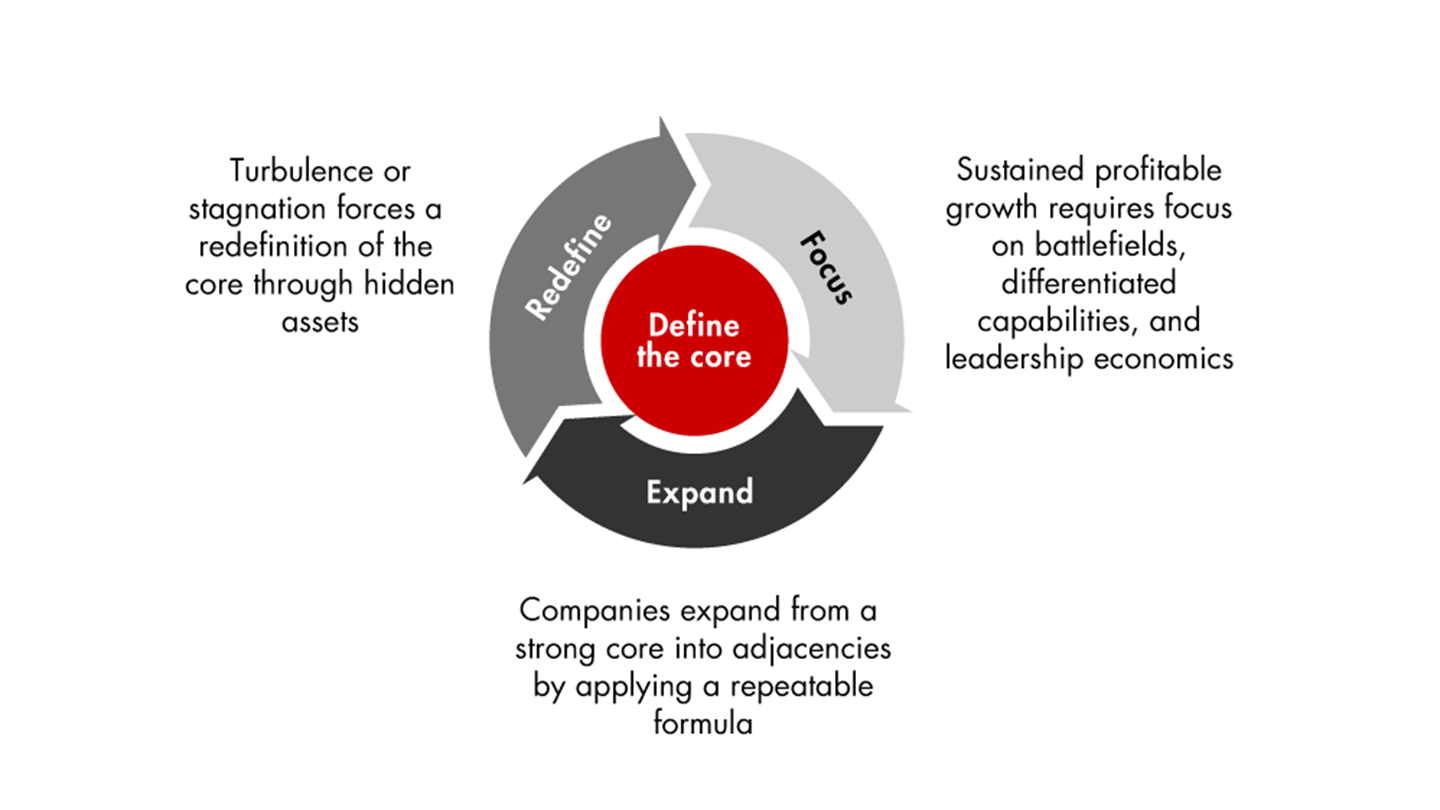
      Nearly every large enterprise moves through the Focus-Expand-Redefine cycle over time
      Nearly every large enterprise moves through the Focus-Expand-Redefine cycle over time
      Nearly every large enterprise moves through the Focus-Expand-Redefine cycle over time

      At some point, however, many companies find that their growth and profitability is tapering off or even declining. Perhaps the market has reached a saturation point, or perhaps the pool of available profits has shifted. Perhaps new competitors with lower cost structures or innovative products have appeared. This is when a company moves into phase three and must face the challenge of redefining its core.

      Today, there is little doubt that the F-E-R cycle has accelerated: companies move from one phase to another faster than ever, thanks to a number of well-recognized forces. New competitors from China and India have shaken up whole industries. New technologies have lowered costs and shortened product lifecycles. Capital, innovation, and management talent all flow more freely and more quickly around the globe than ever before.

      The average holding period of a share of common stock has declined from four years in the 1980s to nine months today. The average lifespan of companies has dropped from fourteen years to just over ten, and the tenure of CEOs has declined from eight years a decade ago to less than five years today. Companies must thus navigate an unusually turbulent sea.

      Focus on the core

      In the Focus phase of the cycle of business, companies concentrate on building their core business to its full potential. They expand their markets, cut costs, improve operations, and develop innovations in their core products.

      Having a clear sense of business boundaries and of the definition of your core is a critical starting point for growth strategy. And identifying the core of your business is the first step in determining how to grow. In order to do that, you must identify your key assets.

      The book Profit from the Core argues that most growth strategies fail to deliver value—or even destroy it—primarily because they wrongly diversify from the core business. This timeless strategic precept—building market power in a well-defined core—remains the key source of competitive advantage and the most viable platform for successful expansion.

      The book identifies and explains three key factors that differentiate growth strategies that succeed from those that fail:

      1. Reaching full potential in the core business.
      2. Expanding into logical adjacent businesses surrounding that core.
      3. Preemptively redefining the core business in response to market turbulence.

      Expand beyond the core

      Pushing out the boundaries of a core business is among the most difficult management challenges. The typical odds of success are low: only one out of four adjacency initiatives prove to be successful. In Beyond the Core, Chris Zook outlines an expansion strategy based on putting together combinations of adjacency moves into areas away from, but related to, the core business, such as new product lines or new channels of distribution. These sequences of moves carry less risk than diversification, yet they can create enormous competitive advantage, because they stem directly from what the company already knows and does best.

      The promise of growth lies in methods that allow you to decide correctly, to tilt the odds in your favor, and to control the cost of failures when they inevitably occur. Small improvements in performance along these dimensions can increase the overall growth rate of a business considerably. If a company in a 3 percent growth market achieved the potential from its adjacency moves 30 percent faster, handled three—not two—adjacency initiatives per year, and had a success rate of 60 percent instead of 30 percent, then the company would nearly double its growth rate to 7.1 percent from 3.9 percent.

      Redefine the core

      Not every company whose growth strategy of the past is reaching a limit needs to rethink its core strategy. To the contrary, declining performance in what had been a thriving business can usually be chalked up to an execution shortfall. But when a strategy does turn out to be exhausted, it's generally for one of three reasons.

      Shrinking or shifting of the future profit pool

      If Apple had not moved its business toward digital music, one might wonder about its prospects: the profit pool in personal computers has been contracting, and Apple held only 3 percent of the market. General Dynamics, faced in the 1990s with a sharp decline in defense spending, sold off many of its units and redefined the company around just three core businesses (submarines, electronics, and information systems) where it held substantial advantages. Only such a radical move saved it from being stranded by the receding profit pool.

      Direct threat to the core business

      Perhaps the most difficult threat to counter is a new competitor with a business model involving inherently superior economics. Indeed, the business landscape is littered with failures and near-failures because management didn't react to such a threat fast enough: General Motors (Toyota), Compaq (Dell), Kmart (Wal-Mart), Xerox (Canon), and so on. Occasionally a company sees such a threat in time and responds. The Port of Singapore Authority, when faced with new, low-cost competition from Malaysia and other locations, reinvented itself to reduce its own costs and to provide additional value-added services to customers.

      Stall-out of the growth formula

      Growth may stall for any number of reasons. The market may be nearing saturation (cell phones). The cost-benefit equation of further expansion may shift unfavorably (think of the difficulties Wal-Mart has encountered in its continuing attempts to expand). Or a natural advantage may start to erode. A mining company whose mines are playing out, a pharmaceutical company with too many expiring patents, a television network that can't find enough hit shows—all are faced with the need to find a new formula for growth.

      Whether due to market saturation, shifting profit pools or a change in the competitive or technological landscape, this is when a company must redefine its core. The issue for executives is what to do when the day arrives. 

      Most strategic approaches to redefining the core involve significant risk, but a number of companies have found a safe approach. Managers can look deep within their organizations to find undervalued, unrecognized, or underutilized assets that can serve as new platforms for sustainable growth. Through these hidden assets, a company can transform itself to become truly unstoppable.

      Chris Zook is a partner in Bain & Company's Boston office. He was coleader of the Global Strategy practice for 20 years. James Allen is a partner in Bain’s London office and coleader of the firm’s Global Strategy practice.

      Bain Book

      Unstoppable

      Learn more about how companies can use hidden assets to renew the core and fuel profitable growth.

      Autori
      • Headshot of Chris Zook
        Chris Zook
        Advisory Partner, Boston
      • Headshot of James Allen
        James Allen
        Advisory Partner, London
      Contattaci
      Servizi di consulenza collegati
      • Strategia
      Strategia
      Six Threats Demand a New Playbook for Banks in Wealth and Asset Management

      AI, direct-to-consumer models, and the return of local priorities are redrawing industry lines.

      Leggi di più
      Strategia
      Compete, Evolve, Compete Again

      What does it really take to stay relevant when the world refuses to stand still?

      Leggi di più
      Strategia
      The Magic of Founder-led Companies

      Companies with their founder present performed twice as well as their peers in the S&P 500 over the past decade.

      Leggi di più
      Strategia
      Betting on the Future without a Plan B?

      Fewer than half of CEOs say their companies have what it takes to thrive in today’s volatile world.

      Leggi di più
      Strategia
      What Business Leaders Need to Know About AI Sovereignty

      Aligning business strategy with national AI priorities is necessary to compete and scale.

      Leggi di più
      First published in marzo 2007
      Tags
      • Strategia

      Come abbiamo aiutato i nostri clienti

      Strategia A Conglomerate Charts a New Global Strategy

      Leggi un caso di studio

      Strategia Designing a Sales Compensation Plan Based on an Unusual Metric

      Leggi un caso di studio

      Strategia Transforming a telecommunications giant

      Leggi un caso di studio

      Vuoi continuare la conversazione?

      Aiutiamo i leader globali e le loro aziende ad affrontare problemi e a cogliere le opportunità. Sosteniamo cambiamenti e otteniamo risultati duraturi.

      Bain Insights. Le nostre idee e punti di vista sulle tematiche che le aziende globali affrontano ogni giorno, arrivano nella tua email tutti i mesi.

      *Ho letto l'Informativa sulla Privacy e accetto i termini e le condizioni.

      Si prega di leggere e accettare l’Informativa sulla Privacy
      Bain & Company
      Contattaci Sustainability Accessibility Condizioni d’uso Privacy Cookie Policy Sitemap Log In

      © 1996-2026 Bain & Company, Inc.

      Contatta Bain

      Come posso aiutarti?

      • Business inquiry
      • Career information
      • Press relations
      • Partnership request
      • Speaker request
      Guarda tutti gli uffici