
Skip to Content
  • Uffici

    Uffici

    Nord e Sud America
    • Atlanta
    • Austin
    • Bogota
    • Boston
    • Buenos Aires
    • Chicago
    • Dallas
    • Denver
    • Houston
    • Los Angeles
    • Mexico City
    • Minneapolis
    • Monterrey
    • Montreal
    • New York
    • Rio de Janeiro
    • San Francisco
    • Santiago
    • São Paulo
    • Seattle
    • Silicon Valley
    • Toronto
    • Washington, DC
    Europa, Medio Oriente e Africa
    • Amsterdam
    • Athens
    • Berlin
    • Brussels
    • Copenhagen
    • Doha
    • Dubai
    • Dusseldorf
    • Frankfurt
    • Helsinki
    • Istanbul
    • Johannesburg
    • Kyiv
    • Lisbon
    • London
    • Madrid
    • Milan
    • Munich
    • Oslo
    • Paris
    • Riyadh
    • Rome
    • Stockholm
    • Vienna
    • Warsaw
    • Zurich
    Asia e Australia
    • Bangkok
    • Beijing
    • Bengaluru
    • Brisbane
    • Ho Chi Minh City
    • Hong Kong
    • Jakarta
    • Kuala Lumpur
    • Manila
    • Melbourne
    • Mumbai
    • New Delhi
    • Perth
    • Seoul
    • Shanghai
    • Singapore
    • Sydney
    • Tokyo
    Guarda tutti gli uffici
  • Alumni
  • Media Center
  • Iscriviti
  • Contattaci
  • Italy | Italiano

    Seleziona il tuo Paese e la tua lingua

    Global
    • Global (English)
    Nord e Sud America
    • Brazil (Português)
    • Argentina (Español)
    • Canada (Français)
    • Chile (Español)
    • Colombia (Español)
    Europa, Medio Oriente e Africa
    • France (Français)
    • DACH Region (Deutsch)
    • Italy (Italiano)
    • Spain (Español)
    • Greece (Elliniká)
    Asia e Australia
    • China (中文版)
    • Korea (한국어)
    • Japan (日本語)
  • Saved items (0)
    Saved items (0)

    You have no saved items.

    Contrassegna il contenuto che ti interessa e verrà salvato qui. Potrai leggerlo o condividerlo in seguito.

    Explore Bain Insights
  • Settori
    Menu principale

    Settori

    • Aerospazio e Difesa
    • Agribusiness
    • Chimica
    • Infrastrutture e Costruzioni
    • Beni di Largo Consumo
    • Servizi Finanziari
    • Sanità
    • Macchinari Industriali
    • Media & Intrattenimento
    • Industria Metallurgica
    • Industria Mineraria
    • Petrolio e Gas
    • Industria Cartaria e Packaging
    • Private Equity
    • Settore Sociale & Pubblico
    • Retail
    • Tecnologia
    • Telecomunicazioni
    • Compagnie Aeree & Trasporti
    • Viaggi e Svago
    • Utility e Rinnovabili
  • Servizi di Consulenza
    Menu principale

    Servizi di Consulenza

    • Customer Experience
    • ESG
    • Innovation
    • M&A and Divestitures
    • Operation
    • People & Organization
    • Private Equity
    • Sales & Marketing
    • Strategia
    • IA, Approfondimenti e Soluzioni
    • Tecnologia
    • Trasformazione
  • Digital
  • Tematiche
  • Informazioni su Bain
    Menu principale

    Informazioni su Bain

    • Che Cosa Facciamo
    • Quello in Cui Crediamo
    • Le Nostre Persone e la Leadership
    • Risultati
    • Premi e Riconoscimenti
    • Organizzazioni Globali
    Further: Our global responsibility
    • Diversità e Inclusione
    • Social Impact
    • Sustainability
    • World Economic Forum
    Learn more about Further
  • Careers
    Menu principale

    Careers

    • Work with Us
      Careers
      Work with Us
      • Find Your Place
      • Our Work Areas
      • Integrated Teams
      • Students
      • Internships & Programs
      • Recruiting Events
    • Life at Bain
      Careers
      Life at Bain
      • Blog: Inside Bain
      • Career Stories
      • Our People
      • Where We Work
      • Supporting Your Growth
      • Affinity Groups
      • Benefits
    • Impact Stories
    • Hiring Process
      Careers
      Hiring Process
      • What to Expect
      • Interviewing
    FIND JOBS
  • Uffici
    Menu principale

    Uffici

    • Nord e Sud America
      Uffici
      Nord e Sud America
      • Atlanta
      • Austin
      • Bogota
      • Boston
      • Buenos Aires
      • Chicago
      • Dallas
      • Denver
      • Houston
      • Los Angeles
      • Mexico City
      • Minneapolis
      • Monterrey
      • Montreal
      • New York
      • Rio de Janeiro
      • San Francisco
      • Santiago
      • São Paulo
      • Seattle
      • Silicon Valley
      • Toronto
      • Washington, DC
    • Europa, Medio Oriente e Africa
      Uffici
      Europa, Medio Oriente e Africa
      • Amsterdam
      • Athens
      • Berlin
      • Brussels
      • Copenhagen
      • Doha
      • Dubai
      • Dusseldorf
      • Frankfurt
      • Helsinki
      • Istanbul
      • Johannesburg
      • Kyiv
      • Lisbon
      • London
      • Madrid
      • Milan
      • Munich
      • Oslo
      • Paris
      • Riyadh
      • Rome
      • Stockholm
      • Vienna
      • Warsaw
      • Zurich
    • Asia e Australia
      Uffici
      Asia e Australia
      • Bangkok
      • Beijing
      • Bengaluru
      • Brisbane
      • Ho Chi Minh City
      • Hong Kong
      • Jakarta
      • Kuala Lumpur
      • Manila
      • Melbourne
      • Mumbai
      • New Delhi
      • Perth
      • Seoul
      • Shanghai
      • Singapore
      • Sydney
      • Tokyo
    Guarda tutti gli uffici
  • Alumni
  • Media Center
  • Iscriviti
  • Contattaci
  • Italy | Italiano
    Menu principale

    Seleziona il tuo Paese e la tua lingua

    • Global
      Seleziona il tuo Paese e la tua lingua
      Global
      • Global (English)
    • Nord e Sud America
      Seleziona il tuo Paese e la tua lingua
      Nord e Sud America
      • Brazil (Português)
      • Argentina (Español)
      • Canada (Français)
      • Chile (Español)
      • Colombia (Español)
    • Europa, Medio Oriente e Africa
      Seleziona il tuo Paese e la tua lingua
      Europa, Medio Oriente e Africa
      • France (Français)
      • DACH Region (Deutsch)
      • Italy (Italiano)
      • Spain (Español)
      • Greece (Elliniká)
    • Asia e Australia
      Seleziona il tuo Paese e la tua lingua
      Asia e Australia
      • China (中文版)
      • Korea (한국어)
      • Japan (日本語)
  • Saved items  (0)
    Menu principale
    Saved items (0)

    You have no saved items.

    Contrassegna il contenuto che ti interessa e verrà salvato qui. Potrai leggerlo o condividerlo in seguito.

    Explore Bain Insights
  • Settori
    • Settori

      • Aerospazio e Difesa
      • Agribusiness
      • Chimica
      • Infrastrutture e Costruzioni
      • Beni di Largo Consumo
      • Servizi Finanziari
      • Sanità
      • Macchinari Industriali
      • Media & Intrattenimento
      • Industria Metallurgica
      • Industria Mineraria
      • Petrolio e Gas
      • Industria Cartaria e Packaging
      • Private Equity
      • Settore Sociale & Pubblico
      • Retail
      • Tecnologia
      • Telecomunicazioni
      • Compagnie Aeree & Trasporti
      • Viaggi e Svago
      • Utility e Rinnovabili
  • Servizi di Consulenza
    • Servizi di Consulenza

      • Customer Experience
      • ESG
      • Innovation
      • M&A and Divestitures
      • Operation
      • People & Organization
      • Private Equity
      • Sales & Marketing
      • Strategia
      • IA, Approfondimenti e Soluzioni
      • Tecnologia
      • Trasformazione
  • Digital
  • Tematiche
  • Informazioni su Bain
    • Informazioni su Bain

      • Che Cosa Facciamo
      • Quello in Cui Crediamo
      • Le Nostre Persone e la Leadership
      • Risultati
      • Premi e Riconoscimenti
      • Organizzazioni Globali
      Further: Our global responsibility
      • Diversità e Inclusione
      • Social Impact
      • Sustainability
      • World Economic Forum
      Learn more about Further
  • Careers
    Ricerche più popolari
    • Agile
    • Digitale
    • Strategia
    La tue ricerche precedenti
      Pagine visitate

      Content added to saved items

      Saved items (0)

      Removed from saved items

      Saved items (0)

      Brief

      Unlocking Hydrogen Projects with a Customer-Centric Approach

      Unlocking Hydrogen Projects with a Customer-Centric Approach

      Securing long-term offtake agreements is key to the success of clean hydrogen projects.

      Di Zach Cole, Per Karlsson, e Peter Meijer

      • Tempo di lettura min.
      }

      Brief

      Unlocking Hydrogen Projects with a Customer-Centric Approach
      en
      In evidenza
      • Developers that can build an early track record of successful clean hydrogen projects will be best positioned to capture value as the market matures in the 2030s.
      • Developing projects that are economically feasible is challenging, but successful early movers differentiate by securing long-term offtake agreements.
      • A customer-centric approach is needed: identify and target the right customer segments and specific customers; partner with customers; and build a customer mindset in the development organization.

      The market for clean hydrogen and its derivatives (such as green ammonia, low-carbon steel, and synthetic fuel for aviation) is growing quickly, with the number of announced projects up by more than 75% since the end of 2021. Traditional utilities, renewable energy developers, oil and gas companies, chemicals producers, and original equipment manufacturers are among those trying to gain first-mover advantage.

      The economics of getting these projects off the ground will remain challenging for at least a decade, due to high capex costs and the variability in the price of carbon. Most clean hydrogen projects will still need regulatory support to be economically competitive with alternatives (see Figure 1). This limits early projects to niche areas where subsidies or other support is available, or where customers will pay a green premium. (For more on this, read the Bain Brief “The Inflation Reduction Act Is a Decarbonization Game Changer.”)

      Figure 1
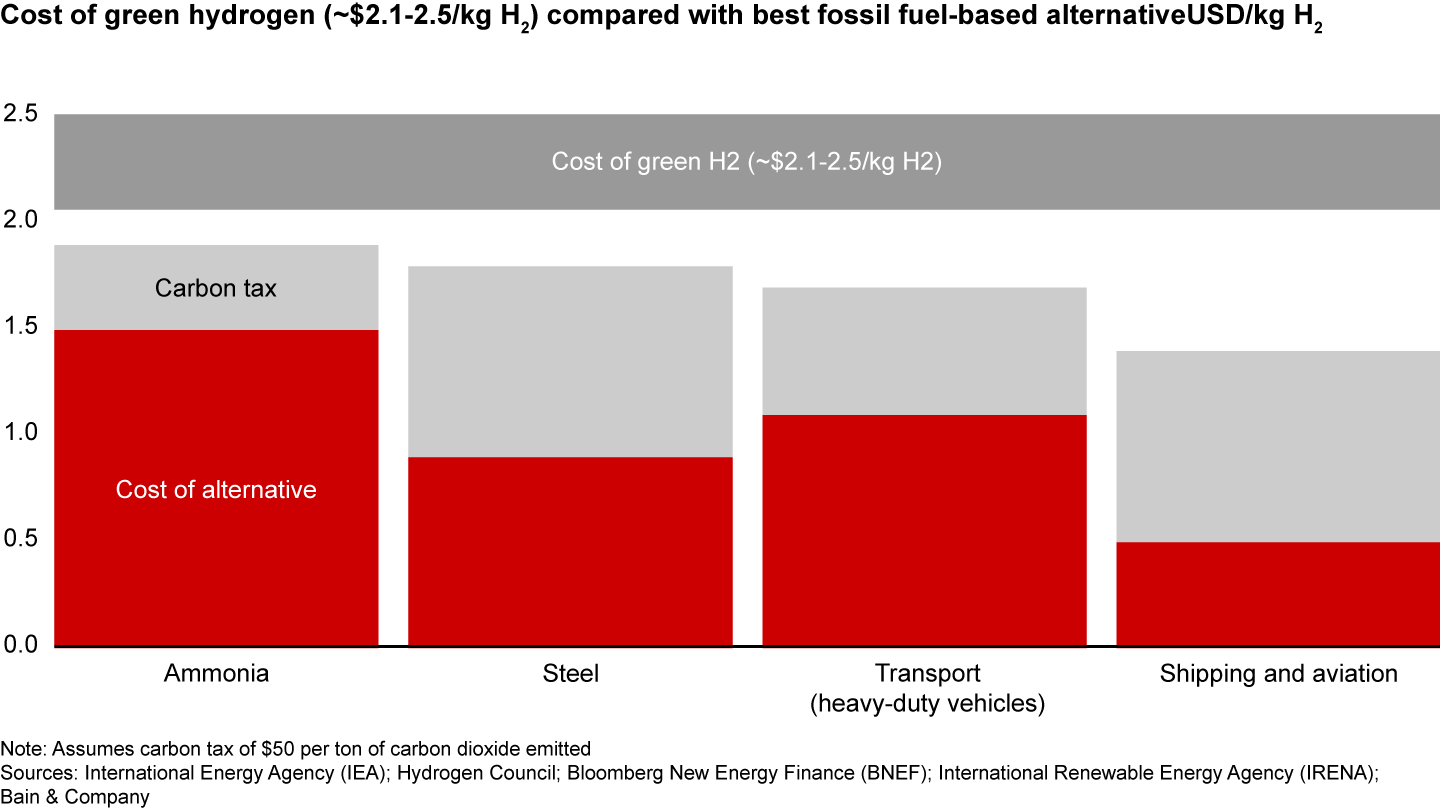
      Clean hydrogen is not competitive today compared to fossil fuel alternatives

      In our experience, hydrogen developers are familiar with the economics around regulatory support and other incentives. They also understand the need for finding the right site locations (with proximity to resources and supporting industry) and the right partners. The missing ingredient, we often find, is that they are less attuned to another factor that’s critical for success: identifying customers that are willing to pay a green premium and securing long-term offtake agreements with them.  

      Ensuring offtake customers

      This capability gap isn’t surprising: The companies developing clean hydrogen projects have focused on developing their engineering and project management capabilities. Securing a base of offtake customers hasn't been a critical capability of their core business, so it's a new muscle to build. For example, the passage of the Inflation Reduction Act in the US is likely to increase the supply of low-cost clean hydrogen, but so far it is unclear if there are enough customers ready to commit to purchasing this new supply.

      But getting potential customers to commit to long-term contracts is essential for project success. It’s difficult because customers must have confidence that they can pass on the cost of the green premium to their end consumers. The challenge is made more difficult because customers expect prices on green derivatives to decline over time, and they don’t want to be locked into higher prices. Also, many hydrogen producers, particularly utilities that are used to selling into commodity markets, lack the specialized sales experience required to close these deals.

      Even so, some leaders are finding ways to secure these long-term commitments. In Sweden, steel maker SSAB has entered a joint venture with power utility Vattenfall and mining group LKAB to develop green hydrogen to power a new green steel operation called Hybrit. A long-term agreement to provide green steel to Volvo will help the automaker achieve its ambitious carbon-reduction goals while ensuring an offtake customer for the green steel. Another Swedish consortium, H2GS, is developing a similar model to make green steel available with long-term commitments from automakers and other customers.

      In another example, the near-term project pipeline before 2025 in green ammonia mostly targets “green” parts of existing ammonia production facilities of major fertilizer companies such as Fertiberia, Fertiglobe, and Yara. These projects take advantage of sites with existing infrastructure, although not necessarily the best renewable energy resources. Most importantly, these early projects take advantage of the fertilizer producers’ strong distribution capabilities and existing customer relationships. Some customers are willing to pay more for greener fertilizer. For example, in early 2022, Yara reached an agreement to bring green fertilizers to market with Lantmännen, a farming cooperative.

      Several East Asia power sectors, particularly Japan and South Korea, may also be new markets for clean ammonia. Some companies have already signed memoranda of understanding with blue and green ammonia projects, not unlike the long-term contracts for LNG that emerged in the 1970s. For example, ACWA Power and Kepco are looking to collaborate on green ammonia projects globally.

      Three steps to develop a customer-centric approach

      Our work with early movers suggests three important steps in developing a customer-centric approach that are key to unlocking a successful clean hydrogen project. Taking this kind of approach has helped companies identify customers willing to pay a premium and commit to long-term contracts, which in turn has enabled hydrogen producers to commit to investment decisions.

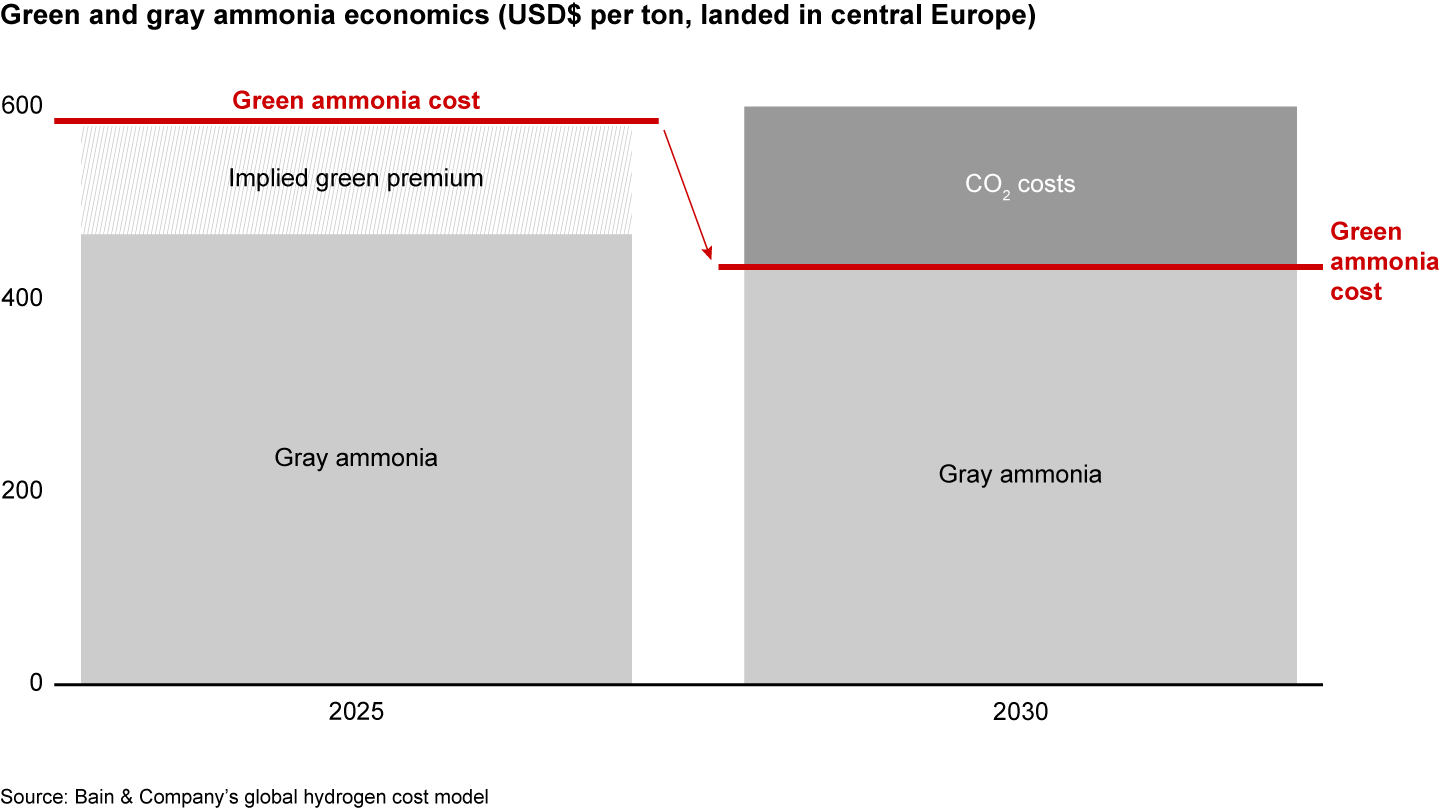
      • Focus on high-potential segments and customers. Many hydrogen developers take a broad approach to their potential customer base. But in these early days for the market, it’s more efficient to identify the customer segments willing to pay the green premium—the price difference between traditional and low-carbon hydrogen. For example, in the European Union, prices for ammonia used in fertilizer could be about $450 to $475 per ton in 2025, while green ammonia could cost around $600 per ton—assuming markets return to levels like those before the current gas crisis (see Figure 2). Customers must be willing to pay more, either to reduce their own carbon footprint or to sell a product that lets their customers do the same. The situation could change by 2030, when it is projected that carbon costs associated with gray ammonia will make it cost more than green ammonia.
        Figure 2
        By 2030, green ammonia could be cheaper than fossil fuel-based alternatives, as the European Union’s carbon border adjustment mechanism comes into place
        Once these segments are identified, developers can then narrow the search to find the highest-potential customers to make efficient use of lean sales teams. Developers might survey customers about their willingness to pay a green premium, but this has its limitations. Purchasers may not know how their company’s willingness to pay a premium could change over time, and frequently the decision maker for a commodity like ammonia may be in procurement, while the decision to pay a green premium rests somewhere else, often in the C-suite.

        A better way to understand whether a company might be willing to pay a green premium is to look at its environmental activities and commitments. Customers that position themselves as environmental leaders but have yet to secure agreements on green derivatives are good candidates. So are companies that are lagging in their environmental commitments but likely to face future regulation—for example, an international airline that needs to meet synthetic air-fuel blending requirements to operate in the EU.

        One renewable energy company developing a clean hydrogen project started with a list of thousands of potential customers in its most attractive segments and narrowed it down to the 40 most likely customers. That allowed it to focus its efforts on negotiations that resulted in an offtake agreement that made the project economically viable.

      • Explore partnering with customers. Hydrogen producers that are not also customers of hydrogen—utilities, for example—should consider deepening their relationships with their offtake customers, like the partnerships we’ve seen in more established commodities such as gray ammonia. This helps secure long-term agreements and can help developers gain a better understanding of the challenges these customers face in selling a greener product and recovering the premium they have paid. Partnerships can also help hydrogen producers develop their commercial capabilities, as they learn more about hydrogen’s economics and supply chain, while they develop their operational capabilities.

        One company that has taken this approach is the container carrier A.P. Moller–Maersk. Maersk has entered several partnerships to ensure a supply of green methanol for new vessels that can run on green fuel, starting in 2025 when the first of 19 ordered vessels are to be delivered. This has so far triggered multiple letters of intent for partnerships with suppliers of both biomethanol and e-methanol from green hydrogen.

      • Build the customer mindset in your organization. To achieve these goals, hydrogen producers are becoming more customer-centric across their organizations. Some need to build new skills because companies that trade mostly in commodities typically have required limited sales capabilities. With a shift toward more differentiated products, they need to train the salesforce to position their product as unique and valuable, form direct relationships with customers, and establish partnerships.

        Developing these customer capabilities requires some of the same muscles that hydrogen producers have used in designing their clean hydrogen projects. A truly customer-centric organization takes a systemic approach, talking to customers to gain a better understanding of the market and their long-term needs. Understanding customer priorities often leads companies to reconsider how they design their products and services and take them to market.

        This may represent a cultural change for many utilities and other industrial organizations that have not worked at this level of customer engagement before. Instilling a customer-centric culture guides actions at all levels of the organization and sheds light on where new learning is necessary. Targeting new customer segments may require greater flexibility and customization, and executives will need to evaluate where this is worthwhile financially.

      A customer-centric approach can do more than ensure a pipeline of offtake customers. When hydrogen developers gain a better understanding of customer demand, they can plan their projects more effectively—for example, making better decisions about the trade-offs between setting up centralized production with a robust distribution network or siting production closer to supply and customer demand. A more concrete, better defined project concept increases the likelihood of project success and accelerates the path to the final investment decision.

      While the market for hydrogen is destined to grow, the path to success for any individual clean hydrogen project is far from certain. Access to the right sites, renewable energy resources, and partnerships will remain important, and given the limited supply of all three, assertive action is likely to generate a first-mover advantage. Adopting a customer-centric approach is a key ingredient in making the difference between failure and success.

      Autori
      • Headshot of Zach Cole
        Zach Cole
        Partner, Oslo
      • Headshot of Per Karlsson
        Per Karlsson
        Partner, Oslo
      • Headshot of Peter Meijer
        Peter Meijer
        Practice Vice President, Brussels
      Contattaci
      Industry collegate
      • Agribusiness
      • Chimica
      • Energia e Risorse Naturali
      • Petrolio e Gas
      • Utility e Rinnovabili
      Servizi di consulenza collegati
      • Capital Projects Acceleration
      • Sostenibilità e Corporate Responsibility
      Energia e Risorse Naturali
      Energy Executive Agenda 2025: New Challenges, New Innovations

      Our latest survey finds executives facing rising costs, surging demand, and a long to-do list.

      Leggi di più
      Energia e Risorse Naturali
      Sustaining Capital: From Chaos to Discipline

      Fragmented budgets, poor visibility, and missed forecasts are fixable with the right approach.

      Leggi di più
      Energia e Risorse Naturali
      Business Breakthrough Barometer 2025

      The annual pulse check from leading businesses on the pace of the net-zero transition.

      Leggi di più
      Energia e Risorse Naturali
      Reality Check: Energy and Natural Resource Executive Pulse 2024

      Executives expect a slower energy transition as it gets more difficult to generate returns and progress diverges across regions.

      Leggi di più
      Energia e Risorse Naturali
      Southeast Asia's Green Economy 2025 Report

      Unlocking systems for growth and impact

      Leggi di più
      First published in gennaio 2023
      Tags
      • Agribusiness
      • Capital Projects Acceleration
      • Chimica
      • Energia e Risorse Naturali
      • Petrolio e Gas
      • Sostenibilità e Corporate Responsibility
      • Utility e Rinnovabili

      Come abbiamo aiutato i nostri clienti

      Organizzazione Moving Beyond an Operating Model Redesign to Live the Model

      Leggi un caso di studio

      An OFS captures post-merger growth synergies

      Leggi un caso di studio

      Broader market plus tighter sales strategy equals big success for a portfolio company

      Leggi un caso di studio

      Vuoi continuare la conversazione?

      Aiutiamo i leader globali e le loro aziende ad affrontare problemi e a cogliere le opportunità. Sosteniamo cambiamenti e otteniamo risultati duraturi.

      Bain Insights. Le nostre idee e punti di vista sulle tematiche che le aziende globali affrontano ogni giorno, arrivano nella tua email tutti i mesi.

      *Ho letto l'Informativa sulla Privacy e accetto i termini e le condizioni.

      Si prega di leggere e accettare l’Informativa sulla Privacy
      Bain & Company
      Contattaci Sustainability Accessibility Condizioni d’uso Privacy Cookie Policy Sitemap Log In

      © 1996-2026 Bain & Company, Inc.

      Contatta Bain

      Come posso aiutarti?

      • Business inquiry
      • Career information
      • Press relations
      • Partnership request
      • Speaker request
      Guarda tutti gli uffici