

Report
As China’s market for fast-moving consumer goods grows, modern retailers are looking for ways to grow too—and outpace competitors. Our study of real-time shopper behavior provides important insights into how China’s retail landscape is quickly evolving, and what separates leading retailers from followers. These insights allow both domestic and foreign retailers to hone their strategies.
Introduction
China’s retail market for fast-moving consumer goods (FMCG) is evolving as quickly and dramatically as it is growing. Modern trade, which includes supermarkets and hypermarkets, is making vast inroads in China’s biggest cities. It now accounts for more than half of all urban sales of FMCGs and is growing at 14%—faster than China’s GDP. At the same time, another channel is gaining significant ground: e-commerce. While it’s still a small percentage of overall sales—less than 2%—e-commerce is exploding: It grew 53% last year.
We decided to dig deeper to see what lessons we could develop for consumer goods makers and retailers pursuing growth from the rising number of middle-class shoppers. Their expansion has been challenged by a lack of detailed, real-time data that would enable retailers to better understand shoppers’ behavior and fully capture the opportunities before them.
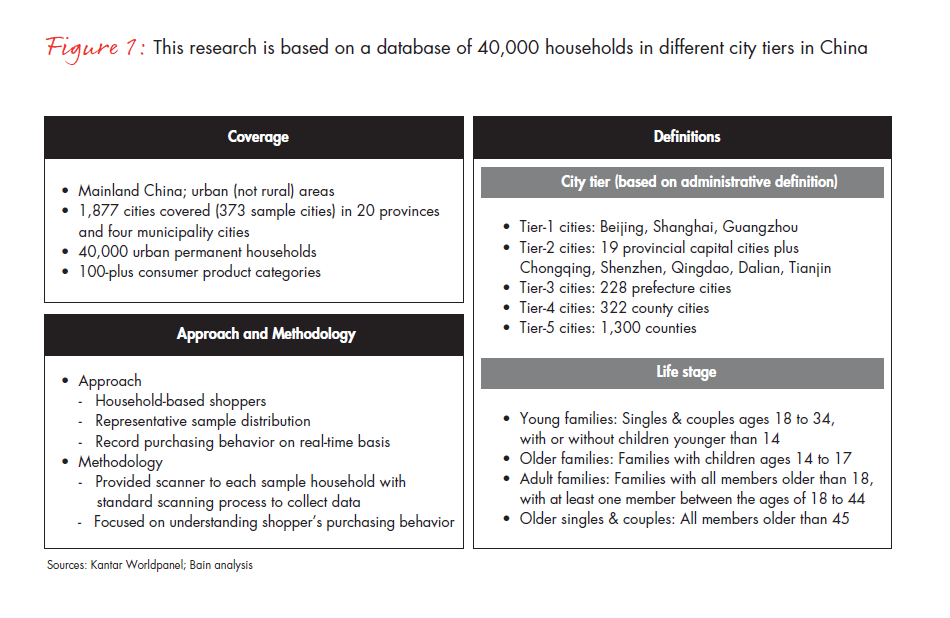
In our groundbreaking report “What Chinese Shoppers Really Do But Will Never Tell You”, published in June, we helped fill that void by sharing real-time shopper data, including the insights gained from a rare look at what shoppers actually do at the point of sale as opposed to what they say they do. This joint study by Bain & Company and Kantar Worldpanel examined the shopping behavior of 40,000 Chinese households from 373 cities in 20 provinces and four major municipalities, creating a comprehensive look at how much shoppers spend by region and by city in 26 important product categories, ranging from milk to shampoo. We followed up with a second report that explored shopper behavior in more depth across three dimensions: city tier, category nature and development stage, and shoppers’ life stages (see Figure 1). A third report examined the dynamics between foreign and domestic consumer goods makers to help both types of competitors capture their share of China’s growth.
In our fourth report, we explore the implications of our findings for retailers in modern trade. Our analysis provides several key insights:
- Modern trade shoppers make fewer trips to the store but spend more per trip, with the average price per item increasing.
- E-commerce is experiencing rapid development and explosive growth, although shoppers are increasingly using online sites to track down cheaper prices in a few higher-priced categories.
- As we detailed in our previous reports, China’s shoppers tend to be repertoire shoppers in most categories. They prefer to choose from a range of brands in a particular category for the same need or occasion instead of being loyal to a brand. The swift expansion of modern trade is helping to fuel the trend toward repertoire behavior by offering a wide variety of brands and promotional activities. It’s a trend that will favor retailers because consumer goods companies will be increasing investments in point-of-sale activation to encourage new shoppers to choose their brands over competing brands on the shelf.
- Despite the extensive choices offered by modern trade, it’s only the top brands and SKUs that contribute the majority of retail sales, according to our analysis. That means retailers that strive to increase listing fees by adding SKUs may actually be tying up shelf space and working capital with low-selling SKUs.
- Our research also confirmed that grocery retailing in China still is largely a local, city-based business, given the vast differences in consumer tastes and behavior. Leading retailers combine an extensive local footprint designed to achieve broad penetration with an effective retail model that motivates shoppers to make repeat visits and increase their basket size.
Full report
Inside China’s diversified and evolving retail market
More than half of all urban FMCG sales in China now take place within the high-ceilinged walls of modern trade. Both hypermarket and supermarket formats have gained ground in China’s major cities, growing 14% last year. Hypermarkets represent 27.4% of total retail, while supermarkets represent 24.8%. By comparison, groceries account for 23.4% of total retail in China’s largest cities. Last year, hypermarkets experienced 16% growth and supermarkets grew by 12%. Meanwhile, e-commerce, also a modern trade format, is exploding, with 53% growth. However, it represents a fraction of urban FMCG sales—just 1.5%. Our survey found that young families make up more than half of all online shoppers.
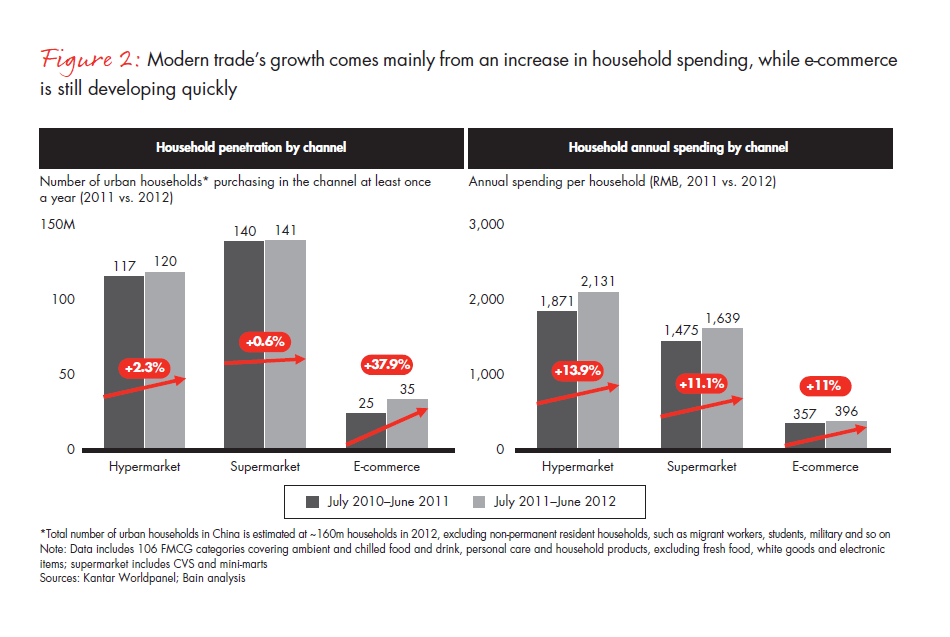
Household channel penetration—the number of households purchasing in a particular channel—grew slightly for hypermarkets and supermarkets this year. Hypermarket penetration rose by 2.3% and supermarket penetration by 0.6%. And shoppers are spending more: Annual household spending increased in hypermarkets by 13.9% and in supermarkets by 11.1% (see Figure 2).
While shoppers are spending more, they’re making fewer trips to the store. Purchasing frequency per household dropped in both of the major modern trade formats (see Figure 3). Compared with last year, shoppers visited hypermarkets and supermarkets less frequently in 2012, down by 4% for hypermarkets and 8.4% for supermarkets. But shoppers purchased more items per trip in each of the formats. They bought 5.7% more items per trip in hypermarkets and 6.2% more in supermarkets. And our research has found that in addition to buying more items, they’re also paying more per item. The average price per item in a hypermarket rose 12.3% compared with a 14.2% rise in supermarkets. This price-per-item increase appears to be spurred by a number of factors, including larger package sizes, rising prices and some trading up to premium products.
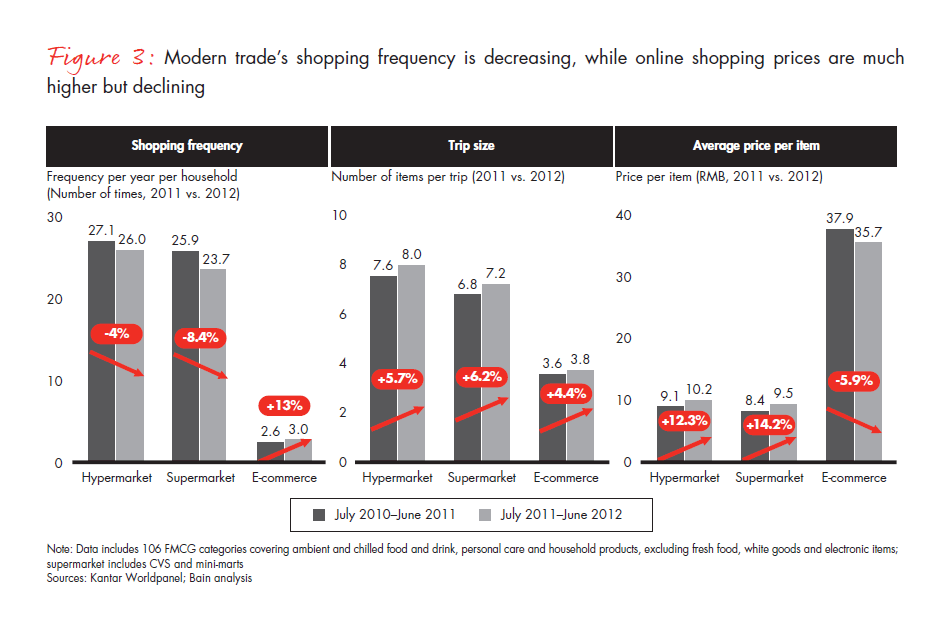
For its part, e-commerce penetration gained significant ground, growing by 37.9% in 2012, as Chinese consumers discovered online options for purchases. The increasing penetration of e-commerce was accompanied by an 11% rise in the amount shoppers spent online. While shoppers are paying fewer visits to hypermarkets and supermarkets, they’re visiting e-commerce retail sites more frequently than they did last year—by 13%. And while the number of items they purchased during online visits increased 4.4%, they’re spending less per item, even though the price per item for e-commerce is considerably higher than in modern trade. The likely reason: Shoppers tend to go online in search of deals, with their spending heavily skewed toward more expensive categories like baby diapers or cosmetics, where there is potential for major savings. Another reason is that e-commerce sites also offer a broader selection of imported products.
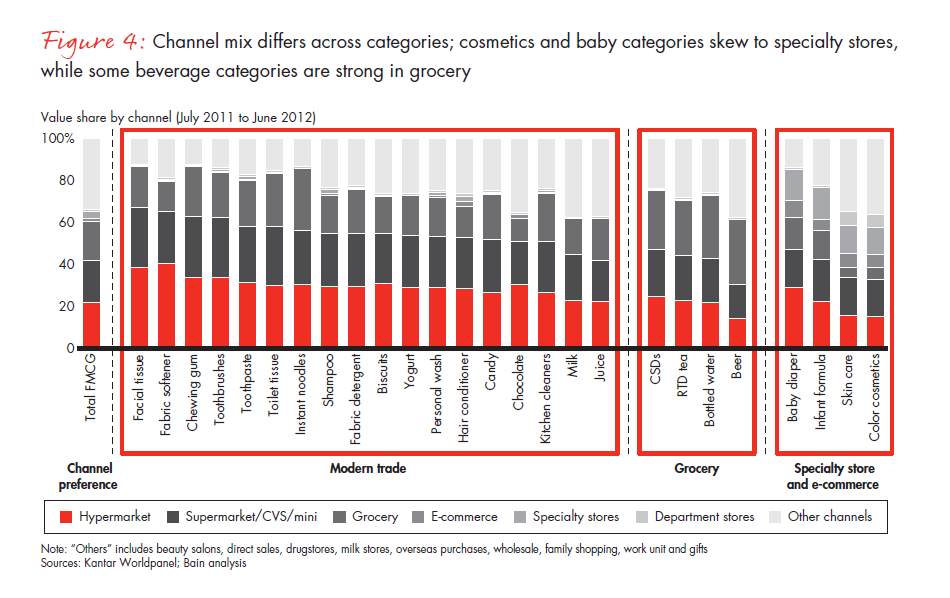
China’s shoppers clearly have a preferred channel for each category they purchase (see Figure 4). For example, while 40% of all facial tissue is purchased in hypermarkets, shoppers buy only 15.8% of their cosmetics there. Shoppers prefer buying cosmetics, skin care and baby categories, such as diapers and infant milk powder, in specialty stores or online. When combined, these categories represent about 60% of all online purchases. Shoppers favor the grocery channel for beer, ready-to-drink (RTD) tea, carbonated soft drinks (CSDs) and bottled water.
How retail channel dynamics influence shopper behavior
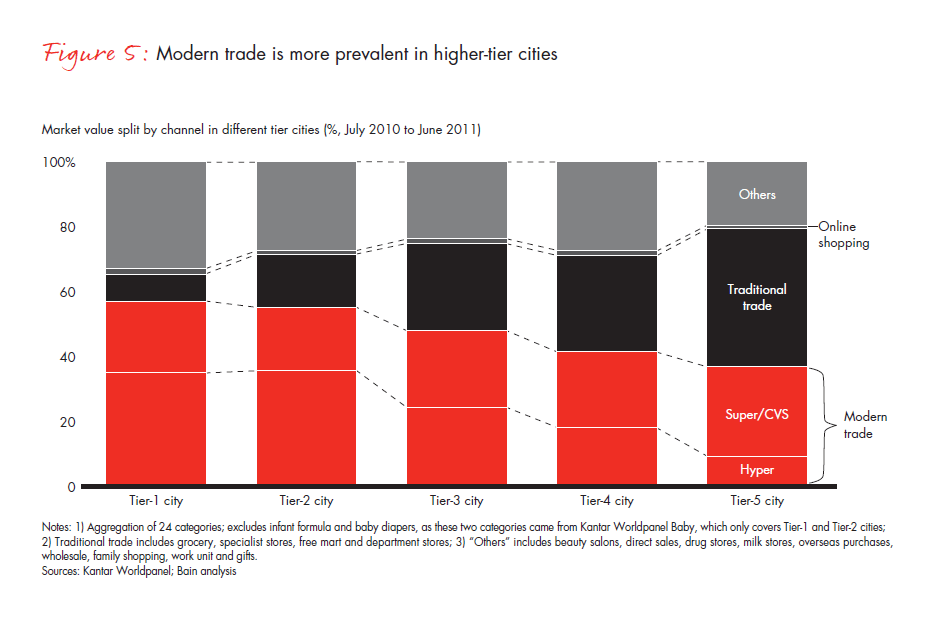
Our analysis shows that all forms of modern trade are more common in China’s cities. In fact, more than half of all modern trade spending takes place in Tier-1 and Tier-2 cities. Hypermarkets are three times more prevalent in Tier-1 cities than in Tier-5 cities (see Figure 5). Because modern trade offers a wider availability of brands for shoppers, we found a corresponding increase in repertoire behavior in Tier-1 and Tier-2 cities. For example, the average Tier-1 household purchased biscuits 21 times last year and chose 8.4 brands. With fewer brands available to them, shoppers in Tier-5 cities bought biscuits 10.7 times and chose 4.7 brands.
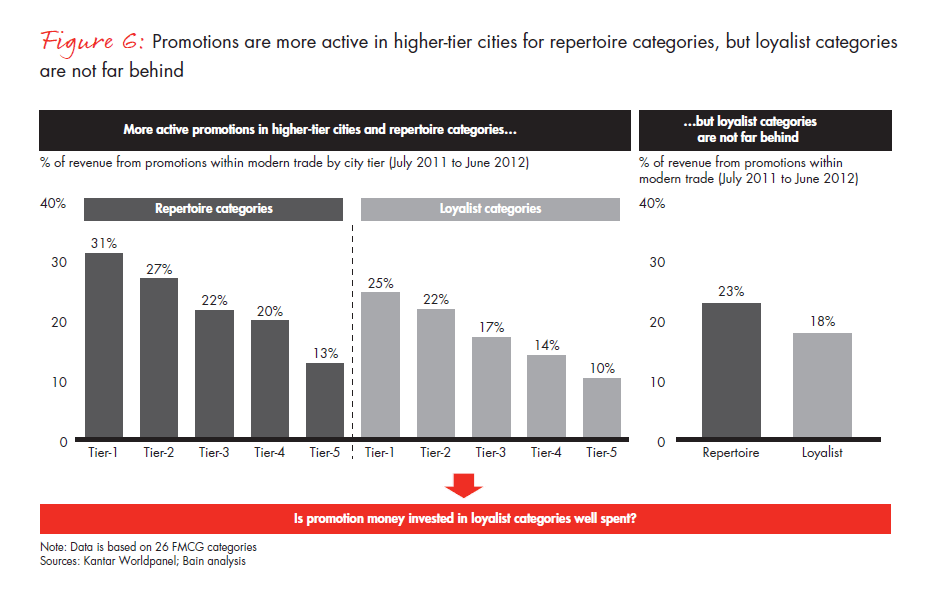
Given the prevalence of repertoire shoppers in top-tier cities, it seems logical that brands and retailers invest in promotions for repertoire categories at a rate corresponding with city size. In repertoire categories, the bigger the city tier, the bigger the investment in promotions (see Figure 6). Last year, promotions generated 31% of repertoire category revenues for Tier- 1 stores, compared with 13% of the repertoire category revenue in Tier-5 stores. Across all city tiers, retailers use promotions in loyalist categories almost as much as in repertoire categories. About 25% of Tier-1 and 10% of Tier-5 modern trade revenues in loyalist categories come from promotions. But as we mentioned in our previous reports, Bain research shows that it is not necessary to constantly rely on in-store activation in loyalist categories. So, brands and retailers may need to reassess the effectiveness of promotions in loyalist categories.
Another important finding from our survey: Despite the extensive choices offered by modern trade, just a few brands deliver the majority of all revenue. A breakdown shows that among all modern trade players in China, the top five brands of fabric detergent accounted for 65% of the category’s revenues.
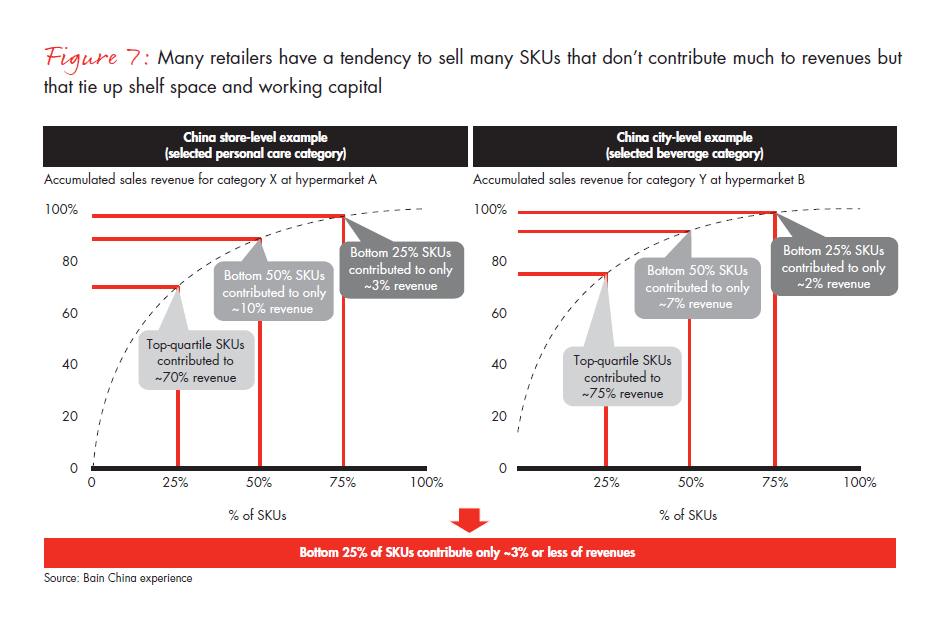
Such findings suggest that retailers should aggressively prune their shelves, devoting space only to top sellers. But across China, modern trade retailers often depend on the listing fees they receive for selling multiple SKUs. As a result, many are tying up shelf space and working capital by selling low-revenue SKUs (see Figure 7). How significant is the impact? When we looked at two categories, personal care and beverages, at two hypermarket retailers in China, we found that the bottom 25% of SKUs contribute 3% or less of sales revenues.
When retailers eliminate low-revenue SKUs, they make it easier for shoppers to choose and often improve performance. For example, when a retailer cuts 40% of its low-performing SKUs, filling the space with fast-moving items, it found that 80% of its customers saw no difference in the variety and 15% actually thought there were more items than before. The move not only improved customers’ perception of variety but also improved sales by 25%. But eliminating SKUs requires caution. It’s important to separate the SKUs that can easily be replaced from those with a loyal customer following.
What makes hypermarkets succeed?
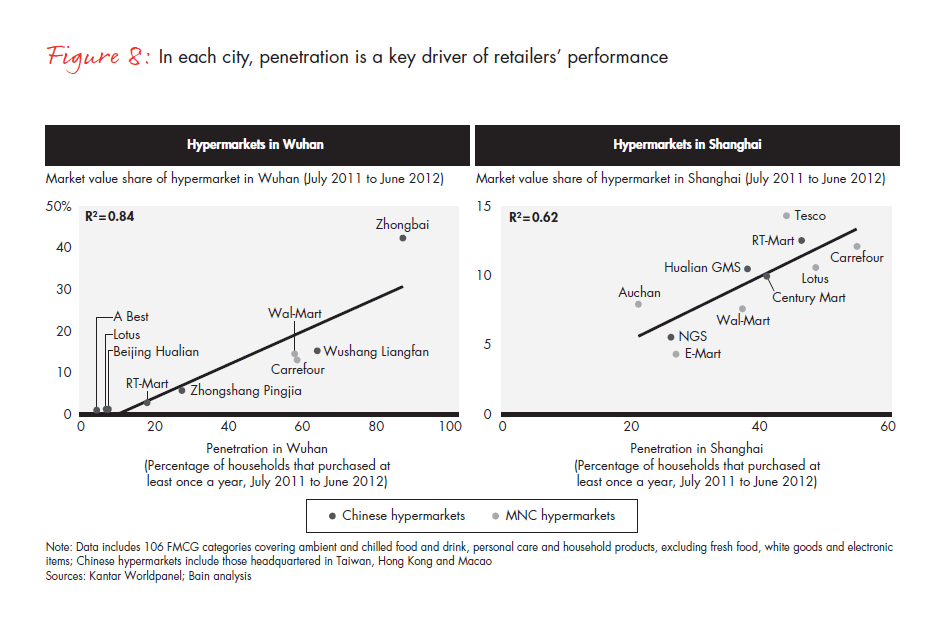
Based on our retail experience, we’ve learned that retailers’ performance stems from their local market share at the city or regional level. To understand what separates leaders from followers among modern trade retailers in China, we compared the experiences of hypermarkets in two important cities: Shanghai and Wuhan. We’ve found that local market share growth depends on two factors: 1) a retailer’s expanded store footprint and sales area, leading to increased penetration, and 2) the effectiveness of the retail model, which translates that store’s footprint into revenues. So it’s no coincidence that in Wuhan, the hypermarket retailer with the highest revenue share is Zhongbai, the company with the deepest penetration (see Figure 8). Part of that successful penetration results from Zhongbai’s footprint. It has 71 hypermarkets in Wuhan—23 more than its closest competitor.
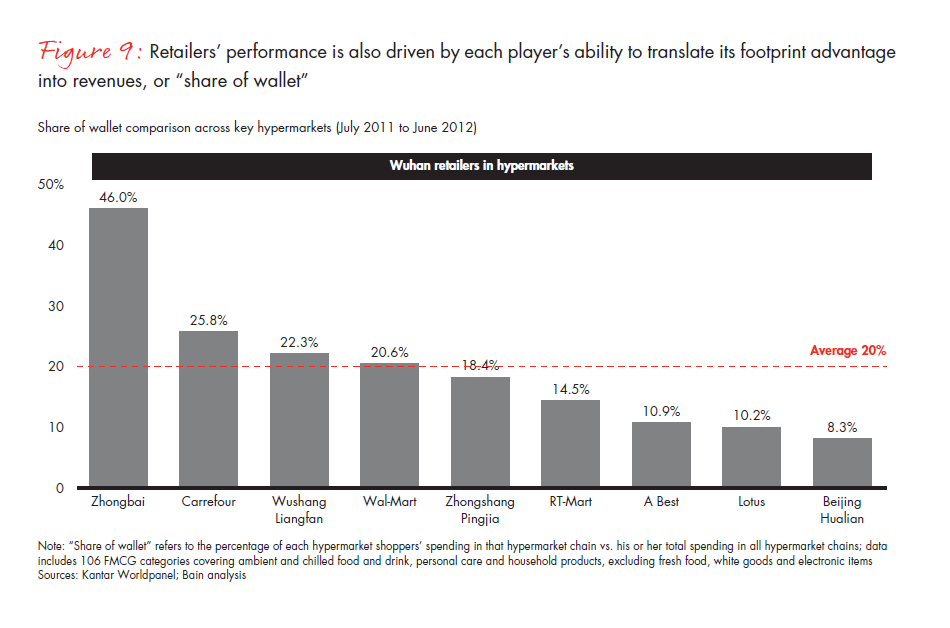
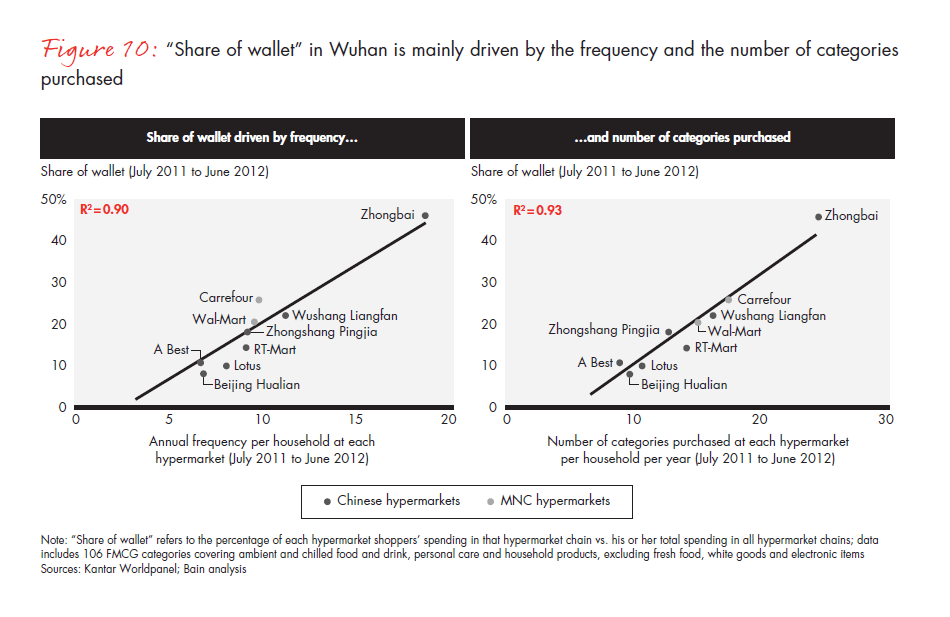
But having a big footprint isn’t enough. Retailers need to take advantage of their footprint by gaining an increasing “share of wallet,” that is, encouraging more frequent shopper purchases and in a broader range of categories. Here, too, Zhongbai comes out on top. The average household takes 18.6 trips to a Zhongbai store in Wuhan each year, compared with 11.2 trips for its closest competitor. Zhongbai leads in the number of categories purchased. The average household buys 26 categories in one of its stores each year, compared with 16.3 for the runner-up. This success in purchasing frequency and number of categories has allowed Zhongbai to capture a high share of wallet that is nearly twice as much as Carrefour, its nearest competitor (see Figures 9 to 10).
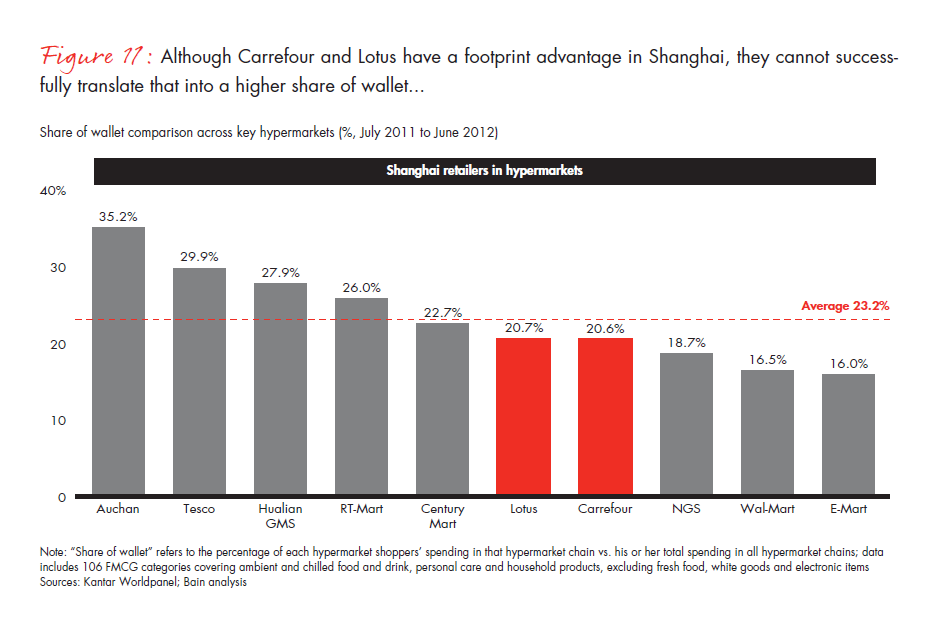
Zhonghai’s success in Wuhan offers lessons for retailers like Carrefour and Lotus in Shanghai. Both have a big footprint in Shanghai—Carrefour has 23 stores and Lotus has 25 stores—but these retailers haven’t successfully used that advantage to earn a higher share of wallet. Among the 10 largest hypermarket retailers in Shanghai, Lotus and Carrefour rank sixth and seventh, respectively (see Figure 11).
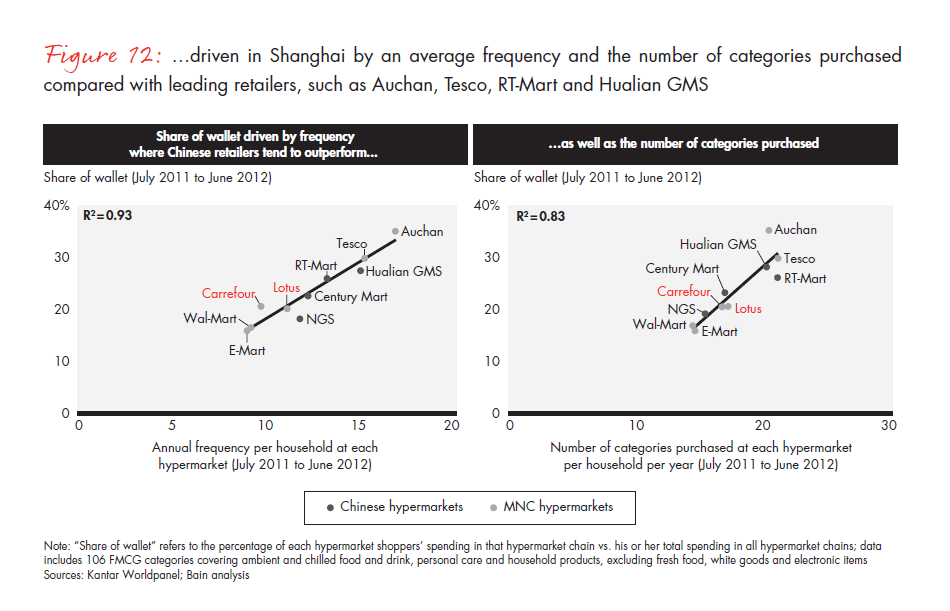
In Shanghai, Auchan is the leading hypermarket retailer when it comes to share of wallet, which increases with shopper frequency and the number of categories purchased. For example, Auchan’s average shopper household visited the retailer 16.8 times last year—more than Lotus’s 11 and Carrefour’s 9.7. Also, Auchan’s shoppers bought an average of 20.5 categories, surpassing Lotus’s 17.2 and Carrefour’s 16.7 (see Figure 12).
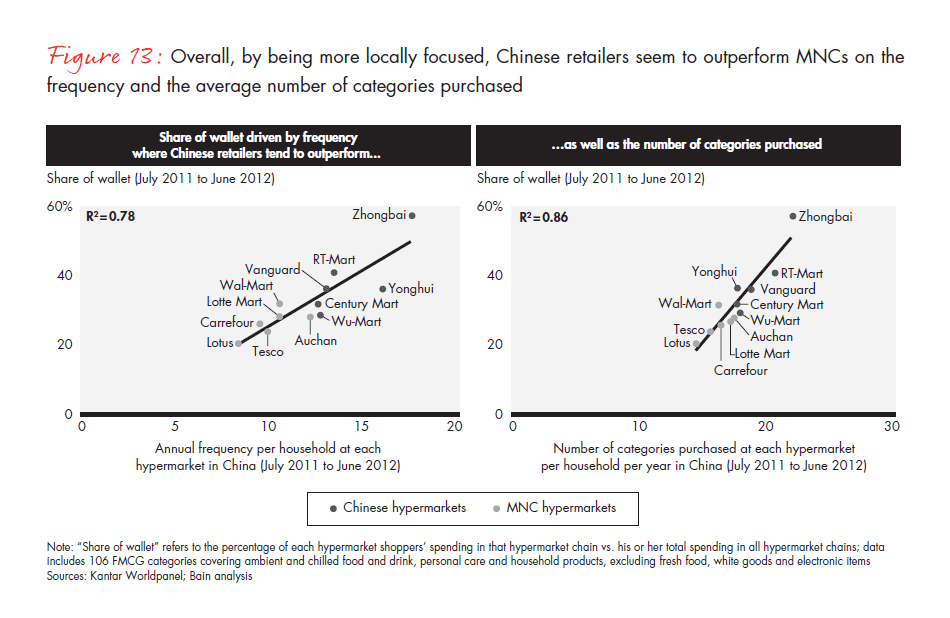
At a national level, top Chinese retailers, including those that originated in Hong Kong, Taiwan and Macau, enjoy a higher share of wallet than multinational players (see Figure 13). Consider that Zhongbai, RT-Mart, Vanguard and Yonghui all achieved share of wallet rates that are higher than multinationals like Wal-Mart, Auchan, Lotte Mart and Carrefour. The average Chinese hypermarket share of wallet is 38%, compared with 26% for multinationals. A major contributing factor to the success of Chinese hypermarkets is their local focus, which translates into higher loyalty in terms of more frequent visits and more categories purchased.
One important note: The 106 FMCG categories we studied don’t include other key elements that may contribute to retailers’ success, such as the competitiveness of fresh produce or shoppers’ overall price perception of the retailer.
Implications for retailers
What do these insights mean for retailers striving to grow in China?
- Repertoire behavior will increase as modern trade expands into lower-tier cities. This will benefit retailers as brands spend more on in-store activation in repertoire categories.
- Retailers should work with the leading brands in each category to deliver better category management and increase the rate of sales. When retailers increase listing fees by adding SKUs—often low-selling items—the proliferation of brands on the shelf can confuse shoppers and ultimately have a detrimental impact on retailers’ performance.
- Local market share is a major contributor to retailers’ performance. To expand their share, retailers should adopt a regional approach and focus first on building local scale in targeted markets. Winners combine an extensive footprint designed to achieve broad penetration with an effective retail model that motivates shoppers to make repeat visits and increase their basket size.
- By being more locally focused, local retailers appear to outperform multinationals in the key dimensions of shopping frequency and the number of categories purchased.
About the authors
Bruno Lannes is a partner in Bain’s Shanghai office and leads the firm’s Consumer Products and Retail practices for Greater China. Mike Booker is a partner in Bain’s Singapore office and leads the firm’s Consumer Products and Retail practices for Asia-Pacific. Kevin Chong and Fiona Liu are partners in Bain’s Shanghai office. James Root is a partner in Bain’s Hong Kong office. Guy Brusselmans is a partner in Bain’s Brussels office.
Marcy Kou is managing director at Kantar Worldpanel Asia. Jason Yu is general manager at Kantar Worldpanel China.
Acknowledgments
This report is a joint effort between Bain & Company and Kantar Worldpanel. The authors extend gratitude to all who contributed to this report, in particular Hongfei Zheng, Victoria Lan, Iris Zhou and Jixuan Jiang from Bain & Company; Rachel Lee, Tina Qin and Tracy Zhuang from Kantar Worldpanel.

 Download PDF
First published in dicembre 2012