
Skip to Content
  • Uffici

    Uffici

    Nord e Sud America
    • Atlanta
    • Austin
    • Bogota
    • Boston
    • Buenos Aires
    • Chicago
    • Dallas
    • Denver
    • Houston
    • Los Angeles
    • Mexico City
    • Minneapolis
    • Monterrey
    • Montreal
    • New York
    • Rio de Janeiro
    • San Francisco
    • Santiago
    • São Paulo
    • Seattle
    • Silicon Valley
    • Toronto
    • Washington, DC
    Europa, Medio Oriente e Africa
    • Amsterdam
    • Athens
    • Berlin
    • Brussels
    • Copenhagen
    • Doha
    • Dubai
    • Dusseldorf
    • Frankfurt
    • Helsinki
    • Istanbul
    • Johannesburg
    • Kyiv
    • Lisbon
    • London
    • Madrid
    • Milan
    • Munich
    • Oslo
    • Paris
    • Riyadh
    • Rome
    • Stockholm
    • Vienna
    • Warsaw
    • Zurich
    Asia e Australia
    • Bangkok
    • Beijing
    • Bengaluru
    • Brisbane
    • Ho Chi Minh City
    • Hong Kong
    • Jakarta
    • Kuala Lumpur
    • Manila
    • Melbourne
    • Mumbai
    • New Delhi
    • Perth
    • Seoul
    • Shanghai
    • Singapore
    • Sydney
    • Tokyo
    Guarda tutti gli uffici
  • Alumni
  • Media Center
  • Iscriviti
  • Contattaci
  • Italy | Italiano

    Seleziona il tuo Paese e la tua lingua

    Global
    • Global (English)
    Nord e Sud America
    • Brazil (Português)
    • Argentina (Español)
    • Canada (Français)
    • Chile (Español)
    • Colombia (Español)
    Europa, Medio Oriente e Africa
    • France (Français)
    • DACH Region (Deutsch)
    • Italy (Italiano)
    • Spain (Español)
    • Greece (Elliniká)
    Asia e Australia
    • China (中文版)
    • Korea (한국어)
    • Japan (日本語)
  • Saved items (0)
    Saved items (0)

    You have no saved items.

    Contrassegna il contenuto che ti interessa e verrà salvato qui. Potrai leggerlo o condividerlo in seguito.

    Explore Bain Insights
  • Settori
    Menu principale

    Settori

    • Aerospazio e Difesa
    • Agribusiness
    • Chimica
    • Infrastrutture e Costruzioni
    • Beni di Largo Consumo
    • Servizi Finanziari
    • Sanità
    • Macchinari Industriali
    • Media & Intrattenimento
    • Industria Metallurgica
    • Industria Mineraria
    • Petrolio e Gas
    • Industria Cartaria e Packaging
    • Private Equity
    • Settore Sociale & Pubblico
    • Retail
    • Tecnologia
    • Telecomunicazioni
    • Compagnie Aeree & Trasporti
    • Viaggi e Svago
    • Utility e Rinnovabili
  • Servizi di Consulenza
    Menu principale

    Servizi di Consulenza

    • Customer Experience
    • ESG
    • Innovation
    • M&A and Divestitures
    • Operation
    • People & Organization
    • Private Equity
    • Sales & Marketing
    • Strategia
    • IA, Approfondimenti e Soluzioni
    • Tecnologia
    • Trasformazione
  • Digital
  • Tematiche
  • Informazioni su Bain
    Menu principale

    Informazioni su Bain

    • Che Cosa Facciamo
    • Quello in Cui Crediamo
    • Le Nostre Persone e la Leadership
    • Risultati
    • Premi e Riconoscimenti
    • Organizzazioni Globali
    Further: Our global responsibility
    • Diversità e Inclusione
    • Social Impact
    • Sustainability
    • World Economic Forum
    Learn more about Further
  • Careers
    Menu principale

    Careers

    • Work with Us
      Careers
      Work with Us
      • Find Your Place
      • Our Work Areas
      • Integrated Teams
      • Students
      • Internships & Programs
      • Recruiting Events
    • Life at Bain
      Careers
      Life at Bain
      • Blog: Inside Bain
      • Career Stories
      • Our People
      • Where We Work
      • Supporting Your Growth
      • Affinity Groups
      • Benefits
    • Impact Stories
    • Hiring Process
      Careers
      Hiring Process
      • What to Expect
      • Interviewing
    FIND JOBS
  • Uffici
    Menu principale

    Uffici

    • Nord e Sud America
      Uffici
      Nord e Sud America
      • Atlanta
      • Austin
      • Bogota
      • Boston
      • Buenos Aires
      • Chicago
      • Dallas
      • Denver
      • Houston
      • Los Angeles
      • Mexico City
      • Minneapolis
      • Monterrey
      • Montreal
      • New York
      • Rio de Janeiro
      • San Francisco
      • Santiago
      • São Paulo
      • Seattle
      • Silicon Valley
      • Toronto
      • Washington, DC
    • Europa, Medio Oriente e Africa
      Uffici
      Europa, Medio Oriente e Africa
      • Amsterdam
      • Athens
      • Berlin
      • Brussels
      • Copenhagen
      • Doha
      • Dubai
      • Dusseldorf
      • Frankfurt
      • Helsinki
      • Istanbul
      • Johannesburg
      • Kyiv
      • Lisbon
      • London
      • Madrid
      • Milan
      • Munich
      • Oslo
      • Paris
      • Riyadh
      • Rome
      • Stockholm
      • Vienna
      • Warsaw
      • Zurich
    • Asia e Australia
      Uffici
      Asia e Australia
      • Bangkok
      • Beijing
      • Bengaluru
      • Brisbane
      • Ho Chi Minh City
      • Hong Kong
      • Jakarta
      • Kuala Lumpur
      • Manila
      • Melbourne
      • Mumbai
      • New Delhi
      • Perth
      • Seoul
      • Shanghai
      • Singapore
      • Sydney
      • Tokyo
    Guarda tutti gli uffici
  • Alumni
  • Media Center
  • Iscriviti
  • Contattaci
  • Italy | Italiano
    Menu principale

    Seleziona il tuo Paese e la tua lingua

    • Global
      Seleziona il tuo Paese e la tua lingua
      Global
      • Global (English)
    • Nord e Sud America
      Seleziona il tuo Paese e la tua lingua
      Nord e Sud America
      • Brazil (Português)
      • Argentina (Español)
      • Canada (Français)
      • Chile (Español)
      • Colombia (Español)
    • Europa, Medio Oriente e Africa
      Seleziona il tuo Paese e la tua lingua
      Europa, Medio Oriente e Africa
      • France (Français)
      • DACH Region (Deutsch)
      • Italy (Italiano)
      • Spain (Español)
      • Greece (Elliniká)
    • Asia e Australia
      Seleziona il tuo Paese e la tua lingua
      Asia e Australia
      • China (中文版)
      • Korea (한국어)
      • Japan (日本語)
  • Saved items  (0)
    Menu principale
    Saved items (0)

    You have no saved items.

    Contrassegna il contenuto che ti interessa e verrà salvato qui. Potrai leggerlo o condividerlo in seguito.

    Explore Bain Insights
  • Settori
    • Settori

      • Aerospazio e Difesa
      • Agribusiness
      • Chimica
      • Infrastrutture e Costruzioni
      • Beni di Largo Consumo
      • Servizi Finanziari
      • Sanità
      • Macchinari Industriali
      • Media & Intrattenimento
      • Industria Metallurgica
      • Industria Mineraria
      • Petrolio e Gas
      • Industria Cartaria e Packaging
      • Private Equity
      • Settore Sociale & Pubblico
      • Retail
      • Tecnologia
      • Telecomunicazioni
      • Compagnie Aeree & Trasporti
      • Viaggi e Svago
      • Utility e Rinnovabili
  • Servizi di Consulenza
    • Servizi di Consulenza

      • Customer Experience
      • ESG
      • Innovation
      • M&A and Divestitures
      • Operation
      • People & Organization
      • Private Equity
      • Sales & Marketing
      • Strategia
      • IA, Approfondimenti e Soluzioni
      • Tecnologia
      • Trasformazione
  • Digital
  • Tematiche
  • Informazioni su Bain
    • Informazioni su Bain

      • Che Cosa Facciamo
      • Quello in Cui Crediamo
      • Le Nostre Persone e la Leadership
      • Risultati
      • Premi e Riconoscimenti
      • Organizzazioni Globali
      Further: Our global responsibility
      • Diversità e Inclusione
      • Social Impact
      • Sustainability
      • World Economic Forum
      Learn more about Further
  • Careers
    Ricerche più popolari
    • Agile
    • Digitale
    • Strategia
    La tue ricerche precedenti
      Pagine visitate

      Content added to saved items

      Saved items (0)

      Removed from saved items

      Saved items (0)

      World Economic Forum

      Why Sustainability Is the New Digital

      Why Sustainability Is the New Digital

      Businesses that ignore the environmental concerns of their investors and consumers will get left behind.

      Di Orit Gadiesh e Jenny Davis-Peccoud

      • Tempo di lettura min.
      }

      Article

      Why Sustainability Is the New Digital
      en
      In evidenza
      • COVID-19 has created a sense of urgency for businesses to improve their sustainability credentials.
      • Some companies aren’t adapting quickly enough to this “disrupt or be disrupted” mindset.
      • Lessons must be learned from the digital revolution to enable businesses to adapt, innovate and ultimately prosper in the future.

      This article originally appeared in the World Economic Forum.

      Even in a year dominated by a global pandemic, the sustainability revolution has accelerated faster than expected, while also expanding to include a wider range of environmental and social issues.

      With consumers and investors demanding significant change, profit pools shifting away from incumbents to insurgents, and even the most carbon-heavy companies making net-zero pledges, executives ignore this revolution at their peril. And make no mistake: this is a real revolution. With every industry—nearly every product and most of our habits under scrutiny—it would be downplaying it to call it anything else.

      Like the digital revolution before it, the sustainability revolution promises to change everything. Yet, just as with digital, many companies are moving too slowly, taking an incremental approach to a challenge that demands a radical rethink.

      Remember in the early 2000s, when companies realized they needed to go digital, they would hire a web developer? They soon learned that was a woefully inadequate response to the enormous task at hand: the need to reshape their organizations, their products, their entire industries to meet the demands and opportunities of a digital economy.

      Something similar is happening today when the executive suite hires a sustainability expert to shepherd this transformation. It’s a start, but it barely begins the work needed to navigate the impending revolution.

      The task is daunting and there’s no time to lose. We need to transform a global economy founded on the principles of unlimited access to resources and the primacy of shareholders to one that recognizes the limits and consequences of everything we extract, manufacture, consume and waste, and the impacts on the people involved in doing so.

      Rapid disruption

      Some companies are grasping this change faster than others, and consumers and investors are rewarding them. For example, Unilever’s Sustainable Living Brands portfolio is growing nearly twice as fast as other brands in its portfolio. In energy, even before the COVID-19 economic slowdown, shares of lower carbon energy companies were outperforming those of the oil and gas majors.

      These disruptions are spreading more quickly than most expected. Who could have envisioned that electric cars would disrupt the automotive industry so quickly, or that Burger King would sell its iconic Whopper alongside the plant-based Impossible Burger? Such evidence of sustainability disruption is everywhere (see Figure 1).

      Figure 1
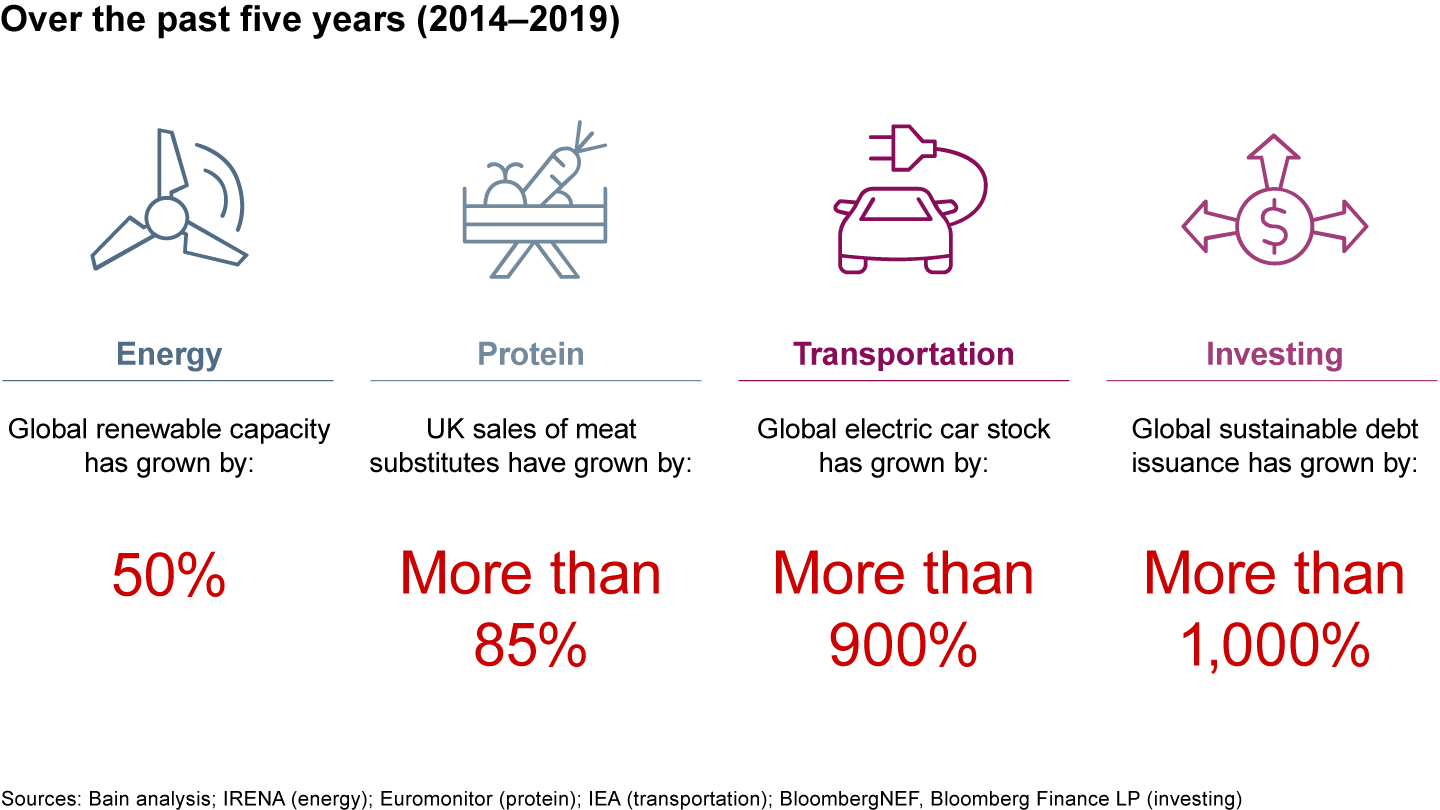
      Many categories are being disrupted by sustainability trends
      Many categories are being disrupted by sustainability trends
      Many categories are being disrupted by sustainability trends

      Seeing this movement, most executives now support sustainability objectives, but they remain wary of the costs. For example, in many industry sectors they’re searching for ways to minimize plastic waste, but they find the cost of setting up collection and recycling systems or replacing current volumes with bio-based materials prohibitive. They know they must prepare for the day when the price of carbon balloons to US$75 per ton or more, but they are also cautious about the cost of renewables and other low-carbon technologies.

      However, if they want to lead, they need to think not just about the short-term costs associated with sustainability, but also the long-term benefits. Just as with digital, sustainability is shifting profit pools to open up multibillion-dollar industries. Plant-based meat could be a US$140 billion business by the end of this decade, and the retail nutrition and wellness market could grow to US$50 billion by 2025. The current market value of the plant-based beverage category (things like almond milk and coconut water) is US$13 billion and growing at 12% per year.

      Yet many companies fail to account adequately for such huge opportunities during their planning. Sustainability-linked consumer products now grow nearly six times faster than other brands, and 73% of global consumers say they would definitely or probably change their consumption habits to reduce their impact on the environment, according to a 2018 Nielsen study Sustainability-friendly projects and companies are attracting a lower cost of capital.

      Decisive action

      Companies will need to reinvent themselves to capture these opportunities. All transitions are tough; this one’s even tougher. Bain’s global research found that only 12% of all corporate change efforts fully succeed, but the success rate for sustainability initiatives is substantially lower—a paltry 4%. So, what can companies do to improve their chances of success?

      1. Make bold strategic choices

      The scope of change is extensive, so leaders should adopt a “disrupt or be disrupted” mindset. Just as the emergence of innovative fintechs forced banks to shift their strategies, food companies need to get out ahead of their customers’ changing habits. Whether their concerns centered around health, carbon emissions or animal welfare, the number of vegans increased by 600% in the US from 2014 to 2017. In Germany and Poland, 1 in 10 young adults followed a vegan diet in 2017, and the number is even higher in France.

      2. Reinvent products

      Sustainable innovation is creating new products that can be produced with fewer carbon emissions, less waste and an emphasis on enhancing wellness. For instance, Unilever makes toothpaste tablets in reusable containers, and Procter & Gamble sells soap swatches that become cleaning products (hand soap, shampoo, laundry detergent) when you add water. These dry products are lighter, and so when transported emits less carbon. Even building materials companies are working hard on low-carbon steel and cement.

      3. Rethink operations

      Digital technologies transformed operations across industries; now sustainability requires the same. In an effort to understand which channels are more efficient, Walmart measured the greenhouse gas emissions and costs to fulfill a range of products ordered online vs. sold in stores. Shipping to homes was more efficient if customers were buying just a few things, but in-store purchases were more efficient if they had a longer shopping list or combined the trip with other errands. These insights helped Walmart identify ways to mitigate emissions by reducing split shipments and encouraging a shift to the most carbon-efficient channel when possible.

      4. Form innovative partnerships

      Sustainability issues are broad and complex—beyond the capacity of any single company to manage—so teaming up is essential. For example, about 40 companies across the plastic value chain (including energy, chemicals and consumer goods companies) formed the Alliance to End Plastic Waste, which supports innovative solutions to minimize plastic waste and encourage recycling, especially in developing countries.

      As the sustainability revolution expands, accelerates and disrupts, it is forcing companies to reassess themselves with an unwavering honesty in order to deliver a future that few imagined. Keeping the digital parallel in mind can help guide them to move quickly and boldly through the coming transformation.

      Autori
      • Headshot of Orit Gadiesh
        Orit Gadiesh
        Partner & Chair Emeritus, London
      • Headshot of Jenny Davis-Peccoud
        Jenny Davis-Peccoud
        Partner, Amsterdam
      Contattaci
      Servizi di consulenza collegati
      • Digital
      • Sostenibilità e Corporate Responsibility
      Come possiamo aiutarti
      • Commercial Operations
      • Transformation Catalyst
      Commercial Operations
      Sustainability Is the Next Digital

      In the sustainability revolution, no company will be left unchanged, and those that act quickest will be those that end up leading.

      Leggi di più
      World Economic Forum
      Circular Business Models Unlock New Profit and Growth

      Companies are using circular strategies to reap economic benefits.

      Leggi di più
      Sostenibilità e Corporate Responsibility
      AI and Power: A Marriage of Necessity

      Tech and utilities are an unlikely pair, but how well they balance data center electricity demand and finite energy resources will have huge implications.

      Leggi di più
      World Economic Forum
      Circular Transformation of Industries: Unlocking Economic Value

      In collaboration with the World Economic Forum and the University of Cambridge, this report explores how circularity can boost resilience, revenues, and cost savings.

      Leggi di più
      Commercial Operations
      Customer Acquisition Model

      Customer acquisition models automatically identify the best potential leads and set up strategies to convert them into active customers.

      Leggi di più
      First published in gennaio 2021
      Tags
      • Commercial Operations
      • Digital
      • Sostenibilità e Corporate Responsibility
      • Transformation Catalyst
      • World Economic Forum

      Come abbiamo aiutato i nostri clienti

      Sostenibilità e Corporate Responsibility Can Microchips Turbocharge Sustainability Improvement?

      Leggi un caso di studio

      Sostenibilità e Corporate Responsibility A Consumer Products Giant Accelerates Its Sustainability Agenda

      Leggi un caso di studio

      Sostenibilità e Corporate Responsibility A Paper Company Takes Bold Steps to Make Sustainability a Source of Profits

      Leggi un caso di studio

      Vuoi continuare la conversazione?

      Aiutiamo i leader globali e le loro aziende ad affrontare problemi e a cogliere le opportunità. Sosteniamo cambiamenti e otteniamo risultati duraturi.

      Bain Insights. Le nostre idee e punti di vista sulle tematiche che le aziende globali affrontano ogni giorno, arrivano nella tua email tutti i mesi.

      *Ho letto l'Informativa sulla Privacy e accetto i termini e le condizioni.

      Si prega di leggere e accettare l’Informativa sulla Privacy
      Bain & Company
      Contattaci Sustainability Accessibility Condizioni d’uso Privacy Cookie Policy Sitemap Log In

      © 1996-2026 Bain & Company, Inc.

      Contatta Bain

      Come posso aiutarti?

      • Business inquiry
      • Career information
      • Press relations
      • Partnership request
      • Speaker request
      Guarda tutti gli uffici