
Skip to Content
  • Uffici

    Uffici

    Nord e Sud America
    • Atlanta
    • Austin
    • Bogota
    • Boston
    • Buenos Aires
    • Chicago
    • Dallas
    • Denver
    • Houston
    • Los Angeles
    • Mexico City
    • Minneapolis
    • Monterrey
    • Montreal
    • New York
    • Rio de Janeiro
    • San Francisco
    • Santiago
    • São Paulo
    • Seattle
    • Silicon Valley
    • Toronto
    • Washington, DC
    Europa, Medio Oriente e Africa
    • Amsterdam
    • Athens
    • Berlin
    • Brussels
    • Copenhagen
    • Doha
    • Dubai
    • Dusseldorf
    • Frankfurt
    • Helsinki
    • Istanbul
    • Johannesburg
    • Kyiv
    • Lisbon
    • London
    • Madrid
    • Milan
    • Munich
    • Oslo
    • Paris
    • Riyadh
    • Rome
    • Stockholm
    • Vienna
    • Warsaw
    • Zurich
    Asia e Australia
    • Bangkok
    • Beijing
    • Bengaluru
    • Brisbane
    • Ho Chi Minh City
    • Hong Kong
    • Jakarta
    • Kuala Lumpur
    • Manila
    • Melbourne
    • Mumbai
    • New Delhi
    • Perth
    • Seoul
    • Shanghai
    • Singapore
    • Sydney
    • Tokyo
    Guarda tutti gli uffici
  • Alumni
  • Media Center
  • Iscriviti
  • Contattaci
  • Italy | Italiano

    Seleziona il tuo Paese e la tua lingua

    Global
    • Global (English)
    Nord e Sud America
    • Brazil (Português)
    • Argentina (Español)
    • Canada (Français)
    • Chile (Español)
    • Colombia (Español)
    Europa, Medio Oriente e Africa
    • France (Français)
    • DACH Region (Deutsch)
    • Italy (Italiano)
    • Spain (Español)
    • Greece (Elliniká)
    Asia e Australia
    • China (中文版)
    • Korea (한국어)
    • Japan (日本語)
  • Saved items (0)
    Saved items (0)

    You have no saved items.

    Contrassegna il contenuto che ti interessa e verrà salvato qui. Potrai leggerlo o condividerlo in seguito.

    Explore Bain Insights
  • Settori
    Menu principale

    Settori

    • Aerospazio e Difesa
    • Agribusiness
    • Chimica
    • Infrastrutture e Costruzioni
    • Beni di Largo Consumo
    • Servizi Finanziari
    • Sanità
    • Macchinari Industriali
    • Media & Intrattenimento
    • Industria Metallurgica
    • Industria Mineraria
    • Petrolio e Gas
    • Industria Cartaria e Packaging
    • Private Equity
    • Settore Sociale & Pubblico
    • Retail
    • Tecnologia
    • Telecomunicazioni
    • Compagnie Aeree & Trasporti
    • Viaggi e Svago
    • Utility e Rinnovabili
  • Servizi di Consulenza
    Menu principale

    Servizi di Consulenza

    • Customer Experience
    • ESG
    • Innovation
    • M&A and Divestitures
    • Operation
    • People & Organization
    • Private Equity
    • Sales & Marketing
    • Strategia
    • IA, Approfondimenti e Soluzioni
    • Tecnologia
    • Trasformazione
  • Digital
  • Tematiche
  • Informazioni su Bain
    Menu principale

    Informazioni su Bain

    • Che Cosa Facciamo
    • Quello in Cui Crediamo
    • Le Nostre Persone e la Leadership
    • Risultati
    • Premi e Riconoscimenti
    • Organizzazioni Globali
    Further: Our global responsibility
    • Diversità e Inclusione
    • Social Impact
    • Sustainability
    • World Economic Forum
    Learn more about Further
  • Careers
    Menu principale

    Careers

    • Work with Us
      Careers
      Work with Us
      • Find Your Place
      • Our Work Areas
      • Integrated Teams
      • Students
      • Internships & Programs
      • Recruiting Events
    • Life at Bain
      Careers
      Life at Bain
      • Blog: Inside Bain
      • Career Stories
      • Our People
      • Where We Work
      • Supporting Your Growth
      • Affinity Groups
      • Benefits
    • Impact Stories
    • Hiring Process
      Careers
      Hiring Process
      • What to Expect
      • Interviewing
    FIND JOBS
  • Uffici
    Menu principale

    Uffici

    • Nord e Sud America
      Uffici
      Nord e Sud America
      • Atlanta
      • Austin
      • Bogota
      • Boston
      • Buenos Aires
      • Chicago
      • Dallas
      • Denver
      • Houston
      • Los Angeles
      • Mexico City
      • Minneapolis
      • Monterrey
      • Montreal
      • New York
      • Rio de Janeiro
      • San Francisco
      • Santiago
      • São Paulo
      • Seattle
      • Silicon Valley
      • Toronto
      • Washington, DC
    • Europa, Medio Oriente e Africa
      Uffici
      Europa, Medio Oriente e Africa
      • Amsterdam
      • Athens
      • Berlin
      • Brussels
      • Copenhagen
      • Doha
      • Dubai
      • Dusseldorf
      • Frankfurt
      • Helsinki
      • Istanbul
      • Johannesburg
      • Kyiv
      • Lisbon
      • London
      • Madrid
      • Milan
      • Munich
      • Oslo
      • Paris
      • Riyadh
      • Rome
      • Stockholm
      • Vienna
      • Warsaw
      • Zurich
    • Asia e Australia
      Uffici
      Asia e Australia
      • Bangkok
      • Beijing
      • Bengaluru
      • Brisbane
      • Ho Chi Minh City
      • Hong Kong
      • Jakarta
      • Kuala Lumpur
      • Manila
      • Melbourne
      • Mumbai
      • New Delhi
      • Perth
      • Seoul
      • Shanghai
      • Singapore
      • Sydney
      • Tokyo
    Guarda tutti gli uffici
  • Alumni
  • Media Center
  • Iscriviti
  • Contattaci
  • Italy | Italiano
    Menu principale

    Seleziona il tuo Paese e la tua lingua

    • Global
      Seleziona il tuo Paese e la tua lingua
      Global
      • Global (English)
    • Nord e Sud America
      Seleziona il tuo Paese e la tua lingua
      Nord e Sud America
      • Brazil (Português)
      • Argentina (Español)
      • Canada (Français)
      • Chile (Español)
      • Colombia (Español)
    • Europa, Medio Oriente e Africa
      Seleziona il tuo Paese e la tua lingua
      Europa, Medio Oriente e Africa
      • France (Français)
      • DACH Region (Deutsch)
      • Italy (Italiano)
      • Spain (Español)
      • Greece (Elliniká)
    • Asia e Australia
      Seleziona il tuo Paese e la tua lingua
      Asia e Australia
      • China (中文版)
      • Korea (한국어)
      • Japan (日本語)
  • Saved items  (0)
    Menu principale
    Saved items (0)

    You have no saved items.

    Contrassegna il contenuto che ti interessa e verrà salvato qui. Potrai leggerlo o condividerlo in seguito.

    Explore Bain Insights
  • Settori
    • Settori

      • Aerospazio e Difesa
      • Agribusiness
      • Chimica
      • Infrastrutture e Costruzioni
      • Beni di Largo Consumo
      • Servizi Finanziari
      • Sanità
      • Macchinari Industriali
      • Media & Intrattenimento
      • Industria Metallurgica
      • Industria Mineraria
      • Petrolio e Gas
      • Industria Cartaria e Packaging
      • Private Equity
      • Settore Sociale & Pubblico
      • Retail
      • Tecnologia
      • Telecomunicazioni
      • Compagnie Aeree & Trasporti
      • Viaggi e Svago
      • Utility e Rinnovabili
  • Servizi di Consulenza
    • Servizi di Consulenza

      • Customer Experience
      • ESG
      • Innovation
      • M&A and Divestitures
      • Operation
      • People & Organization
      • Private Equity
      • Sales & Marketing
      • Strategia
      • IA, Approfondimenti e Soluzioni
      • Tecnologia
      • Trasformazione
  • Digital
  • Tematiche
  • Informazioni su Bain
    • Informazioni su Bain

      • Che Cosa Facciamo
      • Quello in Cui Crediamo
      • Le Nostre Persone e la Leadership
      • Risultati
      • Premi e Riconoscimenti
      • Organizzazioni Globali
      Further: Our global responsibility
      • Diversità e Inclusione
      • Social Impact
      • Sustainability
      • World Economic Forum
      Learn more about Further
  • Careers
    Ricerche più popolari
    • Agile
    • Digitale
    • Strategia
    La tue ricerche precedenti
      Pagine visitate

      Content added to saved items

      Saved items (0)

      Removed from saved items

      Saved items (0)

      Brief

      Young Gamers and the Metaverse: How the Rules of Success Are Changing

      Young Gamers and the Metaverse: How the Rules of Success Are Changing

      Younger gamers spend more time and money on games than older players do, and that has implications for the industry.

      Di Anders Christofferson, Andre James, Amanda OBrien, e Tom Rowland

      • Tempo di lettura min.
      }

      Brief

      Young Gamers and the Metaverse: How the Rules of Success Are Changing
      en
      In evidenza
      • Video games are now the first choice of entertainment for players ages 13 to 17, who spend more time playing games than on social media, TV, or any other media.
      • Younger players spend more time playing metaverse games than older players do, and they expect to spend more time in the metaverse in the future.
      • To meet the evolving preferences of these younger players, developers and publishers need to invest in scale, develop IP that can be franchised, and implement stronger talent models to find and retain people in an increasingly competitive environment.

      There’s been a fair amount of buzz over the advent of the metaverse over the past year or two, and more than a few observers have taken a gimlet eye to the bold claims about life and commerce shifting so far into the digital realm. But one large group of consumers has been comfortable spending a lot of time in virtual worlds for years: gamers.

      Younger gamers in particular, those from 13 to 17 years of age, have adopted metaverse-style games quicker and tend to be more interested in them than players a few years older (18 to 34). They’re also more likely to believe that they’ll spend more time in the future with metaverse games, by which we mean persistent and immersive virtual environments that overlap with the physical world, where players go not just for the game, but also to socialize, create things, and sometimes even attend events (see Figure 1). Even younger gamers who haven’t played in the metaverse say they’ll probably do so in the future. And half of younger gamers who don’t play online games at all say they’re interested in metaverse technology.

      Figure 1
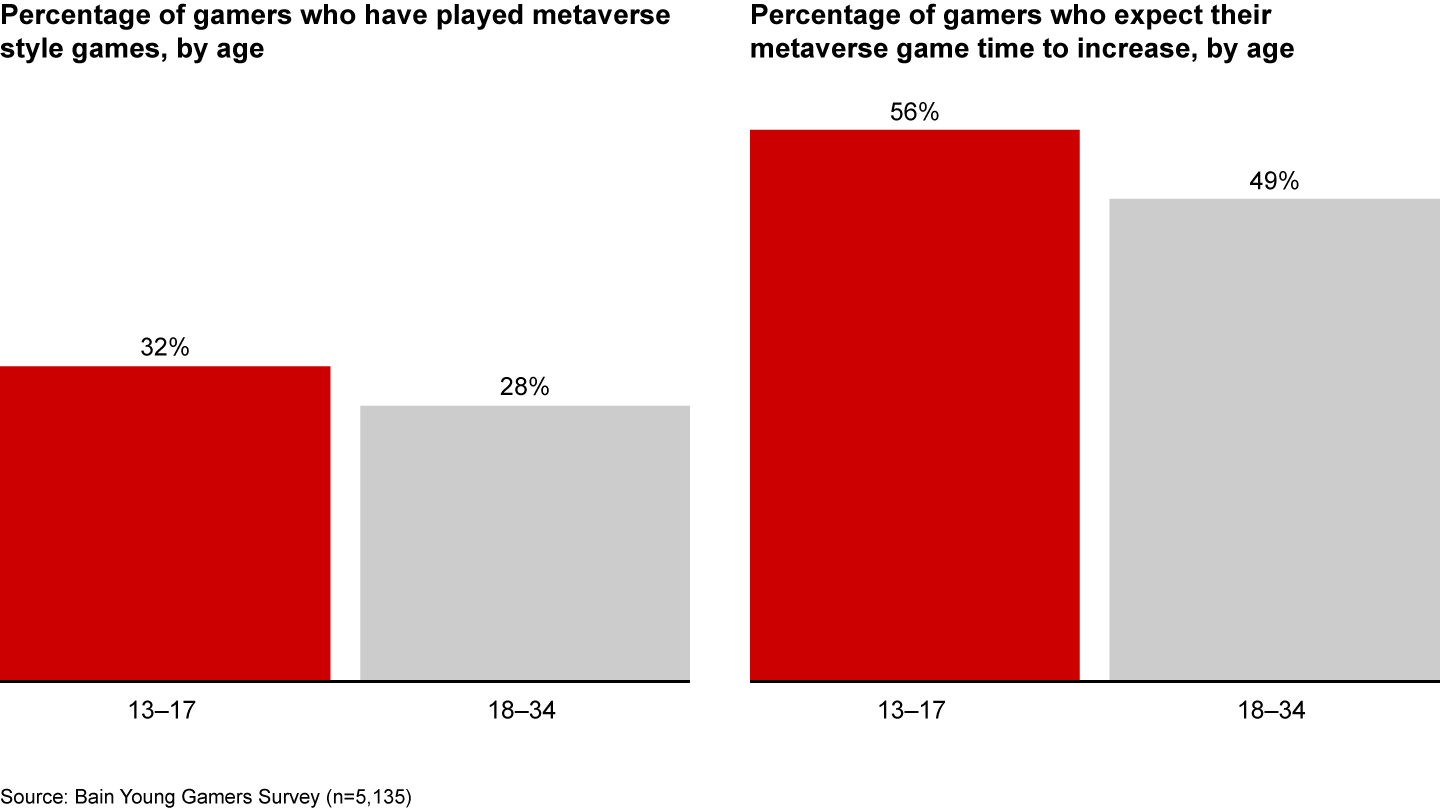
      Younger gamers expect to spend more time in the metaverse

      This preference is consistent: About half of younger gamers said they would rather attend school events in the metaverse, and half said they would rather play with their friends online than in person (see Figure 2).    

      Figure 2
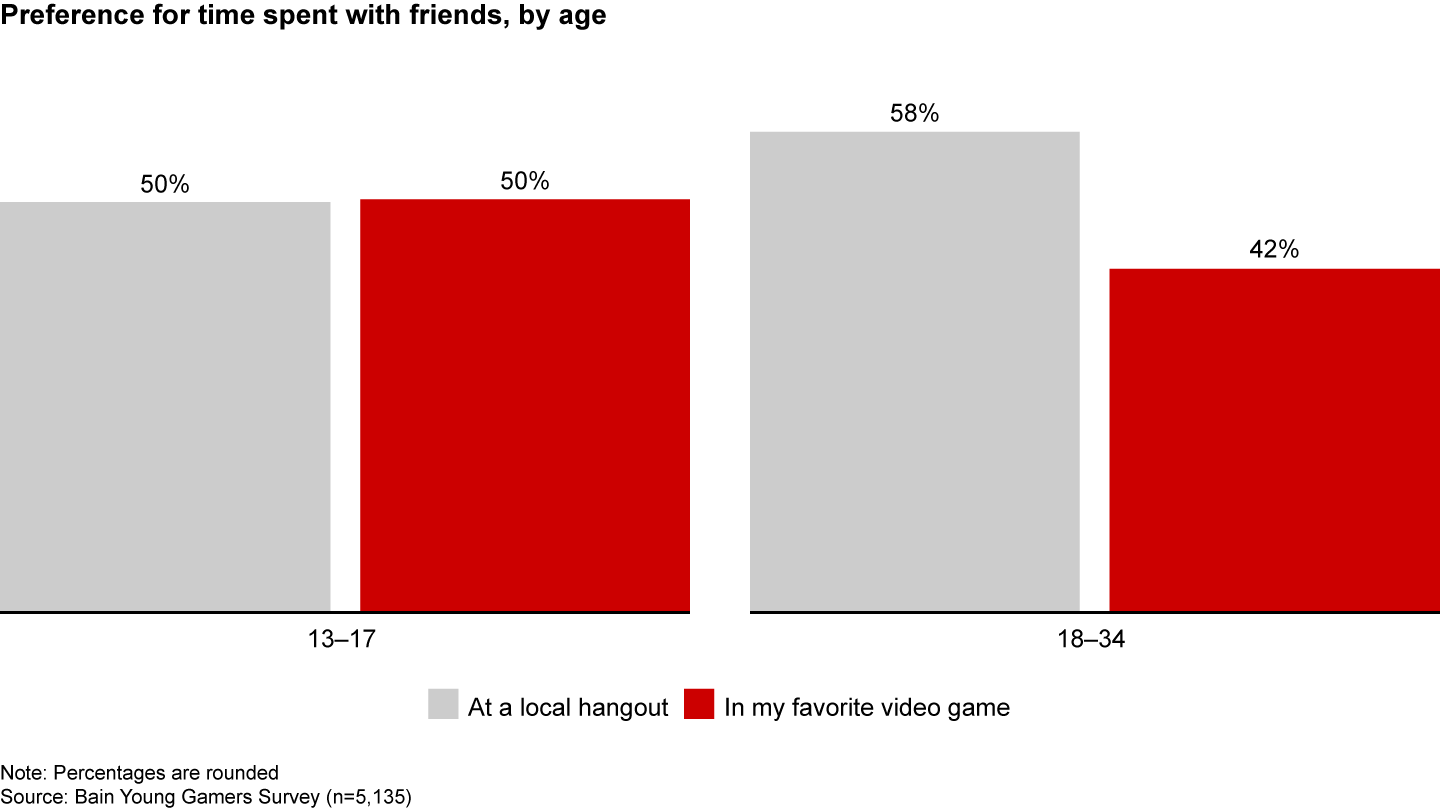
      Half of younger gamers prefer to spend time with their friends in games

      53% of younger metaverse gamers said they would prefer to inherit a vacation home in the metaverse than on an exotic island.

      This is just one example of how gamers’ preferences are changing as the delineation between digital and real-world experiences recedes, and video games become the foundation for a far broader collection of entertainment experiences.

      These shifting preferences have major implications for the companies that develop and distribute these gaming experiences. We found trends toward metaverse gaming are true in all five of the markets we surveyed (Japan, South Korea, China, the US, and Brazil), with limited differences among geographies.

      Our survey also indicates that gamers place greater importance on metaverse experiences that (see Figure 3):

      • are immersive;
      • are social;
      • allow players to be active creators;
      • are persistent and available on any device, and
      • offer in-game purchases.
      Figure 3
      Immersive and socializing features are especially attractive to younger gamers

      While most of these features are similarly important for younger gamers (13 to 17) and adults, we see a few differences. For instance, younger gamers place greater importance on the ability to make in-game purchases (44%) than adult gamers do (34%).

      44% of younger metaverse gamers say in-game purchases are a reason they play metaverse games.

      Social experiences in game spaces lay the foundation for other online activities, such as concerts, sporting events, and other aspects of life, including work and commerce. The growing demand for community experiences is becoming a catalyst for a broader metaverse.

      Time online and limits to customization

      According to our research, this younger group of gamers spends more time and money on video games than the age group above them (see Figure 4).

      Figure 4
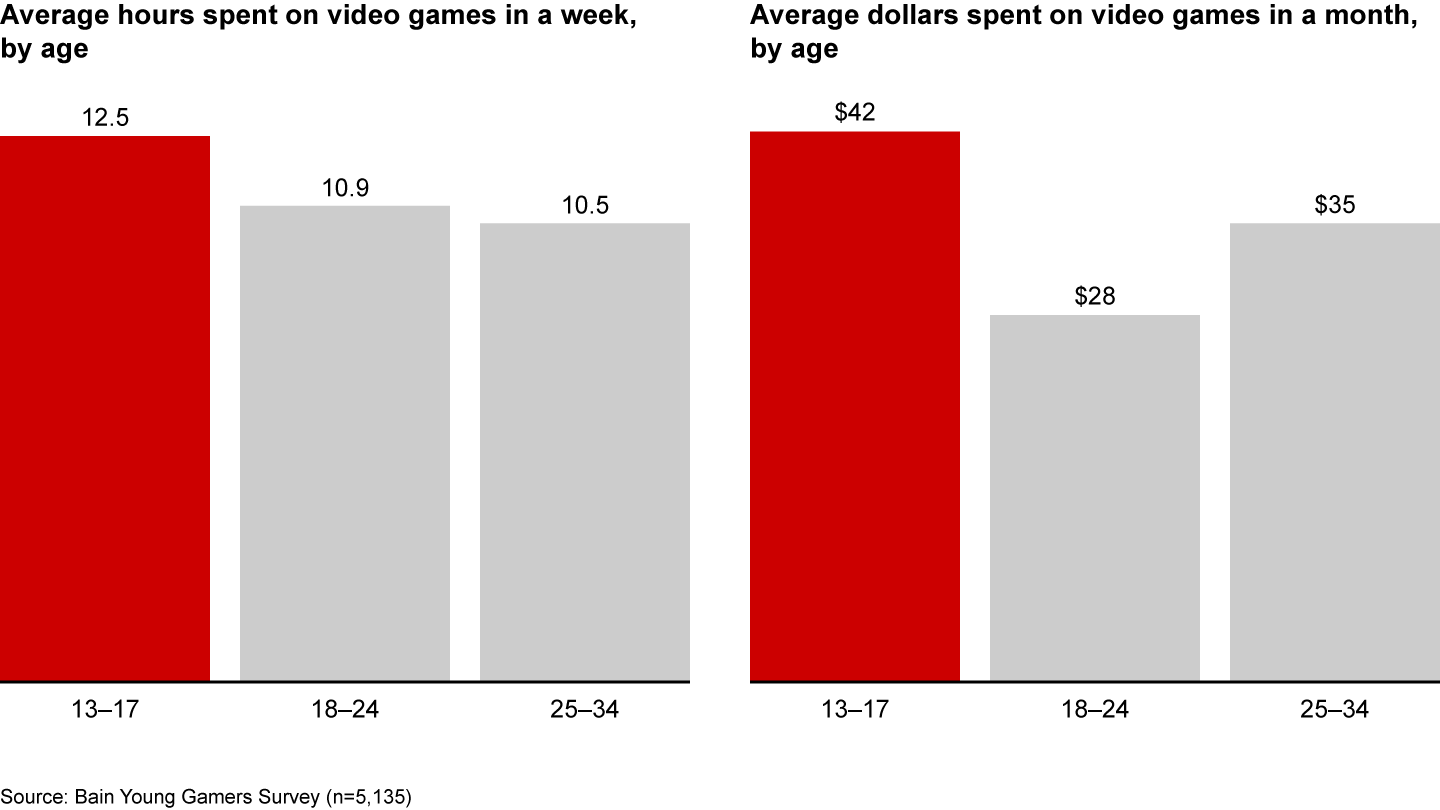
      Younger gamers spend more time and money on games than their older peers

      Younger gamers also spend more time on video games than any other form of media (see Figure 5).

      Figure 5
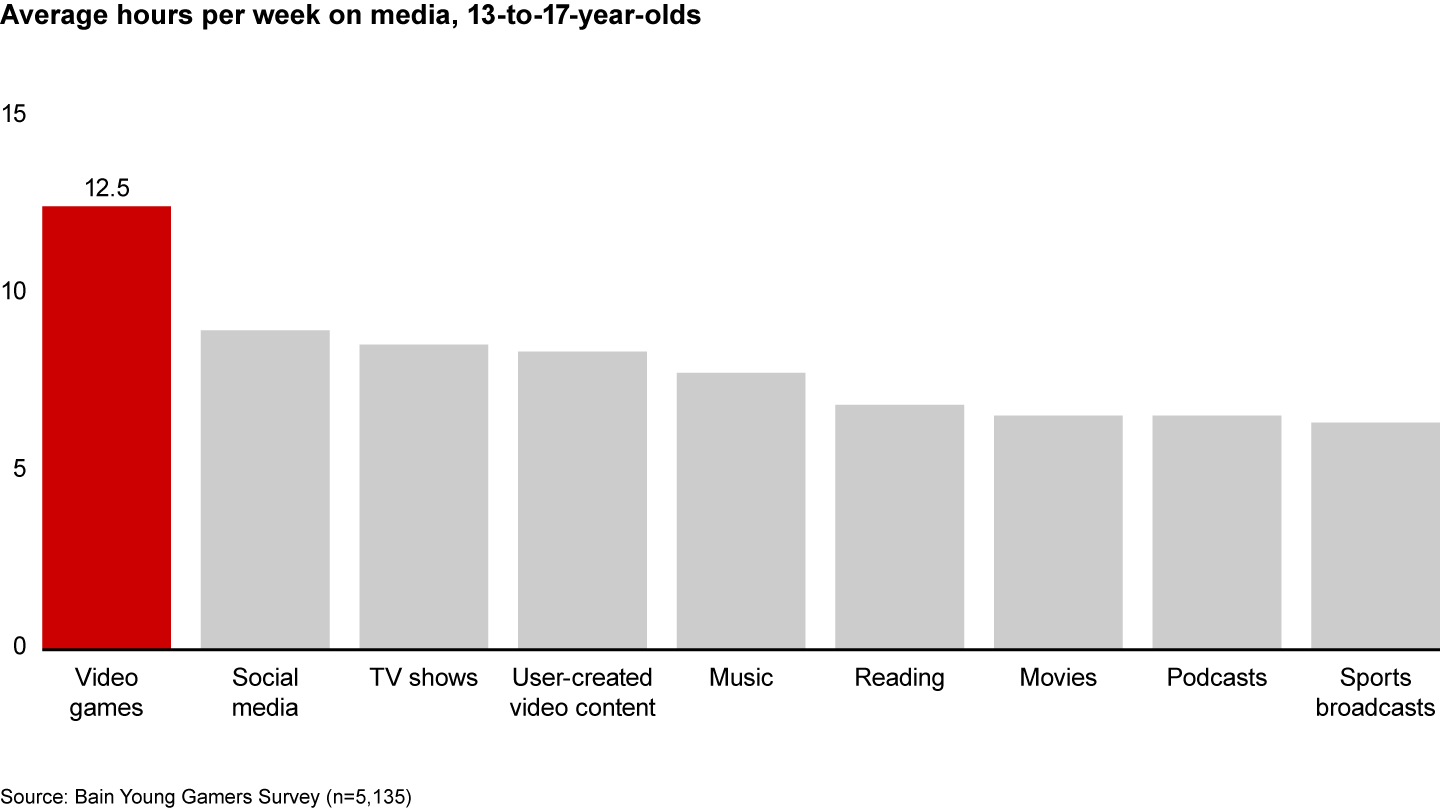
      Younger gamers spend more time on video games than on other media

      This evolving preference bodes well for growth of the gaming industry. The rise of new payment models like monthly subscriptions to game libraries (such as Xbox Game Pass and Apple Arcade) along with the global dominance of free-to-play games have improved average revenue per user (ARPUs). This trend is likely to accelerate as video games become the foundation for other paid entertainment experiences.

      Within free-to-play models, there has been some backlash against features that let gamers pay for better performance, such as buying special capabilities or a more powerful weapon. Our survey found that 56% of younger gamers said they were comfortable paying to unlock features that improve their performance, while more older players were not. Developers and publishers that get this right through experimentation and listening to gamer feedback should benefit from higher engagement among Gen Z, which includes the 13-to-17 age group. Younger gamers are also more likely to play online games to compete with friends, family, and strangers, compared with adult gamers who tend to play for fun and are more likely to play solo (see Figure 6).

      Figure 6
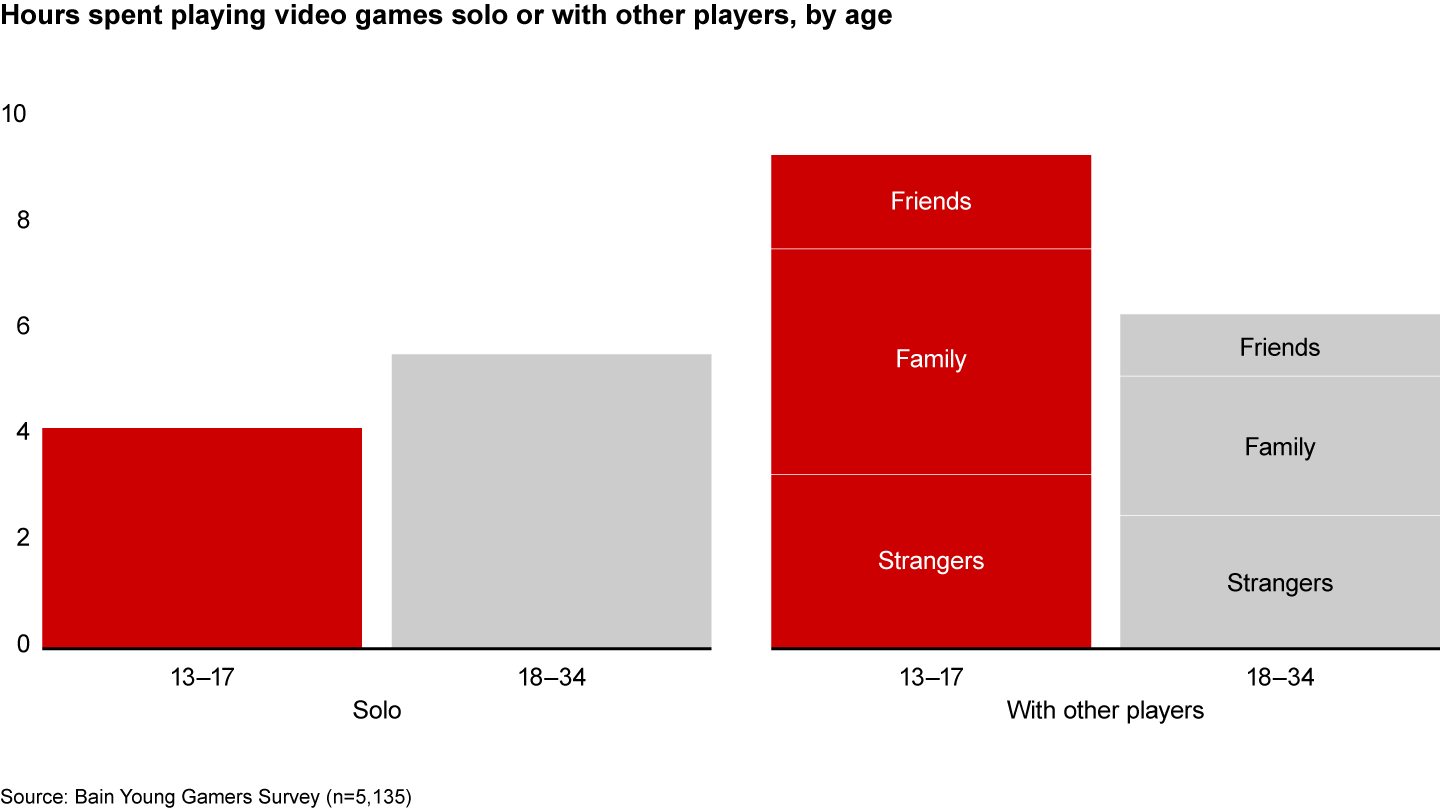
      Social gaming wins; younger gamers prefer to play with others

      Not all models are a guaranteed home run. While players show a strong desire for control over basic user-generated content (UGC), such as customizing their appearance and making simple mods, there are limits to that interest. The demand for more extensive creative capabilities, such as creating mini games within larger platforms, is significantly lower. More than 55% of gamers who plan to increase time spent on UGC-enabled platforms don’t see customization as essential to their overall gaming experience. Even among active players of virtual reality and augmented reality games, more than 50% don’t see the technology as essential.

      Advances in technology will continue to play a major role in delivering more realistic and compelling game playing experiences. Our research shows greater demand for interoperability among young players—for example, the ability to take an avatar or skin from one game into another. However, delivering a fun, immersive experience 5 to 10 years from now will probably not depend on replicating the immersive experience of Ready Player One!

      Rules of play

      Bain’s research also indicates that although there are some differences between younger gamer motivations and preferences across geographies, similarities are growing. As the structural barriers that resulted in regional content recede, this demand clears the path for more global successes.

      These findings have significant implications for the priorities of developers and publishers.

      • Building fun, immersive experiences will remain paramount. This core imperative won’t change, but these experiences will need to embrace the preferences of younger gamers: immersive, social, multiplatform, and customizable with UGC capabilities. Critically, the core intellectual property (IP) needs to have applicability within the game and beyond it. Riot Games’ League of Legends (LoL) offers a good example. The character-driven IP not only lends itself to extensions of the game in other forms, but also generates enough fan interest to support activities beyond gaming, including a limited series for Netflix, Arcane, and a virtual K-pop girl band starring four LoL characters. The franchise also extends to Esports, with a peak of 74 million concurrent viewers watching the LoL World Championship final in 2021, up from 46 million the year before. Casual, mobile games, or licensed sports games will remain a major part of the market. But these aren’t likely to drive the industry economics and long-term player engagement over the next decade.
      • Scale to succeed. Building and operating multiexperiential metaverse games will require immense investment (the average cost to build a AAA-class game is already north of $80 million). But scale means much more than that. Video game companies will need to build and nurture the communities required for games to flourish. Scale also provides such strategic advantages as larger data assets to generate insights that support superior monetization; greater ability to attract and retain star talent through compensation and breadth of roles; and a more attractive proposition for distribution and marketing partners. The frenzied M&A activity that defined the first half of 2022 may be only the beginning. Experience from other media industries suggests that more consolidation is likely.
      • Manage franchises expansively. Gamers’ hunger for more interactive media experiences creates new opportunities in franchise management. There’s much to learn from Disney, which has mastered this capability for nearly a century. Newer examples closer to the gaming world also offer lessons. Pokemon’s expansion across media, video games, consumer goods, and broader experiences stands out; more than 80% of its lifetime revenue has been generated by nongame products. We believe video game developers and publishers are well-positioned to expand franchises, given the continuous nature of touch points with players (see Figure 7).
      Figure 7
      Successful franchises follow a common path to diversify and broaden their fan base beyond players
      • Finding and keeping talent. Game developers compete with other tech companies for top coding talent, but our research of salaries shows game companies pay less than competitors, such as technology companies. To deliver the top-tier metaverse content that younger gamers crave, gaming companies will need to adapt their talent strategies so they can attract and retain the right people. Offering above-market compensation and benefits is part of the answer. But so too is providing a future-friendly work environment—more virtual, less hierarchical, leaner, and more agile.

      The development of metaverse gaming environments is changing the baseline expectations for young gamers and creating new worlds of opportunities for online experiences, including entertainment events, commerce, and community building. Gaming companies are experimenting with ways to generate new value from these developments. To remain competitive, gaming companies will need to gain a deep understanding of these younger players while building the capabilities within their organizations to delight and engage them. Developing core IP that lends itself to franchise extensions will be critical—and increasingly, gaming companies will need to make sure that the IP suits the preferences of the younger gamers who are already spending their time and money in the metaverse.

      Read more

      Six Shifts Changing the Future of Media

      Investment capital is flowing into start-ups and new technologies to meet the evolving demands of media and entertainment consumers.

      Autori
      • Headshot of Anders Christofferson
        Anders Christofferson
        Partner, Denver
      • Headshot of Andre James
        Andre James
        Alumni, Los Angeles
      • Headshot of Amanda OBrien
        Amanda OBrien
        Partner, Los Angeles
      • Headshot of Tom Rowland
        Tom Rowland
        Partner, Los Angeles
      Contattaci
      Industry collegate
      • Gaming
      • Media & Entertainment
      Servizi di consulenza collegati
      • Digital
      • Web3
      Media & Entertainment
      Games Are the Gateway to the Metaverse

      Social experiences in game spaces are laying the foundation for other online activities, such as concerts, sporting events, work, and school.

      Leggi di più
      Media & Entertainment
      Not Yet, Robots: How to Win in Media’s Flooded Era

      As AI floods the market with cheap content, human creativity will stand out—and new tech tools might even help.

      Leggi di più
      Digital
      From Niche to Utility: Stablecoins Move toward the Financial Mainstream

      Widespread adoption depends on regulatory clarity, a compelling value proposition, and seamless integration with legacy systems.

      Leggi di più
      Media & Entertainment
      Gamer Survey: Great Gameplay Is No Longer Enough

      Top games are winning with community building, user-generated content, and innovative revenue models.

      Leggi di più
      Digital
      How Tokenization Can Fuel a $400 Billion Opportunity in Distributing Alternative Investments to Individuals

      Tokenization could revolutionize access to alternatives, unlocking revenues for managers and distributors while enabling higher-quality portfolios for wealthy individuals.

      Leggi di più
      First published in luglio 2022
      Tags
      • Digital
      • Gaming
      • Media & Entertainment
      • Web3

      Come abbiamo aiutato i nostri clienti

      Organizzazione A Video Game Company Levels Up With a New Operating Model

      Leggi un caso di studio

      A Global Media Company Unlocks Hundreds of Millions in Working Capital

      Leggi un caso di studio

      Analytics guide an entertainment company's growth strategy

      Leggi un caso di studio

      Vuoi continuare la conversazione?

      Aiutiamo i leader globali e le loro aziende ad affrontare problemi e a cogliere le opportunità. Sosteniamo cambiamenti e otteniamo risultati duraturi.

      Bain Insights. Le nostre idee e punti di vista sulle tematiche che le aziende globali affrontano ogni giorno, arrivano nella tua email tutti i mesi.

      *Ho letto l'Informativa sulla Privacy e accetto i termini e le condizioni.

      Si prega di leggere e accettare l’Informativa sulla Privacy
      Bain & Company
      Contattaci Sustainability Accessibility Condizioni d’uso Privacy Cookie Policy Sitemap Log In

      © 1996-2026 Bain & Company, Inc.

      Contatta Bain

      Come posso aiutarti?

      • Business inquiry
      • Career information
      • Press relations
      • Partnership request
      • Speaker request
      Guarda tutti gli uffici