
Skip to Content
  • Uffici

    Uffici

    Nord e Sud America
    • Atlanta
    • Austin
    • Bogota
    • Boston
    • Buenos Aires
    • Chicago
    • Dallas
    • Denver
    • Houston
    • Los Angeles
    • Mexico City
    • Minneapolis
    • Monterrey
    • Montreal
    • New York
    • Rio de Janeiro
    • San Francisco
    • Santiago
    • São Paulo
    • Seattle
    • Silicon Valley
    • Toronto
    • Washington, DC
    Europa, Medio Oriente e Africa
    • Amsterdam
    • Athens
    • Berlin
    • Brussels
    • Copenhagen
    • Doha
    • Dubai
    • Dusseldorf
    • Frankfurt
    • Helsinki
    • Istanbul
    • Johannesburg
    • Kyiv
    • Lisbon
    • London
    • Madrid
    • Milan
    • Munich
    • Oslo
    • Paris
    • Riyadh
    • Rome
    • Stockholm
    • Vienna
    • Warsaw
    • Zurich
    Asia e Australia
    • Bangkok
    • Beijing
    • Bengaluru
    • Brisbane
    • Ho Chi Minh City
    • Hong Kong
    • Jakarta
    • Kuala Lumpur
    • Manila
    • Melbourne
    • Mumbai
    • New Delhi
    • Perth
    • Seoul
    • Shanghai
    • Singapore
    • Sydney
    • Tokyo
    Guarda tutti gli uffici
  • Alumni
  • Media Center
  • Iscriviti
  • Contattaci
  • Italy | Italiano

    Seleziona il tuo Paese e la tua lingua

    Global
    • Global (English)
    Nord e Sud America
    • Brazil (Português)
    • Argentina (Español)
    • Canada (Français)
    • Chile (Español)
    • Colombia (Español)
    Europa, Medio Oriente e Africa
    • France (Français)
    • DACH Region (Deutsch)
    • Italy (Italiano)
    • Spain (Español)
    • Greece (Elliniká)
    Asia e Australia
    • China (中文版)
    • Korea (한국어)
    • Japan (日本語)
  • Saved items (0)
    Saved items (0)

    You have no saved items.

    Contrassegna il contenuto che ti interessa e verrà salvato qui. Potrai leggerlo o condividerlo in seguito.

    Explore Bain Insights
  • Settori
    Menu principale

    Settori

    • Aerospazio e Difesa
    • Agribusiness
    • Chimica
    • Infrastrutture e Costruzioni
    • Beni di Largo Consumo
    • Servizi Finanziari
    • Sanità
    • Macchinari Industriali
    • Media & Intrattenimento
    • Industria Metallurgica
    • Industria Mineraria
    • Petrolio e Gas
    • Industria Cartaria e Packaging
    • Private Equity
    • Settore Sociale & Pubblico
    • Retail
    • Tecnologia
    • Telecomunicazioni
    • Compagnie Aeree & Trasporti
    • Viaggi e Svago
    • Utility e Rinnovabili
  • Servizi di Consulenza
    Menu principale

    Servizi di Consulenza

    • Customer Experience
    • ESG
    • Innovation
    • M&A and Divestitures
    • Operation
    • People & Organization
    • Private Equity
    • Sales & Marketing
    • Strategia
    • IA, Approfondimenti e Soluzioni
    • Tecnologia
    • Trasformazione
  • Digital
  • Tematiche
  • Informazioni su Bain
    Menu principale

    Informazioni su Bain

    • Che Cosa Facciamo
    • Quello in Cui Crediamo
    • Le Nostre Persone e la Leadership
    • Risultati
    • Premi e Riconoscimenti
    • Organizzazioni Globali
    Further: Our global responsibility
    • Diversità e Inclusione
    • Social Impact
    • Sustainability
    • World Economic Forum
    Learn more about Further
  • Careers
    Menu principale

    Careers

    • Work with Us
      Careers
      Work with Us
      • Find Your Place
      • Our Work Areas
      • Integrated Teams
      • Students
      • Internships & Programs
      • Recruiting Events
    • Life at Bain
      Careers
      Life at Bain
      • Blog: Inside Bain
      • Career Stories
      • Our People
      • Where We Work
      • Supporting Your Growth
      • Affinity Groups
      • Benefits
    • Impact Stories
    • Hiring Process
      Careers
      Hiring Process
      • What to Expect
      • Interviewing
    FIND JOBS
  • Uffici
    Menu principale

    Uffici

    • Nord e Sud America
      Uffici
      Nord e Sud America
      • Atlanta
      • Austin
      • Bogota
      • Boston
      • Buenos Aires
      • Chicago
      • Dallas
      • Denver
      • Houston
      • Los Angeles
      • Mexico City
      • Minneapolis
      • Monterrey
      • Montreal
      • New York
      • Rio de Janeiro
      • San Francisco
      • Santiago
      • São Paulo
      • Seattle
      • Silicon Valley
      • Toronto
      • Washington, DC
    • Europa, Medio Oriente e Africa
      Uffici
      Europa, Medio Oriente e Africa
      • Amsterdam
      • Athens
      • Berlin
      • Brussels
      • Copenhagen
      • Doha
      • Dubai
      • Dusseldorf
      • Frankfurt
      • Helsinki
      • Istanbul
      • Johannesburg
      • Kyiv
      • Lisbon
      • London
      • Madrid
      • Milan
      • Munich
      • Oslo
      • Paris
      • Riyadh
      • Rome
      • Stockholm
      • Vienna
      • Warsaw
      • Zurich
    • Asia e Australia
      Uffici
      Asia e Australia
      • Bangkok
      • Beijing
      • Bengaluru
      • Brisbane
      • Ho Chi Minh City
      • Hong Kong
      • Jakarta
      • Kuala Lumpur
      • Manila
      • Melbourne
      • Mumbai
      • New Delhi
      • Perth
      • Seoul
      • Shanghai
      • Singapore
      • Sydney
      • Tokyo
    Guarda tutti gli uffici
  • Alumni
  • Media Center
  • Iscriviti
  • Contattaci
  • Italy | Italiano
    Menu principale

    Seleziona il tuo Paese e la tua lingua

    • Global
      Seleziona il tuo Paese e la tua lingua
      Global
      • Global (English)
    • Nord e Sud America
      Seleziona il tuo Paese e la tua lingua
      Nord e Sud America
      • Brazil (Português)
      • Argentina (Español)
      • Canada (Français)
      • Chile (Español)
      • Colombia (Español)
    • Europa, Medio Oriente e Africa
      Seleziona il tuo Paese e la tua lingua
      Europa, Medio Oriente e Africa
      • France (Français)
      • DACH Region (Deutsch)
      • Italy (Italiano)
      • Spain (Español)
      • Greece (Elliniká)
    • Asia e Australia
      Seleziona il tuo Paese e la tua lingua
      Asia e Australia
      • China (中文版)
      • Korea (한국어)
      • Japan (日本語)
  • Saved items  (0)
    Menu principale
    Saved items (0)

    You have no saved items.

    Contrassegna il contenuto che ti interessa e verrà salvato qui. Potrai leggerlo o condividerlo in seguito.

    Explore Bain Insights
  • Settori
    • Settori

      • Aerospazio e Difesa
      • Agribusiness
      • Chimica
      • Infrastrutture e Costruzioni
      • Beni di Largo Consumo
      • Servizi Finanziari
      • Sanità
      • Macchinari Industriali
      • Media & Intrattenimento
      • Industria Metallurgica
      • Industria Mineraria
      • Petrolio e Gas
      • Industria Cartaria e Packaging
      • Private Equity
      • Settore Sociale & Pubblico
      • Retail
      • Tecnologia
      • Telecomunicazioni
      • Compagnie Aeree & Trasporti
      • Viaggi e Svago
      • Utility e Rinnovabili
  • Servizi di Consulenza
    • Servizi di Consulenza

      • Customer Experience
      • ESG
      • Innovation
      • M&A and Divestitures
      • Operation
      • People & Organization
      • Private Equity
      • Sales & Marketing
      • Strategia
      • IA, Approfondimenti e Soluzioni
      • Tecnologia
      • Trasformazione
  • Digital
  • Tematiche
  • Informazioni su Bain
    • Informazioni su Bain

      • Che Cosa Facciamo
      • Quello in Cui Crediamo
      • Le Nostre Persone e la Leadership
      • Risultati
      • Premi e Riconoscimenti
      • Organizzazioni Globali
      Further: Our global responsibility
      • Diversità e Inclusione
      • Social Impact
      • Sustainability
      • World Economic Forum
      Learn more about Further
  • Careers
    Ricerche più popolari
    • Agile
    • Digitale
    • Strategia
    La tue ricerche precedenti
      Pagine visitate

      Content added to saved items

      Saved items (0)

      Removed from saved items

      Saved items (0)

      Article

      Banks’ New Growth Path: From the Customer to the Cloud

      Banks’ New Growth Path: From the Customer to the Cloud

      How incumbents can re-architect to win market share, one slice at a time

      By Philipp Baecker, Jeff Tijssen, Kunal Galav, and Tanur Madaree

      • Tempo di lettura min.

      Article

      Banks’ New Growth Path: From the Customer to the Cloud

      At a Glance

      • By excelling at personalization and customer centricity, neobanks and fintechs are gaining an edge on traditional banks.
      • To compete—and rapidly deliver and scale customer-centric propositions—incumbents can take an agile approach rooted in business objectives.
      • Though there are several paths to technology transformation, a shared legacy approach—combining cloud-native digital platforms with banks’ existing digital capabilities—helps banks avoid a full reboot. 


      By targeting markets that are underserved by traditional banks, neobanks and fintechs are gaining ground on incumbents, one strategic segment at a time. Many banks now find themselves playing catch-up, but they are often hampered by complicated IT architectures that lack essential agility.

      According to some studies, 65% of executives believe that the branch-based model will be a thing of the past in five years, putting many banks at risk of losing their value lead over digital competitors. To compete, these banks will not only need to pursue digital transformation but also address an even broader call to action: They will need to unlock new segments, such as gig workers; develop new, more relevant offerings, such as buy now, pay later; and align their tech strategies with the most promising markets.

      Written in collaboration with

      Written in collaboration with

      mambu_logo_aha-_3_rgb_200x55.png


      To answer this call, banks must augment legacy systems to accelerate growth. Building on our experience in core banking transformation and fintech business building, we propose a five-step process to guide this transformation. By adapting digital architecture to focus on world-class products targeted to distinct audiences, incumbents can achieve higher return on investment (ROI) and avoid ceding market share to competitors. 

      Situation analysis: One size no longer fits all

      Banks can no longer afford to follow their current growth strategies. Disruption—which happens more steadily than ever before—challenges even the most current innovation plans. Advancing technologies and reforms, such as API-based open banking and PSD2, have given customers access to providers that offer personalized services that fit their exact needs.

      As customers increasingly overlook generic, mass-market products, personalization is fast becoming a marker of banking agility. Simply adding customer names to emails will no longer cut it; incumbents must embrace advanced personalization techniques, like using rules engines to leverage real-time data. Such efforts can yield upwards of $20 for every dollar invested, but incumbents often lag in this area due to inadequate IT support.

      Digital banks are also winning on customer centricity, which they use as the basis for all significant decisions, from product development and marketing to investment allocation. This laser focus on relevant solutions and experiences brings rewards: Customer experience leaders grow revenues 4% to 8% above their competitors. 

      By 2025, US digital-only banks are projected to service almost 20% of the population, reaching more than 53 million account holders, up from 29 million in 2021. At the same time, incumbents’ failure to meet customer demand for digital services has translated into an impressive increase in fintech funding—while the market capitalization of banks overall has increased only slightly (see Figure 1).

      Figure 1
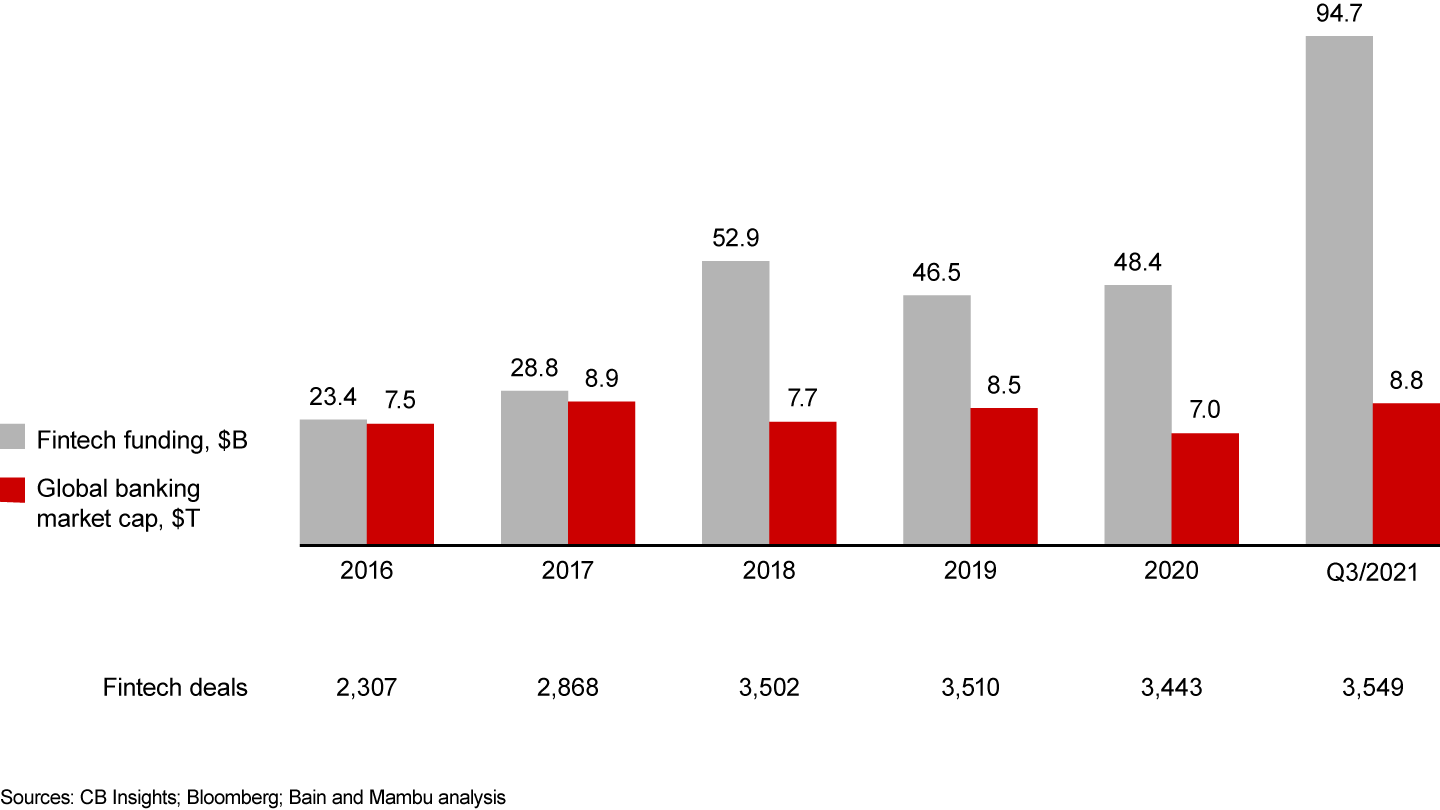
      Fintechs’ ability to pursue growth opportunities attracts record funding

      Banks’ new growth path: A five-step process

      To compete with fintechs, we advocate a process that is firmly anchored in each bank’s unique business context and objectives (see Figure 2). While it is by no means a silver bullet to banks’ challenges, an increasing number of innovation leaders have adopted an agile approach to technology transformation that harnesses the power of high-impact micro-battles to rapidly win and scale customer-centric propositions.

      By capitalizing on the agility and speed offered by “shared legacy” infrastructure—that is, the original core augmented with new cloud-based platforms—innovation leaders can deliver tangible results more quickly. Using this process, they can codify lessons learned from customer feedback, develop a repeatable model, and launch capabilities to leverage in other parts of the business.

      Figure 2
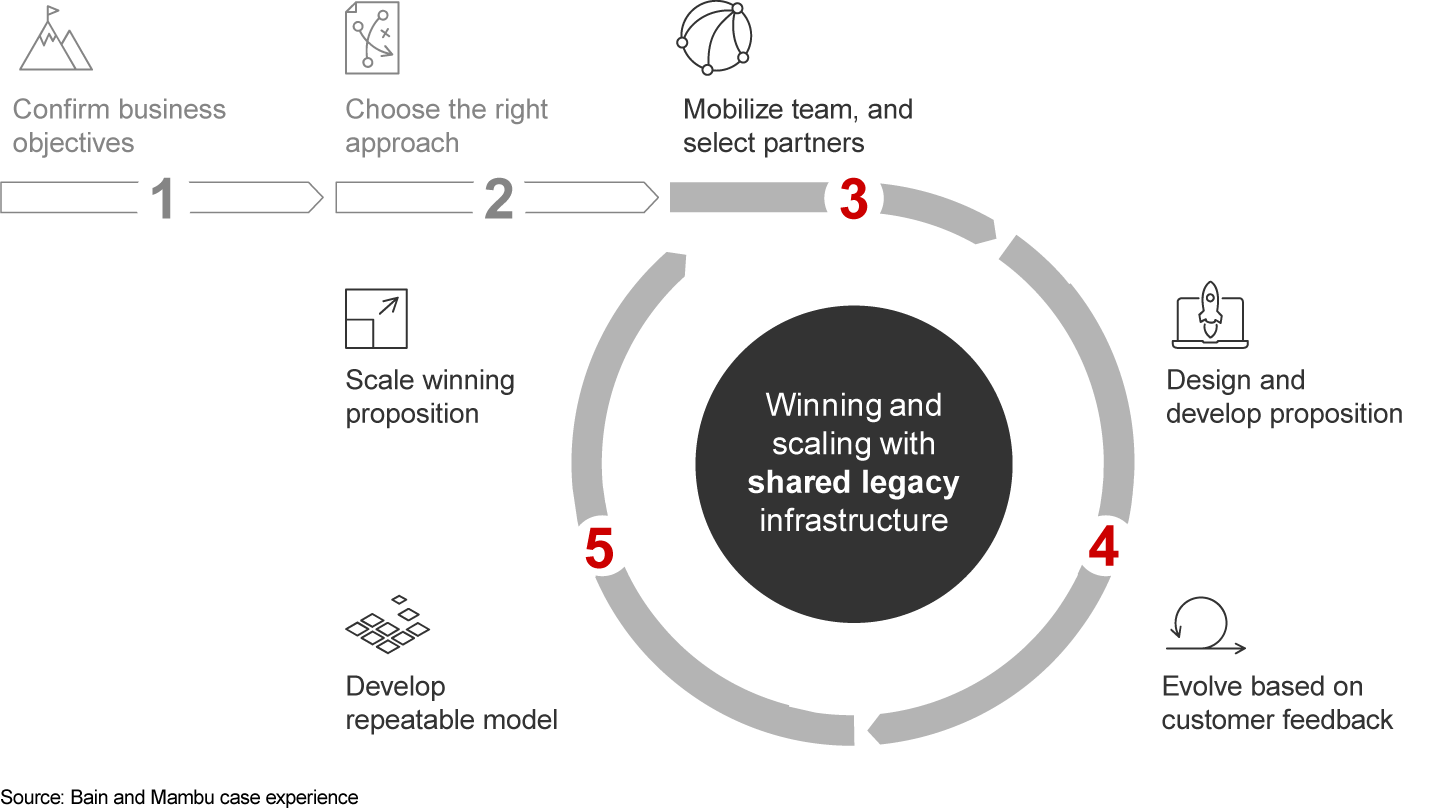
      We advocate an agile approach to technology transformation
      We advocate an agile approach to technology transformation
      We advocate an agile approach to technology transformation

      Business objectives: Achieving growth—one targeted segment at a time

      Banks investing in technology—to the tune of $500 billion—are simply not seeing the desired ROI. The culprit may be a failure to tackle the initial steps shown above. Before even considering the technological solution, competitors are leading with business goals, applying a highly targeted, segment-focused go-to-market strategy. For example, fintech Wise (formerly TransferWise) grew out of its founders’ need to make international money transfers affordable and streamlined. In the last five years, it has gained approximately 10% market share in the $700 billion P2P market. 

      However, while offering highly personalized services may now be table stakes in this increasingly competitive landscape, incumbent banks must strike a fine balance. Targeting too widely could strain resources and limit their ability to keep pace with customers’ evolving needs. Instead, hyper-targeting allows them to strategically prioritize key segments. Once won, a target segment can be scaled up fast, providing a viable foundation for long-term growth, revenue, and service development. By focusing on segmented markets, banks can rediscover the nimbleness that drove their early growth while still leveraging their strong market positions and substantial resources.

      The right approach: Modernized architecture, no reboot required

      Whatever the segment battleground, from conversational banking to alternative lending, the race is on to be first to market with new, exceptional experiences. Winning—and keeping—customers is the name of the game.

      Traditional banks looking to answer this call and capitalize on diversified growth opportunities are hemmed in by several interconnected legacy issues: complex IT infrastructure, technology debt, budget constraints, and resistance to change. Yet, their reluctance to rip and replace existing systems is understandable. Many of those processes and systems, built over decades, provide critical strategic differentiation.

      In our experience, banks have taken four broad approaches to modernizing their architecture (see Figure 3). Choosing the right methodology hinges on the bank’s main impetus for change, whether it’s unsustainable costs, operational and regulatory risks, risk tolerance, or desire for innovation. Regardless of the method, it’s clear that incumbents can no longer afford to kick the can down the road.

      Figure 3
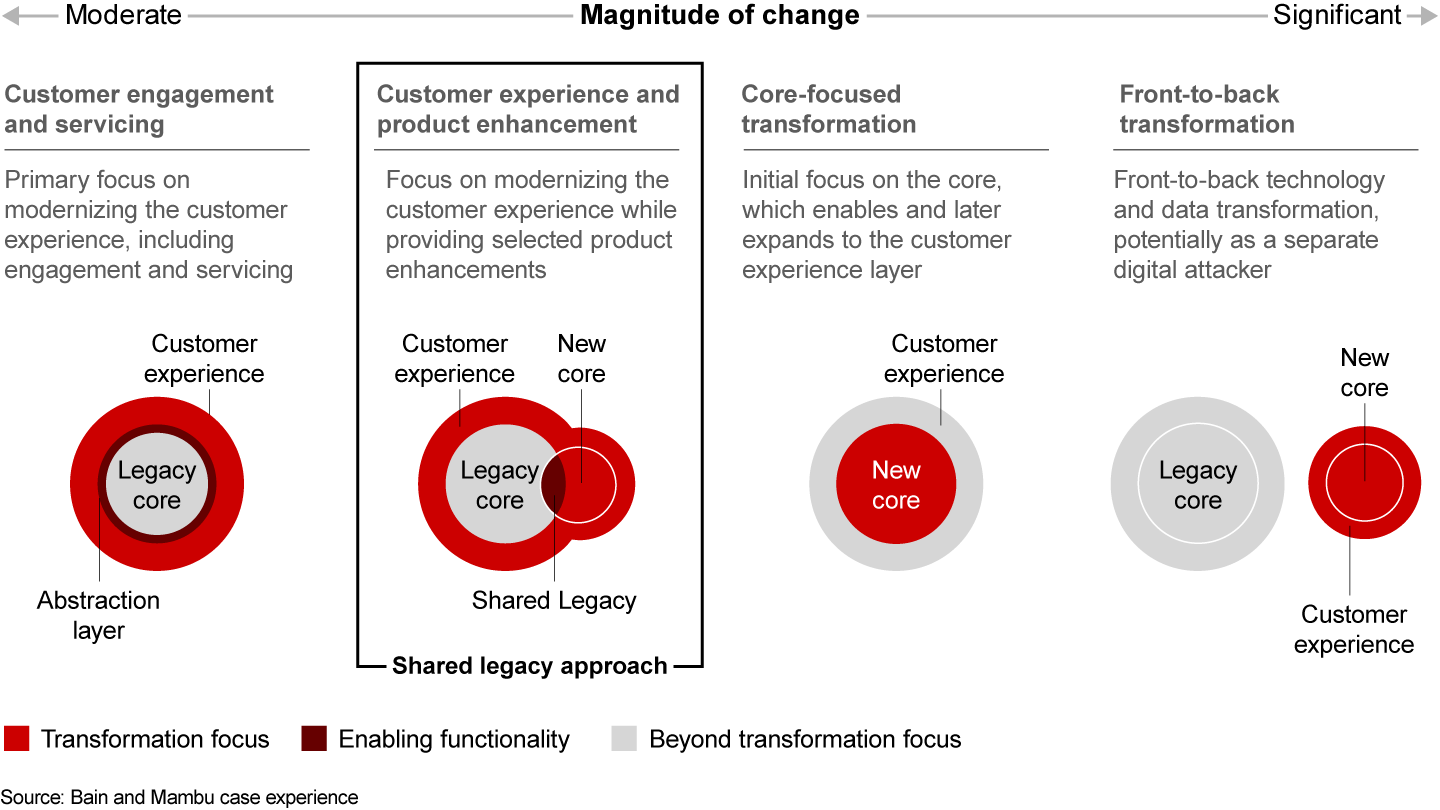
      We see four approaches to modernization, depending on bank’s point of departure
      We see four approaches to modernization, depending on bank’s point of departure
      We see four approaches to modernization, depending on bank’s point of departure

      Some banks have opted to break free from cumbersome legacy platforms and launch separate digital attackers with a front-to-back transformation. But spinning off a subsidiary with an entirely new technology stack may not always be the simplest or most effective solution, especially for those banks with strong customer relationships. Instead, a shared legacy approach combines cloud-native digital platforms with banks’ existing digital capabilities to create a unified customer experience across different products and regions more easily and economically.

      To carry brand trust into the digital realm, incumbents can take a page from banking as a service (BaaS). Adopting a BaaS model of digital transformation—using open cloud platforms, orchestration, and APIs—can help banks make the most of their existing investment and create specific solution architecture for a targeted audience, product, or geography. By leaving the legacy core as a system of record and then layering on software as a service (SaaS) solutions, banks can launch new products fast and stay in the game (see Figure 4).

      Figure 4
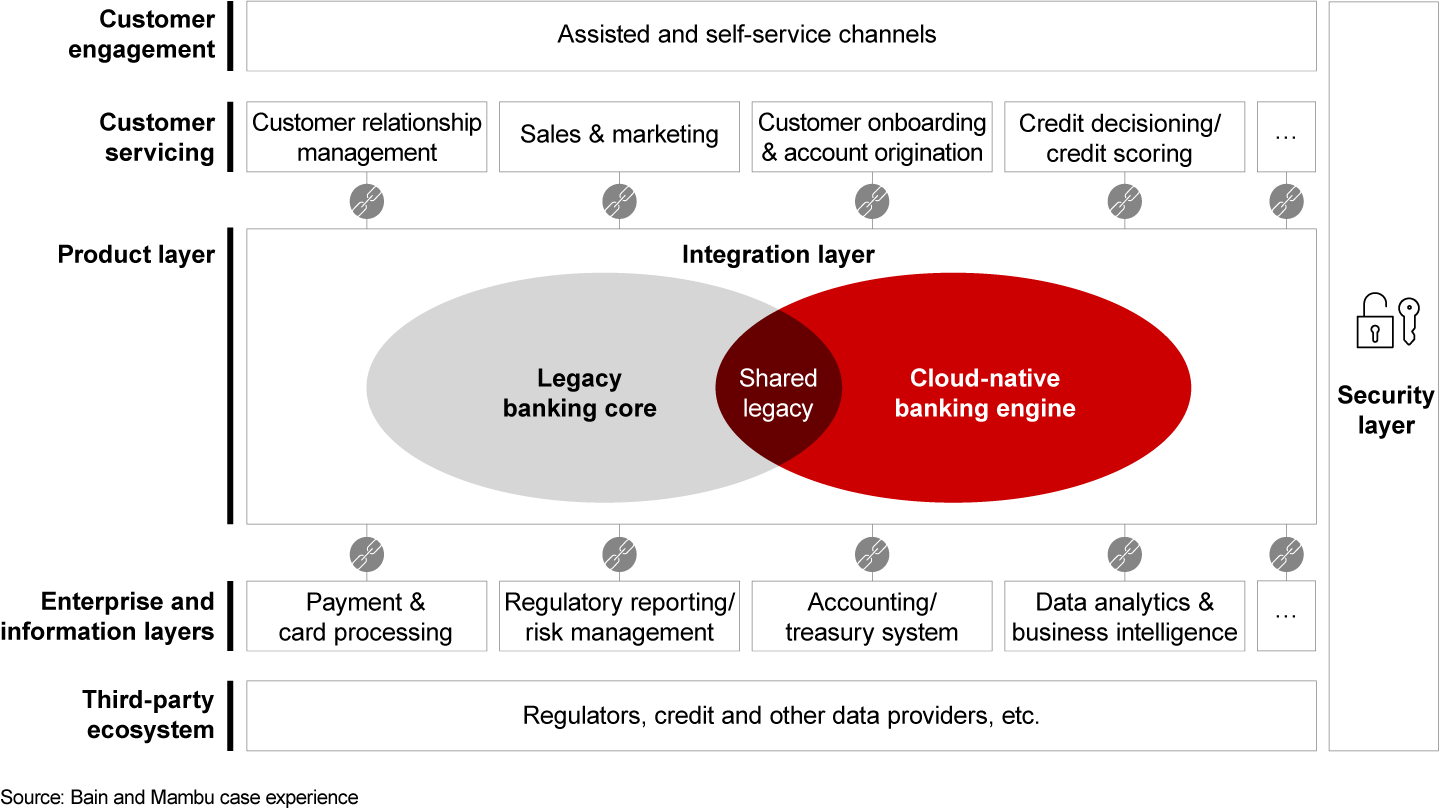
      A shared legacy approach helps banks efficiently launch new products

      Examples of technology-enabled micro-battles abound. Take Amsterdam Trade Bank (ATB), a large European bank that transformed its business into a fintech in six months, focused on lending to small- and mid-size enterprises (SMEs), and expanded to the UK under the new brand FIBR. Another example is BancoEstado, one of the largest financial institutions in Latin America, which uses a cloud-native core banking platform to improve customer access to digital services. This approach enabled them to migrate 13 million customers to a shared legacy setup. 

      Winning and scaling: Best practices for customer-led technology transformation

      Banking’s innovation leaders know that transformation can’t happen without a firm grasp of the market segments that will yield the greatest returns. This laser focus on customers, coupled with a sound strategy, paves the way for selecting the right approach and core banking solution. When leaders take the next step in partnering with a technology provider, they light the fuse—augmenting their existing strengths with new capabilities that help them reach those target segments.

      Whatever the scale and scope of their transformation, banks should follow these tried-and-true principles:

      Design for customers, not banks. A sound understanding of the market, including its most profitable segments, customer preferences, and how the competition stacks up, will reveal the biggest growth opportunities.

      Plan for realistic outcomes. After establishing a viable business case, de-risk execution by identifying and mitigating potential roadblocks before the actual kickoff.

      Build demand as well as products. Observe how leading banks have brought new products to market profitably and sustainably. Apply a test-and-learn approach and iterate through rapid customer feedback cycles.

      Use scale as an advantage. A larger customer base means more feedback as well as more resources to develop and deliver value to customers and markets.

      For banks with the biggest appetites for growth, the fastest route may be the one that starts with smaller steps. By using cloud-based banking platforms and a shared legacy approach, they can optimize their architecture to help them win and scale, one targeted segment at a time. By doing so, they can introduce more diverse, customer-centric services while creating a more responsive delivery model—one that can adapt quickly and build sustainable growth now and into the future.

      About Mambu

      Mambu is a leading SaaS cloud banking platform. Mambu’s composable approach means that independent components, systems, and connectors can be assembled in any configuration to meet business needs and end user demands.

      Authors
      • Headshot of Philipp Baecker
        Philipp Baecker
        Alumni, Frankfurt
      • Headshot of Jeff Tijssen
        Jeff Tijssen
        Alumni, London
      • Kunal Galav
        Regional Director, EMEA Advisory, Mambu, London
      • Tanur Madaree
        Associate, Global Research, Mambu, Amsterdam
      Contact us
      Related Industries
      • Banking
      • Fintech
      • Servizi Finanziari
      Related Consulting Services
      • Digital
      How We Can Help
      • Bain Micro-battles System®
      • NextEngine
      Servizi Finanziari
      Helping a Fintech Reboot its Digital Wallet Sign-up and Onboarding Processes

      Through a better understanding of user behavior we designed, tested and improved the sign-up and on-boarding experiences for a digital wallet business with several million users. The results: increased conversion and revenue, a +50% increase in first-deposit rate and a 20x return on our fees.

      Leggi di più
      Banking
      A Global Bank Digitizes the Customer Experience

      Long lines at the teller windows inspired creative digital solutions that greatly enhanced customer service

      Leggi di più
      Banking
      Blockchain-enabled Payment Flows: A Payments Company Reviews its Strategy

      Amid disruption and uncertainty, this company built a roadmap for opportunities

      Leggi di più
      Bain Micro-battles System®
      Springtime for April as a Digital Transformation Takes Root

      Encouraged by new owner CVC Capital Partners, the insurer launched a bold four-part strategy to revive growth and reclaim the mantle of disruptor.

      Leggi di più
      Servizi Finanziari
      Three individuals collaborating, placing colorful sticky notes on a glass wall. One person holds a tablet.
      Reimagining Insurance for the AI Era

      While 95% of companies investing in AI haven't seen measurable impact, InsuranceCo is on track to beat the odds, redesigning processes to unlock lasting value from AI.

      Leggi di più
      Tags
      • Bain Micro-battles System®
      • Banking
      • Digital
      • Fintech
      • NextEngine
      • Servizi Finanziari

      How We've Helped Clients

      Blockchain-enabled Payment Flows: A Payments Company Reviews its Strategy

      Read case study

      A Digital-First Bank Finds a Customer-Driven Path to Profitability

      Read case study

      Trasformazione Completa A Traditional Bank Pursues Digital in a Nontraditional Way

      Read case study

      Vuoi continuare la conversazione?

      Aiutiamo i leader globali e le loro aziende ad affrontare problemi e a cogliere le opportunità. Sosteniamo cambiamenti e otteniamo risultati duraturi.

      Bain Micro-battles System® is a registered trademark of Bain & Company, Inc.

      Bain Insights. Le nostre idee e punti di vista sulle tematiche che le aziende globali affrontano ogni giorno, arrivano nella tua email tutti i mesi.

      *Ho letto l'Informativa sulla Privacy e accetto i termini e le condizioni.

      Si prega di leggere e accettare l’Informativa sulla Privacy
      Bain & Company
      Contattaci Sustainability Accessibility Condizioni d’uso Privacy Cookie Policy Sitemap Log In

      © 1996-2026 Bain & Company, Inc.

      Contatta Bain

      Come posso aiutarti?

      • Business inquiry
      • Career information
      • Press relations
      • Partnership request
      • Speaker request
      Guarda tutti gli uffici