
Brief


|
In evidenza
When Bain & Company and BritishAmerican Business conducted our Transatlantic Confidence Index Survey in May and June 2025, global trade tensions were the highest they’d been in decades. The US had just issued ‘Liberation Day’ tariffs, and what followed was a period of significant unpredictability. By the time we closed our 2025 survey, a relatively relaxed tariff agreement between the US and the UK had been announced. In the UK, a new administration with a substantial majority promised political stability and pro-growth policies, including a reset of the relationship with the EU. Written in collaboration withWritten in collaboration with
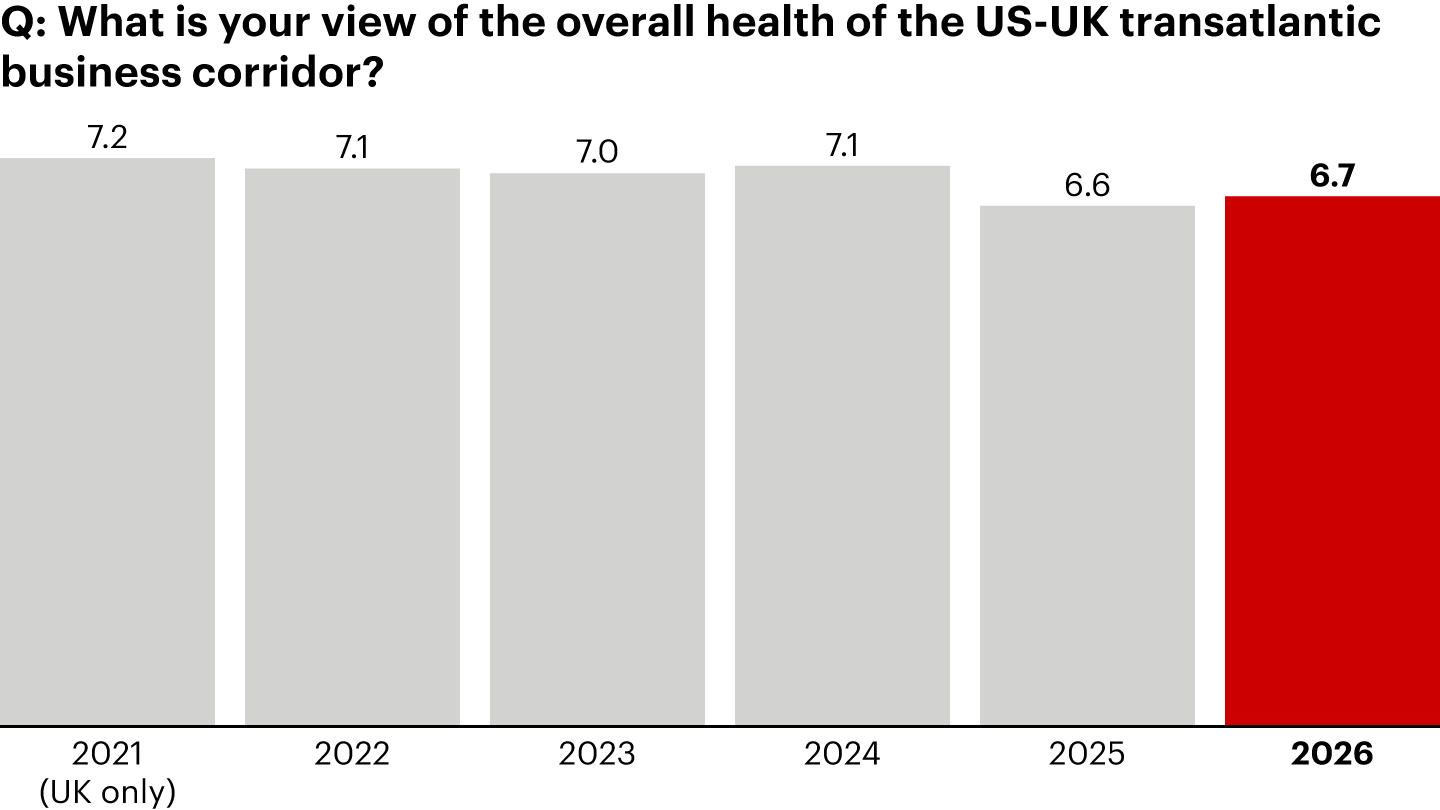
Since then, global trade has been less disrupted than initially feared, and the US economy is predicted to outpace both the UK and the EU in growth. While UK exports in goods to the US took a hit, transatlantic investment remained strong overall. In the UK, the governing party’s leadership change has raised new questions about political stability and the UK’s ability to deliver on its growth agenda. It’s within this context—this pendulum of panic and relief—that we issue our latest transatlantic confidence research. In May and June 2026, we surveyed 53 leading US companies operating in the UK and 21 leading UK companies operating in the US. Combined, our research sample has over 3,700 years of experience operating across the Atlantic and employs over 275,000 people. Our headline index of overall confidence in the health of the US-UK business corridor rebounded very slightly in 2026 (see Figure 1). After hitting a record low in 2025 (6.6 out of 10), it ticked up to 6.7. (Prior to 2025, the index was consistently between 7.0 and 7.2.) This slight rise represents a mix of caution and optimism. Concerns about economic collaboration between the US and the UK persist; however, leaders noted a sense of relief relative to their fear in spring 2025. The long-term economic relationship between the US and the UK has been remarkably successful and has borne a certain resilience. This report explores the factors behind each country’s confidence rating.
Figure 1

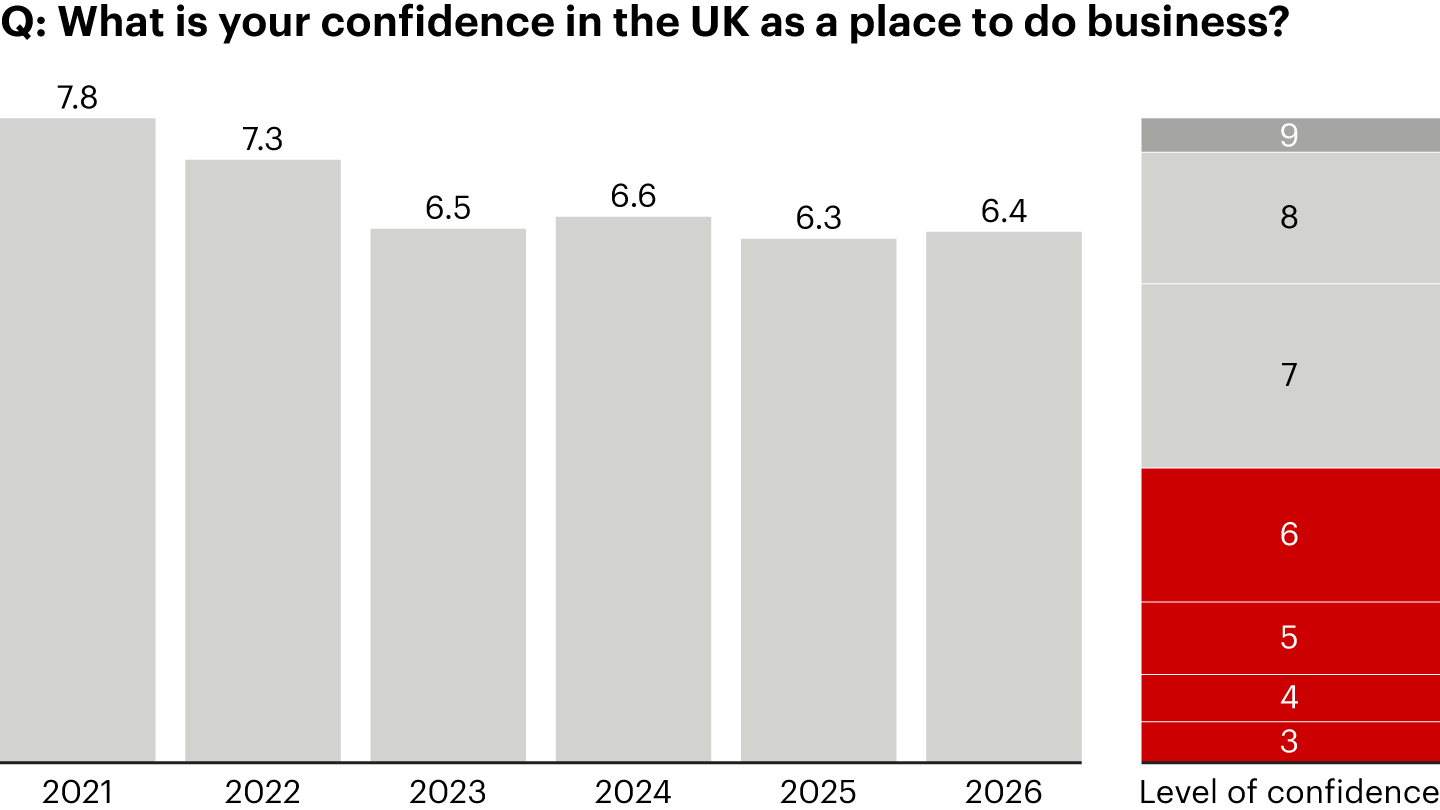
US companies report slightly higher confidence in the UKUS companies’ confidence in the UK ticked up very slightly, rising from the all-time low of 6.3 out of 10 in 2025 to 6.4 in 2026 (see Figure 2). Most of the companies we surveyed plan to increase their investments in the UK either ‘modestly’ or ‘significantly’ in the next two to three years.
Figure 2

We used net attractiveness scores—calculated as the number of respondents who consider a feature attractive minus the number who deem it unattractive—to measure various attributes. Views on UK business features remained largely consistent with those from recent years. Respondents praised the UK on talent, strong rule of law, access to capital, and integration with global supply chains. These positive attributes rated slightly higher in 2026 (compared with 2025) or held flat. Past trends also continued regarding opinions of taxes and the cost of doing business in the UK, which were viewed negatively, with nearly all respondents considering them unattractive. A new finding also emerged: For the first time, we asked US leaders about energy supply and energy costs in the UK, and these attributes were perceived as equally highly negative. Views on the UK’s political stability changed significantly in 2026. Political stability’s net attractiveness rocketed from -16 in 2024 to +37 in 2025, following the Labour Party’s landslide election. In 2026, net attractiveness of political stability dropped back to -12 as it became clearer that a leadership change was coming. Since the UK’s departure from the EU, our survey has asked about confidence in the UK-EU relationship. Confidence improved steadily from 2022 to 2025, when it reached 6.6 out of 10. However, in 2026, it slipped to 6.2. We attribute this dip to predominantly dashed hopes: Possibilities raised during the UK-EU reset discussions have not been fully realised, though conversations about EU-UK collaboration opportunities continue. Alternatively, leaders may be focused on the US-UK relationship and domestic issues. US companies would like the UK to continue building trade and economic collaborations with every major bloc. Unsurprisingly, interest in UK collaboration with the US and the EU is strongest, but a solid majority also regard India and the Comprehensive and Progressive Agreement for Trans-Pacific Partnership as highly important. Nearly half of US respondents (45%) rated the UK-China relationship as 7.0 or higher in importance. In a rating that is its strongest this year, US companies would like the UK government to address regulation and tax issues (see Figure 3). More than one-third (35%) of respondents ranked ‘a flexible, predictable, and business-friendly regulatory and tax environment’ as their top priority, and 75% placed it within their top three. More than 60% identified ‘regulatory reform/simplification to support innovation’ in their top three priorities. ‘Delivery of the UK industrial strategy and planning reforms’ ranked third amongst respondents’ priorities. US companies are signalling that hope for a UK growth agenda is stalled and that tax and labour policies have discouraged growth. A strong majority of US respondents (92%) ranked the implementation of a pro-growth agenda at least a 7.0 out of 10 in importance to their future investments in the UK.
Figure 3
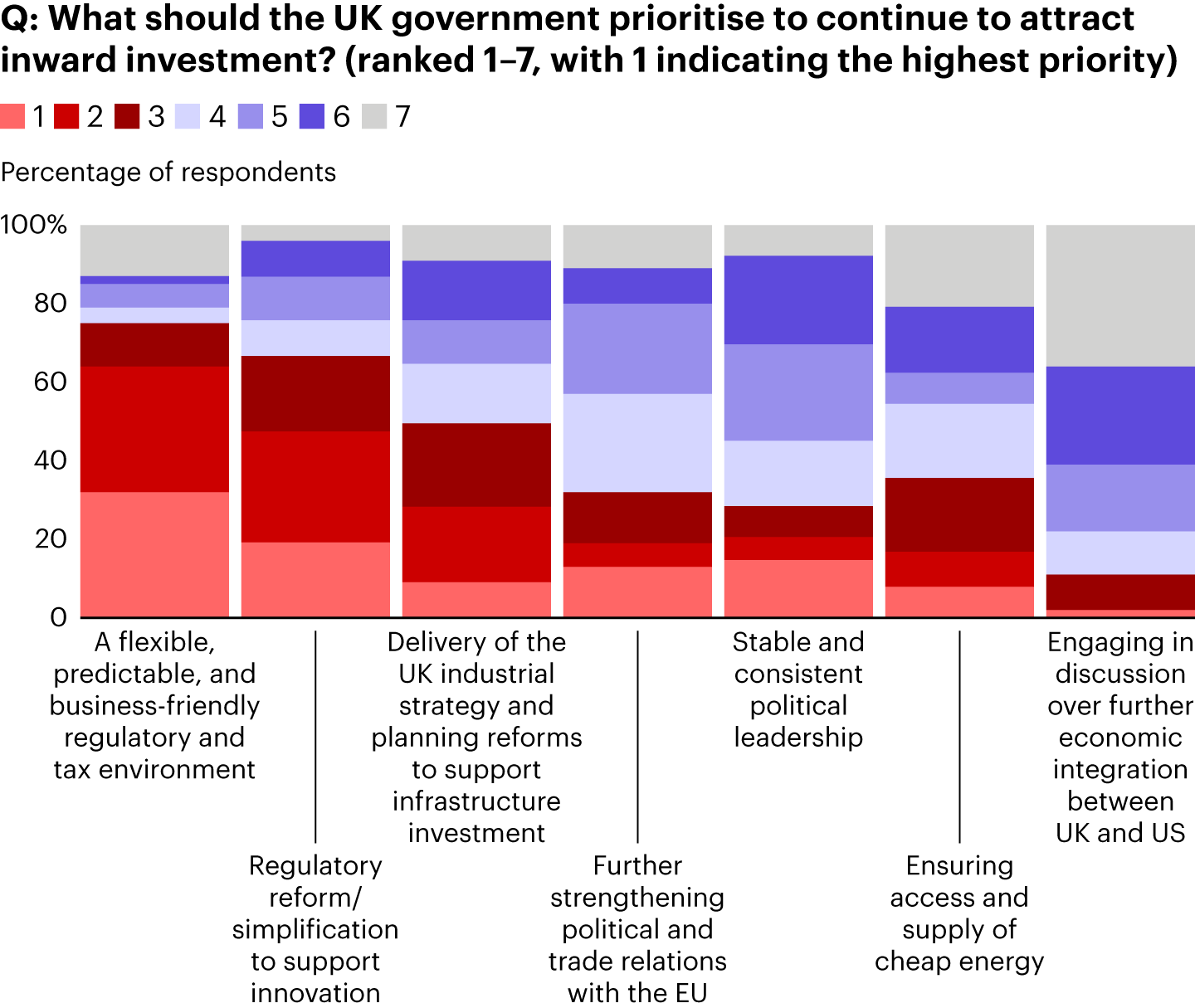

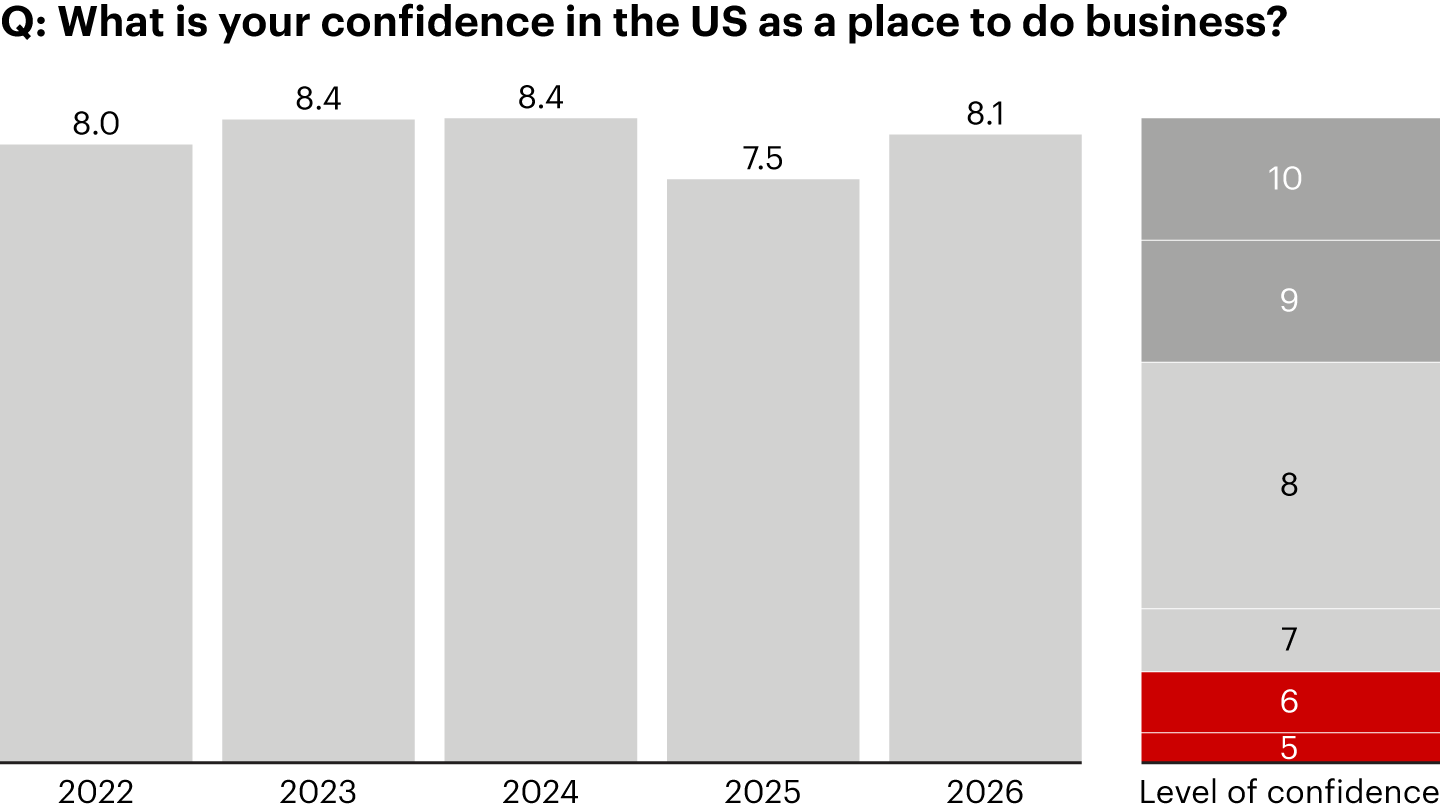
EU relations, stable political leadership, and affordable energy all received meaningful but lower levels of prioritisation. Discussions on deeper US-UK economic collaboration ranked last, reversing course from a few years ago, when interest in a US-UK free trade agreement ranked amongst the top priorities for business. Companies view economic prosperity deals (EPDs) and technology prosperity deals (TPDs) between the US and the UK as more realistic outcomes, and respondents indicated high interest in ensuring EPDs and TPDs set benchmarks for strong collaboration and lower tariff rates in the future. Beyond that, US investors’ priorities are largely centred on the UK’s growth agenda. UK companies’ confidence in the US has reboundedUK companies’ confidence in the US dropped for the first time in 2025 (see Figure 4). In 2026, UK companies rated their confidence as 8.1 out of 10—up from 7.5 in 2025 but still below the 8.4 peaks in 2023 and 2024. We believe investors felt relief that their worst fears about the US decoupling from global trade did not materialise. The rating also recognises the sheer size and success of the US market, particularly given AI growth tailwinds from the past year. Notably, a strong majority of UK companies (86%) indicated they plan to ‘moderately’ or ‘significantly’ increase their investment in the US.
Figure 4

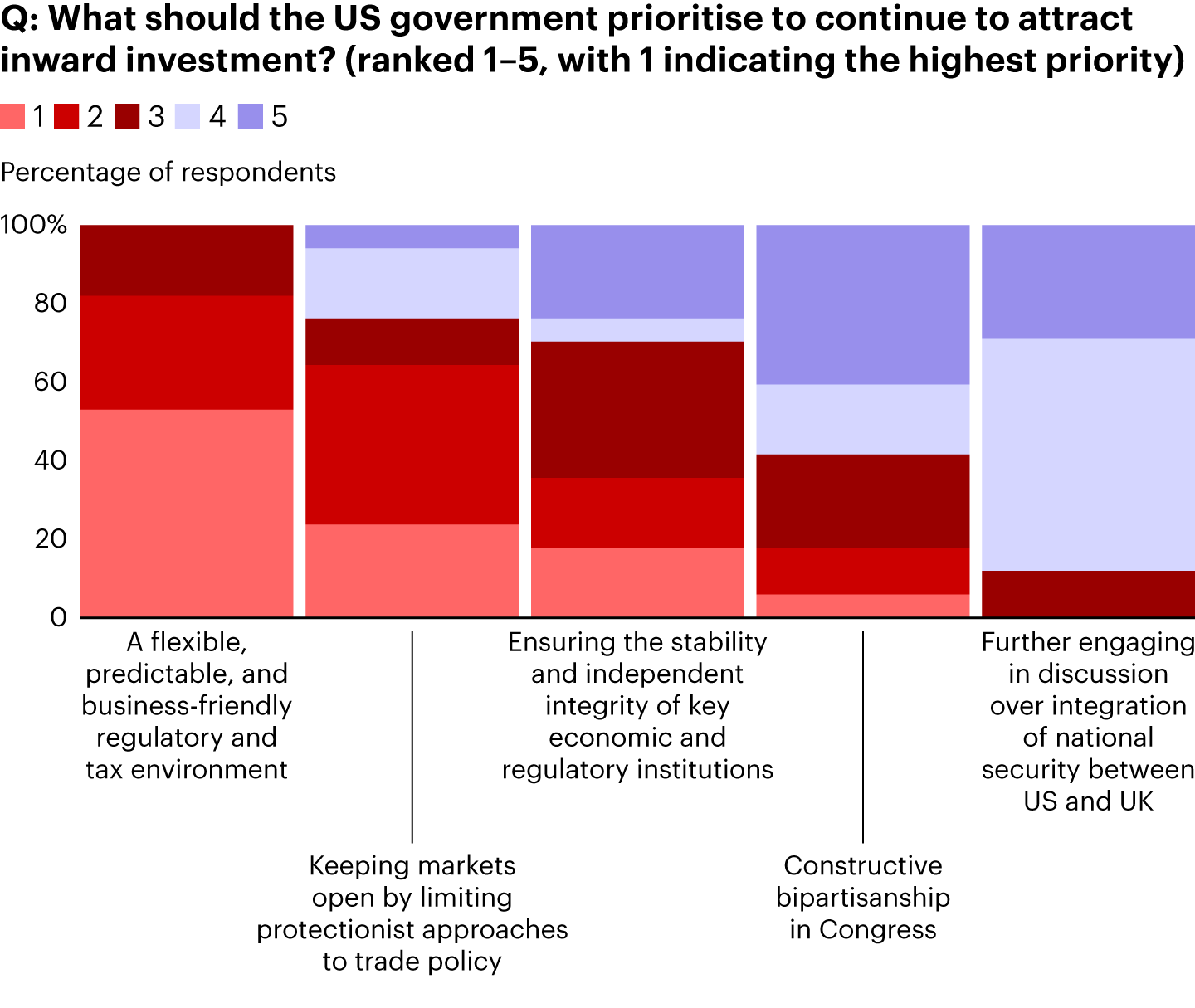
UK leaders rated the strengths and weaknesses of the US similarly to 2025. Access to capital and talent were seen as highly positive, and views about the integration of the US in global supply chains remained favourable, despite tariff concerns. The US continues to be viewed as a hub for innovation; UK leaders ranked their confidence in US innovation an 8.5 out of 10. (Conversely, US leaders ranked their confidence in UK innovation a 6.1 out of 10.) Political stability and the immigration system in the US continue to be perceived negatively, with nearly every respondent rating them both as unattractive. Above all else, UK companies want the US government to maintain ‘a flexible, predictable, and business-friendly regulatory environment’ (see Figure 5). More than half of UK respondents ranked this as their top priority. ‘Keeping markets open by limiting protectionist approaches to trade policy’ was the second-most-cited priority, followed by ‘ensuring the stability and independent integrity of key economic and regulatory institutions.’ These priorities align with a broader set of concerns over the recent US approach to economic policy. In 2025, we asked respondents to rate their confidence in US economic policy, and the result was a sobering 5.4 out of 10. In 2026, confidence related to economic policy meaningfully improved to 6.5. Nevertheless, around half of respondents rated it 6.0 or lower in 2026. Regarding trade policy, UK companies hoped for a successful review of the US-Mexico-Canada Agreement. This pact earned an importance rating of 7.5 out of 10. UK companies would also like to see strong US collaboration with both the UK and the EU.
Figure 5

What’s next for the US-UK corridor?The transatlantic relationship was tested in 2025 and 2026, but its core strengths remained intact. Both countries boast highly skilled workforces, world-leading educational institutions, and large capital markets. They also share a language, a long history of cooperation and cross-investment, and a strong foundation for transatlantic cooperation between governments. What companies on both sides of the Atlantic want next is concrete, tangible progress in resuming and extending trade and economic collaboration. Strong support for an EPD and subsequent US-UK trade arrangements—for example on pharma or zero-tariff trading for Scotch whisky—confirm these deals are viewed as vehicles towards a lower-barrier trading relationship. At the moment, optimism around these deals prevails, but as always, full implementation is what drives confidence. Beyond that, confidence is increasingly shaped by policy and the broader business environments affecting both sides of the Atlantic. UK companies are attracted to the scale of the US market and the strength of its innovation ecosystem, and they’re supporting continued investment despite ongoing concerns about policy predictability. Maintaining that momentum, however, will depend on greater certainty around US economic and trade policies. US companies’ confidence in the UK depends on whether the government’s pro-growth agenda translates into tangible improvements in the business environment. For both sides, delivering on these priorities will be critical to drawing future investments across the transatlantic corridor. Thanks to the many BritishAmerican Business member companies that offered their insight and expertise to make sure this report reflects what is important for leading transatlantic firms. 
About BritishAmerican BusinessBritishAmerican Business is the leading transatlantic trade association incorporating the British-American Chamber of Commerce in the US and the American Chamber of Commerce in the UK. We are committed to strengthening the economic corridor between the United States and the United Kingdom by supporting policies and actions that protect and enhance the environment for transatlantic trade and investment on behalf of our members. We convene and serve a growing network of companies and business leaders through networking opportunities, bespoke programming and marketing platforms. We actively promote trade and investment and support those who make the transatlantic corridor part of their business growth ambition. For more information, visit www.babinc.org. |