
Skip to Content
  • Uffici

    Uffici

    Nord e Sud America
    • Atlanta
    • Austin
    • Bogota
    • Boston
    • Buenos Aires
    • Chicago
    • Dallas
    • Denver
    • Houston
    • Los Angeles
    • Mexico City
    • Minneapolis
    • Monterrey
    • Montreal
    • New York
    • Rio de Janeiro
    • San Francisco
    • Santiago
    • São Paulo
    • Seattle
    • Silicon Valley
    • Toronto
    • Washington, DC
    Europa, Medio Oriente e Africa
    • Amsterdam
    • Athens
    • Berlin
    • Brussels
    • Copenhagen
    • Doha
    • Dubai
    • Dusseldorf
    • Frankfurt
    • Helsinki
    • Istanbul
    • Johannesburg
    • Kyiv
    • Lisbon
    • London
    • Madrid
    • Milan
    • Munich
    • Oslo
    • Paris
    • Riyadh
    • Rome
    • Stockholm
    • Vienna
    • Warsaw
    • Zurich
    Asia e Australia
    • Bangkok
    • Beijing
    • Bengaluru
    • Brisbane
    • Ho Chi Minh City
    • Hong Kong
    • Jakarta
    • Kuala Lumpur
    • Manila
    • Melbourne
    • Mumbai
    • New Delhi
    • Perth
    • Seoul
    • Shanghai
    • Singapore
    • Sydney
    • Tokyo
    Guarda tutti gli uffici
  • Alumni
  • Media Center
  • Iscriviti
  • Contattaci
  • Italy | Italiano

    Seleziona il tuo Paese e la tua lingua

    Global
    • Global (English)
    Nord e Sud America
    • Brazil (Português)
    • Argentina (Español)
    • Canada (Français)
    • Chile (Español)
    • Colombia (Español)
    Europa, Medio Oriente e Africa
    • France (Français)
    • DACH Region (Deutsch)
    • Italy (Italiano)
    • Spain (Español)
    • Greece (Elliniká)
    Asia e Australia
    • China (中文版)
    • Korea (한국어)
    • Japan (日本語)
  • Saved items (0)
    Saved items (0)

    You have no saved items.

    Contrassegna il contenuto che ti interessa e verrà salvato qui. Potrai leggerlo o condividerlo in seguito.

    Explore Bain Insights
  • Settori
    Menu principale

    Settori

    • Aerospazio e Difesa
    • Agribusiness
    • Chimica
    • Infrastrutture e Costruzioni
    • Beni di Largo Consumo
    • Servizi Finanziari
    • Sanità
    • Macchinari Industriali
    • Media & Intrattenimento
    • Industria Metallurgica
    • Industria Mineraria
    • Petrolio e Gas
    • Industria Cartaria e Packaging
    • Private Equity
    • Settore Sociale & Pubblico
    • Retail
    • Tecnologia
    • Telecomunicazioni
    • Compagnie Aeree & Trasporti
    • Viaggi e Svago
    • Utility e Rinnovabili
  • Servizi di Consulenza
    Menu principale

    Servizi di Consulenza

    • Customer Experience
    • ESG
    • Innovation
    • M&A and Divestitures
    • Operation
    • People & Organization
    • Private Equity
    • Sales & Marketing
    • Strategia
    • IA, Approfondimenti e Soluzioni
    • Tecnologia
    • Trasformazione
  • Digital
  • Tematiche
  • Informazioni su Bain
    Menu principale

    Informazioni su Bain

    • Che Cosa Facciamo
    • Quello in Cui Crediamo
    • Le Nostre Persone e la Leadership
    • Risultati
    • Premi e Riconoscimenti
    • Organizzazioni Globali
    Further: Our global responsibility
    • Diversità e Inclusione
    • Social Impact
    • Sustainability
    • World Economic Forum
    Learn more about Further
  • Careers
    Menu principale

    Careers

    • Work with Us
      Careers
      Work with Us
      • Find Your Place
      • Our Work Areas
      • Integrated Teams
      • Students
      • Internships & Programs
      • Recruiting Events
    • Life at Bain
      Careers
      Life at Bain
      • Blog: Inside Bain
      • Career Stories
      • Our People
      • Where We Work
      • Supporting Your Growth
      • Affinity Groups
      • Benefits
    • Impact Stories
    • Hiring Process
      Careers
      Hiring Process
      • What to Expect
      • Interviewing
    FIND JOBS
  • Uffici
    Menu principale

    Uffici

    • Nord e Sud America
      Uffici
      Nord e Sud America
      • Atlanta
      • Austin
      • Bogota
      • Boston
      • Buenos Aires
      • Chicago
      • Dallas
      • Denver
      • Houston
      • Los Angeles
      • Mexico City
      • Minneapolis
      • Monterrey
      • Montreal
      • New York
      • Rio de Janeiro
      • San Francisco
      • Santiago
      • São Paulo
      • Seattle
      • Silicon Valley
      • Toronto
      • Washington, DC
    • Europa, Medio Oriente e Africa
      Uffici
      Europa, Medio Oriente e Africa
      • Amsterdam
      • Athens
      • Berlin
      • Brussels
      • Copenhagen
      • Doha
      • Dubai
      • Dusseldorf
      • Frankfurt
      • Helsinki
      • Istanbul
      • Johannesburg
      • Kyiv
      • Lisbon
      • London
      • Madrid
      • Milan
      • Munich
      • Oslo
      • Paris
      • Riyadh
      • Rome
      • Stockholm
      • Vienna
      • Warsaw
      • Zurich
    • Asia e Australia
      Uffici
      Asia e Australia
      • Bangkok
      • Beijing
      • Bengaluru
      • Brisbane
      • Ho Chi Minh City
      • Hong Kong
      • Jakarta
      • Kuala Lumpur
      • Manila
      • Melbourne
      • Mumbai
      • New Delhi
      • Perth
      • Seoul
      • Shanghai
      • Singapore
      • Sydney
      • Tokyo
    Guarda tutti gli uffici
  • Alumni
  • Media Center
  • Iscriviti
  • Contattaci
  • Italy | Italiano
    Menu principale

    Seleziona il tuo Paese e la tua lingua

    • Global
      Seleziona il tuo Paese e la tua lingua
      Global
      • Global (English)
    • Nord e Sud America
      Seleziona il tuo Paese e la tua lingua
      Nord e Sud America
      • Brazil (Português)
      • Argentina (Español)
      • Canada (Français)
      • Chile (Español)
      • Colombia (Español)
    • Europa, Medio Oriente e Africa
      Seleziona il tuo Paese e la tua lingua
      Europa, Medio Oriente e Africa
      • France (Français)
      • DACH Region (Deutsch)
      • Italy (Italiano)
      • Spain (Español)
      • Greece (Elliniká)
    • Asia e Australia
      Seleziona il tuo Paese e la tua lingua
      Asia e Australia
      • China (中文版)
      • Korea (한국어)
      • Japan (日本語)
  • Saved items  (0)
    Menu principale
    Saved items (0)

    You have no saved items.

    Contrassegna il contenuto che ti interessa e verrà salvato qui. Potrai leggerlo o condividerlo in seguito.

    Explore Bain Insights
  • Settori
    • Settori

      • Aerospazio e Difesa
      • Agribusiness
      • Chimica
      • Infrastrutture e Costruzioni
      • Beni di Largo Consumo
      • Servizi Finanziari
      • Sanità
      • Macchinari Industriali
      • Media & Intrattenimento
      • Industria Metallurgica
      • Industria Mineraria
      • Petrolio e Gas
      • Industria Cartaria e Packaging
      • Private Equity
      • Settore Sociale & Pubblico
      • Retail
      • Tecnologia
      • Telecomunicazioni
      • Compagnie Aeree & Trasporti
      • Viaggi e Svago
      • Utility e Rinnovabili
  • Servizi di Consulenza
    • Servizi di Consulenza

      • Customer Experience
      • ESG
      • Innovation
      • M&A and Divestitures
      • Operation
      • People & Organization
      • Private Equity
      • Sales & Marketing
      • Strategia
      • IA, Approfondimenti e Soluzioni
      • Tecnologia
      • Trasformazione
  • Digital
  • Tematiche
  • Informazioni su Bain
    • Informazioni su Bain

      • Che Cosa Facciamo
      • Quello in Cui Crediamo
      • Le Nostre Persone e la Leadership
      • Risultati
      • Premi e Riconoscimenti
      • Organizzazioni Globali
      Further: Our global responsibility
      • Diversità e Inclusione
      • Social Impact
      • Sustainability
      • World Economic Forum
      Learn more about Further
  • Careers
    Ricerche più popolari
    • Agile
    • Digitale
    • Strategia
    La tue ricerche precedenti
      Pagine visitate

      Content added to saved items

      Saved items (0)

      Removed from saved items

      Saved items (0)

      Expert Commentary

      Classify Demand Series to Improve the Forecast

      Classify Demand Series to Improve the Forecast

      Each class has different demand signal patterns that can help with model selection.

      Di Yue Li

      • Tempo di lettura min.
      }

      Article

      Classify Demand Series to Improve the Forecast
      en

      Companies often group their demand series according to a business or organizational structure, such as a planning hierarchy or reporting hierarchy. Although this type of grouping is easy to organize and report, it is poorly suited for modeling purposes. Instead, companies should think about demand series from the perspective of demand signals and classify them accordingly to better understand them and guide the forecasting process.

      Special demand signals

      There are three special demand signals. Depending on the application, these might require a modeler to handle each in a special manner or ignore them by applying a simple method that improves the computational performance.

      • Retired product series. Sometimes demand series for discontinued products remain in the system. The expected forecast behavior should either filter out these series or generate zero or missing forecast values. The decision on whether to include these series in the modeling process depends on the case. For an important product or when this series can provide useful information to substitute products, the series should be included in the modeling process after adjustment.
      • New product series. Examples include a new product in an existing store, an existing product in a new store or a new product in a new store. The series usually has limited historical observations for modeling, and its use will depend on the application. For example, an assortment planning or pricing project might require new product forecast methods such as attribute-based models or life cycle analysis.
      • Extremely low-demand series. For demand with small values at relatively low frequency, such as demand for special machinery or some luxury products, the historical pattern alone will be hard to model. A critical series—say, products with high margins—might require modeling with additional explanatory variables to capture demand occurrence signals or borrowing information from other series. Otherwise, values from complicated models cannot exceed those from the simple average.

      Regular demand signals

      Regular demand signals can be classified in two ways.

      First, using a business- and project-planning perspective. By classifying demand based on volume, which indicates importance, and volatility, which indicates forecastability, we can classify the demand series into four categories and prioritize the forecasting efforts (see Figure 1).

      Figure 1
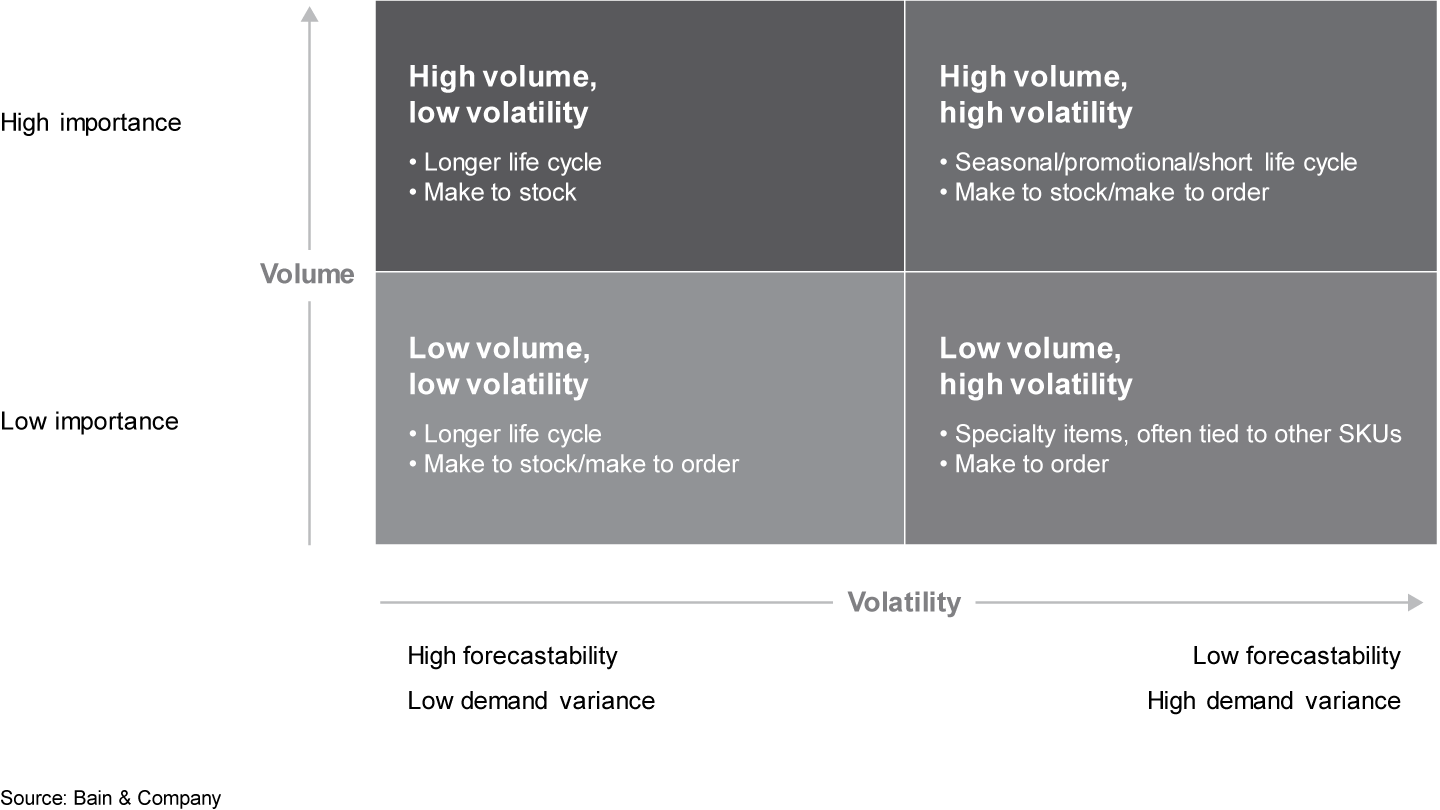
      Four demand classes help to prioritize forecasting efforts
      Four demand classes help to prioritize forecasting efforts
      Four demand classes help to prioritize forecasting efforts

      Usually, high volatility indicates low forecastability. Sometimes, the volatility of the original demand series does not directly serve to measure the forecastability, however, because highly seasonal series, such as one with a sine curve, are highly volatile but not hard to forecast. A more reasonable gauge of volatility in forecasting should be the volatility of the residuals from the benchmark model.

      The advantage of this classification is that it helps to prioritize the forecasting tasks. For an operational level forecast, there are usually thousands of demand series, too many to monitor. It’s more effective to focus on the high-volume, high-volatility class first, since improving forecast accuracy for this category yields the most value. Then we can focus on the high-volume, low-volatility category next, with the low-volume, low-volatility category after that and the low-volume, high-volatility category last.

      Using Pareto’s 80/20 principle, the four classes should be easy to manage and interpret. You can also split each dimension into three categories instead of two so that it has nine classes, similar to ABC/XYZ classification, with a slightly different measurement of volatility. Companies often use ABC/XYZ classification in supply chain management.

      Six categories for demand series

      Depending on the demand cycle pattern, seasonality and volume, we can classify demand series into six categories (see Figure 2).

      Figure 2
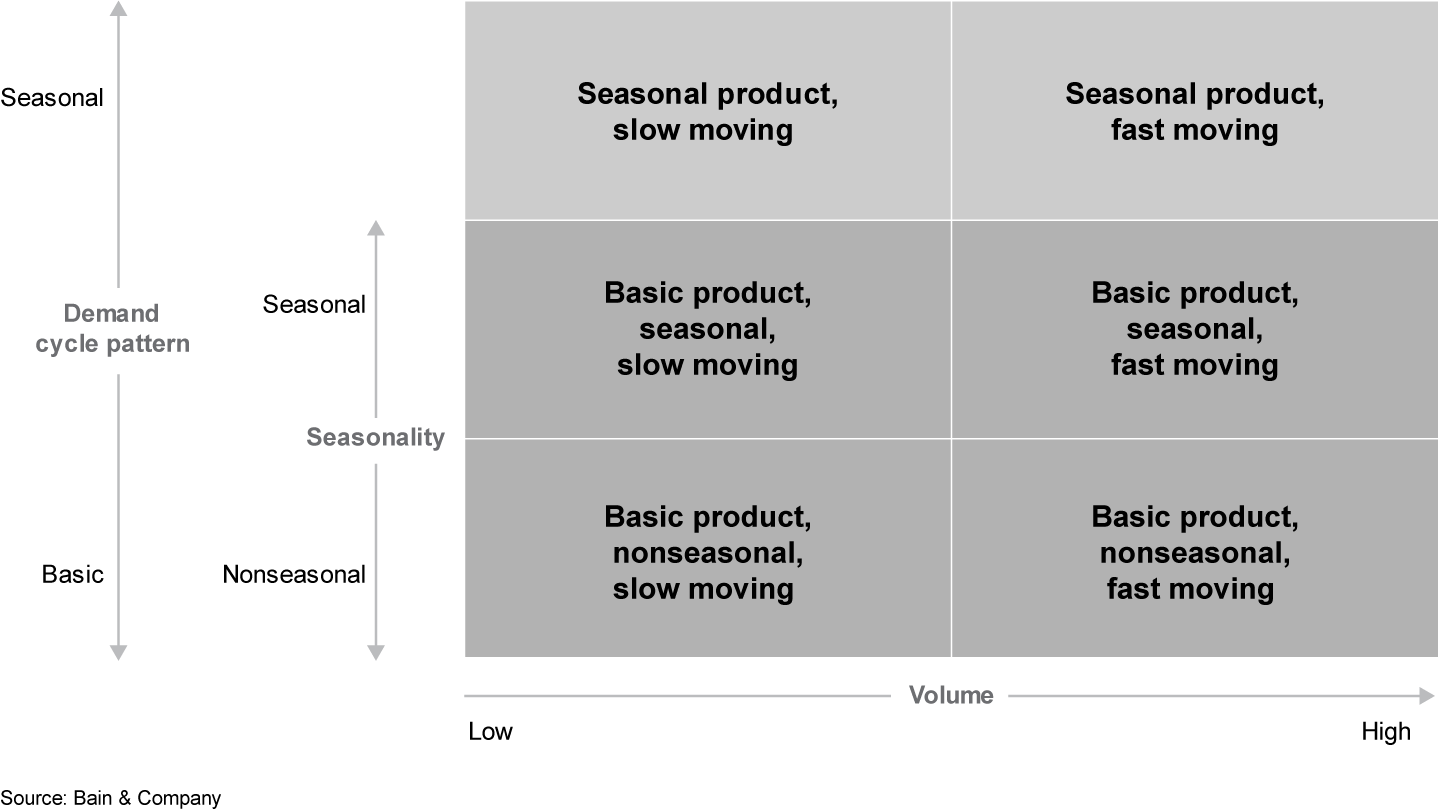
      Each class has different demand signal patterns that can help with model selection
      Each class has different demand signal patterns that can help with model selection
      Each class has different demand signal patterns that can help with model selection

      Each class has different demand signal patterns that can help with model selection. For example, slow-moving series, also called intermittent demand series, might require intermittent demand models or a probabilistic forecast model in order to understand the special distribution of the demand. Seasonal product series, which have big demand gaps during the off-season periods, require models that can handle that pattern, so we might model with a customized time interval or a regression-based model with interval indicators.

      We can use the six categories to diagnose problems with existing forecast results. For example, we might find that a forecasting team encounters issues with some of the products or regions. This classification method can help identify the common characteristics of such series and improve upon them.

      The classification method serves to improve business insights and build trust in the forecast. For example, when working with seasonal product series, such as demand for wood stove accessories, many forecasting models will generate some small, nonzero forecast values for the off-season part of the series. Although the forecast accuracy for these models might be good, it does not make sense from a business perspective because one might not trust a forecast that predicts demand for wood stove accessories during the summer. With the demand pattern in mind, we can avoid such mistakes and build trust in the forecast.

      The classification method can also guide consideration of the downstream decision process. For example, extremely low-demand series, slow-moving series and fast-moving series imply different demand distributions and models for inventory optimization. Therefore, it makes sense to consider them separately during the forecasting process.

      In summary, classifying demand series can help facilitate forecasting tasks by focusing time on high-value cases, understanding the data, identifying forecasting problems, selecting forecasting models, building trust in the forecast and guiding the forecast process.

      Yue Li is an expert with Bain & Company’s Advanced Analytics practice. She is based in Los Angeles.

      Read More

      Advanced Analytics Expert Commentary

      Success with advanced analytics requires both technical know-how and a thoughtful approach. In this series, Bain's experts offer practical advice on some of the most common data issues.

      Autori
      • Headshot of Yue Li
        Yue Li
        Expert Associate Partner, Los Angeles
      Contattaci
      Servizi di consulenza collegati
      • AI, Insights, and Solutions
      Come possiamo aiutarti
      • Demand Forecasting
      Supporto in Advanced Analytics
      How to Choose among Three Forecasting Models: Machine Learning, Statistical and Expert

      Get to know their strengths and weaknesses.

      Leggi di più
      Supporto in Advanced Analytics
      Defining the Intelligent Enterprise

      A recap from DeepLearning.AI’s AI Dev 25 × NYC.

      Leggi di più
      Demand Forecasting
      Predicting Consumer Demand in an Unpredictable World

      While it's more complicated than ever in the Covid-19 pandemic, don’t abandon forecast modeling. Just change how you do it.

      Leggi di più
      AI, Insights, and Solutions
      Retailers Have a Secret Weapon in AI-Powered Shopping: Trust

      US consumers would be more comfortable with AI buying on their behalf if a familiar retailer were involved.

      Leggi di più
      Supporto in Advanced Analytics
      Making Friends with Collinearity: How Driver Interactions Can Inform Targeted Interventions

      Driver analysis helps inform decisions on which drivers deserve the greatest effort.

      Leggi di più
      First published in agosto 2019
      Tags
      • AI, Insights, and Solutions
      • Demand Forecasting
      • Supporto in Advanced Analytics

      Come abbiamo aiutato i nostri clienti

      A New Demand Forecasting Approach Signals a Bottom-Line Boost

      Leggi un caso di studio

      Direct marketing excellence through experimental design

      Leggi un caso di studio

      Analytics guide an entertainment company's growth strategy

      Leggi un caso di studio

      Vuoi continuare la conversazione?

      Aiutiamo i leader globali e le loro aziende ad affrontare problemi e a cogliere le opportunità. Sosteniamo cambiamenti e otteniamo risultati duraturi.

      Bain Insights. Le nostre idee e punti di vista sulle tematiche che le aziende globali affrontano ogni giorno, arrivano nella tua email tutti i mesi.

      *Ho letto l'Informativa sulla Privacy e accetto i termini e le condizioni.

      Si prega di leggere e accettare l’Informativa sulla Privacy
      Bain & Company
      Contattaci Sustainability Accessibility Condizioni d’uso Privacy Cookie Policy Sitemap Log In

      © 1996-2026 Bain & Company, Inc.

      Contatta Bain

      Come posso aiutarti?

      • Business inquiry
      • Career information
      • Press relations
      • Partnership request
      • Speaker request
      Guarda tutti gli uffici