
Skip to Content
  • Uffici

    Uffici

    Nord e Sud America
    • Atlanta
    • Austin
    • Bogota
    • Boston
    • Buenos Aires
    • Chicago
    • Dallas
    • Denver
    • Houston
    • Los Angeles
    • Mexico City
    • Minneapolis
    • Monterrey
    • Montreal
    • New York
    • Rio de Janeiro
    • San Francisco
    • Santiago
    • São Paulo
    • Seattle
    • Silicon Valley
    • Toronto
    • Washington, DC
    Europa, Medio Oriente e Africa
    • Amsterdam
    • Athens
    • Berlin
    • Brussels
    • Copenhagen
    • Doha
    • Dubai
    • Dusseldorf
    • Frankfurt
    • Helsinki
    • Istanbul
    • Johannesburg
    • Kyiv
    • Lisbon
    • London
    • Madrid
    • Milan
    • Munich
    • Oslo
    • Paris
    • Riyadh
    • Rome
    • Stockholm
    • Vienna
    • Warsaw
    • Zurich
    Asia e Australia
    • Bangkok
    • Beijing
    • Bengaluru
    • Brisbane
    • Ho Chi Minh City
    • Hong Kong
    • Jakarta
    • Kuala Lumpur
    • Manila
    • Melbourne
    • Mumbai
    • New Delhi
    • Perth
    • Seoul
    • Shanghai
    • Singapore
    • Sydney
    • Tokyo
    Guarda tutti gli uffici
  • Alumni
  • Media Center
  • Iscriviti
  • Contattaci
  • Italy | Italiano

    Seleziona il tuo Paese e la tua lingua

    Global
    • Global (English)
    Nord e Sud America
    • Brazil (Português)
    • Argentina (Español)
    • Canada (Français)
    • Chile (Español)
    • Colombia (Español)
    Europa, Medio Oriente e Africa
    • France (Français)
    • DACH Region (Deutsch)
    • Italy (Italiano)
    • Spain (Español)
    • Greece (Elliniká)
    Asia e Australia
    • China (中文版)
    • Korea (한국어)
    • Japan (日本語)
  • Saved items (0)
    Saved items (0)

    You have no saved items.

    Contrassegna il contenuto che ti interessa e verrà salvato qui. Potrai leggerlo o condividerlo in seguito.

    Explore Bain Insights
  • Settori
    Menu principale

    Settori

    • Aerospazio e Difesa
    • Agribusiness
    • Chimica
    • Infrastrutture e Costruzioni
    • Beni di Largo Consumo
    • Servizi Finanziari
    • Sanità
    • Macchinari Industriali
    • Media & Intrattenimento
    • Industria Metallurgica
    • Industria Mineraria
    • Petrolio e Gas
    • Industria Cartaria e Packaging
    • Private Equity
    • Settore Sociale & Pubblico
    • Retail
    • Tecnologia
    • Telecomunicazioni
    • Compagnie Aeree & Trasporti
    • Viaggi e Svago
    • Utility e Rinnovabili
  • Servizi di Consulenza
    Menu principale

    Servizi di Consulenza

    • Customer Experience
    • ESG
    • Innovation
    • M&A and Divestitures
    • Operation
    • People & Organization
    • Private Equity
    • Sales & Marketing
    • Strategia
    • IA, Approfondimenti e Soluzioni
    • Tecnologia
    • Trasformazione
  • Digital
  • Tematiche
  • Informazioni su Bain
    Menu principale

    Informazioni su Bain

    • Che Cosa Facciamo
    • Quello in Cui Crediamo
    • Le Nostre Persone e la Leadership
    • Risultati
    • Premi e Riconoscimenti
    • Organizzazioni Globali
    Further: Our global responsibility
    • Diversità e Inclusione
    • Social Impact
    • Sustainability
    • World Economic Forum
    Learn more about Further
  • Careers
    Menu principale

    Careers

    • Work with Us
      Careers
      Work with Us
      • Find Your Place
      • Our Work Areas
      • Integrated Teams
      • Students
      • Internships & Programs
      • Recruiting Events
    • Life at Bain
      Careers
      Life at Bain
      • Blog: Inside Bain
      • Career Stories
      • Our People
      • Where We Work
      • Supporting Your Growth
      • Affinity Groups
      • Benefits
    • Impact Stories
    • Hiring Process
      Careers
      Hiring Process
      • What to Expect
      • Interviewing
    FIND JOBS
  • Uffici
    Menu principale

    Uffici

    • Nord e Sud America
      Uffici
      Nord e Sud America
      • Atlanta
      • Austin
      • Bogota
      • Boston
      • Buenos Aires
      • Chicago
      • Dallas
      • Denver
      • Houston
      • Los Angeles
      • Mexico City
      • Minneapolis
      • Monterrey
      • Montreal
      • New York
      • Rio de Janeiro
      • San Francisco
      • Santiago
      • São Paulo
      • Seattle
      • Silicon Valley
      • Toronto
      • Washington, DC
    • Europa, Medio Oriente e Africa
      Uffici
      Europa, Medio Oriente e Africa
      • Amsterdam
      • Athens
      • Berlin
      • Brussels
      • Copenhagen
      • Doha
      • Dubai
      • Dusseldorf
      • Frankfurt
      • Helsinki
      • Istanbul
      • Johannesburg
      • Kyiv
      • Lisbon
      • London
      • Madrid
      • Milan
      • Munich
      • Oslo
      • Paris
      • Riyadh
      • Rome
      • Stockholm
      • Vienna
      • Warsaw
      • Zurich
    • Asia e Australia
      Uffici
      Asia e Australia
      • Bangkok
      • Beijing
      • Bengaluru
      • Brisbane
      • Ho Chi Minh City
      • Hong Kong
      • Jakarta
      • Kuala Lumpur
      • Manila
      • Melbourne
      • Mumbai
      • New Delhi
      • Perth
      • Seoul
      • Shanghai
      • Singapore
      • Sydney
      • Tokyo
    Guarda tutti gli uffici
  • Alumni
  • Media Center
  • Iscriviti
  • Contattaci
  • Italy | Italiano
    Menu principale

    Seleziona il tuo Paese e la tua lingua

    • Global
      Seleziona il tuo Paese e la tua lingua
      Global
      • Global (English)
    • Nord e Sud America
      Seleziona il tuo Paese e la tua lingua
      Nord e Sud America
      • Brazil (Português)
      • Argentina (Español)
      • Canada (Français)
      • Chile (Español)
      • Colombia (Español)
    • Europa, Medio Oriente e Africa
      Seleziona il tuo Paese e la tua lingua
      Europa, Medio Oriente e Africa
      • France (Français)
      • DACH Region (Deutsch)
      • Italy (Italiano)
      • Spain (Español)
      • Greece (Elliniká)
    • Asia e Australia
      Seleziona il tuo Paese e la tua lingua
      Asia e Australia
      • China (中文版)
      • Korea (한국어)
      • Japan (日本語)
  • Saved items  (0)
    Menu principale
    Saved items (0)

    You have no saved items.

    Contrassegna il contenuto che ti interessa e verrà salvato qui. Potrai leggerlo o condividerlo in seguito.

    Explore Bain Insights
  • Settori
    • Settori

      • Aerospazio e Difesa
      • Agribusiness
      • Chimica
      • Infrastrutture e Costruzioni
      • Beni di Largo Consumo
      • Servizi Finanziari
      • Sanità
      • Macchinari Industriali
      • Media & Intrattenimento
      • Industria Metallurgica
      • Industria Mineraria
      • Petrolio e Gas
      • Industria Cartaria e Packaging
      • Private Equity
      • Settore Sociale & Pubblico
      • Retail
      • Tecnologia
      • Telecomunicazioni
      • Compagnie Aeree & Trasporti
      • Viaggi e Svago
      • Utility e Rinnovabili
  • Servizi di Consulenza
    • Servizi di Consulenza

      • Customer Experience
      • ESG
      • Innovation
      • M&A and Divestitures
      • Operation
      • People & Organization
      • Private Equity
      • Sales & Marketing
      • Strategia
      • IA, Approfondimenti e Soluzioni
      • Tecnologia
      • Trasformazione
  • Digital
  • Tematiche
  • Informazioni su Bain
    • Informazioni su Bain

      • Che Cosa Facciamo
      • Quello in Cui Crediamo
      • Le Nostre Persone e la Leadership
      • Risultati
      • Premi e Riconoscimenti
      • Organizzazioni Globali
      Further: Our global responsibility
      • Diversità e Inclusione
      • Social Impact
      • Sustainability
      • World Economic Forum
      Learn more about Further
  • Careers
    Ricerche più popolari
    • Agile
    • Digitale
    • Strategia
    La tue ricerche precedenti
      Pagine visitate

      Content added to saved items

      Saved items (0)

      Removed from saved items

      Saved items (0)

      Brief

      Cost Reduction for Utilities in a Zero Load-Growth World

      Cost Reduction for Utilities in a Zero Load-Growth World

      North American utilities will need to cut $15 billion, about 20% of operations and maintenance costs, over the next 5 years to meet their commitments to investors.

      Di Jason Glickman, Pratap Mukharji, Joseph Scalise and Kelly Boone Swaintek

      • Tempo di lettura min.
      }

      Brief

      Cost Reduction for Utilities in a Zero Load-Growth World
      en

      An increasingly challenging landscape has pushed cost reduction to the top of the agenda for executive teams at North American utilities. Rising energy efficiency has flattened demand for electricity, even as operating costs, living expenses and pension liabilities continue to rise. Meanwhile, utilities are investing to modernize their infrastructure and operations. All of this is happening at a time when regulatory and competitive conditions make rate increases unlikely, yet utilities still aim to deliver earnings-per-share growth of 4% to 6%.

      All told, analysis by Bain & Company indicates that over the next five years, North American utilities will need to slice more than $15 billion, about 20% of operations and maintenance costs, to meet earnings growth targets without accelerating rate growth—and that number could grow if electricity loads decline.

      Most executives recognize the need for action, but are daunted by the scale and complexity of the challenge. Many leadership teams bear the scars of previous cost-cutting programs, which often netted out as annual budgeting exercises, deferrals of work or other one-off efforts. These limited successes make skeptics of executives, who have come to believe that significant cost reductions are impossible without sacrificing reliability, customer satisfaction, safety or other aspects of operational effectiveness.

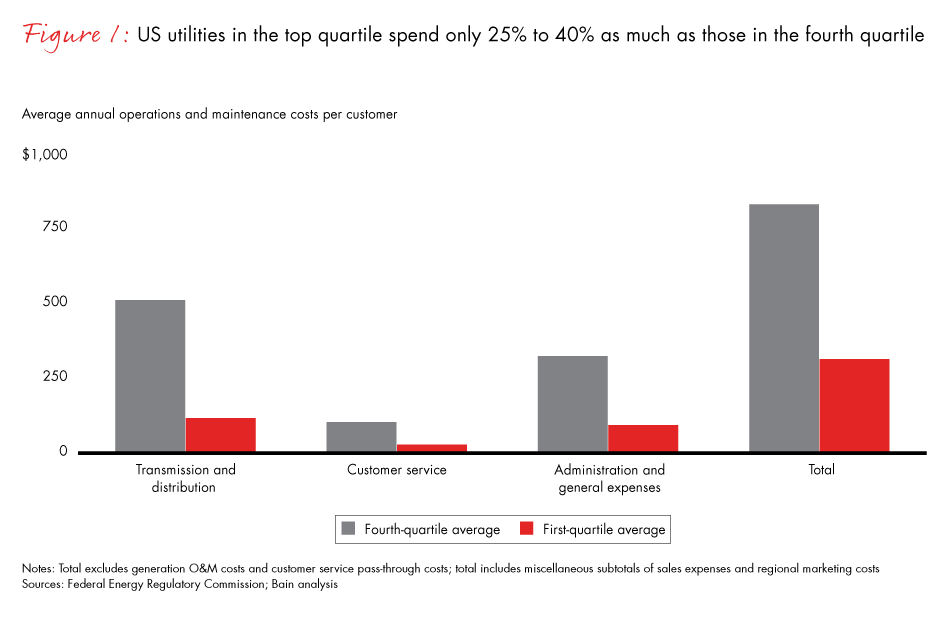
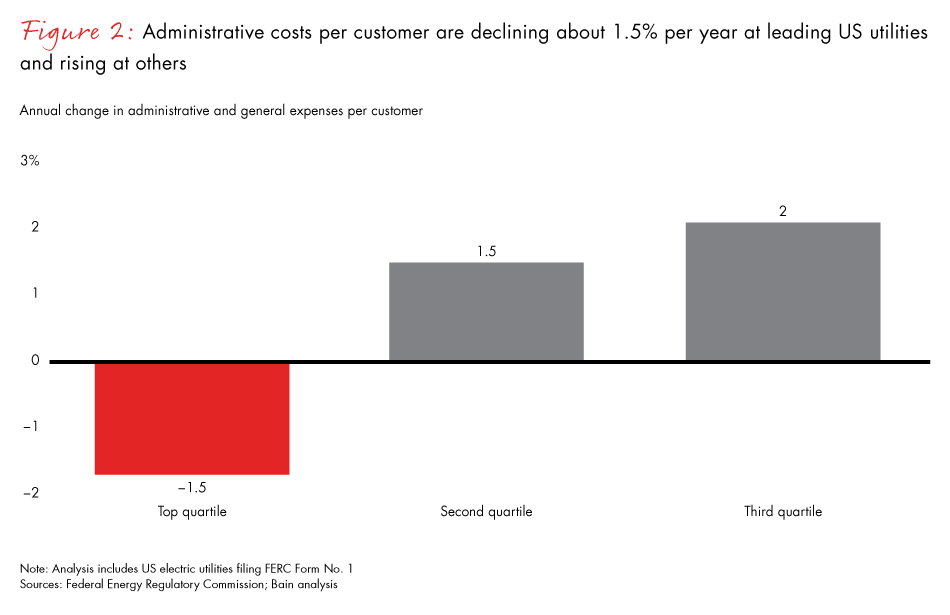
      However, a small group of industry leaders have shown how to make it work. Instead of trimming around the edges, these executive teams decide what kind of company they want in 5 or 10 years, and shape their organization and spending to meet those expectations. Across the board, these utilities have much lower costs than the industry average, spending about 25% to 40% as much on operations and maintenance as their least-efficient peers (see Figure 1). And they get better every year, reducing administrative costs by about 1.5% annually (see Figure 2).

      For senior executives at utilities that need to reduce their cost position—which is just about all of them—the transition to become a more cost-effective organization begins with leadership from the top and their willingness to make hard decisions. Leaders need to identify significant but realistic financial goals, based on a clear understanding of their current costs and drivers. Some early wins will build momentum to help make difficult choices. Perhaps most important, they need to develop a strategic roadmap that carries the entire organization through budget and rate-case cycles, to avoid falling into a trap of annual budget wrangling, and in doing so, build a better and stronger organization.
      cost-reduction-utilities-fig01_embed


      cost-reduction-utilities-fig02_embed

      Lead from the top and set ambitious targets


      The $15 billion that will need to come out of the North American utility industry implies cost reductions of between 15% and 20% for each utility—on top of all the cuts already made. Successful senior executives will approach this target with a strong conviction that these reductions are essential, and that armed with industry performance data on costs and other metrics, they can lead their organizations toward the goal.

      Undoubtedly, most have already heard from their business unit leads that reductions at this scale are impossible without unintended negative consequences, including greater risk in key operational areas, lower reliability and the loss of vital talent. Senior executives can counter the argument by identifying the risk in not acting: Utilities will be unable to meet the necessary demands in infrastructure development and customer engagement unless they improve their cost performance.

      Senior executive teams at leading utilities are aiming higher, setting cost-reduction targets of 30% to hedge against worsening financial conditions, one-time costs or implementation challenges such as delays in IT systems or resistance from regulators. At a leading US utility, the CEO and his leadership team (many of whom had come from a highly competitive telco) agreed that a low-cost position was essential for long-term success. They pursued cost reductions in a systematic multiyear program that launched initiatives to implement capital and improve efficiency while implementing a culture of continuous improvement. Throughout, the team emphasized the criticality of maintaining customer satisfaction. After several years, they have one of the best cost positions, while maintaining industry-leading customer satisfaction ratings.

      Infographic

      How Utilities Can Cut Costs in a Challenging Environment

      Leading utilities are able to cut costs while building a stronger organization.

      Identify root causes and look across functions


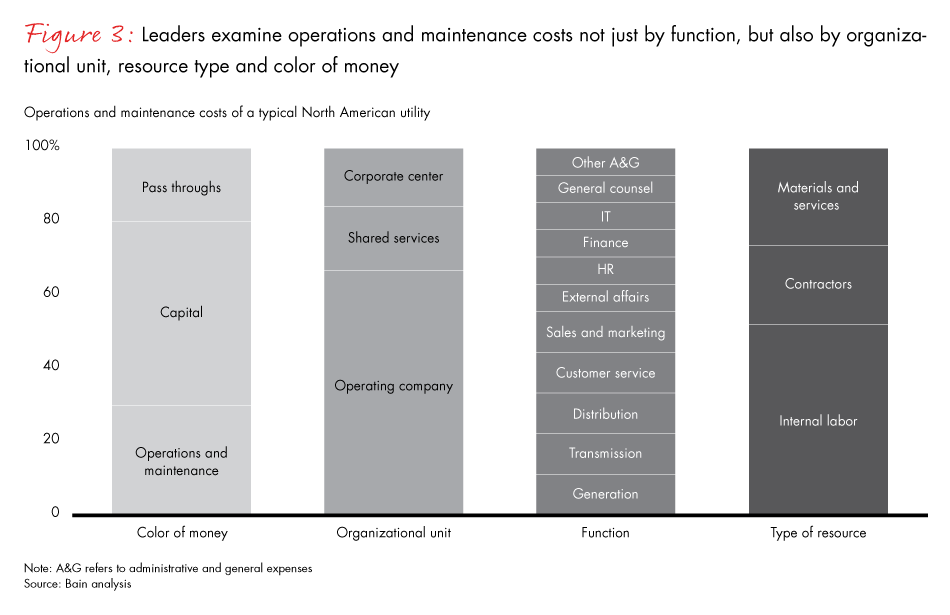
      Leaders in cost reduction identify more opportunities by looking at spending from a range of perspectives, questioning every expense and reexamining spending habits. Viewing budgets from multiple perspectives—not just functions, but also by organizational unit, resource type and color of money (the industry term for types of funding)—allows them to identify more ways to reduce costs (see Figure 3). Many take a zero-based approach to budgets, continually questioning what work needs to be done and what outputs need to be generated.

      cost-reduction-utilities-fig03_embed

      Identifying who does the work and why can also reveal surprises. Sometimes senior staff continues to do work that could be more cost-effectively assigned to junior staff, simply because of time and grade promotions. Old reports and paperwork are often generated long after processes have changed and their value should have been questioned.

      In other cases, work is needlessly gold plated. One utility’s IT organization had poor demand-management capabilities and wound up treating all requests as urgent, sometimes spending millions of dollars to outsource work to expensive contractors in order to hit unnecessary deadlines. Utilities often overinvest in their truck fleets, with excessive customization that requires more upfront costs and ongoing maintenance expenses than they would incur by sticking to standard models.

      In some cases, senior executives only have to push a little harder. After holding operations and maintenance spending flat for several years, the CEO of one North American utility believed that further cuts would be difficult, if not impossible. But a 16-week assessment of cost-saving opportunities, applying some of these principles, revealed another $400 million available, a number that the line organization reviewed and validated.

      Joseph Scalise, who leads Bain's Utilities practice in the Americas, outlines what leaders can do to develop a roadmap for sustaining cost reductions over time.

      Build a time-phased plan and create momentum with early wins


      Success in large cost programs doesn’t come easily. While reductions in external spending on materials and services can be significant, headcount reductions are also likely—a process that can be difficult and gut-wrenching for organizations. It’s critical to design the change program in ways that build momentum, to ensure success.

      At one North American utility, executives focused first on managing suppliers more closely and simplifying the organizational structure (primarily at the top) to reduce costs by 2% in one fiscal year. The changes were well received by the rank and file of the organization, which helped build momentum and confidence to make hard choices that would move the organization closer to its long-term reduction targets of 15% to 20%.

      They then took a zero-based approach that revealed new opportunities across functions. In finance, they identified redundancies at the parent company and operating companies. In IT, the utility rationalized its portfolio, improved demand management and committed to standardization. In operations, they reduced the number of job classifications, invested in technology that boosted productivity and employed advanced analytics to improve forecasting.

      As these programs unfold, executives should also be evaluating longer-term decisions, such as whether to shutter uncompetitive assets, how to use capital to reduce ongoing operations and maintenance costs, and where to switch from archaic customized systems to standardized solutions that reduce long-term maintenance and upgrading costs.

      Develop a long-term roadmap to build the right culture and team


      Leading North American utilities will set cost reduction as a long-term priority, one that transcends budget cycles and becomes a permanent part of the organization’s DNA. They will need to set clear internal targets and hold teams accountable for results as they build a cost-conscious culture that delivers continuous improvement along the lines of the 1.5%-a-year reduction demonstrated by the leading quartile. Of course, consistent communication about cost reduction, both internally and with customers, regulators and shareholders, will remain critical.

      The number of leaders in any organization with the set of skills to intelligently manage change at this scale is finite. The right leaders will impart the urgency of the effort to their teams and work to instill a sense of pride in achievement—along with the bragging rights that accompany success. Programs like these are ideal learning platforms, and senior executives should view them as an opportunity to develop their talent pipeline.

      No utility executive sees this as optional anymore; the trends are clear and the numbers unforgiving. Starting sooner is better than later, since it allows more freedom in cost-reduction decisions and taps greater enthusiasm than when one’s back is against the wall. Leaders have shown that taking a multiyear, cross-functional approach to reducing costs yields meaningful and sustainable results, while also building a lean culture focused on performance.


      Five questions to get started


      Is this a top-three priority for your CEO, CFO and executive team? Cost transformation succeeds only when it’s led from the top. Long-term cost reduction has to be an integral part of ongoing strategy, not a one-time budget move to meet targets.

      Does everyone on your leadership team understand the case for change? Cost-reduction efforts are more successful when executives understand the mandate and can look beyond next quarter’s earnings.

      Who are the 15 to 20 high-potential leaders you will take out of their day jobs for 12 to 18 months to drive the effort? Success depends on finding the right leaders.

      Can you act counter to your current bonus goals? Incentives must be aligned over the long term, and leaders must be rewarded for executing their initiatives, particularly if it requires perceived personal pain, such as larger cost reductions than their peers.

      Are you ready for zero-based budgeting every year? A disciplined, multiyear approach is necessary to prevent costs from slipping back.

      Jason Glickman and Joseph Scalise are partners with Bain & Company in San Francisco, where Kelly Boone Swaintek is a manager. Pratap Mukharji is a partner in Bain’s Atlanta office. All four work with Bain’s Global Utilities practice, which Jason and Joe colead in the Americas.


      cost-reduction-utilities-fig01_full

      cost-reduction-utilities-fig02_full

      cost-reduction-utilities-fig03_full
      Autori
      • Jason Glickman
        Former Partner, San Francisco
      • Pratap Mukharji
        Former Partner, Atlanta
      • Headshot of Joe Scalise
        Joe Scalise
        Partner, San Francisco
      • Headshot of Kelly Swaintek
        Kelly Swaintek
        Partner, Austin
      Contattaci
      Industry collegate
      • Energia e Risorse Naturali
      • Utility e Rinnovabili
      Servizi di consulenza collegati
      • Performance Improvement
      Come possiamo aiutarti
      • Zero-based Budgeting
      Energia e Risorse Naturali
      How Utilities Can Make the Most of Distributed Energy Resources

      Integrated planning allows utilities to manage the influx of electricity from rooftop solar panels and other new generation sources.

      Leggi di più
      Petrolio e Gas
      Energy Management in the Age of Disruptions

      Navigating the future energy market requires robust scenario planning and strategic choices to open up new ways of competing.

      Leggi di più
      Utility e Rinnovabili
      Harnessing the Value of Grid-Edge Technologies

      Electrification, decentralization and digitalization are creating a smarter electric system with new opportunities for energy companies.

      Leggi di più
      Utility e Rinnovabili
      Joseph Scalise: Cost Reduction for Utilities in a Zero Load-Growth World

      Leaders can develop a roadmap for sustaining cost reductions over time.

      Leggi di più
      Costo
      Scaling AI While Controlling Tech Costs

      AI adds complexity, but it’s also a powerful tool to control spending.

      Leggi di più
      First published in luglio 2017
      Tags
      • Costo
      • Energia e Risorse Naturali
      • Performance Improvement
      • Utility e Rinnovabili
      • Zero-based Budgeting

      Come abbiamo aiutato i nostri clienti

      An Environmental Services Company Captures Massive Savings from a Merger

      Leggi un caso di studio

      Boosting a utility's workforce productivity

      Leggi un caso di studio

      Revitalizing a utility's market position with customer loyalty

      Leggi un caso di studio

      Vuoi continuare la conversazione?

      Aiutiamo i leader globali e le loro aziende ad affrontare problemi e a cogliere le opportunità. Sosteniamo cambiamenti e otteniamo risultati duraturi.

      Bain Insights. Le nostre idee e punti di vista sulle tematiche che le aziende globali affrontano ogni giorno, arrivano nella tua email tutti i mesi.

      *Ho letto l'Informativa sulla Privacy e accetto i termini e le condizioni.

      Si prega di leggere e accettare l’Informativa sulla Privacy
      Bain & Company
      Contattaci Sustainability Accessibility Condizioni d’uso Privacy Cookie Policy Sitemap Log In

      © 1996-2026 Bain & Company, Inc.

      Contatta Bain

      Come posso aiutarti?

      • Business inquiry
      • Career information
      • Press relations
      • Partnership request
      • Speaker request
      Guarda tutti gli uffici