
Skip to Content
  • Uffici

    Uffici

    Nord e Sud America
    • Atlanta
    • Austin
    • Bogota
    • Boston
    • Buenos Aires
    • Chicago
    • Dallas
    • Denver
    • Houston
    • Los Angeles
    • Mexico City
    • Minneapolis
    • Monterrey
    • Montreal
    • New York
    • Rio de Janeiro
    • San Francisco
    • Santiago
    • São Paulo
    • Seattle
    • Silicon Valley
    • Toronto
    • Washington, DC
    Europa, Medio Oriente e Africa
    • Amsterdam
    • Athens
    • Berlin
    • Brussels
    • Copenhagen
    • Doha
    • Dubai
    • Dusseldorf
    • Frankfurt
    • Helsinki
    • Istanbul
    • Johannesburg
    • Kyiv
    • Lisbon
    • London
    • Madrid
    • Milan
    • Munich
    • Oslo
    • Paris
    • Riyadh
    • Rome
    • Stockholm
    • Vienna
    • Warsaw
    • Zurich
    Asia e Australia
    • Bangkok
    • Beijing
    • Bengaluru
    • Brisbane
    • Ho Chi Minh City
    • Hong Kong
    • Jakarta
    • Kuala Lumpur
    • Manila
    • Melbourne
    • Mumbai
    • New Delhi
    • Perth
    • Seoul
    • Shanghai
    • Singapore
    • Sydney
    • Tokyo
    Guarda tutti gli uffici
  • Alumni
  • Media Center
  • Iscriviti
  • Contattaci
  • Italy | Italiano

    Seleziona il tuo Paese e la tua lingua

    Global
    • Global (English)
    Nord e Sud America
    • Brazil (Português)
    • Argentina (Español)
    • Canada (Français)
    • Chile (Español)
    • Colombia (Español)
    Europa, Medio Oriente e Africa
    • France (Français)
    • DACH Region (Deutsch)
    • Italy (Italiano)
    • Spain (Español)
    • Greece (Elliniká)
    Asia e Australia
    • China (中文版)
    • Korea (한국어)
    • Japan (日本語)
  • Saved items (0)
    Saved items (0)

    You have no saved items.

    Contrassegna il contenuto che ti interessa e verrà salvato qui. Potrai leggerlo o condividerlo in seguito.

    Explore Bain Insights
  • Settori
    Menu principale

    Settori

    • Aerospazio e Difesa
    • Agribusiness
    • Chimica
    • Infrastrutture e Costruzioni
    • Beni di Largo Consumo
    • Servizi Finanziari
    • Sanità
    • Macchinari Industriali
    • Media & Intrattenimento
    • Industria Metallurgica
    • Industria Mineraria
    • Petrolio e Gas
    • Industria Cartaria e Packaging
    • Private Equity
    • Settore Sociale & Pubblico
    • Retail
    • Tecnologia
    • Telecomunicazioni
    • Compagnie Aeree & Trasporti
    • Viaggi e Svago
    • Utility e Rinnovabili
  • Servizi di Consulenza
    Menu principale

    Servizi di Consulenza

    • Customer Experience
    • ESG
    • Innovation
    • M&A and Divestitures
    • Operation
    • People & Organization
    • Private Equity
    • Sales & Marketing
    • Strategia
    • IA, Approfondimenti e Soluzioni
    • Tecnologia
    • Trasformazione
  • Digital
  • Tematiche
  • Informazioni su Bain
    Menu principale

    Informazioni su Bain

    • Che Cosa Facciamo
    • Quello in Cui Crediamo
    • Le Nostre Persone e la Leadership
    • Risultati
    • Premi e Riconoscimenti
    • Organizzazioni Globali
    Further: Our global responsibility
    • Diversità e Inclusione
    • Social Impact
    • Sustainability
    • World Economic Forum
    Learn more about Further
  • Careers
    Menu principale

    Careers

    • Work with Us
      Careers
      Work with Us
      • Find Your Place
      • Our Work Areas
      • Integrated Teams
      • Students
      • Internships & Programs
      • Recruiting Events
    • Life at Bain
      Careers
      Life at Bain
      • Blog: Inside Bain
      • Career Stories
      • Our People
      • Where We Work
      • Supporting Your Growth
      • Affinity Groups
      • Benefits
    • Impact Stories
    • Hiring Process
      Careers
      Hiring Process
      • What to Expect
      • Interviewing
    FIND JOBS
  • Uffici
    Menu principale

    Uffici

    • Nord e Sud America
      Uffici
      Nord e Sud America
      • Atlanta
      • Austin
      • Bogota
      • Boston
      • Buenos Aires
      • Chicago
      • Dallas
      • Denver
      • Houston
      • Los Angeles
      • Mexico City
      • Minneapolis
      • Monterrey
      • Montreal
      • New York
      • Rio de Janeiro
      • San Francisco
      • Santiago
      • São Paulo
      • Seattle
      • Silicon Valley
      • Toronto
      • Washington, DC
    • Europa, Medio Oriente e Africa
      Uffici
      Europa, Medio Oriente e Africa
      • Amsterdam
      • Athens
      • Berlin
      • Brussels
      • Copenhagen
      • Doha
      • Dubai
      • Dusseldorf
      • Frankfurt
      • Helsinki
      • Istanbul
      • Johannesburg
      • Kyiv
      • Lisbon
      • London
      • Madrid
      • Milan
      • Munich
      • Oslo
      • Paris
      • Riyadh
      • Rome
      • Stockholm
      • Vienna
      • Warsaw
      • Zurich
    • Asia e Australia
      Uffici
      Asia e Australia
      • Bangkok
      • Beijing
      • Bengaluru
      • Brisbane
      • Ho Chi Minh City
      • Hong Kong
      • Jakarta
      • Kuala Lumpur
      • Manila
      • Melbourne
      • Mumbai
      • New Delhi
      • Perth
      • Seoul
      • Shanghai
      • Singapore
      • Sydney
      • Tokyo
    Guarda tutti gli uffici
  • Alumni
  • Media Center
  • Iscriviti
  • Contattaci
  • Italy | Italiano
    Menu principale

    Seleziona il tuo Paese e la tua lingua

    • Global
      Seleziona il tuo Paese e la tua lingua
      Global
      • Global (English)
    • Nord e Sud America
      Seleziona il tuo Paese e la tua lingua
      Nord e Sud America
      • Brazil (Português)
      • Argentina (Español)
      • Canada (Français)
      • Chile (Español)
      • Colombia (Español)
    • Europa, Medio Oriente e Africa
      Seleziona il tuo Paese e la tua lingua
      Europa, Medio Oriente e Africa
      • France (Français)
      • DACH Region (Deutsch)
      • Italy (Italiano)
      • Spain (Español)
      • Greece (Elliniká)
    • Asia e Australia
      Seleziona il tuo Paese e la tua lingua
      Asia e Australia
      • China (中文版)
      • Korea (한국어)
      • Japan (日本語)
  • Saved items  (0)
    Menu principale
    Saved items (0)

    You have no saved items.

    Contrassegna il contenuto che ti interessa e verrà salvato qui. Potrai leggerlo o condividerlo in seguito.

    Explore Bain Insights
  • Settori
    • Settori

      • Aerospazio e Difesa
      • Agribusiness
      • Chimica
      • Infrastrutture e Costruzioni
      • Beni di Largo Consumo
      • Servizi Finanziari
      • Sanità
      • Macchinari Industriali
      • Media & Intrattenimento
      • Industria Metallurgica
      • Industria Mineraria
      • Petrolio e Gas
      • Industria Cartaria e Packaging
      • Private Equity
      • Settore Sociale & Pubblico
      • Retail
      • Tecnologia
      • Telecomunicazioni
      • Compagnie Aeree & Trasporti
      • Viaggi e Svago
      • Utility e Rinnovabili
  • Servizi di Consulenza
    • Servizi di Consulenza

      • Customer Experience
      • ESG
      • Innovation
      • M&A and Divestitures
      • Operation
      • People & Organization
      • Private Equity
      • Sales & Marketing
      • Strategia
      • IA, Approfondimenti e Soluzioni
      • Tecnologia
      • Trasformazione
  • Digital
  • Tematiche
  • Informazioni su Bain
    • Informazioni su Bain

      • Che Cosa Facciamo
      • Quello in Cui Crediamo
      • Le Nostre Persone e la Leadership
      • Risultati
      • Premi e Riconoscimenti
      • Organizzazioni Globali
      Further: Our global responsibility
      • Diversità e Inclusione
      • Social Impact
      • Sustainability
      • World Economic Forum
      Learn more about Further
  • Careers
    Ricerche più popolari
    • Agile
    • Digitale
    • Strategia
    La tue ricerche precedenti
      Pagine visitate

      Content added to saved items

      Saved items (0)

      Removed from saved items

      Saved items (0)

      Brief

      Future of the bank branch in Asia: Rewiring staff behavior for a more digital world

      Future of the bank branch in Asia: Rewiring staff behavior for a more digital world

      Given the pressures on margins in a low-interest-rate environment, Asian banks are seeking higher productivity from their staff in an increasingly digital world.

      Di Mark Schofield and Seow-Chien Chew

      • Tempo di lettura min.

      Brief

      Future of the bank branch in Asia: Rewiring staff behavior for a more digital world
      en

      As the digital technology wave washes through banking across Asia, there’s that nagging matter of what to do with a huge number of employees accustomed to traditional ways of banking. How will the role of employees change in this new world?

      Given the pressures on margins in a low-interest-rate environment, Asian banks are seeking higher productivity from their staff in an increasingly digital world. To succeed in this transition, forward-thinking banks are investing in behavioral science that makes it easy, and fulfilling, for staff to do the right things and hard to do the wrong things. These banks have begun to realize the triple-crown benefits of an improved customer experience, greater employee engagement and stronger financial results.

      Most executives at large retail banks sense that digital technology is rapidly changing their business. A growing number of customers have embraced mobile and online banking, especially for routine transactions and to compare loans or investment products among providers. (See the Bain Brief, “The digital challenge to retail banks.”) Digital channels can create “wow” experiences that make routine transactions such as bill paying fast and convenient. And these experiences, along with moments of truth such as resolving fraudulent activity, can prove decisive in winning customers’ loyalty. Routine transactions handled at the branch, by contrast, don’t have a big impact on loyalty, and are more prone to annoy than delight customers. (See the Bain Report, “Customer Loyalty in Retail Banking: Global Edition 2012.”) Digital channels, if executed well, also can divert volumes from higher-cost brick-and-mortar branches.

      The branch won’t disappear, but the branch network will evolve to a very different shape. We estimate that one-third of branches will need to move to a better location. Almost all branches will need reformatting so that they can capture the full opportunity of their local market. Banks will be compelled to design new formats that can integrate seamlessly with mobile, online, call center and other channels—all with an eye to reducing costs and improving the customer experience. To that end, some banks are applying more behavioral science to the selection of branch sites and format design.

      Technology investments will deliver just a fraction of the potential benefits unless banks understand and act on the implications for staff capabilities and behavior. In an integrated “omnichannel” approach, basic transactions and sales of simple products increasingly migrate to digital channels. Branches more often serve as showrooms for complex product sales and as venues for expert advice on investments, mortgages and educating consumers on using digital channels. In-person sales and service interactions will appeal to consumers with more complex needs while follow-up communications and ongoing relationship management can be done remotely through video calls or email. Employees will be called on to engage in more meaningful ways with customers. They’ll have to get up to speed—keeping pace with their customers—on how to use new digital tools while maintaining productivity within an evolving branch environment.

      Making it easy to do the right thing

      With branch evolution comes a new mix of required skills, particularly a shift from administrative services, such as taking deposits and handling cash, to sales activities, product advice and information services. Frontline positions will require stronger generalist, interpersonal skills than do today’s delineated roles of teller or specialist lender. Not all tellers can become advisers, and Asian banks will likely need to hire new people for certain positions and trim staff in others.

      Many branch employees, however, can make the transition to new roles if given the right support, motivation and coaching. Forward-thinking banks thus are starting to invest in rewiring their staff, not just their computers. They’re using insights from behavioral science to build a performance system that operates at high velocity and provides fast feedback to employees. And they’re tapping branch managers as well as senior executives to coach through the digital transition.

      Based on these efforts, in combination with adjustments to the branch network footprint and format, we’ve seen promising early results along a triple crown of:

      • Vastly improved experiences for customers (translating to a 20% lift in customer loyalty scores)
      • More engaged branch staff (a 6% rise in engagement in one Asian bank)
      • Superior financial outcomes (a 20% increase in profit across the branch network)

      The experiences of banks and companies in other service industries suggest several actions that will raise the odds of success in realizing the digital transformation.

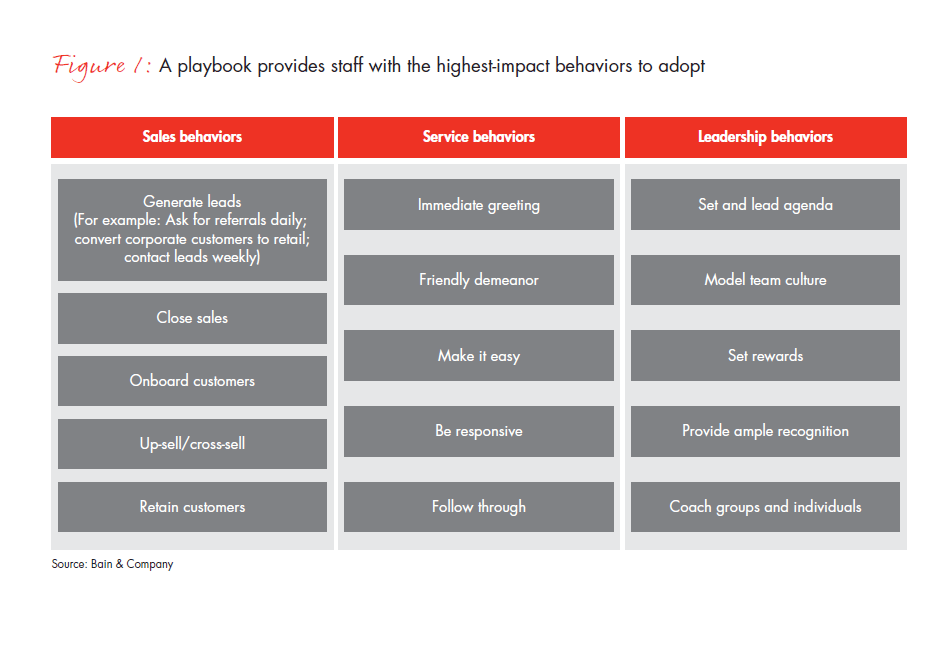
      Identify the employee behaviors that will make the most of technology. This might sound like a soft exercise, but rigorous analysis can be employed to identify the top-performing employees in sales, service and leadership, and to isolate their distinctive, replicable behaviors. The best behaviors today and the most valuable behaviors for tomorrow can then be assembled into a playbook that will vary by role and will be continually updated based on customer feedback from the field (see Figure 1).

      future-of-the-bank-branch-in-asia-1-fig-01_embed

      Consider the behaviors involved in bringing new customers on board: demonstrating the utility of technology-enabled products, like mobile payments, so that customers walk out knowing how to use them; ensuring that customers adopt the technology within a few weeks; and actively managing future interactions to cross-sell and up-sell appropriately, based on customers’ needs and priorities. As the branch evolves, employees’ deeper advisory role, with fewer routine interactions, makes each of these interactions more important.

      Banks typically find that the biggest lift in the realm of behavioral change comes from moving middle performers to high performance. The lowest performers may simply be the wrong people for their jobs and likely won’t respond to training and other investments. Top performers don’t need a major investment, but rather the latitude to run with the new plan.

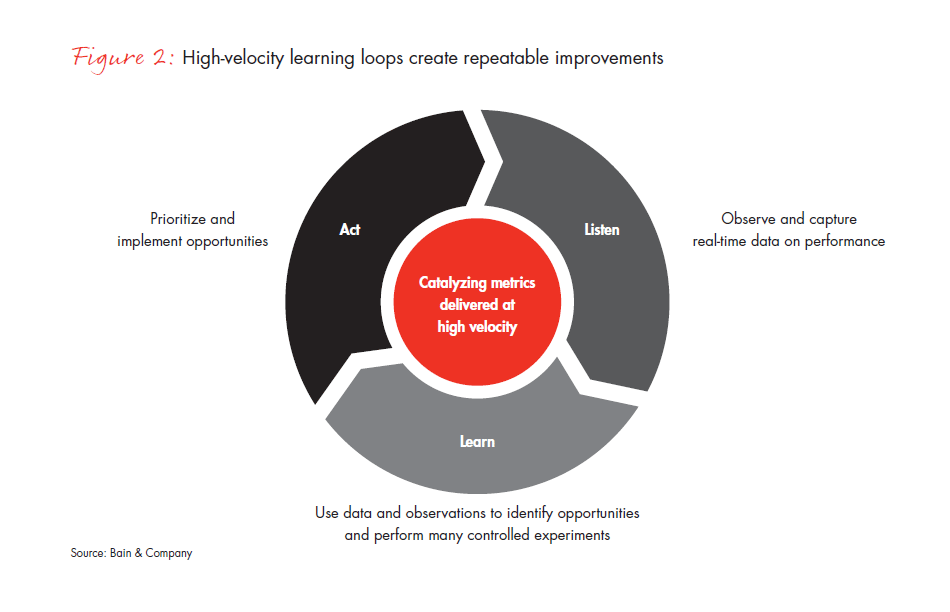
      Design a system to make these new behaviors stick. Identifying the most effective behaviors is relatively easy compared to embedding them throughout the branches. To change behavior on the front lines, many leading companies rely on a cycle of new behavior and reinforcement, repeated enough times that it becomes habitual. Companies that use this system, which we call a High-Velocity Performance System®, have several characteristics.

      First, they rally around one or two catalyzing metrics, communicated back to employees quickly and frequently. The metrics make it clear to employees what matters to the bank’s performance, establishing a causal link between actions and outcomes. These can take several forms, such as metrics tracking customer loyalty rather than simple satisfaction, customer appointments booked in the branch or, for a call center, fi rst-time resolution rather than average handle time.

      These companies also foster a discipline of continuous learning behavior. They have developed an ability to improve again and again by using a high-velocity feedback loop of action-information-reaction (see Figure 2). Feedback from customers goes to the frontline employees most responsible for the interaction, as well as to direct supervisors and other employees who create the policies, processes or product features that indirectly shape the interaction. High velocity is essential here, because an employee will vividly remember the interaction that generated feedback when that data is shared the same or next day.

      While training and tools are important to equip employees with proper support, the immediate, after-the-fact consequences are roughly four times more powerful in encouraging new behavior. Consequences remind employees every day of their mission and, through self-awareness and positive peer pressure, foster behavior that leads to higher performance.

      future-of-the-bank-branch-in-asia-1-fig-02_embed

      We have found that the most effective mix of consequences is about 80% positive and 20% negative, in part to build trust among frontline employees and managers. That means bank management needs to devise a lot of positive consequences, at a high frequency. The choice of consequences will depend on the employee group and the specific operational challenges, but they can range from monetary bonuses to special assignments or a prime parking space.

      Empower branch teams so they take ownership of the plan. Adoption of new behaviors accelerates when the branch manager and local team participate in choosing the behaviors that will affect performance. Senior leadership sets the performance target, and local branches have some leeway within the framework to choose how they reach the target.

      Branch managers in particular must be on board with the planned changes, otherwise directives from the C-suite through regional or local managers will break down at the branch level. The branch manager can ignore new practices that are adopted in other areas, so he or she must embrace the changes in order for feedback loops to succeed at the front lines.

      The branch team starts with a diagnosis of the branch, then looks at its financial and operating performance against a comparable cohort and selects the most valuable priorities to pursue. It’s often useful to develop an action plan through a workshop facilitated by an expert and respected senior branch staff.

      Don’t skimp on coaching and support. Certain roles serve as linchpins during times of disruption, branch managers and regional managers among them. Yet it’s rare for branch managers to get dedicated support. They merit weekly coaching for at least two months, and then monthly coaching after that. Their quarterly reviews should cover how they are executing on the action plan. And banks should consider starting an online peer-to-peer network that enables fellow practitioners to share successes and challenges.

      Walk the talk

      With the acceleration of digital technologies throughout all aspects of banking, Asian banks have a huge opportunity to improve their branch networks. Forward-thinking banks have already begun to reshape branches and redeploy staff, testing and learning as they go.

      Bank executives play key behavioral roles in this transformation. Staff will be looking to senior management for cues about how to proceed:

      • Do senior leaders take an outside-in perspective that emphasizes the customer’s priorities rather than only the volume of product sales?
      • Do leaders spend time at the branch talking with staff? Do they articulate the business case simply and clearly?
      • Do they give staff the power to do the right thing?
      • Have they identified a handful of critical metrics and promoted consequences that will unlock performance in the organization?
      • Are they providing high-quality, respected coaches?

      Employees will note what you do, not just what you say. Excelling in each area raises the odds of success in seizing that triple crown of customer loyalty, employee engagement and financial outcomes.


      future-of-the-bank-branch-in-asia-1-fig-01_full

      future-of-the-bank-branch-in-asia-1-fig-02_full
      Autori
      • Mark Schofield
        Former Partner, Toronto
      Contattaci
      Industry collegate
      • Servizi Finanziari
      Servizi di consulenza collegati
      • Net Promoter System®
      • Sales and Marketing
      Come possiamo aiutarti
      • Net Promoter®
      Servizi Finanziari
      Future of the bank branch in Asia: Redesigning footprint and format

      Bank branches can serve as showrooms for complex product sales and venues for expert advice on investments and mortgages.

      Leggi di più
      Servizi Finanziari
      The digital challenge to retail banks

      Financial institutions that successfully apply digital technologies will embrace deep strategic, operational and organizational changes.

      Leggi di più
      Integrating mobile and branch banking will increase customer loyalty

      Our survey finds that mobile banking is more likely to increase a customer's likelihood to recommend his or her bank to other people than any other channel interaction.

      Leggi di più
      Servizi Finanziari
      Mundane Interactions Can Still Win Over Mobile Customers

      When it comes to earning consumer loyalty in banking, routine transactions matter most. But enhancing the customer experience with ease of use in mind is difficult for many banks, particularly when it comes to mobile.

      Leggi di più
      Servizi Finanziari
      Beyond Payments, the Real Prize in SME Commerce Is Ecosystem Control

      Choices on integration are reshaping how European commerce platforms and payments providers will thrive.

      Leggi di più
      First published in marzo 2013
      Tags
      • Net Promoter System®
      • Net Promoter®
      • Sales and Marketing
      • Servizi Finanziari

      Come abbiamo aiutato i nostri clienti

      Trasformazione Completa Transformation sparks financial leader's turnaround

      Leggi un caso di studio

      Trasformazione Completa Turning around a pioneering service for working parents with sick children

      Leggi un caso di studio

      Revitalizing a utility's market position with customer loyalty

      Leggi un caso di studio

      Vuoi continuare la conversazione?

      Aiutiamo i leader globali e le loro aziende ad affrontare problemi e a cogliere le opportunità. Sosteniamo cambiamenti e otteniamo risultati duraturi.

      Bain Insights. Le nostre idee e punti di vista sulle tematiche che le aziende globali affrontano ogni giorno, arrivano nella tua email tutti i mesi.

      *Ho letto l'Informativa sulla Privacy e accetto i termini e le condizioni.

      Si prega di leggere e accettare l’Informativa sulla Privacy
      Bain & Company
      Contattaci Sustainability Accessibility Condizioni d’uso Privacy Cookie Policy Sitemap Log In

      © 1996-2026 Bain & Company, Inc.

      Contatta Bain

      Come posso aiutarti?

      • Business inquiry
      • Career information
      • Press relations
      • Partnership request
      • Speaker request
      Guarda tutti gli uffici