
Skip to Content
  • Uffici

    Uffici

    Nord e Sud America
    • Atlanta
    • Austin
    • Bogota
    • Boston
    • Buenos Aires
    • Chicago
    • Dallas
    • Denver
    • Houston
    • Los Angeles
    • Mexico City
    • Minneapolis
    • Monterrey
    • Montreal
    • New York
    • Rio de Janeiro
    • San Francisco
    • Santiago
    • São Paulo
    • Seattle
    • Silicon Valley
    • Toronto
    • Washington, DC
    Europa, Medio Oriente e Africa
    • Amsterdam
    • Athens
    • Berlin
    • Brussels
    • Copenhagen
    • Doha
    • Dubai
    • Dusseldorf
    • Frankfurt
    • Helsinki
    • Istanbul
    • Johannesburg
    • Kyiv
    • Lisbon
    • London
    • Madrid
    • Milan
    • Munich
    • Oslo
    • Paris
    • Riyadh
    • Rome
    • Stockholm
    • Vienna
    • Warsaw
    • Zurich
    Asia e Australia
    • Bangkok
    • Beijing
    • Bengaluru
    • Brisbane
    • Ho Chi Minh City
    • Hong Kong
    • Jakarta
    • Kuala Lumpur
    • Manila
    • Melbourne
    • Mumbai
    • New Delhi
    • Perth
    • Seoul
    • Shanghai
    • Singapore
    • Sydney
    • Tokyo
    Guarda tutti gli uffici
  • Alumni
  • Media Center
  • Iscriviti
  • Contattaci
  • Italy | Italiano

    Seleziona il tuo Paese e la tua lingua

    Global
    • Global (English)
    Nord e Sud America
    • Brazil (Português)
    • Argentina (Español)
    • Canada (Français)
    • Chile (Español)
    • Colombia (Español)
    Europa, Medio Oriente e Africa
    • France (Français)
    • DACH Region (Deutsch)
    • Italy (Italiano)
    • Spain (Español)
    • Greece (Elliniká)
    Asia e Australia
    • China (中文版)
    • Korea (한국어)
    • Japan (日本語)
  • Saved items (0)
    Saved items (0)

    You have no saved items.

    Contrassegna il contenuto che ti interessa e verrà salvato qui. Potrai leggerlo o condividerlo in seguito.

    Explore Bain Insights
  • Settori
    Menu principale

    Settori

    • Aerospazio e Difesa
    • Agribusiness
    • Chimica
    • Infrastrutture e Costruzioni
    • Beni di Largo Consumo
    • Servizi Finanziari
    • Sanità
    • Macchinari Industriali
    • Media & Intrattenimento
    • Industria Metallurgica
    • Industria Mineraria
    • Petrolio e Gas
    • Industria Cartaria e Packaging
    • Private Equity
    • Settore Sociale & Pubblico
    • Retail
    • Tecnologia
    • Telecomunicazioni
    • Compagnie Aeree & Trasporti
    • Viaggi e Svago
    • Utility e Rinnovabili
  • Servizi di Consulenza
    Menu principale

    Servizi di Consulenza

    • Customer Experience
    • ESG
    • Innovation
    • M&A and Divestitures
    • Operation
    • People & Organization
    • Private Equity
    • Sales & Marketing
    • Strategia
    • IA, Approfondimenti e Soluzioni
    • Tecnologia
    • Trasformazione
  • Digital
  • Tematiche
  • Informazioni su Bain
    Menu principale

    Informazioni su Bain

    • Che Cosa Facciamo
    • Quello in Cui Crediamo
    • Le Nostre Persone e la Leadership
    • Risultati
    • Premi e Riconoscimenti
    • Organizzazioni Globali
    Further: Our global responsibility
    • Diversità e Inclusione
    • Social Impact
    • Sustainability
    • World Economic Forum
    Learn more about Further
  • Careers
    Menu principale

    Careers

    • Work with Us
      Careers
      Work with Us
      • Find Your Place
      • Our Work Areas
      • Integrated Teams
      • Students
      • Internships & Programs
      • Recruiting Events
    • Life at Bain
      Careers
      Life at Bain
      • Blog: Inside Bain
      • Career Stories
      • Our People
      • Where We Work
      • Supporting Your Growth
      • Affinity Groups
      • Benefits
    • Impact Stories
    • Hiring Process
      Careers
      Hiring Process
      • What to Expect
      • Interviewing
    FIND JOBS
  • Uffici
    Menu principale

    Uffici

    • Nord e Sud America
      Uffici
      Nord e Sud America
      • Atlanta
      • Austin
      • Bogota
      • Boston
      • Buenos Aires
      • Chicago
      • Dallas
      • Denver
      • Houston
      • Los Angeles
      • Mexico City
      • Minneapolis
      • Monterrey
      • Montreal
      • New York
      • Rio de Janeiro
      • San Francisco
      • Santiago
      • São Paulo
      • Seattle
      • Silicon Valley
      • Toronto
      • Washington, DC
    • Europa, Medio Oriente e Africa
      Uffici
      Europa, Medio Oriente e Africa
      • Amsterdam
      • Athens
      • Berlin
      • Brussels
      • Copenhagen
      • Doha
      • Dubai
      • Dusseldorf
      • Frankfurt
      • Helsinki
      • Istanbul
      • Johannesburg
      • Kyiv
      • Lisbon
      • London
      • Madrid
      • Milan
      • Munich
      • Oslo
      • Paris
      • Riyadh
      • Rome
      • Stockholm
      • Vienna
      • Warsaw
      • Zurich
    • Asia e Australia
      Uffici
      Asia e Australia
      • Bangkok
      • Beijing
      • Bengaluru
      • Brisbane
      • Ho Chi Minh City
      • Hong Kong
      • Jakarta
      • Kuala Lumpur
      • Manila
      • Melbourne
      • Mumbai
      • New Delhi
      • Perth
      • Seoul
      • Shanghai
      • Singapore
      • Sydney
      • Tokyo
    Guarda tutti gli uffici
  • Alumni
  • Media Center
  • Iscriviti
  • Contattaci
  • Italy | Italiano
    Menu principale

    Seleziona il tuo Paese e la tua lingua

    • Global
      Seleziona il tuo Paese e la tua lingua
      Global
      • Global (English)
    • Nord e Sud America
      Seleziona il tuo Paese e la tua lingua
      Nord e Sud America
      • Brazil (Português)
      • Argentina (Español)
      • Canada (Français)
      • Chile (Español)
      • Colombia (Español)
    • Europa, Medio Oriente e Africa
      Seleziona il tuo Paese e la tua lingua
      Europa, Medio Oriente e Africa
      • France (Français)
      • DACH Region (Deutsch)
      • Italy (Italiano)
      • Spain (Español)
      • Greece (Elliniká)
    • Asia e Australia
      Seleziona il tuo Paese e la tua lingua
      Asia e Australia
      • China (中文版)
      • Korea (한국어)
      • Japan (日本語)
  • Saved items  (0)
    Menu principale
    Saved items (0)

    You have no saved items.

    Contrassegna il contenuto che ti interessa e verrà salvato qui. Potrai leggerlo o condividerlo in seguito.

    Explore Bain Insights
  • Settori
    • Settori

      • Aerospazio e Difesa
      • Agribusiness
      • Chimica
      • Infrastrutture e Costruzioni
      • Beni di Largo Consumo
      • Servizi Finanziari
      • Sanità
      • Macchinari Industriali
      • Media & Intrattenimento
      • Industria Metallurgica
      • Industria Mineraria
      • Petrolio e Gas
      • Industria Cartaria e Packaging
      • Private Equity
      • Settore Sociale & Pubblico
      • Retail
      • Tecnologia
      • Telecomunicazioni
      • Compagnie Aeree & Trasporti
      • Viaggi e Svago
      • Utility e Rinnovabili
  • Servizi di Consulenza
    • Servizi di Consulenza

      • Customer Experience
      • ESG
      • Innovation
      • M&A and Divestitures
      • Operation
      • People & Organization
      • Private Equity
      • Sales & Marketing
      • Strategia
      • IA, Approfondimenti e Soluzioni
      • Tecnologia
      • Trasformazione
  • Digital
  • Tematiche
  • Informazioni su Bain
    • Informazioni su Bain

      • Che Cosa Facciamo
      • Quello in Cui Crediamo
      • Le Nostre Persone e la Leadership
      • Risultati
      • Premi e Riconoscimenti
      • Organizzazioni Globali
      Further: Our global responsibility
      • Diversità e Inclusione
      • Social Impact
      • Sustainability
      • World Economic Forum
      Learn more about Further
  • Careers
    Ricerche più popolari
    • Agile
    • Digitale
    • Strategia
    La tue ricerche precedenti
      Pagine visitate

      Content added to saved items

      Saved items (0)

      Removed from saved items

      Saved items (0)

      Brief

      How Retail Banks in China Can Elevate Digital Banking

      How Retail Banks in China Can Elevate Digital Banking

      Retail banks need to develop core capabilities to improve customer centricity and deliver more delightful digital experiences.

      Di Frankie Leung, Scully Cui, e Lei Zhang

      • Tempo di lettura min.
      }

      Brief

      How Retail Banks in China Can Elevate Digital Banking
      en
      In evidenza
      • Customers in mainland China are happy with their banks. More than half of retail banking customers like and would recommend their primary bank.
      • Mobile is one of the most-used channels and has the greatest impact on customer experience, as measured by the Net Promoter ScoreSM.
      • Customers want mobile apps with extensive functionality, built-in rewards programs, and lifestyle services. They also want simple digital experiences and reliable access to human support. 
      • To be competitive, banks must develop customer-centric capabilities, create seamless customer journeys, and optimize human and digital interactions.


      The retail banking market in mainland China

      In mainland China, the retail banking industry is shifting toward quality growth over quantity.

      The retail banking market grew rapidly from 2010 to 2015, keeping pace with a prospering stock market. Then capital market fluctuations and credit tightening tempered the market and slowed the growth rate.

      Retail banking is on the rebound now—but in an entirely new set of market conditions. Today’s banks are combating stronger competition, tighter compliance controls, and headwinds from volatile macroeconomic conditions.

      Customers are also more demanding than they were a decade ago, especially when it comes to digital experiences. The Covid-19 pandemic caused a surge in digital banking behaviors that never fully subsided. Now, digital banking is a predominant part of the banking experience.

      To learn more about consumers’ digital banking experiences and preferences, Bain & Company surveyed 1,800 retail banking consumers in mainland China from August to September 2022. We used the proprietary Net Promoter Score℠ to measure customers’ experiences with state-owned banks, national joint-stock banks, and foreign financial institutions. Customers reported on multiple facets of experience, such as relationship (rNPS), channel (cNPS), product (pNPS), and episode (eNPS).

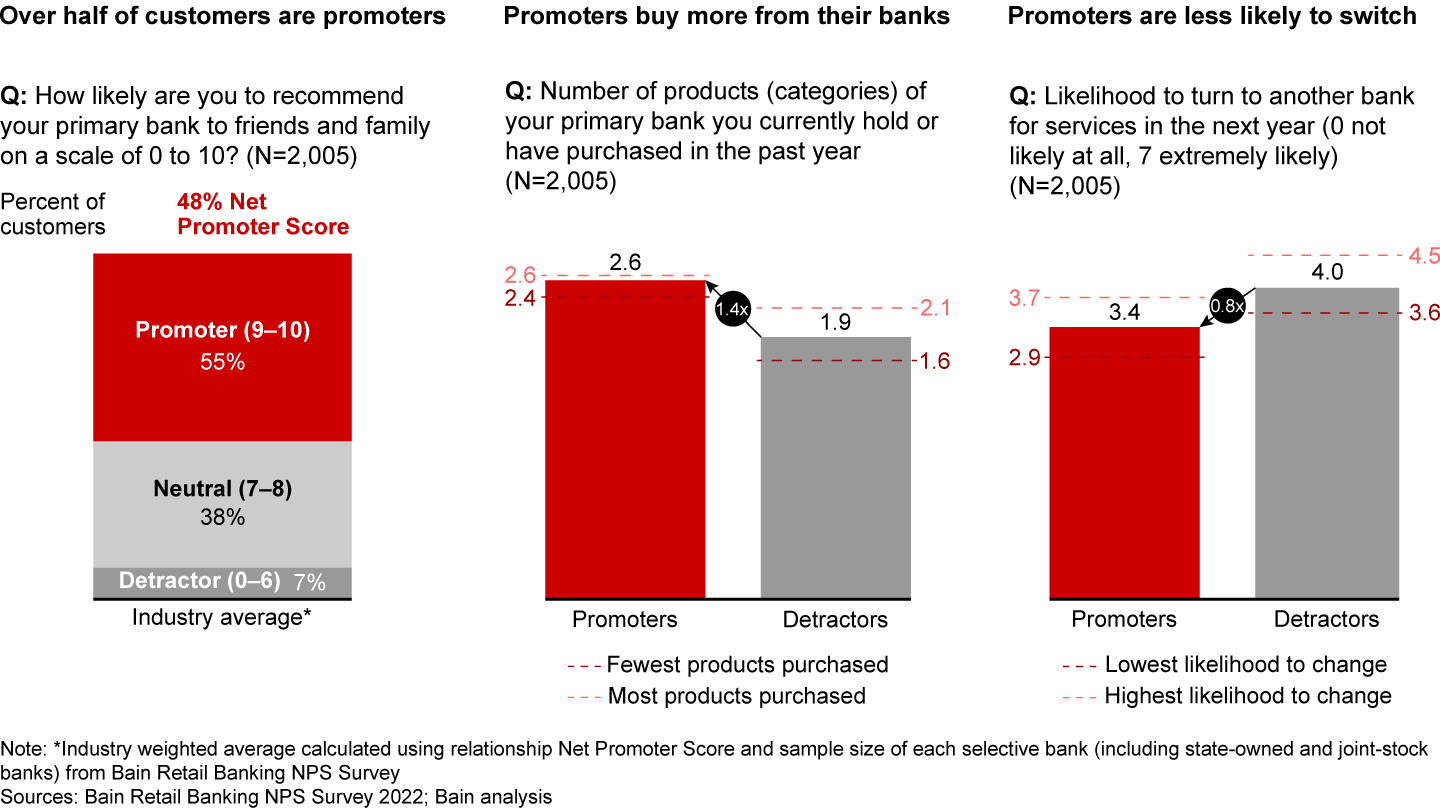
      As part of the analysis, we classified respondents as brand “promoters” or “detractors.” Net Promoter Score classifications are significant because they correlate to quantifiable business metrics, like lifetime customer value and acquisition costs. In mainland China, on average, promoters purchase 37% more product categories from their primary financial institution than detractors. Promoters are also more loyal customers (see Figure 1).

      Figure 1
      Promoters deliver more value to their primary financial institutions
      Promoters deliver more value to their primary financial institutions
      Promoters deliver more value to their primary financial institutions

      Generally, mainland customers are happy with their primary financial institutions. Net Promoter Score percentages are strong and steadily increasing. In 2022, approximately 55% of retail banking customers in mainland China said they would recommend (or “promote”) their primary bank.

      Between 2019 and 2022, the average rNPS of major retail banks in China rose more than 60%. The market average is catching up to the top five banks’, which earned rNPS scores between 47% and 59% in 2022.  

      If a majority of customers in China are happy with their banking experience, how can retail banks drive deeper relationships with customers? 

      How to take digital banking experiences to the next level

      Customers told us they want retail banks to address four critical areas related to customer experience. They want smooth omnichannel experiences, “super app” functionality, blended wealth management services, and simple digital experiences.

      1. Customers want omnichannel experiences

      Mobile and online banking are the most frequently used channels among the retail banking consumers we surveyed. Consumers interact with their bank via mobile app about 15 times per quarter, which is five times more often than they visit a physical branch. Mobile banking also has the highest correlation to positive overall customer experience.

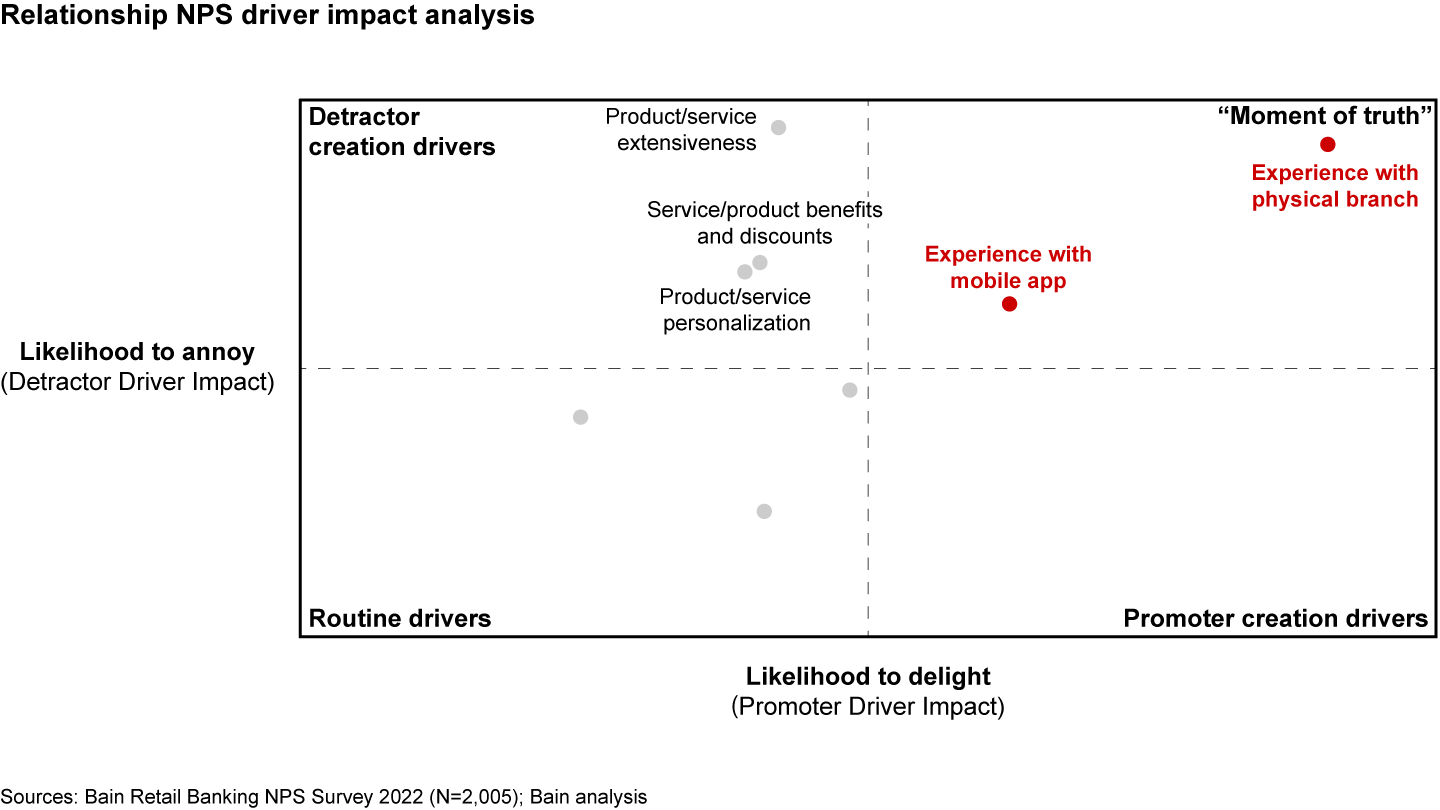
      However, there is one area where mobile channels were outranked. Despite lower usage, branch experiences are more likely to delight customers, and they have a higher chance of converting customers into promoters or detractors than mobile apps (see Figure 2).

      Figure 2
      Positive branch experiences can convert customers into promoters 
      Positive branch experiences can convert customers into promoters 
      Positive branch experiences can convert customers into promoters 

      Branch interactions stand out because they often occur during complex or emotionally charged episodes. Customers say they prefer in-person assistance with mortgages, wealth management, and large cash transactions—“moments of truth” that can make or break their sentiment toward the bank. 

      That doesn’t mean customers want all of their banking interactions to be at the counter, though. Customers want a blend of digital and human services.

      In wealth management, for example, human interactions help build trust with the bank at the start of a relationship or when complicated information is being exchanged. Later in the journey, customers are happy to perform simple transactions, performance reviews, and redemptions through digital channels. 

      Omnichannel capabilities can help banks deliver more consistent and positive customer experiences overall. Banks should make it easy for customers to switch between physical and digital channels. To encourage omnichannel interactions, banks can include or embed digital experiences in their branches.

      2. Customers want “super app” functionality

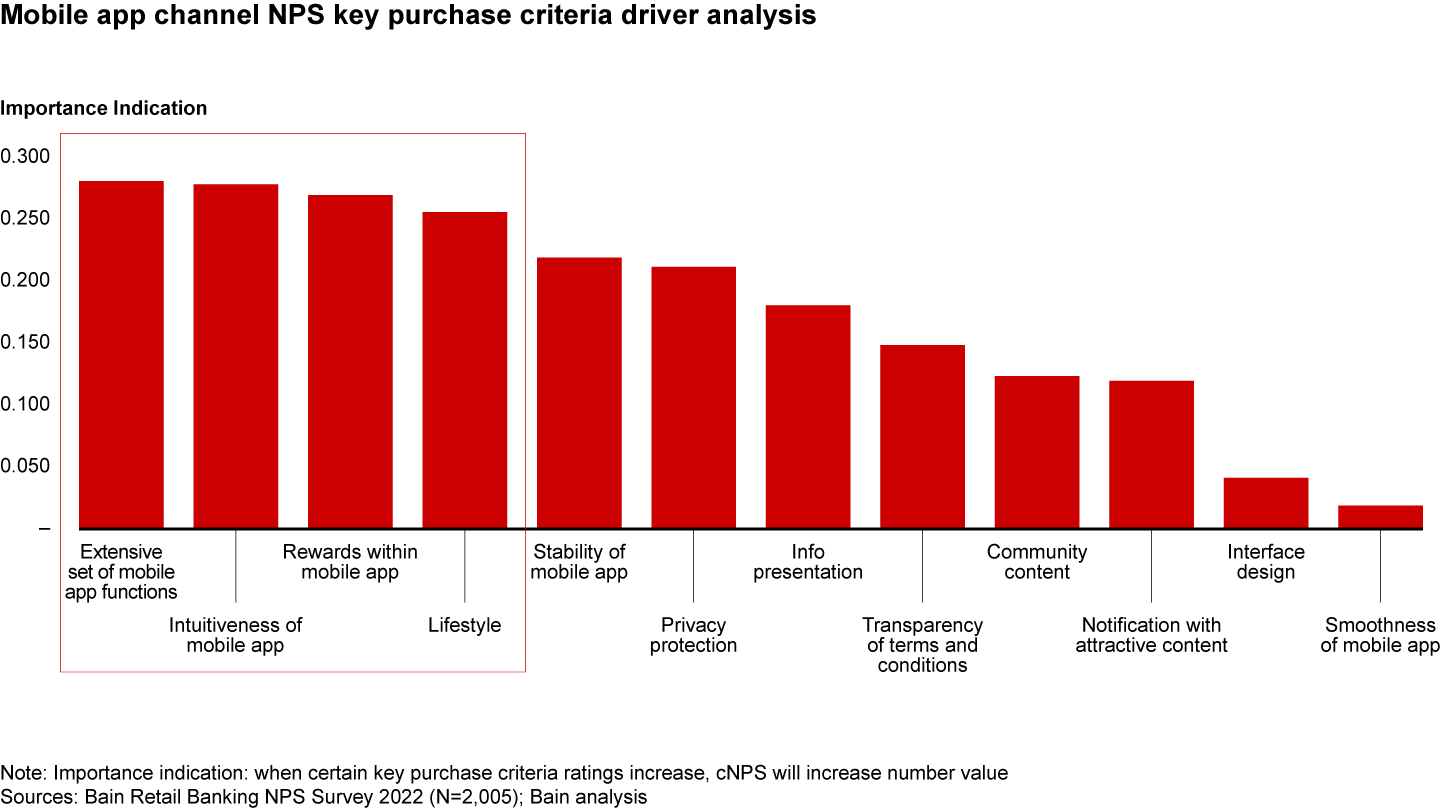
      On average, customers are happy with their banks’ mobile apps, but they want more features. They want more functionality, plus access to rewards and lifestyle services. They also want mobile apps to be intuitive (see Figure 3).

      Figure 3
      Chinese banking customers want “super apps” with extensive features and intuitive functionality
      Chinese banking customers want “super apps” with extensive features and intuitive functionality
      Chinese banking customers want “super apps” with extensive features and intuitive functionality

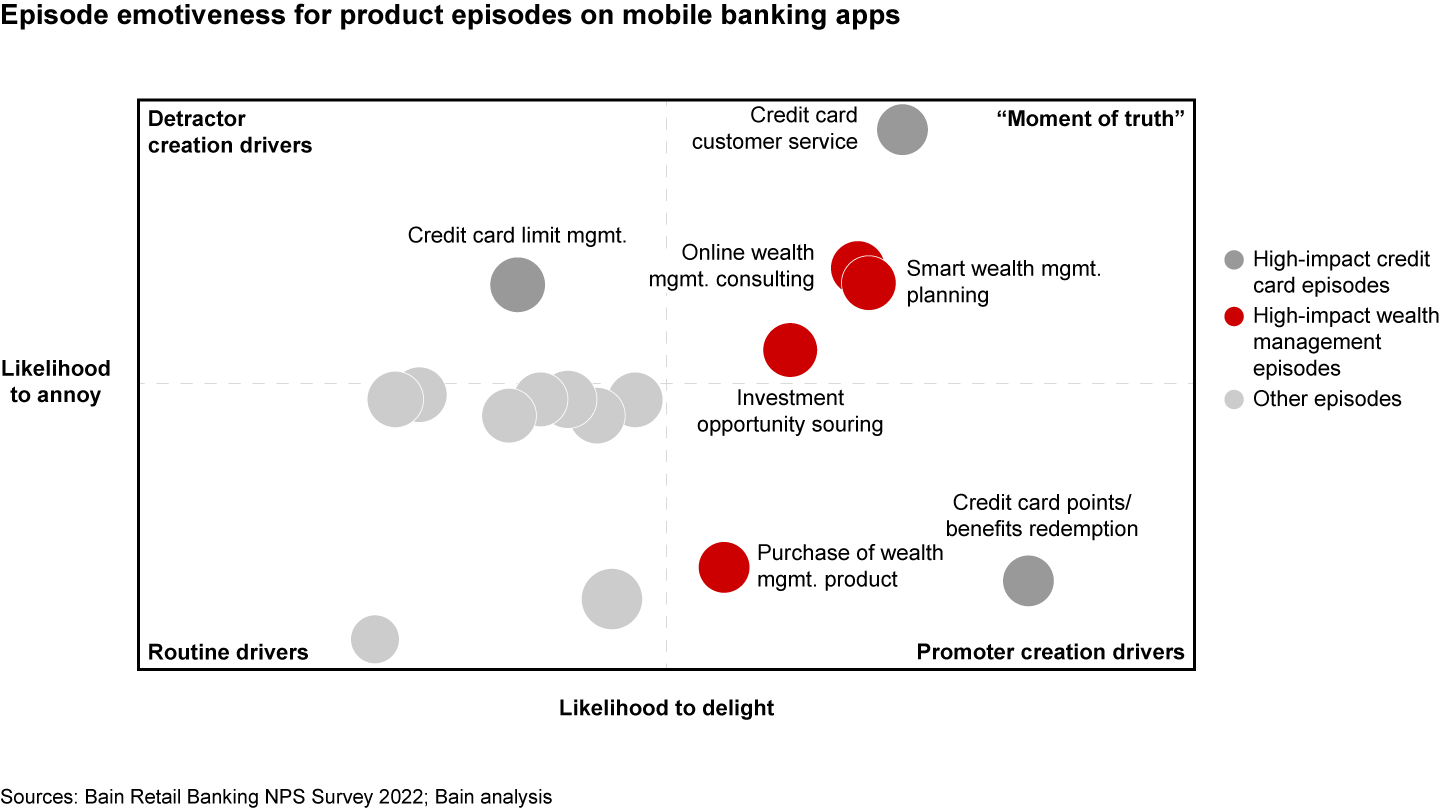
      Similar to branches, there are mobile “moments of truth” that can elevate customers’ experiences. Based on our survey data, great in-app experiences related to credit cards and wealth management episodes are most likely to create promoters or detractors (see Figure 4).

      Figure 4
      Within mobile apps, credit card and wealth management features have the greatest impact on customer experience
      Within mobile apps, credit card and wealth management features have the greatest impact on customer experience
      Within mobile apps, credit card and wealth management features have the greatest impact on customer experience

      Within credit card products, interactions related to customer service, benefits redemption, and credit limit management are the most influential. For wealth management apps, consulting and smart planning events are the most important.

      Many banks added nonfinancial functionality to their apps to drive mobile usage. However, customers prefer modules that tie into their financial lives. Reward modules and bill payment features can drive usage and customer experience, while customers are indifferent to discussion forums and gamification (see Figure 5).

      Figure 5
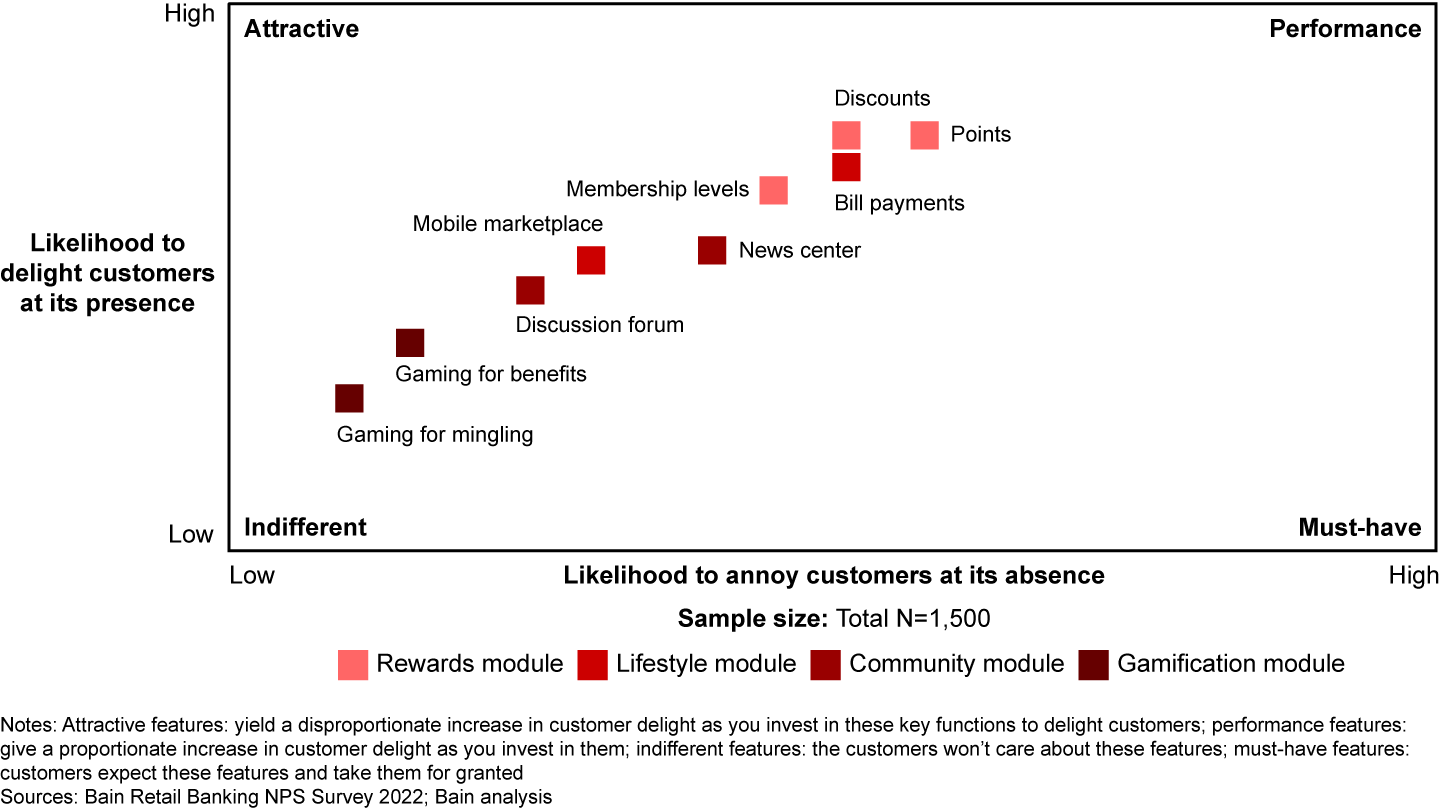
      Rewards and bill payments can drive mobile usage and delight customers
      Rewards and bill payments can drive mobile usage and delight customers
      Rewards and bill payments can drive mobile usage and delight customers

      3. Customers want human and digital wealth management services

      Digital channels are used for most wealth management interactions, but customers aren’t ready to give up human services altogether. Physical branches and customer hotlines are still essential for parts of the journey and for certain customer segments.

      Wealth management is often intermingled with life planning and, thus, has more emotional “moments of truth.” When customers can’t reach human support during a mobile wealth management episode, it creates a negative experience.

      A lack of human intervention and guidance is the biggest pain point for mobile wealth management planning users. For wealth management consulting, consumers say automated text consultations are ineffective. Customers also get upset when they have to be transferred to different channels to resolve their issues.

      Banks need to use all of their available channels to serve wealth management customers. Overall, customers want easier access to human support, timely assistance, and smooth transitions between human and digital support (see Figure 6).

      Figure 6
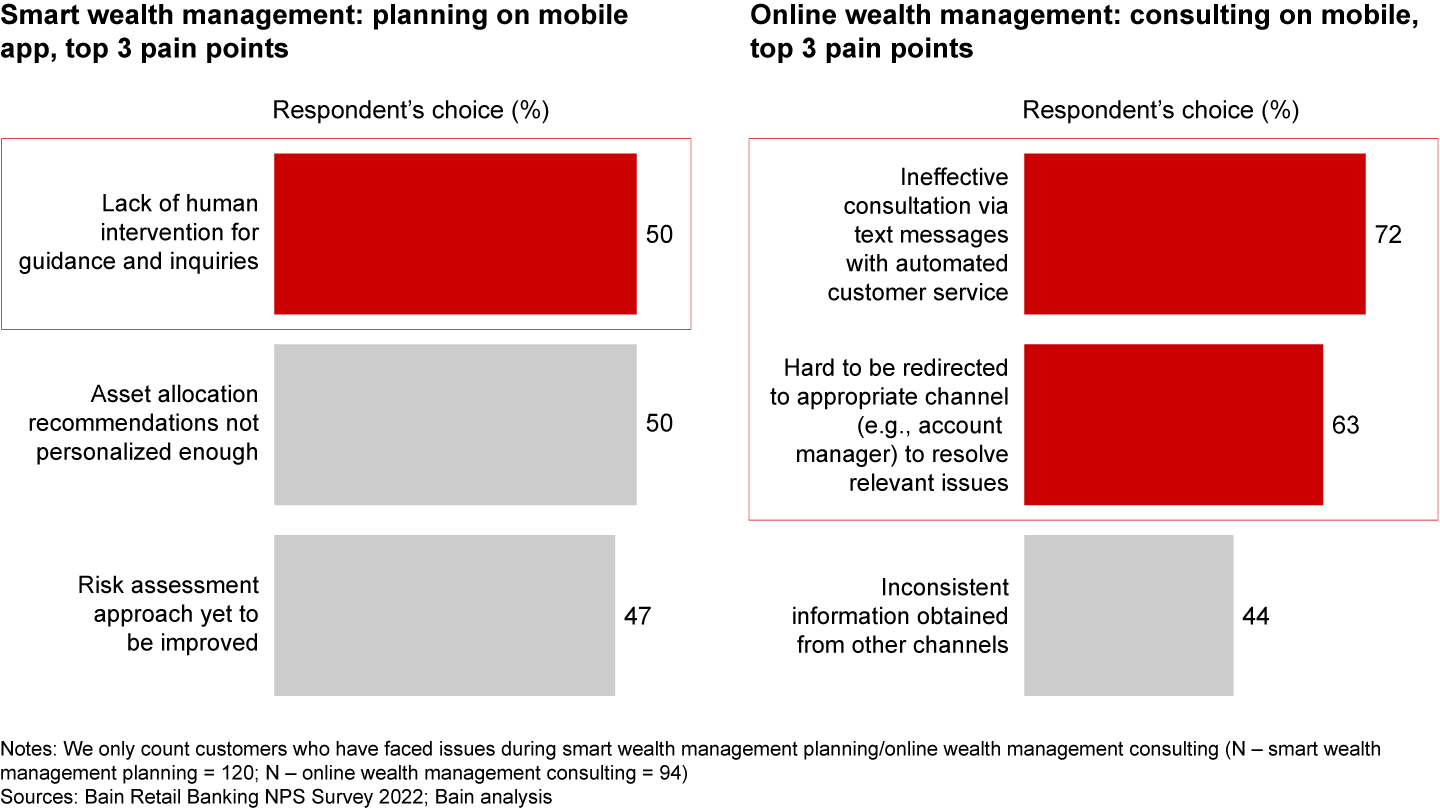
      Mobile users need human support for wealth management queries, consultation, and issue resolution
      Mobile users need human support for wealth management queries, consultation, and issue resolution
      Mobile users need human support for wealth management queries, consultation, and issue resolution

      The balance of human touch vs. digital will vary based on customer segment and phase of the customer journey (see Figure 7). For example, banks can offer human-delivered services to their most affluent consumers in any stage of the journey or channel, but use digital self-service, automation, or artificial intelligence (AI)-driven solutions to serve the mass market. For the affluent market, banks can also use digital services to support human interactions, such as video calls or chat.

      Figure 7
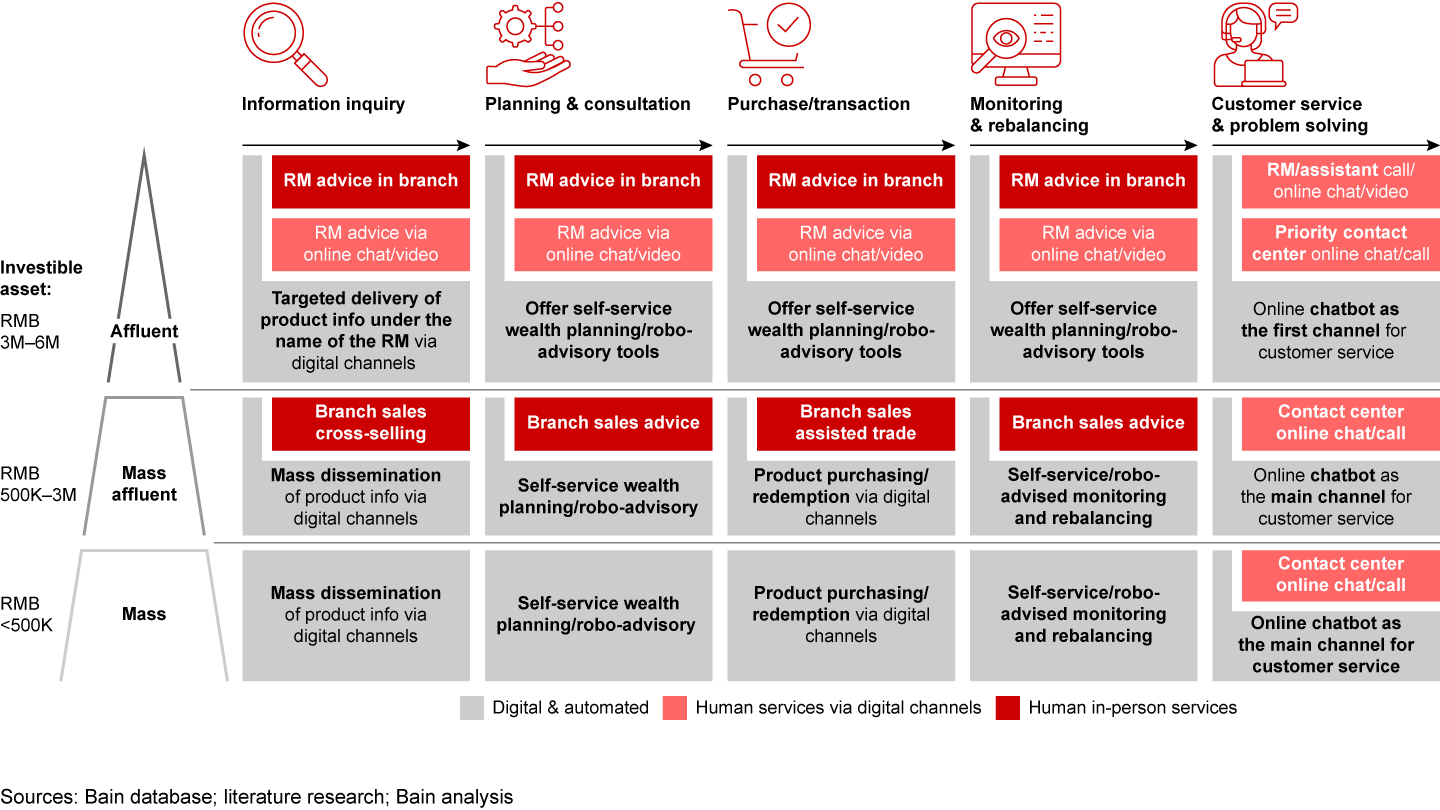
      Wealth management services will blend digital and human touch, based on segment
      Wealth management services will blend digital and human touch, based on segment
      Wealth management services will blend digital and human touch, based on segment

      Customer service and problem resolution are frequently digitalized today, and a wide variety of digital approaches are already in place.

      4. Customers want simple digital experiences

      Fintechs created a compelling value proposition based on customer experience, which inspired an uplift in customer experience across the market.

      Because they were built to be digital-first (or digital only), fintech platforms are more intuitive, inclusive, and convenient than those from traditional banks. For example, at WeBank, consumer credit line applications can be completed in “one click.” And Ant Group issues and activates microcredit cards online through a simple, two-step application process. Customers only have to click a button and establish a password. There’s no waiting for confirmation, authentication, or approval.

      Fintechs also widened the market for financial services. For example, Tencent’s LiCaiTong uses a digital wealth management platform and robo-advisory services to deliver a range of investment services to the mass market. In most cases, there’s no minimum investment requirement. With some providers, consumers can invest as little as RMB 10.

      Digital capabilities can help financial institutions reach more customers and serve them well. To compete, traditional banks must expand their digital capabilities, specifically around AI, big data, cloud computing, and automation.

      At the same time, banks need to deliver simple digital experiences. Mobile navigation should be intuitive and “stress-free,” even for complex products and services.

      Key actions for banks

      Traditional banks have long-standing relationships and deep customer knowledge to their advantage, but they face more organizational, system, and capability challenges as they transform into customer-centric players. There are three stages of development traditional banks can follow to improve customer experience at scale (see Figure 8). The starting point may vary based on how sophisticated and customer-centric a bank is today.  

      Figure 8
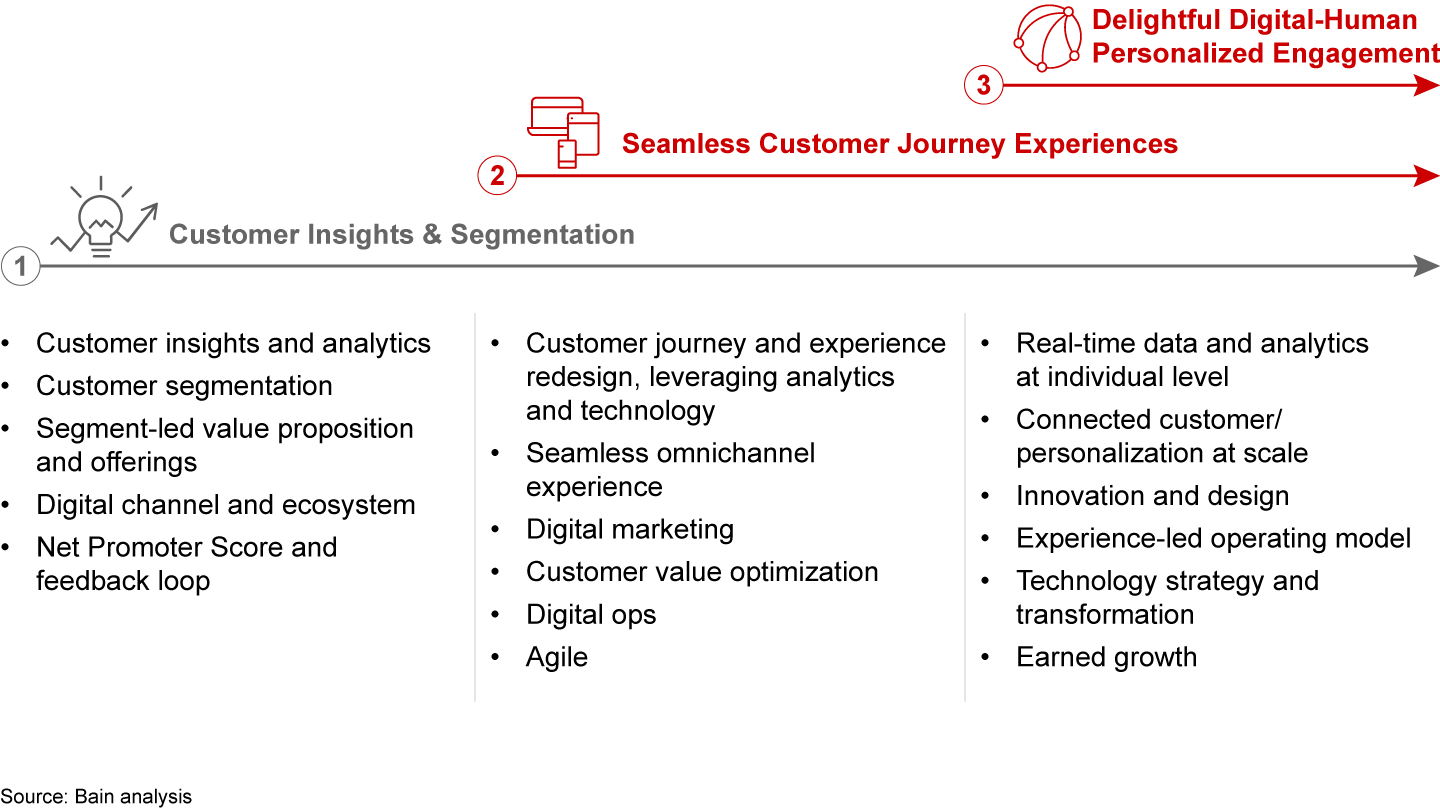
      Banks can become more customer-centric in three stages
      Banks can become more customer-centric in three stages
      Banks can become more customer-centric in three stages

      Stage 1: Develop segment-based customer insights and propositions

      In this phase, banks need to build core capabilities in customer insights and analytics to understand their position in the market. They should examine their culture, strategy, and performance benchmarks to identify gaps and opportunities. They also need to use all available data to establish their position, ideal customer segments, and segment-led value propositions. From there, the digital channels and ecosystem needed to deliver value will come into focus.

      Research and analysis are not “one and done” events. Banks should use measures such as the Net Promoter Score to continuously collect feedback and adapt the customer experience strategy.

      Stage 2: Create a seamless customer journey

      Next, apply customer insights to create seamless, omnichannel customer journeys. Start with products or performance areas with the highest potential to affect Net Promoter Scores, such as mobile wealth management. Create a customer experience roadmap to identify priority use cases, then determine how and when to scale technologies.

      Remember, technology isn’t supposed to digitize the traditional banking process. Rather, it’s intended to enhance the experience and value for customers. Continuous feedback loops and sentiment monitoring can keep development efforts on the right track.

      Stage 3: Optimize digital and human engagements

      By leveraging advanced data analytics, banks can blend digital and human engagements to create ultrapersonal interactions and delight customers.

      Real-time data and analytics can be applied at the individual level, whether customers are at the counter or on a mobile device. To achieve personalization at scale, traditional banks need experience-led operating models and customer-driven cultures. Some banks may also need to upgrade their data and IT infrastructure to support more advanced customer experience capabilities.

      As the dimensions of customer experience become more complex, traditional banks will need new ways to measure customer relationships across products, channels, and journeys. Continuous, high-velocity feedback loops will be necessary to benchmark performance, make timely and effective decisions, and delight customers.

      Customer-based accounting can also help traditional banks measure earned growth that results from customer experience. Combined, customer-based accounting and dynamic sentiment tracking (such as the Net Promoter Score or NPS Prism℠) can help traditional banks create delightful experiences.

      Conclusion

      Customers in mainland China are satisfied with their banking experiences—for now. But competition is intense and customer expectations are steadily rising. Banks must continuously elevate their digital game. To retain and delight customers, they need core capabilities in customer centricity. 

      Customer experience should stay at the forefront of innovation, and every product and service should have a digital path or component. Positive digital experiences can keep customers happy, inspire loyalty, and encourage purchasing.

      It’s vital for banks to listen to customers. They are the best source for feedback, opportunities, and sustainable growth. Banks that delight customers—on any channel—will find exciting ways to grow.

      • Methodology (click to expand)

        This report examines the digital banking market in mainland China post–Covid-19. The findings and recommendations in this report were informed by Bain & Company’s analysis of the results, plus industry expertise.

        We surveyed about 1,800 retail banking consumers in mainland China from August to September 2022 to learn about their digital banking experiences and preferences. Our survey included consumers with accounts at traditional banks and fintechs, and across a distributed range of genders, ages, income levels, and investable assets. About 83% of respondents reportedly use mobile banking apps. 

        We also conducted interviews with nearly two dozen bank executives, industry practitioners, and market experts in the mainland to gain the service providers’ perspective. And we analyzed current market practices and business approaches.

        This research also used Net Promoter Scores from 12 major retail banks and three fintech companies in mainland China. Net Promoter Score measures the degree to which a consumer would recommend an organization, product, or service to others. A Net Promoter Score is the percentage of respondents who identify as “promoters” minus the percentage of respondents who identify as “detractors.”

      • Acknowledgments (click to expand)

        The authors highly appreciate the guidance and input from Bain & Company’s experts, such as senior partners Henrik Naujoks, Philip Leung, and Harshveer Singh; partners Lee Herbert, Priscilla Dell’Orto, and Bao-Viet Le; expert partner Jeff Tijssen; and expert associate partner Ryan Garner. Consultants on this case included Ray Ren, Calvin Chen, and Tiger Zuo. In addition, we are grateful for Sophia Xin, Shawn Chen, and Claudia Jiang for their advanced analytics work, and to Pinky He and our colleagues in Market Reputation.

      Autori
      • Headshot of Frankie Leung
        Frankie Leung
        Partner, Hong Kong
      • Headshot of Scully Cui
        Scully Cui
        Alumni, Shanghai
      • Headshot of Lei Zhang
        Lei Zhang
        Alumni, Beijing
      Contattaci
      Industry collegate
      • Banking
      • Fintech
      • Servizi Finanziari
      Come possiamo aiutarti
      • Net Promoter Score℠
      Servizi Finanziari
      Can US Banks Protect Their Card-Issuing Business?

      Consumer payments have been gravitating to neobanks and technology firms.

      Leggi di più
      How Synthetic Customers Bring Companies Closer to the Real Ones

      From product design to campaign testing, companies are using synthetic customers to get sharper answers faster.

      Leggi di più
      Servizi Finanziari
      The Fragmentation of Wholesale Payments Calls for Banks to Remake Their Approach

      Banks have a dominant position, but competitors look set to take market share.

      Leggi di più
      Scaling Software Companies: The Path to $1B in Revenue

      Few have crossed the chasm from $100 million to $1 billion in annual revenue. Here’s how the winners increased their odds.

      Leggi di più
      Servizi Finanziari
      United We Thrive: The Untapped Power of Bank-Fintech Partnerships

      The rise of digital banking puts a premium on partnerships, but they require substantial investments and organizational changes from both parties.

      Leggi di più
      First published in gennaio 2023
      Tags
      • Banking
      • Fintech
      • Net Promoter Score℠
      • Servizi Finanziari

      Come abbiamo aiutato i nostri clienti

      A European Banking Giant Rises to the Fintech Challenge

      Leggi un caso di studio

      Blockchain-enabled Payment Flows: A Payments Company Reviews its Strategy

      Leggi un caso di studio

      A Digital-First Bank Finds a Customer-Driven Path to Profitability

      Leggi un caso di studio

      Vuoi continuare la conversazione?

      Aiutiamo i leader globali e le loro aziende ad affrontare problemi e a cogliere le opportunità. Sosteniamo cambiamenti e otteniamo risultati duraturi.

      Net Promoter®, NPS®, NPS Prism®, and the NPS-related emoticons are registered trademarks and Net Promoter Score℠ and Net Promoter System℠ are service marks of Bain & Company, Inc., Satmetrix Systems, Inc., and Fred Reichheld.

      Bain Insights. Le nostre idee e punti di vista sulle tematiche che le aziende globali affrontano ogni giorno, arrivano nella tua email tutti i mesi.

      *Ho letto l'Informativa sulla Privacy e accetto i termini e le condizioni.

      Si prega di leggere e accettare l’Informativa sulla Privacy
      Bain & Company
      Contattaci Sustainability Accessibility Condizioni d’uso Privacy Cookie Policy Sitemap Log In

      © 1996-2026 Bain & Company, Inc.

      Contatta Bain

      Come posso aiutarti?

      • Business inquiry
      • Career information
      • Press relations
      • Partnership request
      • Speaker request
      Guarda tutti gli uffici