
Skip to Content
  • Uffici

    Uffici

    Nord e Sud America
    • Atlanta
    • Austin
    • Bogota
    • Boston
    • Buenos Aires
    • Chicago
    • Dallas
    • Denver
    • Houston
    • Los Angeles
    • Mexico City
    • Minneapolis
    • Monterrey
    • Montreal
    • New York
    • Rio de Janeiro
    • San Francisco
    • Santiago
    • São Paulo
    • Seattle
    • Silicon Valley
    • Toronto
    • Washington, DC
    Europa, Medio Oriente e Africa
    • Amsterdam
    • Athens
    • Berlin
    • Brussels
    • Copenhagen
    • Doha
    • Dubai
    • Dusseldorf
    • Frankfurt
    • Helsinki
    • Istanbul
    • Johannesburg
    • Kyiv
    • Lisbon
    • London
    • Madrid
    • Milan
    • Munich
    • Oslo
    • Paris
    • Riyadh
    • Rome
    • Stockholm
    • Vienna
    • Warsaw
    • Zurich
    Asia e Australia
    • Bangkok
    • Beijing
    • Bengaluru
    • Brisbane
    • Ho Chi Minh City
    • Hong Kong
    • Jakarta
    • Kuala Lumpur
    • Manila
    • Melbourne
    • Mumbai
    • New Delhi
    • Perth
    • Seoul
    • Shanghai
    • Singapore
    • Sydney
    • Tokyo
    Guarda tutti gli uffici
  • Alumni
  • Media Center
  • Iscriviti
  • Contattaci
  • Italy | Italiano

    Seleziona il tuo Paese e la tua lingua

    Global
    • Global (English)
    Nord e Sud America
    • Brazil (Português)
    • Argentina (Español)
    • Canada (Français)
    • Chile (Español)
    • Colombia (Español)
    Europa, Medio Oriente e Africa
    • France (Français)
    • DACH Region (Deutsch)
    • Italy (Italiano)
    • Spain (Español)
    • Greece (Elliniká)
    Asia e Australia
    • China (中文版)
    • Korea (한국어)
    • Japan (日本語)
  • Saved items (0)
    Saved items (0)

    You have no saved items.

    Contrassegna il contenuto che ti interessa e verrà salvato qui. Potrai leggerlo o condividerlo in seguito.

    Explore Bain Insights
  • Settori
    Menu principale

    Settori

    • Aerospazio e Difesa
    • Agribusiness
    • Chimica
    • Infrastrutture e Costruzioni
    • Beni di Largo Consumo
    • Servizi Finanziari
    • Sanità
    • Macchinari Industriali
    • Media & Intrattenimento
    • Industria Metallurgica
    • Industria Mineraria
    • Petrolio e Gas
    • Industria Cartaria e Packaging
    • Private Equity
    • Settore Sociale & Pubblico
    • Retail
    • Tecnologia
    • Telecomunicazioni
    • Compagnie Aeree & Trasporti
    • Viaggi e Svago
    • Utility e Rinnovabili
  • Servizi di Consulenza
    Menu principale

    Servizi di Consulenza

    • Customer Experience
    • ESG
    • Innovation
    • M&A and Divestitures
    • Operation
    • People & Organization
    • Private Equity
    • Sales & Marketing
    • Strategia
    • IA, Approfondimenti e Soluzioni
    • Tecnologia
    • Trasformazione
  • Digital
  • Tematiche
  • Informazioni su Bain
    Menu principale

    Informazioni su Bain

    • Che Cosa Facciamo
    • Quello in Cui Crediamo
    • Le Nostre Persone e la Leadership
    • Risultati
    • Premi e Riconoscimenti
    • Organizzazioni Globali
    Further: Our global responsibility
    • Diversità e Inclusione
    • Social Impact
    • Sustainability
    • World Economic Forum
    Learn more about Further
  • Careers
    Menu principale

    Careers

    • Work with Us
      Careers
      Work with Us
      • Find Your Place
      • Our Work Areas
      • Integrated Teams
      • Students
      • Internships & Programs
      • Recruiting Events
    • Life at Bain
      Careers
      Life at Bain
      • Blog: Inside Bain
      • Career Stories
      • Our People
      • Where We Work
      • Supporting Your Growth
      • Affinity Groups
      • Benefits
    • Impact Stories
    • Hiring Process
      Careers
      Hiring Process
      • What to Expect
      • Interviewing
    FIND JOBS
  • Uffici
    Menu principale

    Uffici

    • Nord e Sud America
      Uffici
      Nord e Sud America
      • Atlanta
      • Austin
      • Bogota
      • Boston
      • Buenos Aires
      • Chicago
      • Dallas
      • Denver
      • Houston
      • Los Angeles
      • Mexico City
      • Minneapolis
      • Monterrey
      • Montreal
      • New York
      • Rio de Janeiro
      • San Francisco
      • Santiago
      • São Paulo
      • Seattle
      • Silicon Valley
      • Toronto
      • Washington, DC
    • Europa, Medio Oriente e Africa
      Uffici
      Europa, Medio Oriente e Africa
      • Amsterdam
      • Athens
      • Berlin
      • Brussels
      • Copenhagen
      • Doha
      • Dubai
      • Dusseldorf
      • Frankfurt
      • Helsinki
      • Istanbul
      • Johannesburg
      • Kyiv
      • Lisbon
      • London
      • Madrid
      • Milan
      • Munich
      • Oslo
      • Paris
      • Riyadh
      • Rome
      • Stockholm
      • Vienna
      • Warsaw
      • Zurich
    • Asia e Australia
      Uffici
      Asia e Australia
      • Bangkok
      • Beijing
      • Bengaluru
      • Brisbane
      • Ho Chi Minh City
      • Hong Kong
      • Jakarta
      • Kuala Lumpur
      • Manila
      • Melbourne
      • Mumbai
      • New Delhi
      • Perth
      • Seoul
      • Shanghai
      • Singapore
      • Sydney
      • Tokyo
    Guarda tutti gli uffici
  • Alumni
  • Media Center
  • Iscriviti
  • Contattaci
  • Italy | Italiano
    Menu principale

    Seleziona il tuo Paese e la tua lingua

    • Global
      Seleziona il tuo Paese e la tua lingua
      Global
      • Global (English)
    • Nord e Sud America
      Seleziona il tuo Paese e la tua lingua
      Nord e Sud America
      • Brazil (Português)
      • Argentina (Español)
      • Canada (Français)
      • Chile (Español)
      • Colombia (Español)
    • Europa, Medio Oriente e Africa
      Seleziona il tuo Paese e la tua lingua
      Europa, Medio Oriente e Africa
      • France (Français)
      • DACH Region (Deutsch)
      • Italy (Italiano)
      • Spain (Español)
      • Greece (Elliniká)
    • Asia e Australia
      Seleziona il tuo Paese e la tua lingua
      Asia e Australia
      • China (中文版)
      • Korea (한국어)
      • Japan (日本語)
  • Saved items  (0)
    Menu principale
    Saved items (0)

    You have no saved items.

    Contrassegna il contenuto che ti interessa e verrà salvato qui. Potrai leggerlo o condividerlo in seguito.

    Explore Bain Insights
  • Settori
    • Settori

      • Aerospazio e Difesa
      • Agribusiness
      • Chimica
      • Infrastrutture e Costruzioni
      • Beni di Largo Consumo
      • Servizi Finanziari
      • Sanità
      • Macchinari Industriali
      • Media & Intrattenimento
      • Industria Metallurgica
      • Industria Mineraria
      • Petrolio e Gas
      • Industria Cartaria e Packaging
      • Private Equity
      • Settore Sociale & Pubblico
      • Retail
      • Tecnologia
      • Telecomunicazioni
      • Compagnie Aeree & Trasporti
      • Viaggi e Svago
      • Utility e Rinnovabili
  • Servizi di Consulenza
    • Servizi di Consulenza

      • Customer Experience
      • ESG
      • Innovation
      • M&A and Divestitures
      • Operation
      • People & Organization
      • Private Equity
      • Sales & Marketing
      • Strategia
      • IA, Approfondimenti e Soluzioni
      • Tecnologia
      • Trasformazione
  • Digital
  • Tematiche
  • Informazioni su Bain
    • Informazioni su Bain

      • Che Cosa Facciamo
      • Quello in Cui Crediamo
      • Le Nostre Persone e la Leadership
      • Risultati
      • Premi e Riconoscimenti
      • Organizzazioni Globali
      Further: Our global responsibility
      • Diversità e Inclusione
      • Social Impact
      • Sustainability
      • World Economic Forum
      Learn more about Further
  • Careers
    Ricerche più popolari
    • Agile
    • Digitale
    • Strategia
    La tue ricerche precedenti
      Pagine visitate

      Content added to saved items

      Saved items (0)

      Removed from saved items

      Saved items (0)

      Brief

      How to Build a Winning Portfolio

      How to Build a Winning Portfolio

      Reducing complexity boosts margins, fuels growth, and benefits customers.

      Di Amanda Adler, Joshua Hinkel, e Axel Erhard

      • Tempo di lettura min.
      }

      Brief

      How to Build a Winning Portfolio
      en
      In evidenza
      • Streamlining a portfolio may sound simple, but many companies struggle to deliver gains.
      • Eliminating only low-revenue products won’t do much to boost the company’s performance.
      • Leaders evaluate all their products, not just the losers, and pare down to a simpler mix.

      Rising costs, ongoing supply chain disruption, and swollen product portfolios have convinced many executive teams to pare down their product offerings. That’s a smart strategy. Top-performing companies often trim their portfolios in difficult times, a move that can accelerate growth by focusing resources on the most competitive product mix.

      These leaders understand that complexity is the silent killer of margins and growth. Product proliferation increases costs and strains organizational resources. It spreads R&D dollars thin, channeling funds to sustaining engineering rather than to innovation, and aggravates supply chain problems. Inflation increases the pain. The business case for slashing complexity is strong: Fewer products and streamlined processes improve margins and resilience and can even fuel growth. For customers, choosing the right product becomes less confusing. The result is a strong competitive advantage.

      In fact, many leadership teams that trimmed product offerings during the pandemic have become convinced of the benefits of a smaller portfolio. Some, however, are seeing complexity start to creep back into their organizations, and that’s not surprising. Creating an optimum product portfolio requires ongoing work—and tough choices. It’s not a one-time fix. 

      The key challenge for teams trying to reduce complexity is figuring out which products or stock-keeping units (SKUs) to cut. It’s not difficult to eliminate those that produce little revenue or profit. But cutting low-revenue products won’t do much to boost the company’s performance. Leading companies build a winning portfolio by evaluating all their products, not just the losers, and paring down to a simpler, more efficient mix that shrinks inventory, spurs top-line growth, improves margins, and benefits customers (see Figure 1). Importantly, these leaders regularly reevaluate which products to keep and cut based on customer needs, cross-functional input, and their evolving strategic priorities.

      Figure 1
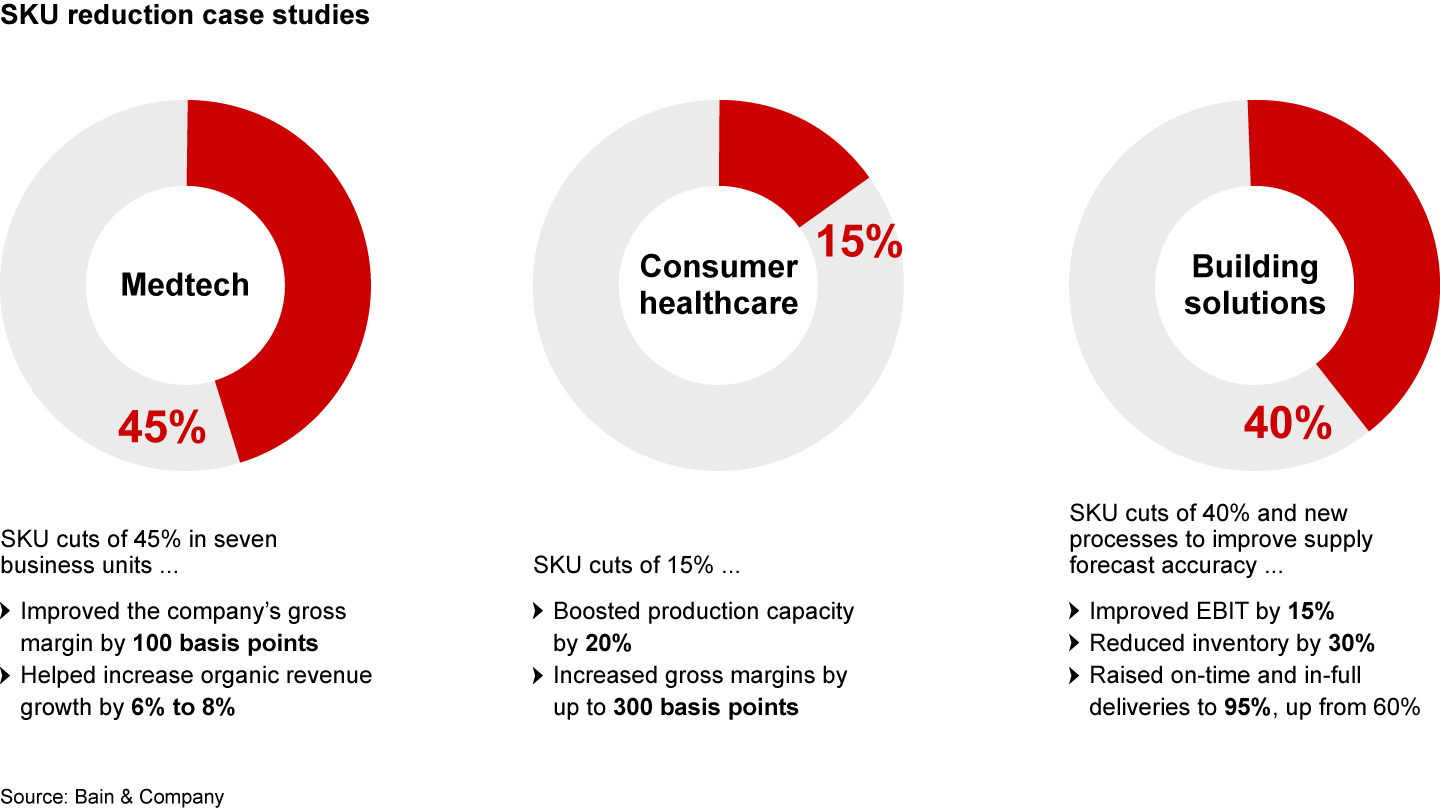
      Companies can reap big benefits by reducing complexity
      Companies can reap big benefits by reducing complexity
      Companies can reap big benefits by reducing complexity

      Obstacles to success

      Portfolio simplification may sound straightforward, but companies determined to root out complexity often fail to significantly improve their performance. The gap between average results and successful efforts is large.

      In our experience, four common pitfalls hinder the effort to build and maintain a winning portfolio. First, managers take the path of least resistance, cutting only low-revenue products, or “the tail” of the product lineup. That approach rarely delivers significant performance improvement. Second, teams neglect to consider customer needs and end up eliminating products without providing clear alternatives. That can erode brand loyalty and prompt customers to switch to a competitor’s products.

      A third common pitfall is failing to build the complete business case for product cuts. Companies often cut products but take a narrow view of the related cost-saving opportunities across the organization. For example, many fail to calculate inventory savings or the benefits of migrating customers from a lower-margin product to a higher-margin product. To understand total performance improvement, leaders capture how each profit and loss statement will be affected, from design through supply chain and sales and marketing.

      Finally, organizations neglect to build savings into the budget to capture the value of streamlining the portfolio. Many executives assume that savings will accrue automatically as they trim complexity. But some fixed costs such as plant assets don’t disappear when the company stops producing a product. Leaders make sure individual managers are accountable for anticipated cost reductions and address the ongoing costs of fixed assets, such as machinery, and other expenses that rise or fall based on a given threshold of activity, such as real estate leases and administrative headcount.

      Complexity indicators

      Leading companies understand that attaining the most competitive product mix is not just a SKU-rationalization exercise. An excessive number of SKUs often reflects complexity that has been introduced on a higher level, including multiple brands or product families that are tailored to specific geographies, retail channels, or customer groups. A key step in rooting out complexity is understanding the business decisions that have led to the creation of similar products and SKUs.

      Leadership teams seeking to evaluate portfolio complexity focus on several key indicators. The most obvious ones are legacy products that compete with new-generation products and mergers or acquisitions that may have led to overlapping products. A plant network and supply chain struggling to handle product complexity also point to an overstretched portfolio. Another red flag is successful competitors with much simpler product lineups.

      Reducing complexity is particularly important for products that have long life cycles, such as capital equipment. Once complexity is woven into these products and processes, it can take years to eliminate. In some industries, government regulation may require companies to support a product and offer spare parts for years after the product is phased out.

      Winning portfolios

      Leading companies follow a few key guidelines to shape a more efficient product offering. The first is building a cross-functional team of leaders to define the optimum product offering. The team assesses the benefits to the entire organization of keeping products to satisfy customer preferences versus cutting specific products or SKUs to reduce costs. Clarifying decision roles is vital to the process. No leader should have veto power over portfolio decisions. The cross-functional team provides critical input, but one person has the decision rights.

      A second important guideline is to make bold choices. Companies with top-performing portfolios cut revenue-bearing products and SKUs and even whole branches of a product tree. A global consumer products company cut 30% of SKUs in one product category, aiming for a 5% increase in margins. It also standardized components, reducing the number of bottle types it used by 40%, cutting cap options (color, size, and shape) by 30%, and standardizing 40% of its carton offerings. Those moves, which customers hardly noticed, were forecast to improve overall equipment effectiveness by 5 percentage points.

      Finally, these leaders embed complexity management processes throughout the product life cycle, from launch to end of life. They regularly benchmark their portfolios against peers; they enlist strong cross-functional input before adding new products to the lineup; and they set complexity targets for the size and shape of each product family. During the design process, for example, teams consider complexity implications and life cycle costs, such as components that will require service, repair, or replacement. For each product and SKU, managers create a smart migration pathway, including a timeline for replacing products and plans to transition customers to next-generation products. Incentives and customer communication can help ensure clients transition easily to a new product.

      Over the next decade, managing complexity in all its forms will become even more central to cost leadership, as well as profits, growth, and sustainability. The growing market for personalized and customized products encourages insidious cost growth. At the same time, global supply chain disruptions and geopolitical uncertainty are likely to continue. In a turbulent macroeconomic environment, a complex portfolio increases operational and financial risk. Finally, as consumers migrate to more sustainable products, companies will face pressure to eliminate products with a large carbon footprint.

      Leaders have begun rooting out complexity and paring portfolios to a set of high-performing products. Companies that start down that path today will be well positioned to outperform in a new era.

      Autori
      • Headshot of Amanda Adler
        Amanda Adler
        Partner, New York
      • Headshot of Joshua Hinkel
        Joshua Hinkel
        Partner, Dallas
      • Headshot of Axel Erhard
        Axel Erhard
        Partner, Munich
      Contattaci
      Servizi di consulenza collegati
      • Accelerated Performance Transformation
      • Strategia
      Come possiamo aiutarti
      • Finance Function Advantage
      CEO Agenda
      In an Era of Tariffs and Turbulence, Four Moves That Matter

      Understand your exposure. Understand your competitors’ exposure. Adjust your pricing and supply chains accordingly. Repeat as necessary.

      Leggi di più
      CEO Agenda
      The 2026 Retail Executive Agenda

      Here are letters to the C-suite to help strengthen strategy, catalyze collaboration, and expand value creation in the AI age.

      Leggi di più
      CFO Insights
      Stablecoins Could Make Cross-Border Payments Faster, Cheaper, and More Transparent

      Most CFOs are not using stablecoins today, but evolving regulations could reduce risk and create competitive advantage.

      Leggi di più
      Accelerated Performance Transformation
      Don’t Underestimate the Cost of Overcapacity

      Overcapacity is endemic to the paper and packaging industry, but these actions can help you maintain margins.

      Leggi di più
      CEO Agenda
      Value Creation: What It Is and Why It Matters

      Creating value is every CEO's No. 1 priority. Here's what it takes.

      Leggi di più
      First published in dicembre 2023
      Tags
      • Accelerated Performance Transformation
      • CEO Agenda
      • CFO Insights
      • Finance Function Advantage
      • Strategia

      Come abbiamo aiutato i nostri clienti

      A Mining Company Optimizes Capex with a Different Way of Working

      Leggi un caso di studio

      A Global Media Company Unlocks Hundreds of Millions in Working Capital

      Leggi un caso di studio

      When market leadership is not enough

      Leggi un caso di studio

      Vuoi continuare la conversazione?

      Aiutiamo i leader globali e le loro aziende ad affrontare problemi e a cogliere le opportunità. Sosteniamo cambiamenti e otteniamo risultati duraturi.

      Bain Insights. Le nostre idee e punti di vista sulle tematiche che le aziende globali affrontano ogni giorno, arrivano nella tua email tutti i mesi.

      *Ho letto l'Informativa sulla Privacy e accetto i termini e le condizioni.

      Si prega di leggere e accettare l’Informativa sulla Privacy
      Bain & Company
      Contattaci Sustainability Accessibility Condizioni d’uso Privacy Cookie Policy Sitemap Log In

      © 1996-2026 Bain & Company, Inc.

      Contatta Bain

      Come posso aiutarti?

      • Business inquiry
      • Career information
      • Press relations
      • Partnership request
      • Speaker request
      Guarda tutti gli uffici