
Skip to Content
  • Uffici

    Uffici

    Nord e Sud America
    • Atlanta
    • Austin
    • Bogota
    • Boston
    • Buenos Aires
    • Chicago
    • Dallas
    • Denver
    • Houston
    • Los Angeles
    • Mexico City
    • Minneapolis
    • Monterrey
    • Montreal
    • New York
    • Rio de Janeiro
    • San Francisco
    • Santiago
    • São Paulo
    • Seattle
    • Silicon Valley
    • Toronto
    • Washington, DC
    Europa, Medio Oriente e Africa
    • Amsterdam
    • Athens
    • Berlin
    • Brussels
    • Copenhagen
    • Doha
    • Dubai
    • Dusseldorf
    • Frankfurt
    • Helsinki
    • Istanbul
    • Johannesburg
    • Kyiv
    • Lisbon
    • London
    • Madrid
    • Milan
    • Munich
    • Oslo
    • Paris
    • Riyadh
    • Rome
    • Stockholm
    • Vienna
    • Warsaw
    • Zurich
    Asia e Australia
    • Bangkok
    • Beijing
    • Bengaluru
    • Brisbane
    • Ho Chi Minh City
    • Hong Kong
    • Jakarta
    • Kuala Lumpur
    • Manila
    • Melbourne
    • Mumbai
    • New Delhi
    • Perth
    • Seoul
    • Shanghai
    • Singapore
    • Sydney
    • Tokyo
    Guarda tutti gli uffici
  • Alumni
  • Media Center
  • Iscriviti
  • Contattaci
  • Italy | Italiano

    Seleziona il tuo Paese e la tua lingua

    Global
    • Global (English)
    Nord e Sud America
    • Brazil (Português)
    • Argentina (Español)
    • Canada (Français)
    • Chile (Español)
    • Colombia (Español)
    Europa, Medio Oriente e Africa
    • France (Français)
    • DACH Region (Deutsch)
    • Italy (Italiano)
    • Spain (Español)
    • Greece (Elliniká)
    Asia e Australia
    • China (中文版)
    • Korea (한국어)
    • Japan (日本語)
  • Saved items (0)
    Saved items (0)

    You have no saved items.

    Contrassegna il contenuto che ti interessa e verrà salvato qui. Potrai leggerlo o condividerlo in seguito.

    Explore Bain Insights
  • Settori
    Menu principale

    Settori

    • Aerospazio e Difesa
    • Agribusiness
    • Chimica
    • Infrastrutture e Costruzioni
    • Beni di Largo Consumo
    • Servizi Finanziari
    • Sanità
    • Macchinari Industriali
    • Media & Intrattenimento
    • Industria Metallurgica
    • Industria Mineraria
    • Petrolio e Gas
    • Industria Cartaria e Packaging
    • Private Equity
    • Settore Sociale & Pubblico
    • Retail
    • Tecnologia
    • Telecomunicazioni
    • Compagnie Aeree & Trasporti
    • Viaggi e Svago
    • Utility e Rinnovabili
  • Servizi di Consulenza
    Menu principale

    Servizi di Consulenza

    • Customer Experience
    • ESG
    • Innovation
    • M&A and Divestitures
    • Operation
    • People & Organization
    • Private Equity
    • Sales & Marketing
    • Strategia
    • IA, Approfondimenti e Soluzioni
    • Tecnologia
    • Trasformazione
  • Digital
  • Tematiche
  • Informazioni su Bain
    Menu principale

    Informazioni su Bain

    • Che Cosa Facciamo
    • Quello in Cui Crediamo
    • Le Nostre Persone e la Leadership
    • Risultati
    • Premi e Riconoscimenti
    • Organizzazioni Globali
    Further: Our global responsibility
    • Diversità e Inclusione
    • Social Impact
    • Sustainability
    • World Economic Forum
    Learn more about Further
  • Careers
    Menu principale

    Careers

    • Work with Us
      Careers
      Work with Us
      • Find Your Place
      • Our Work Areas
      • Integrated Teams
      • Students
      • Internships & Programs
      • Recruiting Events
    • Life at Bain
      Careers
      Life at Bain
      • Blog: Inside Bain
      • Career Stories
      • Our People
      • Where We Work
      • Supporting Your Growth
      • Affinity Groups
      • Benefits
    • Impact Stories
    • Hiring Process
      Careers
      Hiring Process
      • What to Expect
      • Interviewing
    FIND JOBS
  • Uffici
    Menu principale

    Uffici

    • Nord e Sud America
      Uffici
      Nord e Sud America
      • Atlanta
      • Austin
      • Bogota
      • Boston
      • Buenos Aires
      • Chicago
      • Dallas
      • Denver
      • Houston
      • Los Angeles
      • Mexico City
      • Minneapolis
      • Monterrey
      • Montreal
      • New York
      • Rio de Janeiro
      • San Francisco
      • Santiago
      • São Paulo
      • Seattle
      • Silicon Valley
      • Toronto
      • Washington, DC
    • Europa, Medio Oriente e Africa
      Uffici
      Europa, Medio Oriente e Africa
      • Amsterdam
      • Athens
      • Berlin
      • Brussels
      • Copenhagen
      • Doha
      • Dubai
      • Dusseldorf
      • Frankfurt
      • Helsinki
      • Istanbul
      • Johannesburg
      • Kyiv
      • Lisbon
      • London
      • Madrid
      • Milan
      • Munich
      • Oslo
      • Paris
      • Riyadh
      • Rome
      • Stockholm
      • Vienna
      • Warsaw
      • Zurich
    • Asia e Australia
      Uffici
      Asia e Australia
      • Bangkok
      • Beijing
      • Bengaluru
      • Brisbane
      • Ho Chi Minh City
      • Hong Kong
      • Jakarta
      • Kuala Lumpur
      • Manila
      • Melbourne
      • Mumbai
      • New Delhi
      • Perth
      • Seoul
      • Shanghai
      • Singapore
      • Sydney
      • Tokyo
    Guarda tutti gli uffici
  • Alumni
  • Media Center
  • Iscriviti
  • Contattaci
  • Italy | Italiano
    Menu principale

    Seleziona il tuo Paese e la tua lingua

    • Global
      Seleziona il tuo Paese e la tua lingua
      Global
      • Global (English)
    • Nord e Sud America
      Seleziona il tuo Paese e la tua lingua
      Nord e Sud America
      • Brazil (Português)
      • Argentina (Español)
      • Canada (Français)
      • Chile (Español)
      • Colombia (Español)
    • Europa, Medio Oriente e Africa
      Seleziona il tuo Paese e la tua lingua
      Europa, Medio Oriente e Africa
      • France (Français)
      • DACH Region (Deutsch)
      • Italy (Italiano)
      • Spain (Español)
      • Greece (Elliniká)
    • Asia e Australia
      Seleziona il tuo Paese e la tua lingua
      Asia e Australia
      • China (中文版)
      • Korea (한국어)
      • Japan (日本語)
  • Saved items  (0)
    Menu principale
    Saved items (0)

    You have no saved items.

    Contrassegna il contenuto che ti interessa e verrà salvato qui. Potrai leggerlo o condividerlo in seguito.

    Explore Bain Insights
  • Settori
    • Settori

      • Aerospazio e Difesa
      • Agribusiness
      • Chimica
      • Infrastrutture e Costruzioni
      • Beni di Largo Consumo
      • Servizi Finanziari
      • Sanità
      • Macchinari Industriali
      • Media & Intrattenimento
      • Industria Metallurgica
      • Industria Mineraria
      • Petrolio e Gas
      • Industria Cartaria e Packaging
      • Private Equity
      • Settore Sociale & Pubblico
      • Retail
      • Tecnologia
      • Telecomunicazioni
      • Compagnie Aeree & Trasporti
      • Viaggi e Svago
      • Utility e Rinnovabili
  • Servizi di Consulenza
    • Servizi di Consulenza

      • Customer Experience
      • ESG
      • Innovation
      • M&A and Divestitures
      • Operation
      • People & Organization
      • Private Equity
      • Sales & Marketing
      • Strategia
      • IA, Approfondimenti e Soluzioni
      • Tecnologia
      • Trasformazione
  • Digital
  • Tematiche
  • Informazioni su Bain
    • Informazioni su Bain

      • Che Cosa Facciamo
      • Quello in Cui Crediamo
      • Le Nostre Persone e la Leadership
      • Risultati
      • Premi e Riconoscimenti
      • Organizzazioni Globali
      Further: Our global responsibility
      • Diversità e Inclusione
      • Social Impact
      • Sustainability
      • World Economic Forum
      Learn more about Further
  • Careers
    Ricerche più popolari
    • Agile
    • Digitale
    • Strategia
    La tue ricerche precedenti
      Pagine visitate

      Content added to saved items

      Saved items (0)

      Removed from saved items

      Saved items (0)

      The Visionary CEO’s Guide to Sustainability

      Lower Costs, Faster Adoption: Closing the Sustainable Innovation Gap

      Lower Costs, Faster Adoption: Closing the Sustainable Innovation Gap

      How leading companies produce green solutions at the lowest cost possible to propel adoption and build competitive advantage.

      Di Piet de Paepe, Jelle Dhaen, e Jenny Lundqvist

      • Tempo di lettura min.
      }

      Report

      Lower Costs, Faster Adoption: Closing the Sustainable Innovation Gap
      en

      This article is part of Bain’s 2023 CEO Sustainability Guide

      Explore the report

      In most industries, leadership positions have been stagnant for decades, with around 80% of profits typically captured by one or two players. Companies make incremental moves for incremental gains, but opportunities to leapfrog competitors or rewrite the future are few and far between.

      The new focus on sustainability shatters that status quo. No matter their competitive position today, the moves that industrial B2B companies make in the next two to three years will determine their market position for the next decade and beyond.

      Even so, green investments have become a source of strife in boardrooms around the world. Stakeholders are pushing to achieve sustainability commitments, but when organizations crunch the numbers, executives don’t feel there’s a solid business case. The investment in green solutions seems too large, too risky to pursue.

      The issue is that most executives take a static view, considering today’s cost structures and scale. They plan a cautious, follower approach that tracks market prices and expands volume as the market grows, making a fast, profitable transition nearly impossible.

      Winners, on the other hand, produce green solutions at the lowest cost possible to propel adoption and build a competitive advantage. They understand that a substantial early investment and quick scaling are critical to success. They burn cash, yes. But these market-making incumbents also create a new profit pool where they are the leader. It’s challenging, to be sure. But if they don’t take the risk first, a nimble insurgent will.

      The key is to understand where you are in terms of your experience in bringing down cost (the E-curve) and where your customers are in terms of adoption (the S-curve) (see Figure 1). Bridging those two curves would seem to pose a conundrum: You can’t reduce your costs until you have a lot of customers, but you can’t win a lot of customers until your costs come down. We can show you how to close that gap.

      Figure 1
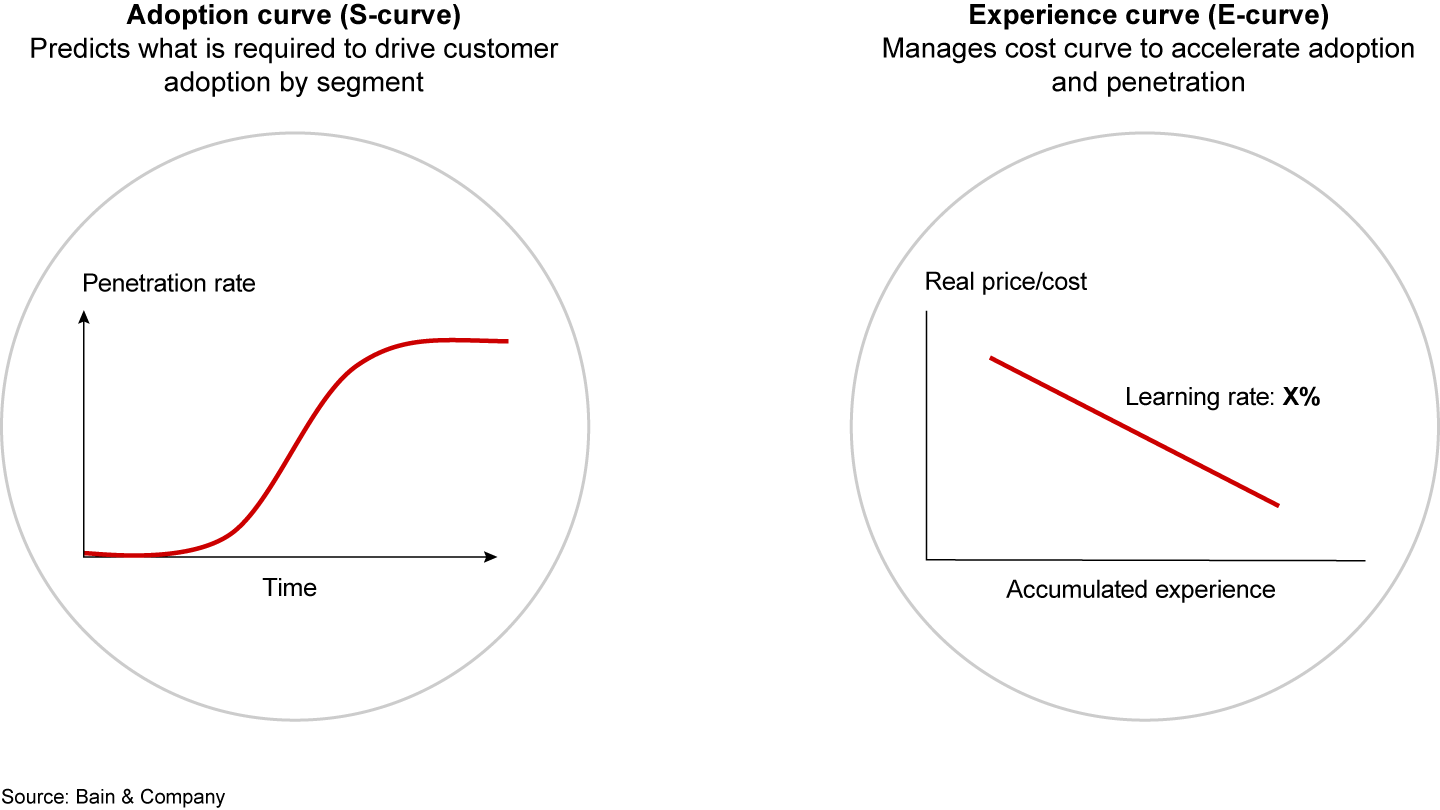
      Winners proactively manage the S- and E-curves to accelerate the green transition

      Here’s our guide on how first-movers can assess their specific locations on the E- and S-curves, close the gap, and back bold ideas with bold investments and execution, to guarantee the risk pays off.

      Two paths forward

      Companies scaling a green solution typically fit one of two archetypes (see Figure 2). While either can be a path to market leadership, each requires a slightly different pace and approach.

      Figure 2
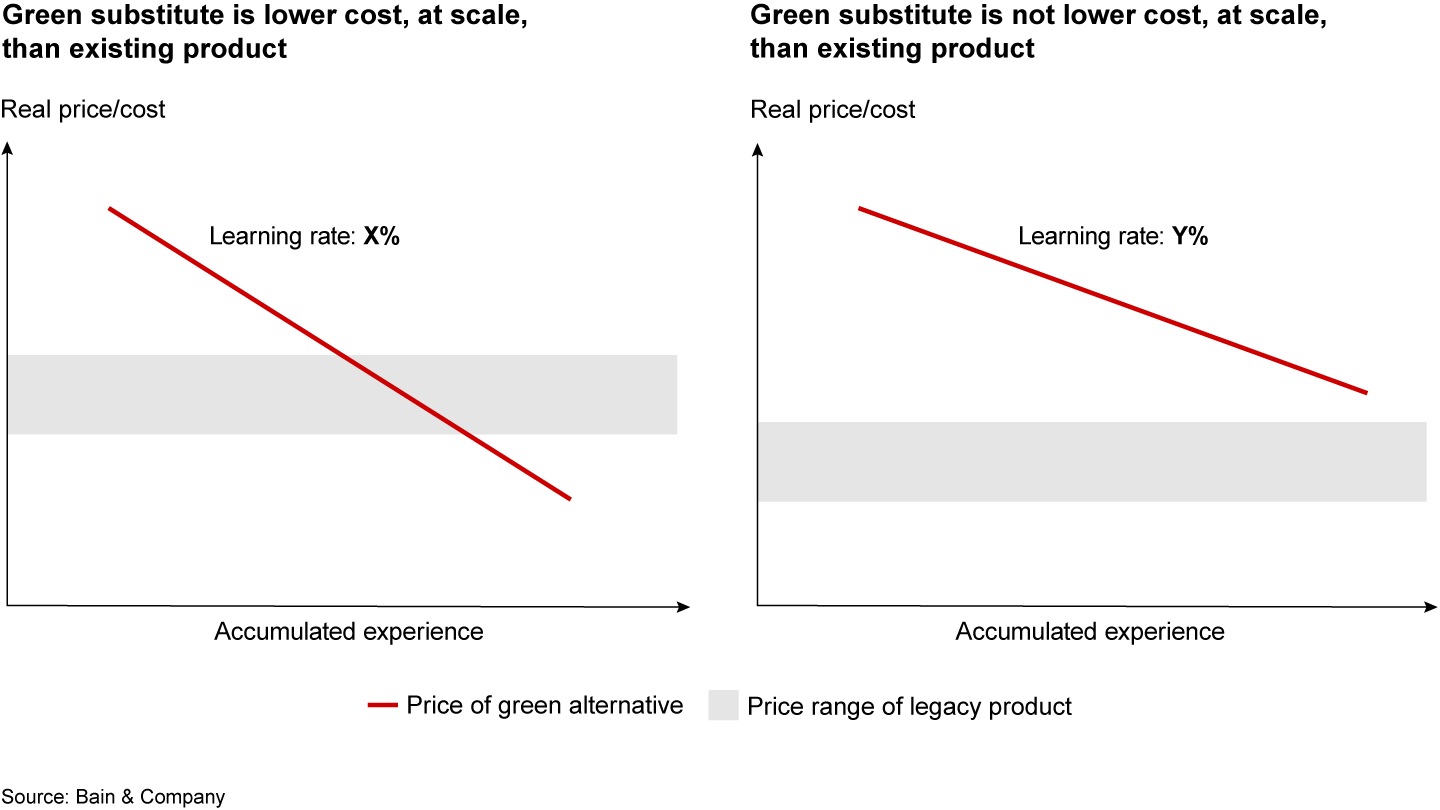
      There are two archetypal experience curves for green solutions
      There are two archetypal experience curves for green solutions
      There are two archetypal experience curves for green solutions

      Firms in the first archetype find that their green substitute is lower cost, at scale, than the incumbent product. There’s high potential for first-mover advantage—in fact, if you move too slowly or price too high, you could lose the business.

      In this scenario, pioneers adopt preemptive pricing to move down the E-curve as fast as possible, accelerating customer adoption. Their green alternatives often have almost identical characteristics and performance to existing products. As B2B buyers usually make rational purchase decisions, offering trials of green substitutes to showcase similarities can help boost adoption. These first movers are quickly rewarded with scale and cost advantage, as well as potential subsidies as regulations change.

      A green solution won’t always be the lower-cost solution—but it’s still worth pursuing, given the direction of most industries. Firms in the second archetype will have no choice but to turn to green substitutes as environmental, social, and governance (ESG) regulations, such as carbon taxation, increase their costs. In this case, leading companies focus on a more value-based pricing strategy, targeting those willing to pay more for green alternatives first. These companies understand that moving too fast could hurt their current business, so they take a slower approach to investing in and scaling the new business, often focusing on just one product or a select segment of the product portfolio. As a result, companies in the second archetype capture a more moderate first-mover advantage.

      The E- and S-curve interlock 

      To determine the right pace and level of investment, winning companies tear down the organizational silos that have historically separated commercial teams from operational and procurement teams. They connect the E- and S-curves in four steps.

      Step 1: Green solution innovation

      Companies can start by brainstorming potential green substitutes for their current product portfolio. Leaders can prioritize the options based on the greatest potential to scale, the biggest impact in achieving sustainability goals, and the level of disruption to current operations.

      Questions to get started:
      • What are the potential green substitutes—for today and for a decarbonized world?
      • Which have the greatest potential to scale? Which will best help us achieve our sustainability goals?
      • How much would each green substitute disrupt our current operations?
      • Which should we prioritize for our assessment?

      Step 2: E-curve analysis

      Future market leaders will develop E-curves for existing solutions, based on historical industry pricing, relevant costs, and expected future moves from scale and regulation. They do the same for potential green substitutes, considering their technology capabilities and anticipated future scale and experience. With these E-curves, companies can pinpoint if, and when, their green substitute will become cheaper than the incumbent solution.

      Questions to get started:
      • What does the E-curve look like for our selected green substitute? What is our level of technological readiness? How are decarbonization regulations and taxes affecting the E-curve?
      • Which industry players, if any, are already transitioning?
      • Which archetype does our green substitute most closely fit?
      • Can we bring down costs with operational performance improvements or product innovation?

      Step 3: S-curve analysis

      Following an assessment of current green substitute adoption by end-market, leading companies determine which customer segments are primed for green solution adoption based on:

      • the customer’s benefit from avoiding carbon cost;
      • the importance of sustainability commitments to investors and stakeholders;
      • the value to the end consumer;
      • forecasted supply-demand dynamics; and
      • potential changes to the regulatory environment and investor commitments.

      When determining the expected adoption curve, these companies first focus on customer segments that stand to benefit most—and are willing to pay. They also forecast and monitor adoption across different segments over time.

      Questions to get started:
      • Where are our customers on the S-curve? What is the level of penetration for green substitutes?
      • What are the relevant customer segments? Which customers benefit most from a green solution?
      • How does this differ by region or application? What are the effects of regulation, like taxation or subsidies?
      • What are the greatest barriers to adoption?

      Step 4: Value creation plan

      Armed with a clear understanding of where they stand on the E- and S-curves and what they need to do to bridge the gap, leading companies then develop a dynamic strategy that delineates short-, medium-, and long-term actions. They identify no-regret moves (such as partnerships), big bets (such as scale acquisitions), and signposts (such as regulatory changes); map resource allocation and investment over time; and dedicate a team to evaluating performance outside of the strategic planning cycle.

      Questions to get started:
      • What is the roadmap to becoming a market maker? Do we need preemptive pricing?
      • What no-regret moves can we take now? What big bets should we consider?
      • What are the signposts to monitor and adjust our strategy over time?
      • What are the financial implications for capex and resource allocation? What are the financial incentives?
      • How can we evaluate our performance and follow through on the transformation?

      Read the Next Chapter

      The Future Is Circular: How Companies Can Prepare to Grow in a Changing World

      Read our 2023 CEO Sustainability Guide

      Explore the full report Download PDF
      Autori
      • Headshot of Piet de Paepe
        Piet de Paepe
        Partner, Brussels
      • Headshot of Jelle Dhaen
        Jelle Dhaen
        Partner, Brussels
      • Headshot of Jenny Lundqvist
        Jenny Lundqvist
        Practice Executive Vice President, Copenhagen
      Contattaci
      Industry collegate
      • Automotive
      • Industria 4.0 e Servizi
      • Metals
      Servizi di consulenza collegati
      • Sostenibilità e Corporate Responsibility
      • Strategia
      Industria 4.0 e Servizi
      How Sustainability Is Creating B2B Growth

      Our survey of B2B buyers and sellers finds growth leaders using sustainability to create commercial value while laggards focus on compliance.

      Leggi di più
      CEO's Guide to Sustainability
      From Sustainability Commitments to Impact: Four Pragmatic Questions for Visionary CEOs

      Amid competing priorities, CEOs and consumers still say sustainability matters. By acting now, companies can set the stage for profitable growth.

      Leggi di più
      Industria 4.0 e Servizi
      The CEO Playbook for Climate Resilience

      Build to bend, not break, when managing climate adaptation.

      Leggi di più
      CEO's Guide to Sustainability
      The Sustainability Puzzle: What Do Consumers Really Want?

      How businesses can unlock the challenge of helping consumers live sustainably.

      Leggi di più
      Industria 4.0 e Servizi
      AI Is Revolutionizing Industrial Operations

      Supply chain planning, procurement enhancements, manufacturing optimization, and engineering augmentation are emerging AI opportunities.

      Leggi di più

      Introduction

      • The Questions Every CEO Needs to Ask About Sustainability

      Levers of Change: Technology, Behavior, Policy

      • Selling Sustainability Means Decoding Consumers

      • Does a Purpose Help Brands Grow?

      • Lower Costs, Faster Adoption: Closing the Sustainable Innovation Gap

      • The Future Is Circular: How Companies Can Prepare to Grow in a Changing World

      • Leading with Vision: Harnessing the Climate Policy Response

      Sector Perspectives

      • Building Resilience in Your Business Strategy: Four Imperatives for Leaders

      • The Energy Transition’s Other Big Puzzle: Making the Math Work

      • Can Food and Agriculture Companies Raise Their Game?

      • Fires, Floods, and Loans: How Banks Can Deal with Increasing Climate Risks

      Making It Happen

      • Building a Data-Based Stakeholder Strategy

      • Operations and Supply Chain Decarbonization: Lower Emissions, Higher Performance

      • Making Business Do Better for Everyone

      • Organizing for Sustainability

      • A Talent Strategy for Sustainability: Skills Matter, but Mindset Is Everything

      First published in novembre 2023
      Tags
      • Automotive
      • CEO's Guide to Sustainability
      • Industria 4.0 e Servizi
      • Metals
      • Sostenibilità e Corporate Responsibility
      • Strategia

      Come abbiamo aiutato i nostri clienti

      Strategia A Steel Company Seeks to Regain Market Leadership

      Leggi un caso di studio

      Strategia A Conglomerate Charts a New Global Strategy

      Leggi un caso di studio

      An Automaker Reinvents Customer Experience with a Focus on Key Episodes

      Leggi un caso di studio

      Vuoi continuare la conversazione?

      Aiutiamo i leader globali e le loro aziende ad affrontare problemi e a cogliere le opportunità. Sosteniamo cambiamenti e otteniamo risultati duraturi.

      Bain Insights. Le nostre idee e punti di vista sulle tematiche che le aziende globali affrontano ogni giorno, arrivano nella tua email tutti i mesi.

      *Ho letto l'Informativa sulla Privacy e accetto i termini e le condizioni.

      Si prega di leggere e accettare l’Informativa sulla Privacy
      Bain & Company
      Contattaci Sustainability Accessibility Condizioni d’uso Privacy Cookie Policy Sitemap Log In

      © 1996-2026 Bain & Company, Inc.

      Contatta Bain

      Come posso aiutarti?

      • Business inquiry
      • Career information
      • Press relations
      • Partnership request
      • Speaker request
      Guarda tutti gli uffici