
Skip to Content
  • Uffici

    Uffici

    Nord e Sud America
    • Atlanta
    • Austin
    • Bogota
    • Boston
    • Buenos Aires
    • Chicago
    • Dallas
    • Denver
    • Houston
    • Los Angeles
    • Mexico City
    • Minneapolis
    • Monterrey
    • Montreal
    • New York
    • Rio de Janeiro
    • San Francisco
    • Santiago
    • São Paulo
    • Seattle
    • Silicon Valley
    • Toronto
    • Washington, DC
    Europa, Medio Oriente e Africa
    • Amsterdam
    • Athens
    • Berlin
    • Brussels
    • Copenhagen
    • Doha
    • Dubai
    • Dusseldorf
    • Frankfurt
    • Helsinki
    • Istanbul
    • Johannesburg
    • Kyiv
    • Lisbon
    • London
    • Madrid
    • Milan
    • Munich
    • Oslo
    • Paris
    • Riyadh
    • Rome
    • Stockholm
    • Vienna
    • Warsaw
    • Zurich
    Asia e Australia
    • Bangkok
    • Beijing
    • Bengaluru
    • Brisbane
    • Ho Chi Minh City
    • Hong Kong
    • Jakarta
    • Kuala Lumpur
    • Manila
    • Melbourne
    • Mumbai
    • New Delhi
    • Perth
    • Seoul
    • Shanghai
    • Singapore
    • Sydney
    • Tokyo
    Guarda tutti gli uffici
  • Alumni
  • Media Center
  • Iscriviti
  • Contattaci
  • Italy | Italiano

    Seleziona il tuo Paese e la tua lingua

    Global
    • Global (English)
    Nord e Sud America
    • Brazil (Português)
    • Argentina (Español)
    • Canada (Français)
    • Chile (Español)
    • Colombia (Español)
    Europa, Medio Oriente e Africa
    • France (Français)
    • DACH Region (Deutsch)
    • Italy (Italiano)
    • Spain (Español)
    • Greece (Elliniká)
    Asia e Australia
    • China (中文版)
    • Korea (한국어)
    • Japan (日本語)
  • Saved items (0)
    Saved items (0)

    You have no saved items.

    Contrassegna il contenuto che ti interessa e verrà salvato qui. Potrai leggerlo o condividerlo in seguito.

    Explore Bain Insights
  • Settori
    Menu principale

    Settori

    • Aerospazio e Difesa
    • Agribusiness
    • Automotive
    • Chimica
    • Infrastrutture e Costruzioni
    • Beni di Largo Consumo
    • Servizi Finanziari
    • Sanità
    • Macchinari Industriali
    • Media & Intrattenimento
    • Industria Metallurgica
    • Industria Mineraria
    • Petrolio e Gas
    • Industria Cartaria e Packaging
    • Private Equity
    • Settore Sociale & Pubblico
    • Retail
    • Tecnologia
    • Telecomunicazioni
    • Compagnie Aeree & Trasporti
    • Viaggi e Svago
    • Utility e Rinnovabili
  • Servizi di Consulenza
    Menu principale

    Servizi di Consulenza

    • Customer Experience
    • ESG
    • Innovation
    • M&A and Divestitures
    • Operation
    • People & Organization
    • Private Equity
    • Sales & Marketing
    • Strategia
    • IA, Approfondimenti e Soluzioni
    • Tecnologia
    • Trasformazione
  • Digital
  • Tematiche
  • Informazioni su Bain
    Menu principale

    Informazioni su Bain

    • Che Cosa Facciamo
    • Quello in Cui Crediamo
    • Le Nostre Persone e la Leadership
    • Risultati
    • Premi e Riconoscimenti
    • Organizzazioni Globali
    Further: Our global responsibility
    • Diversità e Inclusione
    • Social Impact
    • Sustainability
    • World Economic Forum
    Learn more about Further
  • Careers
    Menu principale

    Careers

    • Work with Us
      Careers
      Work with Us
      • Find Your Place
      • Our Work Areas
      • Integrated Teams
      • Students
      • Internships & Programs
      • Recruiting Events
    • Life at Bain
      Careers
      Life at Bain
      • Blog: Inside Bain
      • Career Stories
      • Our People
      • Where We Work
      • Supporting Your Growth
      • Affinity Groups
      • Benefits
    • Impact Stories
    • Hiring Process
      Careers
      Hiring Process
      • What to Expect
      • Interviewing
    FIND JOBS
  • Uffici
    Menu principale

    Uffici

    • Nord e Sud America
      Uffici
      Nord e Sud America
      • Atlanta
      • Austin
      • Bogota
      • Boston
      • Buenos Aires
      • Chicago
      • Dallas
      • Denver
      • Houston
      • Los Angeles
      • Mexico City
      • Minneapolis
      • Monterrey
      • Montreal
      • New York
      • Rio de Janeiro
      • San Francisco
      • Santiago
      • São Paulo
      • Seattle
      • Silicon Valley
      • Toronto
      • Washington, DC
    • Europa, Medio Oriente e Africa
      Uffici
      Europa, Medio Oriente e Africa
      • Amsterdam
      • Athens
      • Berlin
      • Brussels
      • Copenhagen
      • Doha
      • Dubai
      • Dusseldorf
      • Frankfurt
      • Helsinki
      • Istanbul
      • Johannesburg
      • Kyiv
      • Lisbon
      • London
      • Madrid
      • Milan
      • Munich
      • Oslo
      • Paris
      • Riyadh
      • Rome
      • Stockholm
      • Vienna
      • Warsaw
      • Zurich
    • Asia e Australia
      Uffici
      Asia e Australia
      • Bangkok
      • Beijing
      • Bengaluru
      • Brisbane
      • Ho Chi Minh City
      • Hong Kong
      • Jakarta
      • Kuala Lumpur
      • Manila
      • Melbourne
      • Mumbai
      • New Delhi
      • Perth
      • Seoul
      • Shanghai
      • Singapore
      • Sydney
      • Tokyo
    Guarda tutti gli uffici
  • Alumni
  • Media Center
  • Iscriviti
  • Contattaci
  • Italy | Italiano
    Menu principale

    Seleziona il tuo Paese e la tua lingua

    • Global
      Seleziona il tuo Paese e la tua lingua
      Global
      • Global (English)
    • Nord e Sud America
      Seleziona il tuo Paese e la tua lingua
      Nord e Sud America
      • Brazil (Português)
      • Argentina (Español)
      • Canada (Français)
      • Chile (Español)
      • Colombia (Español)
    • Europa, Medio Oriente e Africa
      Seleziona il tuo Paese e la tua lingua
      Europa, Medio Oriente e Africa
      • France (Français)
      • DACH Region (Deutsch)
      • Italy (Italiano)
      • Spain (Español)
      • Greece (Elliniká)
    • Asia e Australia
      Seleziona il tuo Paese e la tua lingua
      Asia e Australia
      • China (中文版)
      • Korea (한국어)
      • Japan (日本語)
  • Saved items  (0)
    Menu principale
    Saved items (0)

    You have no saved items.

    Contrassegna il contenuto che ti interessa e verrà salvato qui. Potrai leggerlo o condividerlo in seguito.

    Explore Bain Insights
  • Settori
    • Settori

      • Aerospazio e Difesa
      • Agribusiness
      • Automotive
      • Chimica
      • Infrastrutture e Costruzioni
      • Beni di Largo Consumo
      • Servizi Finanziari
      • Sanità
      • Macchinari Industriali
      • Media & Intrattenimento
      • Industria Metallurgica
      • Industria Mineraria
      • Petrolio e Gas
      • Industria Cartaria e Packaging
      • Private Equity
      • Settore Sociale & Pubblico
      • Retail
      • Tecnologia
      • Telecomunicazioni
      • Compagnie Aeree & Trasporti
      • Viaggi e Svago
      • Utility e Rinnovabili
  • Servizi di Consulenza
    • Servizi di Consulenza

      • Customer Experience
      • ESG
      • Innovation
      • M&A and Divestitures
      • Operation
      • People & Organization
      • Private Equity
      • Sales & Marketing
      • Strategia
      • IA, Approfondimenti e Soluzioni
      • Tecnologia
      • Trasformazione
  • Digital
  • Tematiche
  • Informazioni su Bain
    • Informazioni su Bain

      • Che Cosa Facciamo
      • Quello in Cui Crediamo
      • Le Nostre Persone e la Leadership
      • Risultati
      • Premi e Riconoscimenti
      • Organizzazioni Globali
      Further: Our global responsibility
      • Diversità e Inclusione
      • Social Impact
      • Sustainability
      • World Economic Forum
      Learn more about Further
  • Careers
    Ricerche più popolari
    • Agile
    • Digitale
    • Strategia
    La tue ricerche precedenti
      Pagine visitate

      Content added to saved items

      Saved items (0)

      Removed from saved items

      Saved items (0)

      Expert Commentary

      Make the Most of Online 'Bulletin Board' Groups for Qualitative Research

      Make the Most of Online 'Bulletin Board' Groups for Qualitative Research

      How to produce relevant, impartial and accurate data from online bulletin boards.

      Di Aimée Douglas

      • Tempo di lettura min.

      Article

      Make the Most of Online 'Bulletin Board' Groups for Qualitative Research
      en

      When the use of the Internet to support qualitative group research was still something of a novelty, almost two decades ago, scholars and professionals debated whether “the online environment” was “a legitimate addition to qualitative methodologies”i. Today, the question has become moot. Chat-style, webcam-based, and bulletin board-type focus groups have proliferated. Some market research professionals might still dispute the merits (speed, reach) and shortcomings (superficial, impersonal) of online group research. For most, however, these digital formats serve as viable options, and the primary consideration is how best to use them.

      An online bulletin board (OBB) is essentially a discussion forum in which 15 or 20 participants engage in conversation around questions posed by a moderator over consecutive days or weeks. Incentives are contingent upon participants’ active involvement in the forum, such as addressing all questions and moderator probes. The researcher prompts participants for detailed feedback around particular visual and narrative stimuli, including websites, advertisements and prototypes. Participants log in, record their responses, and reply to postings by the moderator or others at their convenience. Typically, the researcher asks the participants to visit the forum a couple of times each day. He or she often programs the primary questions in advance and sets up an automatic posting at pre-determined times. Below is a classic three-day concept testing sequence.
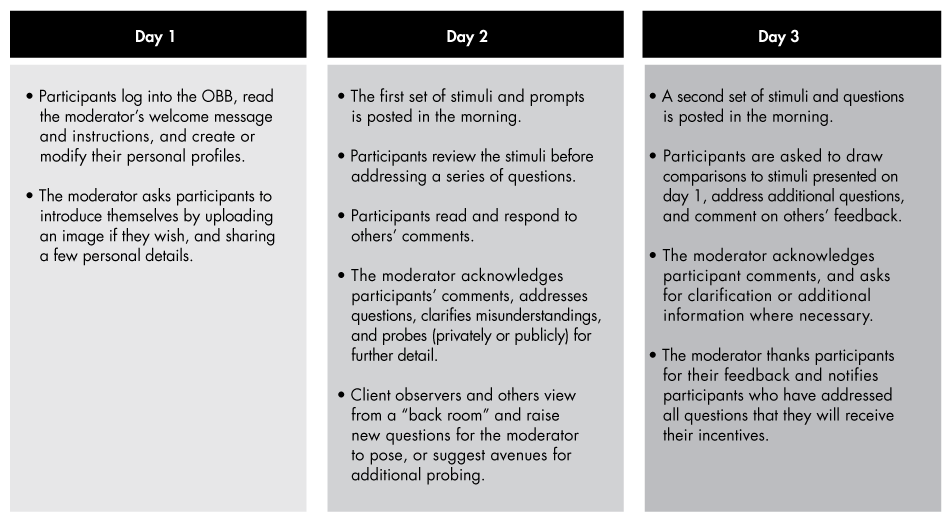

      online-bulletin-board-fig01_embed

      Online versus face to face


      OBBs offer several advantages over face-to-face groups:

      • Savings on incentives, travel, facilities and related costs;
      • the ability to convene geographically dispersed or lower-incidence recruits;
      • an anonymous forum for discussion of sensitive topics;
      • immediate availability of transcripts;
      • ample time for participants to digest and reflect on complex stimuli;
      • continuity through a testing period of days or weeks;
      • blinded responses, as researchers can program questions so that participants cannot view others’ comments until they have posted their own. This feature addresses the phenomenon of “groupthink” in face-to-face focus groups.
      • the ability for the moderator to follow up privately on individual participants’ responses.

      As with any text-based qualitative research format, however, the biggest drawback of OBB groups is the loss of non-verbal cues that enliven discussion and enrich verbal data in in-person and, to a limited extent, webcam focus groups.

      Read More

      Advanced Analytics Expert Commentary

      Success with advanced analytics requires both technical know-how and a thoughtful approach. In this series, Bain's experts offer practical advice on some of the most common data issues.

      When to use OBBs


      Specific project goals and constraints determine whether a researcher chooses an OBB over the in-person format. OBBs lend themselves to the following situations:

      • You don’t need to collect non-verbal participant data.
      • Participants will benefit from digesting and reflecting on stimuli at their own pace.
      • Target participants are geographically dispersed or difficult to recruit.
      • It is valuable to follow the same participants over an extended period. In product testing, for instance, researchers might send samples to participants and then collect feedback over a period of time.

      With the goal of generating rich qualitative data from OBBs, several principles are worth keeping in mind.

      First, the kind of interpersonal dynamism that generally characterizes in-person focus groups can also characterize OBBs, but you must more actively engineer participant interactions. You can require or give incentives to participants to read and respond to others’ comments and moderator probes. And you should factor in time for participants to build rapport with one another through general introductions and an icebreaker exercise.

      Second, building trust between participants, even in an impersonal space, is essential to generating honest feedback. It helps to offer a more detailed and perhaps personal introduction than is necessary, and to model ideal behavior. For example, you can respond with more verbal (here, textual) feedback, and possibly use emoticons.

      Third, avoid being an overly intrusive presence, which risks biasing feedback. In contrast to the minimal interference that moderators practice in face-to-face groups, OBB participants may interpret the absence of regular moderator responses as indifference. Strike a balance between facilitation and allowing participants to establish meaningful dialogue among themselves.

      Finally, as with any research method, “garbage in, garbage out” holds true. Design neutral, open-ended questions that invite relevant and elaborated responses.

      By adhering to these principles, researchers will harvest rich insights from their online groups.


      i Mann, Chris, and Fiona Steward. 2000. Internet Communication and Qualitative Research: A Handbook for Researching Online. London: Sage.

      Aimée Douglas is a senior specialist in Bain & Company’s Advanced Analytics practice. She is based in Boston.


      online-bulletin-board-fig01_full
      Servizi di consulenza collegati
      • AI, Insights, and Solutions
      AI, Insights, and Solutions
      To Optimize Multivariate In-Market Tests, Run a Series

      For multivariate testing, plan and execute a series of tests instead of one test.

      Leggi di più
      AI, Insights, and Solutions
      Choose Your Weapon: Prediction or Prescription

      When selecting a model for advanced analytics, the right choice comes down to understanding the challenge at hand.

      Leggi di più
      AI, Insights, and Solutions
      What to Look For In a Text Analytics Platform

      Executives should keep five key criteria in mind when evaluating text analytics platforms.

      Leggi di più
      Supporto in Advanced Analytics
      Defining the Intelligent Enterprise

      A recap from DeepLearning.AI’s AI Dev 25 × NYC.

      Leggi di più
      AI, Insights, and Solutions
      The Three Layers of an Agentic AI Platform

      Modern AI platforms are converging around a shared architecture built for orchestration, visibility, and governed data access.

      Leggi di più
      First published in dicembre 2017
      Tags
      • AI, Insights, and Solutions
      • Supporto in Advanced Analytics

      Come abbiamo aiutato i nostri clienti

      Analytics Powers a Software Company’s Bold Revenue Goals

      Leggi un caso di studio

      Advanced Analytics powers up UtilityCo’s reliability, and customers notice

      Leggi un caso di studio

      Analytics guide an entertainment company's growth strategy

      Leggi un caso di studio

      Vuoi continuare la conversazione?

      Aiutiamo i leader globali e le loro aziende ad affrontare problemi e a cogliere le opportunità. Sosteniamo cambiamenti e otteniamo risultati duraturi.

      Bain Insights. Le nostre idee e punti di vista sulle tematiche che le aziende globali affrontano ogni giorno, arrivano nella tua email tutti i mesi.

      *Ho letto l'Informativa sulla Privacy e accetto i termini e le condizioni.

      Si prega di leggere e accettare l’Informativa sulla Privacy
      Bain & Company
      Contattaci Sustainability Accessibility Condizioni d’uso Privacy Cookie Policy Sitemap Log In

      © 1996-2026 Bain & Company, Inc.

      Contatta Bain

      Come posso aiutarti?

      • Business inquiry
      • Career information
      • Press relations
      • Partnership request
      • Speaker request
      Guarda tutti gli uffici