
Skip to Content
  • Uffici

    Uffici

    Nord e Sud America
    • Atlanta
    • Austin
    • Bogota
    • Boston
    • Buenos Aires
    • Chicago
    • Dallas
    • Denver
    • Houston
    • Los Angeles
    • Mexico City
    • Minneapolis
    • Monterrey
    • Montreal
    • New York
    • Rio de Janeiro
    • San Francisco
    • Santiago
    • São Paulo
    • Seattle
    • Silicon Valley
    • Toronto
    • Washington, DC
    Europa, Medio Oriente e Africa
    • Amsterdam
    • Athens
    • Berlin
    • Brussels
    • Copenhagen
    • Doha
    • Dubai
    • Dusseldorf
    • Frankfurt
    • Helsinki
    • Istanbul
    • Johannesburg
    • Kyiv
    • Lisbon
    • London
    • Madrid
    • Milan
    • Munich
    • Oslo
    • Paris
    • Riyadh
    • Rome
    • Stockholm
    • Vienna
    • Warsaw
    • Zurich
    Asia e Australia
    • Bangkok
    • Beijing
    • Bengaluru
    • Brisbane
    • Ho Chi Minh City
    • Hong Kong
    • Jakarta
    • Kuala Lumpur
    • Manila
    • Melbourne
    • Mumbai
    • New Delhi
    • Perth
    • Seoul
    • Shanghai
    • Singapore
    • Sydney
    • Tokyo
    Guarda tutti gli uffici
  • Alumni
  • Media Center
  • Iscriviti
  • Contattaci
  • Italy | Italiano

    Seleziona il tuo Paese e la tua lingua

    Global
    • Global (English)
    Nord e Sud America
    • Brazil (Português)
    • Argentina (Español)
    • Canada (Français)
    • Chile (Español)
    • Colombia (Español)
    Europa, Medio Oriente e Africa
    • France (Français)
    • DACH Region (Deutsch)
    • Italy (Italiano)
    • Spain (Español)
    • Greece (Elliniká)
    Asia e Australia
    • China (中文版)
    • Korea (한국어)
    • Japan (日本語)
  • Saved items (0)
    Saved items (0)

    You have no saved items.

    Contrassegna il contenuto che ti interessa e verrà salvato qui. Potrai leggerlo o condividerlo in seguito.

    Explore Bain Insights
  • Settori
    Menu principale

    Settori

    • Aerospazio e Difesa
    • Agribusiness
    • Chimica
    • Infrastrutture e Costruzioni
    • Beni di Largo Consumo
    • Servizi Finanziari
    • Sanità
    • Macchinari Industriali
    • Media & Intrattenimento
    • Industria Metallurgica
    • Industria Mineraria
    • Petrolio e Gas
    • Industria Cartaria e Packaging
    • Private Equity
    • Settore Sociale & Pubblico
    • Retail
    • Tecnologia
    • Telecomunicazioni
    • Compagnie Aeree & Trasporti
    • Viaggi e Svago
    • Utility e Rinnovabili
  • Servizi di Consulenza
    Menu principale

    Servizi di Consulenza

    • Customer Experience
    • ESG
    • Innovation
    • M&A and Divestitures
    • Operation
    • People & Organization
    • Private Equity
    • Sales & Marketing
    • Strategia
    • IA, Approfondimenti e Soluzioni
    • Tecnologia
    • Trasformazione
  • Digital
  • Tematiche
  • Informazioni su Bain
    Menu principale

    Informazioni su Bain

    • Che Cosa Facciamo
    • Quello in Cui Crediamo
    • Le Nostre Persone e la Leadership
    • Risultati
    • Premi e Riconoscimenti
    • Organizzazioni Globali
    Further: Our global responsibility
    • Diversità e Inclusione
    • Social Impact
    • Sustainability
    • World Economic Forum
    Learn more about Further
  • Careers
    Menu principale

    Careers

    • Work with Us
      Careers
      Work with Us
      • Find Your Place
      • Our Work Areas
      • Integrated Teams
      • Students
      • Internships & Programs
      • Recruiting Events
    • Life at Bain
      Careers
      Life at Bain
      • Blog: Inside Bain
      • Career Stories
      • Our People
      • Where We Work
      • Supporting Your Growth
      • Affinity Groups
      • Benefits
    • Impact Stories
    • Hiring Process
      Careers
      Hiring Process
      • What to Expect
      • Interviewing
    FIND JOBS
  • Uffici
    Menu principale

    Uffici

    • Nord e Sud America
      Uffici
      Nord e Sud America
      • Atlanta
      • Austin
      • Bogota
      • Boston
      • Buenos Aires
      • Chicago
      • Dallas
      • Denver
      • Houston
      • Los Angeles
      • Mexico City
      • Minneapolis
      • Monterrey
      • Montreal
      • New York
      • Rio de Janeiro
      • San Francisco
      • Santiago
      • São Paulo
      • Seattle
      • Silicon Valley
      • Toronto
      • Washington, DC
    • Europa, Medio Oriente e Africa
      Uffici
      Europa, Medio Oriente e Africa
      • Amsterdam
      • Athens
      • Berlin
      • Brussels
      • Copenhagen
      • Doha
      • Dubai
      • Dusseldorf
      • Frankfurt
      • Helsinki
      • Istanbul
      • Johannesburg
      • Kyiv
      • Lisbon
      • London
      • Madrid
      • Milan
      • Munich
      • Oslo
      • Paris
      • Riyadh
      • Rome
      • Stockholm
      • Vienna
      • Warsaw
      • Zurich
    • Asia e Australia
      Uffici
      Asia e Australia
      • Bangkok
      • Beijing
      • Bengaluru
      • Brisbane
      • Ho Chi Minh City
      • Hong Kong
      • Jakarta
      • Kuala Lumpur
      • Manila
      • Melbourne
      • Mumbai
      • New Delhi
      • Perth
      • Seoul
      • Shanghai
      • Singapore
      • Sydney
      • Tokyo
    Guarda tutti gli uffici
  • Alumni
  • Media Center
  • Iscriviti
  • Contattaci
  • Italy | Italiano
    Menu principale

    Seleziona il tuo Paese e la tua lingua

    • Global
      Seleziona il tuo Paese e la tua lingua
      Global
      • Global (English)
    • Nord e Sud America
      Seleziona il tuo Paese e la tua lingua
      Nord e Sud America
      • Brazil (Português)
      • Argentina (Español)
      • Canada (Français)
      • Chile (Español)
      • Colombia (Español)
    • Europa, Medio Oriente e Africa
      Seleziona il tuo Paese e la tua lingua
      Europa, Medio Oriente e Africa
      • France (Français)
      • DACH Region (Deutsch)
      • Italy (Italiano)
      • Spain (Español)
      • Greece (Elliniká)
    • Asia e Australia
      Seleziona il tuo Paese e la tua lingua
      Asia e Australia
      • China (中文版)
      • Korea (한국어)
      • Japan (日本語)
  • Saved items  (0)
    Menu principale
    Saved items (0)

    You have no saved items.

    Contrassegna il contenuto che ti interessa e verrà salvato qui. Potrai leggerlo o condividerlo in seguito.

    Explore Bain Insights
  • Settori
    • Settori

      • Aerospazio e Difesa
      • Agribusiness
      • Chimica
      • Infrastrutture e Costruzioni
      • Beni di Largo Consumo
      • Servizi Finanziari
      • Sanità
      • Macchinari Industriali
      • Media & Intrattenimento
      • Industria Metallurgica
      • Industria Mineraria
      • Petrolio e Gas
      • Industria Cartaria e Packaging
      • Private Equity
      • Settore Sociale & Pubblico
      • Retail
      • Tecnologia
      • Telecomunicazioni
      • Compagnie Aeree & Trasporti
      • Viaggi e Svago
      • Utility e Rinnovabili
  • Servizi di Consulenza
    • Servizi di Consulenza

      • Customer Experience
      • ESG
      • Innovation
      • M&A and Divestitures
      • Operation
      • People & Organization
      • Private Equity
      • Sales & Marketing
      • Strategia
      • IA, Approfondimenti e Soluzioni
      • Tecnologia
      • Trasformazione
  • Digital
  • Tematiche
  • Informazioni su Bain
    • Informazioni su Bain

      • Che Cosa Facciamo
      • Quello in Cui Crediamo
      • Le Nostre Persone e la Leadership
      • Risultati
      • Premi e Riconoscimenti
      • Organizzazioni Globali
      Further: Our global responsibility
      • Diversità e Inclusione
      • Social Impact
      • Sustainability
      • World Economic Forum
      Learn more about Further
  • Careers
    Ricerche più popolari
    • Agile
    • Digitale
    • Strategia
    La tue ricerche precedenti
      Pagine visitate

      Content added to saved items

      Saved items (0)

      Removed from saved items

      Saved items (0)

      Brief

      Maximizing Your Merger's Potential

      Maximizing Your Merger's Potential

      Companies are using merger integration as a catalyst for achieving the full potential for both companies’ operations. But the path to success isn’t the same for every company.

      Di Jason Heinrich and Laura Miles

      • Tempo di lettura min.
      }

      Brief

      Maximizing Your Merger's Potential
      en

      The year 2015 was already the biggest year on record for M&A deal volume when DuPont and Dow Chemical made their stunning merger announcement in the year’s final weeks. While deals like Pfizer-Allergan and Dell-EMC may still face regulatory hurdles, global M&A volume surpassed $5 trillion for the first time ever, standing at $5.03 trillion at the end of 2015, according to Dealogic.

      In a boom that spans industries and company size, companies are going the M&A route in the quest for growth and efficiency amid a tepid economy, taking advantage of the availability of inexpensive debt. For many, the benefits will be greater than what they can achieve through organic growth. Our analysis of deals spanning a 10-year period found that as a group, companies that engaged in any M&A activity averaged 4.8% total shareholder return compared with 3.3% for those that were inactive.

      Now, as they pursue M&A in record numbers, companies are under intensifying pressure from activist investors to boost efficiencies, prompting them to take a new look at how they create even more value. They’re viewing the disruption created by merger integration as an opportunity to maximize the potential for the combined entity. Trouble is, while the goal of squeezing more value out of M&A may be the right strategy, most acquirers are likely to fail at the mission: Too many companies simply under-deliver. In fact, overestimated synergies was the second-biggest cause of deal disappointment cited in our global survey of 352 executives.

      Why will they fail? In many situations, it’s a matter of timing and conflicting priorities. Mergers create a unique “unfreezing” moment for major cost improvement and employees anticipate change during merger integration, so the time is often perfect for bold moves—but the window closes quickly. Also, a lack of focus on organization-related factors is a major contributor to unwanted talent flight immediately following a merger. But we see many companies, in an urgency to prove out a deal thesis, focusing their initial efforts on managing near-term risks and capturing only the synergies identified in due diligence, which is never the full-potential plan. Too often, deferred or unplanned optimization never happens. Overwhelmed by the daily routine of running the business, the merging companies fail even to meet their pre-deal synergy targets, let alone expanded optimization goals.

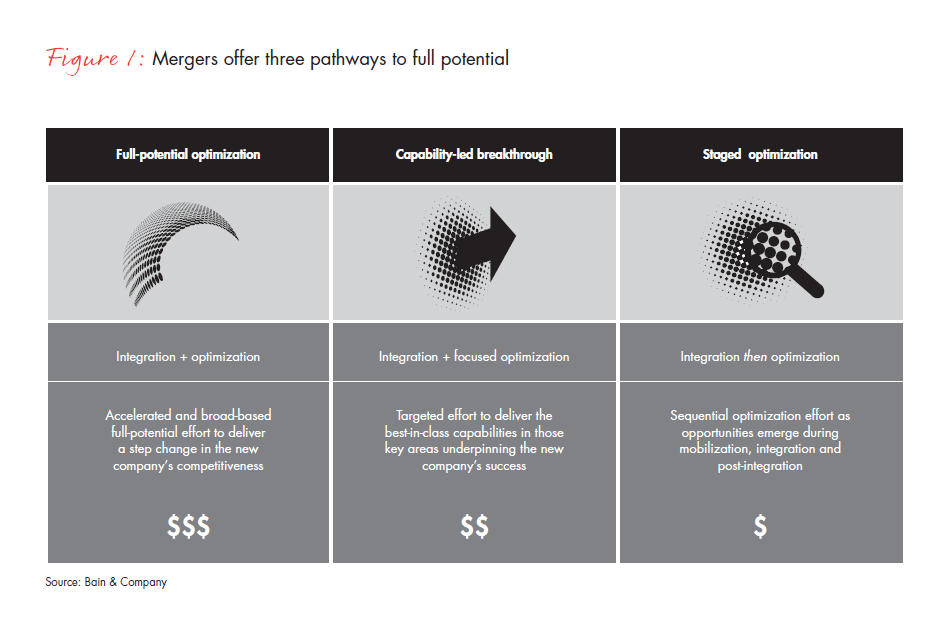
      The best value creators don’t stop at integration, however. These winners are systematic when choosing to pursue additional performance-improvement benefits during M&A and have a well-defined plan for achieving the combined company’s full potential. These acquirers are realistic about their internal capabilities during and after the integration phase. They create a full-potential vision for each function, organizing resources and timing performance-improvement initiatives based on their unique situation. The most successful companies frame the integration into multiple phases: planning, integration and optimization. The sequencing and timing of these phases maximizes value and minimizes stress on the organization. Led by the integration management office (IMO), each integration team relies on aggressive benchmarks to set targets and goals, building steps into the process to determine what full potential looks like for the combined companies and the route to moving into the industry’s top quartile. Based on our research and work helping clients achieve full-potential goals through merger integration, we’ve identified three distinct paths to success—and the reasons for choosing each (see Figure 1).

      maximizing-your-mergers-potential-fig-01_embed

      Full-potential optimization. In this approach, companies embark on an accelerated and broad-based, full-potential effort to significantly boost the competiveness of the combined company. These acquirers optimize operations in tandem with integration. We counsel companies to take this aggressive route in a number of situations: when pre-deal synergies don’t match the acquired company’s full potential or when an acquirer has paid a high premium for an acquisition. It’s also the best path to take for companies with a poor history of change or when there’s a high degree of functional and operational overlap or a low risk of customer disruption. Also, full-potential optimizations are a common approach for companies that discover potential opportunities in the post-merger mutual discovery that were not evident in the limited outside-in analysis of due diligence.

      One diversified industrials company, which fit many of these criteria, set bold synergy targets that were above those identified in due diligence. Instead of taking an incremental approach, it used the integration process as an opportunity for a broad transformation of both companies. It met synergy targets identified in due diligence, yet executives repeatedly looked at the game plan ahead and asked, “When will we be in the top quartile of our industry?”

      The diligence process had offered only limited visibility into supply chain and other critical areas, so for a year following the merger, senior executives regularly tracked potential opportunities for improvements. They held biweekly meetings with team leaders to review progress and continually refine plans. They ultimately identified $200 million in additional synergies in supply chain and shared services efficiencies as well as revenue gains from improved cross-selling, channel penetration, new product development and geographic expansion. After the first year, the company put in place an annual refresh process aimed at regularly looking for ways to maintain the momentum.

      Jason Heinrich, a partner with Bain's Mergers & Acquisitions practice, discusses three paths that companies can follow to turn mergers into a catalyst for bolder change.

      Capability-led breakthrough. However, the approach for full-potential optimization isn’t right for every merger integration. In other situations, there is a key capability—procurement is an example—that’s critical for creating the most value from the acquisition. Instead of integrating and broadly optimizing in tandem, these acquirers have more to gain by targeting only a handful of optimization efforts, focusing on the key capabilities that will underpin the new company’s success. Consider the experience of one construction equipment rental company during its integration of an acquired company. After the deal closed, the company relied on its IMO to direct integration opportunities identified in due diligence: reducing redundant infrastructure and functions, consolidating overlapping rental locations and making such operational improvements as sharing best practices in repair services. But it also saw the potential to optimize capabilities in two other important areas: sales operations and customer loyalty. The IMO identified a host of moves that improved sales performance, including finding new ways to map accounts to sales teams and implementing shared services. To boost customer loyalty, the company deployed technology to improve fleet availability, delivering higher rates of on-time delivery.

      Infographic

      A Strategic Guide to Merger Integration

      Why do so many mergers disappoint? Here's a look at how to achieve full potential after an M&A deal.

      Staged optimization. Finally, the better path for some companies is to sequence optimization efforts to address specific opportunities that emerge during mobilization, integration and post-integration. A thoughtfully staged approach often is preferred when management is dealing with dramatically changing the operating model of both companies or when the merger itself is quite destabilizing for the organization. It’s the right choice when there’s little overlap in activities but a high risk of customer disruption, or if an acquirer’s initial plans call for operating the acquisition as a separate business unit. In addition, this option works well for companies that have a strong record of successful optimization efforts. However, taking the deliberate approach comes with a risk: By waiting too long, a company can miss the biggest opportunities.

      A major food and beverage company conducted a successful staged optimization when it acquired a food company. Given the scale of the deal, one of management’s biggest objectives was to minimize the distractions of running the day-to-day business. It completed a successful integration but then waited a full year before embarking on a major cost initiative. That was followed by a corporate spinout, and a year later the company conducted an even more aggressive cost program, reducing costs through supply chain reinvention and other moves.

      Regardless of the path a company chooses to take, there are critical decisions involving how aggressively to act and the sequencing of moves. We counsel companies to make those decisions by considering the value at stake, the difficulty of implementation and the risk of customer disruption. For example, a scale merger that promises significant overlap in such back-office functions as finance, HR and procurement, with relatively easy implementation and little chance of customer disruption, would benefit from concurrent integration and optimization. But in a scale merger where the customer service requirements are high and the IT processes complex, it often is preferable to integrate first and then optimize, guided by an integration plan that provides a roadmap to full potential.

      Which of the three paths to take? These five questions can help direct you:

      1. Do you need to generate more synergies than those identified in due diligence to be competitive in your industry? If so, consider full-potential optimization.
      2. What’s your history of transformational success? If you look back on your record of accomplishment, how hard is it to mobilize the organization once they’ve gotten back into the “business of business” mode? If you’ve had a lot of stops and starts, it’s time to think bolder. Here, too, the answer is likely a full-potential optimization.
      3. Is there one source of value—procurement, for example—that represents more than 50% of the synergies? If so, consider the capability-led breakthrough approach.
      4. Are there big cultural concerns, or is there a risk of losing key talent? If so, it’s usually best to wait and conduct a staged optimization.
      5. Are there things outside your control—like a complex IT infrastructure, labor unions or regulatory compliance issues—that make it difficult to optimize operations right away? If your deal requires you to wait to implement performance-improvement initiatives beyond those identified in your deal thesis, a staged optimization is the right path.

      Jason Heinrich is a Bain & Company partner based in Chicago. Laura Miles is a partner based in Atlanta, where she leads Bain’s Global Mergers and Acquisitions practice.


      maximizing-your-mergers-potential-fig-01_full
      Autori
      • Headshot of Jason Heinrich
        Jason Heinrich
        Partner, Chicago
      • Headshot of Laura Miles
        Laura Miles
        Partner, Atlanta
      Contattaci
      Servizi di consulenza collegati
      • Mergers and Acquisitions
      • Post-Merger Integration
      Beni di Largo Consumo
      Repeatable M&A in Consumer Goods

      Mergers and acquisitions deliver better results for consumer goods companies than for companies in other industries. Why, then, are so many consumer goods companies settling for occasional deals instead of building a repeatable model for doing lots of them—and doing them right?

      Leggi di più
      Mergers and Acquisitions
      Rethinking M&A Valuation Assumptions

      Why the assumptions behind many M&A models may be too onerous.

      Leggi di più
      Mergers and Acquisitions
      Arnaud Leroi: Maximizing Your Merger's Potential

      Bain Partner Arnaud Leroi describes how companies can minimize risks and help mergers achieve their full potential.

      Leggi di più
      Mergers and Acquisitions
      Banking M&A

      As conditions shift, leading banks are fusing scale with scope to create future-ready organizations.

      Leggi di più
      Mergers and Acquisitions
      Consumer Products M&A

      In their quest for profitable growth, more companies are divesting brands or buying insurgents.

      Leggi di più
      First published in febbraio 2016
      Tags
      • Mergers and Acquisitions
      • Post-Merger Integration

      Come abbiamo aiutato i nostri clienti

      Aggressively growing an IT service provider with a high-performance culture

      Leggi un caso di studio

      An OFS captures post-merger growth synergies

      Leggi un caso di studio

      Salesforce integration generates M&A success in healthcare

      Leggi un caso di studio

      Vuoi continuare la conversazione?

      Aiutiamo i leader globali e le loro aziende ad affrontare problemi e a cogliere le opportunità. Sosteniamo cambiamenti e otteniamo risultati duraturi.

      Bain Insights. Le nostre idee e punti di vista sulle tematiche che le aziende globali affrontano ogni giorno, arrivano nella tua email tutti i mesi.

      *Ho letto l'Informativa sulla Privacy e accetto i termini e le condizioni.

      Si prega di leggere e accettare l’Informativa sulla Privacy
      Bain & Company
      Contattaci Sustainability Accessibility Condizioni d’uso Privacy Cookie Policy Sitemap Log In

      © 1996-2026 Bain & Company, Inc.

      Contatta Bain

      Come posso aiutarti?

      • Business inquiry
      • Career information
      • Press relations
      • Partnership request
      • Speaker request
      Guarda tutti gli uffici