
Skip to Content
  • Uffici

    Uffici

    Nord e Sud America
    • Atlanta
    • Austin
    • Bogota
    • Boston
    • Buenos Aires
    • Chicago
    • Dallas
    • Denver
    • Houston
    • Los Angeles
    • Mexico City
    • Minneapolis
    • Monterrey
    • Montreal
    • New York
    • Rio de Janeiro
    • San Francisco
    • Santiago
    • São Paulo
    • Seattle
    • Silicon Valley
    • Toronto
    • Washington, DC
    Europa, Medio Oriente e Africa
    • Amsterdam
    • Athens
    • Berlin
    • Brussels
    • Copenhagen
    • Doha
    • Dubai
    • Dusseldorf
    • Frankfurt
    • Helsinki
    • Istanbul
    • Johannesburg
    • Kyiv
    • Lisbon
    • London
    • Madrid
    • Milan
    • Munich
    • Oslo
    • Paris
    • Riyadh
    • Rome
    • Stockholm
    • Vienna
    • Warsaw
    • Zurich
    Asia e Australia
    • Bangkok
    • Beijing
    • Bengaluru
    • Brisbane
    • Ho Chi Minh City
    • Hong Kong
    • Jakarta
    • Kuala Lumpur
    • Manila
    • Melbourne
    • Mumbai
    • New Delhi
    • Perth
    • Seoul
    • Shanghai
    • Singapore
    • Sydney
    • Tokyo
    Guarda tutti gli uffici
  • Alumni
  • Media Center
  • Iscriviti
  • Contattaci
  • Italy | Italiano

    Seleziona il tuo Paese e la tua lingua

    Global
    • Global (English)
    Nord e Sud America
    • Brazil (Português)
    • Argentina (Español)
    • Canada (Français)
    • Chile (Español)
    • Colombia (Español)
    Europa, Medio Oriente e Africa
    • France (Français)
    • DACH Region (Deutsch)
    • Italy (Italiano)
    • Spain (Español)
    • Greece (Elliniká)
    Asia e Australia
    • China (中文版)
    • Korea (한국어)
    • Japan (日本語)
  • Saved items (0)
    Saved items (0)

    You have no saved items.

    Contrassegna il contenuto che ti interessa e verrà salvato qui. Potrai leggerlo o condividerlo in seguito.

    Explore Bain Insights
  • Settori
    Menu principale

    Settori

    • Aerospazio e Difesa
    • Agribusiness
    • Chimica
    • Infrastrutture e Costruzioni
    • Beni di Largo Consumo
    • Servizi Finanziari
    • Sanità
    • Macchinari Industriali
    • Media & Intrattenimento
    • Industria Metallurgica
    • Industria Mineraria
    • Petrolio e Gas
    • Industria Cartaria e Packaging
    • Private Equity
    • Settore Sociale & Pubblico
    • Retail
    • Tecnologia
    • Telecomunicazioni
    • Compagnie Aeree & Trasporti
    • Viaggi e Svago
    • Utility e Rinnovabili
  • Servizi di Consulenza
    Menu principale

    Servizi di Consulenza

    • Customer Experience
    • ESG
    • Innovation
    • M&A and Divestitures
    • Operation
    • People & Organization
    • Private Equity
    • Sales & Marketing
    • Strategia
    • IA, Approfondimenti e Soluzioni
    • Tecnologia
    • Trasformazione
  • Digital
  • Tematiche
  • Informazioni su Bain
    Menu principale

    Informazioni su Bain

    • Che Cosa Facciamo
    • Quello in Cui Crediamo
    • Le Nostre Persone e la Leadership
    • Risultati
    • Premi e Riconoscimenti
    • Organizzazioni Globali
    Further: Our global responsibility
    • Diversità e Inclusione
    • Social Impact
    • Sustainability
    • World Economic Forum
    Learn more about Further
  • Careers
    Menu principale

    Careers

    • Work with Us
      Careers
      Work with Us
      • Find Your Place
      • Our Work Areas
      • Integrated Teams
      • Students
      • Internships & Programs
      • Recruiting Events
    • Life at Bain
      Careers
      Life at Bain
      • Blog: Inside Bain
      • Career Stories
      • Our People
      • Where We Work
      • Supporting Your Growth
      • Affinity Groups
      • Benefits
    • Impact Stories
    • Hiring Process
      Careers
      Hiring Process
      • What to Expect
      • Interviewing
    FIND JOBS
  • Uffici
    Menu principale

    Uffici

    • Nord e Sud America
      Uffici
      Nord e Sud America
      • Atlanta
      • Austin
      • Bogota
      • Boston
      • Buenos Aires
      • Chicago
      • Dallas
      • Denver
      • Houston
      • Los Angeles
      • Mexico City
      • Minneapolis
      • Monterrey
      • Montreal
      • New York
      • Rio de Janeiro
      • San Francisco
      • Santiago
      • São Paulo
      • Seattle
      • Silicon Valley
      • Toronto
      • Washington, DC
    • Europa, Medio Oriente e Africa
      Uffici
      Europa, Medio Oriente e Africa
      • Amsterdam
      • Athens
      • Berlin
      • Brussels
      • Copenhagen
      • Doha
      • Dubai
      • Dusseldorf
      • Frankfurt
      • Helsinki
      • Istanbul
      • Johannesburg
      • Kyiv
      • Lisbon
      • London
      • Madrid
      • Milan
      • Munich
      • Oslo
      • Paris
      • Riyadh
      • Rome
      • Stockholm
      • Vienna
      • Warsaw
      • Zurich
    • Asia e Australia
      Uffici
      Asia e Australia
      • Bangkok
      • Beijing
      • Bengaluru
      • Brisbane
      • Ho Chi Minh City
      • Hong Kong
      • Jakarta
      • Kuala Lumpur
      • Manila
      • Melbourne
      • Mumbai
      • New Delhi
      • Perth
      • Seoul
      • Shanghai
      • Singapore
      • Sydney
      • Tokyo
    Guarda tutti gli uffici
  • Alumni
  • Media Center
  • Iscriviti
  • Contattaci
  • Italy | Italiano
    Menu principale

    Seleziona il tuo Paese e la tua lingua

    • Global
      Seleziona il tuo Paese e la tua lingua
      Global
      • Global (English)
    • Nord e Sud America
      Seleziona il tuo Paese e la tua lingua
      Nord e Sud America
      • Brazil (Português)
      • Argentina (Español)
      • Canada (Français)
      • Chile (Español)
      • Colombia (Español)
    • Europa, Medio Oriente e Africa
      Seleziona il tuo Paese e la tua lingua
      Europa, Medio Oriente e Africa
      • France (Français)
      • DACH Region (Deutsch)
      • Italy (Italiano)
      • Spain (Español)
      • Greece (Elliniká)
    • Asia e Australia
      Seleziona il tuo Paese e la tua lingua
      Asia e Australia
      • China (中文版)
      • Korea (한국어)
      • Japan (日本語)
  • Saved items  (0)
    Menu principale
    Saved items (0)

    You have no saved items.

    Contrassegna il contenuto che ti interessa e verrà salvato qui. Potrai leggerlo o condividerlo in seguito.

    Explore Bain Insights
  • Settori
    • Settori

      • Aerospazio e Difesa
      • Agribusiness
      • Chimica
      • Infrastrutture e Costruzioni
      • Beni di Largo Consumo
      • Servizi Finanziari
      • Sanità
      • Macchinari Industriali
      • Media & Intrattenimento
      • Industria Metallurgica
      • Industria Mineraria
      • Petrolio e Gas
      • Industria Cartaria e Packaging
      • Private Equity
      • Settore Sociale & Pubblico
      • Retail
      • Tecnologia
      • Telecomunicazioni
      • Compagnie Aeree & Trasporti
      • Viaggi e Svago
      • Utility e Rinnovabili
  • Servizi di Consulenza
    • Servizi di Consulenza

      • Customer Experience
      • ESG
      • Innovation
      • M&A and Divestitures
      • Operation
      • People & Organization
      • Private Equity
      • Sales & Marketing
      • Strategia
      • IA, Approfondimenti e Soluzioni
      • Tecnologia
      • Trasformazione
  • Digital
  • Tematiche
  • Informazioni su Bain
    • Informazioni su Bain

      • Che Cosa Facciamo
      • Quello in Cui Crediamo
      • Le Nostre Persone e la Leadership
      • Risultati
      • Premi e Riconoscimenti
      • Organizzazioni Globali
      Further: Our global responsibility
      • Diversità e Inclusione
      • Social Impact
      • Sustainability
      • World Economic Forum
      Learn more about Further
  • Careers
    Ricerche più popolari
    • Agile
    • Digitale
    • Strategia
    La tue ricerche precedenti
      Pagine visitate

      Content added to saved items

      Saved items (0)

      Removed from saved items

      Saved items (0)

      Brief

      The Coronavirus Demand Challenge Awaiting China’s Auto Industry

      The Coronavirus Demand Challenge Awaiting China’s Auto Industry

      Sales could fall by more than 20% in the worst case, but carmakers can still adapt to the longer-term impact of COVID-19.

      Di Raymond Tsang, Bruno Zhao, Ralf Kalmbach, Helen Liu and Siwei Shen

      • Tempo di lettura min.
      }

      Brief

      The Coronavirus Demand Challenge Awaiting China’s Auto Industry
      en
      In evidenza
      • COVID-19 could drag Chinese passenger vehicle sales 5% below precrisis expectations in our mildest scenario, 10% if there is a heavy impact and 23% in the worst case.
      • If there is no resurgence of the pandemic in China, demand shocks are likely to be the biggest managerial challenge for the sector.
      • Priority actions for carmakers include systematically improving operational efficiency, redefining pricing strategy and mastering online sales.

      When SARS hit China in 2003, the epidemic failed to dent the booming automobile industry. Carmakers pushed ahead, building new factories to take advantage of the ongoing transformation occurring within China’s economy. The outbreak even ended up spurring demand for cars among some Chinese commuters who didn’t want to risk infection by taking public transit. Overall, nearly 2 million cars were sold in 2003, up three-quarters from 2002.

      It’s too early to predict how or when the coronavirus outbreak of 2020 will resolve itself in China, but it’s probably safe to say that the automobile industry won’t be powering on as spectacularly as it did almost two decades ago. For starters, COVID-19 has spread more widely than SARS, doing so against a backdrop of economic growth that has already slowed. In addition, years of strong sales growth means that the automobile market is much more mature than it was around the time of SARS; in 2018, there were 183 cars in use per 1,000 adults in China, up from just 9 cars in 2003. The Chinese market has become a major source of sales for the auto industry globally (see Figure 1).

      Figure 1
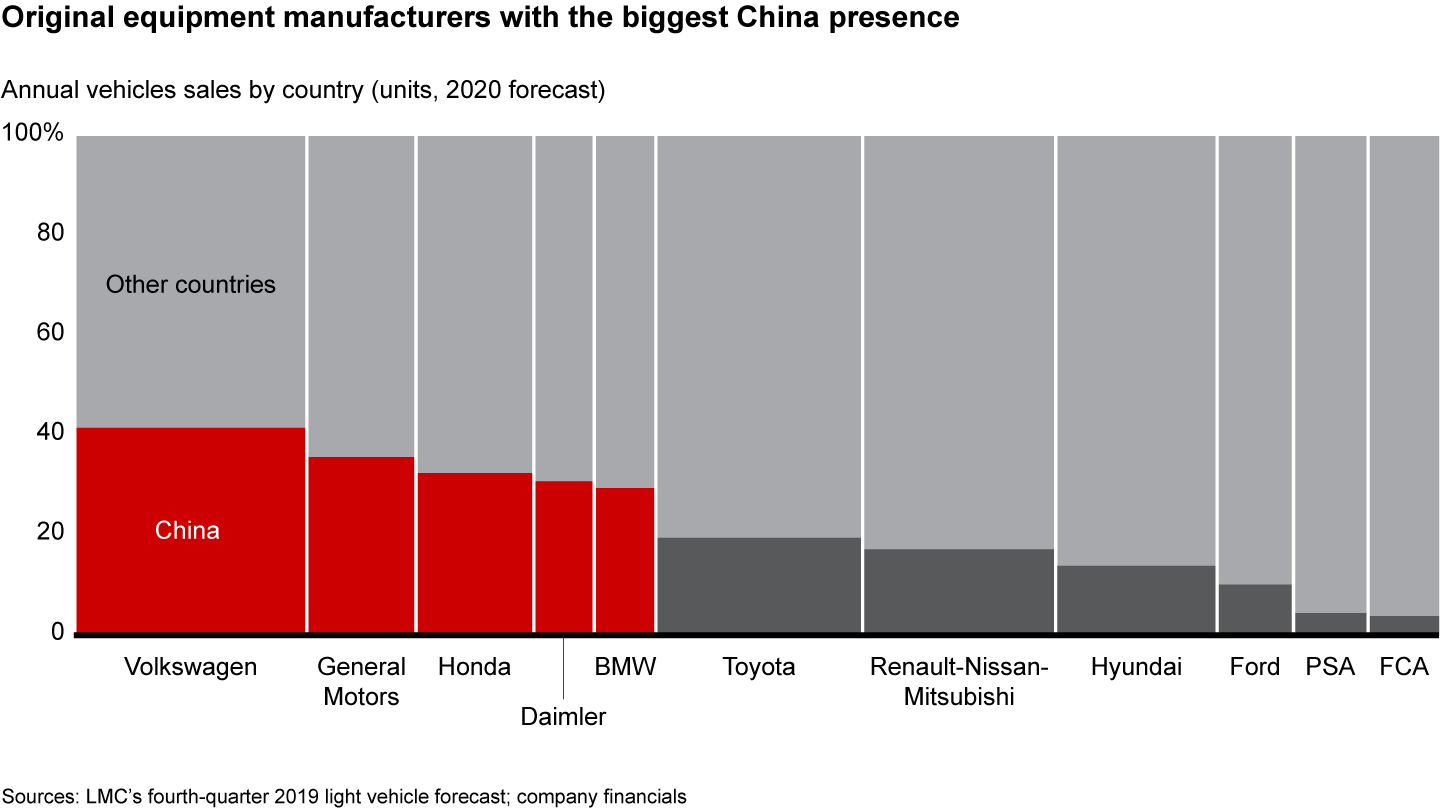
      For some global carmakers, China had been expected to account for about one-third of their sales volume in 2020
      For some global carmakers, China had been expected to account for about one-third of their sales volume in 2020
      For some global carmakers, China had been expected to account for about one-third of their sales volume in 2020

      To understand better how the coronavirus pandemic will affect carmakers and their suppliers in China, Bain & Company modeled three scenarios, ranging from a mild impact on expected sales to a worst-case reduction of more than 20%. In all three cases, we believe that the managerial challenge ahead is more about coping with lingering demand shocks than the considerable supply disruption already suffered. Rising to that challenge is likely to involve actions such as systematically improving operational efficiency, redefining pricing strategy and mastering online sales.

      For Our Clients

      Macro Surveillance Platform

      For more detail on the business implications of coronavirus from Bain’s Macro Trends Group, log on to the Macro Surveillance Platform. Learn more about the platform >

      Demand shocks outweigh supply challenges

      The auto industry has certainly faced a short-term supply shock in China. Nearly 7% of China’s light vehicle production is in Wuhan, the city in which COVID-19 was first identified. Parts suppliers and original equipment manufacturers (OEMs) in China typically had to suspend work for 10 to 20 days in late January and February as the Lunar New Year holidays were extended in a bid to control the outbreak. The return to work hasn’t been straightforward either. Productivity has been hampered by shortages of protective supplies, logistical shortcomings and other factors. Indeed, some OEMs have shifted production to making protective masks.

      In spite of this disruption, we think that demand, not supply, will be the chief obstacle to the auto industry in China over the coming weeks and months. If there is no resurgence of the pandemic, production capacity should be back to normal within the first quarter of 2020. Moreover, inventory already within the sales network ought to be enough to cover 30 to 45 days of regular sales.

      As sales have declined to a level that is anything but regular, undersupply is unlikely to be an issue. Restrictions imposed during the early stages of the outbreak have already forced consumers to delay car purchases, as shown by the 80% year-over-year sales volume drop in February. That catastrophic month represents a lot of missing revenue. We examined in detail three automotive OEMs with a strong Chinese presence and calculated that their lost revenue in February alone would be about $12 billion to $15 billion; much of this impact—about $10 billion to $12 billion—would cascade down to become lost revenue for their suppliers. The liquidity impact on some suppliers could be significant given the limited room they have to cut fixed costs, and it is likely to take time to ease fully. For instance, the profit hit for suppliers to the three OEMs we analyzed could be about $3 billion in February.

      Three scenarios for a recovery

      We think sales volumes will shrink over 2020 as a whole; the big question is by how much. In the second and third quarters, pent-up demand will probably support sales, but not in a uniform fashion. Given that wealthier consumers are less likely to have been affected by purchasing power restrictions, the mid- to high-end segment of the market will likely stabilize first. As had happened after SARS, some of these consumers are likely to be buying a car for the first time to avoid public transit and its perceived health risks. Demand for less expensive vehicles is likely to rebound more slowly, though, as lower-paid workers will have been hit harder by unpaid wages, pay freezes and other purchasing power negatives.

      In our first (and mildest) scenario for 2020 China car sales, we assume a swift local conclusion to the pandemic in the first quarter and limited impact on purchasing power. This would be possible if authorities were to take timely and effective action to control the virus and then relax restrictions as quickly as possible without jeopardizing public safety. If that were to occur, 2020 passenger vehicle sales might only dip 5% below our preoutbreak expectations.

      Our second scenario is more pessimistic, projecting a 10% decline in 2020 sales and a heavy impact on both suppliers and OEMs. It assumes that the pandemic in China continues into the second quarter, requiring the authorities to extend moderate restrictions and causing a moderate hit to purchasing power.

      Our third scenario is the worst case (see Figure 2). It would be realized if COVID-19 staged a resurgence, requiring a fresh wave of drastic countermeasures, such as large-scale quarantines or plant closures, before a slow recovery at the end of the second quarter. Employees would really feel the pinch financially, and sales would drop 23% from our precrisis forecast.

      Figure 2
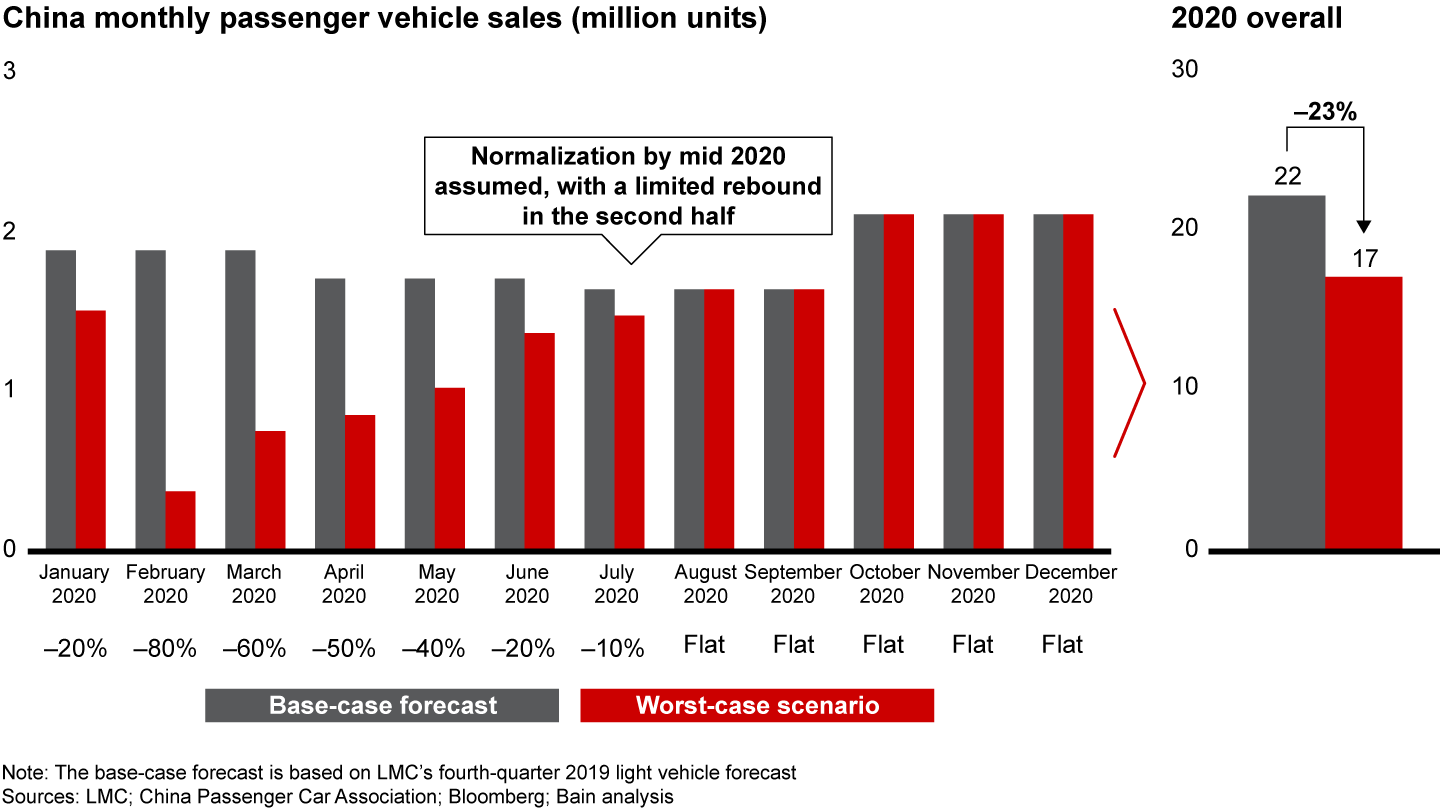
      China’s car sales could decline by more than 20% in 2020 because of COVID-19
      China’s car sales could decline by more than 20% in 2020 because of COVID-19
      China’s car sales could decline by more than 20% in 2020 because of COVID-19

      Given their heavy exposure to China’s market, premium OEMs could be hit particularly hard in our second and third scenarios. The suddenness of the outbreak gave OEMs little chance to soften lost sales’ impact on the bottom line. To gain a sense of the possible profit hit, we created estimates based on the 2018 earnings before interest and taxes (EBIT) of bellwether premium carmakers, reasoning that about half of that profit was likely to have come from China. Projecting our “heavy impact” scenario onto those 2018 figures suggests that COVID-19 would have cut EBIT by up to 20%. In the worst-case scenario, the reduction would have been 40% (see Figure 3).

      Figure 3
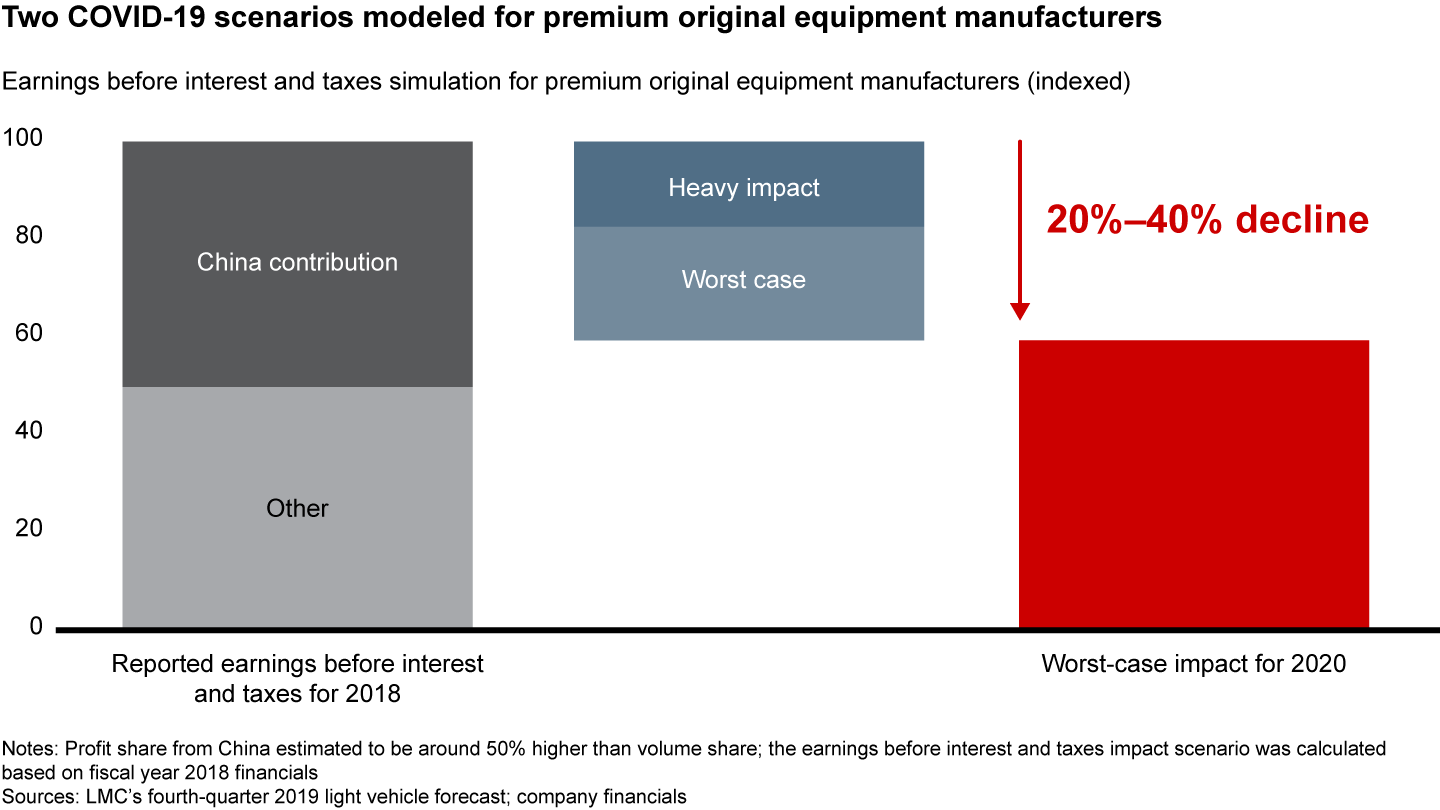
      Premium carmakers could see earnings before interest and taxes fall by 20% to 40% in 2020
      Premium carmakers could see earnings before interest and taxes fall by 20% to 40% in 2020
      Premium carmakers could see earnings before interest and taxes fall by 20% to 40% in 2020

      Over the medium to long term, we think three factors will support demand.

      • There’s the ongoing economic development of China; rising household incomes should continue to stimulate car sales over the longer term.
      • Given the auto industry’s national importance, government policy is likely to remain friendly.
      • The easing real estate market means that households will face less pressure to pour all their wealth into property.

      How OEMs can adapt to COVID-19’s longer-term impact

      Following two years of sales declines amid a general slowing of the economy, China’s auto industry had entered 2020 hoping for at least some signs of recovery. Instead, it found itself playing a supporting role in a broader struggle to keep the country functioning in the most testing of circumstances. We think that the following range of actions can help OEM executives rise to this ongoing operational challenge and adapt to COVID-19’s longer-term impact.

      • Systematically improving operational efficiency: OEMs will already be planning or implementing a host of measures to both improve cash flow and cut costs. These crisis responses are likely to be even more effective if they feed into a strategic and long-term overhaul of operations. That means digitally transforming processes such as supply chain management and using data to make faster and more objective decisions.
      • Supporting suppliers and relaxing dealer targets: While top suppliers are likely to be in robust shape, others might be facing cash flow issues. Proactive communication and risk assessment is key. Solutions might include specialized supply chain finance and earlier settlement. If dealer targets are now unrealistic, they need to be relaxed, but dealers should fill any slow days with training, operational refinements and planning for the recovery.
      • Redefining pricing strategy: When the rebound occurs—be that in the second quarter, third quarter or even later—pricing is likely to come under pressure as dealers scramble to destock. Brand by brand, model by model, OEMs will need to weigh how much discounting they are willing to tolerate to secure volume and market share, taking into account the need to maintain brand positioning and short-term profitability.
      • Mastering online sales: Chinese consumers have turned to online shopping to get around lockdowns. Some of this accelerated shift away from physical stores is likely to be permanent—and not just for consumer staples. OEMs and dealers already are investing more in online marketing as well as pickup and home delivery services. The next step is to redesign the buying and after-sales processes to exploit the full potential of digital technology.
      Related Insights

      Coronavirus

      The global Covid-19 pandemic has extracted a terrible human toll and spurred sweeping changes in the world economy. Across industries, executives have begun reassessing their strategies and repositioning their companies to thrive now and in the world beyond coronavirus.

      Raymond Tsang, Bruno Zhao and Helen Liu are Bain & Company partners based in Shanghai. Ralf Kalmbach is a Bain partner based in Munich. All are members of the firm’s Automotive practice, which Ralf coleads. Siwei Shen is a Bain manager based in Shanghai.

      The authors would like to thank Daisy Lu, Lesley Li and and Ingo Stein for their contributions to this brief.

      Autori
      • Headshot of Raymond Tsang
        Raymond Tsang
        Partner, Hong Kong
      • Headshot of Ralf Kalmbach
        Ralf Kalmbach
        Alumni, Munich
      • Headshot of Helen Liu
        Helen Liu
        Partner, Shanghai
      Contattaci
      Industry collegate
      • Automotive
      • Industria 4.0 e Servizi
      Coronavirus
      How Auto Suppliers Can Navigate through the Downturn

      Experts with Bain and BDO discuss how automotive companies can weather the massive challenges brought by the Covid-19 pandemic and emerge stronger than their competitors.

      Leggi di più
      Coronavirus
      Cash Management Practices to Weather a Downturn

      Take an honest look at the business, and decide where to improve.

      Leggi di più
      Industria 4.0 e Servizi
      Automotive & Mobility M&A

      As pressure to scale mounts, leaders are consolidating and buying technology.

      Leggi di più
      Coronavirus
      Ramping Up Online Grocery without Breaking the Bank

      Bain’s Marc-André Kamel discusses the challenges that online grocery presents for retailers and CPGs and how they can pair up to find a winning solution.

      Leggi di più
      Industria 4.0 e Servizi
      Automotive Profitability: How OEM and Supplier Margins Are Faring

      The post-pandemic profit surge has reversed, as OEM margins have fallen more than 50% since 2023.

      Leggi di più
      First published in marzo 2020
      Tags
      • Automotive
      • Coronavirus
      • Industria 4.0 e Servizi

      Come abbiamo aiutato i nostri clienti

      Strategia A Conglomerate Charts a New Global Strategy

      Leggi un caso di studio

      An Automaker Reinvents Customer Experience with a Focus on Key Episodes

      Leggi un caso di studio

      Streamlining engine assembly boosts output

      Leggi un caso di studio

      Vuoi continuare la conversazione?

      Aiutiamo i leader globali e le loro aziende ad affrontare problemi e a cogliere le opportunità. Sosteniamo cambiamenti e otteniamo risultati duraturi.

      Bain Insights. Le nostre idee e punti di vista sulle tematiche che le aziende globali affrontano ogni giorno, arrivano nella tua email tutti i mesi.

      *Ho letto l'Informativa sulla Privacy e accetto i termini e le condizioni.

      Si prega di leggere e accettare l’Informativa sulla Privacy
      Bain & Company
      Contattaci Sustainability Accessibility Condizioni d’uso Privacy Cookie Policy Sitemap Log In

      © 1996-2026 Bain & Company, Inc.

      Contatta Bain

      Come posso aiutarti?

      • Business inquiry
      • Career information
      • Press relations
      • Partnership request
      • Speaker request
      Guarda tutti gli uffici