Skip to Content
  • Standorte

    Standorte

    North & Latin America
    • Atlanta
    • Austin
    • Bogota
    • Boston
    • Buenos Aires
    • Chicago
    • Dallas
    • Denver
    • Houston
    • Lisbon
    • Los Angeles
    • Mexico City
    • Minneapolis
    • Monterrey
    • Montreal
    • New York
    • Rio de Janeiro
    • San Francisco
    • Santiago
    • São Paulo
    • Seattle
    • Silicon Valley
    • Toronto
    • Washington, DC
    Europe & Africa
    • Amsterdam
    • Athens
    • Berlin
    • Brussels
    • Copenhagen
    • Düsseldorf
    • Frankfurt
    • Helsinki
    • Istanbul
    • Johannesburg
    • Kyiv
    • Lisbon
    • London
    • Madrid
    • Milan
    • München
    • Oslo
    • Paris
    • Rome
    • Stockholm
    • Warsaw
    • Wien
    • Zürich
    Middle East
    • Doha
    • Dubai
    • Riyadh
    Asia & Australia
    • Bangkok
    • Beijing
    • Bengaluru
    • Brisbane
    • Ho Chi Minh City
    • Hong Kong
    • Jakarta
    • Kuala Lumpur
    • Manila
    • Melbourne
    • Mumbai
    • New Delhi
    • Perth
    • Seoul
    • Shanghai
    • Singapore
    • Sydney
    • Tokyo
    Alle Standorte Anzeigen
  • Alumni
  • Presse
  • Newsletter
  • Kontakt
  • DACH-Region | Deutsch

    Wählen Sie Ihre Region und Sprache

    Global
    • Global (English)
    North & Latin America
    • Brazil (Português)
    • Argentina (Español)
    • Canada (Français)
    • Chile (Español)
    • Colombia (Español)
    Europe, Middle East, & Africa
    • France (Français)
    • DACH-Region (Deutsch)
    • Italy (Italiano)
    • Spain (Español)
    • Greece (Elliniká)
    Asia & Australia
    • China (中文版)
    • Korea (한국어)
    • Japan (日本語)
  • Saved items (0)
    Saved items (0)

    You have no saved items.

    Inhalte, für die Sie sich interessieren, werden hier gespeichert und können später gelesen oder weitergeleitet werden.

    Explore Bain Insights
  • Branchenkompetenzen
    Hauptmenü

    Branchenkompetenzen

    • Luft- und Raumfahrt, Verteidigung
    • Agrarwirtschaft
    • Chemieindustrie
    • Infrastruktur und Bauwirtschaft
    • Konsumgüter
    • Finanzdienstleistungen
    • Gesundheitswesen
    • Maschinen- und Anlagenbau
    • Medienwirtschaft
    • Metallindustrie
    • Bergbau
    • Öl und Gas
    • Papier- und Verpackungsindustrie
    • Private Equity
      Branchenkompetenzen
      Private Equity
      • Due Diligence
      • Exit Planning
      • Firm Strategy & Operations
      • Portfolio Value Creation
    • Öffentlicher Sektor und Sozialwesen
    • Einzelhandel
    • Technologie
    • Telekommunikation
    • Transportwesen
    • Reise- und Freizeitbranche
    • Versorgung und erneuerbare Energien
  • Managementkompetenzen
    Hauptmenü

    Managementkompetenzen

    • Customer Experience
    • ESG
    • Innovation
    • M&A
    • Operations
    • People & Organization
    • Private Equity
    • Sales & Marketing
    • Strategie
    • KI, Einblicke und Lösungen
    • Technologie
    • Transformation
  • Digital
  • Publikationen
    Hauptmenü

    Publikationen

    • Branchenthemen
    • Managementthemen
    • Bain-Bücher
    Alle Publikationen
    Ausgewählte Themen
    • Resilienz in der globalen Krise
    • M&A Report
    • Private Equity Podcast
    • Midyear Private Equity Report
    • Agile
    • Engineering Report
    • Digital Transformation
    • Elements of Value®
    • Firm of the Future
    • Nachhaltigkeitsstudie
    • Macro Trends
    • Future of Consumption
    • Weltwirtschaftsforum (WEF)
  • Über uns
    Hauptmenü

    Über uns

    • Was wir bieten
    • Unser Ansatz
    • Unser Team
    • Game Changer Award
    • Female Allstar Board
    • Messbare Ergebnisse (EN)
    • Auszeichnungen
    • Globale Partnerschaften
    • The Mission
    Further: Our global responsibility
    • Vielfalt & Chancengleichheit
    • Soziale Verantwortung
    • Sustainability
    Erfahren Sie mehr zu "Further"
  • Karriere
    Hauptmenü

    Karriere

    • Dein Einstieg
      Karriere
      Dein Einstieg
      • Find Your Place
      • Unsere Arbeitsbereiche
      • Unsere Teams
      • Angebote für Studierende
      • Praktika & Programme
      • Recruiting-Events
    • Arbeiten bei Bain
      Karriere
      Arbeiten bei Bain
      • Karriere Stories
      • Unsere Bainies
      • Office-Standorte
      • Weiterentwicklung
      • Affinity Groups
      • Deine Benefits
    • Impact Stories
    • Deine Bewerbung
      Karriere
      Deine Bewerbung
      • Das erwartet dich
      • Der Interviewprozess
    FIND JOBS
  • Standorte
    Hauptmenü

    Standorte

    • North & Latin America
      Standorte
      North & Latin America
      • Atlanta
      • Austin
      • Bogota
      • Boston
      • Buenos Aires
      • Chicago
      • Dallas
      • Denver
      • Houston
      • Lisbon
      • Los Angeles
      • Mexico City
      • Minneapolis
      • Monterrey
      • Montreal
      • New York
      • Rio de Janeiro
      • San Francisco
      • Santiago
      • São Paulo
      • Seattle
      • Silicon Valley
      • Toronto
      • Washington, DC
    • Europe & Africa
      Standorte
      Europe & Africa
      • Amsterdam
      • Athens
      • Berlin
      • Brussels
      • Copenhagen
      • Düsseldorf
      • Frankfurt
      • Helsinki
      • Istanbul
      • Johannesburg
      • Kyiv
      • Lisbon
      • London
      • Madrid
      • Milan
      • München
      • Oslo
      • Paris
      • Rome
      • Stockholm
      • Warsaw
      • Wien
      • Zürich
    • Middle East
      Standorte
      Middle East
      • Doha
      • Dubai
      • Riyadh
    • Asia & Australia
      Standorte
      Asia & Australia
      • Bangkok
      • Beijing
      • Bengaluru
      • Brisbane
      • Ho Chi Minh City
      • Hong Kong
      • Jakarta
      • Kuala Lumpur
      • Manila
      • Melbourne
      • Mumbai
      • New Delhi
      • Perth
      • Seoul
      • Shanghai
      • Singapore
      • Sydney
      • Tokyo
    Alle Standorte Anzeigen
  • Alumni
  • Presse
  • Newsletter
  • Kontakt
  • DACH-Region | Deutsch
    Hauptmenü

    Wählen Sie Ihre Region und Sprache

    • Global
      Wählen Sie Ihre Region und Sprache
      Global
      • Global (English)
    • North & Latin America
      Wählen Sie Ihre Region und Sprache
      North & Latin America
      • Brazil (Português)
      • Argentina (Español)
      • Canada (Français)
      • Chile (Español)
      • Colombia (Español)
    • Europe, Middle East, & Africa
      Wählen Sie Ihre Region und Sprache
      Europe, Middle East, & Africa
      • France (Français)
      • DACH-Region (Deutsch)
      • Italy (Italiano)
      • Spain (Español)
      • Greece (Elliniká)
    • Asia & Australia
      Wählen Sie Ihre Region und Sprache
      Asia & Australia
      • China (中文版)
      • Korea (한국어)
      • Japan (日本語)
  • Saved items  (0)
    Hauptmenü
    Saved items (0)

    You have no saved items.

    Inhalte, für die Sie sich interessieren, werden hier gespeichert und können später gelesen oder weitergeleitet werden.

    Explore Bain Insights
  • Branchenkompetenzen
    • Branchenkompetenzen

      • Luft- und Raumfahrt, Verteidigung
      • Agrarwirtschaft
      • Chemieindustrie
      • Infrastruktur und Bauwirtschaft
      • Konsumgüter
      • Finanzdienstleistungen
      • Gesundheitswesen
      • Maschinen- und Anlagenbau
      • Medienwirtschaft
      • Metallindustrie
      • Bergbau
      • Öl und Gas
      • Papier- und Verpackungsindustrie
      • Private Equity
      • Öffentlicher Sektor und Sozialwesen
      • Einzelhandel
      • Technologie
      • Telekommunikation
      • Transportwesen
      • Reise- und Freizeitbranche
      • Versorgung und erneuerbare Energien
  • Managementkompetenzen
    • Managementkompetenzen

      • Customer Experience
      • ESG
      • Innovation
      • M&A
      • Operations
      • People & Organization
      • Private Equity
      • Sales & Marketing
      • Strategie
      • KI, Einblicke und Lösungen
      • Technologie
      • Transformation
  • Digital
  • Publikationen
    • Publikationen

      • Branchenthemen
      • Managementthemen
      • Bain-Bücher
      Alle Publikationen
      Ausgewählte Themen
      • Resilienz in der globalen Krise
      • M&A Report
      • Private Equity Podcast
      • Midyear Private Equity Report
      • Agile
      • Engineering Report
      • Digital Transformation
      • Elements of Value®
      • Firm of the Future
      • Nachhaltigkeitsstudie
      • Macro Trends
      • Future of Consumption
      • Weltwirtschaftsforum (WEF)
  • Über uns
    • Über uns

      • Was wir bieten
      • Unser Ansatz
      • Unser Team
      • Game Changer Award
      • Female Allstar Board
      • Messbare Ergebnisse (EN)
      • Auszeichnungen
      • Globale Partnerschaften
      • The Mission
      Further: Our global responsibility
      • Vielfalt & Chancengleichheit
      • Soziale Verantwortung
      • Sustainability
      Erfahren Sie mehr zu "Further"
  • Karriere
    Häufige Suchanfragen
    • Agil
    • Digital
    • Strategie
    Vorherige Suchanfragen
      Zuletzt besuchte Seiten

      Content added to saved items

      Saved items (0)

      Removed from saved items

      Saved items (0)

      Brief

      A Modern Enterprise Architecture Is Essential for Scaling Agile

      A Modern Enterprise Architecture Is Essential for Scaling Agile

      Today, however, only 10% of companies are satisfied with their company’s enterprise architecture capabilities.

      Von Brendan O'Rourke, Christian Schroeder, Sebastian Schroeder, Marita Vavoulioti, und Phil Williams

      • Min. Lesezeit
      }

      Brief

      A Modern Enterprise Architecture Is Essential for Scaling Agile
      en
      At a Glance
      • Companies with modern enterprise architecture practices have higher operational productivity and are better at business transformation.
      • Most companies, however, are not satisfied with the role that enterprise architecture plays within their organization. Satisfaction runs higher in companies that adopt a distributed rather than centralized model, embedding architects within product teams.
      • Working on the front lines gives architects a better view of how technology and the company are evolving and makes it easier to adapt the architecture to emerging customer behaviors and technology trends.

      Enterprise architects design the plans that align a company’s business strategy with its technology. This architecture describes how the organization’s complex applications, data, and infrastructure will enable success. But the role is changing: In the past, architects sat outside the delivery teams, advising from a remote position. Today, architects are an integral part of the team, giving direction in real time.

      The change comes as the product model has risen, and as more companies use Agile methodologies to develop and run the business. Some teams now believe that the architecture function is less vital as the company scales its Agile ways of working. Some think that the product teams themselves will be able to manage any modernization necessary.

      But the opposite is true: The rise of Agile and product-led development makes enterprise architecture more important than ever. And including architects on those Agile teams makes their guidance more valuable.

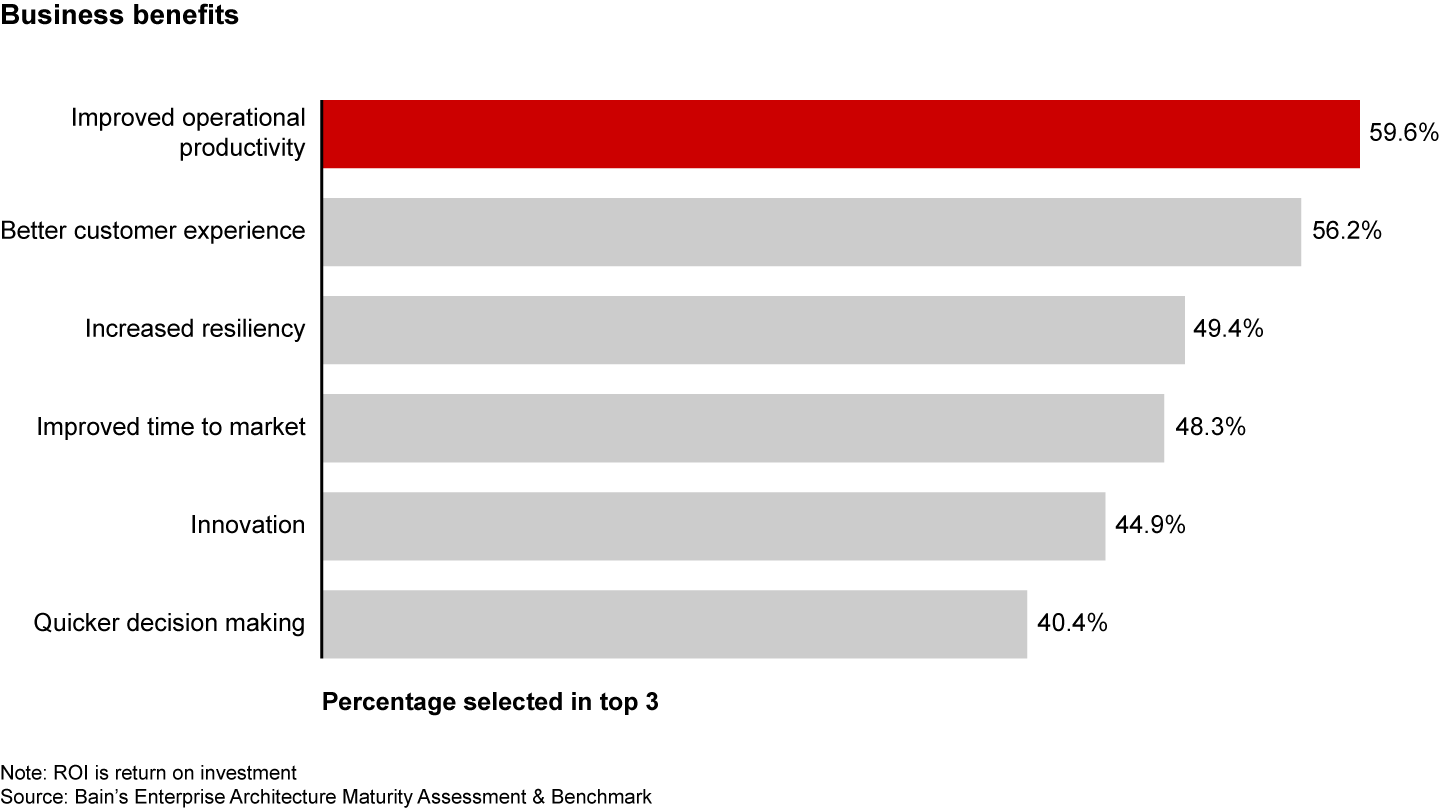
      Architecture provides the guardrails that all the autonomous Agile teams work within. It describes the ways that products and systems can work together (see Figure 1). Without good architecture, there’s no way to orchestrate the cross-channel, cross-department capabilities that a successful product model depends on. For example, with so many digital channels exposing greater functionality, it’s more important than ever to align to a target architecture that helps reduce time to market, manage costs, and create a seamless, omnichannel customer experience.

      Figure 1a
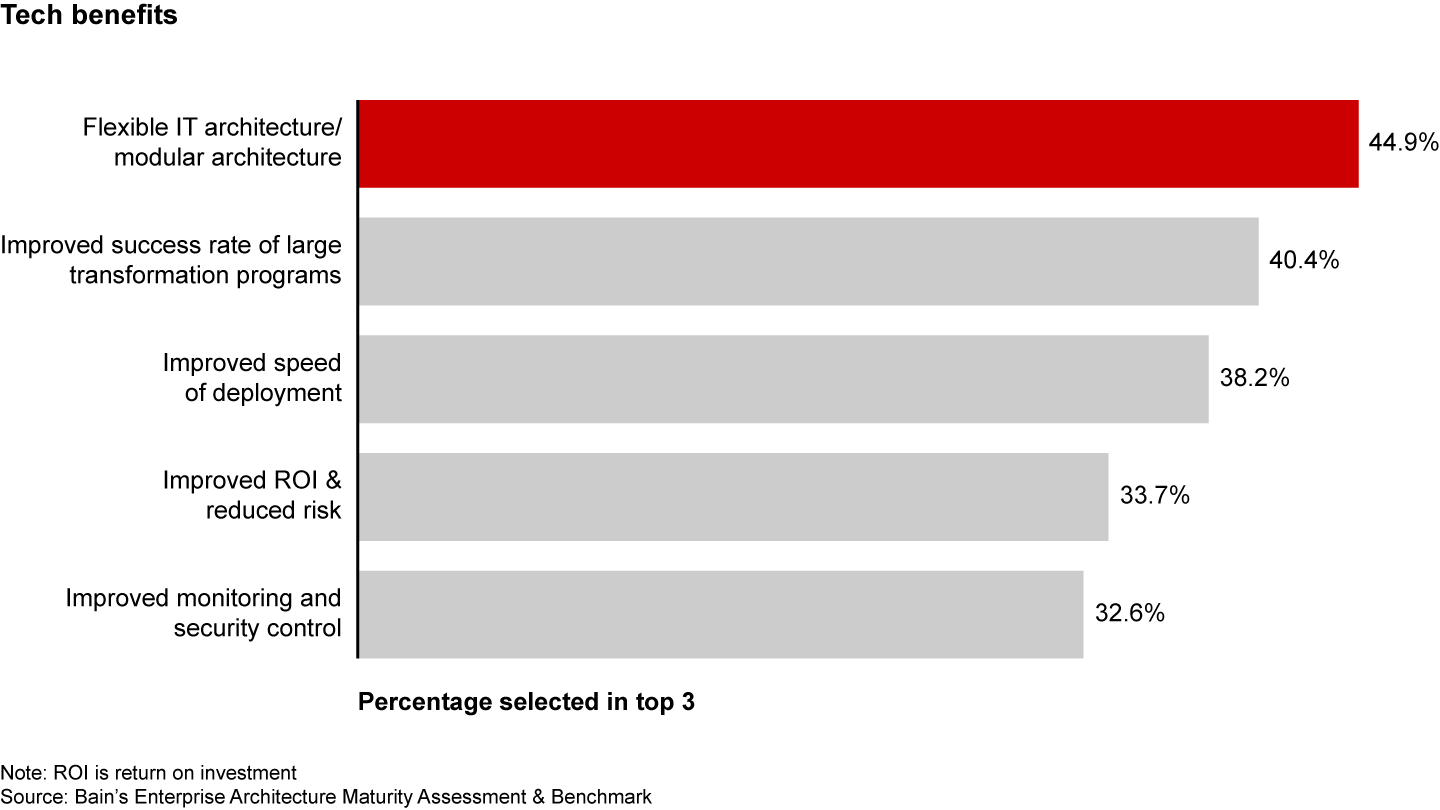
      Executives point to flexible and modular architecture and better productivity as key benefits of adopting modern architecture
      Figure 1b
      Executives point to flexible and modular architecture and better productivity as key benefits of adopting modern architecture

      Modern enterprise architecture ensures modularity and flexibility that are essential as the pace of technological change speeds up. But despite its critical importance, Bain’s research finds that only 1 in 10 executives surveyed were satisfied with the way their company manages its enterprise architecture.

      Satisfaction is greater in companies where the architects are less remote and more engaged with the teams developing internal and external products. Leading companies embed architects in teams that are delivery oriented, so that they can quickly see where the architecture is facilitating results and where improvements would help. Working on the front lines gives them a better view in real time of how technology and the company are evolving and makes it easier to adapt the architecture to emerging customer behaviors and technology trends.

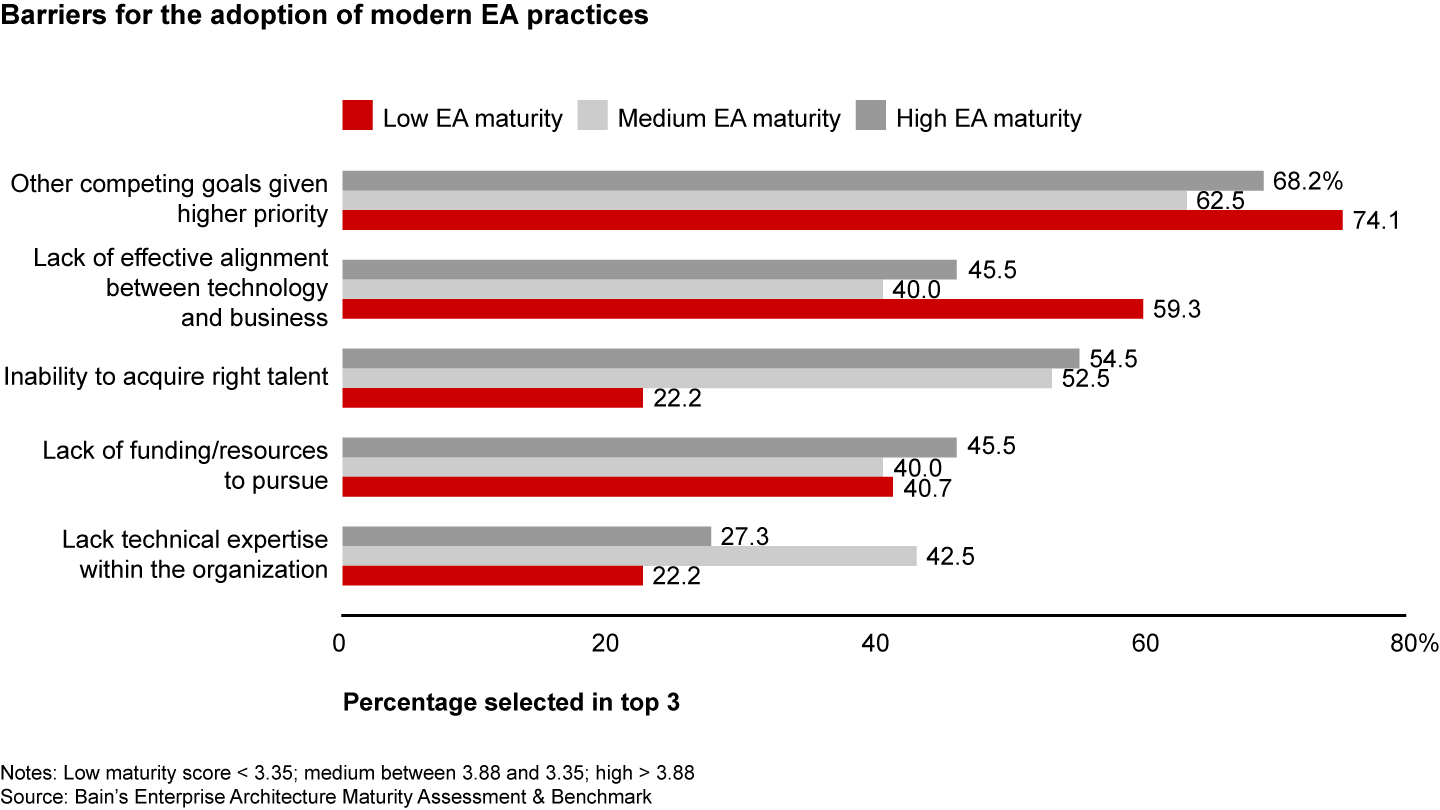
      For many companies and architects, this will require new capabilities that are both broad and deep. Executives identified technical expertise as a top enabler of enterprise architecture adoption in a recent Bain survey (see Figure 2). Talented architects, who have the skills to define and deploy enterprise architecture, also need be able to work closely with Agile teams.

      Figure 2a
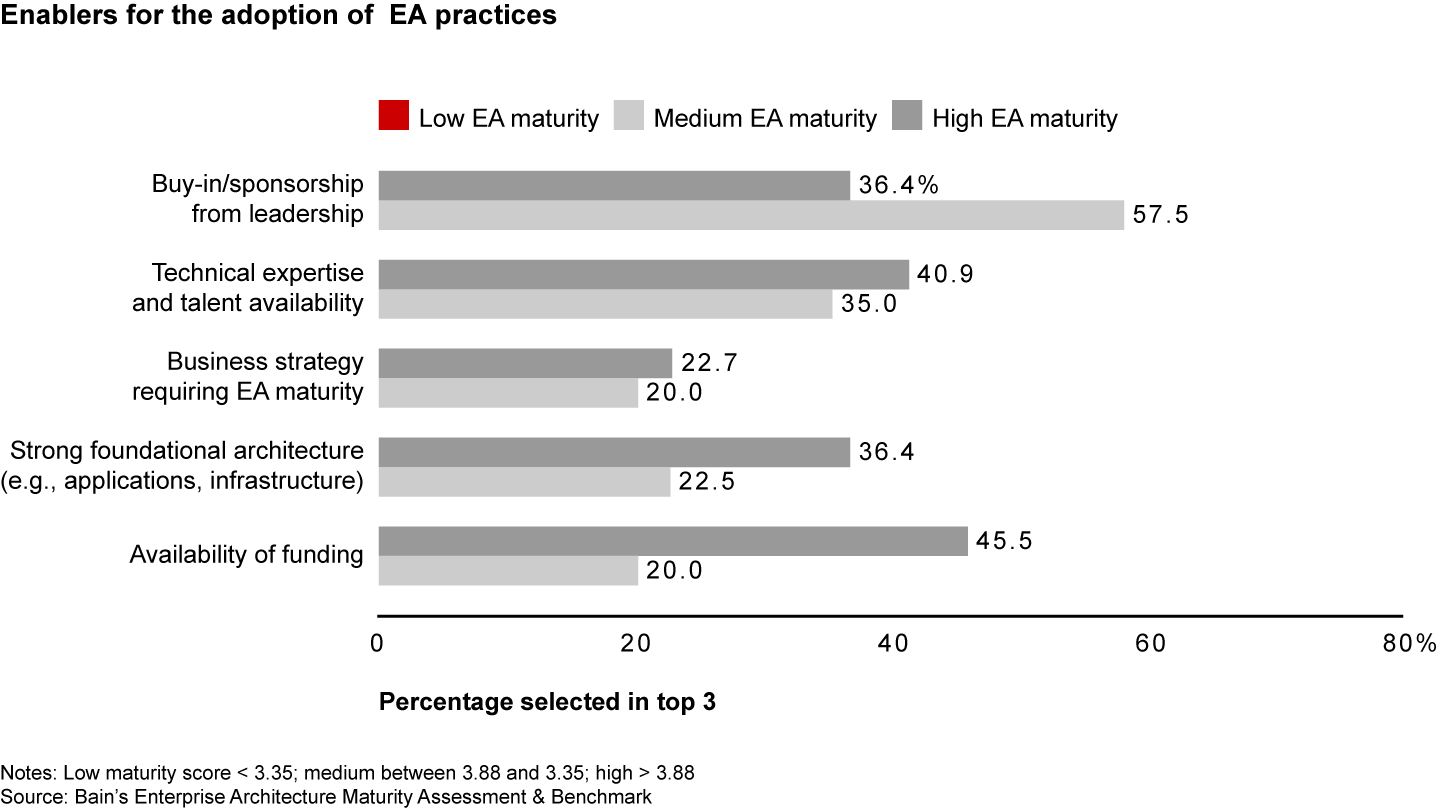
      Support from leadership is the most critical enabler for enterprise architecture practices, while competing priorities, weak alignment with the business, and difficulties finding talent are top barriers
      Figure 2b
      Support from leadership is the most critical enabler for enterprise architecture practices, while competing priorities, weak alignment with the business, and difficulties finding talent are top barriers

      Why enterprise architecture matters

      What happens if you don’t have a strong enterprise architecture in place as you scale Agile?

      Without a strong guiding architecture, business goals such as time to market and good customer experience can suffer. Companies with weak architecture struggle to orchestrate strategic initiatives, whether business or technology. This often leads to the creation of program teams to coordinate across multiple Agile teams—which increases cost, creates dependencies, and causes delays.

      It also makes it harder to align new developments in technology, creating duplicate efforts, poor integration, technical debt, and slow progress in modernizing platforms. For example, one multichannel retailer with semiautonomous product development teams saw its mobile and web teams each develop its own shopping basket, making it difficult to produce a seamless shopping experience across channels for buyers.

      What went wrong? A lack of architectural governance meant there were no barriers to guard against the teams’ developing their own baskets. Because architects were not working close to the teams, no cross-team communication alerted the architects that this was happening. Without an orchestrating role, enterprise architects weren’t able to coordinate development—which in this case could have meant asking product owners to wait until an integrated basket could be delivered.

      By contrast, companies with a flexible, modular enterprise architecture are more successful with their large transformation programs, improved operational productivity, and better customer experience. For example, a large provider of capital market infrastructure relied on enterprise architecture to help shape a business and technology strategy for data and analytics, a rapidly growing service in that industry. The company also used enterprise architecture to overcome silos by aligning language across multiple entities. This enabled new business opportunities that none of the individual entities would have been able to capture alone, and generated significant new revenue and efficiency gains.

      What leaders do differently

      Companies generate more value from technology when they view enterprise architecture as a center of excellence, advising and supporting teams across the organization as they scale Agile. This model allows enterprise architects to work more closely with teams, embedded in their delivery and decision-making processes.

      Most companies are somewhere along their journey from viewing enterprise architecture as a centralized function, where architects work on a central team, to viewing it as a center of excellence, where architects work within business teams (see Figure 3).

      Figure 3
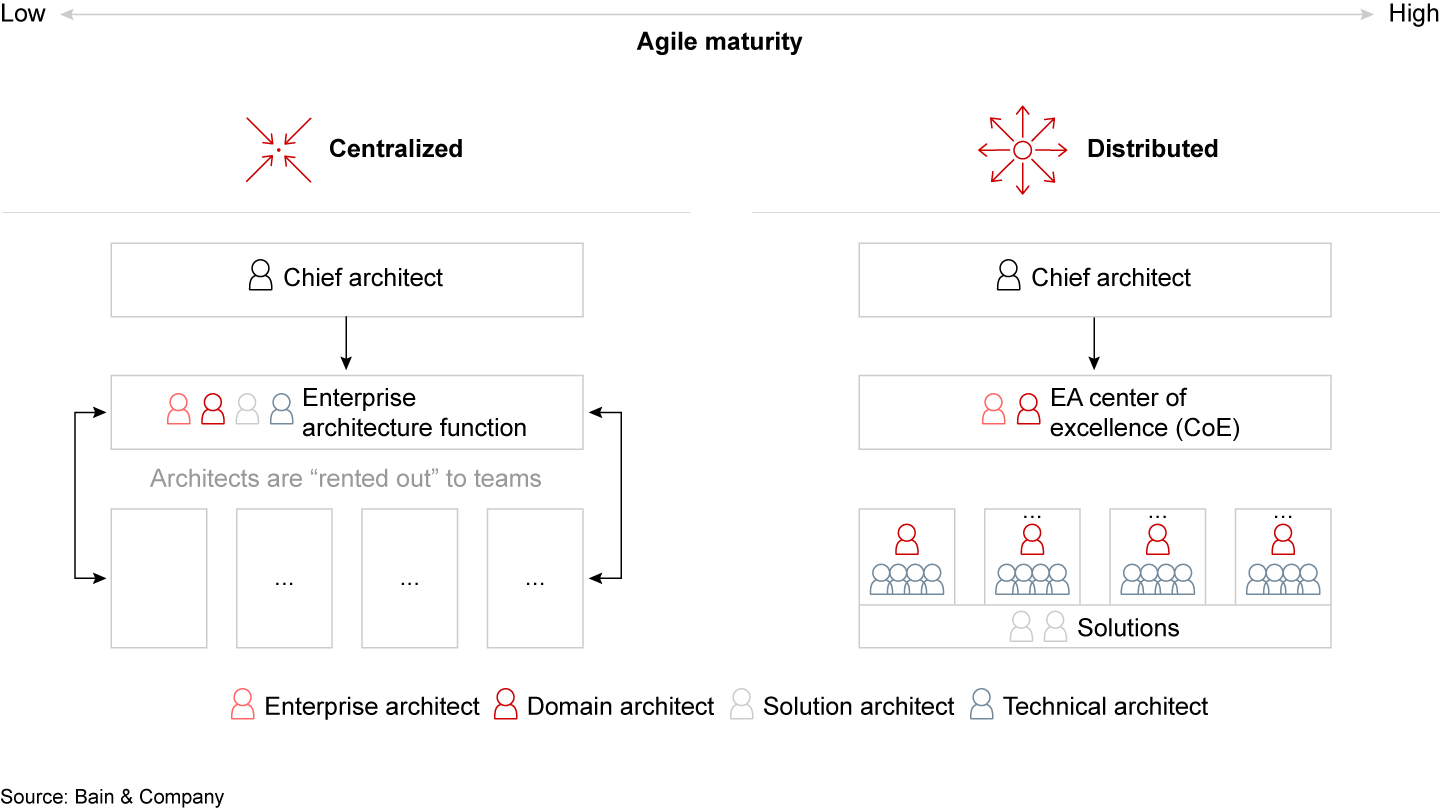
      In distributed models, architects are embedded in teams and can advise in real time

      Making this shift starts with a clear assessment of what the company will need in the future. In some cases, existing enterprise architects will need to learn new skills to work more effectively with Agile teams. In most companies some new talent will also be required. Our survey respondents cited an inability to find the right talent as a top barrier to adopting modern enterprise architecture practices.

      Our experience with companies across industries helps identify three traits that successful enterprise architecture organizations show today:

      • A hybrid structure. Successful enterprise architecture functions tend to combine a small, central enterprise architecture team that focuses on strategic priorities, portfolio decisions, and framing value streams, with a decentralized cadre that works closely with the business and Agile teams on delivery.
      • Lean governance. Simple decision-making processes, a limited set of committees, and clear guidance to teams helps reduce the administrative overhead of architecture.
      • Community support. Building up a community of enterprise architecture enables cocreation and sharing of information. Encouraging broad use of data and architecture tools through simplified language and learning support can also help spread the capability across the organization.

      As businesses strive to become more digital and operate at higher speed and with greater agility, senior leaders shouldn’t wait to transform their enterprise architecture capabilities. Updating the way enterprise architects work with teams is the foundational component to modernizing the tech stack and the people who manage it.

      Autoren
      • Headshot of Brendan O'Rourke
        Brendan O'Rourke
        Partner, London
      • Christian Schroeder
        Expert Senior Manager, Architecture, Zürich
      • Headshot of Sebastian Schroeder
        Sebastian Schroeder
        Expert Associate Partner, Düsseldorf
      • Headshot of Marita Vavoulioti
        Marita Vavoulioti
        Partner, Singapore
      • Phil Williams
        Principal Consultant, Enterprise Blueprints,, Bristol, England
      Kontaktieren Sie uns
      Ähnliche Beratungsangebote
      • Digitalisierung
      • Informationstechnologie
      Wie wir Sie unterstützen können
      • Agile Teams
      • Systems & Architecture
      CIO Insights
      Tech Execs Lack Confidence in System Integrators

      Only 6% said that they would recommend their system integrators for an enterprise resource planning (ERP) transformation.

      Mehr erfahren
      CIO Insights
      What Business Leaders Need to Know About AI Sovereignty

      Aligning business strategy with national AI priorities is necessary to compete and scale.

      Mehr erfahren
      Informationstechnologie
      Reimagining Merchandising in the Era of Agentic AI

      The future of merchandising is not better analysis, but faster, smarter execution—and agentic AI is what makes that possible.

      Mehr erfahren
      CIO Insights
      NeurIPS 2025: Signals for Enterprise Leaders from the AI Research Frontier

      Five themes that matter most for executives and boards.

      Mehr erfahren
      CIO Insights
      How Soon Will Agentic AI Redefine Enterprise Resource Planning?

      Bain’s latest survey reveals a divide: tech leaders find ERP enables AI adoption, while laggards say it hinders it.

      Mehr erfahren
      First published in Juli 2023
      Markierungen
      • Agile Teams
      • CIO Insights
      • Digitalisierung
      • Informationstechnologie
      • Systems & Architecture

      Wie wir unsere Kunden unterstützt haben

      Informationstechnologie An Appliance Maker Transforms its Technology Architecture and Strategy

      Kundenbeispiel lesen

      Change & Implementation Results360® Boosts a Pharmaceutical Company’s Stock Price 135%

      Kundenbeispiel lesen

      Informationstechnologie Salvaging a Technology Outsourcing Deal Gone Bad

      Kundenbeispiel lesen

      Möchten Sie mit uns in Kontakt bleiben?

      Wir unterstützen Führungskräfte weltweit, die kritischen Themen in ihrem Unternehmen zu adressieren. Gemeinsam schaffen wir nachhaltige Veränderungen und Ergebnisse.

      Bain Insights. Unsere Perspektive auf die kritischen Themen, mit denen sich international agierende Unternehmen konfrontiert sehen, finden Sie monatlich in Ihrem Postfach.

      *Ich habe die Datenschutzerklärung gelesen und akzeptiere sie.
      Bitte lesen Sie die Datenschutzerklärung und akzeptieren Sie diese.
      Bain & Company
      Contact us Sustainability Accessibility Rechtliche Hinweise Impressum Datenschutz Cookie-Richtlinie Sitemap Log In

      © 1996-2026 Bain & Company, Inc.

      Kontaktieren Sie Bain

      Wie können wir Ihnen helfen?

      • Business inquiry
      • Career information
      • Press relations
      • Partnership request
      • Speaker request
      Alle weltweiten Büros