
Skip to Content
  • Standorte

    Standorte

    North & Latin America
    • Atlanta
    • Austin
    • Bogota
    • Boston
    • Buenos Aires
    • Chicago
    • Dallas
    • Denver
    • Houston
    • Lisbon
    • Los Angeles
    • Mexico City
    • Minneapolis
    • Monterrey
    • Montreal
    • New York
    • Rio de Janeiro
    • San Francisco
    • Santiago
    • São Paulo
    • Seattle
    • Silicon Valley
    • Toronto
    • Washington, DC
    Europe & Africa
    • Amsterdam
    • Athens
    • Berlin
    • Brussels
    • Copenhagen
    • Düsseldorf
    • Frankfurt
    • Helsinki
    • Istanbul
    • Johannesburg
    • Kyiv
    • Lisbon
    • London
    • Madrid
    • Milan
    • München
    • Oslo
    • Paris
    • Rome
    • Stockholm
    • Warsaw
    • Wien
    • Zürich
    Middle East
    • Doha
    • Dubai
    • Riyadh
    Asia & Australia
    • Bangkok
    • Beijing
    • Bengaluru
    • Brisbane
    • Ho Chi Minh City
    • Hong Kong
    • Jakarta
    • Kuala Lumpur
    • Manila
    • Melbourne
    • Mumbai
    • New Delhi
    • Perth
    • Seoul
    • Shanghai
    • Singapore
    • Sydney
    • Tokyo
    Alle Standorte Anzeigen
  • Alumni
  • Presse
  • Newsletter
  • Kontakt
  • DACH-Region | Deutsch

    Wählen Sie Ihre Region und Sprache

    Global
    • Global (English)
    North & Latin America
    • Brazil (Português)
    • Argentina (Español)
    • Canada (Français)
    • Chile (Español)
    • Colombia (Español)
    Europe, Middle East, & Africa
    • France (Français)
    • DACH-Region (Deutsch)
    • Italy (Italiano)
    • Spain (Español)
    • Greece (Elliniká)
    Asia & Australia
    • China (中文版)
    • Korea (한국어)
    • Japan (日本語)
  • Saved items (0)
    Saved items (0)

    You have no saved items.

    Inhalte, für die Sie sich interessieren, werden hier gespeichert und können später gelesen oder weitergeleitet werden.

    Explore Bain Insights
  • Branchenkompetenzen
    Hauptmenü

    Branchenkompetenzen

    • Luft- und Raumfahrt, Verteidigung
    • Agrarwirtschaft
    • Chemieindustrie
    • Infrastruktur und Bauwirtschaft
    • Konsumgüter
    • Finanzdienstleistungen
    • Gesundheitswesen
    • Maschinen- und Anlagenbau
    • Medienwirtschaft
    • Metallindustrie
    • Bergbau
    • Öl und Gas
    • Papier- und Verpackungsindustrie
    • Private Equity
      Branchenkompetenzen
      Private Equity
      • Due Diligence
      • Exit Planning
      • Firm Strategy & Operations
      • Portfolio Value Creation
    • Öffentlicher Sektor und Sozialwesen
    • Einzelhandel
    • Technologie
    • Telekommunikation
    • Transportwesen
    • Reise- und Freizeitbranche
    • Versorgung und erneuerbare Energien
  • Managementkompetenzen
    Hauptmenü

    Managementkompetenzen

    • Customer Experience
    • ESG
    • Innovation
    • M&A
    • Operations
    • People & Organization
    • Private Equity
    • Sales & Marketing
    • Strategie
    • KI, Einblicke und Lösungen
    • Technologie
    • Transformation
  • Digital
  • Publikationen
    Hauptmenü

    Publikationen

    • Branchenthemen
    • Managementthemen
    • Bain-Bücher
    Alle Publikationen
    Ausgewählte Themen
    • Resilienz in der globalen Krise
    • M&A Report
    • Private Equity Podcast
    • Midyear Private Equity Report
    • Agile
    • Engineering Report
    • Digital Transformation
    • Elements of Value®
    • Firm of the Future
    • Nachhaltigkeitsstudie
    • Macro Trends
    • Future of Consumption
    • Weltwirtschaftsforum (WEF)
  • Über uns
    Hauptmenü

    Über uns

    • Was wir bieten
    • Unser Ansatz
    • Unser Team
    • Game Changer Award
    • Female Allstar Board
    • Messbare Ergebnisse (EN)
    • Auszeichnungen
    • Globale Partnerschaften
    • The Mission
    Further: Our global responsibility
    • Vielfalt & Chancengleichheit
    • Soziale Verantwortung
    • Sustainability
    Erfahren Sie mehr zu "Further"
  • Karriere
    Hauptmenü

    Karriere

    • Dein Einstieg
      Karriere
      Dein Einstieg
      • Find Your Place
      • Unsere Arbeitsbereiche
      • Unsere Teams
      • Angebote für Studierende
      • Praktika & Programme
      • Recruiting-Events
    • Arbeiten bei Bain
      Karriere
      Arbeiten bei Bain
      • Blog: Inside Bain
      • Karriere Stories
      • Unsere Bainies
      • Office-Standorte
      • Weiterentwicklung
      • Affinity Groups
      • Deine Benefits
    • Impact Stories
    • Deine Bewerbung
      Karriere
      Deine Bewerbung
      • Das erwartet dich
      • Der Interviewprozess
    FIND JOBS
  • Standorte
    Hauptmenü

    Standorte

    • North & Latin America
      Standorte
      North & Latin America
      • Atlanta
      • Austin
      • Bogota
      • Boston
      • Buenos Aires
      • Chicago
      • Dallas
      • Denver
      • Houston
      • Lisbon
      • Los Angeles
      • Mexico City
      • Minneapolis
      • Monterrey
      • Montreal
      • New York
      • Rio de Janeiro
      • San Francisco
      • Santiago
      • São Paulo
      • Seattle
      • Silicon Valley
      • Toronto
      • Washington, DC
    • Europe & Africa
      Standorte
      Europe & Africa
      • Amsterdam
      • Athens
      • Berlin
      • Brussels
      • Copenhagen
      • Düsseldorf
      • Frankfurt
      • Helsinki
      • Istanbul
      • Johannesburg
      • Kyiv
      • Lisbon
      • London
      • Madrid
      • Milan
      • München
      • Oslo
      • Paris
      • Rome
      • Stockholm
      • Warsaw
      • Wien
      • Zürich
    • Middle East
      Standorte
      Middle East
      • Doha
      • Dubai
      • Riyadh
    • Asia & Australia
      Standorte
      Asia & Australia
      • Bangkok
      • Beijing
      • Bengaluru
      • Brisbane
      • Ho Chi Minh City
      • Hong Kong
      • Jakarta
      • Kuala Lumpur
      • Manila
      • Melbourne
      • Mumbai
      • New Delhi
      • Perth
      • Seoul
      • Shanghai
      • Singapore
      • Sydney
      • Tokyo
    Alle Standorte Anzeigen
  • Alumni
  • Presse
  • Newsletter
  • Kontakt
  • DACH-Region | Deutsch
    Hauptmenü

    Wählen Sie Ihre Region und Sprache

    • Global
      Wählen Sie Ihre Region und Sprache
      Global
      • Global (English)
    • North & Latin America
      Wählen Sie Ihre Region und Sprache
      North & Latin America
      • Brazil (Português)
      • Argentina (Español)
      • Canada (Français)
      • Chile (Español)
      • Colombia (Español)
    • Europe, Middle East, & Africa
      Wählen Sie Ihre Region und Sprache
      Europe, Middle East, & Africa
      • France (Français)
      • DACH-Region (Deutsch)
      • Italy (Italiano)
      • Spain (Español)
      • Greece (Elliniká)
    • Asia & Australia
      Wählen Sie Ihre Region und Sprache
      Asia & Australia
      • China (中文版)
      • Korea (한국어)
      • Japan (日本語)
  • Saved items  (0)
    Hauptmenü
    Saved items (0)

    You have no saved items.

    Inhalte, für die Sie sich interessieren, werden hier gespeichert und können später gelesen oder weitergeleitet werden.

    Explore Bain Insights
  • Branchenkompetenzen
    • Branchenkompetenzen

      • Luft- und Raumfahrt, Verteidigung
      • Agrarwirtschaft
      • Chemieindustrie
      • Infrastruktur und Bauwirtschaft
      • Konsumgüter
      • Finanzdienstleistungen
      • Gesundheitswesen
      • Maschinen- und Anlagenbau
      • Medienwirtschaft
      • Metallindustrie
      • Bergbau
      • Öl und Gas
      • Papier- und Verpackungsindustrie
      • Private Equity
      • Öffentlicher Sektor und Sozialwesen
      • Einzelhandel
      • Technologie
      • Telekommunikation
      • Transportwesen
      • Reise- und Freizeitbranche
      • Versorgung und erneuerbare Energien
  • Managementkompetenzen
    • Managementkompetenzen

      • Customer Experience
      • ESG
      • Innovation
      • M&A
      • Operations
      • People & Organization
      • Private Equity
      • Sales & Marketing
      • Strategie
      • KI, Einblicke und Lösungen
      • Technologie
      • Transformation
  • Digital
  • Publikationen
    • Publikationen

      • Branchenthemen
      • Managementthemen
      • Bain-Bücher
      Alle Publikationen
      Ausgewählte Themen
      • Resilienz in der globalen Krise
      • M&A Report
      • Private Equity Podcast
      • Midyear Private Equity Report
      • Agile
      • Engineering Report
      • Digital Transformation
      • Elements of Value®
      • Firm of the Future
      • Nachhaltigkeitsstudie
      • Macro Trends
      • Future of Consumption
      • Weltwirtschaftsforum (WEF)
  • Über uns
    • Über uns

      • Was wir bieten
      • Unser Ansatz
      • Unser Team
      • Game Changer Award
      • Female Allstar Board
      • Messbare Ergebnisse (EN)
      • Auszeichnungen
      • Globale Partnerschaften
      • The Mission
      Further: Our global responsibility
      • Vielfalt & Chancengleichheit
      • Soziale Verantwortung
      • Sustainability
      Erfahren Sie mehr zu "Further"
  • Karriere
    Häufige Suchanfragen
    • Agil
    • Digital
    • Strategie
    Vorherige Suchanfragen
      Zuletzt besuchte Seiten

      Content added to saved items

      Saved items (0)

      Removed from saved items

      Saved items (0)

      Brief

      Beyond Proofs of Concept: Scaling the Industrial IoT

      Beyond Proofs of Concept: Scaling the Industrial IoT

      Customers are finding it harder to implement the industrial IoT than they expected. Here’s how vendors can help.

      Von Michael Schallehn, Christopher Schorling, Peter Bowen, und Oliver Strähle

      • Min. Lesezeit
      }

      Brief

      Beyond Proofs of Concept: Scaling the Industrial IoT
      en
      Auf einen Blick
      • Long-term prospects for the industrial Internet of Things remain ambitious. However, customers have struggled to implement some early solutions, and they now believe it will take longer to reach scale than expected.
      • IoT vendors, including analytics firms, industrial technology makers and cloud service providers, can help customers by gaining deeper experience in industry-specific applications and offering end-to-end solutions.
      • Vendors shouldn’t assume their industry experience gives them a strong competitive edge in IoT. They should partner with analytics firms and industry specialists to fill their gaps in knowledge and capabilities.

      Two years ago, predictive maintenance was forecast to be one of the most promising uses of the industrial Internet of Things (IoT). Improving the ability to determine more precisely when equipment was at risk of failing, and to signal that risk to a system where it could be identified and repaired or replaced, seemed like a no-brainer. Who wouldn’t want better information to prevent equipment failure?

      So it’s somewhat surprising that predictive maintenance has failed to take off as broadly as expected. A recent Bain survey of more than 600 high-tech executives has found that industrial customers were less enthused about the potential of predictive maintenance in 2018 than they were two years earlier. Conversations with many customers reveal that implementing predictive maintenance solutions has been more difficult than anticipated, and it has proven more challenging to extract valuable insights from the data.

      Predictive maintenance is just one of many IoT use cases that customers have had difficulty integrating into their existing operational technology and IT systems. As companies in the industrial sector have invested in more proofs of concept, many have found IoT implementation more challenging than they anticipated. Because of this, customer expectations have dampened slightly (see Figure 1). Our 2018 survey found that, although the long-term predictions remain positive, in the short term, customers expect implementation to be a bit slower than they did in 2016. However, given the progress in sensor technology, 5G connectivity, edge computing and edge analytics, and an estimated 20 billion devices connected by 2020, there’s little doubt of the potential for technology to vastly improve efficiency and no doubt that the IoT will have to manage it.

      Figure 1
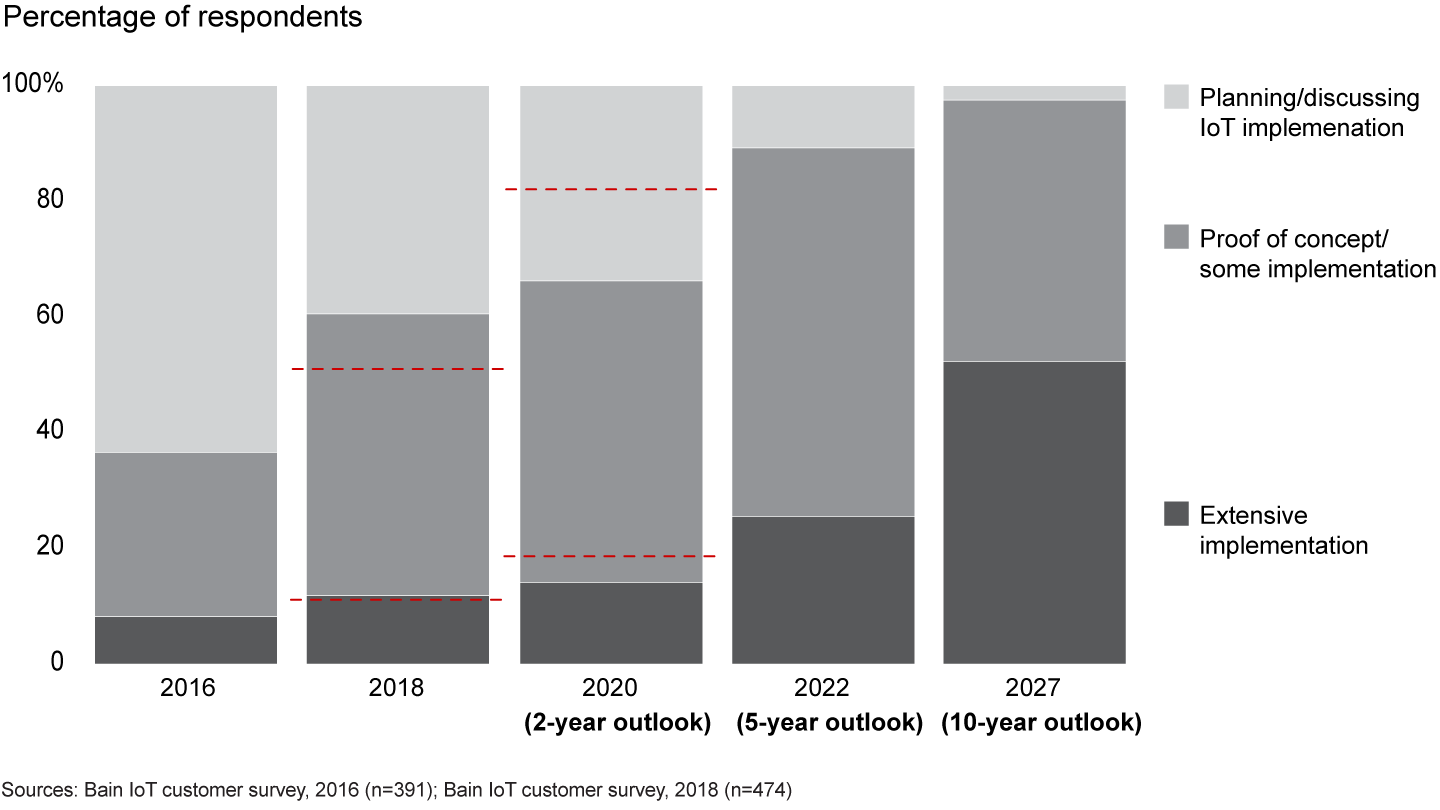
      The IoT outlook for 2020 has dampened, but long-term targets remain bullish
      The IoT outlook for 2020 has dampened, but long-term targets remain bullish
      The IoT outlook for 2020 has dampened, but long-term targets remain bullish

      Overcoming adoption barriers

      To reach those long-term goals, industrial IoT vendors should be helping their customers overcome the barriers to adoption. Bain’s 2018 survey found that among industrial customers, concerns over integration issues—in particular, technical expertise, data portability and transition risks—have become more acute over the past two years (see Figure 2).

      Figure 2
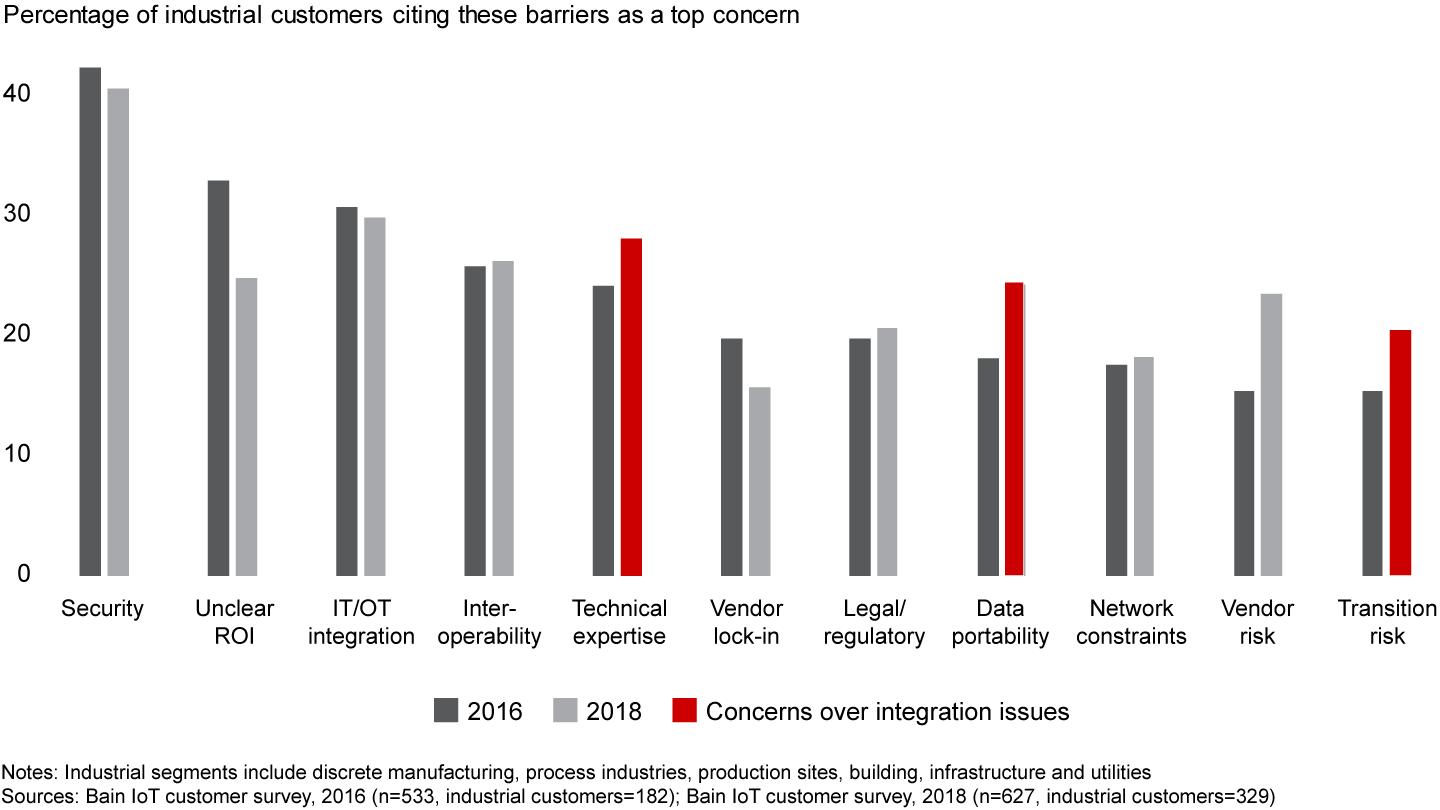
      More experience with proofs of concept has shifted IoT customers’ concerns in the past two years
      More experience with proofs of concept has shifted IoT customers’ concerns in the past two years
      More experience with proofs of concept has shifted IoT customers’ concerns in the past two years

      In 2016, customers were most concerned about security, returns on investment and the difficulty of integrating IoT solutions with existing IT and operational technology. In 2018, security and integration were still top concerns, indicating that tech vendors haven’t made much progress in addressing these. Our research has also found that as an organization becomes more technologically mature, concerns about security actually increase—so the challenge continues to grow. (For more on the subject, read the Bain Brief “Cybersecurity Is the Key to Unlocking Demand in the Internet of Things.”) However, fewer customers are concerned about ROI than two years ago, perhaps because they have been satisfied by the returns on their early implementations. Industrial IoT use cases are beginning to deliver vendors’ promises.

      The issues that worry customers more are ones that arise during implementation: technical expertise, difficulties in porting data across different formats, and the transition risks. Proofs of concept have unearthed these challenges, and executives may now realize that although the effort pays off, the devil is in the details.

      Gaining more industry expertise will allow industrial IoT vendors to help their customers overcome these barriers. To do that, they’ll need to align more closely with their customers’ expectations.

      Aligning on use cases

      So, which applications of IoT technology are gaining the most traction? To identify the most anticipated and promising use cases, we asked industrial IoT customers and vendors where they are in deployment on a wide range of applications. Several ranked high for customers and vendors both: quality control, remote monitoring of equipment and tracking of assets or equipment on production sites are a few examples (see Figure 3). We expect to see rapid growth in these applications, which appear in the top right corner of the chart.

      Figure 3
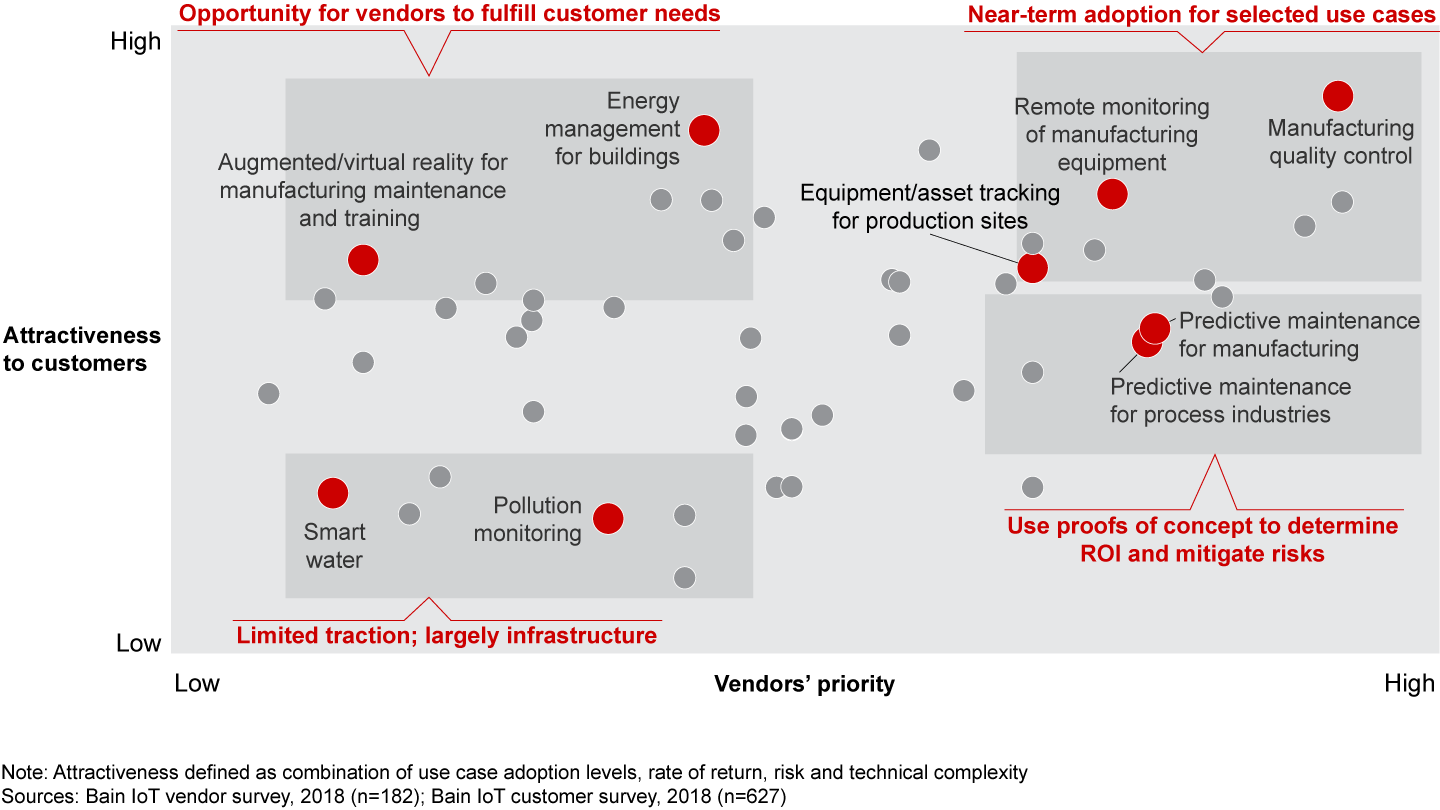
      Vendors and customers often differ over which use cases they value most
      Vendors and customers often differ over which use cases they value most
      Vendors and customers often differ over which use cases they value most

      Predictive maintenance is the prime example of a use case that vendors are ready to deploy, but customers are less excited about, as shown in the middle right panel. Its decline in attractiveness indicates customers face implementation barriers. Vendors that want to boost adoption of these use cases need to focus on helping customers implement them.

      Several others, including augmented reality and virtual reality for maintenance and training, and energy management, were among those that customers are eager for, but vendors don’t feel ready to deploy (upper left corner). These represent an untapped opportunity for vendors to build end-to-end offerings.

      While smart city solutions such as water and pollution monitoring have received a great deal of media attention, they continue to draw little interest from vendors and customers (lower left corner).

      Market potential

      Despite these barriers and misalignments, the industrial IoT remains a promising opportunity. Our research indicates that the industrial portion of the Internet of Things—including software, hardware and system solutions in the manufacturing, infrastructure, building and utilities sectors—continues to grow rapidly, and could double in size to more than $200 billion by 2021 (see Figure 4).

      Figure 4
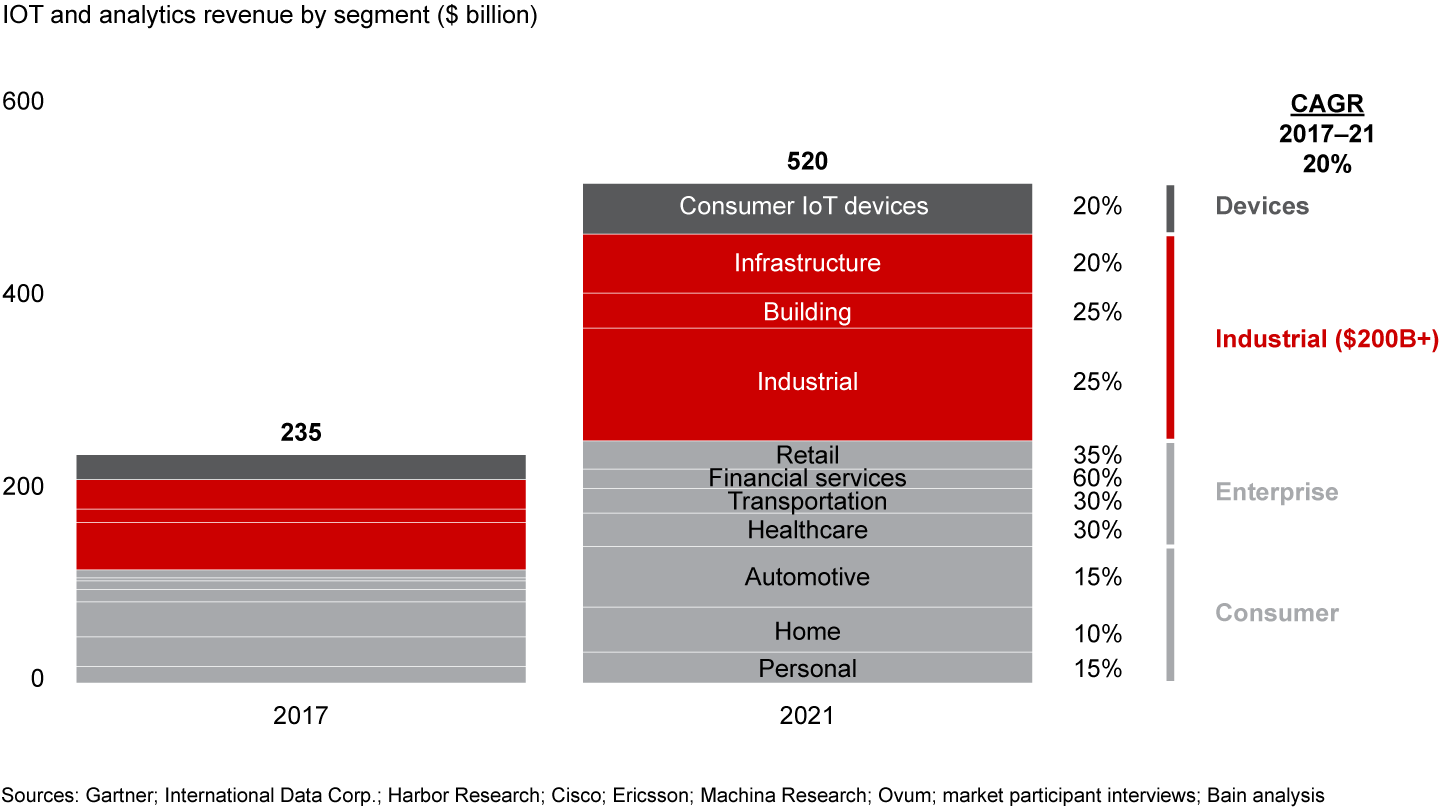
      The industrial IoT market will reach $200 billion by 2021
      The industrial IoT market will reach $200 billion by 2021
      The industrial IoT market will reach $200 billion by 2021

      To capture that opportunity, device makers and other vendors of industrial and operational technology need to dramatically improve their software capabilities—not a historical strength for most of them. Leaders are investing heavily in acquisitions to acquire the necessary capabilities and talent (see Figure 5). Most of this M&A activity targets companies further up the technology stack—in the realms of software and systems integration—than the core capabilities of industrial companies.

      Figure 5
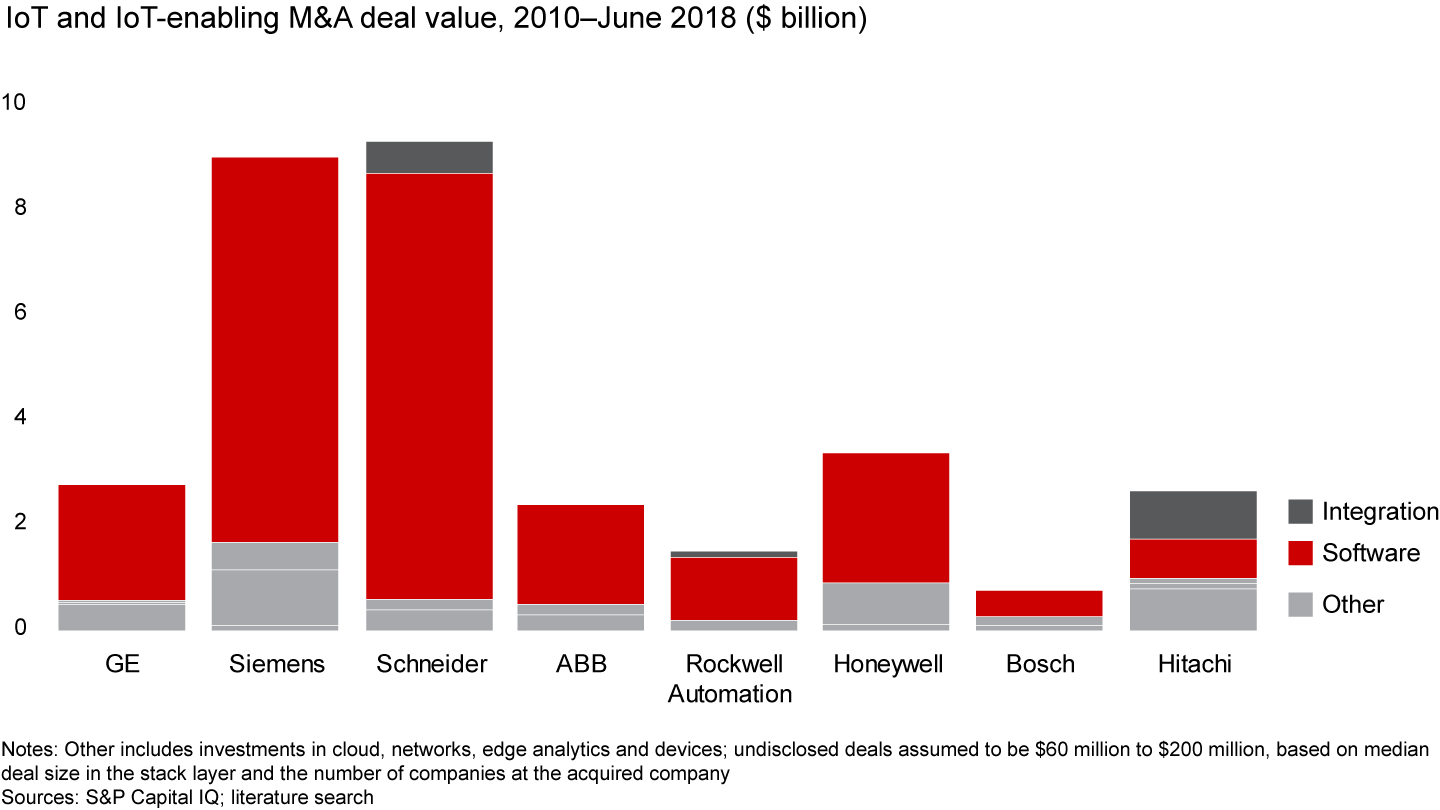
      Operation technology vendors are investing billions to strengthen their software capabilities
      Operation technology vendors are investing billions to strengthen their software capabilities
      Operation technology vendors are investing billions to strengthen their software capabilities

      And the competitive field is crowded. Cloud service providers (CSPs) like Amazon’s AWS IoT Greengrass and Microsoft Azure are leveraging their enterprise business relationships to penetrate industrial IoT markets, and enterprise IT vendors are also developing IoT platforms. One measure of their increasing traction lies in the size of their developer networks, since they’re programming the applications that make sense of IoT data and ultimately determine the scale and scope of the platform (see Figure 6). Our research on developer networks indicates that CSPs have a substantial edge over most IoT platforms, with the exception of PTC’s Thingworx. Among industrial technology providers and device makers, most of the leaders are just beginning to catch up with GE and the CSPs. For any executive team looking to lead the market in the industrial IoT, the message to act is clear in these numbers.

      Figure 6
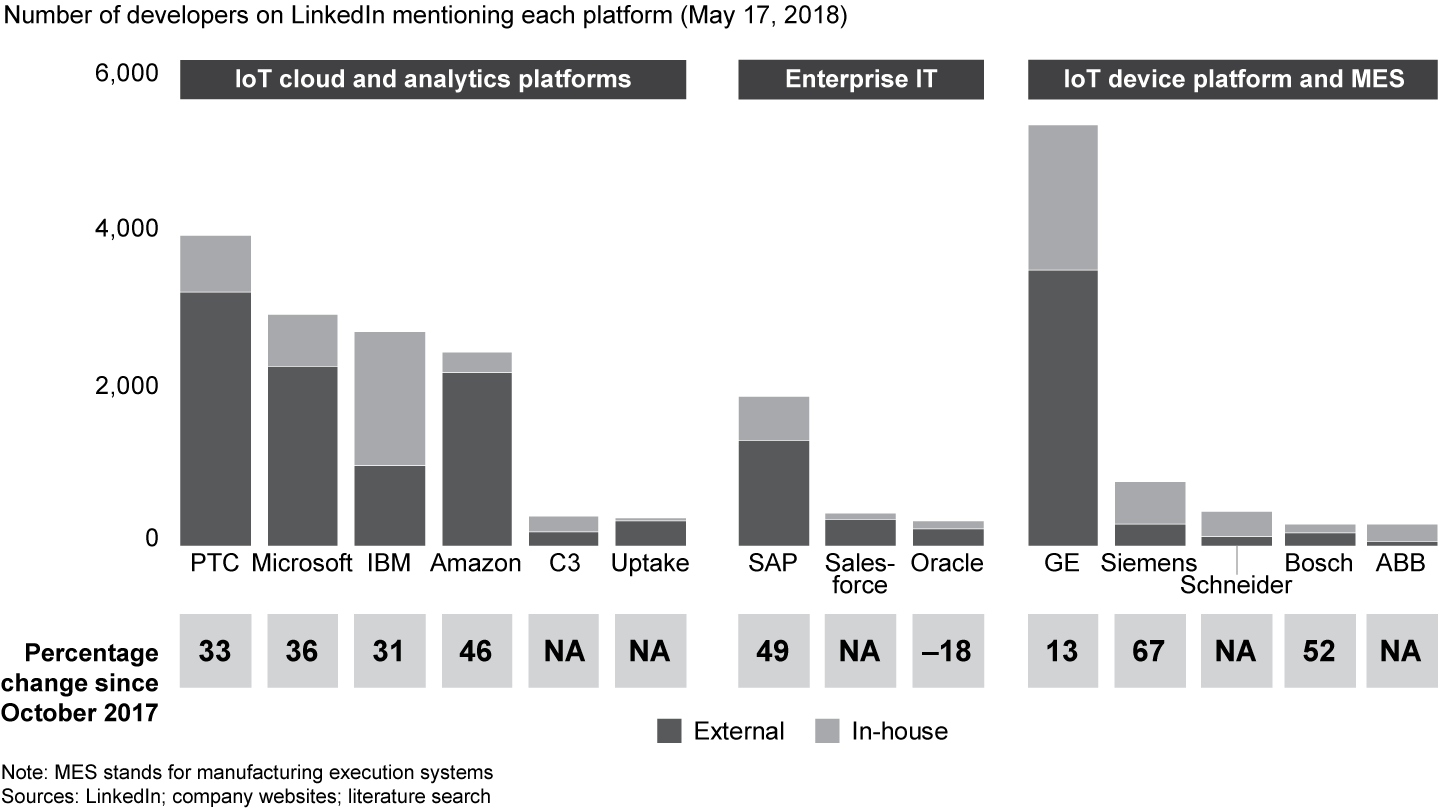
      All categories of vendors are competing for developers on their IoT platforms
      All categories of vendors are competing for developers on their IoT platforms
      All categories of vendors are competing for developers on their IoT platforms

      Gaining a competitive edge

      To achieve scale, operational technology vendors and manufacturers will need to mobilize quickly, to ensure they gain the necessary capabilities and position themselves for long-term success. Four groups of actions can help guide the way.

      • Concentrate your bets. Focus on select use cases and tackle barriers to adoption such as security, ROI, and IT and operational technology integration. Learn from proofs of concept and develop repeatable playbooks. Package IoT solutions into scalable products that you then can roll out to customers.
      • Don’t try this alone. Acknowledge that you have capability gaps, and find ways to address them through partnerships. Work closely with CSPs, analytics vendors or enterprise IT vendors based on what you’re pursuing. At the same time, avoid broad and unwieldy alliances with too many players. Partnerships tend to be more effective with a selective approach based on the use case.
      • Tell the CFO that break-even may take a while. Building capabilities and forging strong partnerships takes time, so commit to long investment periods. Approach the effort with a realistic view of the funding, timeline and staffing changes needed to deliver results.
      • Scan broadly for new talent. Your best employees excel at their jobs, but new operating models may require different skills. Learn to identify, hire and retain the entrepreneurial talent to thrive in your evolving business model.

      Finally, executives need a clear picture of what their new operating model will be. Many companies struggle to scale their successful proofs of concept amid fears of cannibalizing existing products and revenue, or out of concerns that the nascent enterprise won’t meet P&L requirements. Companies need to redesign the operating model around IoT initiatives in ways that allow internal entrepreneurs to pursue these opportunities without alienating the rest of the organization.

      One way to assess your company’s readiness to scale up its industrial IoT efforts is to ask a few questions.

      • Are you clear on what full potential IoT means for your company, in terms of revenues, cost and quality?
      • Do you have a plan and the means to beat your competition in the industrial IoT, wherever it may come?
      • Have you cracked the code to scaling IoT proofs of concept in your business?
      • Do you have an effective operating model to support the execution of your plan?

      Michael Schallehn, Christopher Schorling and Peter Bowen are partners with Bain’s Technology practice, based in Silicon Valley, Frankfurt and Chicago, respectively. Oliver Straehle is a partner in Zurich, where he leads Bain’s Advanced Manufacturing & Services practice in Europe, the Middle East and Africa.

      Autoren
      • Headshot of Michael Schallehn
        Michael Schallehn
        Partner, Silicon Valley
      • Headshot of Christopher Schorling
        Christopher Schorling
        Alumni, Frankfurt
      • Headshot of Peter Bowen
        Peter Bowen
        Partner, Austin
      • Headshot of Oliver Straehle
        Oliver Strähle
        Partner, Zürich
      Kontaktieren Sie uns
      Verwandte Branchen
      • Industriegüter und -services
      • Internet of Things
      • Technologie
      Internet der Dinge
      Industrial IoT Customers Show Tempered Optimism

      Industrial companies had more proofs of concept in 2018 than expected, but they anticipate slower progress ahead.

      Mehr erfahren
      Internet der Dinge
      Coronavirus and Other Shocks: How Resilient Is Your Supply Chain?

      Don’t overlook the risks from second- and third-tier suppliers.

      Mehr erfahren
      Industriegüter und -services
      Using Hardware to Scale the Industrial Internet of Things

      Bain partners discuss the opportunity for hardware vendors to help companies develop their IoT pilots.

      Mehr erfahren
      Internet der Dinge
      For Manufacturing Gains, Focus Big Data on Big Problems

      Bain Partner Joachim Breidenthal explains how manufacturers can make their facilities more reliable by focusing technology investments on problem solving.

      Mehr erfahren
      Internet der Dinge
      Which Applications of the Industrial IoT Are Gaining the Most Traction?

      Vendors and customers aren’t always aligned on which Internet of Things technologies to deploy next.

      Mehr erfahren
      First published in Januar 2019
      Markierungen
      • Industriegüter und -services
      • Internet der Dinge
      • Internet of Things
      • Technologie

      Wie wir unsere Kunden unterstützt haben

      Strategie A Conglomerate Charts a New Global Strategy

      Kundenbeispiel lesen

      Nachhaltigkeit Can Microchips Turbocharge Sustainability Improvement?

      Kundenbeispiel lesen

      An Auto Parts Company Revs Up Its Competitive Position

      Kundenbeispiel lesen

      Möchten Sie mit uns in Kontakt bleiben?

      Wir unterstützen Führungskräfte weltweit, die kritischen Themen in ihrem Unternehmen zu adressieren. Gemeinsam schaffen wir nachhaltige Veränderungen und Ergebnisse.

      Bain Insights. Unsere Perspektive auf die kritischen Themen, mit denen sich international agierende Unternehmen konfrontiert sehen, finden Sie monatlich in Ihrem Postfach.

      *Ich habe die Datenschutzerklärung gelesen und akzeptiere sie.
      Bitte lesen Sie die Datenschutzerklärung und akzeptieren Sie diese.
      Bain & Company
      Contact us Sustainability Accessibility Rechtliche Hinweise Impressum Datenschutz Cookie-Richtlinie Sitemap Log In

      © 1996-2026 Bain & Company, Inc.

      Kontaktieren Sie Bain

      Wie können wir Ihnen helfen?

      • Business inquiry
      • Career information
      • Press relations
      • Partnership request
      • Speaker request
      Alle weltweiten Büros