
Skip to Content
  • Standorte

    Standorte

    North & Latin America
    • Atlanta
    • Austin
    • Bogota
    • Boston
    • Buenos Aires
    • Chicago
    • Dallas
    • Denver
    • Houston
    • Lisbon
    • Los Angeles
    • Mexico City
    • Minneapolis
    • Monterrey
    • Montreal
    • New York
    • Rio de Janeiro
    • San Francisco
    • Santiago
    • São Paulo
    • Seattle
    • Silicon Valley
    • Toronto
    • Washington, DC
    Europe & Africa
    • Amsterdam
    • Athens
    • Berlin
    • Brussels
    • Copenhagen
    • Düsseldorf
    • Frankfurt
    • Helsinki
    • Istanbul
    • Johannesburg
    • Kyiv
    • Lisbon
    • London
    • Madrid
    • Milan
    • München
    • Oslo
    • Paris
    • Rome
    • Stockholm
    • Warsaw
    • Wien
    • Zürich
    Middle East
    • Doha
    • Dubai
    • Riyadh
    Asia & Australia
    • Bangkok
    • Beijing
    • Bengaluru
    • Brisbane
    • Ho Chi Minh City
    • Hong Kong
    • Jakarta
    • Kuala Lumpur
    • Manila
    • Melbourne
    • Mumbai
    • New Delhi
    • Perth
    • Seoul
    • Shanghai
    • Singapore
    • Sydney
    • Tokyo
    Alle Standorte Anzeigen
  • Alumni
  • Presse
  • Newsletter
  • Kontakt
  • DACH-Region | Deutsch

    Wählen Sie Ihre Region und Sprache

    Global
    • Global (English)
    North & Latin America
    • Brazil (Português)
    • Argentina (Español)
    • Canada (Français)
    • Chile (Español)
    • Colombia (Español)
    Europe, Middle East, & Africa
    • France (Français)
    • DACH-Region (Deutsch)
    • Italy (Italiano)
    • Spain (Español)
    • Greece (Elliniká)
    Asia & Australia
    • China (中文版)
    • Korea (한국어)
    • Japan (日本語)
  • Saved items (0)
    Saved items (0)

    You have no saved items.

    Inhalte, für die Sie sich interessieren, werden hier gespeichert und können später gelesen oder weitergeleitet werden.

    Explore Bain Insights
  • Branchenkompetenzen
    Hauptmenü

    Branchenkompetenzen

    • Luft- und Raumfahrt, Verteidigung
    • Agrarwirtschaft
    • Chemieindustrie
    • Infrastruktur und Bauwirtschaft
    • Konsumgüter
    • Finanzdienstleistungen
    • Gesundheitswesen
    • Maschinen- und Anlagenbau
    • Medienwirtschaft
    • Metallindustrie
    • Bergbau
    • Öl und Gas
    • Papier- und Verpackungsindustrie
    • Private Equity
      Branchenkompetenzen
      Private Equity
      • Due Diligence
      • Exit Planning
      • Firm Strategy & Operations
      • Portfolio Value Creation
    • Öffentlicher Sektor und Sozialwesen
    • Einzelhandel
    • Technologie
    • Telekommunikation
    • Transportwesen
    • Reise- und Freizeitbranche
    • Versorgung und erneuerbare Energien
  • Managementkompetenzen
    Hauptmenü

    Managementkompetenzen

    • Customer Experience
    • ESG
    • Innovation
    • M&A
    • Operations
    • People & Organization
    • Private Equity
    • Sales & Marketing
    • Strategie
    • KI, Einblicke und Lösungen
    • Technologie
    • Transformation
  • Digital
  • Publikationen
    Hauptmenü

    Publikationen

    • Branchenthemen
    • Managementthemen
    • Bain-Bücher
    Alle Publikationen
    Ausgewählte Themen
    • Resilienz in der globalen Krise
    • M&A Report
    • Private Equity Podcast
    • Midyear Private Equity Report
    • Agile
    • Engineering Report
    • Digital Transformation
    • Elements of Value®
    • Firm of the Future
    • Nachhaltigkeitsstudie
    • Macro Trends
    • Future of Consumption
    • Weltwirtschaftsforum (WEF)
  • Über uns
    Hauptmenü

    Über uns

    • Was wir bieten
    • Unser Ansatz
    • Unser Team
    • Game Changer Award
    • Female Allstar Board
    • Messbare Ergebnisse (EN)
    • Auszeichnungen
    • Globale Partnerschaften
    • The Mission
    Further: Our global responsibility
    • Vielfalt & Chancengleichheit
    • Soziale Verantwortung
    • Sustainability
    Erfahren Sie mehr zu "Further"
  • Karriere
    Hauptmenü

    Karriere

    • Dein Einstieg
      Karriere
      Dein Einstieg
      • Find Your Place
      • Unsere Arbeitsbereiche
      • Unsere Teams
      • Angebote für Studierende
      • Praktika & Programme
      • Recruiting-Events
    • Arbeiten bei Bain
      Karriere
      Arbeiten bei Bain
      • Karriere Stories
      • Unsere Bainies
      • Office-Standorte
      • Weiterentwicklung
      • Affinity Groups
      • Deine Benefits
    • Impact Stories
    • Deine Bewerbung
      Karriere
      Deine Bewerbung
      • Das erwartet dich
      • Der Interviewprozess
    FIND JOBS
  • Standorte
    Hauptmenü

    Standorte

    • North & Latin America
      Standorte
      North & Latin America
      • Atlanta
      • Austin
      • Bogota
      • Boston
      • Buenos Aires
      • Chicago
      • Dallas
      • Denver
      • Houston
      • Lisbon
      • Los Angeles
      • Mexico City
      • Minneapolis
      • Monterrey
      • Montreal
      • New York
      • Rio de Janeiro
      • San Francisco
      • Santiago
      • São Paulo
      • Seattle
      • Silicon Valley
      • Toronto
      • Washington, DC
    • Europe & Africa
      Standorte
      Europe & Africa
      • Amsterdam
      • Athens
      • Berlin
      • Brussels
      • Copenhagen
      • Düsseldorf
      • Frankfurt
      • Helsinki
      • Istanbul
      • Johannesburg
      • Kyiv
      • Lisbon
      • London
      • Madrid
      • Milan
      • München
      • Oslo
      • Paris
      • Rome
      • Stockholm
      • Warsaw
      • Wien
      • Zürich
    • Middle East
      Standorte
      Middle East
      • Doha
      • Dubai
      • Riyadh
    • Asia & Australia
      Standorte
      Asia & Australia
      • Bangkok
      • Beijing
      • Bengaluru
      • Brisbane
      • Ho Chi Minh City
      • Hong Kong
      • Jakarta
      • Kuala Lumpur
      • Manila
      • Melbourne
      • Mumbai
      • New Delhi
      • Perth
      • Seoul
      • Shanghai
      • Singapore
      • Sydney
      • Tokyo
    Alle Standorte Anzeigen
  • Alumni
  • Presse
  • Newsletter
  • Kontakt
  • DACH-Region | Deutsch
    Hauptmenü

    Wählen Sie Ihre Region und Sprache

    • Global
      Wählen Sie Ihre Region und Sprache
      Global
      • Global (English)
    • North & Latin America
      Wählen Sie Ihre Region und Sprache
      North & Latin America
      • Brazil (Português)
      • Argentina (Español)
      • Canada (Français)
      • Chile (Español)
      • Colombia (Español)
    • Europe, Middle East, & Africa
      Wählen Sie Ihre Region und Sprache
      Europe, Middle East, & Africa
      • France (Français)
      • DACH-Region (Deutsch)
      • Italy (Italiano)
      • Spain (Español)
      • Greece (Elliniká)
    • Asia & Australia
      Wählen Sie Ihre Region und Sprache
      Asia & Australia
      • China (中文版)
      • Korea (한국어)
      • Japan (日本語)
  • Saved items  (0)
    Hauptmenü
    Saved items (0)

    You have no saved items.

    Inhalte, für die Sie sich interessieren, werden hier gespeichert und können später gelesen oder weitergeleitet werden.

    Explore Bain Insights
  • Branchenkompetenzen
    • Branchenkompetenzen

      • Luft- und Raumfahrt, Verteidigung
      • Agrarwirtschaft
      • Chemieindustrie
      • Infrastruktur und Bauwirtschaft
      • Konsumgüter
      • Finanzdienstleistungen
      • Gesundheitswesen
      • Maschinen- und Anlagenbau
      • Medienwirtschaft
      • Metallindustrie
      • Bergbau
      • Öl und Gas
      • Papier- und Verpackungsindustrie
      • Private Equity
      • Öffentlicher Sektor und Sozialwesen
      • Einzelhandel
      • Technologie
      • Telekommunikation
      • Transportwesen
      • Reise- und Freizeitbranche
      • Versorgung und erneuerbare Energien
  • Managementkompetenzen
    • Managementkompetenzen

      • Customer Experience
      • ESG
      • Innovation
      • M&A
      • Operations
      • People & Organization
      • Private Equity
      • Sales & Marketing
      • Strategie
      • KI, Einblicke und Lösungen
      • Technologie
      • Transformation
  • Digital
  • Publikationen
    • Publikationen

      • Branchenthemen
      • Managementthemen
      • Bain-Bücher
      Alle Publikationen
      Ausgewählte Themen
      • Resilienz in der globalen Krise
      • M&A Report
      • Private Equity Podcast
      • Midyear Private Equity Report
      • Agile
      • Engineering Report
      • Digital Transformation
      • Elements of Value®
      • Firm of the Future
      • Nachhaltigkeitsstudie
      • Macro Trends
      • Future of Consumption
      • Weltwirtschaftsforum (WEF)
  • Über uns
    • Über uns

      • Was wir bieten
      • Unser Ansatz
      • Unser Team
      • Game Changer Award
      • Female Allstar Board
      • Messbare Ergebnisse (EN)
      • Auszeichnungen
      • Globale Partnerschaften
      • The Mission
      Further: Our global responsibility
      • Vielfalt & Chancengleichheit
      • Soziale Verantwortung
      • Sustainability
      Erfahren Sie mehr zu "Further"
  • Karriere
    Häufige Suchanfragen
    • Agil
    • Digital
    • Strategie
    Vorherige Suchanfragen
      Zuletzt besuchte Seiten

      Content added to saved items

      Saved items (0)

      Removed from saved items

      Saved items (0)

      M&A Report

      M&A in Consumer Products: Carving Out to Grow

      M&A in Consumer Products: Carving Out to Grow

      Consumer products companies are separating to enable more focus and simpler business models.

      Von Peter Horsley, Maria Kurenova, Sam Rovit, Allison Snider, Joost Spits, und Dustin Rohrer

      • First published on Februar 04, 2025
      • Min. Lesezeit
      }

      Report

      M&A in Consumer Products: Carving Out to Grow
      en
      Auf einen Blick
      • Despite a few large acquisitions, deal value dropped by 19% in 2024.
      • Many are continuing to evaluate and divest low-growth and noncore parts of their portfolios.
      • Our survey found that 60% of consumer products executives expect to sell assets over the next three years.
      • Success requires companies to look for ways to maximize value, not just split the business away.

      This article is part of Bain's 2025 M&A Report.

      EXPLORE THE REPORT

      For two decades, the consumer products industry has watched its total shareholder returns (TSRs) steadily drop from one of the highest to one of the lowest among industries. Reversing that fate requires companies to be aggressive about boosting volume growth and restoring profitability.

      For many in consumer products, the year 2024 was a time to evaluate portfolios and shed underperforming, noncore, and low-growth assets to double down on the areas with the highest growth potential and to simplify for profitability. It’s been a steady trend. Even as overall deal value dropped after 2018, divestitures' share of total M&A increased by 10 percentage points (see Figure 1). When we asked M&A practitioners in consumer products about their plans for the future, about 60% said that they expect to sell assets within the next three years compared with 42% across all industries.

      Figure 1
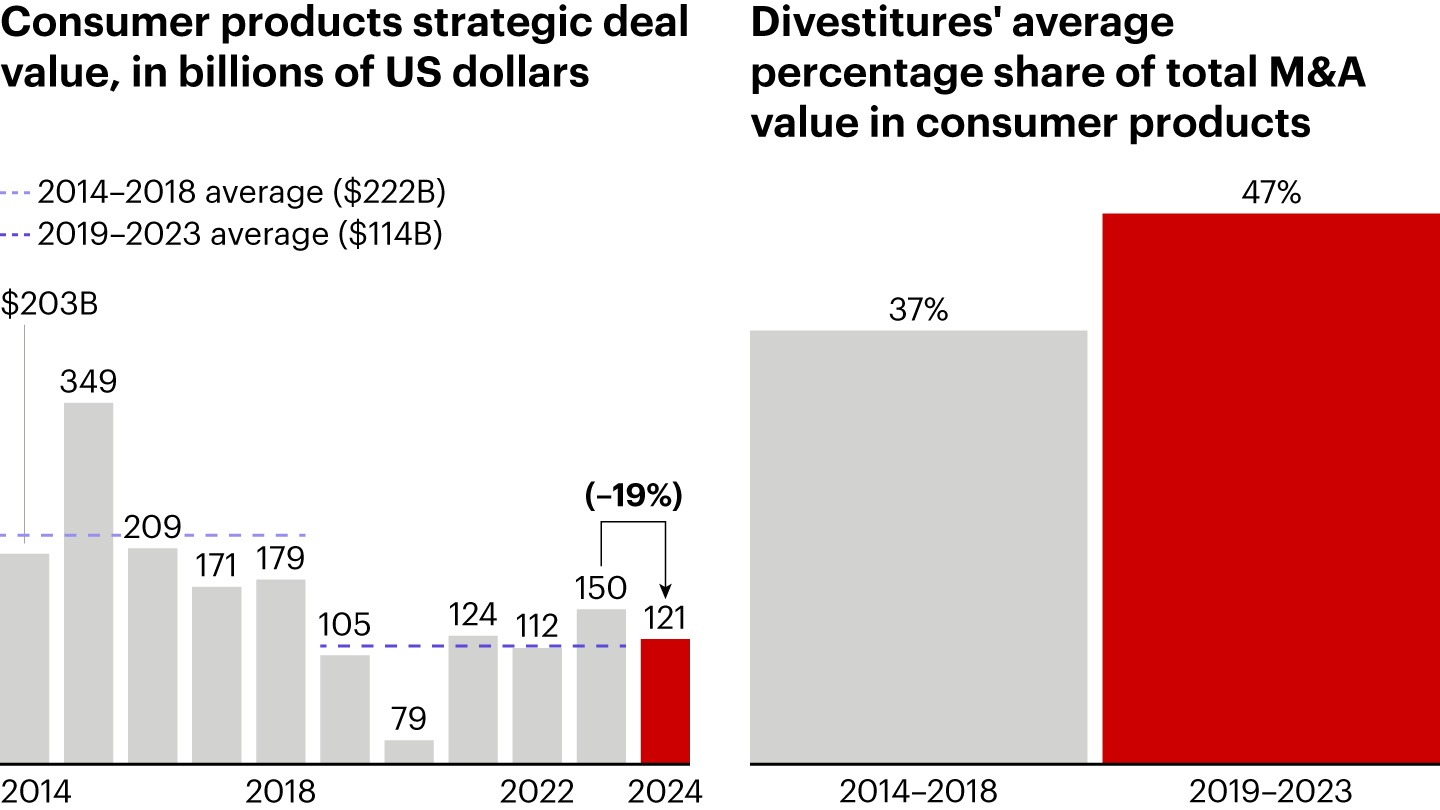
      Even as overall consumer products M&A dropped post-2018, divestitures continued and gained share of total deal value

      Note: Strategic M&A includes corporate M&A deals (which includes private equity exits) and add-ons

      Quelle Dealogic as of January 7, 2025

      It is no surprise that divestitures were on M&A practitioners’ minds in 2024. The consumer products industry already is more consolidated than most, and it faced the same macroeconomic headwinds as other industries, such as high interest rates and regulatory scrutiny that discouraged acquisitions. On top of that, consumer products companies find themselves burdened with two types of investments, including those for digital capabilities that they’ve delayed for too long as well as for more resilient supply chains.

      All of this led to a 19% decline in M&A deal value in 2024 compared to 2023. That’s a long way from the industry’s heady M&A years in the 2010s. In fact, the only 2024 consumer products deal valuation greater than $10 billion announced during the first 10 months of 2024 was the Mars acquisition of Kellanova, which was the remaining core of Kellogg’s after spinning off WK Kellogg, its North American ready-to-eat cereal business, a year prior.

      But the divestiture activity is another story because in addition to supply, there is adequate demand. As companies prune their portfolios, they’re willing to selectively invest in other high-growth areas that are big enough to make a difference yet small enough to pull off. When we polled M&A executives in consumer products, 30% said that they expect increased interest among corporate buyers for carve-outs over the next 12 months—and around 40% of them anticipate more private equity interest.

      When breaking up is the answer

      Consumer products companies are separating to unleash growth by providing more focus and simpler business models. The most dramatic examples can be seen in consumer healthcare, in which splitting the consumer element from pharma has redefined the industry. In 2022, GSK spun off its consumer health business into Haleon. A year later, Johnson & Johnson did the same thing with its consumer health business, creating Kenvue.

      Further separations do not feel far away, which, in turn, may give rise to industry consolidation and maturity in a fragmented market. Fonterra just announced the separation of its consumer business, for example.

      Companies are also separating as a way of exiting the low-growth parts of their portfolios that have become a drag on the rest of the business—and where there are likely better parents. Since 2015, Unilever has systematically divested businesses to reduce its exposure in frozen goods, teas, and margarine and other spreads. In 2024, the company extended that to ice cream. Companies such as Reckitt are following suit, with announced plans to sell its Essential Home business next year, which includes brands such as Air Wick, Calgon, and Cillit Bang.

      As part of this shift, we’re seeing more creative divestiture structures, which is not surprising given the continuing valuation gap between buyers and sellers over price. Surveyed consumer products M&A practitioners told us that the top three most important factors in deciding to divest are stakeholder support, tax implications, and availability of buyers (see Figure 2). In this climate, tax-free spin-offs or reverse Morris trusts appeal to certain sellers, and divesting to a joint venture is also an appealing option because it allows for participation in upside while gaining new investment in the business.

      Figure 2
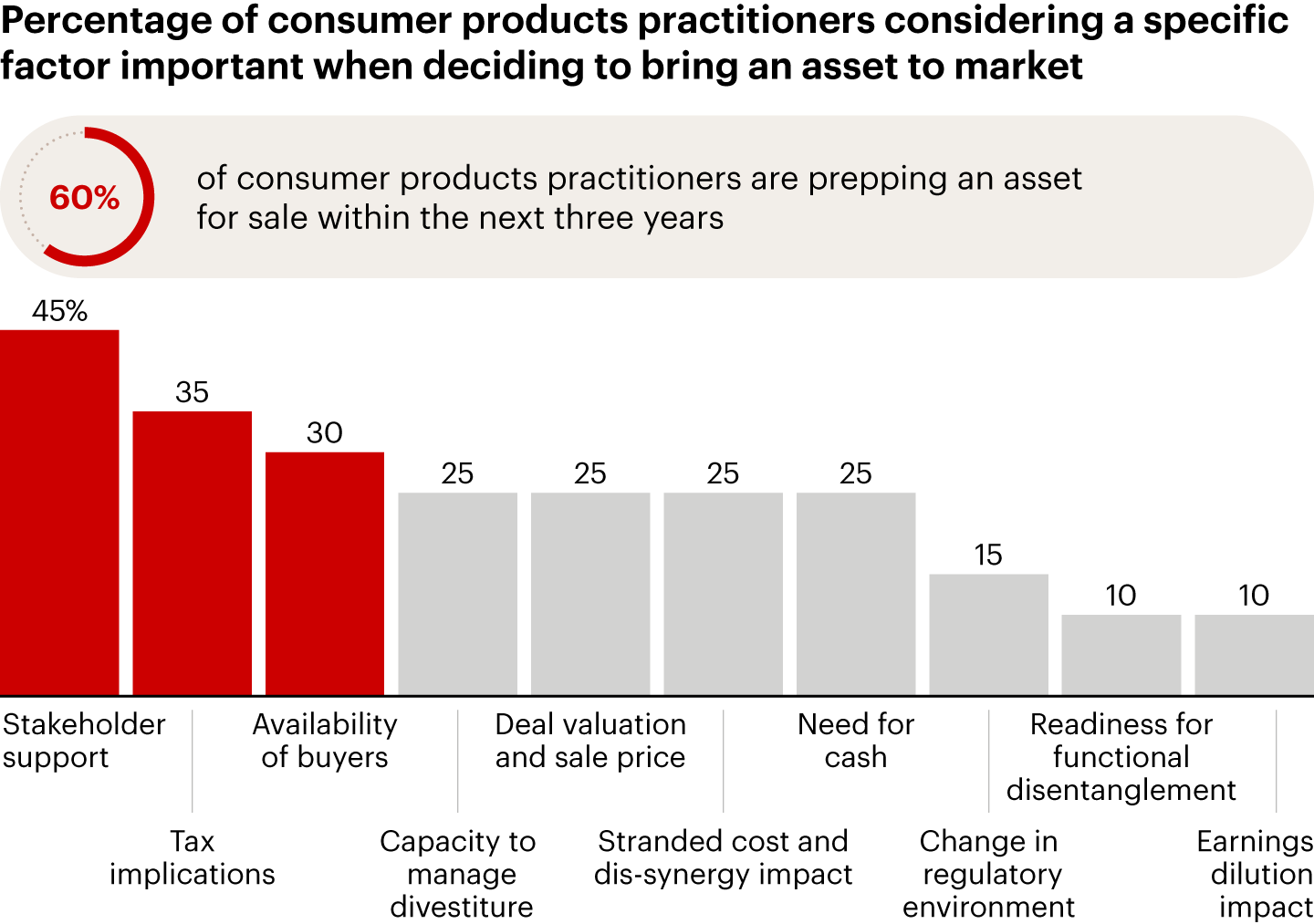
      With most consumer products survey respondents looking to bring assets to market, stakeholder support and tax implications are top considerations in their decision making
      Quelle Bain M&A Practitioners 2025 Outlook Survey (n=307)

      Getting it right

      Divestitures aren’t easy.

      For one thing, boards and managements are focused on other pressing issues, such as transforming supply chains for better resiliency or implementing enterprise resource planning software. Just obtaining board approval for a divestiture requires thoughtful planning and coordinating with other priorities.

      Getting the value out of a divestiture requires running a program that is carefully tailored to the separation thesis. The best companies balance speed, base business performance, and value creation. And sometimes there’s the need to move quickly because delays create a negative spiral for the business—less focus and demoralized talent results in worse performance and therefore reduces the value. For others, there’s a need to package the business by pulling quick-win levers that will help attract buyers or investors and deliver on the equity story.

      In consumer products, divestitures typically take 12 to 36 months from inception to close. They test executives’ decision-making abilities on everything from designing the appropriate asset perimeter and working through transition service agreements (TSAs) to managing talent in the interim. And ultimately, these deals often don’t succeed. In fact, our analysis shows that only the top quartile of spin-offs delivered combined TSRs above the overall market’s performance within the three years following the divestiture (see the Bain infographic “When a Spin-Off Wins Big”).

      What can divestors do to boost their odds of success? We see five key steps to take for consumer products executives planning to divest.

      Step No. 1: Start with a holistic view of your portfolio, and mark businesses for exit in line with your strategy. There are some basic questions to ask: Are there still parenting advantages you have over the business? Where are there shared customers and capabilities? What is the sum-of-the-parts analysis, and where are investors discounting the business? Consumer products companies can take a hard look at what categories fit better or those that are too different, and consider options such as different buyers, different aisles, and even different cost profiles as they evaluate their portfolios.

      Step No. 2: Aim to maximize value through the perimeter and transaction structure; do not just split the business. Think through how to bundle brands to spur volume growth and streamline costs. Also, think through what structure will maximize value. For organically grown businesses, tax-free spin-offs can minimize tax leakage of deal proceeds. For partial businesses or businesses requiring a turnaround, however, divestiture is often faster and requires a lower one-time cost to execute. Consider the need for cash and how proceeds will be reinvested—for example, through M&A, buybacks, or debt paydown. And think through what an attractive asset perimeter is for an acquirer.

      Think through how to bundle brands to spur volume growth and streamline costs.

      Step No. 3: Accelerate decisions on the biggest entanglements. In 2021, we asked practitioners to name the top inhibiting factors for divestitures. Functional entanglement was No. 1. For consumer products companies, the biggest entanglements often are around systems, shared production, and route to market. Thinking through how to disentangle the business in a way that minimizes stranded costs and one-time costs can be a complex equation.

      Step No. 4: Use the unfreezing moment to reshape the remaining company’s profit-and-loss statement. A divestiture or spin-off is an opportunity to reshape the profit-and-loss statements (P&Ls) of both the divested company and remaining company. Building the pro forma P&L and disentangling the businesses will often expose stranded costs and bloated cost structures in the remaining company. Even for businesses that are already largely separate, there can be an opportunity to shift investments to areas that line up with the remaining company’s new focus.

      Step No. 5: Keep 95% of people 100% focused on the base business. As with any transaction, running a divestiture can distract from the base business. When that business suffers, the economics of a deal sometimes becomes less attractive or even untenable, and buyers may back out or spin-offs may be canceled. The best consumer products companies keep a focus on the base business by running a divestiture program with fewer, more highly dedicated individuals.

      What if you’re the buyer?

      Among surveyed consumer products M&A practitioners who have bought a carve-out within the past three years, 70% say that their last carve-out acquisition created value. But even for experienced acquirers, these deals can pose risks. Here’s our advice for buyers.

      Figure out what you're getting. Use cutting-edge diligence to assess and proactively address carve-out standing issues. In a carve-out acquisition, it is not always immediately clear what you’re getting. In fact, “issues with the perimeter” was one of the top three carve-out challenges cited by consumer products M&A practitioners in our survey (see Figure 3). Diligence is the critical moment to dig deep into the people, systems, and assets (including brands and IP) that tell you where the new company will either need TSAs or a build-out/integration plan for Day 1.

      Figure 3
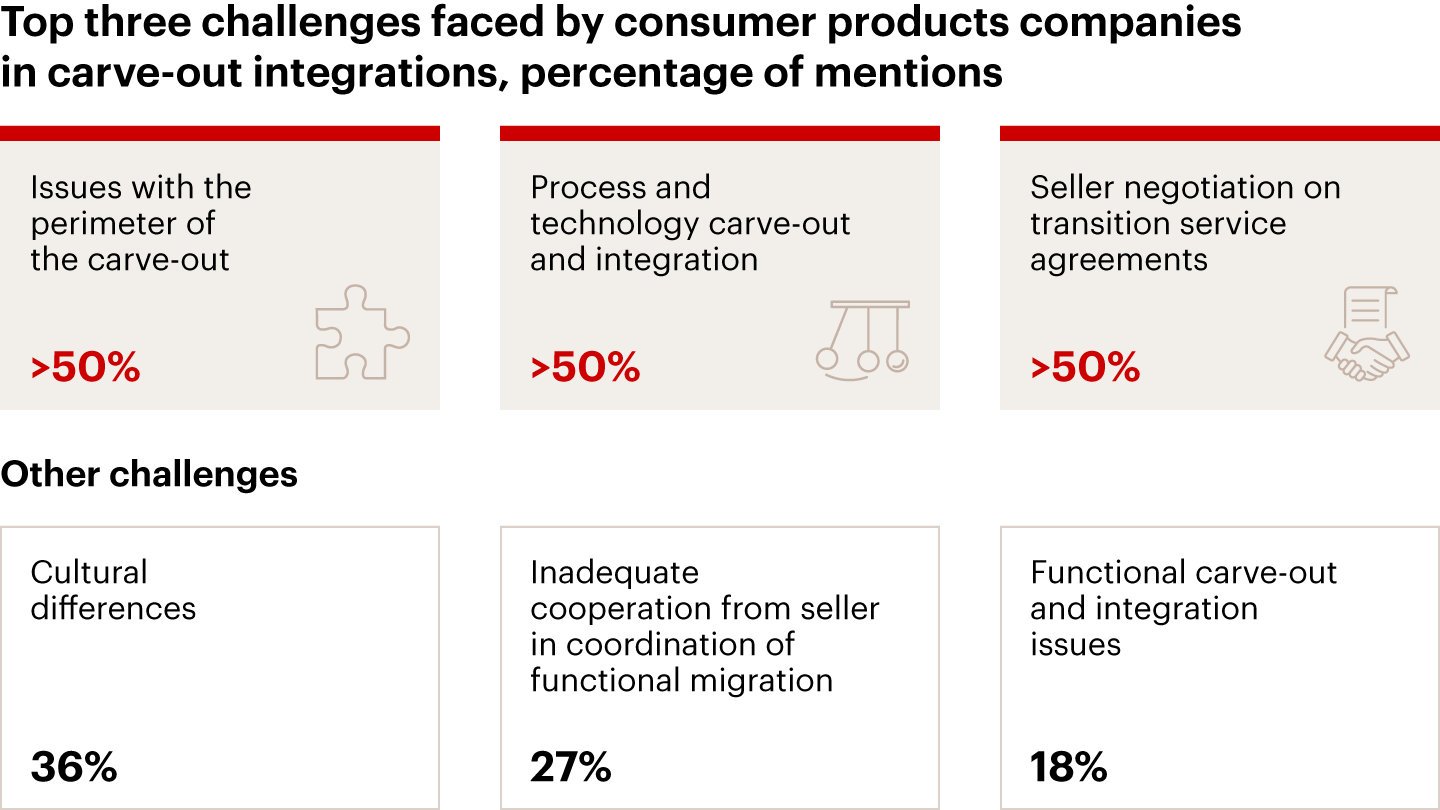
      More than half of consumer products companies have a shared perspective on their top three challenges in carve-out integrations
      Quelle Bain M&A Practitioners 2025 Outlook Survey (n=307)

      Develop an investment thesis. As with any M&A in any industry, the deal thesis is critical. With a carve-out in consumer products, there are likely specific levers that need to be pulled to increase growth, profitability, or both. Understanding these levers early on will help with carve-out diligence and integration planning.

      Remember, carve-out integrations are more complex than normal integrations. For practitioners with a repeatable integration capability, there are challenges to running a carve-out integration. The main difference is that Day 1 will be a hard cutover. This often means a heavier lift in sign-to-close planning to ensure readiness on Day 1. Two other considerations are TSAs and dis-synergies. The bandwidth required to get these correct should be considered when setting up a program.

      Plan for and execute Day 1 in a way that mitigates risk and prepares for the future state. Because carve-outs are so complex, many companies see a successful Day 1 as the mark of victory. But the best carve-out acquirers understand that a smooth cutover on Day 1 is just the beginning. These companies plan for a Day 1 that enables future value creation. For example, one acquirer understood that procurement was a critical lever in its value creation plan, but there was only one procurement full-time equivalent coming onboard within the perimeter of the carve-out. With this knowledge, the acquirer moved quickly to hire a top procurement executive who could start planning for Day 1 and beyond.

      Read the Next Chapter

      M&A in Energy and Natural Resources: Making Deal Economics Work in a Record Year 

      Read our 2025 M&A Report

      Download the PDF EXPLORE THE REPORT

      Overview

      • Looking Ahead to 2025: Preparing for What Comes Next

      • Looking Back at M&A in 2024: Dealmakers Adapt as the Market Idles

      • Generative AI in M&A: You’re Not Behind—Yet

      • Where the Deals Are: 2024’s Top M&A Markets

      • Ten Takeaways from Our M&A Executive Survey

      Industry Views

      • Aerospace & Defense M&A

      • Automotive & Mobility M&A

      • Building Products & Technology M&A

      • Consumer Products M&A

      • Energy & Natural Resources M&A

      • Financial Services M&A

      • Healthcare & Life Sciences M&A

      • Machinery & Equipment M&A

      • Media & Entertainment M&A

      • Retail M&A

      • Technology M&A

      • Telecommunications M&A

      Autoren
      • Headshot of Peter Horsley
        Peter Horsley
        Partner, London
      • Headshot of Maria Kurenova
        Maria Kurenova
        Partner, Atlanta
      • Headshot of Sam Rovit
        Sam Rovit
        Partner, Chicago
      • Headshot of Allison Snider
        Allison Snider
        Partner, New York
      • Headshot of Joost Spits
        Joost Spits
        Partner, Boston
      • Dustin Rohrer
        Practice Director, Atlanta
      Kontaktieren Sie uns
      Verwandte Branchen
      • Konsumgüter
      Mergers & Acquisitions
      How Companies Got So Good at M&A

      What 20 years in the trenches have taught us about deal success

      Mehr erfahren
      Mergers & Acquisitions
      Ten Takeaways from Our M&A Executive Survey

      We asked over 300 practitioners across the globe about their dealmaking efforts in today’s market. Here’s what they said.

      Mehr erfahren
      M&A Report
      Consumer Products M&A

      In their quest for profitable growth, more companies are divesting brands or buying insurgents.

      Mehr erfahren
      M&A Report
      Banking M&A

      As conditions shift, leading banks are fusing scale with scope to create future-ready organizations.

      Mehr erfahren
      Konsumgüter
      Shift to Vertical: David Haines, Group CEO, Flora Food Group

      What does it take to stay connected to your customers when scale and complexity threaten to pull you away? 

      Mehr erfahren
      Markierungen
      • Konsumgüter
      • M&A Report

      Wie wir unsere Kunden unterstützt haben

      Nachhaltigkeit A Personal Care and Cosmetics Brand Charts a Course for Sustainability

      Kundenbeispiel lesen

      Kundenstrategie und Marketing A sweet new branding strategy

      Kundenbeispiel lesen

      Agile How Micro-battles Powered a Brand and Sales Lift at BeautyCo

      Kundenbeispiel lesen

      Möchten Sie mit uns in Kontakt bleiben?

      Wir unterstützen Führungskräfte weltweit, die kritischen Themen in ihrem Unternehmen zu adressieren. Gemeinsam schaffen wir nachhaltige Veränderungen und Ergebnisse.

      Bain Insights. Unsere Perspektive auf die kritischen Themen, mit denen sich international agierende Unternehmen konfrontiert sehen, finden Sie monatlich in Ihrem Postfach.

      *Ich habe die Datenschutzerklärung gelesen und akzeptiere sie.
      Bitte lesen Sie die Datenschutzerklärung und akzeptieren Sie diese.
      Bain & Company
      Contact us Sustainability Accessibility Rechtliche Hinweise Impressum Datenschutz Cookie-Richtlinie Sitemap Log In

      © 1996-2026 Bain & Company, Inc.

      Kontaktieren Sie Bain

      Wie können wir Ihnen helfen?

      • Business inquiry
      • Career information
      • Press relations
      • Partnership request
      • Speaker request
      Alle weltweiten Büros