

Report

Executive summary
Background
Historically, Japanese companies have tended to grow organically, export without entering new markets, recruit employees early and retain them throughout their careers, and focus on stakeholders such as employees, banks and trade partners over shareholders. But the country’s business environment has experienced major shifts over the past decade, driven by new mergers and acquisitions, global business expansion, increased talent mobilization and a stronger focus on the management of return on equity. Today, Japanese companies must transform themselves to grow further, and this means embracing a new way of doing business. To start, companies can demand better oversight and advice from board members. Amid inorganic growth strategies and plans for globalization, board governance reforms have become a hot topic.
Changes are afoot in Japan’s overall approach to corporate governance. The Japanese Corporate Governance Code took effect in June 2015, which sets rules regarding whistle-blowing, disclosure, stakeholders’ rights and more. Although compliance is voluntary, support from both the government and the Tokyo Stock Exchange (TSE) seems to be creating the momentum needed to pressure companies into making meaningful changes.
One focus of the Corporate Governance Code is the company’s board of directors, including its composition and responsibilities. According to the code, “The board should be well-balanced in knowledge, experience and skills in order to fulfill its roles and responsibilities, and it should be constituted in a manner to achieve both diversity and appropriate size.” The code also states, “Independent directors should fulfill their roles and responsibilities with the aim of contributing to sustainable growth of companies and increasing corporate value over the mid- to long-term. Companies should, therefore, appoint at least two independent directors who sufficiently have such qualities.” This means just appointing outside directors is not enough, but it’s critical to appoint qualified persons and make the best use of them.
Structure of the board
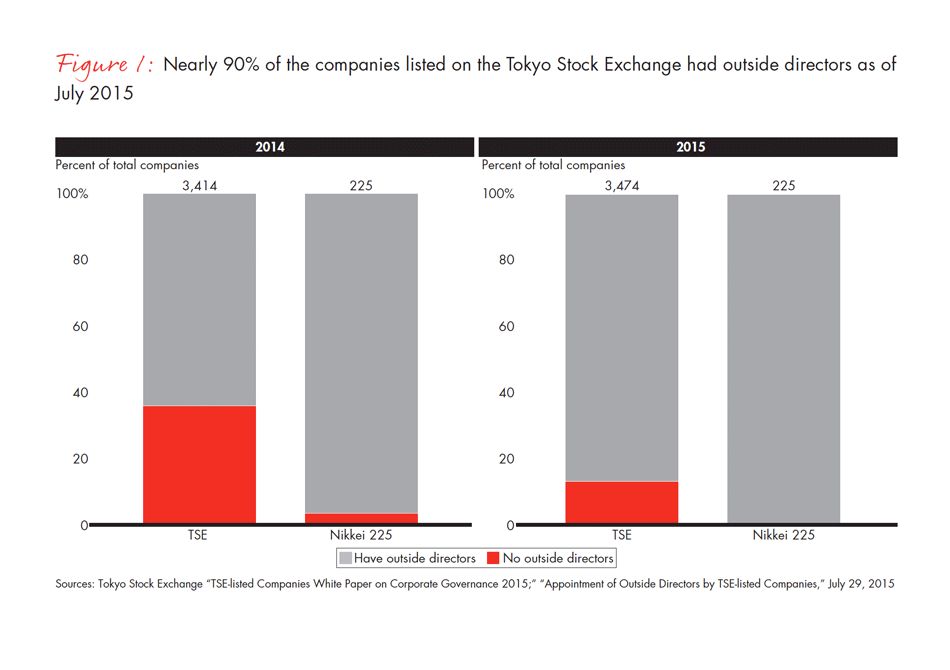
Japanese companies have responded to this call: In July 2014, approximately 65% of TSE-listed companies had outside directors. In July 2015, nearly 90% did. And as of December 2015, all Nikkei 225-listed companies had at least one outside director.
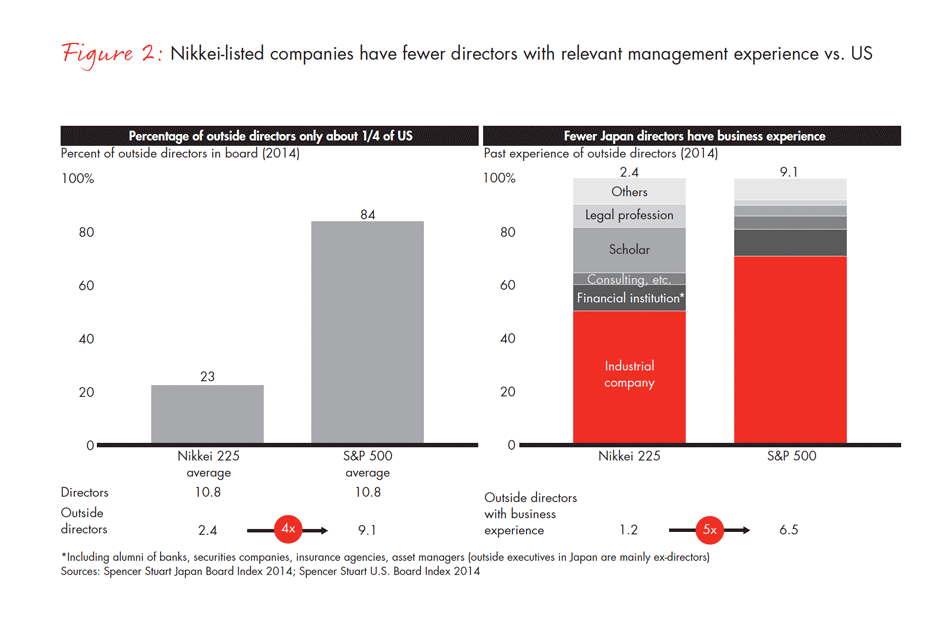
Compared with the US, however, Japan still has progress to make. Among companies listed on the S&P 500, for example, outside directors hold an average 84% of corporate board seats, compared with only 23% of Nikkei 225-listed companies in 2014. In addition, US board members are more likely to have executive management experience, most often from companies in the same industry. The average S&P-listed company has 6.5 outside directors with business experience. In contrast, the average Japanese board has only 1.2 outside directors with business experience, and the remaining directors may represent varied backgrounds including academia and law.
Links to total shareholder return
Bain & Company wanted to learn more about the effect of boards of directors, and especially their composition, on company performance. We conducted a bottom-up analysis of 500 Japanese public corporations comparing board membership composition with companies’ total shareholder return (TSR). Our findings: An effective board of directors includes members who are external to an organization and have relevant management experience.
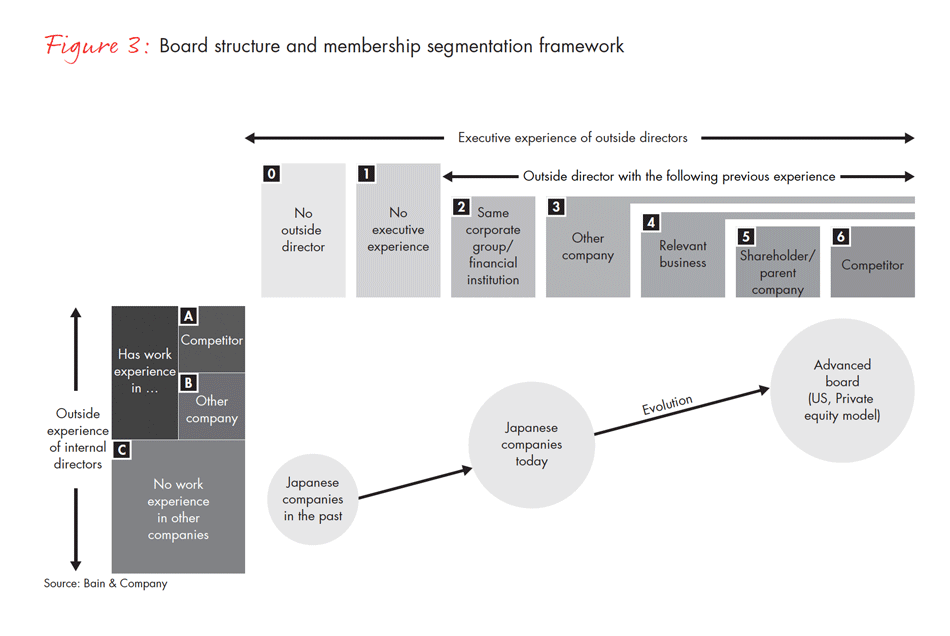
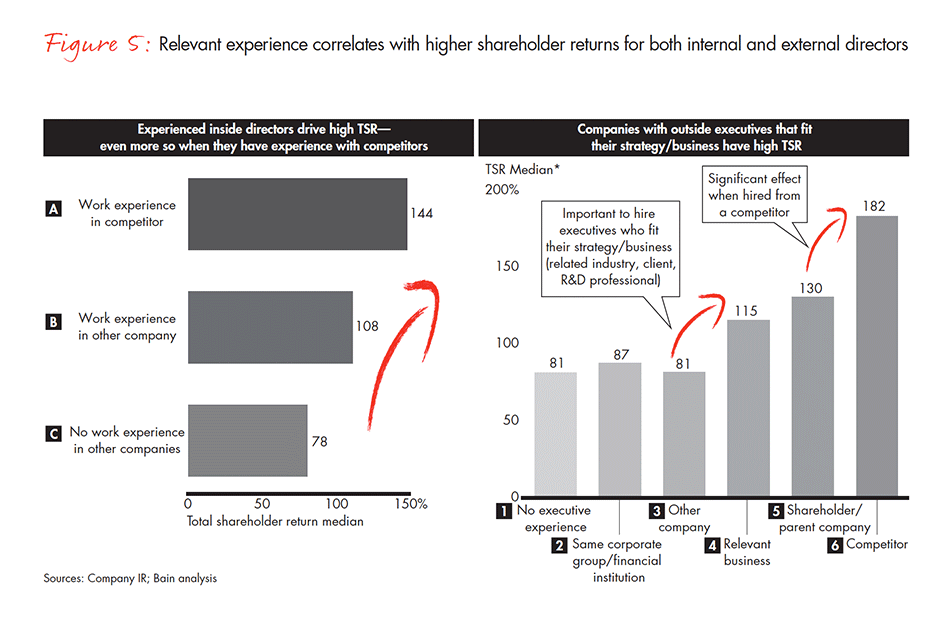
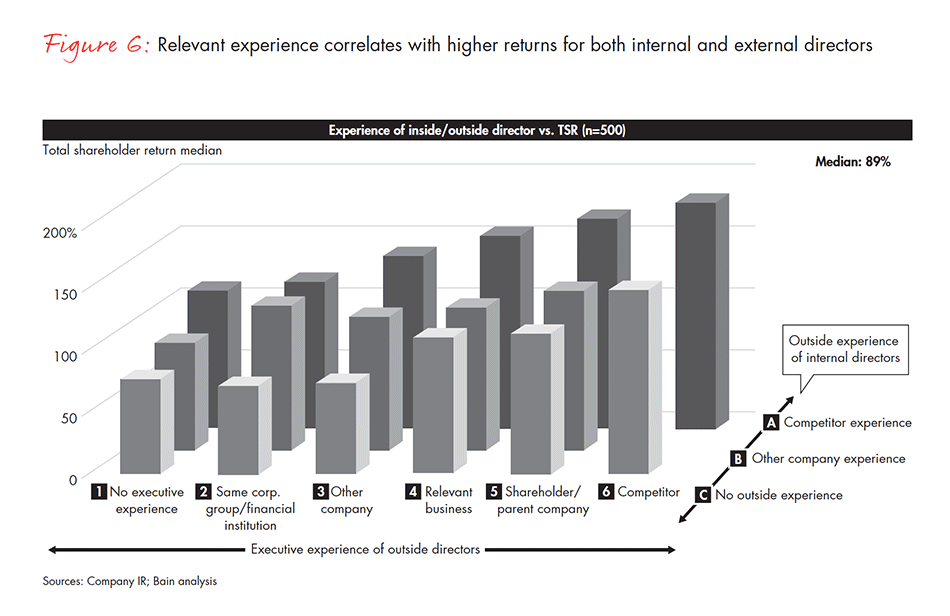
We classified the board members of the companies we studied as having either no management experience, experience with the same corporate group or financial institution, experience with a company in another industry, experience with a relevant business, experience at a shareholder or parent company, or experience with a competitor. The deeper and more relevant a board member’s experience, we concluded, the more effectively he or she can advise a business. In addition, there is a positive correlation between the depth of experience of both inside and outside board members and TSR. The companies with the highest TSR, on average, are those who have both inside and outside directors with experience working for competitors.
Using boards effectively
Do more experienced boards cause higher TSR, or are they merely a symptom? Is a third factor responsible for both?
We see the makeup and effectiveness of corporate boards as indicators of how well a company is run. However, an experienced board—and a corresponding high TSR—may simply be two signs of a well-managed, mission-focused business. In other words, building a strong board of directors is just a start. It is necessary but not sufficient for success. Companies will get the most value from their outside directors if they engage them systematically and make efforts to integrate them into company culture.
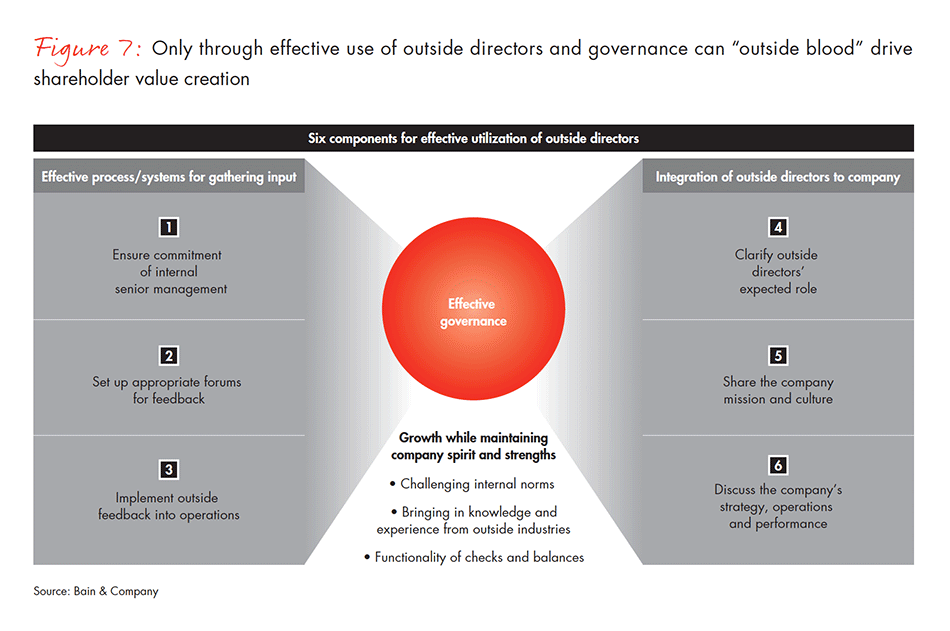
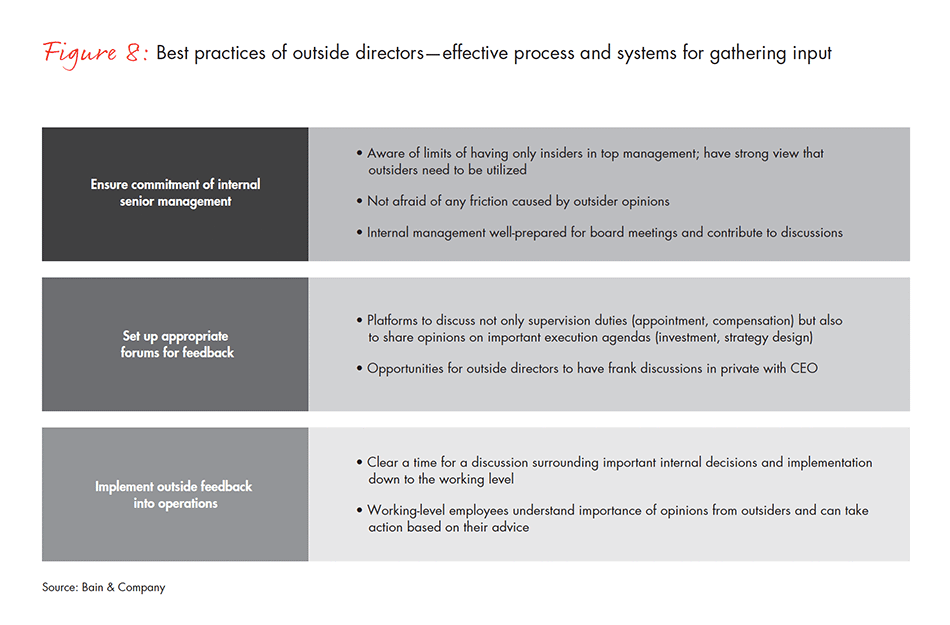
We followed up our analysis with interviews of senior executives—including CEOs, C-level executives and outside directors—to gain a deeper understanding of how boards can contribute to a company’s performance. We distilled the insights we gained into six key best practices:
- Ensure commitment of internal senior management. There must be consensus among top management that “outsiders” are not a threat but rather a source of valuable insights.
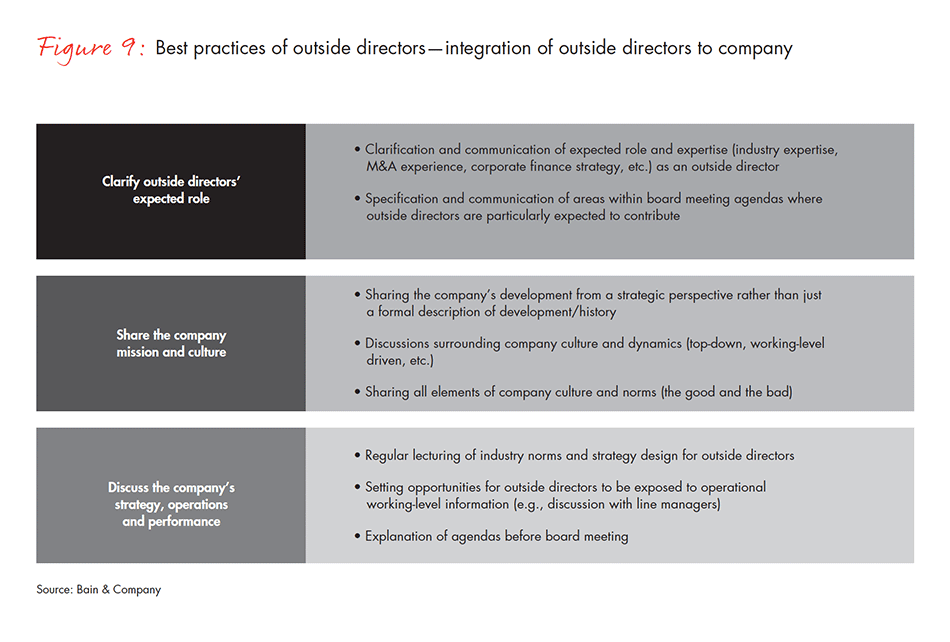
- Clarify outside directors’ expected role. Companies must clearly explain to their directors where and how they are expected to offer their expertise.
- Share the company mission and culture. Outside directors can better advise if they understand a company’s strategy, not just its formal characteristics. Companies should share their culture and norms—both the good and the bad.
- Discuss the company’s strategy, operations and performance. Corporations should take time to explain industry basics and field information to bring directors up to speed.
- Set up appropriate forums for feedback. Outside directors must feel free to speak openly with the company’s CEO. The company should also provide opportunities for directors to discuss both supervision duties and operational agendas.
- Implement outside feedback. For outside directors to be legitimate, their feedback must actually be applied to operations. Company employees must take action based on their advice within appropriate timelines.
Governance and operating execution
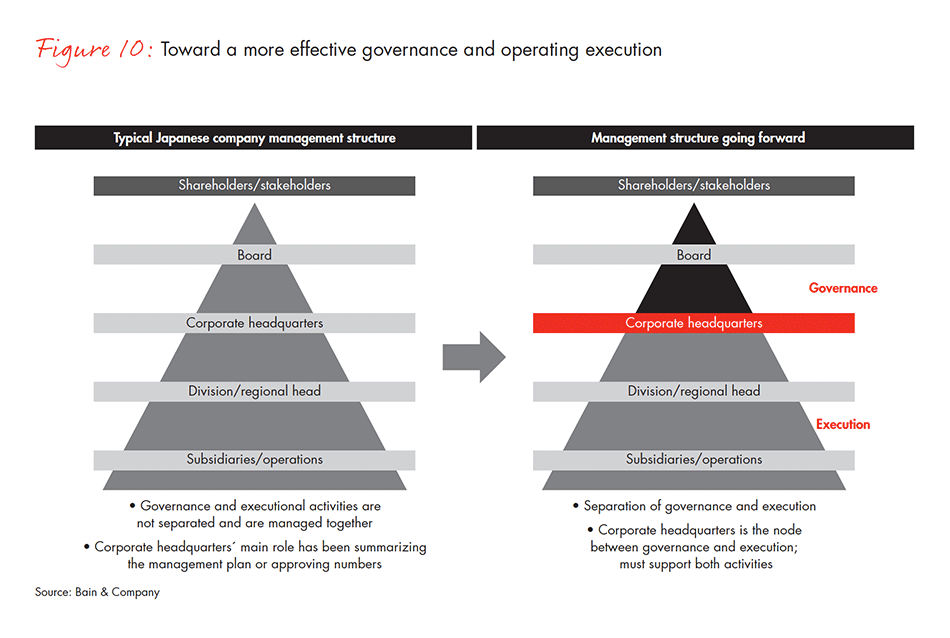
As Japanese companies adjust to the new Corporate Governance Code and become increasingly international, they will confront both opportunities and challenges. Historically in Japan, corporate governance has emphasized incumbency and promotion from within. The role of the corporate headquarters has often consisted of little more than summarizing mid- to long-term management plans, monitoring their status or approving numbers. There has been minimal segregation between pure governance and operation execution. The new governance code, however, has caused companies to increasingly divide these two functions. We believe that this redistribution of responsibility will lead to better allocation of skills and experience.
Under this new management structure, the corporate headquarters will act as a hinge between governance and execution, supporting both activities equally. Headquarters will communicate insights and direction from the board to working-level employees and vice versa. This will also require corporations to rethink their talent pipelines, recruiting and developing separate talent streams for governance and execution. The new structure also includes outside director ownership of CEO appointment, succession, compensation and reviews—leading to further objectivity and transparency.
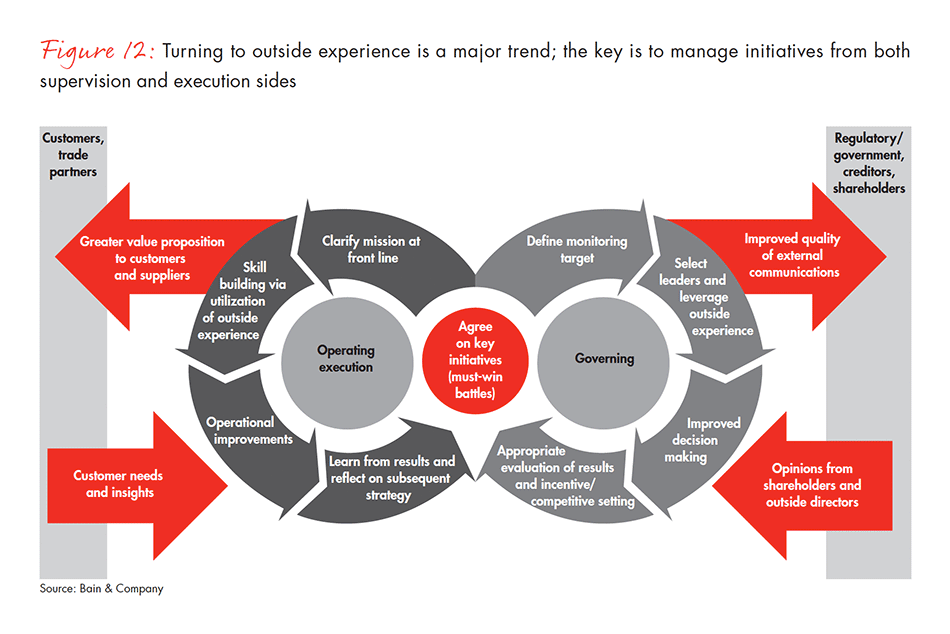
The balancing act between governance and operating execution may prove challenging for many Japanese corporations. But they require balance: between governance and execution, between the advice of inside and outside experts, and between those with deep industry experience and those with knowledge in other areas. Establishing open lines of communication between directors, creditors and shareholders on one hand, and customers and trade partners on the other can lead to improvements that reinforce and strengthen both engines of the organization.
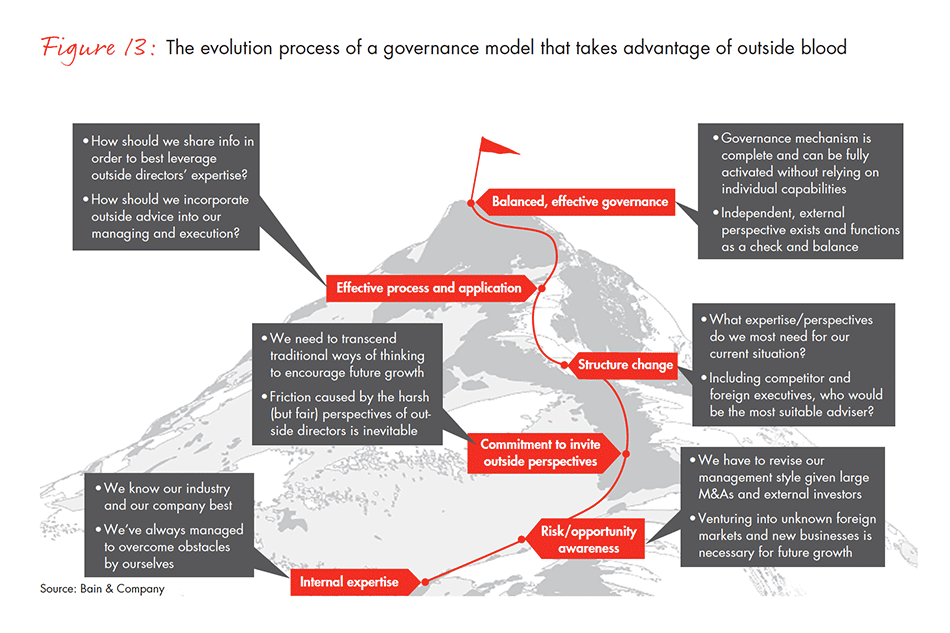
Japanese companies are responding to the guidelines set forth by the new governance code. They are also realizing that if they want to venture into new markets and add new capabilities, they need fresh perspectives. Diverse boards of directors, managed appropriately, provide this. The more receptive and responsive corporations are to outside advice, the faster they will achieve balanced, effective governance. And when they do that, corporations—and their shareholders—will reap the rewards.
Full Report
1. Building more diverse boards: Links to total shareholder return
- In response to the new Corporate Governance Code, Japanese companies have begun to add outside directors to their boards of directors. As of July 2015, approximately 90% of TSE-listed companies had outside directors.
- However, boards are still in the early stages of transformation. Although Japanese and US companies have roughly the same average number of directors, only about one-quarter of the boards of Japanese companies include outside directors—compared with 84% of US companies—meaning that fewer outside perspectives are represented.
- Additionally, the outside directors in Japan are less likely to have relevant business experience than those in the US. Whereas roughly 70% of US outside directors have past experience with a company (including a parent company or competitor), only about 50% of Japanese outside directors do. These factors combined mean that, on average, Japanese companies have roughly five times fewer outside directors with business experience than US companies.
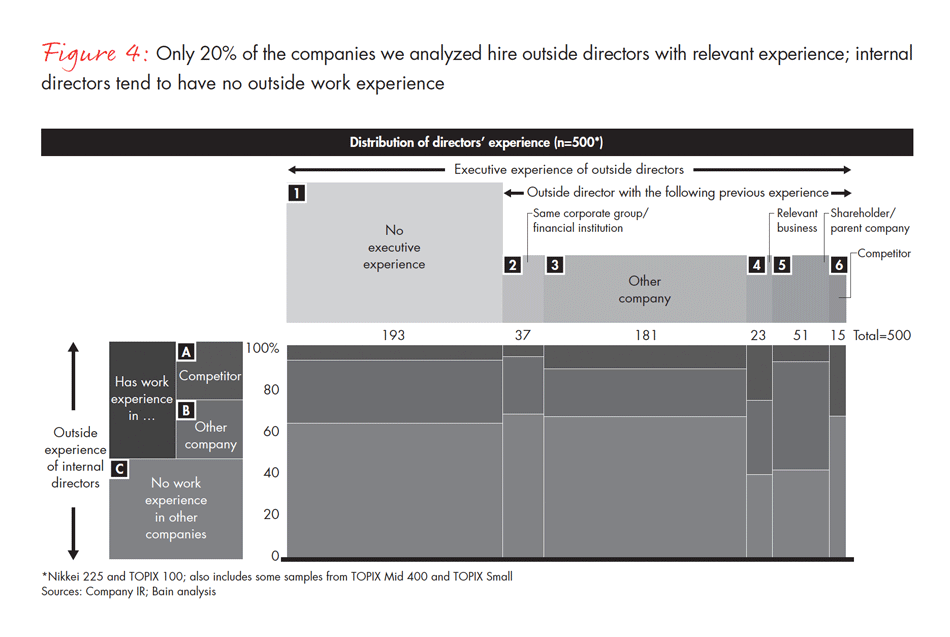
- Only about 20% of Japanese companies hire outside directors with management experience at a competitor company, parent/shareholder company or other relevant business. And 60% of Japanese companies have internal board members with no outside work experience.
- These differences have real consequences. Companies that appoint outside directors with relevant experience have higher TSR than those that do not. The same is true for internal board members with outside management experience. Companies with directors who have previous experience with competitors have the highest TSR of all.
- Not all types of directors benefit businesses equally. Companies with outside directors who have worked at other companies in the industry have an average TSR of 182%, compared with 81% among those companies with no external directors. However, adding directors from unrelated companies, academic or legal backgrounds has little effect on TSR.
2. Using boards effectively: Best practices from top corporations
- While board structure is a reliable indicator of TSR, appointing a diverse board is only a start. To be most successful, companies must put board members’ outside expertise and perspectives to work. They can create value for shareholders through systematic engagement and integration of outside directors into the company.
- As revealed in our interviews with top executives at major Japanese companies, best practices regarding utilization of outside directors fall into two main categories: processes and systems for gathering directors’ input, and integration of outside directors into a company.
- Effective use of outside board members requires culture change. Top management must not fear the views and possible criticism of outsiders; instead, they should welcome new perspectives and act promptly on feedback. Company employees, too, should understand the importance of opinions from outside directors and be empowered to take action based on their advice.
- Although outside directors are not employed by the corporations they serve, they must be treated with an attitude of acceptance and inclusion. This means clearly explaining the expectations for their responsibilities, giving them ample opportunities to share opinions and educating them on industry trends and company culture.
- At their best, outside board members should serve a “check and balance” function for corporations, providing oversight of executives’ actions and offering objective, unbiased knowledge. If outside directors understand a company’s culture and strategic priorities, they can help companies grow while ensuring they maintain their distinctive spirit and strengths.
3. The road ahead: Developing a governance mindset
- In the past, governance and operations have been managed by shared teams, diminishing the responsibility of the corporate headquarters. In today’s ideal management structure, however, the headquarters is the hinge between governance and execution.
- Going forward, governance and execution within Japanese companies should be managed separately due to the different skills and experience they require. Companies should also seek out independent points of view in the form of outside directors to provide oversight and advise on strategy. Outside directors should primarily own the processes of CEO appointment, succession, compensation and reviews.
- Governance and execution should have distinct talent management processes and pipelines. Companies should nurture internal talent and capabilities in parallel with the succession of the board.
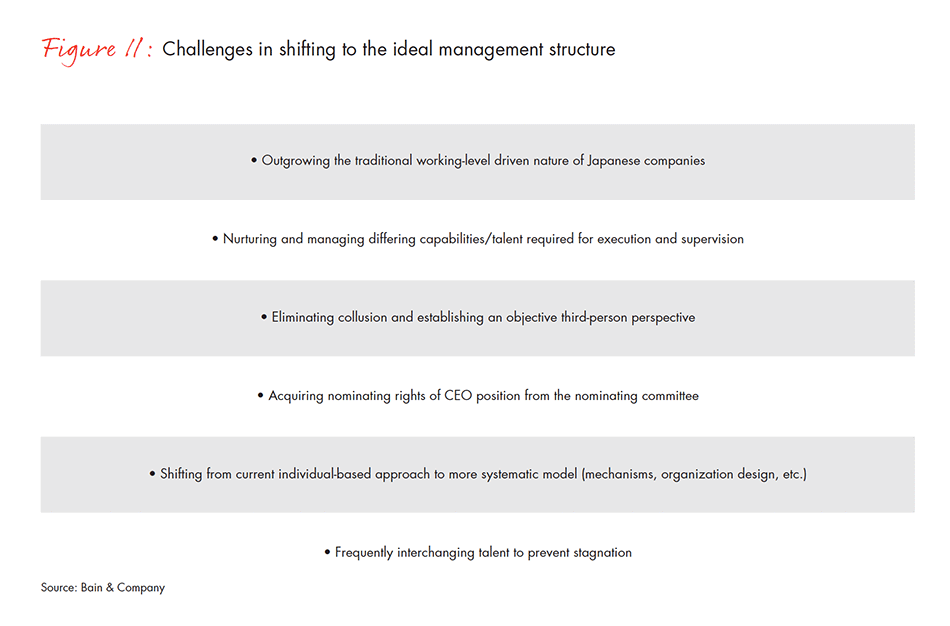
- Japanese corporations face many challenges in shifting to this ideal management structure. These include overcoming the traditional “employee-driven” nature of many Japanese companies, shifting from an individual-based approach to a more systematic model and swapping talent frequently to prevent stagnation.
- Companies that manage to do this, however, will not only build greater alignment on key initiatives; they will also improve their communications with external stakeholders and deliver a better value proposition to customers and suppliers.
- The evolution may not be easy. Many companies will likely confront internal biases and suspicions of “outside blood.” The sooner corporations embrace a balanced governance model, the sooner they are likely to see improved returns.
Methodology
For our analysis, we chose a sample of 500 prominent Japanese public companies, including Nikkei 225- and TOPIX 100-listed companies, as well as some samples from TOPIX Mid 400 and TOPIX Small, taking care to include the core companies in each industry. We then categorized the companies according to Bain criteria regarding the composition of their boards of directors, using information from FY 2014 financial reports in a bottom-up manner.
We defined TSR as the sum of capital gains and dividends versus investment amount if stock had been held from the end of calendar year 2009 to calendar year 2014. We used the median value of TSR for each sample within each segment.
About the authors
Toshihiko Hiura is a chairman and partner with Bain’s Tokyo office and leads the M&A practice in Japan.
Junya Ishikawa is a partner with Bain’s Tokyo office and leads the Organization practice in Japan.
First published in Februar 2016