

Brief

Auf einen Blick
- More than 75% of the largest venture capital investments in recent years went to IT infrastructure and industry-focused enterprise software companies, illustrating the potential for innovation perceived in these sectors.
- Many incumbents overlook or underestimate the signals of impending disruption until it’s too late.
- The most successful reject the legacy mindset, effectively monitor emerging business threats, invest in a clear R&D and M&A strategy, and fearlessly disrupt themselves.
When 75% of the largest venture capital investments move assertively in one direction, it’s time to take notice.
That’s the situation in which the leaders of incumbent enterprise software companies find themselves. From 2017 to 2021, more than three-quarters of VC investments of $100 million or more went to IT infrastructure and industry-focused, or vertical, software companies, according to Bain & Company’s analysis of our Startup Investment Cruncher database (see Figure 1).
Figure 1


Investors are backing start-ups that are taking aim at software markets supposedly immune to disruption in industries as disparate as education, healthcare, restaurants, and auto dealerships. These markets historically had high barriers to entry and loyal customers, and the cost of switching to alternative vendors was high.
Now, however, companies can develop and deploy new software more quickly and easily than ever, thanks to open-source software architectures and platforms that can develop apps with little to no coding expertise. As a result, start-ups are no longer afraid of markets that long appeared untouchable and are gradually winning over customers. In the payments sector, for example, 12-year-old Stripe and 16-year-old Adyen are shaking up the market with leading offerings and strategies, giving decades-older incumbents a run for their money.
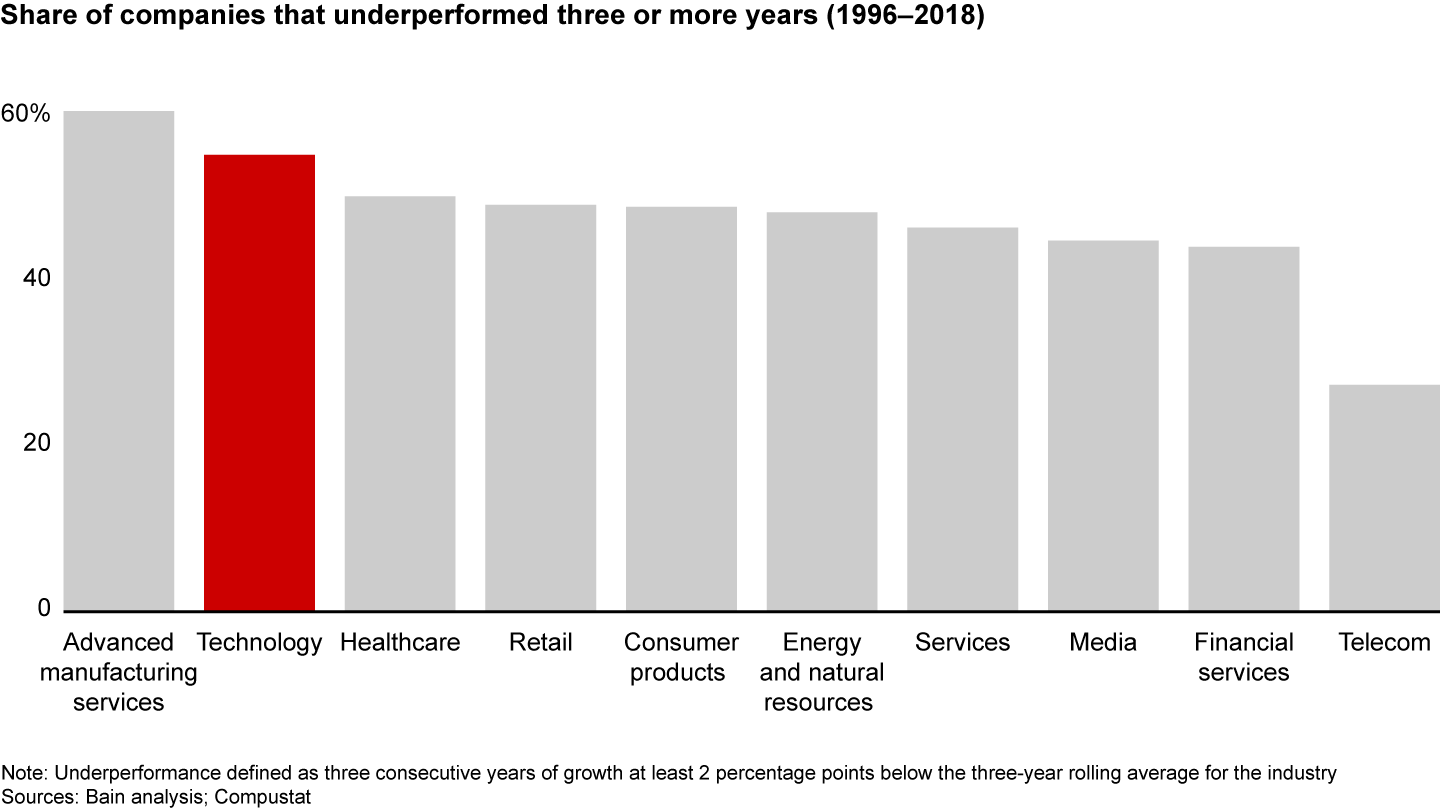
Unfortunately for incumbents, many don’t pick up signals of impending disruption until it’s too late, or worse, they recognize the signals, but disregard them because they believe they’re in a niche, sufficiently sheltered market. In a 2022 Bain survey of executives at 98 tech companies, nearly 50% said they see disruptive threats to their company’s market share position as mild or not critical at all; only 5% saw such threats as severe. But other evidence suggests that tech companies are highly susceptible to the kind of disruption that leads to sector underperformance—and that the longer a tech company underperforms, the less likely it is to turn around (see Figure 2).
Figure 2: Figure 2
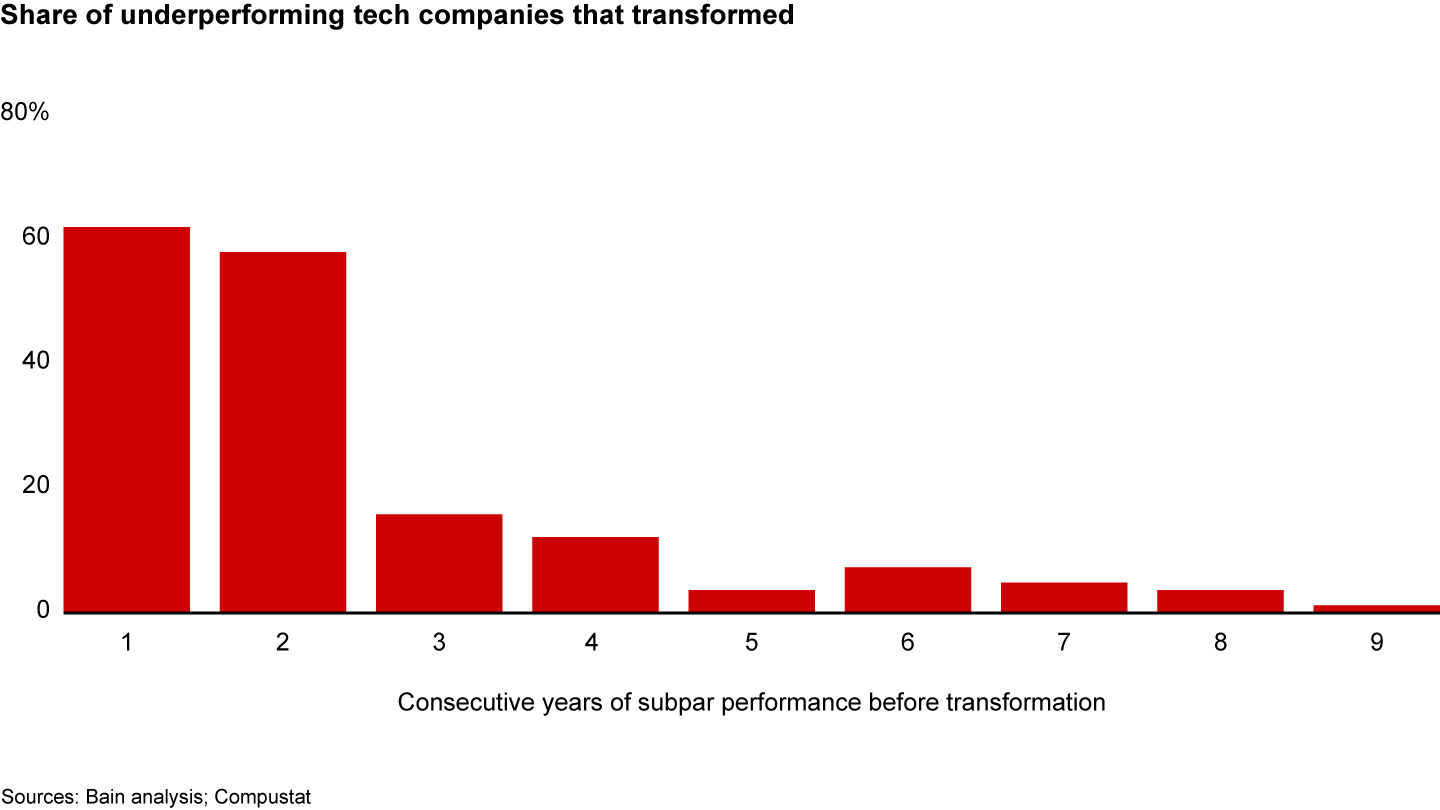

Figure 2: Figure 2

The incumbents that don’t heed signals of disruption continue to bet on the playbook that has worked for years: make a series of acquisitions, take out costs, manage the businesses for cash, and enjoy slow-but-steady growth. That playbook will likely remain valuable, but it’s no longer sufficient to protect against what’s coming. Although venture capital investment in and valuation of high-growth tech companies both declined in the first half of this year, such drops won’t curb the long-term increased pace of disruption.
Now is an opportune moment for incumbents to go on offense. In recent years, incumbents that were expected to deliver steady profits, and therefore had less freedom to invest in innovation, have been at a disadvantage against start-up competitors. But the rules of the game are changing. Start-ups are under more pressure to deliver profits, not just growth. Incumbents have an opening to press forward and seize momentum.
In this fast-evolving landscape, the leading incumbents are accelerating past new challengers by rejecting the legacy mindset, effectively monitoring potential threats, investing in a clear strategy for research and development (R&D) and mergers and acquisitions (M&A), and fearlessly disrupting themselves.
Beware the disrupters
Well-funded enterprise software start-ups have shaken up markets with different approaches to product development and business models. What does that look like?
Toast has become an emerging leader in restaurant point of sale (POS) software by building its core product from the ground up to serve the sector’s needs, unlike some incumbent vendors that adapted their general POS systems to fit restaurants. Toast has attracted customers in part by simplifying their tech footprint and enabling restaurants—small ones in particular—to run almost their entire operation using Toast products and services. Toast also invested in a direct sales model and a go-to-market strategy focused on metropolitan areas, which has given it an edge over competitors that typically sell their products through distributors and third parties. These moves have helped Toast accelerate its growth, particularly during the pandemic. The company generated $1.7 billion in revenue last year, more than double the previous year’s total, and has continued growing in 2022, serving 68,000 locations.
Meanwhile, Onit built its enterprise legal management software on a cloud-based, “no-code” platform with a simple user interface, which means its products generally can be implemented faster and are easier to use than legacy systems. Onit’s expertise in workflow automation also makes its products highly customizable, and it opted for a simple, subscription-based pricing model. These traits, bolstered by significant strategic investment funding, have helped Onit become one of the fastest-growing tech companies in North America, with more than 2,800 corporate legal departments using its products.
Why incumbents are always on defense
The biggest issue for incumbents is simply responding too late. Most have time to get ahead of emerging threats, but years of consistent results and customer stickiness have allowed them to grow primarily through regular price increases, without much pressure to update or transform their products. Moreover, incumbents’ R&D budgets are constrained by the need to maintain the existing product portfolio while also advancing the innovation agenda. As a result, when disruption is finally identified, years of underinvestment often make their products too inflexible to respond to the threat or evolving customer needs.
Many attempt to solve the problem by buying innovative start-ups. However, when acquiring companies, two primary strengths of many incumbents—achieving moderate, but sustainable, growth through software subscription or maintenance renewals and maintaining product quality through incremental development—aren’t well suited to the high-growth, high-volatility nature of start-ups. So, rather than capturing the full growth potential of acquisitions, the buyer can end up snuffing it out.
This disconnect can further exacerbate undisciplined purchasing or lead to underinvestment in purchased businesses. In the former, if the acquired company has only tenuous links to the company’s core markets, strategy, or strengths, the costs of complexity can swamp any potential benefits. In the latter, many companies don’t provide sufficient R&D investment for the acquired company to outpace disruptive competitors. As a result, what seemed like a durable business can quickly erode.
Where to focus instead
Leadership that rejects the legacy mindset is the most important hallmark of software incumbents that have successfully defended against disruption. Not satisfied with slow-but-steady growth, these leaders want to be at the forefront of technology for their industry, and they take pride in what their products help their customers accomplish. This sounds like a given for any leadership team, but in truth many companies lose sight of these goals or only pay them lip service. That leaves their companies vulnerable to complacency and, eventually, irrelevance.
The most successful software incumbents put that mindset into action by focusing on three things.
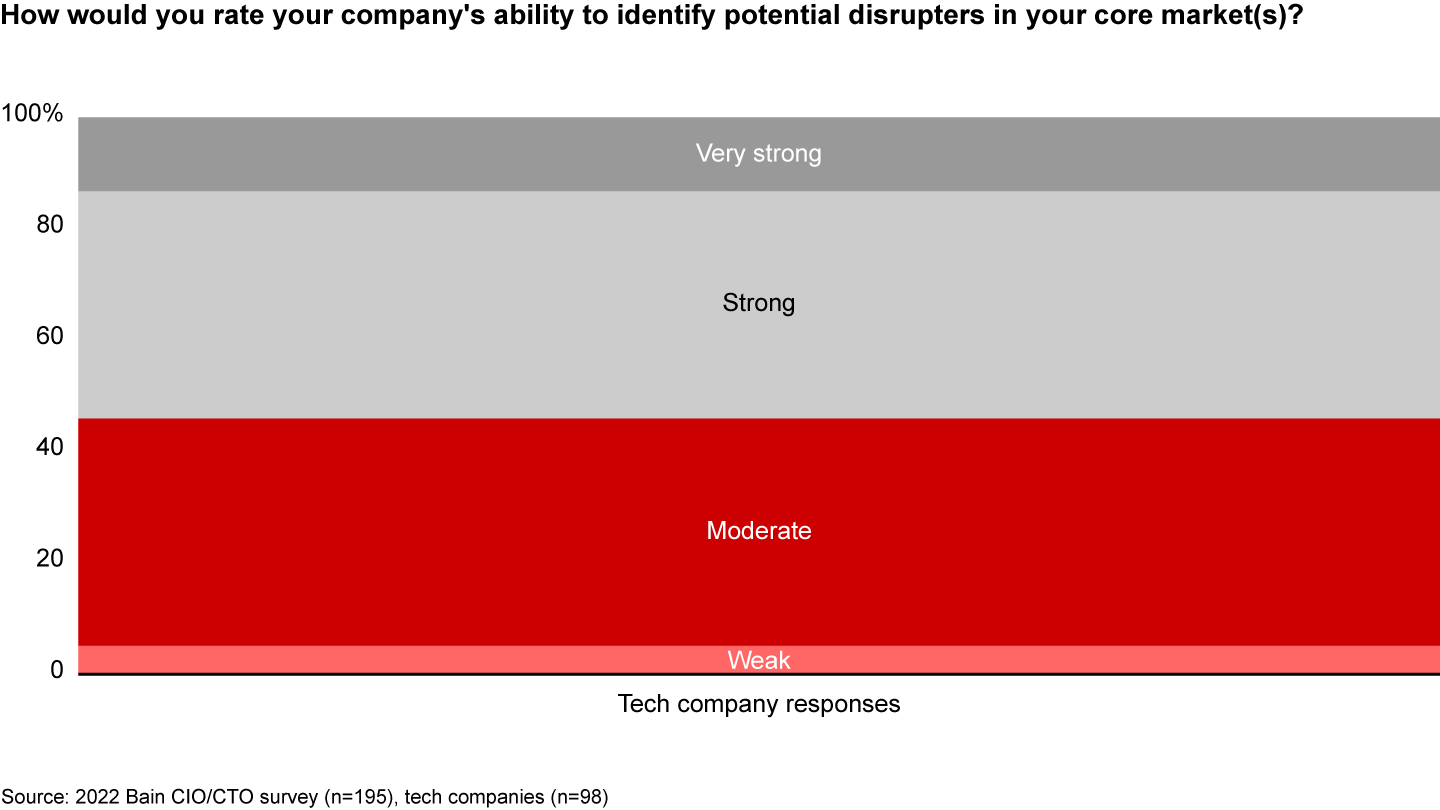
Continually assess potential threats and new business opportunities. Leading companies put defending against disruption at the heart of their strategy. There are a lot of ways to do this, but a good starting point is to build competitive threat assessments into the company’s annual planning process. Many tech companies have room to improve in this area. In a 2022 Bain survey of CIOs and CTOs, nearly half said their company doesn’t have a strong ability to identify potential disrupters in their core market (see Figure 3).
Figure 2: Figure 3

To avoid threat assessments becoming a “check-the-box” exercise, leading companies not only monitor the competitive landscape, but also think deeply about anything and everything that could emerge in the future to prey upon their business vulnerabilities. Paranoia is a virtue here.
Move the CEO closer to the company’s R&D roadmap of products and tech capabilities. Sometimes, the response to disruption might require only refreshing product features or adding new ones. But when it calls for a fundamental redefinition of the company’s core business, that’s a decision only the CEO can make—and it needs to be made quickly to stay ahead of the competition. Closer collaboration between the CEO and head of R&D can also help incumbent software companies make the appropriate investment trade-offs in order to fix their “technology debt,” a common pitfall wherein companies choose incremental feature upgrades or additions at the expense of refreshing their core product, which can atrophy as a result.
Invest in migrating customers to the new offering. Once the company is ready to scale up a new, innovative product or modernized technology platform, managing the transition in the market can be even more difficult than navigating the internal shift. Customers might be reluctant or refuse to switch, which might spook the sales team or discourage it from promoting the new offering. And the board might not want to risk upsetting the status quo, which has worked for so long.
Leading companies reorient the sales team’s priorities to focus on the new offering, adjusting the team’s incentives if necessary. They build targeted sales plays around the new offering and ensure close communication between sales and R&D to make the customer migration work.
The most successful companies start small by winning “lighthouse” customers, a targeted set of existing buyers willing to try out nascent products. Those success stories can help persuade more customers to make the switch, until eventually most or all of the customer base has transitioned. This requires sustained effort and buy-in across the company.
Staying ahead of the game
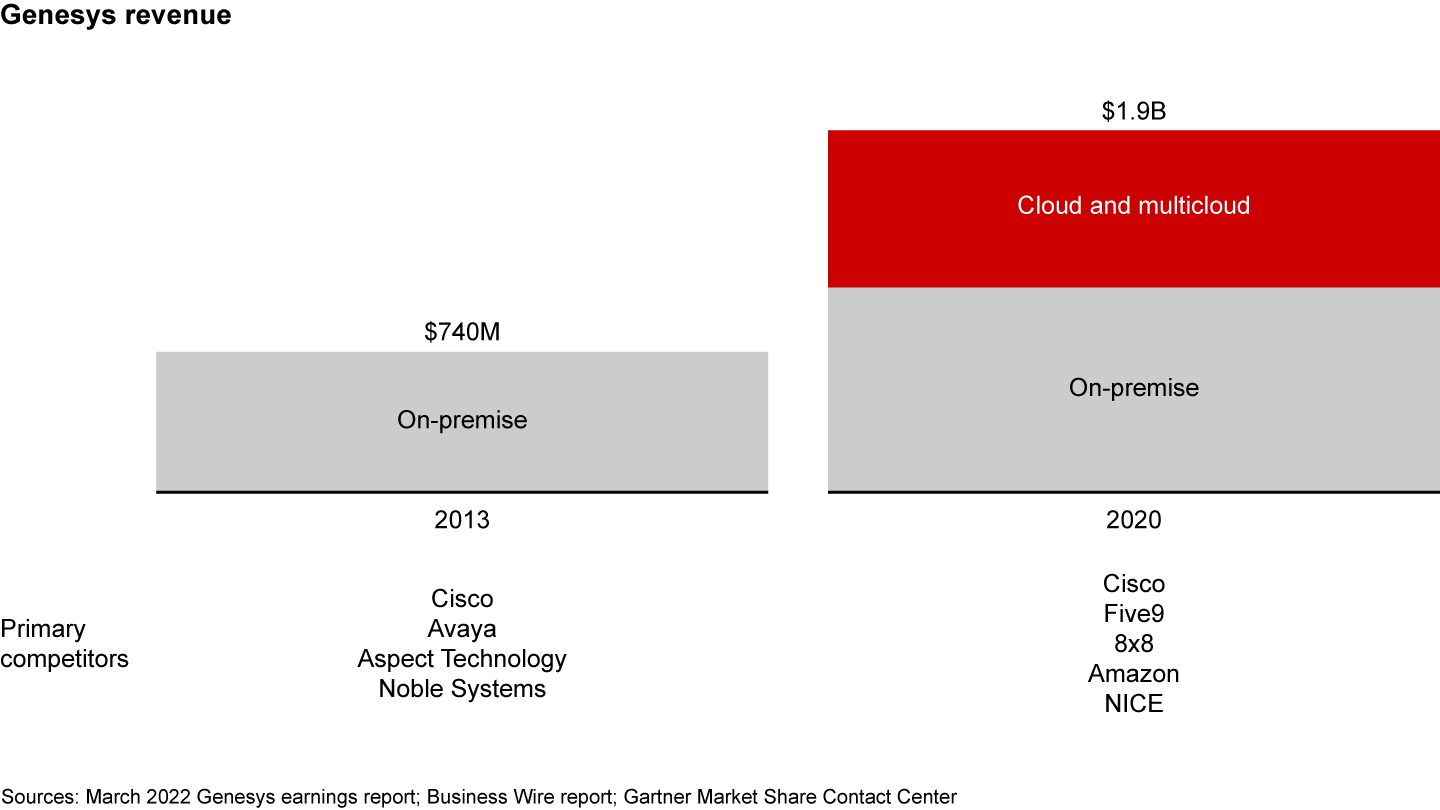
Genesys’s cloud strategy illustrates how incumbents can turn potential disruption to their advantage. In 2013, a year after the company was spun out of Alcatel-Lucent, it was operating almost entirely on-premise, with some hosting. Recognizing early that its customers were starting to prefer cloud-based products, the contact center software provider began shifting away from its legacy on-premise solution with a couple of small tuck-in acquisitions. It swung for the fences with the $1.4 billion purchase of Interactive Intelligence in 2016. To capture the value of the deal, Genesys’s leadership team crafted a plan to win new customers and carefully manage the transition of existing customers from its on-premise offerings and Interactive’s single-tenant cloud product to Interactive’s more modern, multitenant cloud product.
Genesys switched its legacy business to a subscription revenue model, transitioned its sales team to sell cloud products alongside on-premise offerings, invested in a program to lure customers away from struggling legacy competitors, and emphasized coordination across business functions to ensure the customer migration went smoothly. These moves helped Genesys to capitalize on the cloud trend, which was responsible for nearly half its growth in 2022, and take on a new set of competitors (see Figure 4).
Figure 2: Figure 4

Meanwhile, Rocket Software’s approach to staying ahead of the competition has combined focused R&D with prolific M&A. Making more than 45 acquisitions in its 32-year history, it has built a diverse portfolio of enterprise software products supporting the legacy platforms of many of the largest companies worldwide. Two things have helped Rocket, which was acquired by Court Square Capital Partners in 2009 and later by Bain Capital in 2018 in a $2 billion deal, avoid the pitfalls that often stymie incumbents. The company strategically reviews its products regularly to ensure it’s serving customers’ highest priorities, and then it adapts its portfolio to deliver what customers need today or will in the near future.
That led Rocket to sharpen its focus on modernization, the ability to either connect legacy, mission-critical workloads to applications running on newer types of computing environments or to update legacy software to use modern architectures and development techniques. Based on this strategy, the company identified R&D priorities that helped it serve emerging customer needs like automation of content-rich workflows across both legacy and modern platforms.
Ultimately, even as incumbent enterprise software companies face intensifying competition, the traditional playbook can still yield solid returns for the foreseeable future. But more incumbents are starting to recognize there’s a better way. Staying ahead of disruptive competitors will set them on a path to accelerate growth for years to come.
First published in September 2022