
Skip to Content
  • Standorte

    Standorte

    North & Latin America
    • Atlanta
    • Austin
    • Bogota
    • Boston
    • Buenos Aires
    • Chicago
    • Dallas
    • Denver
    • Houston
    • Lisbon
    • Los Angeles
    • Mexico City
    • Minneapolis
    • Monterrey
    • Montreal
    • New York
    • Rio de Janeiro
    • San Francisco
    • Santiago
    • São Paulo
    • Seattle
    • Silicon Valley
    • Toronto
    • Washington, DC
    Europe & Africa
    • Amsterdam
    • Athens
    • Berlin
    • Brussels
    • Copenhagen
    • Düsseldorf
    • Frankfurt
    • Helsinki
    • Istanbul
    • Johannesburg
    • Kyiv
    • Lisbon
    • London
    • Madrid
    • Milan
    • München
    • Oslo
    • Paris
    • Rome
    • Stockholm
    • Warsaw
    • Wien
    • Zürich
    Middle East
    • Doha
    • Dubai
    • Riyadh
    Asia & Australia
    • Bangkok
    • Beijing
    • Bengaluru
    • Brisbane
    • Ho Chi Minh City
    • Hong Kong
    • Jakarta
    • Kuala Lumpur
    • Manila
    • Melbourne
    • Mumbai
    • New Delhi
    • Perth
    • Seoul
    • Shanghai
    • Singapore
    • Sydney
    • Tokyo
    Alle Standorte Anzeigen
  • Alumni
  • Presse
  • Newsletter
  • Kontakt
  • DACH-Region | Deutsch

    Wählen Sie Ihre Region und Sprache

    Global
    • Global (English)
    North & Latin America
    • Brazil (Português)
    • Argentina (Español)
    • Canada (Français)
    • Chile (Español)
    • Colombia (Español)
    Europe, Middle East, & Africa
    • France (Français)
    • DACH-Region (Deutsch)
    • Italy (Italiano)
    • Spain (Español)
    • Greece (Elliniká)
    Asia & Australia
    • China (中文版)
    • Korea (한국어)
    • Japan (日本語)
  • Saved items (0)
    Saved items (0)

    You have no saved items.

    Inhalte, für die Sie sich interessieren, werden hier gespeichert und können später gelesen oder weitergeleitet werden.

    Explore Bain Insights
  • Branchenkompetenzen
    Hauptmenü

    Branchenkompetenzen

    • Luft- und Raumfahrt, Verteidigung
    • Agrarwirtschaft
    • Chemieindustrie
    • Infrastruktur und Bauwirtschaft
    • Konsumgüter
    • Finanzdienstleistungen
    • Gesundheitswesen
    • Maschinen- und Anlagenbau
    • Medienwirtschaft
    • Metallindustrie
    • Bergbau
    • Öl und Gas
    • Papier- und Verpackungsindustrie
    • Private Equity
      Branchenkompetenzen
      Private Equity
      • Due Diligence
      • Exit Planning
      • Firm Strategy & Operations
      • Portfolio Value Creation
    • Öffentlicher Sektor und Sozialwesen
    • Einzelhandel
    • Technologie
    • Telekommunikation
    • Transportwesen
    • Reise- und Freizeitbranche
    • Versorgung und erneuerbare Energien
  • Managementkompetenzen
    Hauptmenü

    Managementkompetenzen

    • Customer Experience
    • ESG
    • Innovation
    • M&A
    • Operations
    • People & Organization
    • Private Equity
    • Sales & Marketing
    • Strategie
    • KI, Einblicke und Lösungen
    • Technologie
    • Transformation
  • Digital
  • Publikationen
    Hauptmenü

    Publikationen

    • Branchenthemen
    • Managementthemen
    • Bain-Bücher
    Alle Publikationen
    Ausgewählte Themen
    • Resilienz in der globalen Krise
    • M&A Report
    • Private Equity Podcast
    • Midyear Private Equity Report
    • Agile
    • Engineering Report
    • Digital Transformation
    • Elements of Value®
    • Firm of the Future
    • Nachhaltigkeitsstudie
    • Macro Trends
    • Future of Consumption
    • Weltwirtschaftsforum (WEF)
  • Über uns
    Hauptmenü

    Über uns

    • Was wir bieten
    • Unser Ansatz
    • Unser Team
    • Game Changer Award
    • Female Allstar Board
    • Messbare Ergebnisse (EN)
    • Auszeichnungen
    • Globale Partnerschaften
    • The Mission
    Further: Our global responsibility
    • Vielfalt & Chancengleichheit
    • Soziale Verantwortung
    • Sustainability
    Erfahren Sie mehr zu "Further"
  • Karriere
    Hauptmenü

    Karriere

    • Dein Einstieg
      Karriere
      Dein Einstieg
      • Find Your Place
      • Unsere Arbeitsbereiche
      • Unsere Teams
      • Angebote für Studierende
      • Praktika & Programme
      • Recruiting-Events
    • Arbeiten bei Bain
      Karriere
      Arbeiten bei Bain
      • Karriere Stories
      • Unsere Bainies
      • Office-Standorte
      • Weiterentwicklung
      • Affinity Groups
      • Deine Benefits
    • Impact Stories
    • Deine Bewerbung
      Karriere
      Deine Bewerbung
      • Das erwartet dich
      • Der Interviewprozess
    FIND JOBS
  • Standorte
    Hauptmenü

    Standorte

    • North & Latin America
      Standorte
      North & Latin America
      • Atlanta
      • Austin
      • Bogota
      • Boston
      • Buenos Aires
      • Chicago
      • Dallas
      • Denver
      • Houston
      • Lisbon
      • Los Angeles
      • Mexico City
      • Minneapolis
      • Monterrey
      • Montreal
      • New York
      • Rio de Janeiro
      • San Francisco
      • Santiago
      • São Paulo
      • Seattle
      • Silicon Valley
      • Toronto
      • Washington, DC
    • Europe & Africa
      Standorte
      Europe & Africa
      • Amsterdam
      • Athens
      • Berlin
      • Brussels
      • Copenhagen
      • Düsseldorf
      • Frankfurt
      • Helsinki
      • Istanbul
      • Johannesburg
      • Kyiv
      • Lisbon
      • London
      • Madrid
      • Milan
      • München
      • Oslo
      • Paris
      • Rome
      • Stockholm
      • Warsaw
      • Wien
      • Zürich
    • Middle East
      Standorte
      Middle East
      • Doha
      • Dubai
      • Riyadh
    • Asia & Australia
      Standorte
      Asia & Australia
      • Bangkok
      • Beijing
      • Bengaluru
      • Brisbane
      • Ho Chi Minh City
      • Hong Kong
      • Jakarta
      • Kuala Lumpur
      • Manila
      • Melbourne
      • Mumbai
      • New Delhi
      • Perth
      • Seoul
      • Shanghai
      • Singapore
      • Sydney
      • Tokyo
    Alle Standorte Anzeigen
  • Alumni
  • Presse
  • Newsletter
  • Kontakt
  • DACH-Region | Deutsch
    Hauptmenü

    Wählen Sie Ihre Region und Sprache

    • Global
      Wählen Sie Ihre Region und Sprache
      Global
      • Global (English)
    • North & Latin America
      Wählen Sie Ihre Region und Sprache
      North & Latin America
      • Brazil (Português)
      • Argentina (Español)
      • Canada (Français)
      • Chile (Español)
      • Colombia (Español)
    • Europe, Middle East, & Africa
      Wählen Sie Ihre Region und Sprache
      Europe, Middle East, & Africa
      • France (Français)
      • DACH-Region (Deutsch)
      • Italy (Italiano)
      • Spain (Español)
      • Greece (Elliniká)
    • Asia & Australia
      Wählen Sie Ihre Region und Sprache
      Asia & Australia
      • China (中文版)
      • Korea (한국어)
      • Japan (日本語)
  • Saved items  (0)
    Hauptmenü
    Saved items (0)

    You have no saved items.

    Inhalte, für die Sie sich interessieren, werden hier gespeichert und können später gelesen oder weitergeleitet werden.

    Explore Bain Insights
  • Branchenkompetenzen
    • Branchenkompetenzen

      • Luft- und Raumfahrt, Verteidigung
      • Agrarwirtschaft
      • Chemieindustrie
      • Infrastruktur und Bauwirtschaft
      • Konsumgüter
      • Finanzdienstleistungen
      • Gesundheitswesen
      • Maschinen- und Anlagenbau
      • Medienwirtschaft
      • Metallindustrie
      • Bergbau
      • Öl und Gas
      • Papier- und Verpackungsindustrie
      • Private Equity
      • Öffentlicher Sektor und Sozialwesen
      • Einzelhandel
      • Technologie
      • Telekommunikation
      • Transportwesen
      • Reise- und Freizeitbranche
      • Versorgung und erneuerbare Energien
  • Managementkompetenzen
    • Managementkompetenzen

      • Customer Experience
      • ESG
      • Innovation
      • M&A
      • Operations
      • People & Organization
      • Private Equity
      • Sales & Marketing
      • Strategie
      • KI, Einblicke und Lösungen
      • Technologie
      • Transformation
  • Digital
  • Publikationen
    • Publikationen

      • Branchenthemen
      • Managementthemen
      • Bain-Bücher
      Alle Publikationen
      Ausgewählte Themen
      • Resilienz in der globalen Krise
      • M&A Report
      • Private Equity Podcast
      • Midyear Private Equity Report
      • Agile
      • Engineering Report
      • Digital Transformation
      • Elements of Value®
      • Firm of the Future
      • Nachhaltigkeitsstudie
      • Macro Trends
      • Future of Consumption
      • Weltwirtschaftsforum (WEF)
  • Über uns
    • Über uns

      • Was wir bieten
      • Unser Ansatz
      • Unser Team
      • Game Changer Award
      • Female Allstar Board
      • Messbare Ergebnisse (EN)
      • Auszeichnungen
      • Globale Partnerschaften
      • The Mission
      Further: Our global responsibility
      • Vielfalt & Chancengleichheit
      • Soziale Verantwortung
      • Sustainability
      Erfahren Sie mehr zu "Further"
  • Karriere
    Häufige Suchanfragen
    • Agil
    • Digital
    • Strategie
    Vorherige Suchanfragen
      Zuletzt besuchte Seiten

      Content added to saved items

      Saved items (0)

      Removed from saved items

      Saved items (0)

      Energy & Natural Resources Report

      Deliver Decarbonization with Visionary Pragmatism

      Deliver Decarbonization with Visionary Pragmatism

      Goals are set and targets have been announced. The next stages of the energy and resource transition depend on being bold and realistic.

      Von Cate Hight, Torsten Lichtenau, Brian Murphy, und Nitesh Prakash

      • Min. Lesezeit
      }

      Report

      Deliver Decarbonization with Visionary Pragmatism
      en
      Auf einen Blick
      • Having set aggressive decarbonization targets, companies across sectors now face the challenge of executing at pace during a time of unprecedented turbulence.
      • Many companies in the energy and natural resources sectors have been working toward these goals for many years, with varying degrees of success.
      • Indicating the difficulty of achieving those ambitions, 31% of ENR companies missed Scope 1 and 2 targets they set for 2020.
      • Companies that make the most progress will stay focused on their visionary net-zero ambition while showing ruthless pragmatism in delivering strategically.

      This article is part of Bain’s Energy and Natural Resources Report 2022

      Explore the report

      If the year 2021 was about setting ambitions, 2022 is about coming to grips with how challenging the energy and resource transition is likely to be.

      Over the past two years, the number of companies establishing science-based targets for reducing their carbon emissions accelerated dramatically, as many prepared for the COP26 climate change conference last November (see Figure 1).

      Figure 1
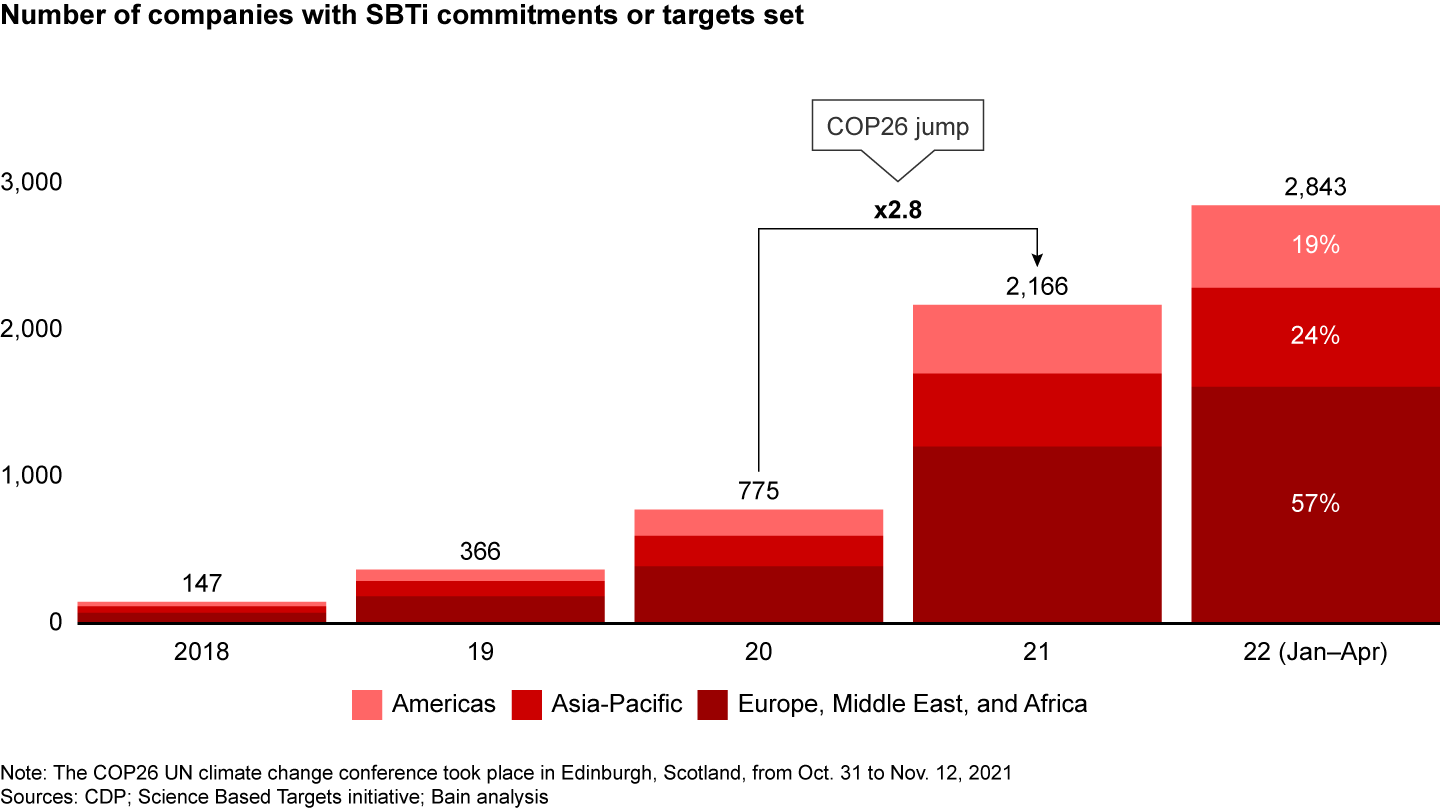
      The number of companies pursuing science-based decarbonization targets has nearly quadrupled since 2020

      But for companies in energy and natural resources (ENR), decarbonization is hardly new. Decarbonization and sustainability have been high on their agenda for several years because these industries are among the highest and most visible of carbon emitters, and because they’re under intense scrutiny to decarbonize.

      As an indication of how difficult it is to turn ambition into reality, consider that 31% of companies missed the Scope 1 and 2 targets they set for 2020, even though these emissions are the most controllable, and addressing them often makes good economic sense (see Figure 2). For many ENR companies, most emissions are downstream Scope 3, when customers use their product.

      Figure 2
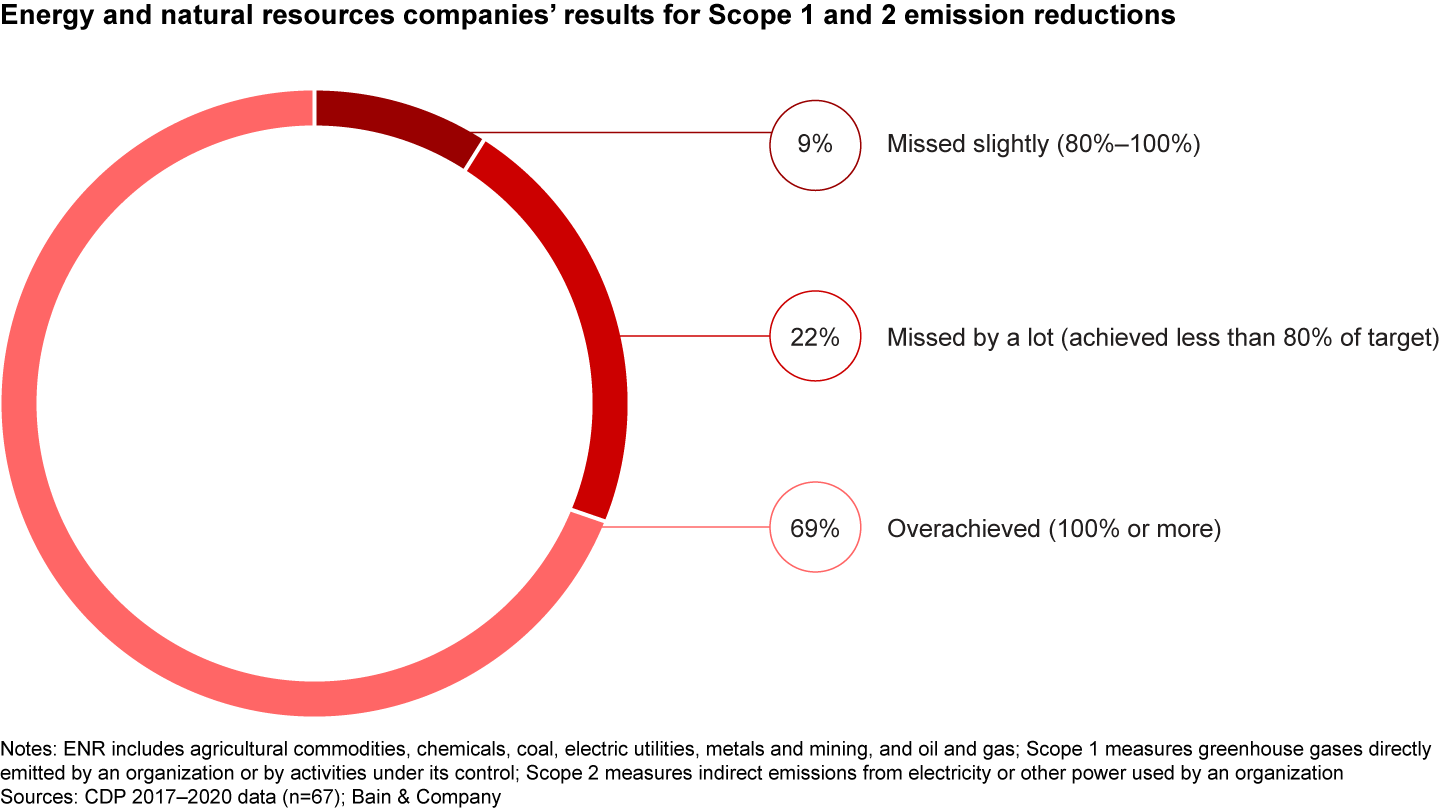
      About one-third of ENR companies said they missed their Scope 1 and 2 targets in 2020

      None of this is happening in a green vacuum. Executives are trying to pursue their decarbonization targets during a period of turbulence that has created historic levels of uncertainty. They’re learning how to make an orderly carbon transition amid an unsettling geopolitical atmosphere, chronic supply chain disruptions, and rampant inflation.

      Progress in the next stages of the transition will depend on visionary pragmatism. Our clients are experimenting with more flexible and nimble approaches that will help them work through the many disruptions. Here’s a short list of some effective strategies.

      1. Put a premium on strategic adaptability. Companies don’t need more climate scenarios, just clarity on the relevant ones. They need to identify the signposts that show the direction of travel, especially regulations and advances on the technology experience curve. We’re seeing companies adopt a more adaptable approach to strategy. For example, instead of setting five-year strategic plans with yearly refreshes, strategy becomes a more continuous activity, taking account of delivery commitments and the development agenda. Continuously assessing the signposts can guide ongoing and quarterly discussions within the executive team and the board as part of a living strategy.

      2. Proactively address investor dissonance. Investors and lenders are raising their expectations about decarbonization. Among utilities investors, for example, 13% say they already have carbon targets or limits that guide investment decisions, and another 16% say they’re considering it. At the same time, they often aren’t willing to compromise on near-term returns. This creates dissonance in capital markets, as companies balance the trade-offs between their green ambitions on the one hand, and their growth and financial aspirations on the other. Capital market days for many companies have become longer, but not necessarily clearer. Executives need to strengthen the investor dialogue. That means focusing on strategic clarity, with specific near-term plans for decarbonization and longer-term pathways to net zero. For many energy and resources companies, it also means showing plans for new growth, including Engine 2 initiatives (for more, see “Investing in New Growth Businesses in Energy and Natural Resources”). Both efforts should make the business more valuable. Companies need to demonstrate progress in everything from Scope 1 and 2 decarbonization to customer collaboration on green products and meaningful investments in new growth.

      3. Decarbonize “customer-back.” Customer preferences deeply influence the level of emissions generated during production and in the supply chain. Through procurement decisions, customers can have as much control over their upstream Scope 3 emissions as they do over Scope 1 and 2 activities. Leaders will set targets for all three levels. Downstream Scope 3 emissions also provide new opportunities, even though ENR companies sometimes view them with trepidation. Visionary pragmatists will work with customers to develop lower-carbon products that meet their needs and support their own decarbonization efforts. Beyond the well-known example of substituting renewable electricity for higher-emitting alternatives, other opportunities include responsibly produced natural gas, carbon-neutral LNG cargoes (through offsets), low-carbon copper, carbon capture services for cement producers, green hydrogen for steel producers, green methanol for shipping, and sustainable aviation fuel for airlines. Since customers will want to know what they’re getting when they pay a premium for these greener products, transparency on materials and emissions will be important.

      4. Collaborate where it matters and for results. Carbon transition is a problem far too big to be solved by any company on its own, and the need to engage the wider ecosystem of customers, suppliers, peers, governments, and civil society is increasing. Know where to collaborate and where to compete. Pick the few partnerships that can make a difference. Those partnerships should be made across the value chain, with peers and with key stakeholder groups, to reach a critical mass for change. (For more, see  “Creating a Coordinated Approach to Decarbonization.”) Avoid losing precious time on initiatives where there’s a lot of talk but little action. Ruthlessly deliver results with a clear intent for the partnership, and with early proof points through experimentation.

      5. Create green heroes in middle management. Top management may be fully convinced of the need for aggressive decarbonization, given interactions with investors, the board, and key customers. New recruits often have chosen an employer based on its green credentials. Yet some companies underinvest in empowering middle management to get the job done, sending confusing signals on how environmental, social, and corporate governance (ESG) considerations should connect with other goals for revenues, costs, and safety. Decarbonization can’t be achieved without managers who have the tools to make it happen. The only way to effectively empower these potential green heroes is to be extremely clear on what decisions they need to make differently and how to resolve trade-offs when they occur. The organization needs to be trained, guided, and aligned to embed its goals as realistic deliverables.

      As an example, procurement is critical to address upstream Scope 3 emissions. Managers who have been trained for years to focus on optimizing cost for certain specifications need clear guidance on how to reflect carbon in procurement decisions, next to specs and price (for example, through internal carbon pricing) and the tools to pragmatically assess where to push in the supply chain.

      Skills must be upgraded throughout the organization, but tailored to specific purposes and people. That starts by investing to understand who’s most affected and who needs the most training, then rolling out support accordingly.

      The importance and urgency of decarbonization and the need to limit global warming to 1.5°C are largely undisputed. While many companies raced to establish their targets in time for COP26, companies in the energy and natural resources sectors often were already managing the difficult task of delivering on those ambitions and building greener businesses. The leaders that combine vision and pragmatism will get there first.

      Data-rich perspectives

      • Execs on energy transition

      • Investing in Engine 2

      • Energy investors and ESG

      • Responding to Ukraine crisis

      Transition trends

      • Talent and inclusivity

      • Building coalitions for decarbonization

      • Circularity in plastics

      Strategic capabilities

      • How to do Engine 2

      • Operations through disruptions

      • Pricing and inflation

      • M&A opportunities

      • Delivering decarbonization

      Read our Energy and Natural Resources Report 2022

      Explore the full report Download PDF
      Autoren
      • Headshot of Cate Hight
        Cate Hight
        Partner, Washington, DC
      • Headshot of Torsten Lichtenau
        Torsten Lichtenau
        Partner, London
      • Headshot of Brian Murphy
        Brian Murphy
        Partner, Perth
      • Headshot of Nitesh Prakash
        Nitesh Prakash
        Partner, London
      Kontaktieren Sie uns
      Verwandte Branchen
      • Agrarwirtschaft
      • Bergbau und Metall
      • Chemieindustrie
      • Energieversorgung
      • Energiewirtschaft
      • Öl und Gas
      Ähnliche Beratungsangebote
      • Strategie
      Energy and Natural Resources Report
      Creating a Coordinated Approach to Decarbonization

      Energy and natural resources companies are building broad coalitions to develop policies that accelerate decarbonization.

      Mehr erfahren
      Energy and Natural Resources Report
      The Energy Transition’s Other Big Puzzle: Making the Math Work

      Strong investment returns are within reach for companies that focus on the fundamentals and aren’t afraid to get creative.

      Mehr erfahren
      Energiewirtschaft
      Sustaining Capital: From Chaos to Discipline

      Fragmented budgets, poor visibility, and missed forecasts are fixable with the right approach.

      Mehr erfahren
      Strategie
      What Business Leaders Need to Know About AI Sovereignty

      Aligning business strategy with national AI priorities is necessary to compete and scale.

      Mehr erfahren
      Energy and Natural Resources Report
      State of the Transition 2023: Global Energy and Natural Resource Executive Perspectives

      Bain’s third annual survey on the energy transition finds executives increasing investments in low-carbon businesses, but skeptical of consumers’ willingness to pay more.

      Mehr erfahren
      First published in Juni 2022
      Markierungen
      • Agrarwirtschaft
      • Bergbau und Metall
      • Chemieindustrie
      • Energieversorgung
      • Energiewirtschaft
      • Energy and Natural Resources Report
      • Öl und Gas
      • Strategie

      Wie wir unsere Kunden unterstützt haben

      Strategie New products propel profitability for metals manufacturer

      Kundenbeispiel lesen

      Mergers & Acquisitions An OFS captures post-merger growth synergies

      Kundenbeispiel lesen

      Mergers & Acquisitions Broader market plus tighter sales strategy equals big success for a portfolio company

      Kundenbeispiel lesen

      Möchten Sie mit uns in Kontakt bleiben?

      Wir unterstützen Führungskräfte weltweit, die kritischen Themen in ihrem Unternehmen zu adressieren. Gemeinsam schaffen wir nachhaltige Veränderungen und Ergebnisse.

      Bain Insights. Unsere Perspektive auf die kritischen Themen, mit denen sich international agierende Unternehmen konfrontiert sehen, finden Sie monatlich in Ihrem Postfach.

      *Ich habe die Datenschutzerklärung gelesen und akzeptiere sie.
      Bitte lesen Sie die Datenschutzerklärung und akzeptieren Sie diese.
      Bain & Company
      Contact us Sustainability Accessibility Rechtliche Hinweise Impressum Datenschutz Cookie-Richtlinie Sitemap Log In

      © 1996-2026 Bain & Company, Inc.

      Kontaktieren Sie Bain

      Wie können wir Ihnen helfen?

      • Business inquiry
      • Career information
      • Press relations
      • Partnership request
      • Speaker request
      Alle weltweiten Büros